
Eight Bowls on a Village Table: Yangsi Feast
八碗摆开杨泗宴,半村烟火半村香 Bā wǎn bǎi kāi Yángsì yàn, bàn cūn yānhuǒ bàn cūn xiāng – Eight bowls laid open the Yangsi feast; half the village’s cooking smoke, half the village’s fragrance
杨泗八大碗 Yángsì bādà wǎn is the village banquet of Yangsi, the village in Ninghe town where 天津市宁河区 Tiānjīn Shì Nínghé Qū Ninghe District sets its formal tables – eight large steamed bowls, meat and vegetable in matched sets, carried out in sequence to a courtyard of round tables for weddings, New Year, and full-month celebrations. This is rural Tianjin formal dining: not a menu but a liturgy, steamed in advance, served hot, and judged by the same eight bowls for generations.
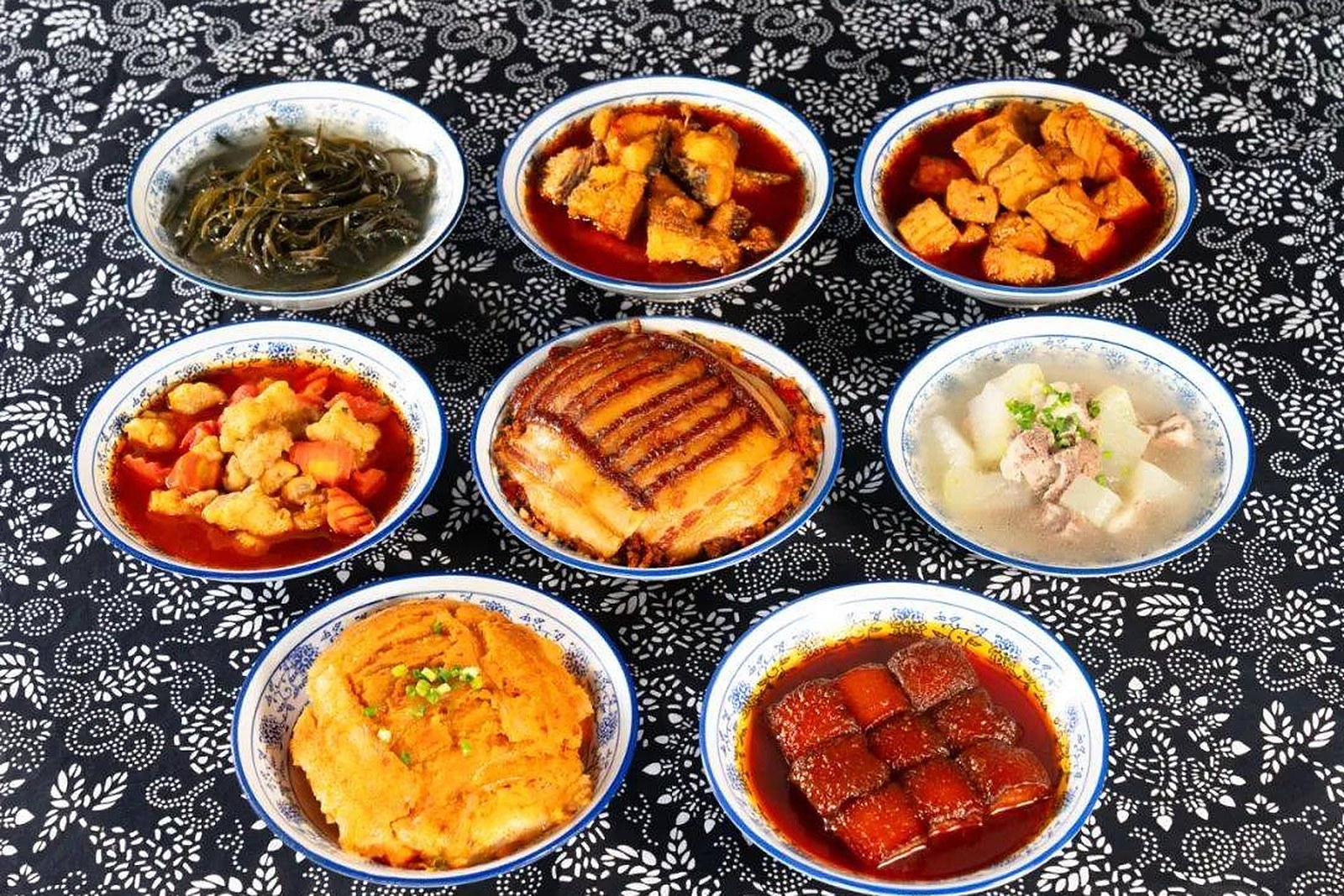
The bowls follow the classic split. Four meat – braised pork square, chicken, fish, smoked rolls – anchors the table; four vegetable bowls of bean curd, gluten, winter melon, and pickled cabbage keep pace; every bowl arrives steaming in its own dish, the steam itself part of the welcome. A village cook crew can stage the whole set for two hundred covers, steaming in shifts so the sequence never stalls.
The order is the ceremony. Bowls go out by rank, the meat anchor first, the vegetable set trailing, each arrival marked at the table by who ladles first – elders, then guests, then the family. Rice follows on demand and the feast ends when the last bowl empties; a table that leaves meat unclaimed embarrasses the host, so the cook watches consumption like a stock market.
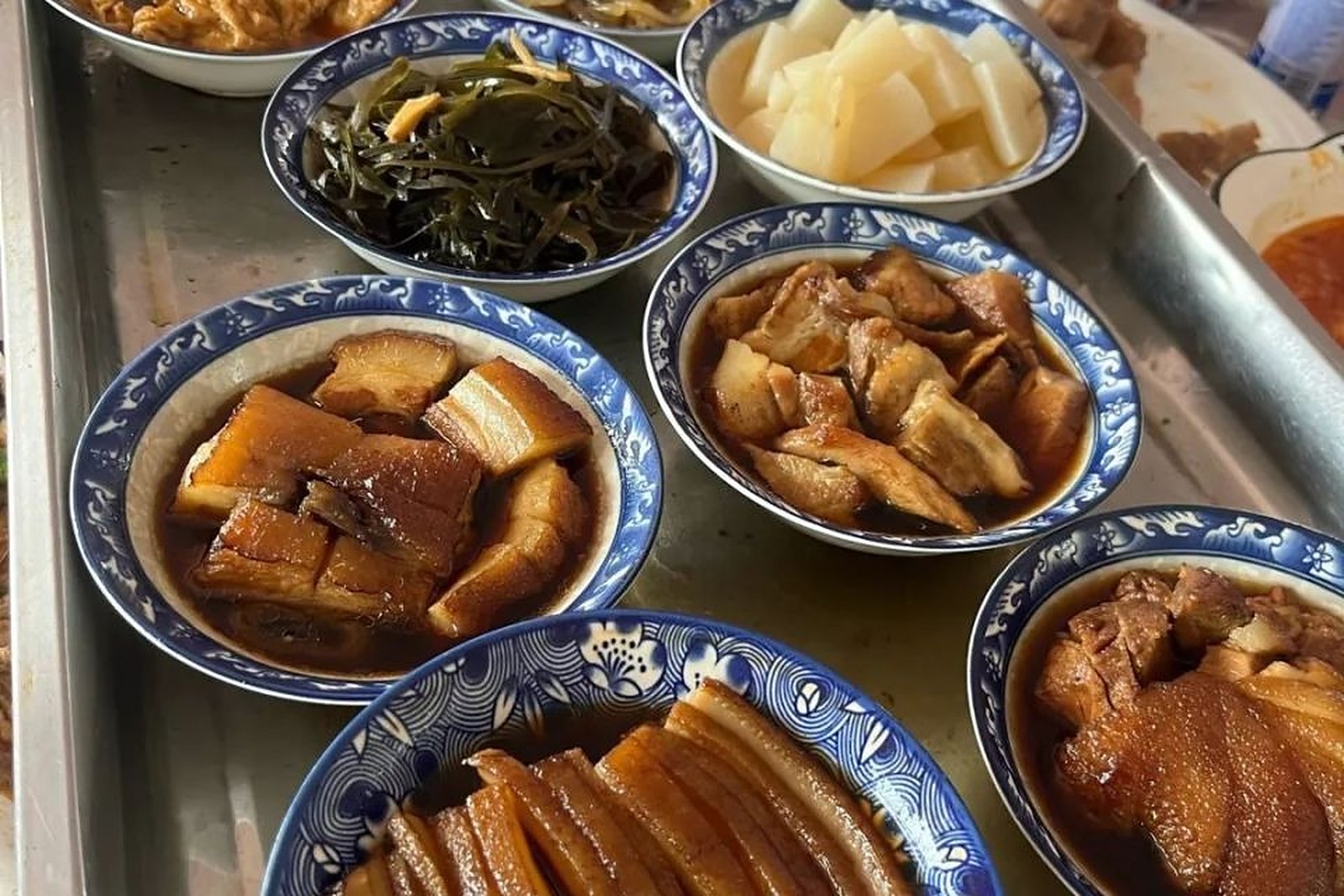
The feast keeps the village calendar. Yangsi’s banquet crews hire out through the wedding seasons – spring and the pre-New Year weeks – and the eight bowls travel to courtyards across Ninghe town, the same steamer racks, the same sequence. City restaurants now serve reunion versions, but the original argument stands: eight bowls taste right under open eaves, with kin at every seat.
The same 天津市宁河区 Tiānjīn Shì Nínghé Qū Ninghe District holds more flavors worth chasing: 七里海河蟹 Qīlǐhǎi héxiè the river crab of the marsh, 七里海河蟹面 Qīlǐhǎi héxiè miàn the crab-roe noodles, 芦台春酒 Lútái Chūn jiǔ the district’s house spirit, or 老二位熏肉 Lǎo èrwèi xūnròu the smoked counter of Lutai – four more doors into the same Ninghe table.
Words and Names
八大碗 bādà wǎn the eight great bowls, the banquet’s fixed cast; 乡厨 xiāng chú the village cook crew that stages it; 荤素 hūnsù the meat-and-vegetable pairing that balances the set; 席面 xímiàn the banquet table itself, a measure of host honor; 蒸碗 zhēng wǎn the steamed-bowl method that keeps each course hot.
What the Locals Know
The steamed pork square is the yardstick – layers even, fat trembling but whole, chopsticks lifting it in one piece – and villages judge a cook crew on that single bowl. Arrive hungry and pace by the vegetable bowls; the meat set lands heavy. And never leave before the last bowl clears: in Yangsi the feast ends together or not at all. All checked November 2026.
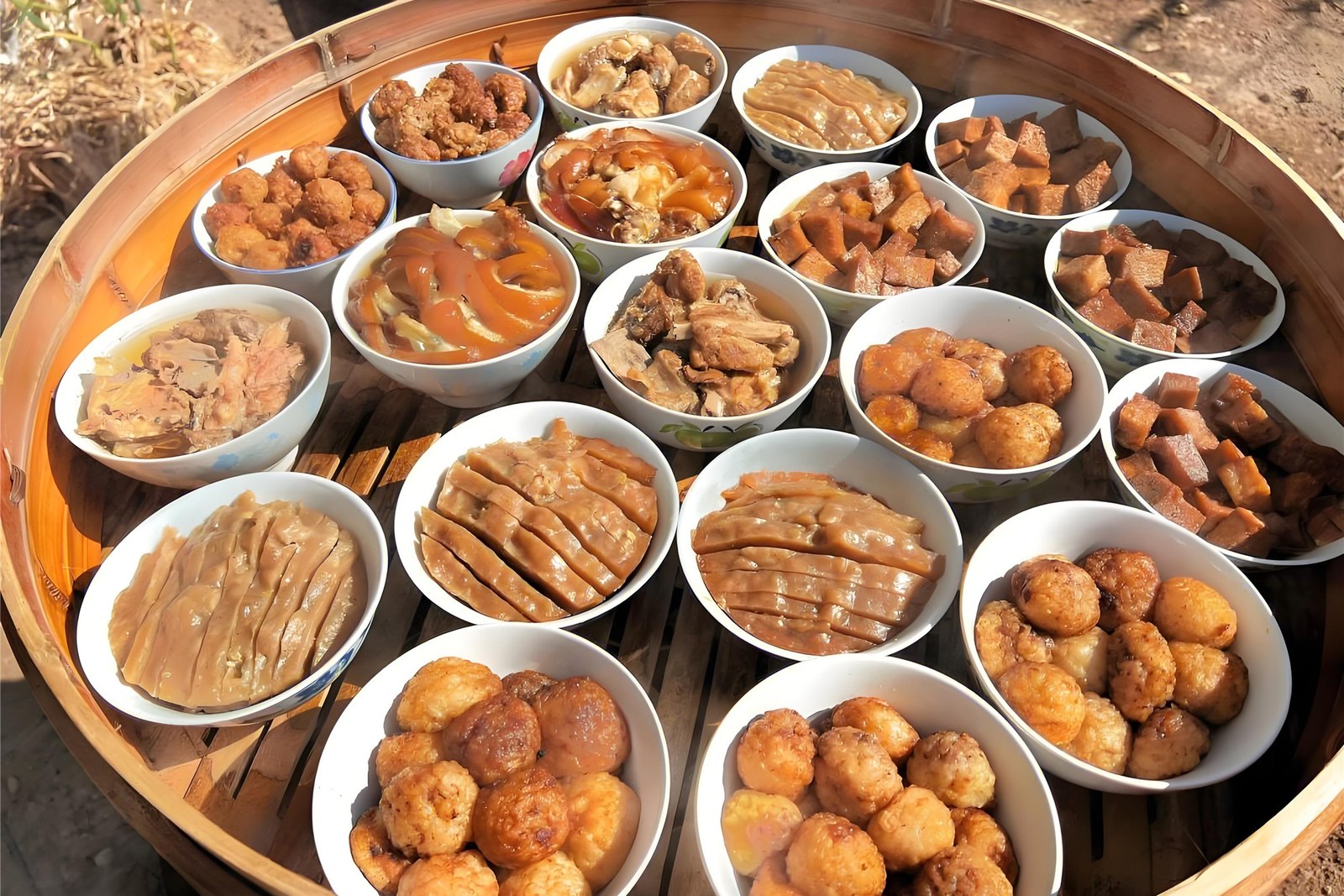
flowcloud would say the eight bowls are Ninghe’s social contract: eight dishes, one sequence, and a village that measures its cooks, its hosts, and its guests by the same steaming table.
Where to find it: Village courtyards in Yangsi stage the full banquet by invitation, and Ninghe-town restaurants run the eight-bowl sets for family tables through the year. All checked November 2026.