
White Broth at Dawn: Yang Tang
羊汤滚雪晨光里,一碗驱寒暖到腰 Yángtāng gǔn xuě chénguāng lǐ, yī wǎn qūhán nuǎn dào yāo – The mutton broth rolls white as snow in morning light; one bowl drives the cold out to the waist and beyond
羊汤 yángtāng Yang tang is 天津市红桥区 Tiānjīn Shì Hóngqiáo Qū Hongqiao District’s dawn radiator – a milky white broth of mutton and bones boiled for hours until the soup itself turns opaque, ladled over sliced lamb or offal and finished with coriander, scallion and the eater’s own courage with chili. In the northwest quarter the broth pot has never really gone cold: the morning queue starts before the shutters finish rising.
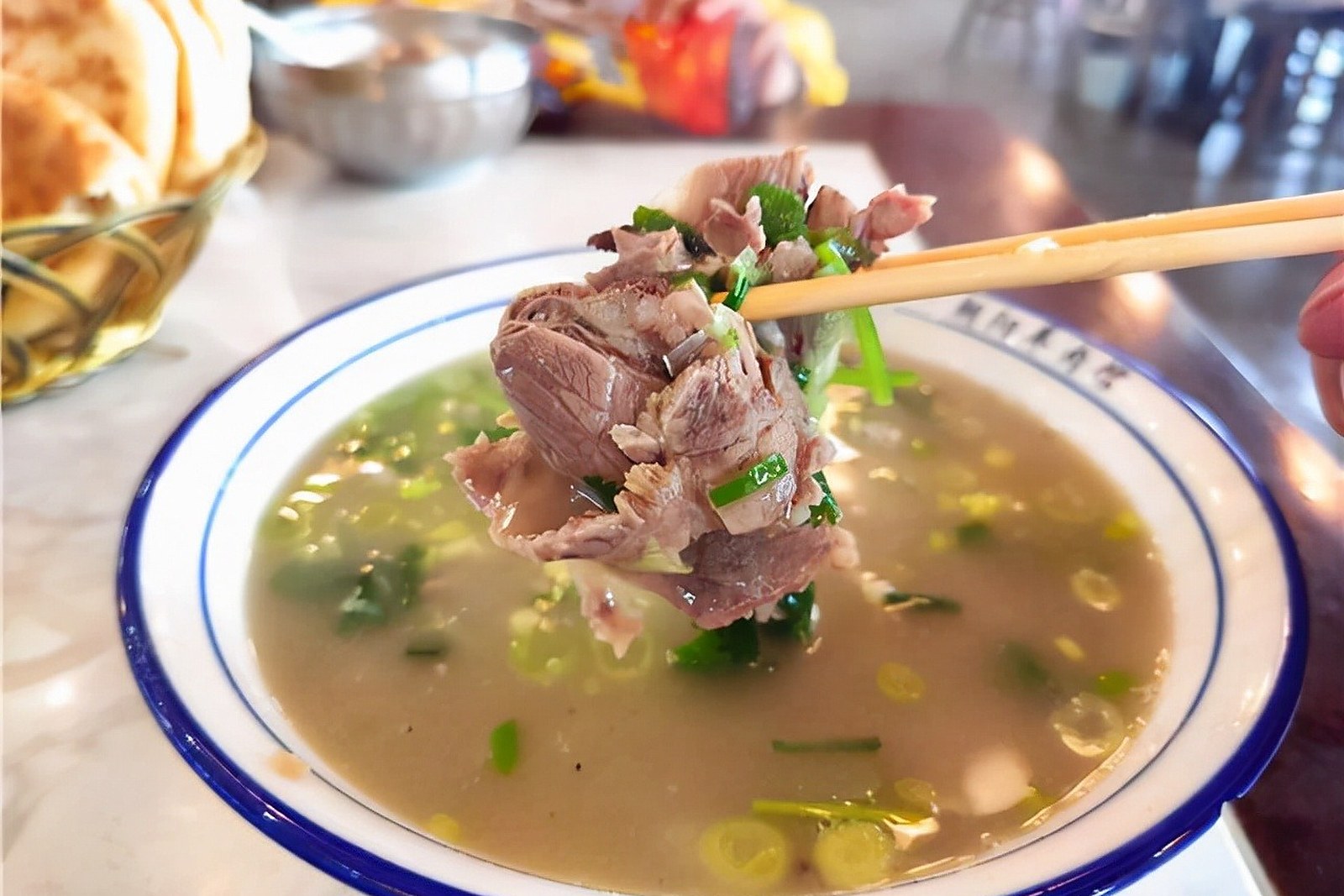
The broth is the whole craft. Bones and meat go into cold water together, the boil is kept at a rolling urgency, and hour after hour the pot turns bone-white on its own – no milk, no shortcuts, just protein and time. The old cooks say a proper 羊汤 holds a spoon upright for a second, and the quarter’s regulars can tell the house by the soup’s weight alone.
The ordering is a small dialect. 全羊汤 quán yángtāng asks for the full anatomy – meat, tripe, liver and lung; 挑羊汤 tiǎo yángtāng lets you choose. The ladle blanches your slices in the broth itself, the bowl arrives scalding, and the burn is the point: this is winter breakfast engineering, built to hold a market porter until dark.
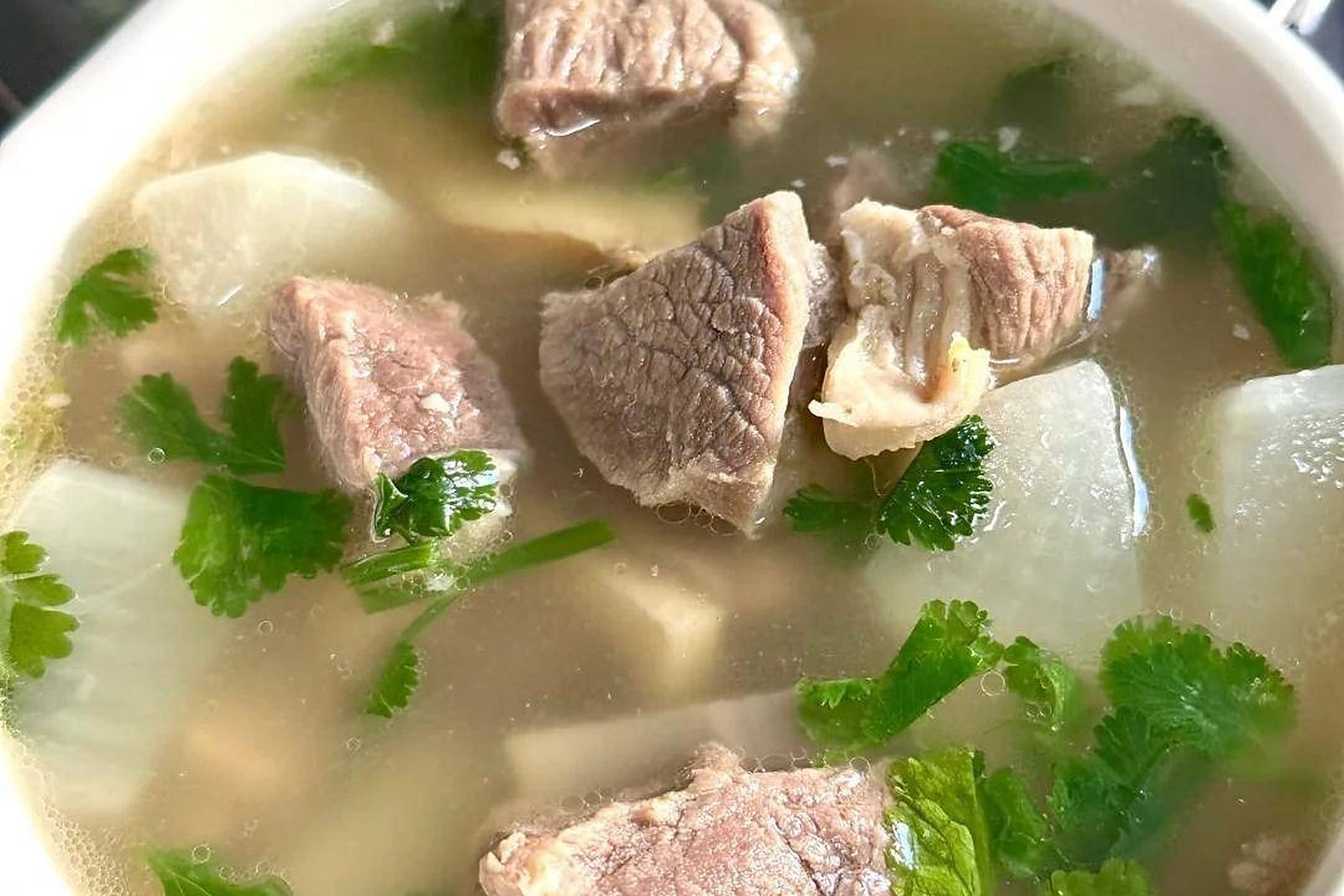
The pairing completes the institution. A wedge of sesame biscuit goes in whole or broken, 烧饼夹肉 shāobǐng jiā ròu stands beside it for the hungry, and the condiment tray – chili oil, fermented tofu, white pepper – lets each bowl be re-tuned mid-meal. By ten the pots run thin, and the quarter agrees that a late yang tang is a greeting, not a breakfast.
The same district holds more flavors worth chasing: 它似蜜 tā sì mì the honey-glazed lamb, 牛肉烧饼 niúròu shāobǐng the beef-stuffed biscuit, 炸蛎黄 zhá lìhuáng the fried oysters, or 捞面 lāomiàn the festival noodles – four more doors into the same Hongqiao District table.
Words and Names
羊汤 yángtāng the white mutton broth; 全羊汤 quán yángtāng the whole-lamb bowl; 奶汤 nǎitāng “milk broth” – the opaque ideal; 芝麻烧饼 zhīma shāobǐng the dipping biscuit; 西北角 Xīběijiǎo the northwest quarter where the pots never cool.
What the Locals Know
The pot’s age is the house’s pedigree – old broth carries a depth no new pot fakes, and regulars ask which batch the morning is serving. Drink it scalding or not at all: the quarter’s verdict is that cooled yang tang is merely soup, while a burning bowl is breakfast, medicine and weather forecast at once. All checked November 2026.
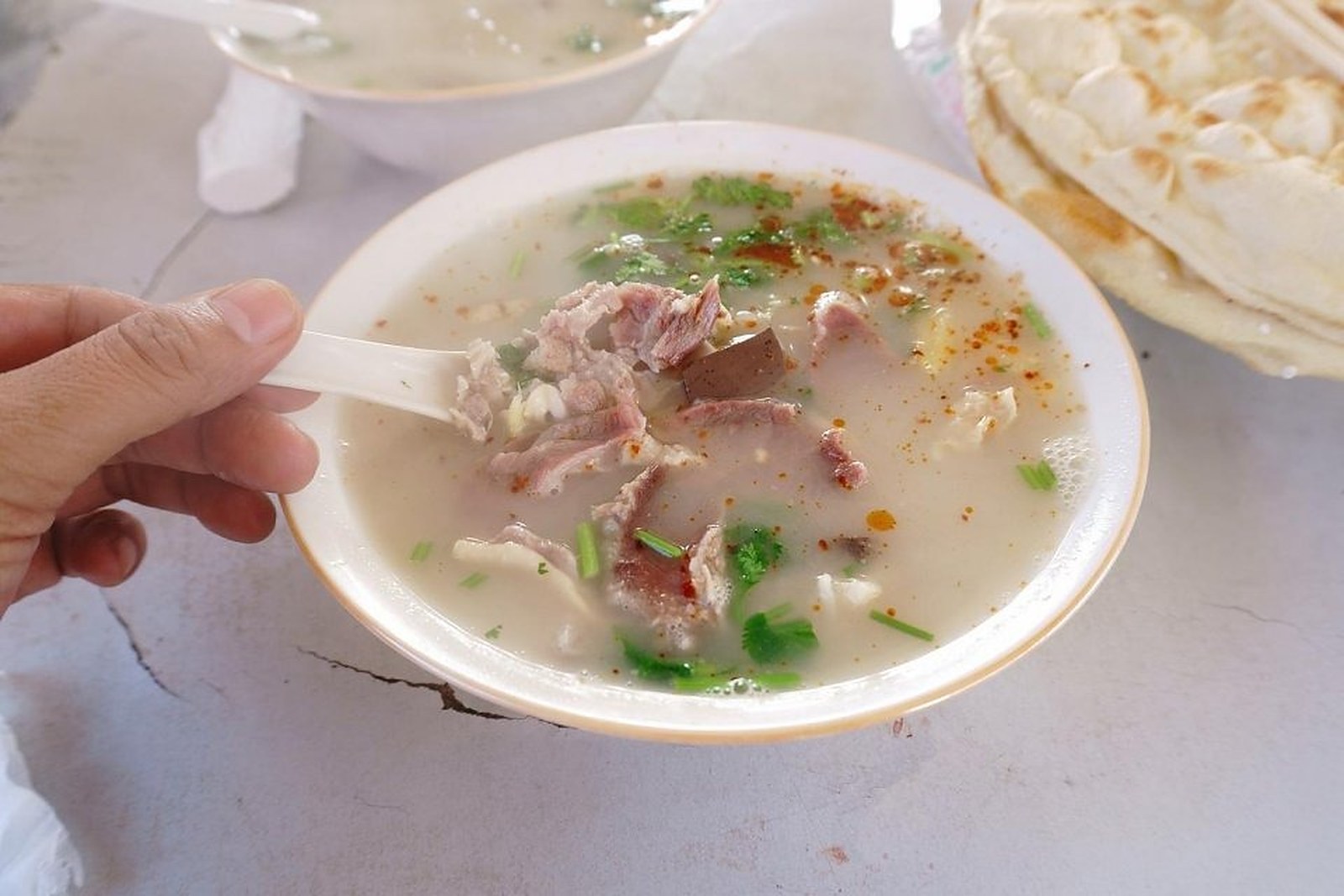
flowcloud would say yang tang is the quarter’s white flag to winter: bones surrendering their richness by the hour, a ladle that measures morning in spoonfuls, and steam that announces the shop from a street away.
Where to find it: The breakfast rows of 西北角 Xīběijiǎo around 天津市红桥区 Tiānjīn Shì Hóngqiáo Qū Hongqiao District ladle yang tang from dawn to mid-morning – go before nine, bring your own chili nerve, and pair with a sesame biscuit. All checked November 2026.