
Lamb Offal Soup: The Breakfast Bowl of the Old Streets, the Steam-and-Broth Opening Shift and the Naan-Dunking Ritual of Hami in Hami, Xinjiang
一碗杂碎滚晨霜,半个馕饼蘸尽汤。Yī wǎn zásuì gǔn chénshuāng, bàn gè náng bǐng zhàn jìn tāng – One bowl of offal rolls the morning frost away; half a naan dips the broth to its last drop.
羊杂汤 yángzà tāng lamb offal soup is Hami’s morning bell – big pots of broth set to roll before first light, filled with the cleaned tripe, heart, liver and lung of the day’s slaughter, seasoned with white pepper and handed out in deep bowls beside torn-up naan (worth confirming the details for the pot hours, since the best stalls sell out as the morning shifts end). The dish came west along the Gansu corridor with the caravan kitchens and stayed: Hami’s old-street breakfast rows run on it, the workers’ shifts open with it, and the winter cold makes the steam part of the price. The correct handling is in the ordering – 杂碎 zásuì mixed offal for the full texture tour, a heavier hand of pepper for the frost, and the naan torn in first or dunked last according to household doctrine. The register is shift-work fuel: steam on the glasses, elbows on the counter, and a bowl that outlasts the sunrise.
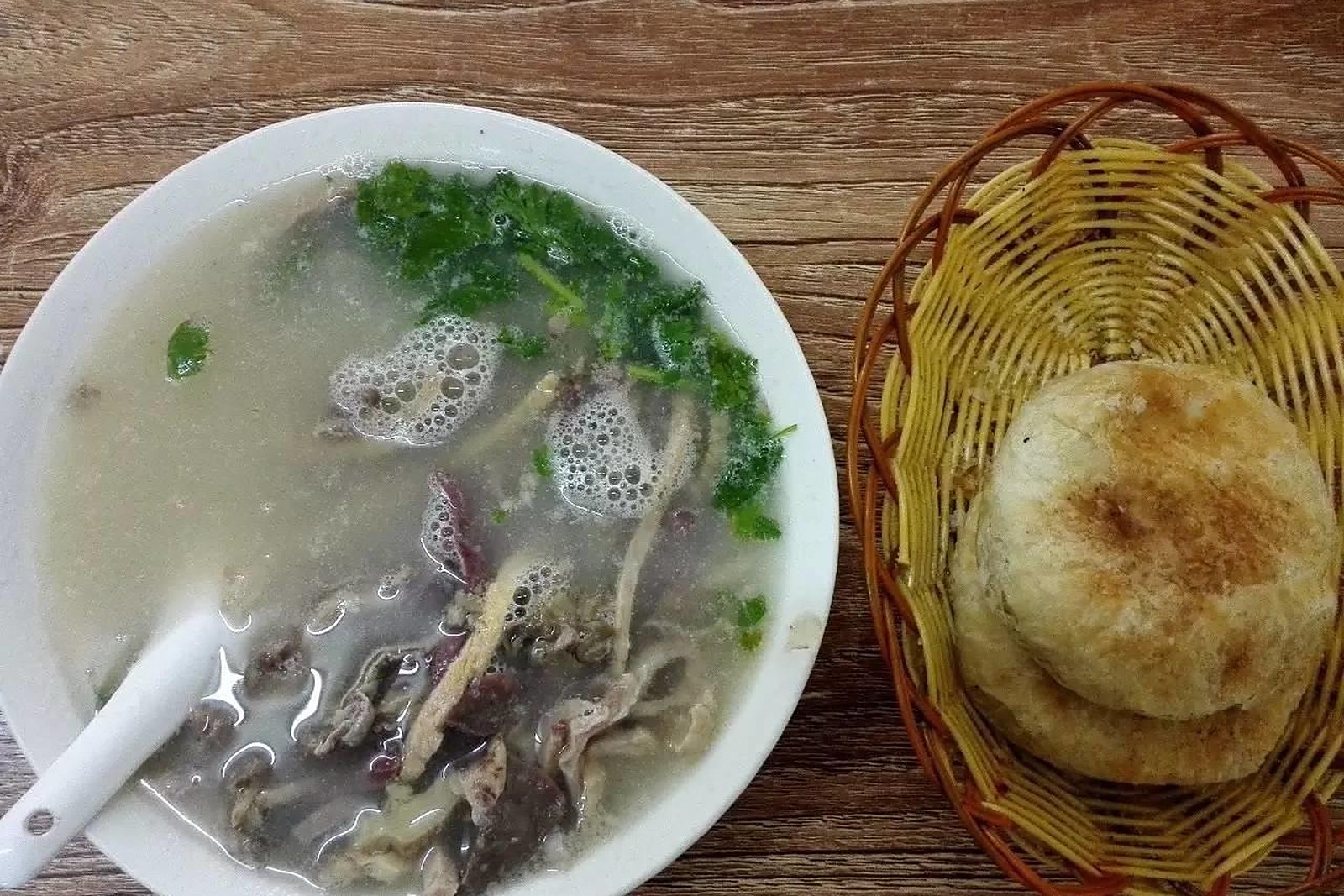
Call it honestly: counter money on a dawn clock. Getting there is one door: the breakfast rows around the old city’s market streets keep the pots rolling (worth confirming the details for which stalls run the winter dawn shift, since the street grid turns over), and the bus-station counters serve the same bowl to the early coaches. A plain bowl prices at pocket-change money, a loaded bowl with extra offal at snack-within-reason money, a bowl-and-naan set at the same small sum – though exact figures are worth confirming the details on rather than quoting, the counters repricing gently with the offal market. The crowds run to the shift: the first-light hours stack the counters, mid-morning hands the stools to the stragglers, and the hour when the pot is at its deepest – after the second broth top-up – is the eater’s own.
The honest star is the broth itself – milky from the long boil, pepper-hot at the rim, and heavy enough to carry the torn naan without going gluelike. What gets oversold is the “adventurous eats” framing: guides sell a dare where locals sell a staple, because the offal bowl is shift-work food that happens to use everything, not a stunt. What repays is the texture run – tripe’s snap, liver’s crumble, lung’s sponge – and the pepper discipline that keeps the broth ahead of the cold (worth confirming the details for each stall’s pepper level, which the counter adjusts on request).
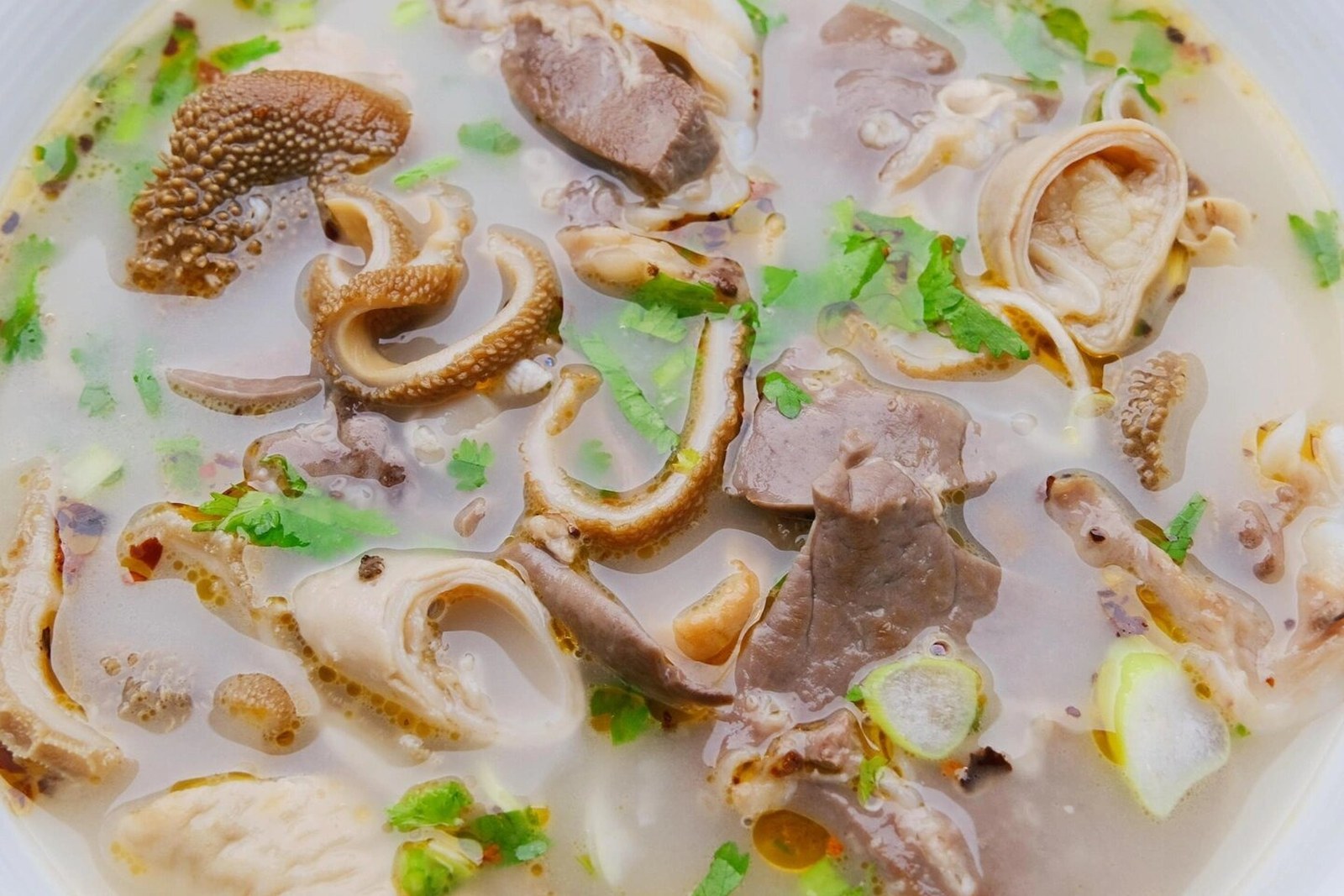
The town’s deepest habit is the dunk itself: naan torn, not cut, and lowered into the broth in stages so the crust holds – a breakfast eaten at counter speed, at counter height, with the day’s first news traded across the pot.
The rest of this Hami list keeps other tables: the bin sweetness of 哈密大枣 Hāmì dàzǎo the red dates fills the pantry, the salt-and-lamb honesty of 手抓羊肉 shǒuzhuā yángròu the hand-grabbed mutton fills the noon, the fiery sauce of 新疆炒米粉 Xīnjiāng chǎomǐfěn the stir-fried rice noodles owns the student hours and the layered pull of 油塔子 yóutǎzi the oil tower anchors the teapot – four more doors into the same 哈密市 Hāmì Shì Hami City.
Words and Names
What the Locals Know
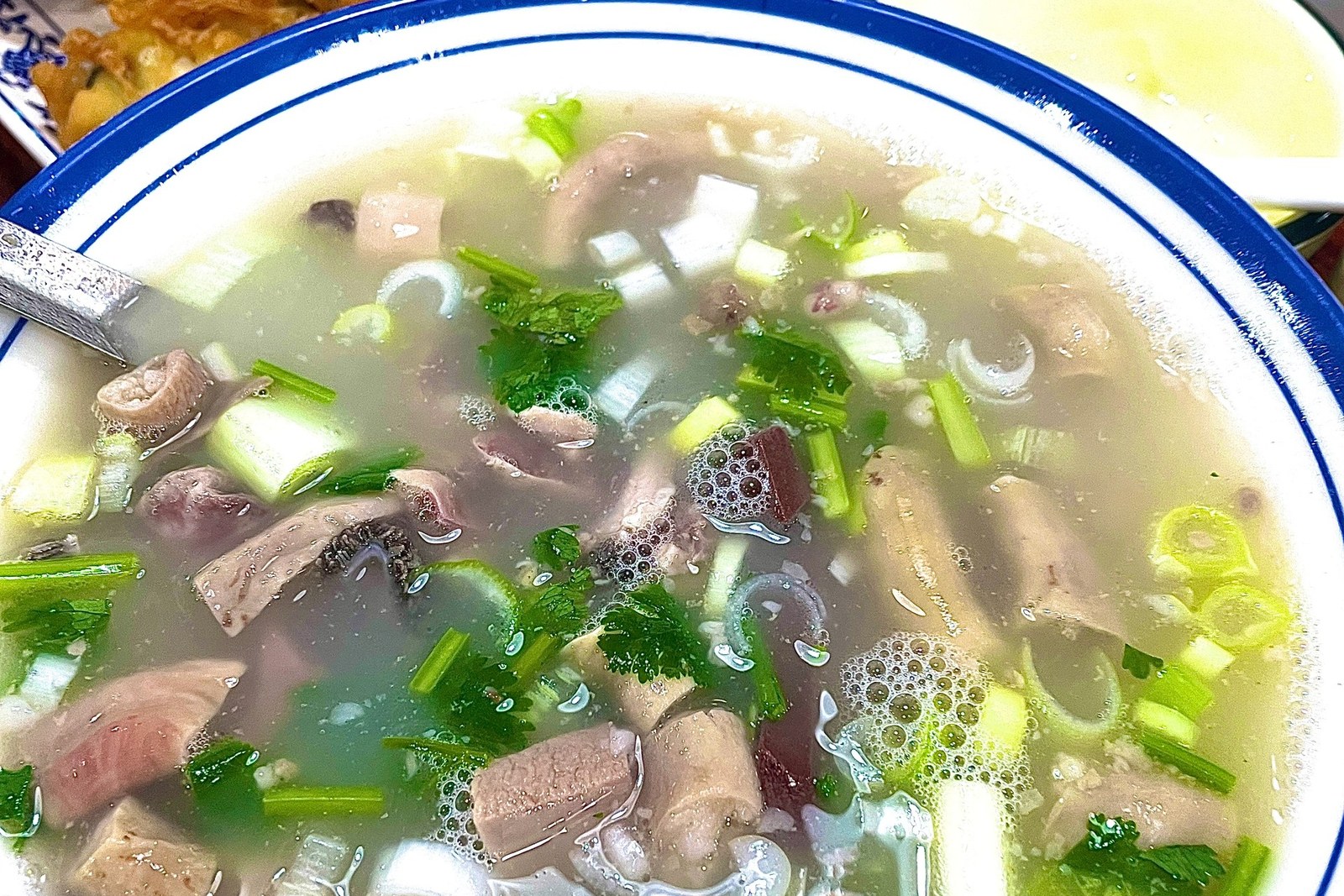
flowcloud would say that the 羊杂汤 yángzà tāng is the old streets’ morning engine and the pepper pot’s frost defence – a broth that answers the corridor’s cold with its own steam – and that the honest move is to eat it at counter height before the second top-up, watch whether the naan holds its crust to the last dunk, and let the morning shift cast the vote, because the pot sets the hour and the frost keeps the queue. All checked November 2026.
Where to find it: 哈密市 Hāmì Shì Hami City, Xinjiang – the breakfast rows around the old city market streets, where the 羊杂汤 yángzà tāng keeps the dawn-pot register through the cold months and the counters and station canteens do the ladling, reached on foot from the central streets before the morning shift turns over (worth confirming the details for which stalls run year-round dawns and which follow the market calendar, counter doors turning over as street kitchens do), where the trade keeps the shift clock – first light the stacked counters, mid-morning the stragglers, second top-up the eater’s own; pocket-change to snack-within-reason money by the bowl, so call it worth confirming the details rather than a fixed number, and let the steam cast the vote. Lamb offal soup is the old streets’ morning bell, eaten one pepper-hot, naan-dunking spoonful at a time – the taste of 哈密市 Hāmì Shì Hami City eaten one counter-height, frost-defying bowl at a time. All checked November 2026.