
The City in a Bowl of Fried Rice: Yangzhou’s Famous Grains
金裹银来粒粒分,一炒炒出世界名 Jīn guǒ yín lái lìlì fēn, yī chǎo chǎo chū shìjiè míng – Gold wraps silver, every grain apart; one stir-fry stir-fries out a world-famous name
正文:扬州炒饭 Yángzhōu Chǎofàn Yangzhou fried rice is the dish that carries the city’s name to every continent – a bowl of rice fried with egg so each grain separates and gilds, tossed with diced ham, shrimp, green pea and scallion in an order that has been written into official craft standards. Its origin story runs through the city’s canal era: boatmen and salt merchants fried yesterday’s rice with whatever the market offered, the Sui-era account of “broken gold rice” – egg wrapping each grain of rice like gold wrapping silver – became the dish’s founding legend, and the Qing gentry’s banquet kitchens codified the garnishes. What defines it is the texture: rice cooked the day before, eggs added in two stages, wok heat high enough that every grain lands loose, and the add-ins cut to rice-grain scale so nothing clumps.
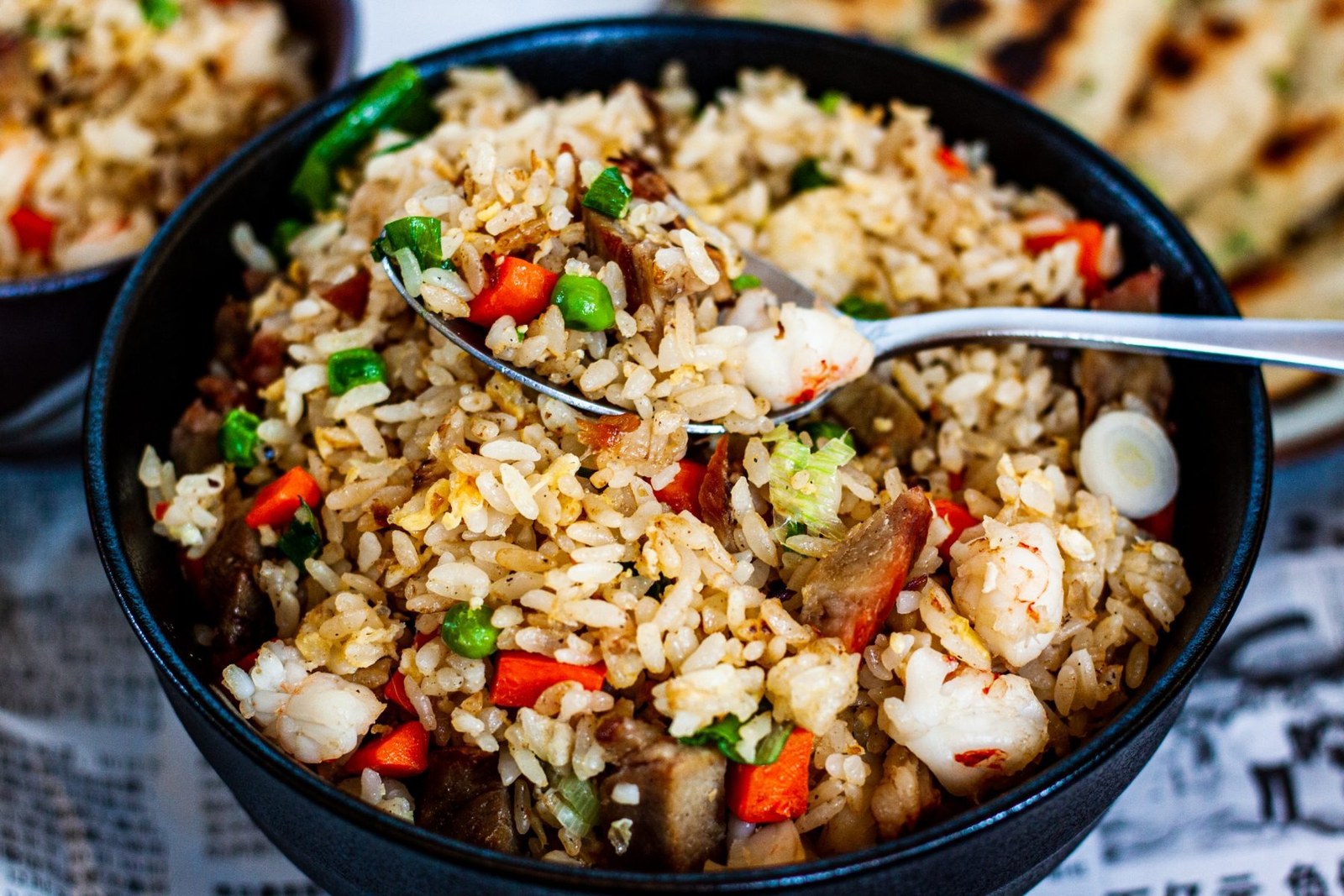
The classic bowl looks simple and eats complex: golden grains, pink shrimp, amber ham, green peas, a scatter of scallion. The first test is visual – every grain stands apart, no egg clump, no wet spot. The second is the chew: dry-tender, each grain carrying egg, the seafood and cured pork alternating through the bite.
The city grades its fried rice seriously. The craft association’s standard lists base ingredients and forbids shortcuts – no frozen mixed vegetables, no soy-sauce-darkened rice in the classic version – and teahouses compete on the wok hand: high toss, fast fold, a finish with stock misted over the grains. Household versions run broader (pickles, chicken, mushrooms), but the restaurant benchmark stays the shrimp-and-ham canon.
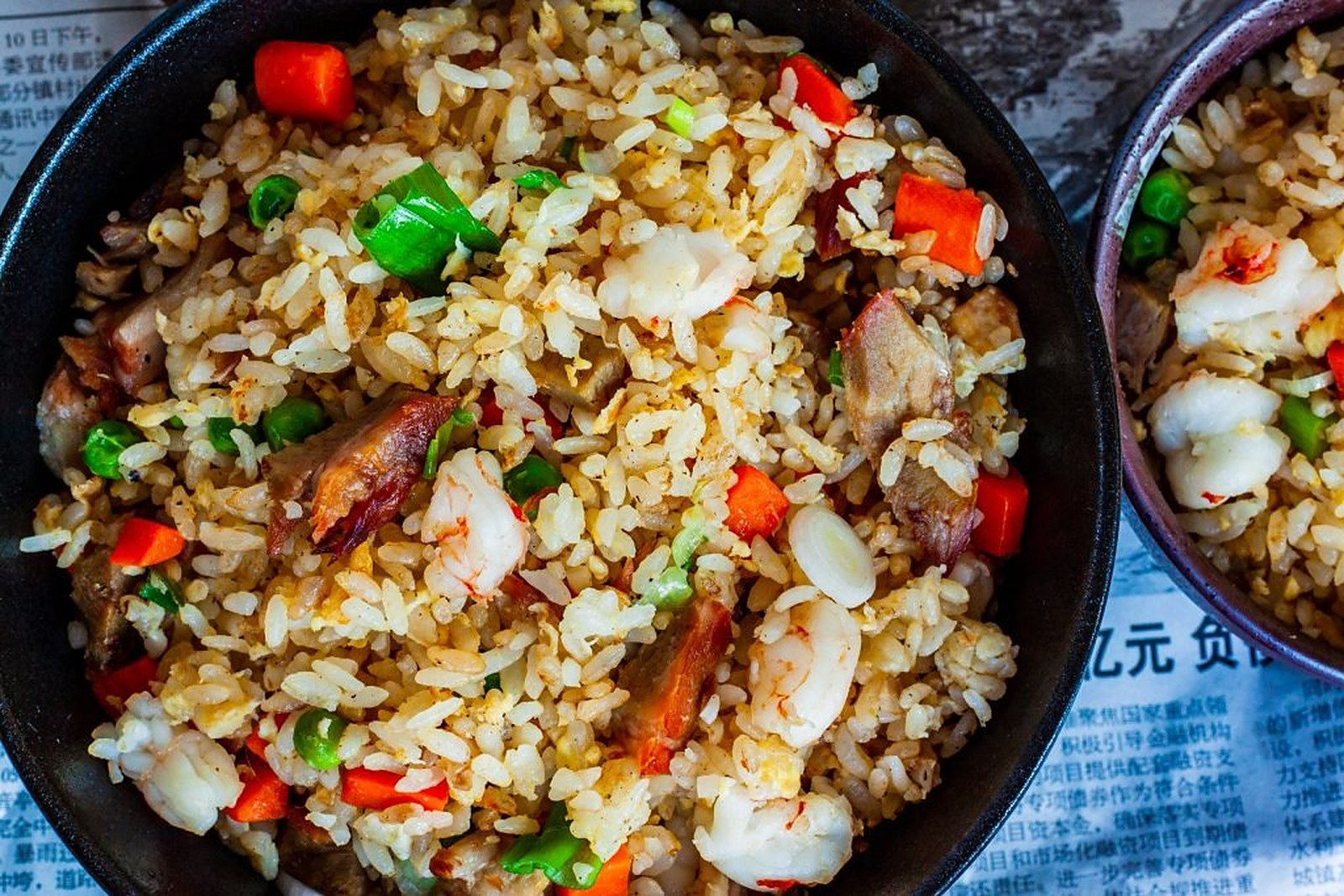
Eating it as the locals do is a lunch discipline: a plate of fried rice, a bowl of dry-clear soup or dried tofu threads on the side, and tea after. The dish appears at every price tier – street woks under ten yuan, teahouse versions with luxury dice – and the best ones share one signature: the plate empties dry, without an oil pool at the bottom.
The same district holds more flavors worth chasing: 蟹粉狮子头 Xièfěn Shīzitóu the crab-meat lion’s head, 大煮干丝 Dàzhǔ Gānsī the braised shredded tofu, 富春三丁包 Fùchūn Sāndīng Bāo the Fuchun three-dice buns, or 扬州老鹅 Yángzhōu Lǎo’é the old goose – four more doors into the same 扬州市 Yángzhōu Shì Yangzhou City table.
Words and Names
What the Locals Know
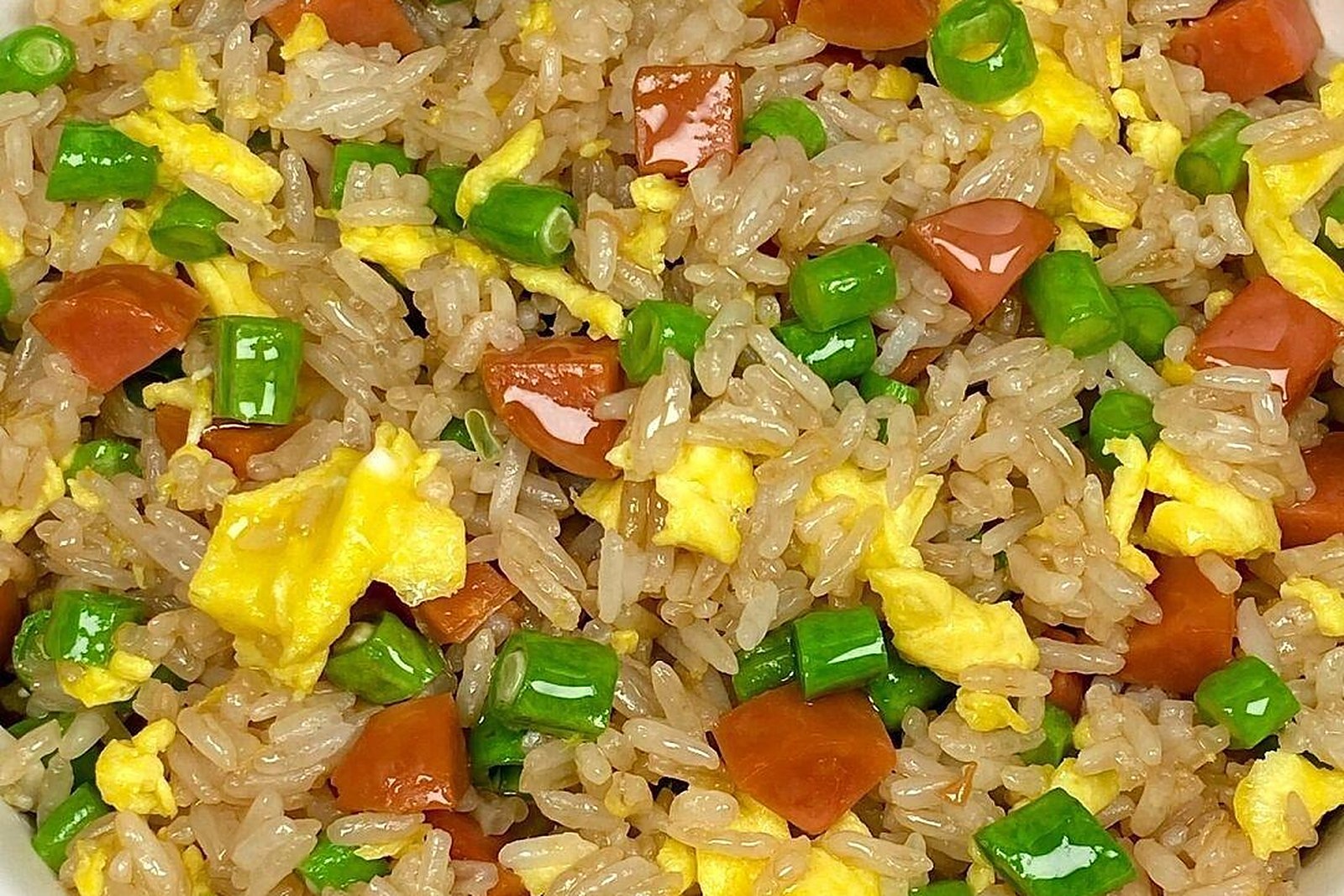
flowcloud would say the fried rice is Yangzhou’s global calling card: gold wrapped on silver, grain by grain, a canal-city pantry handed to the whole world in a wok. All checked November 2026.
Where to find it: Yangzhou fried rice runs the whole city – teahouses and banquet rooms list it from morning tea to late dinner, the craft-standard houses are the safest kitchens, and street woks near the markets do the fastest plates; order the shrimp-and-ham classic, expect pocket change to mid-range pricing, and eat it hot from the wok – the grains seal as they cool. All checked November 2026.