
义渡古镇 Yìdù Gǔzhèn, Yidu Ancient Town, eats two things it has always eaten, and both are the wharf’s rather than a restaurant chain’s. The first is a stone-mill tofu pudding, 豆花 dòuhuā, lifted out in a slab and eaten with a numbing-malab dipping sauce, and the second is the river fish of the old 大渡口 Dàdùkǒu Dadukou wharf – 江团 jiāngtuán longsnout catfish braised, and the 酸菜鱼 suāncàiyú sauerkraut fish that the Yangtze towns all claim. The town was a working ferry crossing and a fishing reach before it was a scenic street, and both dishes are the working river’s, which is why neither has a single shop address, opening hour or price on the record: the food is the town’s, not a counter’s.
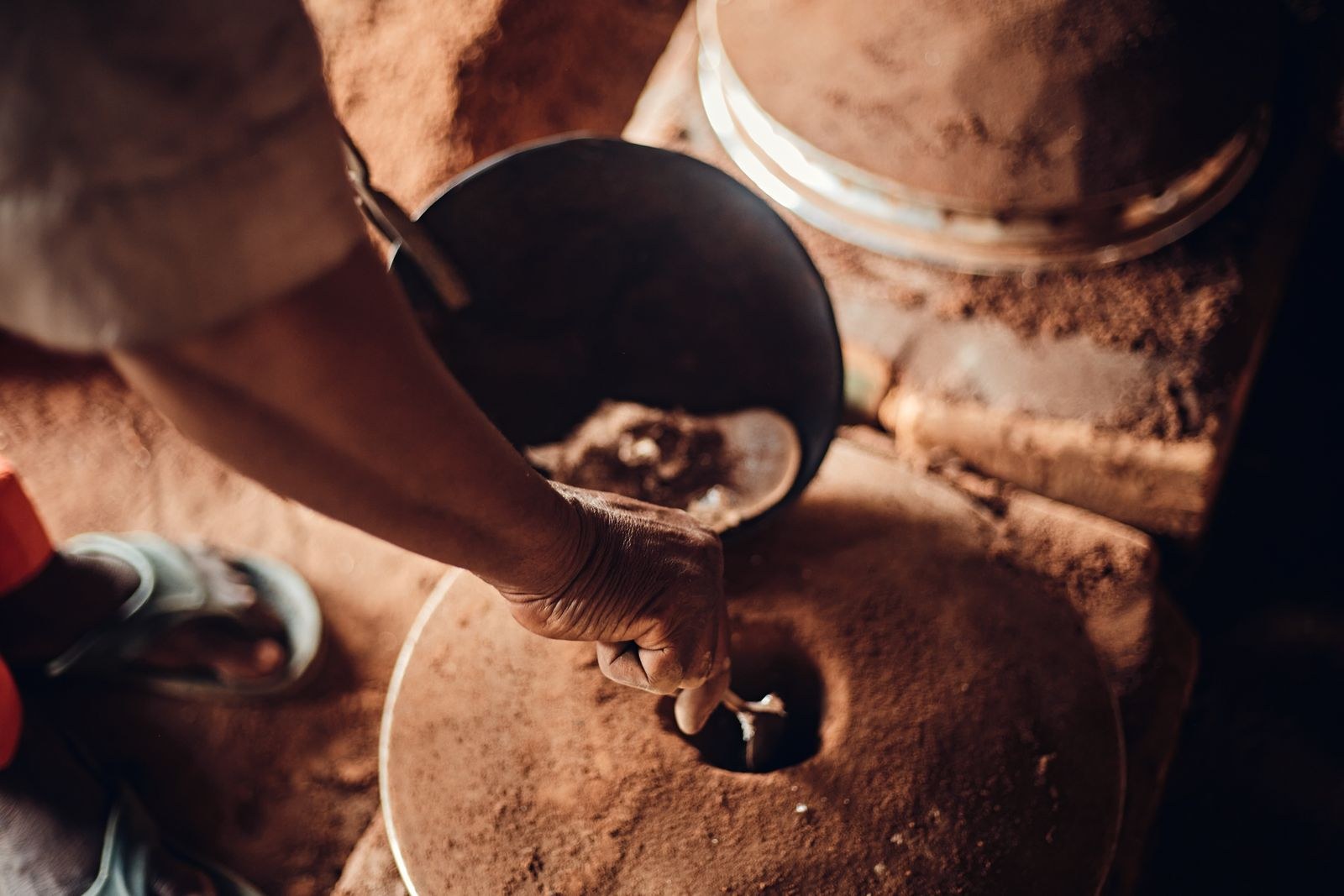
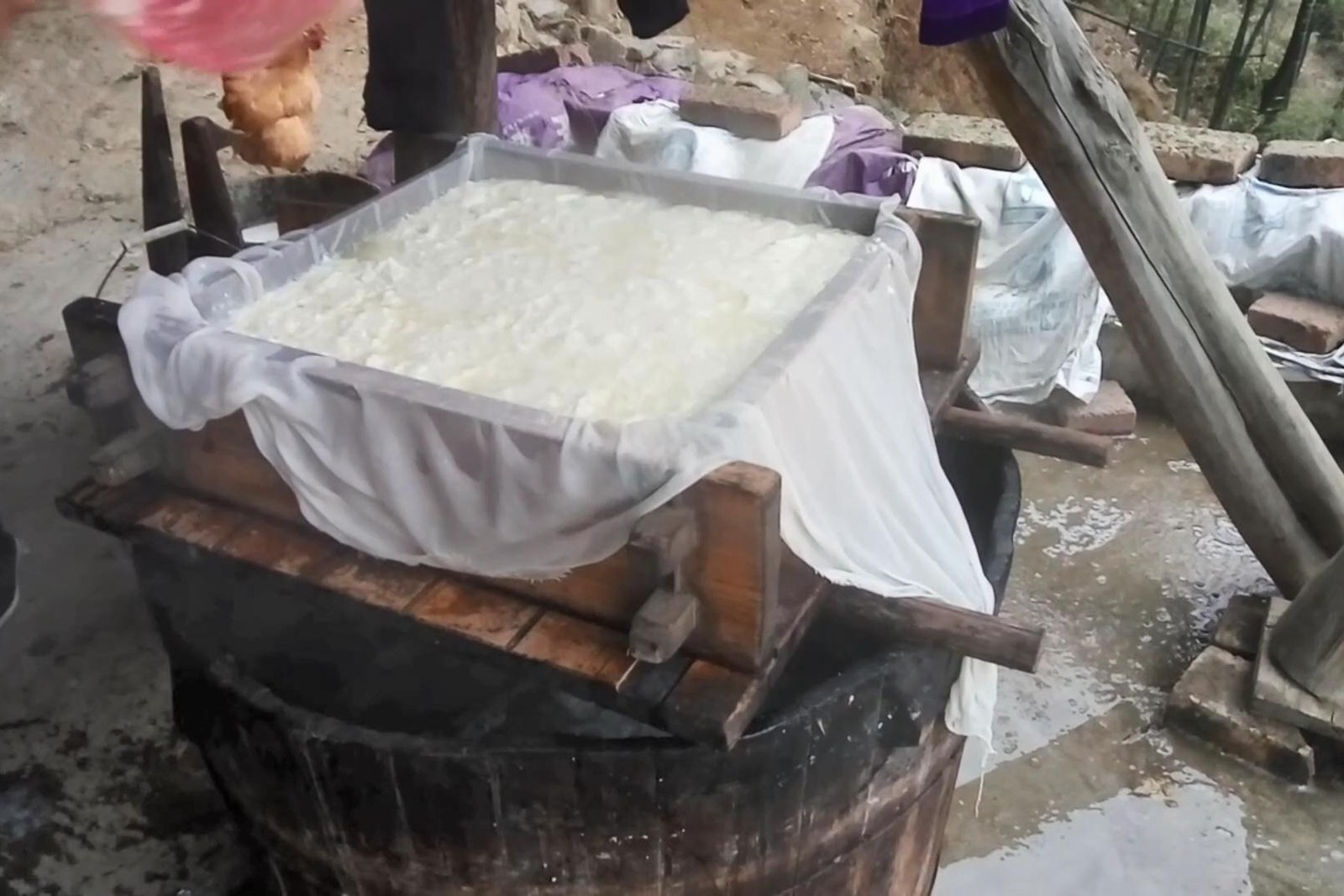
What the customer actually eats at the town is one pot of soybean set to two uses. The 豆花 tofu pudding is made from local soybeans pushed through a stone mill and set with a brine, then lifted out in a slab rather than scooped, so the texture is firm enough to cut and soft enough to tremble, and it is eaten with a dipping sauce built on 花椒 huājiāo Sichuan pepper and 麻辣 málà numbing chilli rather than with a sweet or savoury broth. The numbing-malab sauce is the town’s own leaning: a Chongqing tofu pudding is judged on its 麻 numbness as much as its 辣 heat, and Yidu’s version carries the pepper forward, which is the distinction this page can state without naming a single shop. The stone mill is the point rather than the decoration, because a mill-set pudding is the old wharf’s method, not a powdered mix.
The river fish is the second half, and it is the Yangtze’s rather than the town’s invention. 江团 longsnout catfish, the 鮰鱼 huíyú of the river, is braised whole or in sections with pickled chilli and ginger, and the 酸菜鱼 sauerkraut fish is filleted and finished in a sour broth with pickled mustard green, both of them dishes the upper-Yangtze towns all claim and none of them originautes. Yidu’s wharf was a fishing reach, so the fish on the town’s tables is the river’s catch dressed in the district’s pepper and pickle, and the honest form of the sentence is that the town eats what the wharf caught, not what a chain invented. No single shop publishes an address, an hour or a price for either dish, and this page names the craft and the place rather than a seat.
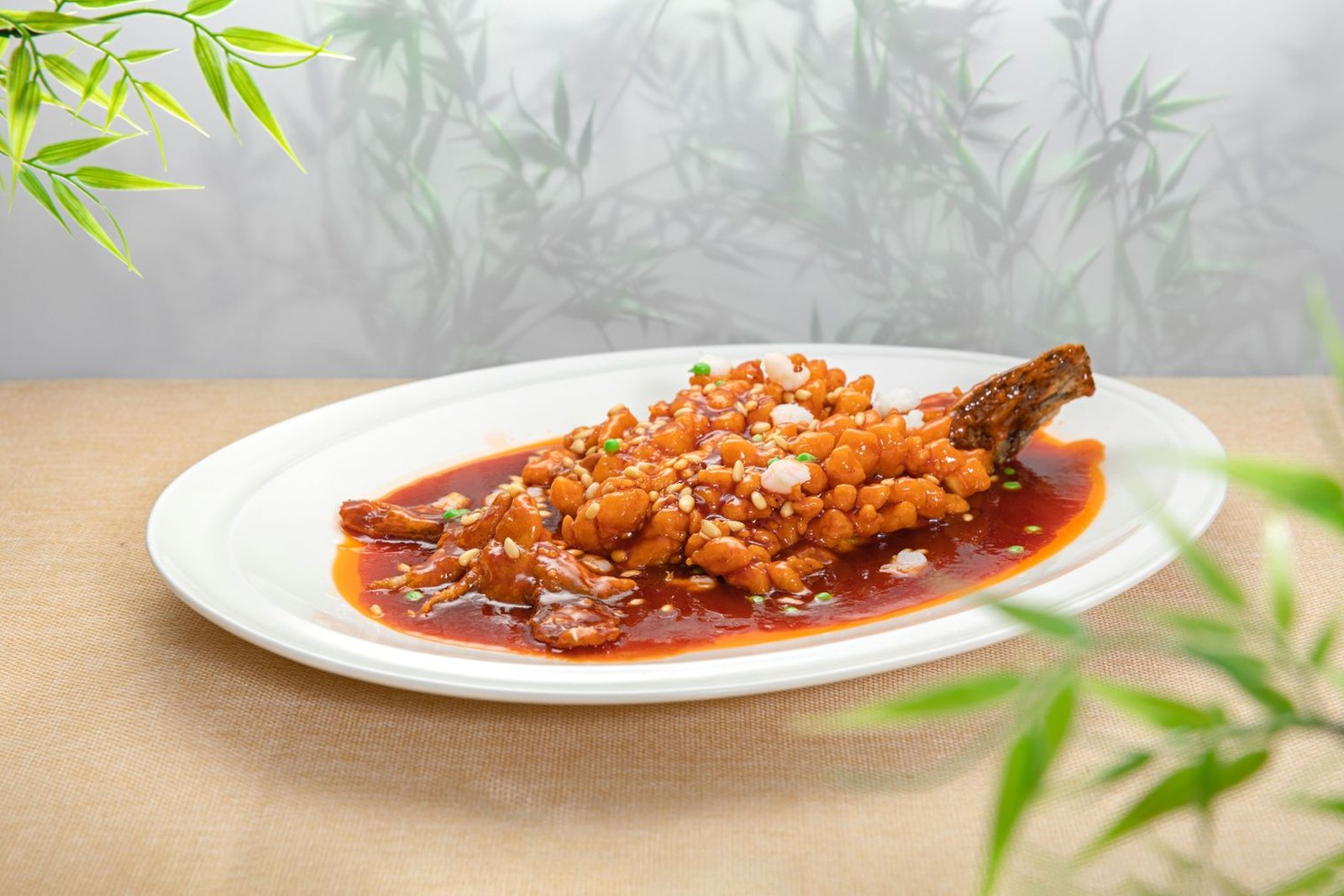
The two dishes share a logic even though one is land and one is river. Both are dressed in the district’s pepper-and-pickle vocabulary rather than in a delicate hand, both are eaten with rice rather than as a standalone, and both are the kind of food a working wharf produces – cheap protein, cooked hard, eaten by the bowl. The town’s rebuild, which opened as 马桑溪古镇 Mǎsāngxī Gǔzhèn Masangxi Ancient Town on 24 January 2017 and took the name 义渡古镇 in 2019, kept the food as the living part of the place, with the 李竹山故居 Lǐ Zhúshān Gùjū Li Zhushan residence and the old supply cooperative as the preserved buildings and the lanes as the place the tofu and the fish are still eaten. The district’s culture-tourism list gives the town a telephone, 023-68533888, for the 2023名录, but no shop on the lanes publishes its own number, hour or price.
What the record does not contain is a named restaurant for either dish, and that absence is the shape of the thing rather than a gap to fill. The tofu is a town craft and the fish is a river catch, and both are eaten along the lanes rather than at a single counter, so the practical answer to where to find them is the town itself on a market day rather than a booking. The honest article is therefore a food-and-place page: the pudding, the sauce, the catfish and the sauerkraut fish, with the wharf as the only address worth naming.
Words and Names
义渡古镇 Yìdù Gǔzhèn, Yidu Ancient Town, eats a stone-mill tofu pudding, 豆花 dòuhuā, local soybeans pushed through a stone mill and set with brine, lifted in a slab and eaten with a numbing-malab dipping sauce built on 花椒 Sichuan pepper and 麻辣 chilli rather than a broth; and the river fish of the old 大渡口 Dadukou wharf – 江团 jiāngtuán longsnout catfish braised with pickled chilli and ginger, and 酸菜鱼 suāncàiyú sauerkraut fish filleted and finished in a sour mustard-green broth. Both are the working Yangtze’s rather than a chain’s: the town was a ferry crossing and a fishing reach before it was a scenic street, opened as 马桑溪古镇 Masangxi on 24 January 2017 and renamed 义渡古镇 in 2019, with the 李竹山故居 Li Zhushan residence and the old supply cooperative preserved. The district culture-tourism list gives the town 023-68533888 for its 2023名录, but no single shop on the lanes publishes an address, hour or price for either dish.
What the Locals Know
The local knowledge about the pudding is about the set and the sauce, and it is the same check a regular makes whatever lane the mill stands on. The pudding should hold an edge when lifted but tremble when pressed, which is the sign of a brine set rather than a powdered one, and the dipping sauce should carry the 麻 numbness forward, because a Yidu sauce that is all red and no tingle has dropped the half of the flavour the town is known for. The second check is the fish: a braised 江团 should come to the spoon in a red-gold gravy that tastes of the river rather than of the powder, and a 酸菜鱼 should be sour before it is hot, because the pickle is the point and the chilli is only the frame. The trade also knows both dishes are eaten with rice and along the lanes rather than at a counter, which is why no shop on the town publishes its own number – the food is the place’s, and a visitor who wants it should come on a market day and eat where the mill is turning, not book a table that does not exist.
flowcloud would say that Yidu Ancient Town eats two things the wharf gave it – a stone-mill tofu pudding set with brine and lifted in a slab, eaten with a numbing-malab sauce of Sichuan pepper and chilli, and the old Dadukou wharf’s river fish, longsnout catfish braised and sauerkraut fish filleted, both dressed in the district’s pepper-and-pickle vocabulary – and that the correct way to treat them is as a town’s food rather than a restaurant’s, because no single shop on the lanes publishes an address, an hour or a price, and the wharf is the only address worth naming. All checked October 2026.
Where to find it: the tofu pudding and the river fish are eaten along the lanes of 义渡古镇 Yidu Ancient Town, the scenic street that opened as 马桑溪古镇 Masangxi on 24 January 2017 and took the name 义渡古镇 in 2019, free to walk all day under the 马桑溪大桥 Masangxi Yangtze Bridge, beside the old 成渝铁路 Chengyu railway and the old wharf; the district culture-tourism list gives the town 023-68533888 for its 2023名录, but no single shop on the lanes publishes its own address, opening hour or price for either dish, so treat the town itself on a market day as the address rather than any counter. The preserved buildings – the 李竹山故居 Li Zhushan residence and the old supply cooperative – are the fixed points, and the food is the living one, eaten where the stone mill is turning rather than booked ahead.