
莺歌海 Yīnggēhǎi, Yinggehai, is the fishing town at the south-western corner of 乐东黎族自治县 Lèdōng Lí Zú Zìzhì Xiàn, Ledong Li Autonomous County, on the Beibu Gulf where the county looks straight across to Vietnam, and it is a place that has made its living from salt and fish for longer than anyone can document. The town gives Hainan two things at once: a first-class fishing port that reopened on 8 January 2024, and the Yinggehai salt field, billed as the largest sea-salt works in southern China and one of the country’s three great salt fields. What a traveller comes for is the cured fish, the parcels the town calls 鱼粽 yúzòng, the shrimp paste, and the wind-dried fillets that hang along the salt-field road.
The harbour’s paperwork is clear even where its history is not. The town’s fishing port is described as having three centuries of history behind it, a line that travels as the town’s own repute rather than as a dated record. What is on the record is the rebuild: the provincial development commission approved the feasibility study in July 2020, work started on 13 July 2021 as part of a provincial free-trade-port project launch, the completed works passed inspection in November 2023, and the port was formally put into use on 8 January 2024. The new harbour cost about 230 million yuan, is planned to land sixty thousand tonnes of fish a year and to berth six hundred boats, and carries an enforcement centre, unloading sheds, a cold chain, sewage treatment and a smart-port system, a working port rather than a fishing pier, and the reason the fish on the quay reaches the town market faster than it used to.
Set the port inside the county’s fisheries and the scale is modest but real. Ledong counts three fishing ports, Yinggehai and Lingtou of the first class and Wanglou of the second, holding more than eleven hundred boats, with sixteen fishing villages, 1,594 fishermen and 747 registered vessels, and a marine catch of 10,721 tonnes in 2023, mostly hairtail, squid, anchovy, shrimp and crab. The county’s 2024 statistical bulletin puts all aquatic output at 20,452 tonnes, up 14.24 per cent, of which the sea provided 19,298 tonnes. Over the harbour sits a plan: the county’s fishing-port economic zone, drawn for 2023 to 2030 and costed at about 24.7 billion yuan, with two marine pastures, three ports and eleven parks and bases. Beside the port lies the salt: the Yinggehai salt field, built and put into production in 1958, spreads over about 3,793 hectares, of which some 2,980 are working pans, and turns out a quarter of a million tonnes of salt a year. Salt and fish share one stretch of coast, which is the whole logic of the town.
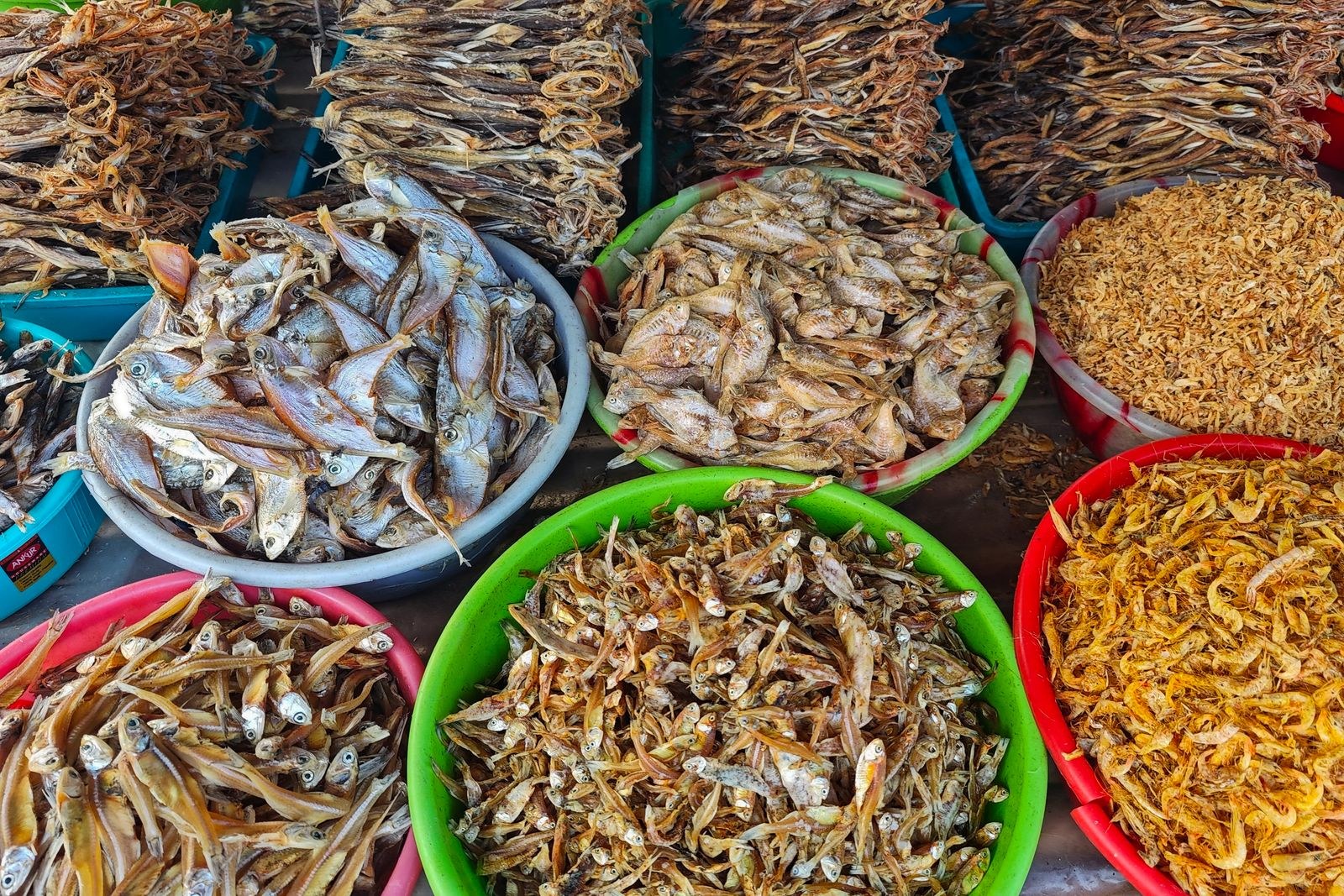
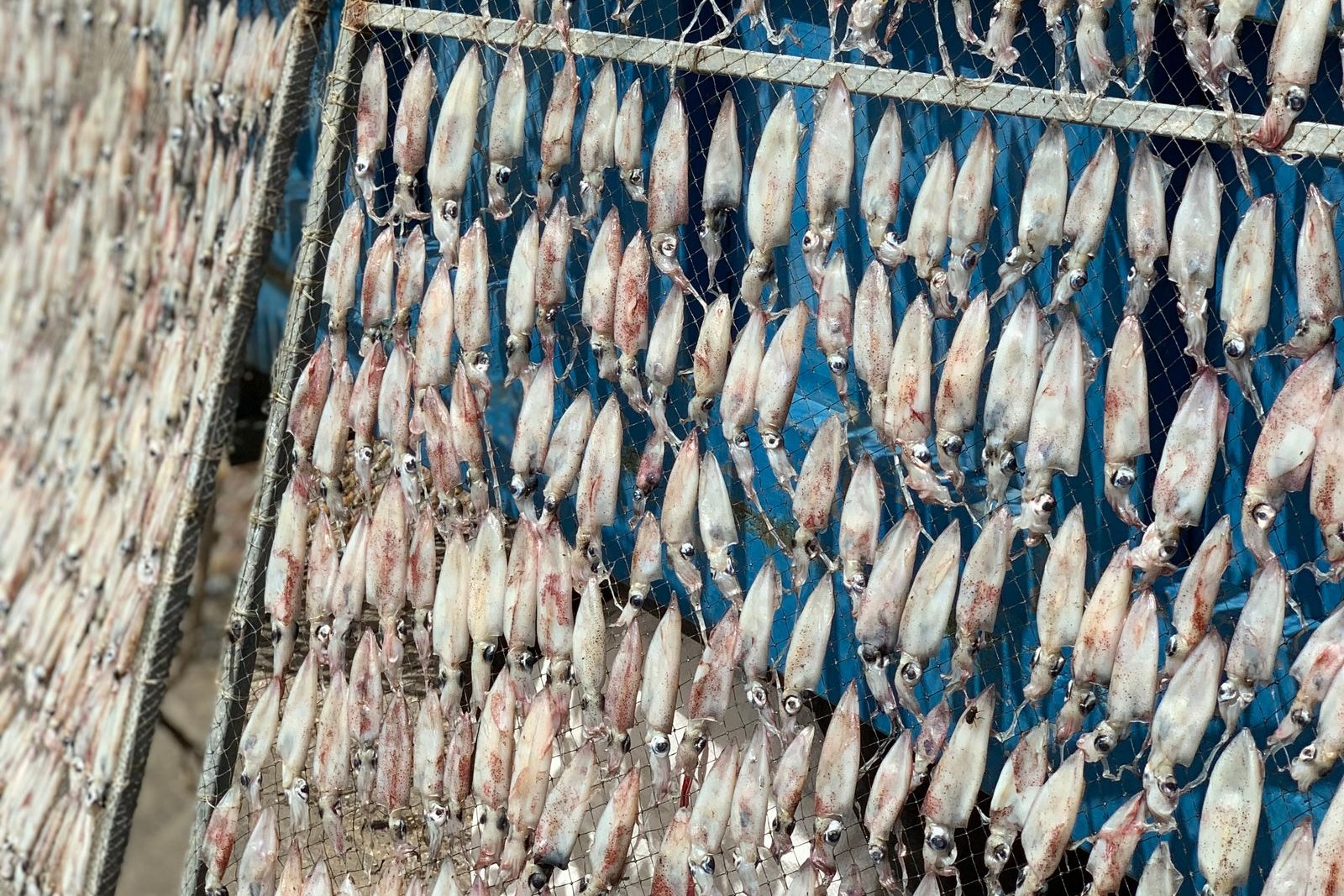
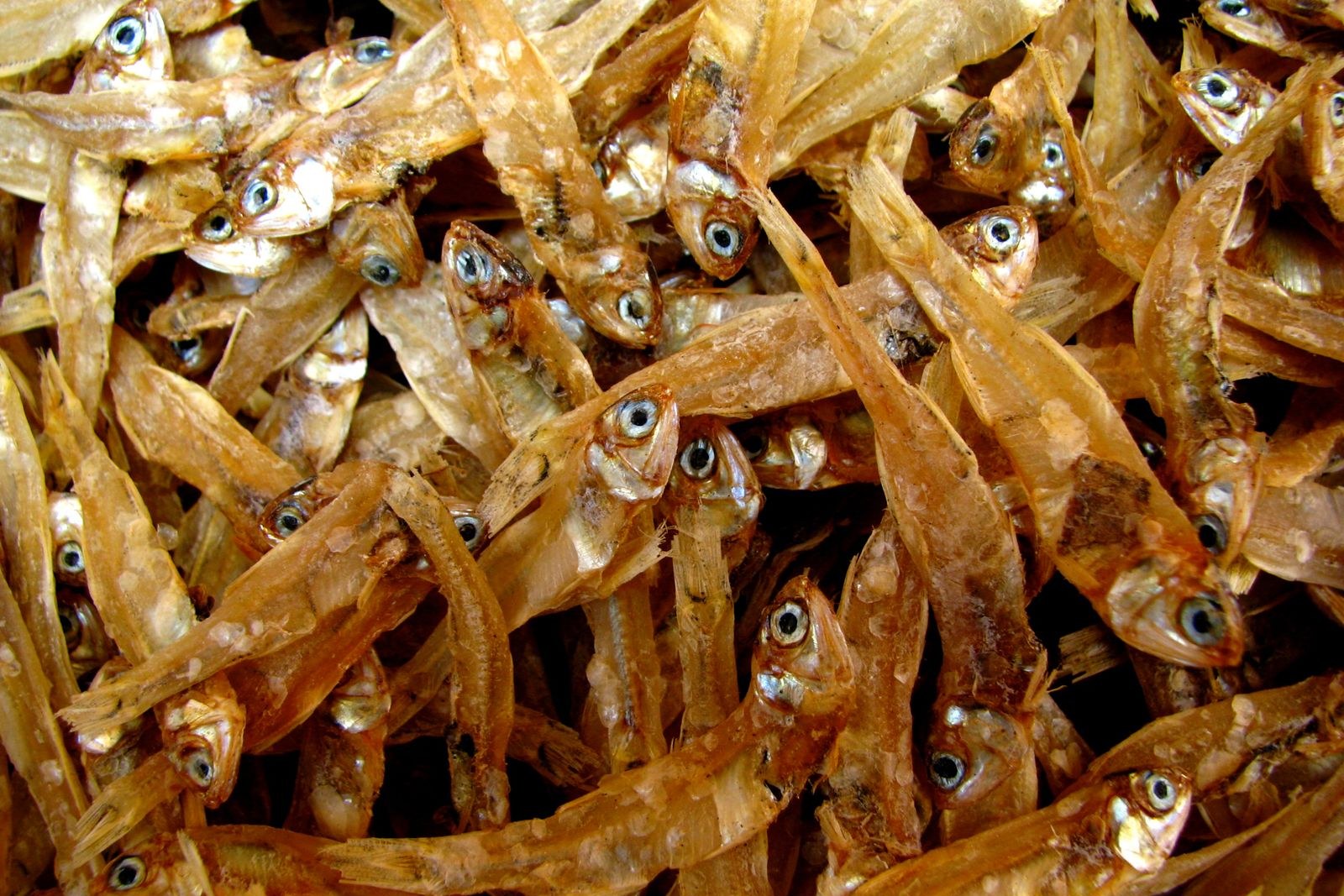
The cured fish is what the town is known for, and it is a family of things rather than one. The best known is the fish parcel, 鱼粽 yúzòng, which is fresh sea fish packed in coarse salt until it cures and then wind-dried; to carry it, the fish is wrapped in film and newspaper and tied into the shape of a long, thick zongzi, which is where the name comes from, and the two most famous are the red-fish parcel and the Spanish-mackerel parcel. The parcels are simmered with cubes of pork belly and eaten with rice once the long cooking has pulled the savour out. The town also makes 虾酱 xiā jiàng, fermented shrimp paste, sold in jars at the market and used as a seasoning rather than a dish, and a third product, the plain wind-dried fish, which the fishermen lay out in the sun to dry the way the first frame on this page shows it. The fish-parcel craft is shared with other fishing coasts of the island, so this text describes it only in general terms and keeps the place to Yinggehai, because no source consulted pins the town’s own recipe to a date or a school.
On the table the port cooks its catch simply. The dishes the town’s own account lists are a tamarind-braised tonguefish, white-cut prawns, a crisp-fried pomfret and a soup of sour gherkin with a local mackerel, all of them built on what came off the boats that morning rather than on anything in a pantry. The fish themselves are the ones the county’s catch list names, pomfret, grouper, hairtail and cuttlefish among them, plus the mackerel that goes into the parcels. The town keeps its fishing culture too: there is a tide-and-current lore, underwater piling and cutting, and rites for the boats, the sea god and Mazu, and after the summer fishing moratorium lifts the town stages an opening-of-the-season festival, which is the best moment to eat fish that has been out of the water for hours. What the record refuses is any official production or price figure for the cured fish and shrimp paste, which no authoritative source gives; a 2025 quayside snapshot found fresh fish at roughly ten to twenty yuan a jin, carried here with its year because it floats.
Words and Names
莺歌海 Yīnggēhǎi is the town, a name already recorded in the Qing-era 崖州志 Yázhōu Zhì, the Yazhou gazetteer, and said to come from the yingge birds that once roosted on its wooded sand ridges. 鱼粽 yúzòng is the salt-cured fish parcel, 红鱼粽 hóngyú zòng the red-fish version and 马鲛鱼粽 mǎjiāoyú zòng the Spanish-mackerel one, and 虾酱 xiā jiàng is the shrimp paste. 酸豆酱闷龙舌鱼 suāndòujiàng mèn lóngshéyú, tamarind-braised tonguefish, is the town dish named here once. The site’s salt-field page covers the pans and the fishing-port pages elsewhere keep their own coasts; this page keeps the cured fish of one harbour.
What the Locals Know
The market is the place to buy and the quay is the place to see. Fish comes ashore at the Yinggehai port and is sold straight off the quay and at the town market, and the cured parcels, the shrimp paste and the dried fillets are laid out beside it; the town’s main street holds a handful of inns and restaurants, so the harbour and the table are a short walk apart. The salt field is the other half of the visit: it is a working industrial landscape rather than a park, and since the island scenic highway ran through it the 莺歌踏浪驿站 Yīnggē Tàlàng Yìzhàn rest stop has looked straight down the pans, with the salt-field page on this site covering the details.
Time the trip to the boats. The summer fishing moratorium on the South China Sea lifts in mid-August, and the town marks it with an opening-of-the-season festival on the waterfront, which is when the quay is busiest and the fish is freshest. The sensible west-coast day is the salt pans in the morning, the harbour and the cured-fish stalls before noon, and a lunch of prawns and tonguefish in the town. What the record refuses, once more and plainly: any official output or price for the cured products, any claim that the town invented the fish parcel, which other Hainan coasts also make, and any geographical-indication protection for Yinggehai salt, which does not exist.
flowcloud would say that Yinggehai is a salt-and-fish town at Hainan’s south-western corner, its harbour rebuilt and reopened on 8 January 2024 with a first-class berth, its salt field one of the country’s three great works, and its cured fish sold as salted fish parcels, fermented shrimp paste and wind-dried fillets along the road to the pans.
Where to find it: the 莺歌海一级渔港 Yīnggēhǎi yījí yúgǎng first-class fishing port and the town market of 莺歌海镇 Yīnggēhǎi Zhèn Yinggehai, plus the salt-field road and the 莺歌踏浪驿站 Yīnggē Tàlàng Yìzhàn rest stop on the island scenic highway, in 乐东黎族自治县 Lèdōng Lí Zú Zìzhì Xiàn Ledong Li Autonomous County, Hainan; cured fish, shrimp paste and dried fillets are bought at the market and the quay rather than shipped, the day’s fish runs about ten to twenty yuan a jin on a 2025 snapshot, and the best week of the year is just after the mid-August end of the moratorium.