
永川豆干 Yǒngchuān dòugān, Yongchuan dried tofu, is the district’s most portable fame – a snack that fits in a coat pocket: small squares of fermented soybean curd pressed flat and sun-dried until the outer skin toughens and wrinkles, then sold vacuum-sealed in bags or grilled to order on charcoal skewers. The craft goes back decades, rooted in the district’s long tradition of preserving foods for the road. At the snack stands along the main roads the stacks of dried tofu turn slowly over open flame until the skins blister and split, releasing a smoky, salty fragrance that pulls passersby in off the street. This is the first page a Yongchuan food reader should read, because everything else in the district’s larder assumes you have tasted the thing that travels.
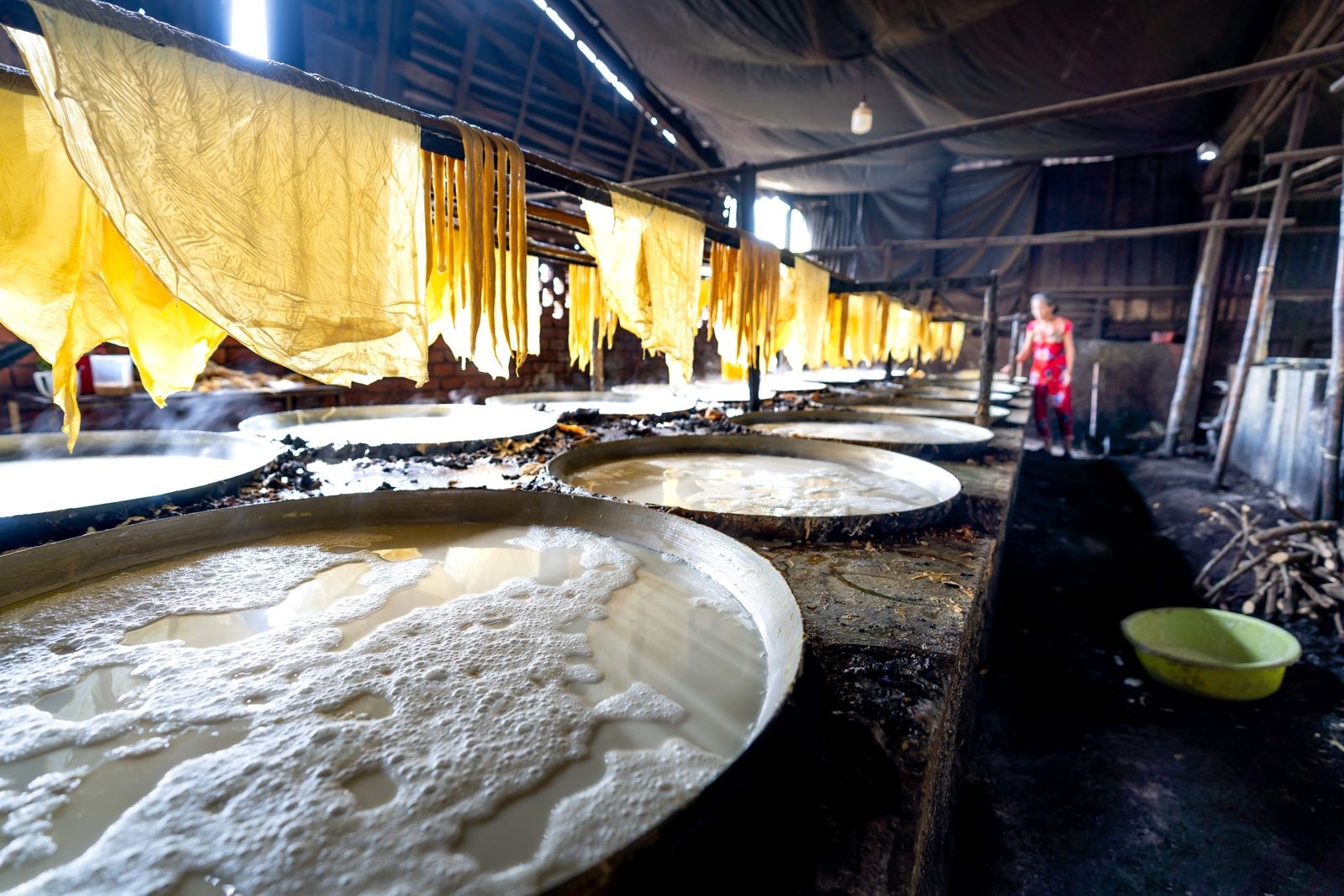
The making is the argument. Fresh curd is fermented until it carries a sour, bean-deep note, then pressed flat into thin squares and laid out to dry in the sun until the surface skins over and the edges curl – a step that locks the shape and keeps the squares from crumbling on a skewer. The drying is slow on purpose: a square that dries too fast cracks, and a square that dries too slow sours, so the makers read the weather the way a baker reads an oven. Once dried, the tofu keeps for the journey, which is exactly why it became the road snack of the district rather than a fresh-market item – you could carry a bag from the district seat to the next town and still have something to chew at the end of it, the skin intact and the chew unchanged.
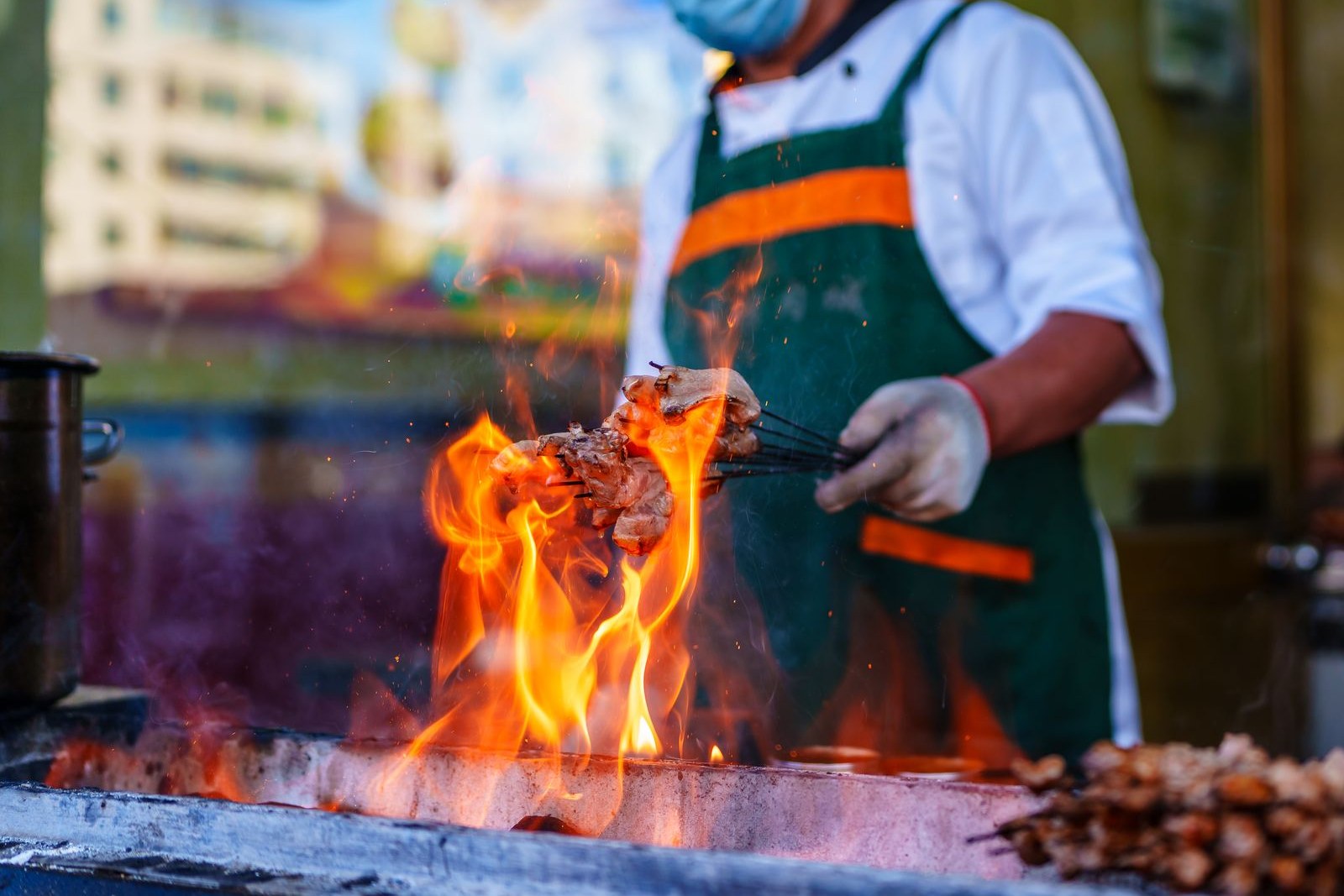
The grilling is where the snack becomes a street performance. The dried squares are threaded onto skewers and held over charcoal, turned by hand so the skins blister and split and the inside stays chewy, then brushed with chili oil and dusted with ground Sichuan peppercorn so the smoke and the spice meet on the same surface. A stand that does this well works a rhythm – load, turn, brush, pass – and the regulars queue by the smell rather than by a menu, because the fragrance is the only signboard the trade needs. The snack is eaten standing, hot off the grill, and a bag of the vacuum-sealed kind goes home in a pocket as the proof of the visit.
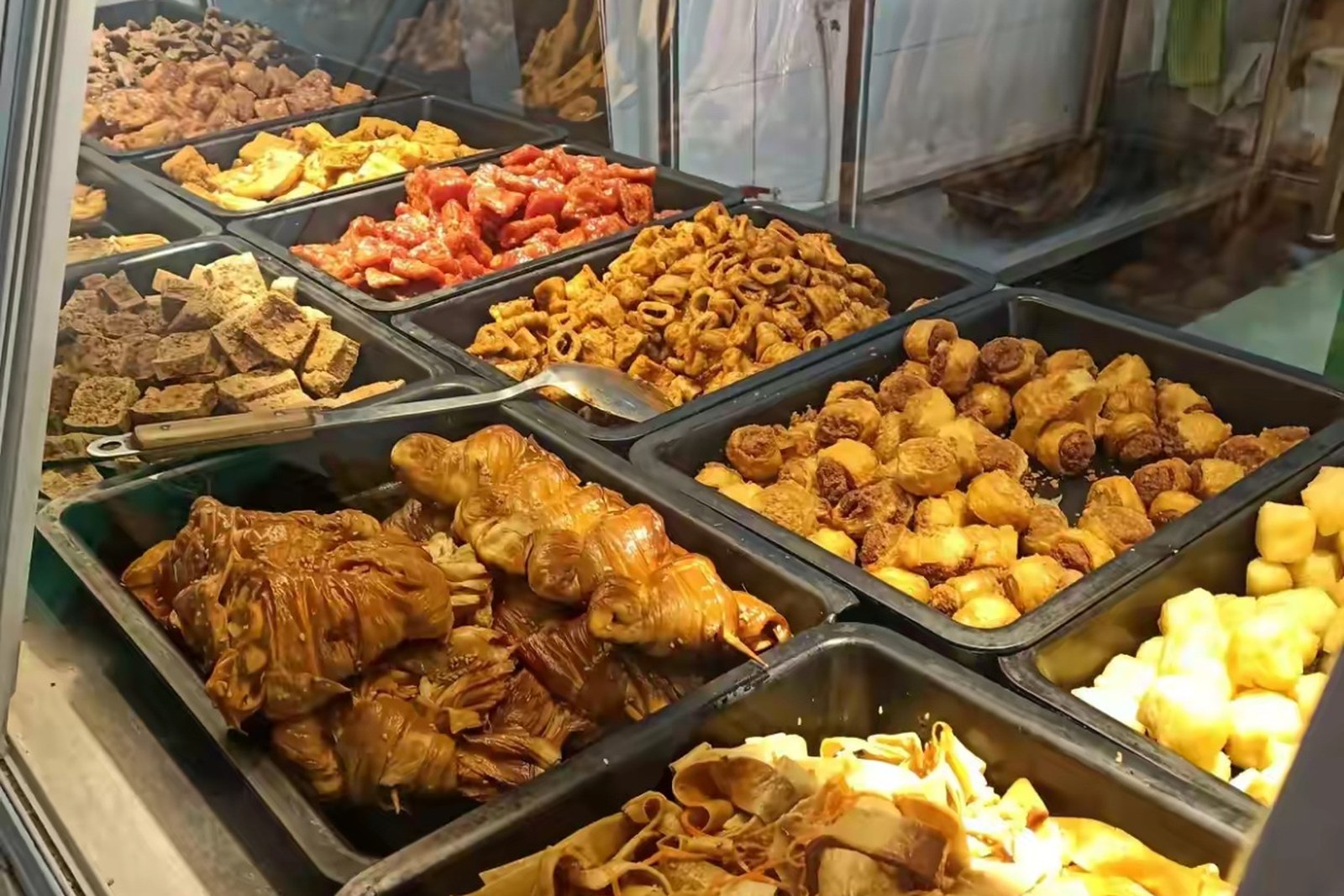
What the record supports and what it does not is worth stating plainly, because a preserved snack with decades behind it is exactly the kind of subject that collects invented detail. The record consulted – the plan’s own facts – names the fermented, pressed, sun-dried squares, the vacuum-sealed bag and the charcoal-skewer format, the cellar-fermented curd of the best makers, the main-road stands and the chili-oil-and-peppercorn finish; it does not name a founding house, a founding year, a posted price or a single shop address, and none is invented here. The honest page reports a district-wide snack format rather than one famous stall, and dates the category to its era – decades – rather than to a year.
What the visitor does is buy where the coals are and carry the bag home. The stands along the main roads fire-grill stacks of the dried tofu until the skins blister, and the square that comes off the coals hot is the argument for eating at the source; the vacuum-sealed bag is the travelling version, the one to tuck into a pocket for the journey back. Try one hot with the peppercorn dust and one from the bag cold, because the texture is the whole point – smoky and chewy off the grill, dense and salty from the packet. All checked October 2026.
Words and Names
永川豆干 Yǒngchuān dòugān, Yongchuan dried tofu, the district’s most portable snack: small squares of fermented soybean curd pressed flat and sun-dried until the outer skin toughens and wrinkles, then sold vacuum-sealed in bags or grilled to order on charcoal skewers and brushed with chili oil and ground Sichuan peppercorn. The craft goes back decades, rooted in the district’s tradition of preserving foods for the road, and the best makers still ferment their curd in earthen jars buried in the cellar through winter. No founding house, founding year, posted price or shop address is on the public record consulted, and none is invented here.
What the Locals Know
The local knowledge is the skin, not the brand. A square is ready when the dried surface blisters and splits over the coals and the inside stays chewy – which is why locals buy from stands that grill in view rather than from pre-sealed bags alone. The second thing locals know is the finish: chili oil for the shine and ground peppercorn for the numbing note, a skew too heavy on either meaning the maker does not trust the bean. The cellar-fermented curd of the old makers carries a sour depth the quick version lacks, and that is the cut connoisseurs ask for by reputation rather than by name. What the record does not carry is any ranking of stands, and the page declines to make one – the queue at the coals is the review.
flowcloud would say that Yongchuan dried tofu is the district’s travelling snack – small squares of fermented soybean curd pressed flat and sun-dried until the skin toughens, then grilled on charcoal skewers and brushed with chili oil and Sichuan peppercorn, the craft going back decades to the district’s road-preserving tradition – and that the honest page reports a district-wide snack format rather than any famous stall, with no founding house, year or price on the record and none invented. All checked October 2026.
Where to find it: the fire-grill stands run along the main roads of 永川区 Yǒngchuān Qū, Yongchuan District, and the vacuum-sealed bags turn up wherever the district’s travellers gather to go home; no specific stand address, posted price or founding year is on the public record consulted, and the stand whose coals you can smell is the practical guide. The square is eaten hot off the skewer or carried home in its bag. Pair this page with the Songgai nine-bowl page for the district’s communal table, and with the district-seat hotel page for the base the bags run home from.