
You Tazi: The Layered Oil Tower of the Tea Table, the Hundred-Flake Pull and the Hui Kitchen’s Steamed Architecture in Hami, Xinjiang
面卷千层塔自开,一撕一线落雪来。
面卷千层塔自开,一撕一线落雪来。Miàn juǎn qiāncéng tǎ zì kāi, yī sī yī xiàn luò xuě lái – The dough rolled in a thousand layers opens by itself; one pull draws a thread of falling snow.
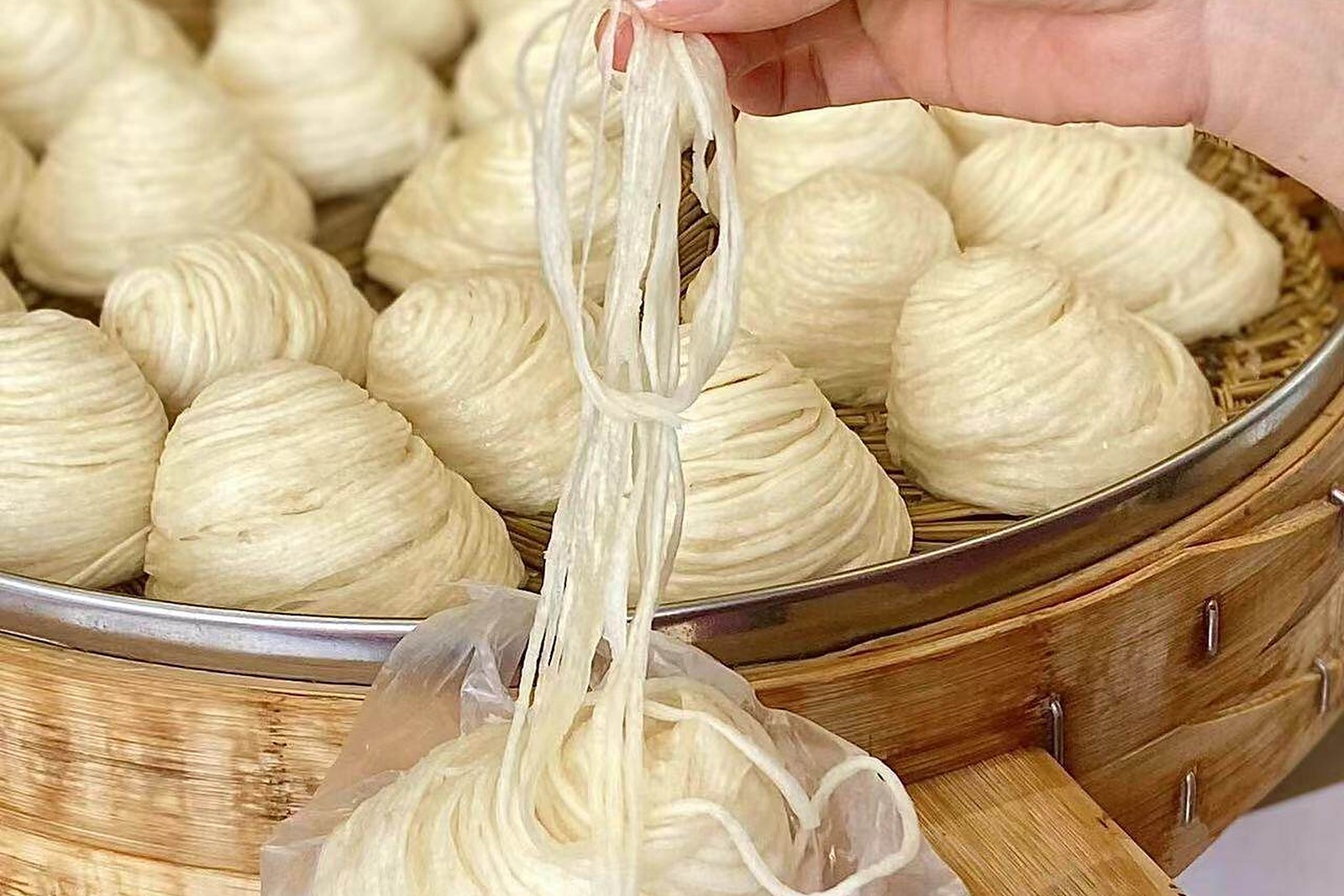
油塔子 yóutǎzi the oil tower pastry is the steamer’s architecture lesson – thin dough brushed with hot oil and rolled into a tower that steams into flaking, thread-pulling layers, served warm beside a bowl of 粉汤 fěntāng vermicelli soup or a pot of tea (worth confirming the details for the pastry-soup pairing, since the classic counters sell the two as one set and the pairing is the point). The craft is in the pull: a proper 油塔子 comes apart in threads rather than torn chunks, each layer oiled separately during the roll so the tower opens like flaking paint rather than bread. Hami’s Hui kitchens keep the tradition in the morning markets and the family tables, where the towers steam in stacks for holidays. The register is steamed geometry: flour, oil and patience arranged in a cone that refuses to be eaten quietly.
Call it honestly: steamer money on a morning clock. Getting there is one door: the morning market rows around the old city sell the towers off the stack (worth confirming the details for the steamer rounds, which the busiest counters run twice daily), and the soup counters pair them with the vermicelli bowls as the set. A single tower prices at pocket-change money, a tower-and-soup set at snack-within-reason money, a holiday stack ordered ahead at family money – though exact figures are worth confirming the details on rather than quoting, the steamers repricing rarely. The crowds run to the round: the first steamer of the morning stacks the queue, the late-morning lull hands the counter to the regulars, and the moment the lid comes off a fresh tower – layers still steaming apart – is the eater’s own.
The honest star is the layer separation: oil between every turn, a roll tight enough to steam into flakes, and a pull that draws threads instead of tearing. What gets oversold is the “fried dough” misreading: guides file it under pastry where the kitchen files it under craft, because nothing is deep-fried – the tower is steamed, and its lightness is the whole skill. What repays is the pairing arithmetic: the oily flake against the peppered soup, or against plain tea, each bite calibrating the other (worth confirming the details for which counters hand-roll daily and which reheat, since the pull test separates them immediately).
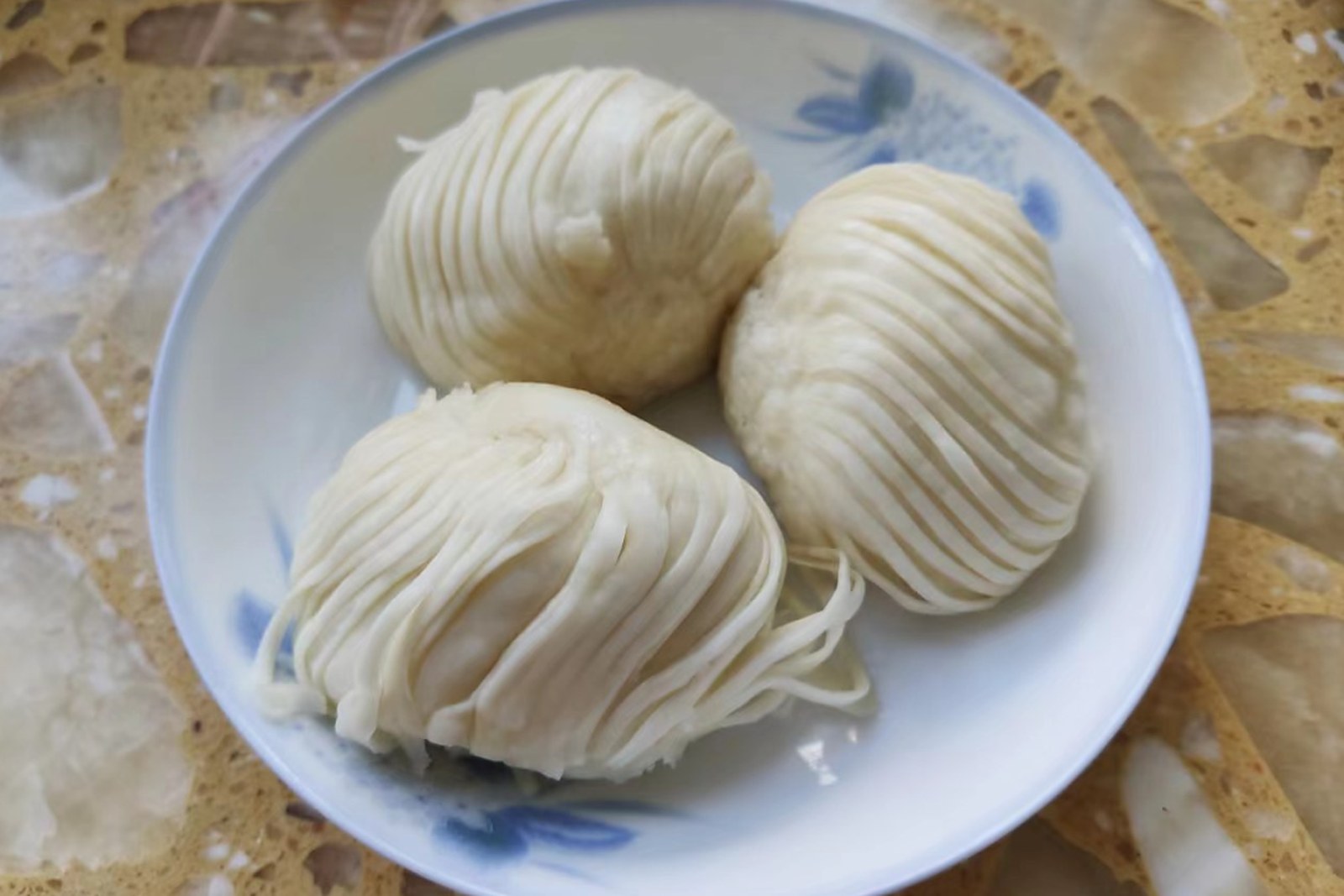
The town’s deepest habit is the set itself: tower and soup ordered together, the tower pulled apart across the soup bowl so the flakes land in the broth – a breakfast eaten as construction work, one deliberate layer at a time.
The rest of this Hami list keeps other tables: the bin sweetness of 哈密大枣 Hāmì dàzǎo the red dates fills the pantry, the salt-and-lamb honesty of 手抓羊肉 shǒuzhuā yángròu the hand-grabbed mutton fills the noon, the breakfast steam of 羊杂汤 yángzà tāng the offal soup opens the day and the fiery sauce of 新疆炒米粉 Xīnjiāng chǎomǐfěn the stir-fried rice noodles owns the student hours – four more doors into the same 哈密市 Hāmì Shì Hami City.
Words and Names
What the Locals Know
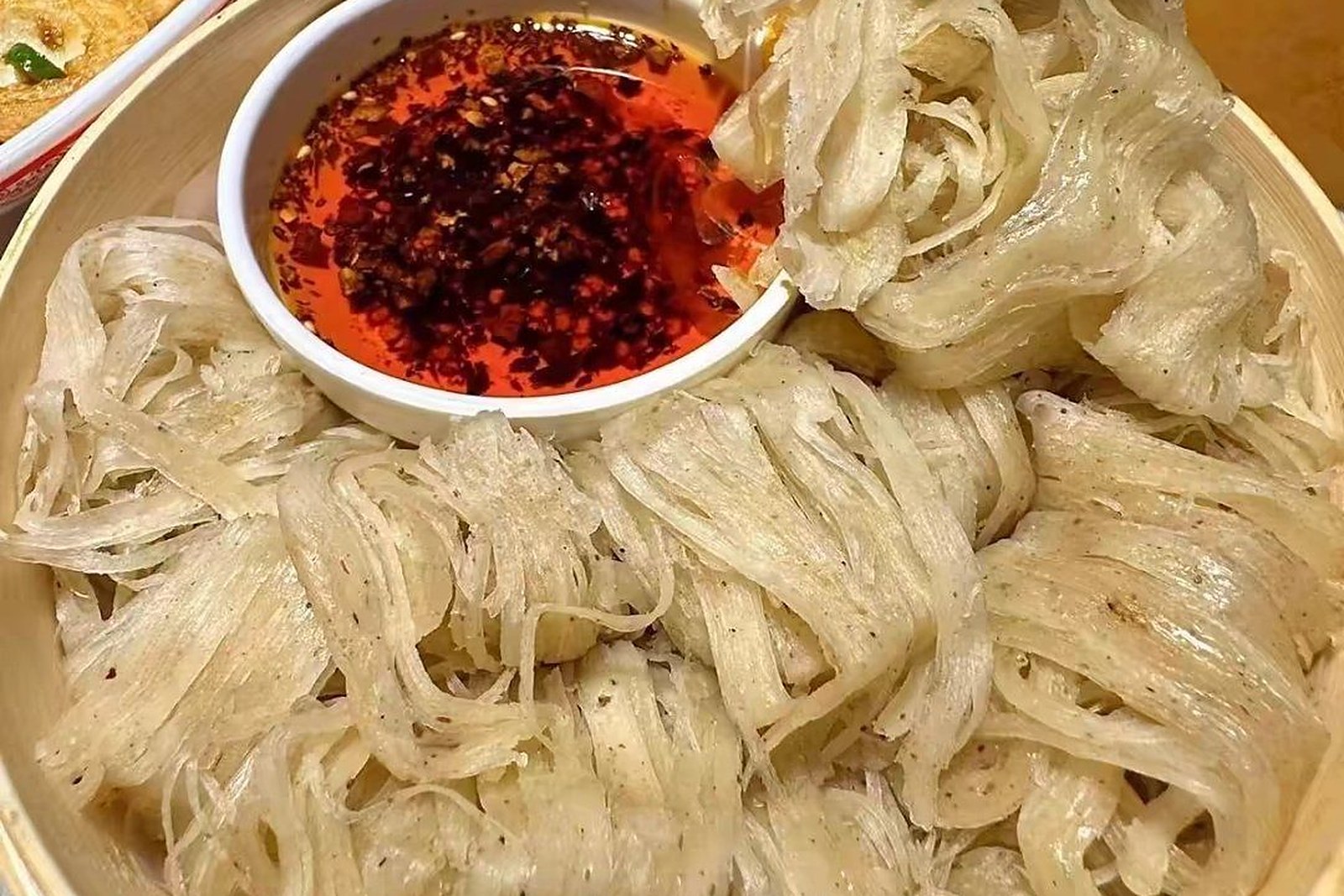
flowcloud would say that the 油塔子 yóutǎzi is the steamer’s quiet architecture and the tea table’s patient craft – a flaking tower that answers the fryer with a steam vent – and that the honest move is to order the soup set, watch whether the pull draws threads or tears, and let the soup-bowl flakes cast the vote, because the oil built the layers and the steam opened them. All checked November 2026.
Where to find it: 哈密市 Hāmì Shì Hami City, Xinjiang – the morning market rows around the old city, where the 油塔子 yóutǎzi keeps the steamer-stack register through the week and the market counters and soup shops do the pairing, reached on foot from the central streets before the morning round sells through (worth confirming the details for which counters hand-roll daily and which pair with the soup shops next door, steamer doors turning over as market kitchens do), where the trade keeps the round clock – first steamer the stacked queue, late morning the regulars, fresh-lid minutes the eater’s own; pocket-change to snack-within-reason money by the set, so call it worth confirming the details rather than a fixed number, and let the pull test cast the vote. You tazi is the steamer’s flaking tower, eaten one oiled, thread-drawing layer at a time – the taste of 哈密市 Hāmì Shì Hami City eaten one soup-side, steam-warm pull at a time. All checked November 2026.