
The vegetable is a stem you have to peel, and it is the reason a section of the lake has a spring. 沅江市 Yuánjiāng Shì sits on the southern shore of 洞庭湖 Dòngtíng Hú on land that was, within living memory, mostly water and is now a grid of drained fields, and one of those fields grows 芦笋 lúsǔn — the stem of the plant the rest of the world calls asparagus lettuce, celtuce or stem lettuce, and which Chinese cooks call a vegetable rather than a lettuce. What 沅江 does is grow it in industrial quantity on the reclaimed ground and sell it as 沅江芦笋 Yuánjiāng lúsǔn, a name that means something in Hunan the way a protected regional brand does anywhere else.
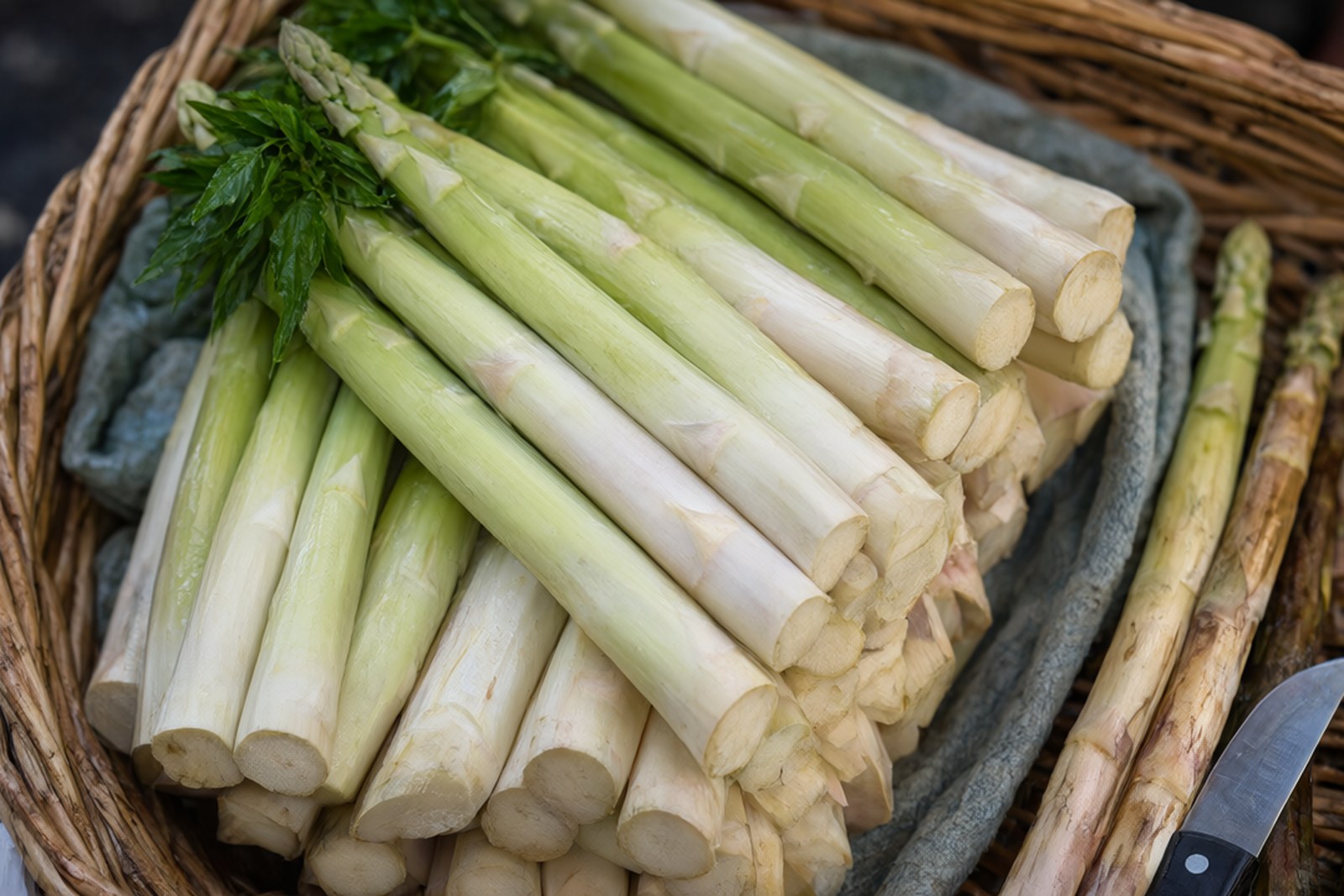
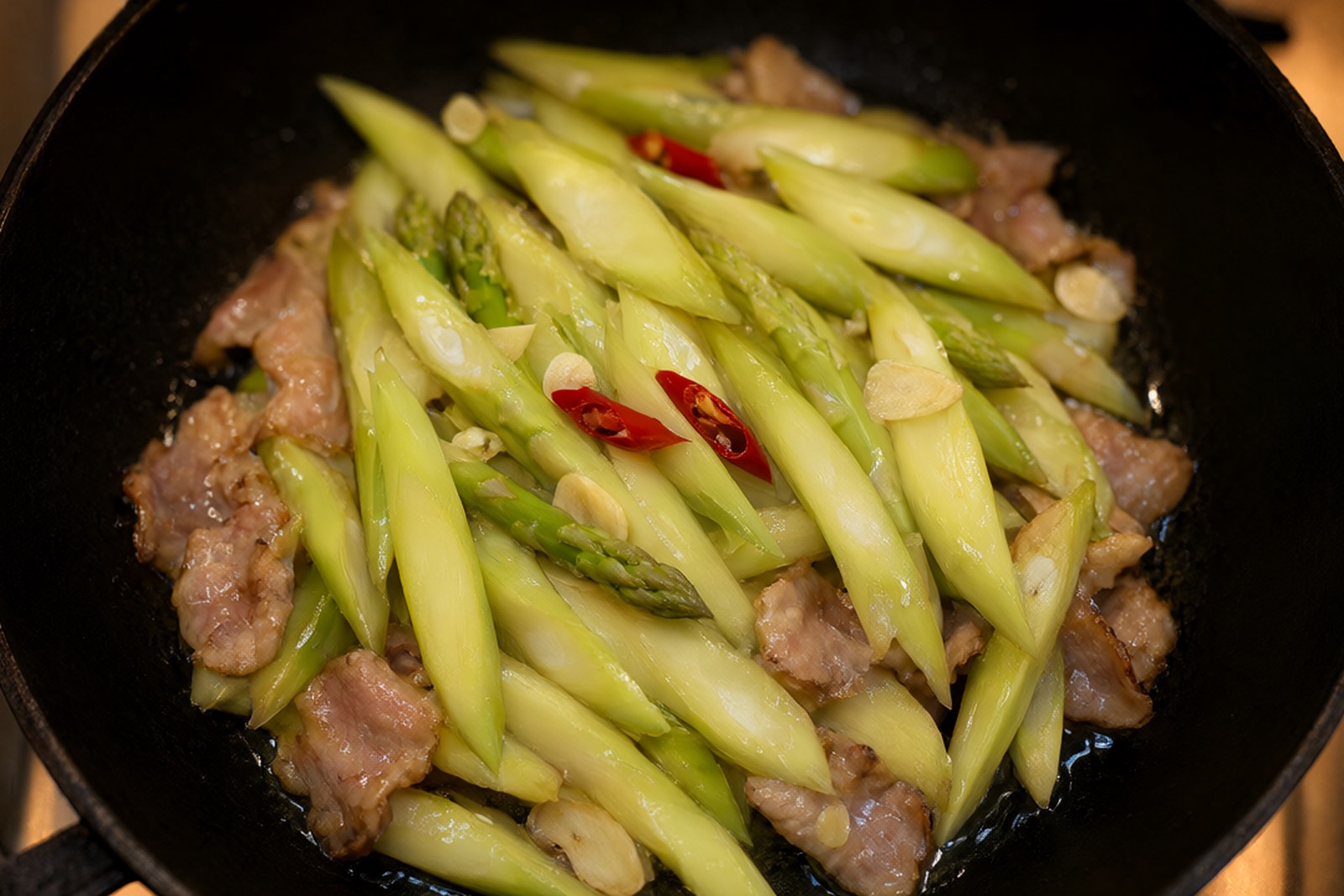
What arrives in the market is a bundle of long, thick, pale-green stems with a rosette of leaves at the top, and the whole craft of cooking it is in the preparation. The outer skin is fibrous and slightly bitter and has to come off in strips with a knife, and so do the tougher parts of the leaves; what is left is a firm, faintly translucent core with a mild, watery, slightly nutty flavour and an extremely satisfying texture — it should squeak between the teeth, and it should still do so after cooking. Cut into lengths, it is stir-fried with a little pork or a great deal of garlic, or blanched and dressed, or sliced thin and salted as 腌芦笋 yān lúsǔn, and it is also dried and pickled in quantities that leave the county in jars.
A Vegetable With a Water Problem
The reason the crop is here rather than anywhere else is the land. The reclaimed fields around South Dongting are flat, silty, high in organic matter and prone to flooding, which makes them difficult for anything that needs to stand all season and comfortable for a stem vegetable that grows fast and likes water. The county’s growers also have the advantage of an enormous local appetite: Hunan eats a great deal of this vegetable, and 沅江 has built the growing, the drying, the canning and the shipping into a single regional trade. You will find the fresh version in the county from late spring, the dried version in shops all year, and the 芦笋茶 lúsǔn chá, an asparagus tea that the county also sells, in any gift shop on the main road.
Words and Names
芦笋 lúsǔn is the vegetable; strictly it is the name of the true asparagus in the north, but across Hunan and Hubei it is used for the thick-stemmed lettuce, and context decides. 茎用莴苣 jīngyòng wōjù, stem lettuce, is the botanical name and the one on agricultural documents. 沅江芦笋 Yuánjiāng lúsǔn is the county’s brand, and 洞庭芦笋 Dòngtíng lúsǔn the broader regional one. 削皮 xiāopí is peeling, the essential step, and 脆 cuì, crisp, is the word every local uses about the doneness. 干芦笋 gān lúsǔn is the dried form and 芦笋茶 lúsǔn chá the tea made from the leaves and peel that would otherwise be thrown away.
What the Locals Know
Buy it in the market, not the supermarket, and buy it in spring, because the stem toughens as the season goes on. The test for freshness is the cut end: a good stem snaps rather than bends and weeps a little clear sap. Peel generously — the temptation is to leave too much on, and the fibrous layer is the whole reason non-locals find the vegetable stringy. Cook it hot and briefly, in a wok, with the garlic going in last so it does not burn; the traditional local dish pairs it with thin slices of belly pork, whose fat the stem will not absorb but which seasons the pan, and the vegetarian version uses dried shrimp or nothing at all. Do not salt it until the pan is off the heat, or it will release water and steam rather than fry. A bundle is cheap, five to fifteen yuan depending on the season, and the dried sort costs more by weight because it takes several kilos of fresh stem to make one.
flowcloud would say that asparagus lettuce is the rare vegetable that is entirely about prep work, since the stem arrives wearing something inedible and everything after the knife is a reward for having taken it off properly.
Where to find it: the wet markets of 沅江市区 Yuánjiāng shìqū, and the roadside farm stalls on the 沅益公路 Yuán-Yì gōnglù between Yuanjiang and 益阳市 Yìyáng Shì. Buy a bundle of fresh stems and ask the seller to peel one to show you how much comes off, order it as 芦笋炒肉 lúsǔn chǎo ròu in any local restaurant in spring, and take home a bag of 干芦笋 for soup.