
Yuegezhuang Market Bites: The Dawn-Wholesale Stall-Bite Trail of Fengtai District, Beijing
岳各庄头星未落,车轮已载菜香来。Yuègèzhuāng tóu xīng wèi luò, chēlún yǐ zài cài xiāng lái – Over Yuegezhuang the stars have not set; the wheels already carry the scent of greens.
岳各庄市场小吃 Yuègèzhuāng shìchǎng xiǎochī Yuegezhuang market bites are the stall-side eating that grows where Beijing’s west buys its vegetables, and the address is wholesale: 岳各庄农副产品批发市场 Yuègèzhuāng nóngfù chǎnpǐn pīfā shìchǎng the Yuegezhuang farm-produce wholesale market, the 丰台区 Fēngtái Qū Fengtai District 菜篮子 càilánzi vegetable basket by the 西四环 Xī Sìhuán West Fourth Ring, which has loaded west Beijing’s kitchens since the mid-1980s with 白菜 báicài cabbage, 豆腐 dòufu bean-curd and 羊肉 yángròu mutton by the truckload. The form is the 摊边吃食 tān biān chīshí stall-bite – a 烧饼 shāobǐng sesame biscuit, a 豆腐脑 dòufunǎo tofu-pudding bowl or a 包子 bāozi bun eaten standing between unloads, priced for the 司机 sījī driver and the 装卸工 zhuāngxiègōng loader rather than a 餐厅 cāntīng dinner – and the clock is the market’s own: the 批发 pīfā wholesale runs through the 凌晨 língchén small hours, the rows scatter by mid-morning, and the 小吃 xiǎochī follows the cargo – hot 羊汤 yángtāng broth at three in the morning, the last 烧饼 shāobǐng gone before noon. The craft most visitors under-rate is the refuelling grammar: a real 岳各庄 Yuègèzhuāng stall feeds men who have lifted 生鲜 shēngxiān fresh produce since midnight, so the honest 摊主 tānzhǔ stall keeper keeps the 分量 fènliàng portion heavy and the 汤 tāng broth salted for labour, and a stall that re-styles its 碗 wǎn bowls for a 游客 yóukè photo has missed the only crowd that never stops moving. The naming is the tell: the market keeps the old village name 岳各庄 Yuègèzhuāng, and the 菜篮子 càilánzi it fills is the city’s own shorthand – west Beijing’s breakfast is bought here before west Beijing wakes.
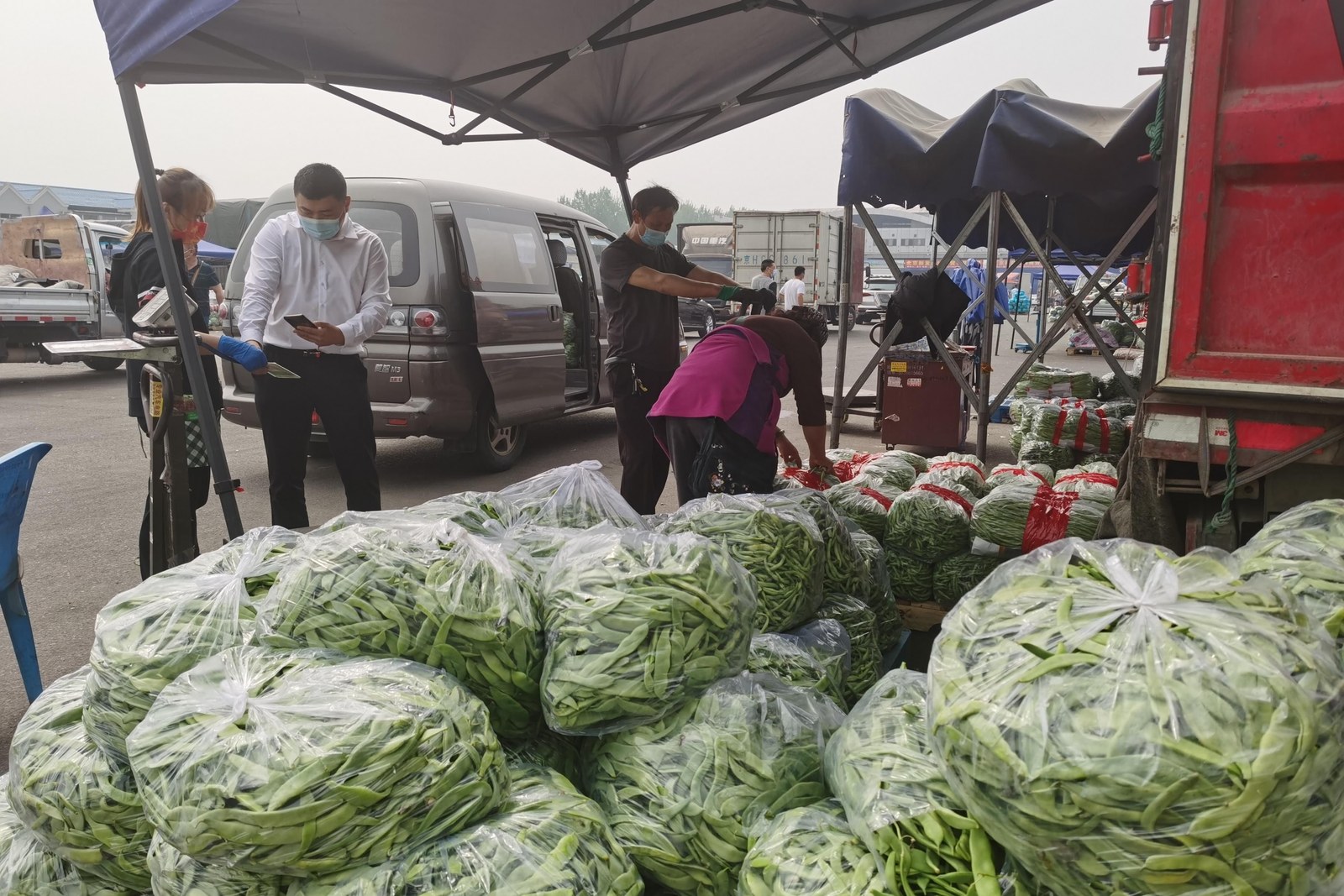
The eating is a dawn menu written for labour, and the grammar is 汤 tāng broth plus 碳水 tànshuǐ carb. The anchor is the 羊汤 yángtāng mutton-broth bowl – 杂 zá offal and 粉丝 fěnsī glass noodles under a milky ladle, 胡椒 hújiāo pepper and 醋 cù vinegar at the table – the three-a.m. warmer the loaders split by the crate – backed by the 烧饼 shāobǐng sesame biscuit straight off the 缸炉 gānglú cylinder oven, 豆腐脑 dòufunǎo tofu pudding under a 咸 xián salty 卤 lǔ gravy, 包子 bāozi buns and 馄饨 húntun wontons by the hundred, and 茶叶蛋 cháyèdàn tea eggs with 小米粥 xiǎomǐ zhōu millet congee for the men who eat mild. The daytime tail is the traders’ own meal: a 盖饭 gàifàn rice-bowl or a 大锅面条 miàntiáo noodle plate at the 档口 dàngkǒu counters that survive into the wholesale hours, while the tofu rows, pickle barrels and dry-goods aisles sell the market’s real produce – 现做 xiànzuò fresh-made 豆腐 dòufu, 酱菜 jiàngcài pickles, 干货 gānhuò dried goods – because at 岳各庄 Yuègèzhuāng the cargo is the menu, and the stall you eat at is the stall you bought from an hour ago.
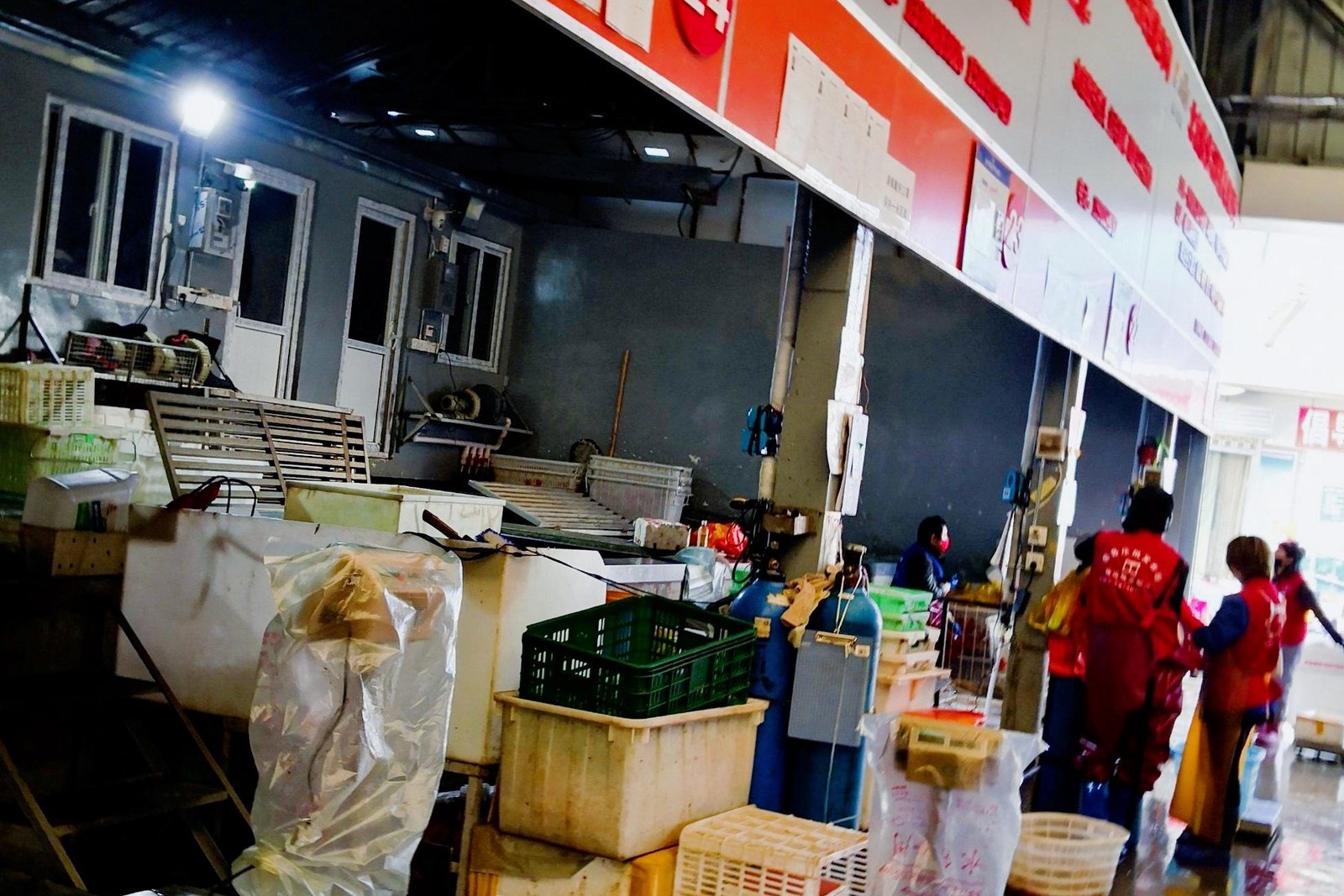
The honest grade is geography plus the 天光 tiānguāng dawn clock. In 丰台区 Fēngtái Qū Fengtai District the bites cluster at the market gates and the truck lanes off 西四环 Xī Sìhuán, where the clientele is half 司机 sījī drivers and half 摊主 tānzhǔ vendors feeding each other between loads, a mix that keeps the 羊汤 yángtāng honest in a way a food-hall imitation never could – a stall here is graded by men who have hauled 菜 cài greens through a hundred winters and know whether the broth is 骨汤 gǔtāng bone-boiled or powder in hot water, and a ladle that fools them fools no one. The continuity is the point: these are not pop-ups but stalls that have fed the same market for twenty years, and the trader who left in 2005 and came back in 2025 can still find his 烧饼 shāobǐng where he left it (worth confirming the details – which stalls have survived the market’s rebuildings and which rows have gone warehouse-only). A per-person bill runs small by any standard, so call it worth confirming the details rather than a fixed number, and arrive before dawn because the 批发 pīfā hours are the whole show – by mid-morning the lanes sweep clean, the stalls fold, and the 羊汤 yángtāng pot scrapes bottom; the ritual is fast and standing, and the visitor who comes at noon eats an empty lane.
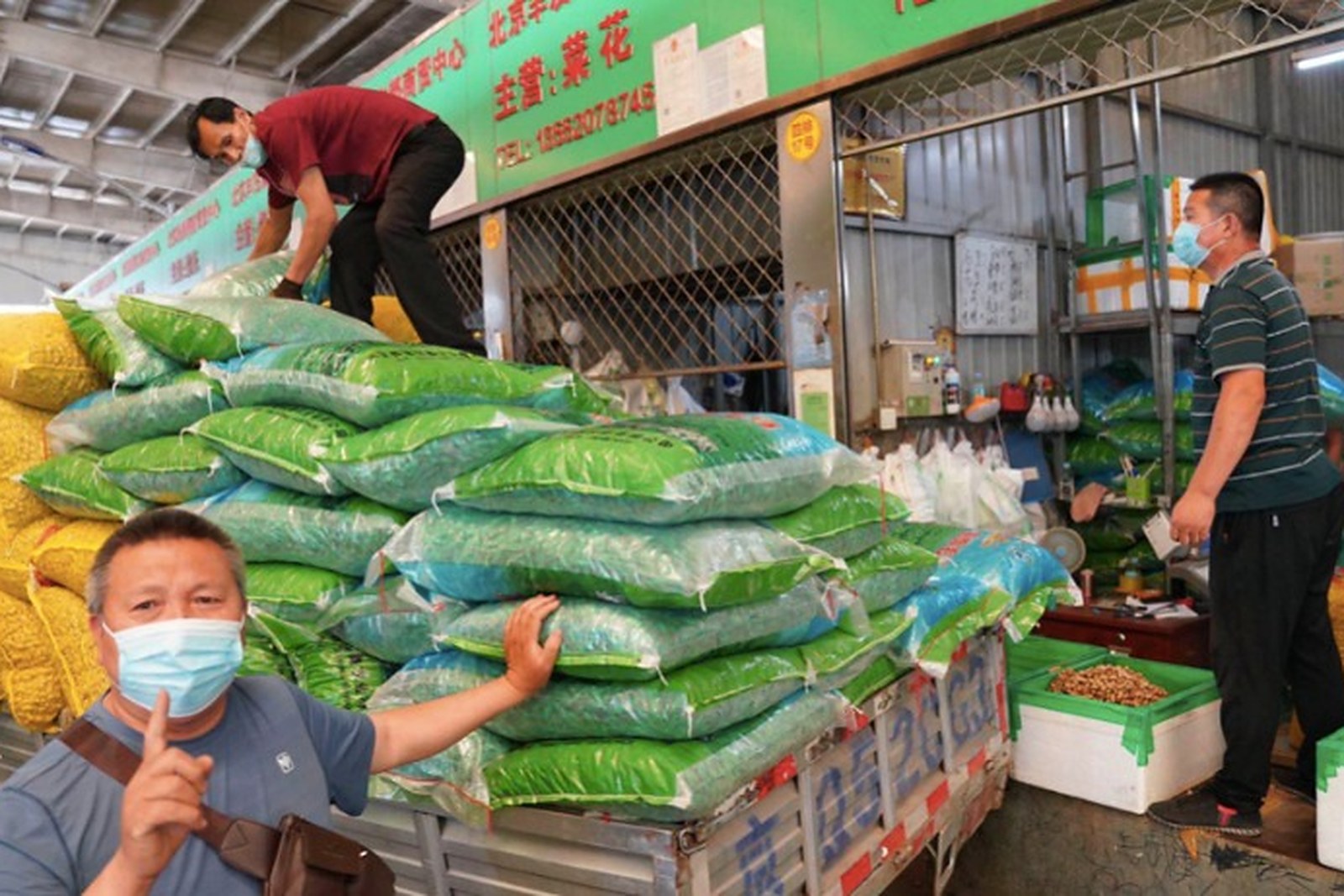
The wry truth is that 岳各庄市场小吃 Yuègèzhuāng shìchǎng xiǎochī is over-rated as an “authentic Beijing” adventure and under-rated as infrastructure: travel lists file it as grit-photo bait, while locals – the 司机 sījī, the 装卸工 zhuāngxiègōng, the 丰台区 Fēngtái Qū Fengtai District traders who live by its clock – treat it as the refuelling stop that keeps the city’s kitchens stocked, a bowl worth confirming the details and nothing more. The real divide is 现做 xiànzuò versus 再热 zàirè: a 烧饼 shāobǐng cracked from the 缸炉 gānglú reads 脆 cuì crisp and layered, while a reheated tray reads limp, and no 酱 jiàng sauce hides it – worth confirming the details. Season barely matters – the market runs year-round – but the 凌晨 língchén winter shift, gloves frozen to the crates and breath steaming over the crates, is the market at its most honest, and the summer dawn its kindest.
The self-deprecating footnote: a food writer will arrive at nine – late by market law – mispronounce 豆腐脑 dòufunǎo to a 摊主 tānzhǔ who has served three hundred loaders since midnight, explain “food heritage” to a man holding a cleaver in one hand and a crate in the other, photograph the 羊汤 yángtāng at heroic shutter, and then call the broth “commendably rustic” as if rust were a recipe – which is the honest grade: 岳各庄市场小吃 Yuègèzhuāng shìchǎng xiǎochī is a dawn refuelling trail the writer will romanticise more than he earns, and the 装卸工 zhuāngxiègōng at the next stall has unloaded a ton before the camera lowers. The same 丰台区 Fēngtái Qū Fengtai District thread runs on: the trucks that load here at three feed the dinner mile of 方庄美食街 Fāngzhuāng měishí jiē Fangzhuang food street, the noon counters of 丽泽商务午餐 Lìzé shāngwù wǔcān Lize business lunch, the 老汤 lǎotāng master broths of the 南城老字号 Nánchéng lǎozìhào halls by 马家堡 Mǎjiābǎo Majiapu, and the halal larder of 大红门清真小吃 Dàhóngmén qīngzhēn xiǎochī Dahongmen halal eats – one market, four tables downstream.
Words and Names
岳各庄 Yuègèzhuāng / Yuegezhuang · the Fengtai District quarter holding west Beijing’s great vegetable market 批发市场 pīfā shìchǎng / wholesale market · the pre-dawn trade that loads the city’s kitchens 菜篮子 càilánzi / vegetable basket · the city’s own shorthand for the market it eats from 凌晨 língchén / small hours · the wholesale window the stalls eat by 羊汤 yángtāng / mutton broth · the three-a.m. warmer split by the crate 烧饼 shāobǐng / sesame biscuit · the cylinder-oven crisp that pairs with the broth 摊主 tānzhǔ / stall keeper · the vendor graded by loaders, not tourists 丰台区 Fēngtái Qū / Fengtai District · the Beijing district holding the dawn trail
What the Locals Know
- The 凌晨 língchén clock is the whole show: the 批发 pīfā trade runs through the small hours and the stalls scatter by mid-morning – come with the trucks or eat an empty lane (worth confirming the details).
- Judge the stall by the broth: a real 羊汤 yángtāng is 骨汤 gǔtāng bone-boiled for the loaders; a powder base fools no one who has lifted crates since midnight.
- 现做 xiànzuò beats 再热 zàirè: a 烧饼 shāobǐng off the 缸炉 gānglú reads 脆 cuì crisp; a reheated tray reads limp, and no 酱 jiàng hides it.
- Dress for the clock, not the photo: the lanes are truck lanes, the stools are crates, and the honest meal is eaten standing between unloads.
flowcloud would say that the 岳各庄市场小吃 Yuègèzhuāng shìchǎng xiǎochī is the dawn-wholesale stall-bite trail of Fengtai District, Beijing – a 岳各庄 Yuègèzhuāng 菜篮子 càilánzi where 凌晨 língchén loaders split 羊汤 yángtāng and 缸炉 gānglú 烧饼 shāobǐng between unloads before the market scatters by mid-morning – and that the honest move is to arrive with the trucks, judge the broth by the men who lift the crates, and eat standing, because the cargo sets the menu and the dawn is the door. All checked October 2026.
Where to find it: Fengtai District Fēngtái Qū – the 岳各庄农副产品批发市场 Yuègèzhuāng nóngfù chǎnpǐn pīfā shìchǎng Yuegezhuang wholesale market by the 西四环 Xī Sìhuán West Fourth Ring, where gate stalls fire 羊汤 yángtāng, 烧饼 shāobǐng and 豆腐脑 dòufunǎo through the 凌晨 língchén wholesale window (worth confirming the details – which stalls survive the rebuildings and which rows have gone warehouse-only); a per-person bill runs small, so call it worth confirming the details rather than a fixed number. Yuegezhuang market bites are the dawn-wholesale stall-bite trail of Fengtai District, Beijing, cargo before camera.