
Yuloudong
If you want to understand why Changsha eats the way it does, you have to start in a dining room on the fourth floor of a building on 五一大道 (Wuyi Avenue), where a restaurant has been serving the same chicken since 1904.
玉楼东 (Yuloudong) is not a snack stall and it is not trying to be. There is a host at the door. There are white cloths. The menu runs to hundreds of dishes and the kitchen is glassed in along one wall so you can watch a dozen woks work at once. On a weekday lunchtime the room is full of families with a grandmother at the head of the table, and a young waiter is doing something careful with a teapot at a corner table, and nobody is taking photographs. This is where Changsha takes its parents to eat.
That is the thing to grasp before the history: 玉楼东 is not a museum piece that happens to serve food. It is a working restaurant that has been working for a hundred and twenty years, and the food is the reason it survived.
The Year the City Started Eating Out
The restaurant opened in 1904, in the last decade of the Qing, at the east mouth of 青石桥 (Qingshi Bridge) lane — roughly where 解放路 (Jiefang Road) runs today. Its first name was 玉楼春, Yulouchun, taken from a line in Bai Juyi’s Song of Everlasting Sorrow: “the jade tower’s feast ends, drunk with spring.” The founders then swapped the last character for 东 — east — because the building stood where the lane opened eastward. 玉楼东. Jade Tower East.
What makes the date matter is not the restaurant but what it meant for the city. As one account of Changsha’s restaurant history puts it, before 玉楼东, a formal banquet in Changsha did not happen in a restaurant at all. If you wanted to entertain properly you borrowed a hall — an ancestral temple, a guild building, a shrine to a local worthy — and paid the caretaker a few hundred cash to sweep up and boil water. There was no such thing as a restaurant you took guests to. Dining out, as a public act, had to be invented.
玉楼东 was part of that invention: a new kind of urban space where a merchant could host a banquet without borrowing a building, where the food was the point and the room was the setting. It is a small thing to say in a city with ten thousand restaurants. In 1904 it was new.
Tan Xiting and the Man from Jiangsu
The restaurant’s reputation was made in 1920, when a chef named 谭奚庭 (Tan Xiting) took over the kitchen. Tan was already locally famous — people called him 湖南第一厨, “the first cook of Hunan” — and his career explains why the food tastes the way it does.
Before he ran his own kitchen, Tan had worked as the private cook for a wealthy salt merchant from Jiangsu named 朱乐堂 (Zhu Letang). Salt merchants were rich, mobile and fussy, and Jiangsu cooking is a delicate, sweet-edged, sauce-and-stock tradition very unlike the blunt heat of Hunan. So when Tan finally stood at the head of 玉楼东’s kitchen, his cooking carried both accents: the smoke and the chili of Changsha, overlaid with the patience of Huaiyang technique.
That combination — the heat of Hunan disciplined by a slower, more careful hand — is what made 玉楼东 the place the city’s officials chose. And it is why the restaurant is still called, half-jokingly, the 黄埔军校 of Hunan cooking: the Whampoa Military Academy of 湘菜, the school where the cuisine’s officers were trained.
A Poem That Sold a Chicken for a Century
The dish the restaurant is known for is 麻辣仔鸡 (mala ziji) — “numbing-hot young chicken” — and it was immortalised by a customer.
曾广钧 (Zeng Guangjun) was a Hanlin scholar from Xiangxiang and, more usefully for a restaurant’s marketing, a grandson of 曾国藩 (Zeng Guofan), the Qing general who is still the most famous Hunanese who ever lived. He ate at 玉楼东 and left a couplet that has been quoted in every account of the restaurant since:
麻辣子鸡汤泡肚,令人常忆玉楼东。 Peppery chicken and tripe in soup — they make a man remember Yuloudong.
Two dishes named in one line, and the restaurant has been selling both for a hundred and twenty years on the strength of it. It is worth noticing how rare that is: a poem that actually changed what a city eats.
The building itself has not been so lucky. In November 1938 the 文夕大火 (Wenxi Fire) burned out most of central Changsha, and 玉楼东 went with it. It was rebuilt in 1942, changed names during the decades that followed, and only got its old name back in 1985. In 2006 the Ministry of Commerce put it on the official register of 中华老字号 — China’s time-honoured brands — and it has held that status through every review since.
What to Order
The two dishes the poem names are the two you should order, in this order.
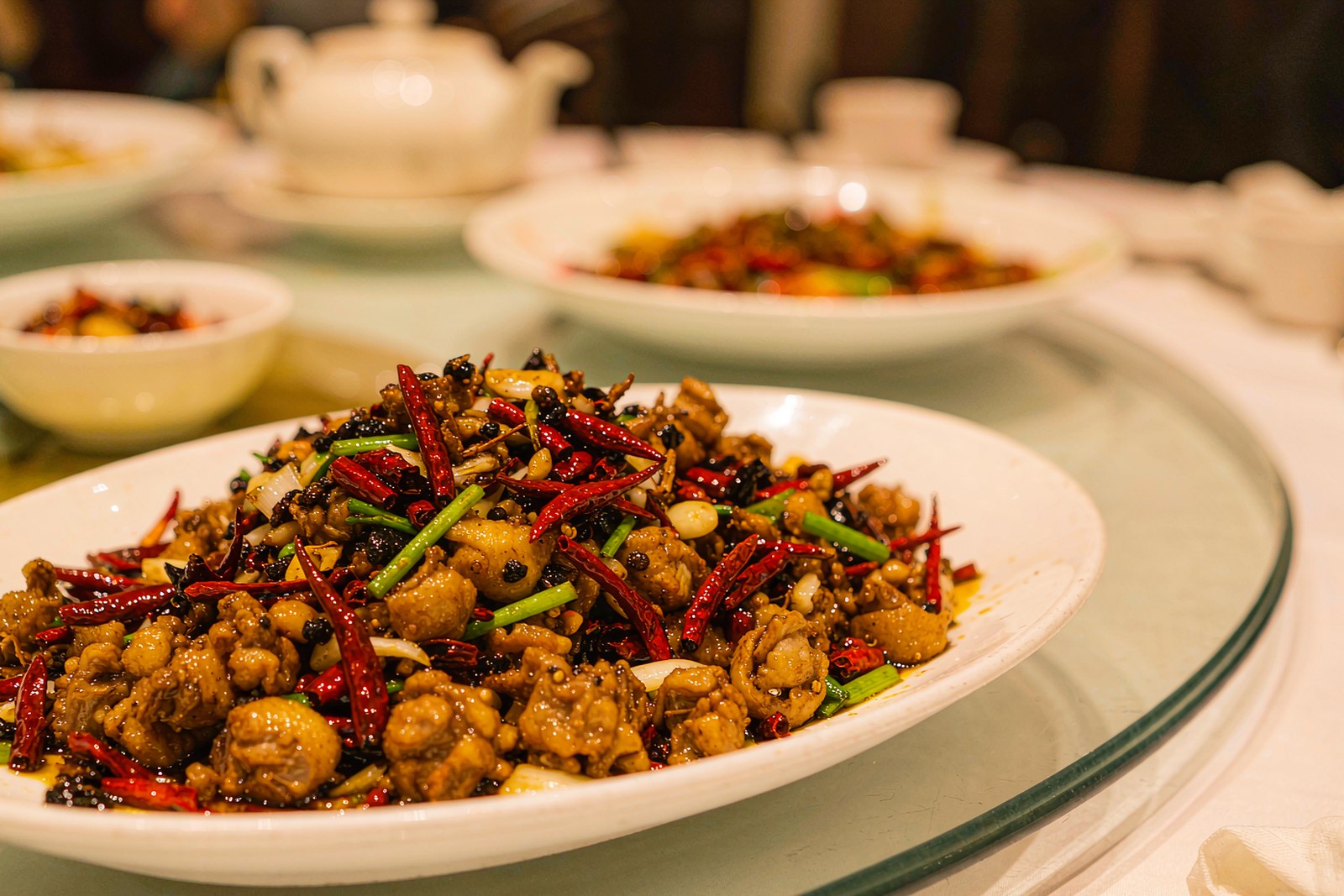
麻辣仔鸡 — a bird of two to three months, the small local 矮脚 hen, chopped into pieces still on the bone and cooked hard with chili, yellow rice vinegar and a lot of garlic. The skin goes golden and the outside crisps while the meat stays soft. It is not the hottest thing you will eat in Changsha. It is the most balanced hot thing you will eat in Changsha.
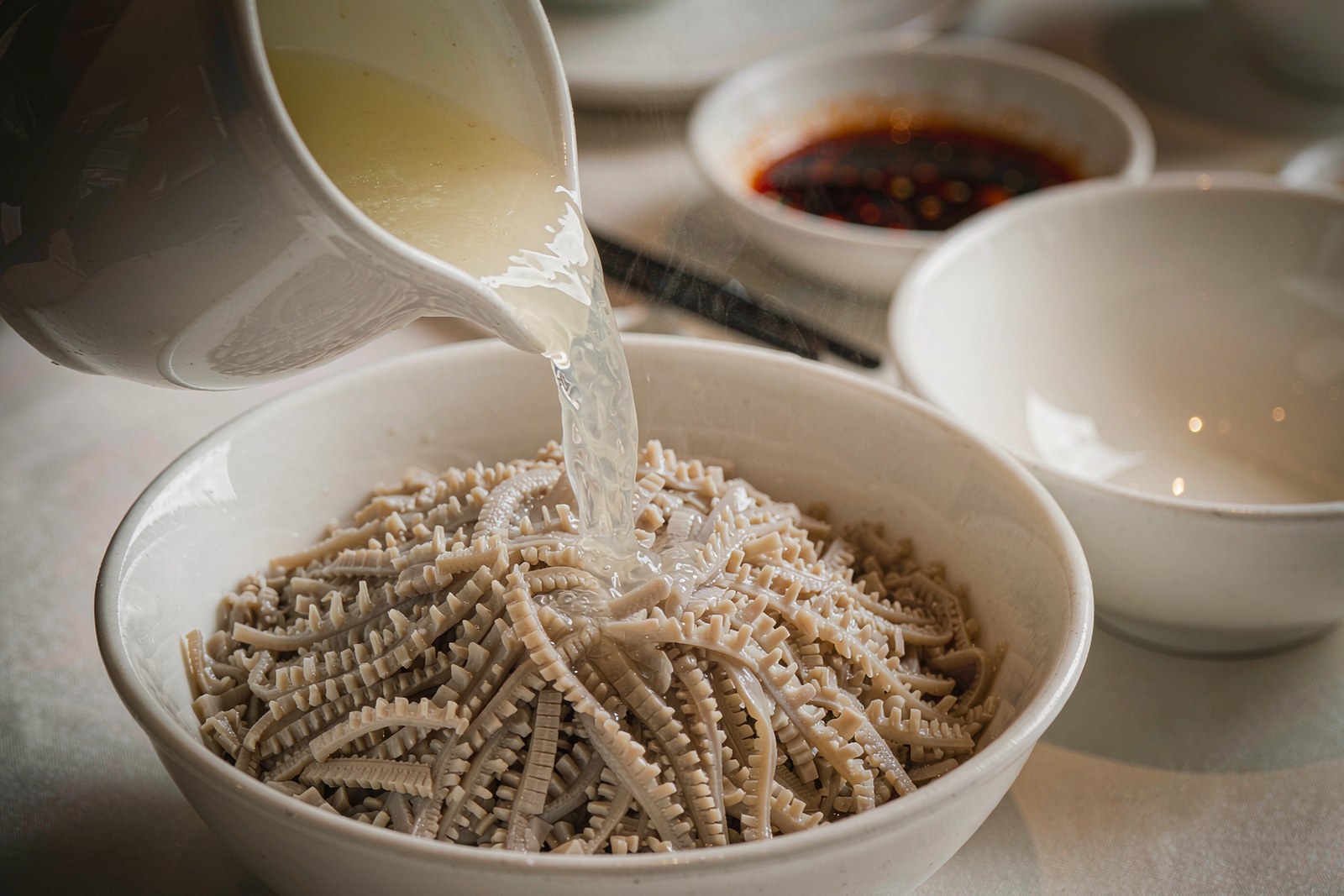
汤泡肚尖 — tripe tips in soup. This is the dish that shows off the kitchen. The tenderest part of the tripe is scored with a fine criss-cross cut, treated, and blanched; it arrives in a dry bowl. Then, at the table, a stock that has been simmered for two days is poured over it. The tripe is cooked, in effect, by the soup. Get the timing wrong by thirty seconds and it is rubber. Get it right — and they do — and it is crisp, clean and startlingly light.
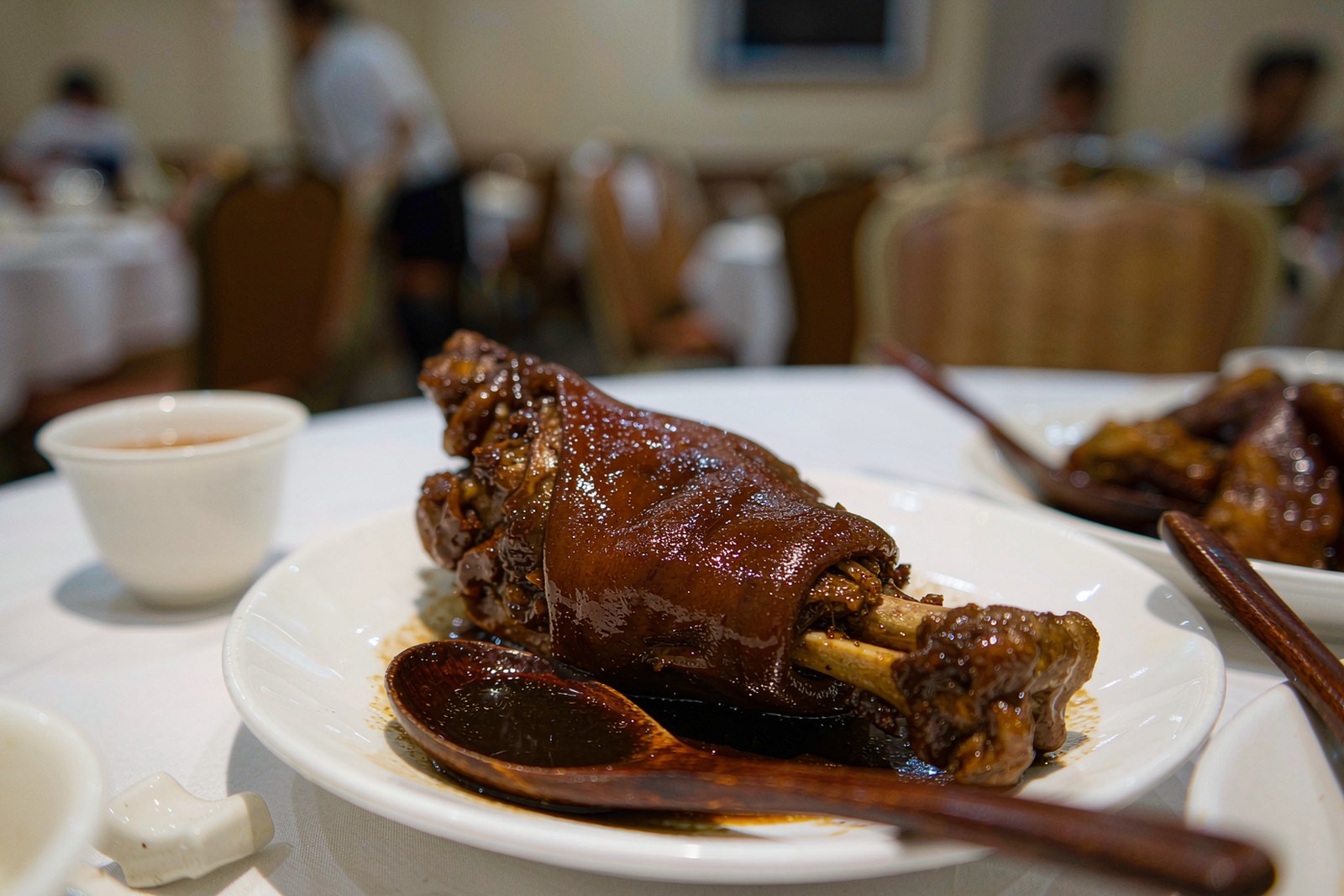
Beyond those two: 发丝百叶 (fasi baiye), beef tripe cut into threads as thin as hair, a Hunan classical dish the restaurant does with real precision; 酱汁肘子 (jiangzhi zhouzi), a braised pork hock in soy and spice, glossy and collapsing, which has taken gold at national competitions more than once; and 开屏柴把桂鱼 (kaiping chaiba guiyu), mandarin fish tied into “firewood bundles” and arranged to fan out like a peacock’s tail — invented by the modern master 许菊云 (Xu Juyun) and a gold medallist at the second national cooking competition. The last one is a banquet dish. Order it if there are six of you.
The 玉楼东 of today is a group — a flagship on 五一大道, a large branch out at 湘府路, others beyond — and the technical direction is still held by the Xu Juyun line. That matters less than it sounds. Kitchens like this rise and fall on who is standing at the pass, and 玉楼东 has spent a century being unusually good at not letting that job go empty.
The Room, and What Kind of Place This Is
The flagship is unprepossessing from the street: a door, some steps, a lift. Upstairs it opens out into something with pavilions, a stream of water running between the tables, paper umbrellas hanging in the rafters and a great deal of warm yellow light. It is unapologetically decorative, and on a banquet night it is loud in the way that Chinese banquet rooms are loud — toasts, a child running, somebody’s phone ringing through the whole of it.
Come here for a proper dinner, not a snack. Budget restaurant money rather than street money: this is a full 湘菜 banquet house and a serious meal for two, with a fish and a hock, will run into the low hundreds of yuan. Lunch is cheaper and the same kitchen. Book, if you are coming at the weekend, or on any evening in the fortnight before Chinese New Year — this is where Changsha holds its family dinners, and the tables go early.
What It Isn’t
It would be easy to file 玉楼东 under “famous old restaurant, expensive, touristy”. That is not quite right, and the difference is worth a sentence.
It is expensive by Changsha standards, yes — but the money goes to a kitchen that still scores tripe by hand and simmers stock for two days, not to a view or a concept. It is old, but it is not dusty: the menu is long, the technique is alive, and the dining room is full of people who have eaten there for thirty years and are not impressed by it. And it is on the tourist lists, but it was on the local lists first, by about a century.
If you have one formal dinner in Changsha and want to understand what the city’s own cuisine looks like when it is not in a hurry, this is the room. Order the chicken. Order the tripe. Pour the soup at the table and watch what it does.
flowcloud would say that a restaurant which survived its own city burning down has already answered the only question that matters about a kitchen, which is whether it would still be worth eating if nobody had ever written it down.
Where to find it: 玉楼东 (Yuloudong), flagship at 五一大道 125 号 (Wuyi Avenue), 芙蓉区, Changsha — near 芙蓉广场; branches include 湘府路. Metro line 2 to 芙蓉广场 or 五一广场. Open for lunch and dinner daily. Order 麻辣仔鸡 and 汤泡肚尖; the tripe arrives dry and the soup is poured over it at the table. Book at weekends.