
飙草牛肉干 (Biāocǎo Niúròugān) — Biaocao beef jerky, the near-century dried-beef craft of a riverside township.
Yunyang’s most portable specialty comes from Biaocao (飙草), a township whose name now doubles as a brand for dried beef. The craft is close to a hundred years old and still follows the same patient line: local grass-fed cattle, a cure of natural spices, and a slow roast that turns a strip of lean beef into something chewy, dark, and deeply fragrant. It is the thing travellers pack into a daypack to take home, and the thing locals keep in the cupboard for the long evenings.
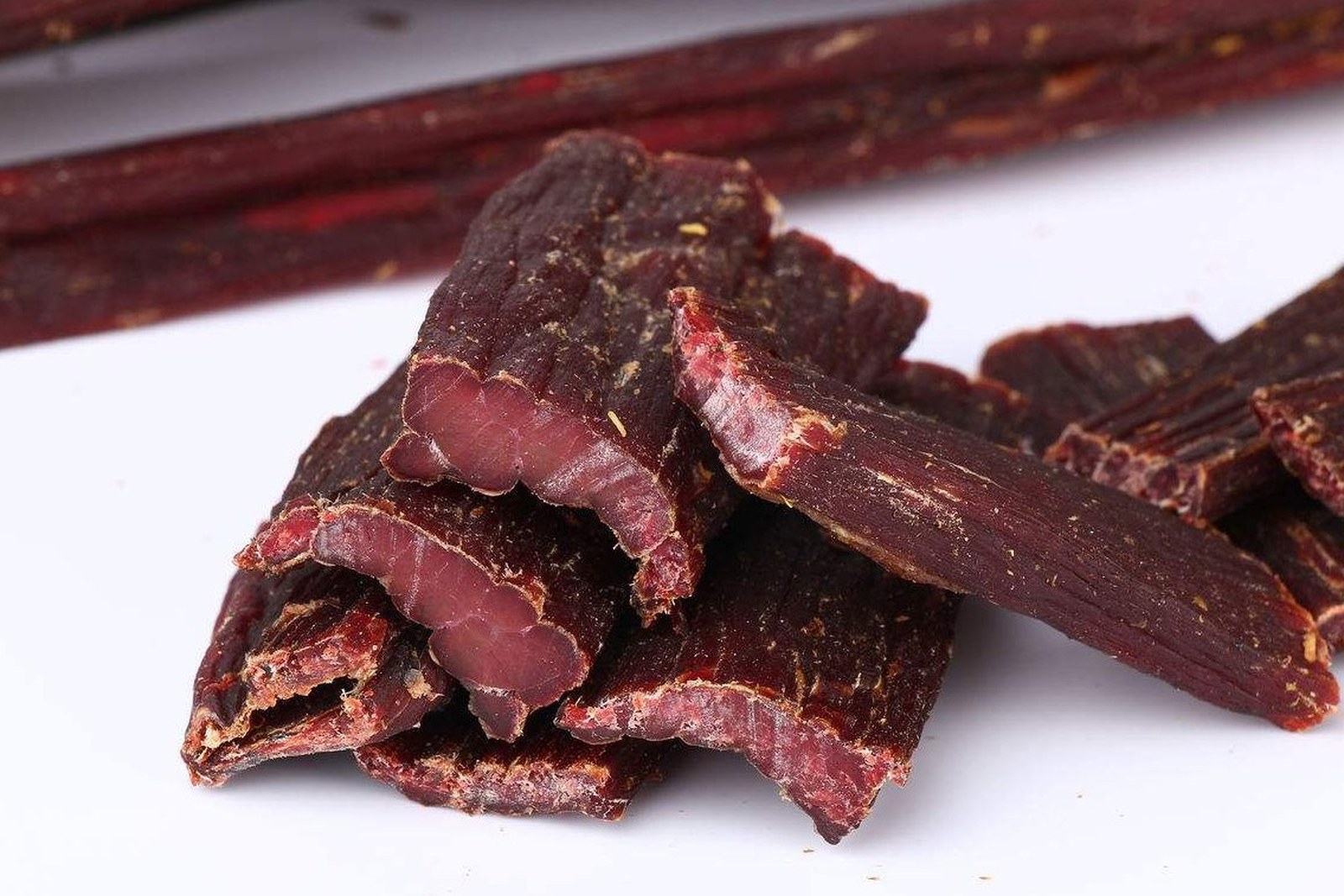
The meat is chosen lean and cut along the grain into long strips, then cured with a blend of natural spices — the houses guard their exact mix, but the base is the familiar warm note of Sichuan pepper, star anise, and a little liquor to tenderise and preserve. After the cure the strips are slow-roasted over low heat for hours, which drives off moisture without hardening the strip to brittleness. Done right, a piece bends rather than snaps and pulls apart in fibres when you bite.
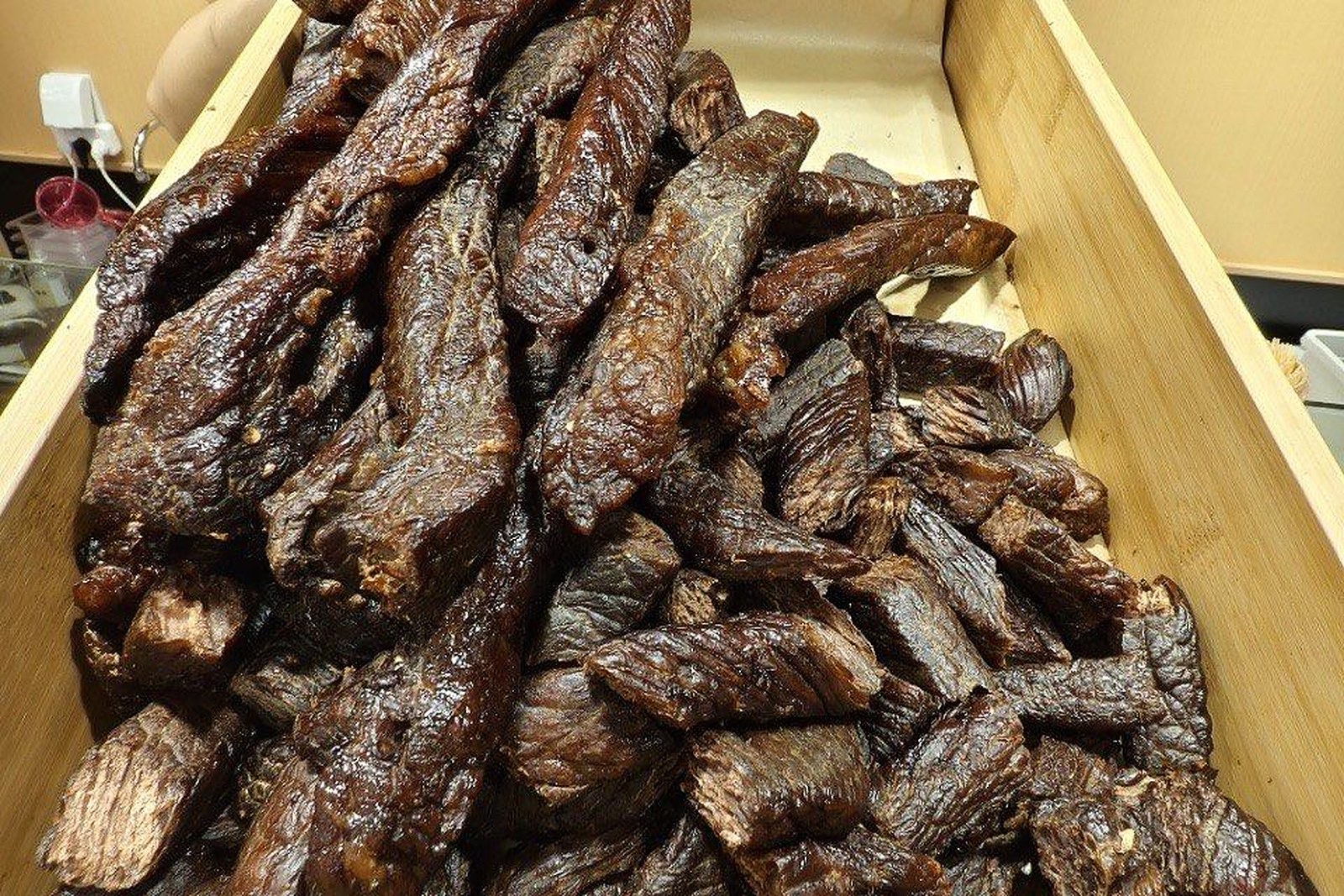
The flavour is savoury first, sweet and spiced second, with the grass-fed beef giving a cleaner taste than grain-fed dried meat. It is salty enough to make you reach for tea, which is exactly how it is meant to be eaten — a strip and a cup, or a few pieces shared from a paper twist among friends. Unlike the fresh breakfast noodle, this is a keeper: sealed well it lasts for months, which is the whole point of a take-home specialty.
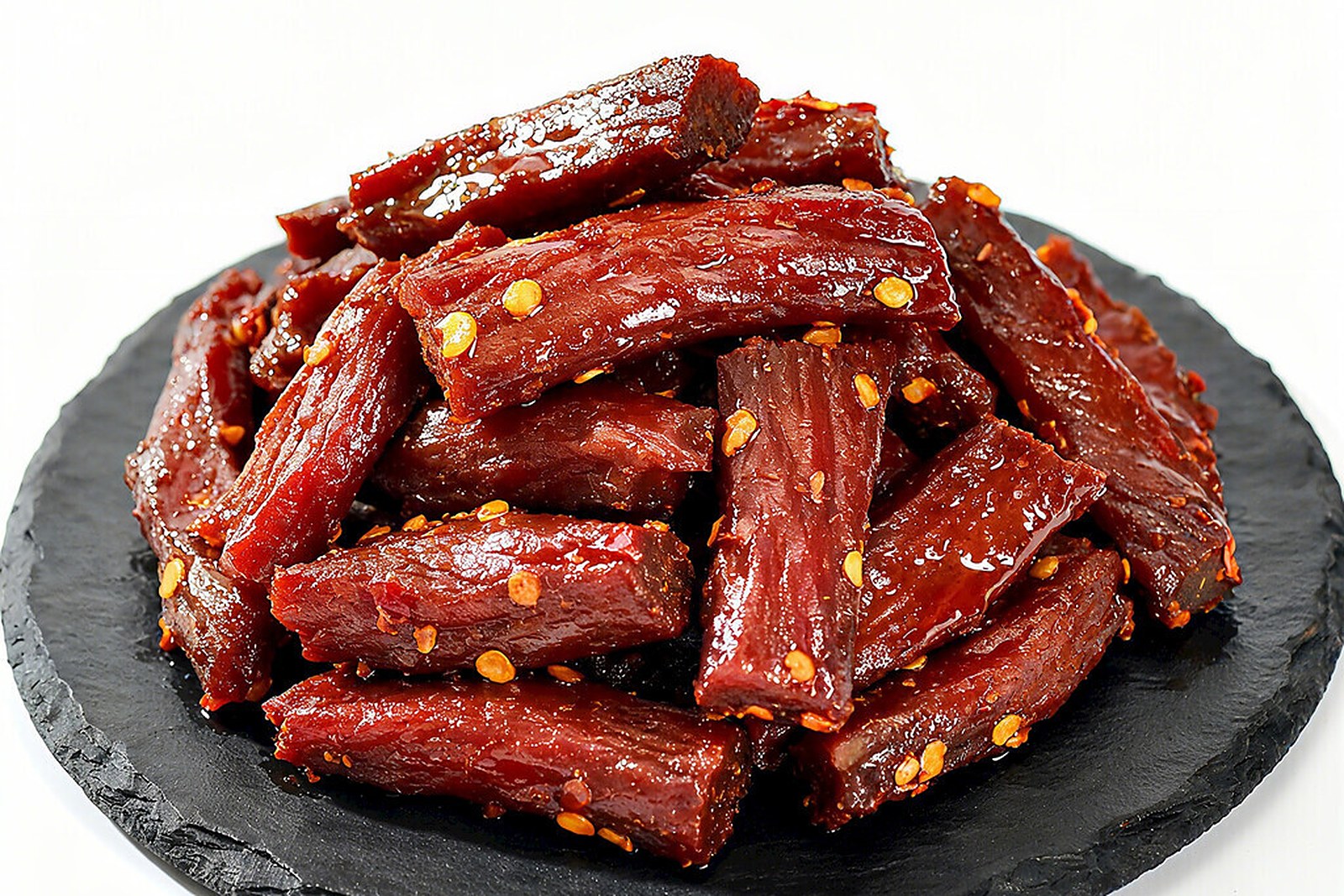
Find it at the shops in and around Biaocao township and at the county-seat food stores that name the township on the label. The older houses still dry and roast in small batches, and the difference shows in the fragrance — mass-produced versions taste flat by comparison. Prices run higher than supermarket jerky, fairly, given the beef and the time, but a modest bag goes a long way. Buy it vacuum-sealed if you are flying; the aroma is the one thing it cannot be packed without.
Words and Names
飙草 Biāocǎo — Biaocao, the township that names the jerky 牛肉干 Niúròugān — beef jerky, dried seasoned beef 草饲 cǎoshì — grass-fed, the cattle-raising method behind the cleaner taste 香料 xiāngliào — natural spices used in the cure 花椒 huājiāo — Sichuan pepper, a base note in the spice blend