
铜锅湖水煮鲜鱼,一勺清汤鲜掉眉。Tóngguō húshuǐ zhǔ xiānyú, yī sháo qīngtāng xiān diào méi. – A brass pot of lake water boils the fresh fish; one spoon of clear broth and your eyebrows drop.
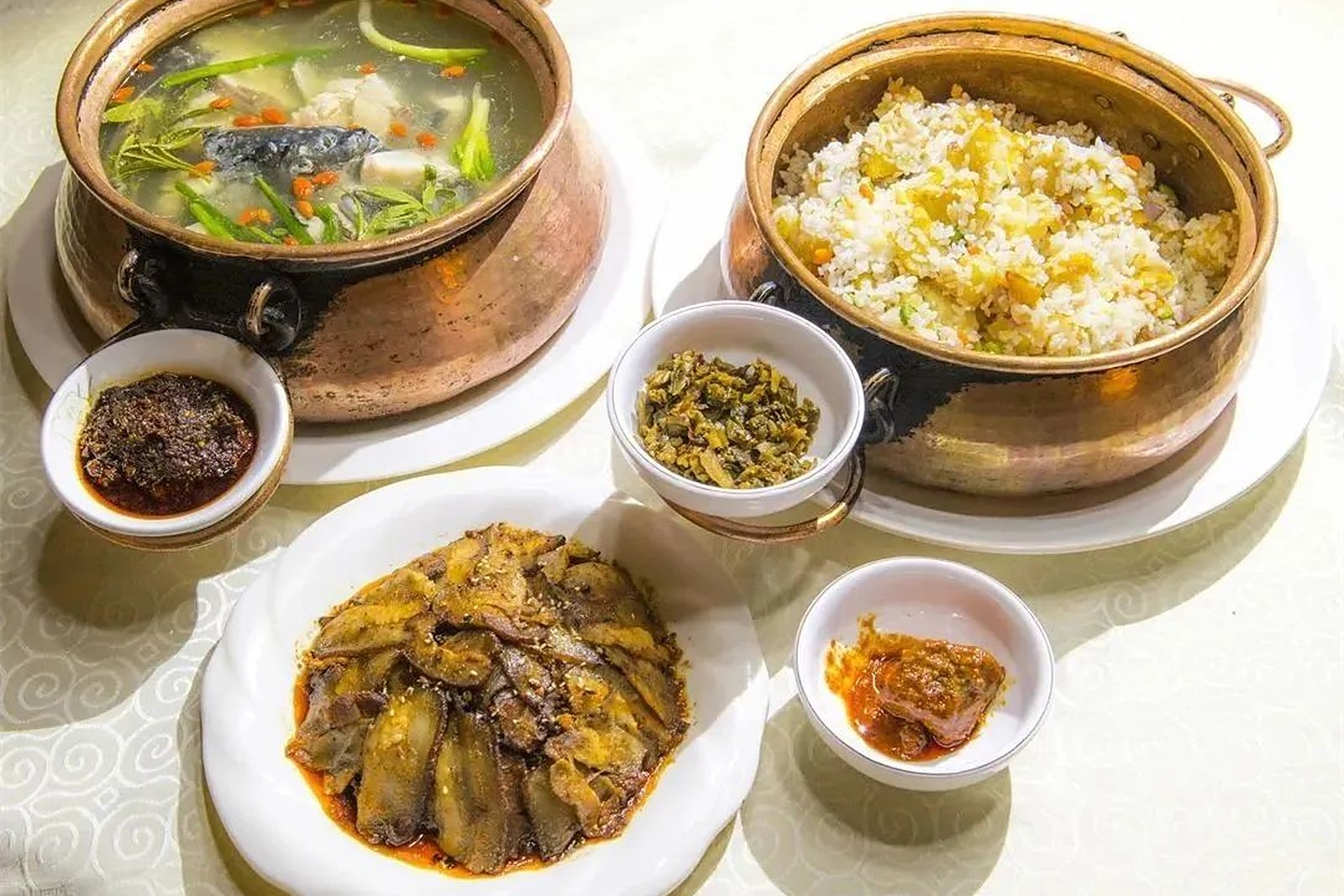
铜锅鱼 Tóngguō Yú brass pot fish is the signature dish of 玉溪 Yùxī Yuxi in central 云南 Yúnnán Yunnan, and the lake behind it is 抚仙湖 Fǔxiān Hú Fuxian Lake, one of China’s deepest freshwater lakes and the pride of the city. The pot is the point: a hand-hammered 铜锅 tóngguō brass pot, tall-sided and cone-bottomed, built to boil a whole fresh fish in nothing but lake water or 泉水 quánshuǐ spring water. The traditional fish was 抗浪鱼 Kànglàngyú kanglang fish, a slender carp native to Fuxian’s waters, but the wild stock has collapsed and the species is now protected, so most pots today are built on farmed 鲫鱼 jìyú crucian carp or 鲤鱼 lǐyú common carp worth confirming. The table comes as a set: the fish pot first, a smaller copper pot of 洋芋饭 yángyù fàn potato rice beside it, a dish of 腌菜 yāncài pickles, and a 蘸水 zhànshuǐ dip of 糊辣椒 hú làjiāo roasted mashed chili. And the eating order is fixed by custom: 先喝汤,后吃鱼 xiān hē tāng, hòu chī yú broth first, fish after.
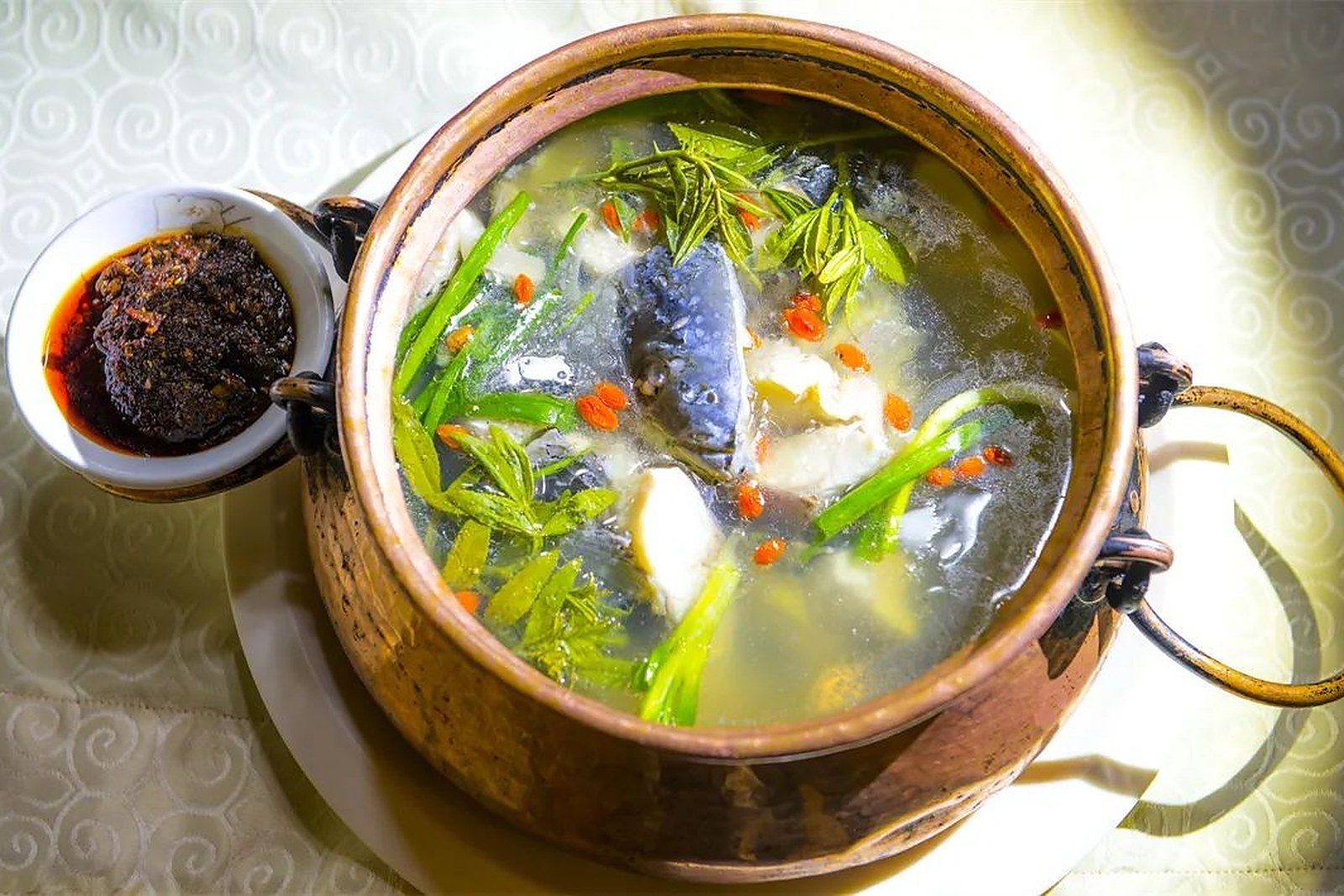
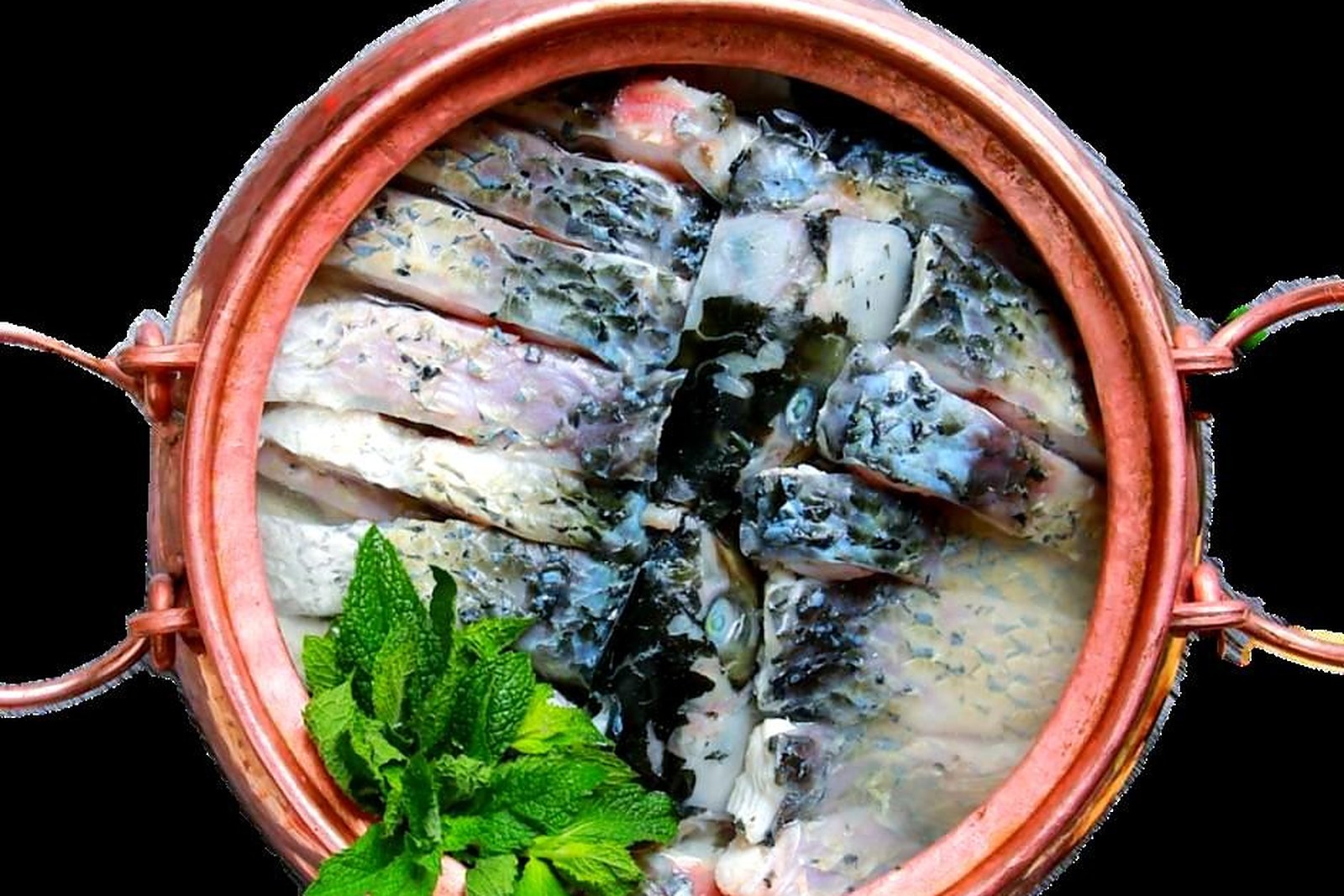
The mechanism is water and freshness. The pot is filled with cold lake water, a few slices of 姜 jiāng ginger, maybe a stick of 花椒 huājiāo Sichuan pepper and a pinch of salt — nothing else — and brought to the boil before the fish goes in. Cloud of steam, lid on, and the fish is done in minutes; the broth stays clear with a faint 奶白 nǎibái milky cast, sweet rather than fishy, and that broth is the first course, sipped from small bowls before any dipping. The meat is eaten plain first too, then dipped: the 蘸水 zhànshuǐ is 糊辣椒 hú làjiāo roasted dry in a pan and mashed coarse with salt and 花椒面 huājiāo miàn Sichuan-pepper powder, wet with a spoonful of pot broth, and the Yunnan signature, a bunch of fresh 薄荷 bòhé mint. The 洋芋饭 yángyù fàn follows the same copper-pot tradition — rice and diced 洋芋 yángyù potato steamed with oil and salt until the bottom forms a crust of 锅巴 guōbā — and the 腌菜 yāncài pickles cut through the sweetness of the lake fish.
Locals eat it by the water, at lunch. The honest move is a table at one of the fishing-village restaurants scattered along Fuxian’s shoreline, order the fish by the 斤 jīn — a whole fish for two or three people — and let the pot boil while the 蘸水 zhànshuǐ is mixed at the table worth confirming. A pot typically runs 80-200 yuan depending on the fish and the size of the party, with the fish priced by weight before cooking worth confirming. The honest tests are the broth and the freshness: the soup should be clear and sweet, and the meat should flake clean off the bone. Autumn is the fattest season, when the lake fish have fed all summer worth confirming, but the pot sells year-round, and in the hot months the same lake stalls send out 凉米线 liáng mǐxiàn cool rice noodles. Newcomers are told to trust the plainness: a 铜锅鱼 tóngguō yú that arrives loaded with chili and herbs in the pot itself is hiding the fish, and the whole point of the Yuxi pot is that the lake does the cooking.
Words and Names
铜锅鱼 Tóngguō Yú brass pot fish · 玉溪 Yùxī Yuxi · 云南 Yúnnán Yunnan · 抚仙湖 Fǔxiān Hú Fuxian Lake · 铜锅 Tóngguō brass pot · 泉水 Quánshuǐ spring water · 抗浪鱼 Kànglàngyú kanglang fish · 鲫鱼 Jìyú crucian carp · 鲤鱼 Lǐyú common carp · 先喝汤,后吃鱼 Xiān Hē Tāng, Hòu Chī Yú broth first, fish after · 蘸水 Zhànshuǐ the dip · 糊辣椒 Hú Làjiāo roasted mashed chili · 花椒面 Huājiāo Miàn Sichuan-pepper powder · 薄荷 Bòhé mint · 洋芋饭 Yángyù Fàn potato rice · 洋芋 Yángyù potato · 锅巴 Guōbā rice crust · 腌菜 Yāncài pickles · 姜 Jiāng ginger · 花椒 Huājiāo Sichuan pepper · 奶白 Nǎibái milky-pale · 斤 Jīn half-kilo weight · 凉米线 Liáng Mǐxiàn cool rice noodles
What the Locals Know
- The order is the ritual: 先喝汤,后吃鱼 xiān hē tāng, hòu chī yú — the broth comes first, sipped plain from small bowls, because the whole pot is built around the sweetness of the lake water, not the spice.
- The dip carries the heat, never the pot: 糊辣椒 hú làjiāo mashed with 花椒面 huājiāo miàn and salt, wet with pot broth; if the chili is already in the soup, the kitchen is covering for the fish.
- 抗浪鱼 Kànglàngyú is the heritage fish, but the wild stock is protected and rarely on menus — order farmed 鲫鱼 jìyú or 鲤鱼 lǐyú and do not expect the legendary kanglang at a normal table worth confirming.
- The 洋芋饭 yángyù fàn is not a side dish but half the meal: rice and diced potato steamed in copper with oil and salt, and the 锅巴 guōbā crust at the bottom is what regulars ask for first.
- Fresh 薄荷 bòhé in the dip is the local signature — cooling and fragrant against the sweet fish — and skipping it is the one mistake newcomers make.
flowcloud would say that the brass pot fish is Fuxian Lake in a copper cone — farmed carp boiled in lake water with ginger, broth sipped first, fish dipped in 糊辣椒 hú làjiāo with mint, and 洋芋饭 yángyù fàn crusting beside it — and that the honest move is a shoreline village table, fish by the 斤 jīn, because the lake does the cooking and the chili is your choice. All checked October 2026.
Where to find it: the lakeside villages and restaurants of 抚仙湖 Fúxiān Hú – 禄充 Lùchōng and the 澄江 Chéngjiāng shore – where the copper pot is cooked over charcoal at the table (worth confirming the details); a pot for two runs a modest sum by lake standards, and the honest pairing is 洋芋焖饭 yángtǔ mèn fàn potato-cooked rice. All checked October 2026.