
一碗凉米线下肚,暑气消去一半。Yī wǎn Liáng Mǐxiàn xià dù, shǔqì xiāo qù yī bàn. – One bowl of cool rice noodles down; half the summer heat is gone.
凉米线 Liáng Mǐxiàn cool rice noodles are Yuxi’s answer to a summer morning, the cold twin of the city’s soup-noodle habit. 云南 Yúnnán Yunnan runs on 米线 mǐxiàn rice noodles, but when the thermometer climbs the bowls flip from hot soup to 凉拌 liángbàn cold-tossed: the noodles are boiled, then rinsed in cold water until completely cool, drained, and dressed with 醋 cù vinegar, 辣椒油 làjiāo yóu chili oil, 蒜水 suàn shuǐ garlic water, 花生碎 huāshēng suì crushed peanuts, chopped 韭菜 jiǔcài Chinese chives, slices of 豌豆粉 wāndòu fěn pea-starch jelly, and a 肉帽 ròumào meat cap — a spoon of savoury 肉酱 ròujiàng minced-meat sauce crowning the bowl. It is a breakfast food, sold from dawn through mid-morning in the hot months, and the profile is 酸辣 suān là sour-hot: the vinegar wakes you up, the chili oil sweats the heat out, and the cold noodles make the whole thing possible at 30 °C worth confirming.
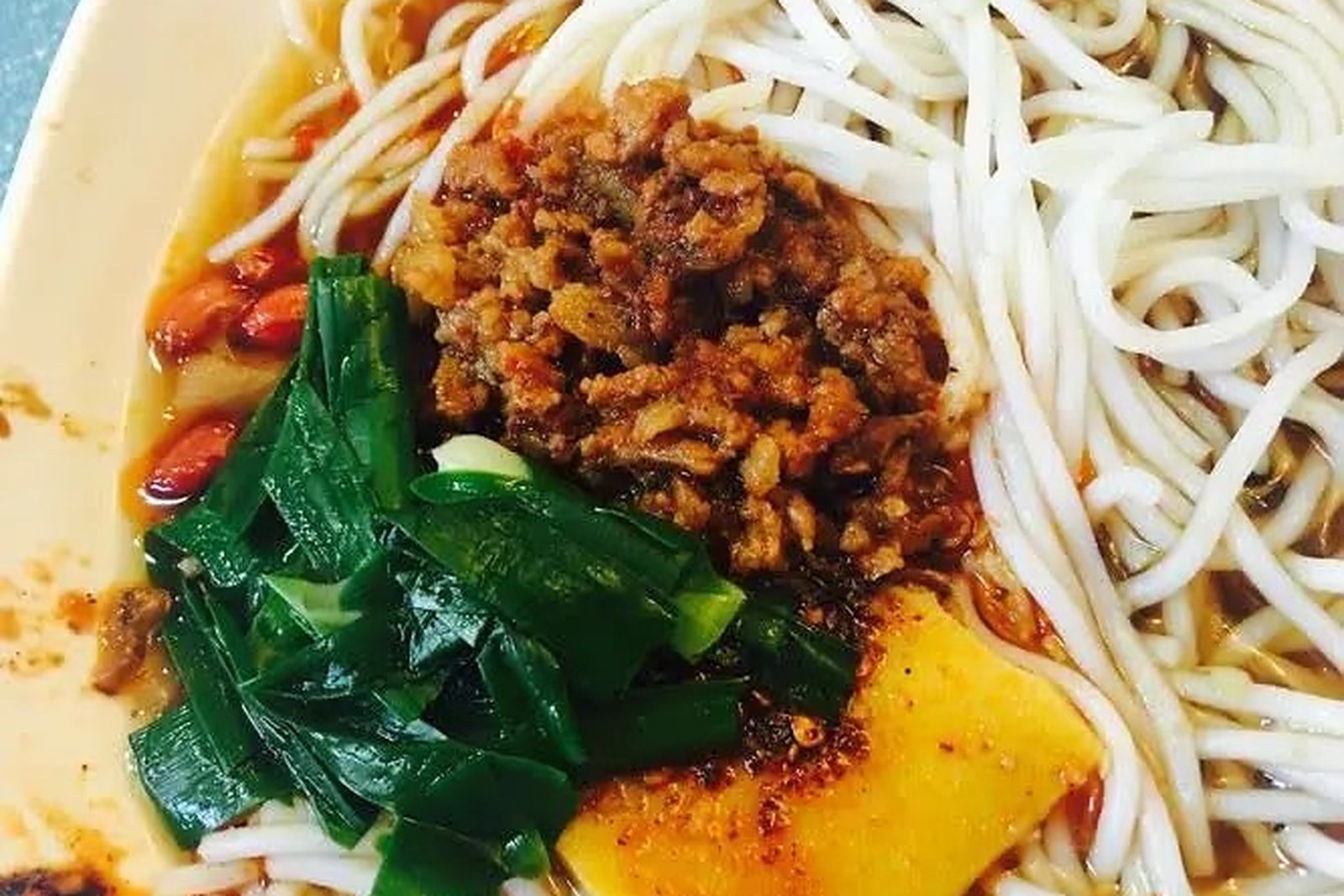
The mechanism is temperature and dressing. Cold 凉米线 liáng mǐxiàn is built to be eaten fast, so everything is prepared ahead: the 米线 mǐxiàn is scalded in the morning, 过凉水 guò liángshuǐ rinsed in cold water — traditionally well water or chilled boiled water — and left to drain, which firms the strands and washes off surface starch so the dressing clings instead of turning pasty. The dressing is assembled in the bowl, not cooked: 醋 cù for the sour, 油辣椒 yóu làjiāo chili-in-oil for the heat and the red slick, 蒜水 suàn shuǐ for the bite, and 花生碎 huāshēng suì for the crunch against the slippery noodles. The 豌豆粉 wāndòu fěn pea jelly, cut into 凉粉片 liángfěn piàn thin slices, adds a cool, quivering 滑 huá slip, and the 肉酱 ròujiàng on top — usually pork fried with 昭通酱 Zhāotōng jiàng Zhaotong sauce or 豆瓣酱 dòubàn jiàng broad-bean paste — gives the dish its savoury base worth confirming. The honest test is the noodle itself: it should be 滑 huá slippery and springy, never 烂 làn mushy, and it should be cold all the way through.
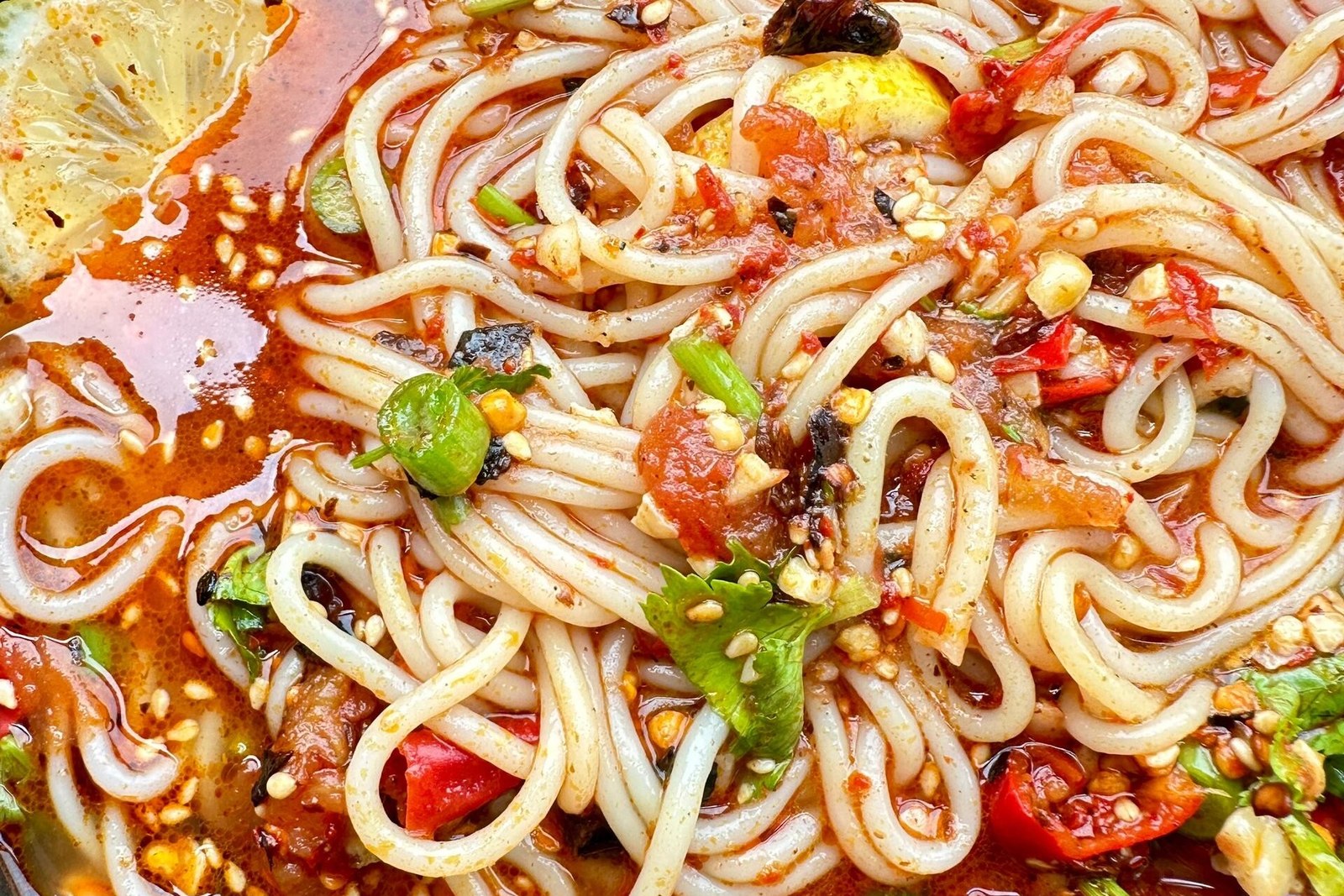
Locals eat it in the summer, before the heat. The honest move is a street stall near a 菜市场 càishìchǎng market, a school gate or an office block in 玉溪 Yùxī city, order a bowl, and take it with the stall’s own balance of vinegar and chili — the ratio is the cook’s signature, and regulars know their favourite stall by the 酸 suān alone. A bowl runs roughly 6-12 yuan, more with extra 肉酱 ròujiàng or 凉粉 liángfěn worth confirming. The season is real: the stalls trade from late spring through the hottest weeks, roughly May to September, and by October the same stands switch back to hot soup noodles worth confirming. The standard Yuxi summer one-two is a bowl of 凉米线 liáng mǐxiàn followed by a bowl of 木瓜水 mùguā shuǐ papaya water from the same stall — sour-hot first, sweet-cold second — and the same stands often sell 凉卷粉 liáng juǎnfěn cool rice sheets, the wider, silkier cousin of the noodle.
Words and Names
凉米线 Liáng Mǐxiàn cool rice noodles · 米线 Mǐxiàn rice noodles · 凉拌 Liángbàn cold-tossed · 过凉水 Guò Liángshuǐ to rinse in cold water · 醋 Cù vinegar · 辣椒油 Làjiāo Yóu chili oil · 油辣椒 Yóu Làjiāo chili-in-oil · 蒜水 Suàn Shuǐ garlic water · 花生碎 Huāshēng Suì crushed peanuts · 韭菜 Jiǔcài Chinese chives · 豌豆粉 Wāndòu Fěn pea-starch jelly · 凉粉片 Liángfěn Piàn jelly slices · 凉粉 Liángfěn jelly · 肉帽 Ròumào meat cap · 肉酱 Ròujiàng minced-meat sauce · 酸辣 Suān Là sour-hot · 酸 Suān sourness · 滑 Huá slippery · 烂 Làn mushy · 昭通酱 Zhāotōng Jiàng Zhaotong sauce · 豆瓣酱 Dòubàn Jiàng broad-bean paste · 凉卷粉 Liáng Juǎnfěn cool rice sheets · 木瓜水 Mùguā Shuǐ papaya water · 玉溪 Yùxī Yuxi · 云南 Yúnnán Yunnan · 菜市场 Càishìchǎng market
What the Locals Know
- The noodle is the test: 滑 huá and springy, cold all the way through; 烂 làn mushy strands mean it was rinsed too early or left to sit, and no dressing rescues it.
- The vinegar-to-chili ratio is the cook’s signature — regulars pick their stall by the 酸 suān, and asking for 多醋少辣 duō cù shǎo là extra vinegar, less chili is the local shorthand.
- It is a morning food: the stalls sell out by mid-morning and close before the real heat, so a two-o’clock craving is better served by 木瓜水 mùguā shuǐ alone worth confirming.
- The 肉帽 ròumào — a spoon of 肉酱 ròujiàng on top — is what turns the bowl from a snack into a breakfast; the plain version is lighter but emptier.
- The summer pairing is fixed: 凉米线 liáng mǐxiàn first, then a bowl of 木瓜水 mùguā shuǐ from the same stall — the same stands usually sell both.
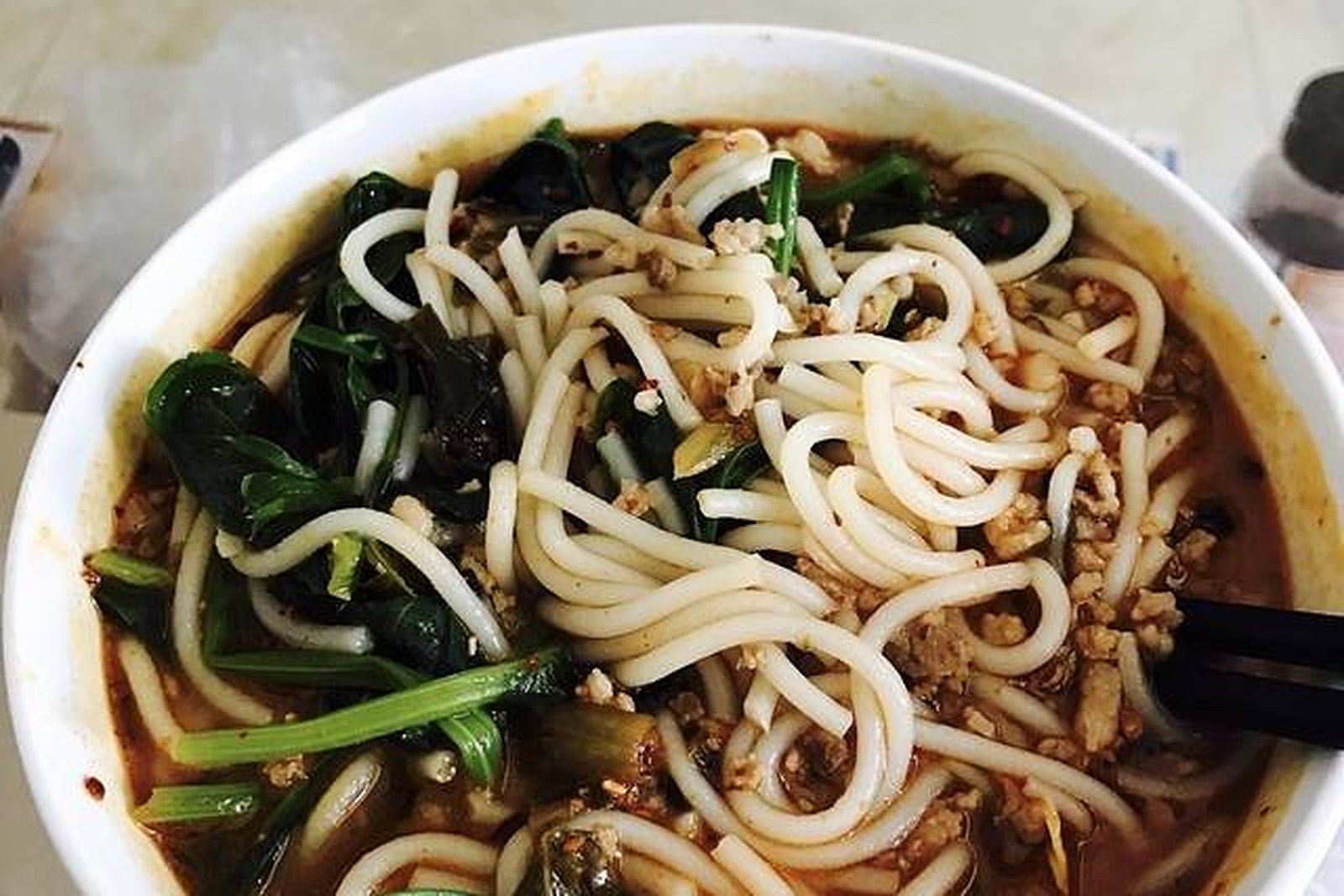
flowcloud would say that the cool rice noodles are Yuxi’s summer switch — 米线 mǐxiàn rinsed cold and dressed with 醋 cù, 油辣椒 yóu làjiāo and a 肉帽 ròumào of 肉酱 ròujiàng — and that the honest move is the school-gate stall at seven in the morning, sour-hot first and sweet-cold second, because half the summer heat goes with the first spoon. All checked October 2026.
Where to find it: the summer stalls and 小吃 xiǎochī shops of 玉溪 Yùxī, on sale through the hot months (worth confirming the details); a bowl is a few yuan, best eaten at the roadside table with 油条 yóutiáo fried dough on the side. All checked October 2026.