
通海豆末糖,层薄如纸,甜而不腻。Tōnghǎi Dòumò Táng, céng bó rú zhǐ, tián ér bù nì. – Tonghai’s soybean candy: layers thin as paper, sweet yet not cloying.
豆末糖 Dòumò Táng soybean candy is the 手信 shǒuxìn souvenir sweet of 通海 Tōnghǎi Tonghai, the county under 玉溪 Yùxī Yuxi whose old town still trades on its 明清 Míng-Qīng Ming-Qing market-town past, and the candy is said to have been invented there in the 清代 Qīdài Qing dynasty worth confirming. It is a 酥糖 sūtáng crisp candy of only three ingredients — 黄豆 huángdòu soybeans, 白糖 báitáng white sugar and 饴糖 yítáng malt sugar — and the craft is all in the layers: a sugar core, pulled and folded again and again, wrapped in dozens of tissue-thin sheets until the layers run 薄如纸 bó rú zhǐ thin as paper. The bite is the point: 豆末糖 dòumò táng does not chew, it 酥 sū crumbles, melting on the tongue into roasted 豆末 dòumò soybean flour and sugar, and the roasted flour cuts the sweetness so the candy finishes 甜而不腻 tián ér bù nì sweet but not cloying. Wrapped in paper and packed in boxes, it is what visitors carry home from Tonghai, and a tin of it on the table with 普洱茶 Pǔ’ěr chá Pu’er tea is the county’s own afternoon.
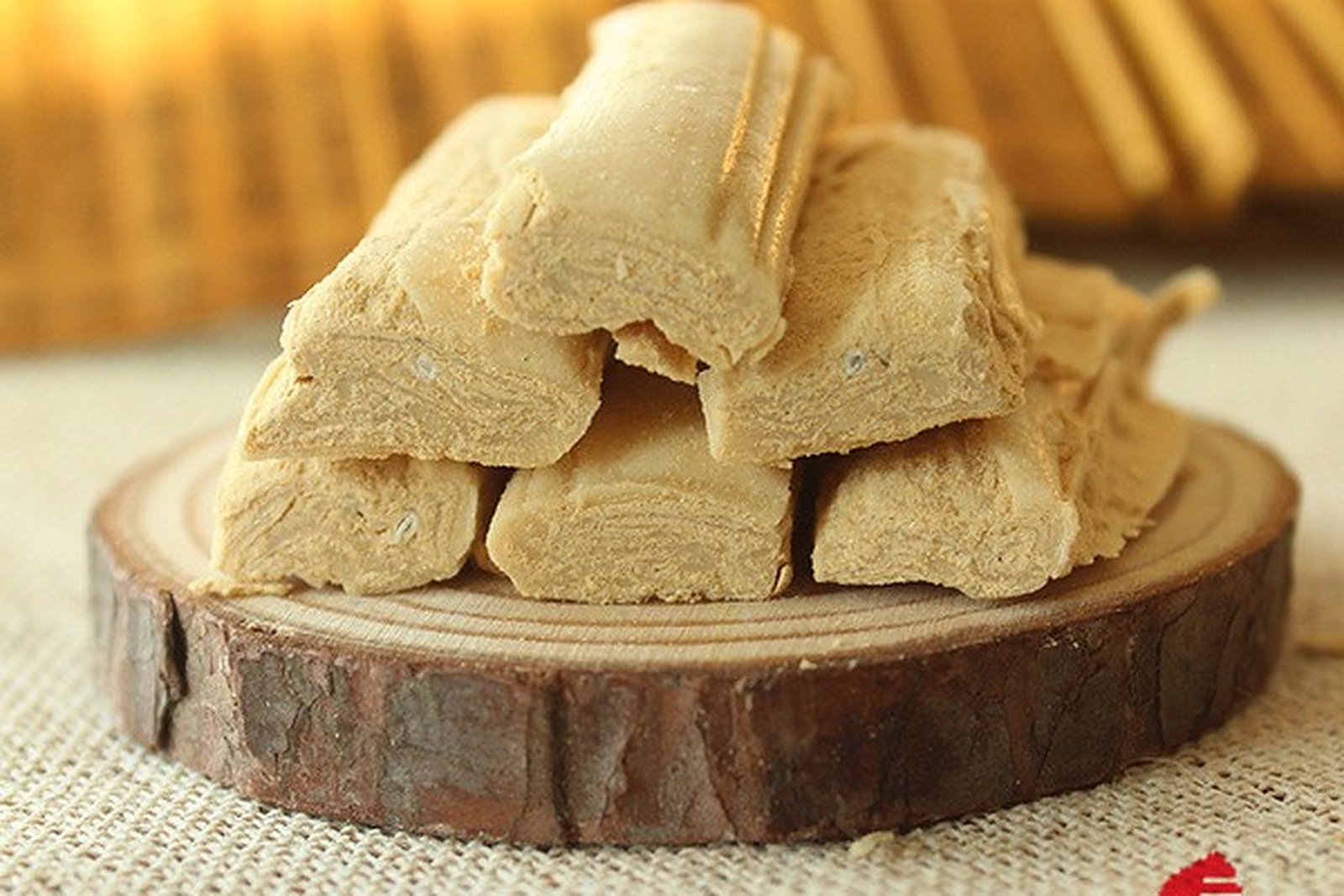
The mechanism is the pull. The soybeans are first 炒 chǎo dry-roasted in a wok until they darken a shade and turn nutty, then 磨 mó milled and sifted into a fine, pale-yellow 豆末 dòumò soybean flour. The sugar core is white sugar boiled with 饴糖 yítáng into a thick syrup, cooled to the pull, and then the 拉糖 lātáng sugar-pulling begins: the syrup is stretched into a ribbon, dusted with soybean flour, folded over itself, stretched again — and each fold doubles the layers, so a candy of a hundred sheets is made from a hundred folds, not a hundred additions worth confirming. The pull is temperature work: too cold and the layers crack into shards, too warm and they merge into a single mass. The stretched bar is finally cut into small bricks and packed, and a good piece breaks with a dry 酥 sū snap, releasing a puff of soybean flour, then dissolves almost instantly — the flour is what makes it melt rather than stick to the teeth like an ordinary 水果糖 shuǐguǒ táng hard candy.
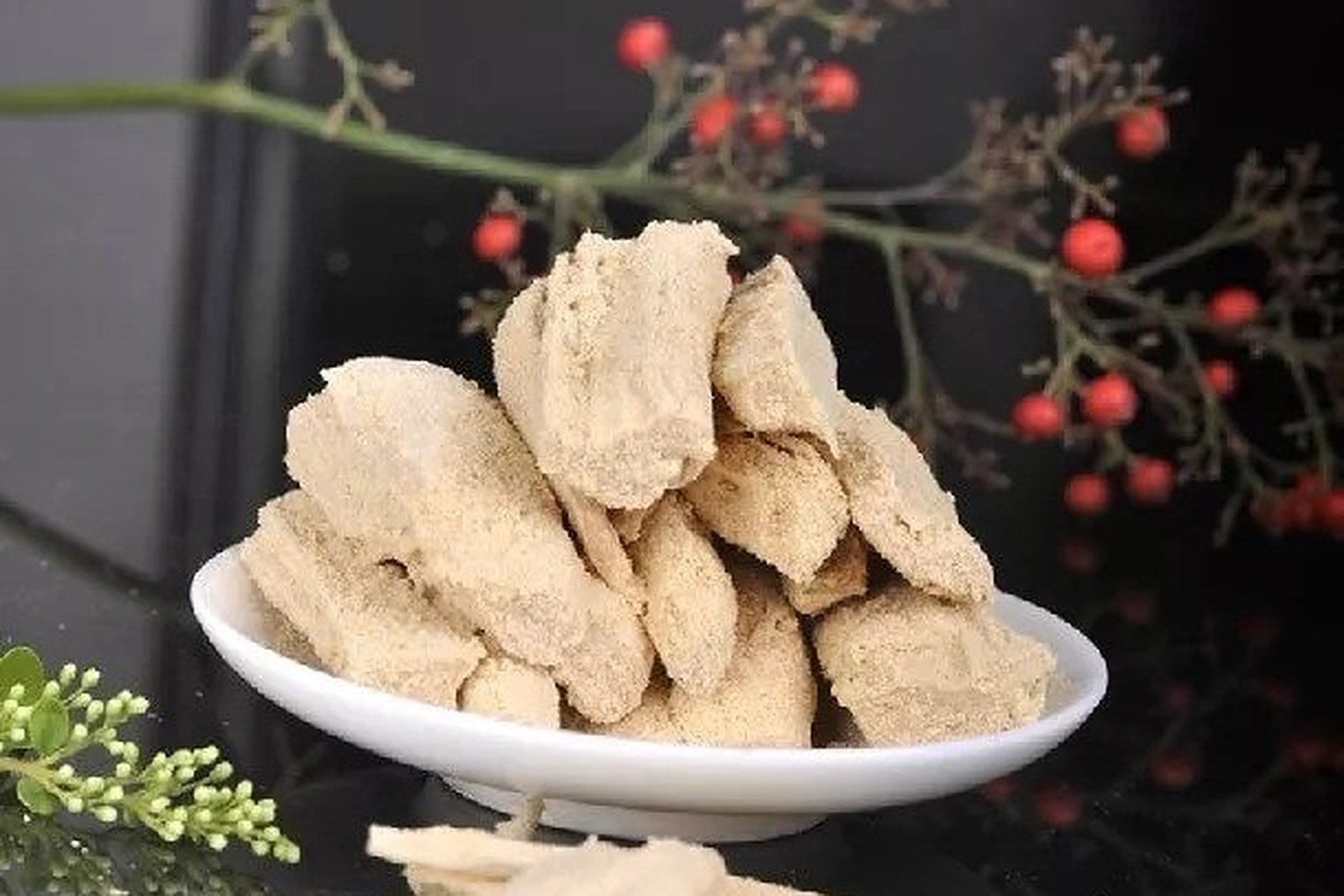
Locals buy it in boxes, by the 斤 jīn or by the piece, from the old candy shops around 通海古城 Tōnghǎi Gǔchéng Tonghai old town and the county market — the 老字号 lǎozìhào old-brand houses that still pull their own sugar, alongside newer workshops selling the same candy in souvenir packaging worth confirming. Prices are modest — a box of a dozen or so pieces runs a few tens of yuan worth confirming — and the honest buying test is the layer count: break a piece and look at the edge, because a real 豆末糖 dòumò táng shows its sheets like the pages of a book, while a dense, uniform sweet is an imitation. Traditionally a cool-season craft, because the sugar pulls best when the air is cold and dry, the candy is sold year-round but freshest in autumn and winter worth confirming. Buy small, buy often: the enemy of the candy is moisture, and a box left open in Yuxi’s summer humidity goes soft within days. Serve it as Tonghai does — with strong 普洱茶 Pǔ’ěr chá Pu’er tea, the bitterness of the tea cutting through the sugar.
Words and Names
豆末糖 Dòumò Táng soybean candy · 通海 Tōnghǎi Tonghai · 玉溪 Yùxī Yuxi · 手信 Shǒuxìn souvenir gift · 酥糖 Sūtáng crisp candy · 黄豆 Huángdòu soybean · 豆末 Dòumò soybean flour · 白糖 Báitáng white sugar · 饴糖 Yítáng malt sugar · 炒 Chǎo to dry-roast · 磨 Mó to mill · 拉糖 Lātáng sugar-pulling · 薄如纸 Bó Rú Zhǐ thin as paper · 酥 Sū crisp, crumbly · 甜而不腻 Tián Ér Bù Nì sweet yet not cloying · 水果糖 Shuǐguǒ Táng hard candy · 通海古城 Tōnghǎi Gǔchéng Tonghai old town · 老字号 Lǎozìhào old-brand shop · 斤 Jīn half-kilo weight · 普洱茶 Pǔ’ěr Chá Pu’er tea · 清代 Qīdài Qing dynasty · 明清 Míng-Qīng Ming-Qing
What the Locals Know
- Look at the broken edge: a real 豆末糖 dòumò táng shows dozens of pale layers like the pages of a book — a uniform, dense sweet is an imitation, whatever the box says.
- It is eaten with 普洱茶 Pǔ’ěr chá, never alone in quantity: the bitterness of the tea is the traditional counterweight to the sugar, and the pairing is the county’s afternoon habit.
- Keep the box sealed: roasted soybean flour drinks humidity, and in a Yuxi summer the candy goes soft and loses its 酥 sū crumble within days.
- The 饴糖 yítáng malt sugar is what holds the layers together — a candy that snaps too cleanly into glassy shards has been made with syrup instead worth confirming.
- Buy from the 老字号 lǎozìhào houses that pull their own sugar around 通海古城 Tōnghǎi Gǔchéng, and buy small boxes rather than the big gift cartons worth confirming.
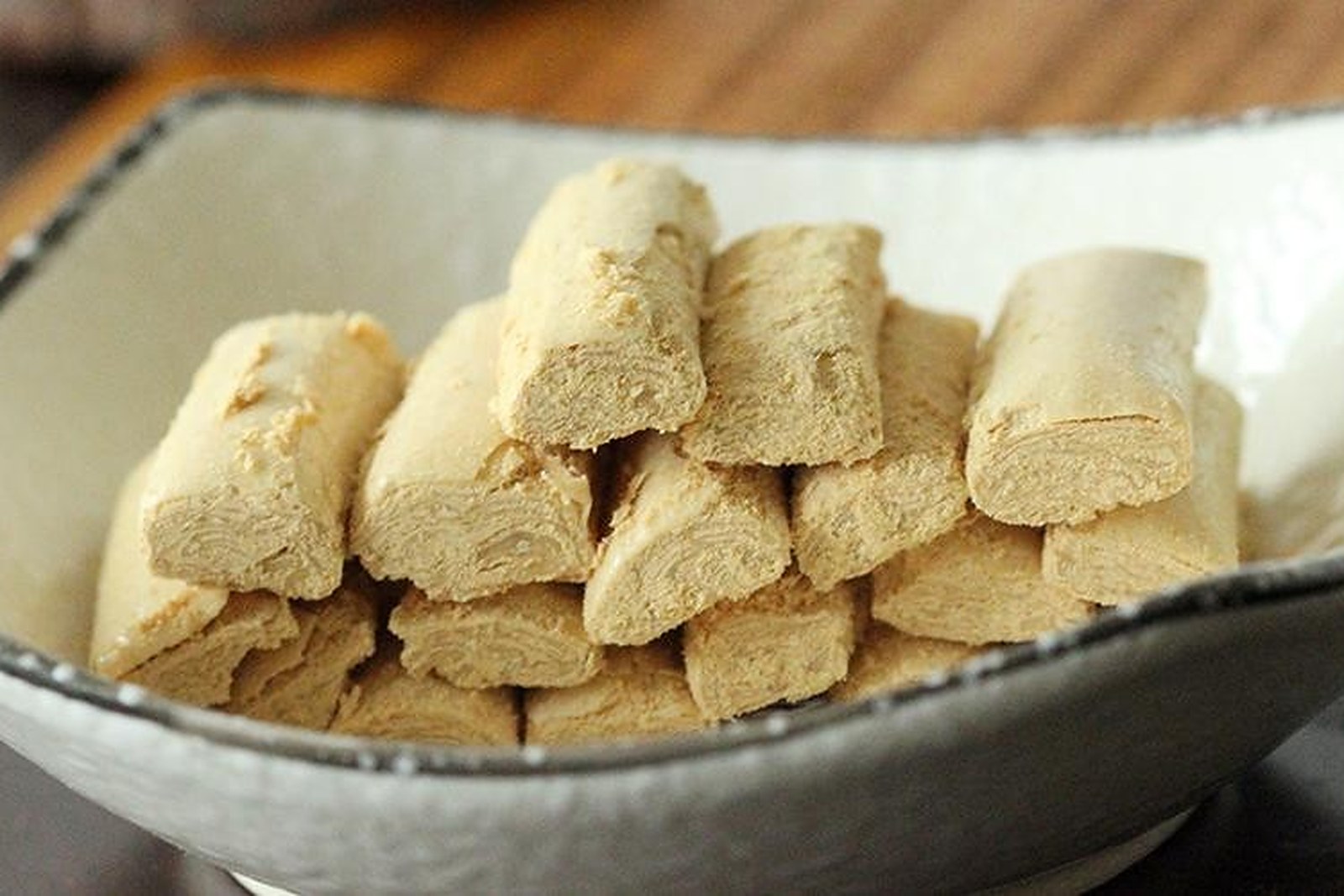
flowcloud would say that domotang is one hundred folds and three ingredients — 黄豆 huángdòu roasted, milled and pulled with 饴糖 yítáng until the layers run 薄如纸 bó rú zhǐ — and that the honest move is a small box from a 通海古城 Tōnghǎi Gǔchéng old-brand counter, broken open over strong 普洱茶 Pǔ’ěr chá, because the candy crumbles, melts and lets the tea do the second half. All checked October 2026.
Where to find it: the 十字街 Shízì Jiē shops of 通海 Tōnghǎi county town, where the candy is made and sold warm (worth confirming the details); paper-twist boxes make the standard souvenir, and the honest pairing is a pot of 普洱茶 pǔ’ěrchá. All checked October 2026.