
晨起一碗鳝鱼米线,油重辣厚顶一天。Chén qǐ yī wǎn Shànyú Mǐxiàn, yóu zhòng là hòu dǐng yī tiān. – A bowl of eel rice noodles at dawn; heavy oil and thick chili carry the whole day.
鳝鱼米线 Shànyú Mǐxiàn eel rice noodles are the 早点 zǎodiān breakfast classic of 玉溪 Yùxī Yuxi, the dish the city wakes up for. 云南 Yúnnán Yunnan is noodle country — 过桥米线 Guòqiáo Mǐxiàn crossing-the-bridge rice noodles may be the province’s famous export — but Yuxi’s own answer is heavier and redder: a bowl of 米线 mǐxiàn rice noodles drowned under a topping of 鳝鱼 shànyú eel, specifically 黄鳝 huángshàn ricefield eel, cut into segments and 红烧 hóngshāo red-braised or 爆炒 bàochǎo wok-fried with dried chili, 花椒 huājiāo Sichuan pepper, garlic and 韭菜 jiǔcài Chinese chives. The dish is deliberately 重油重辣 zhòng yóu zhòng là heavy on oil and chili, and the old-school version goes further: a 血酱 xuèjiàng blood sauce, the eel’s own 鳝血 shànxuè stirred into the braise to thicken it dark and glossy worth confirming. It is a morning food only — eaten at dawn or mid-morning, washed down with 豆浆 dòujiāng soy milk, with 油条 yóutiáo fried dough sticks on the side for dipping.
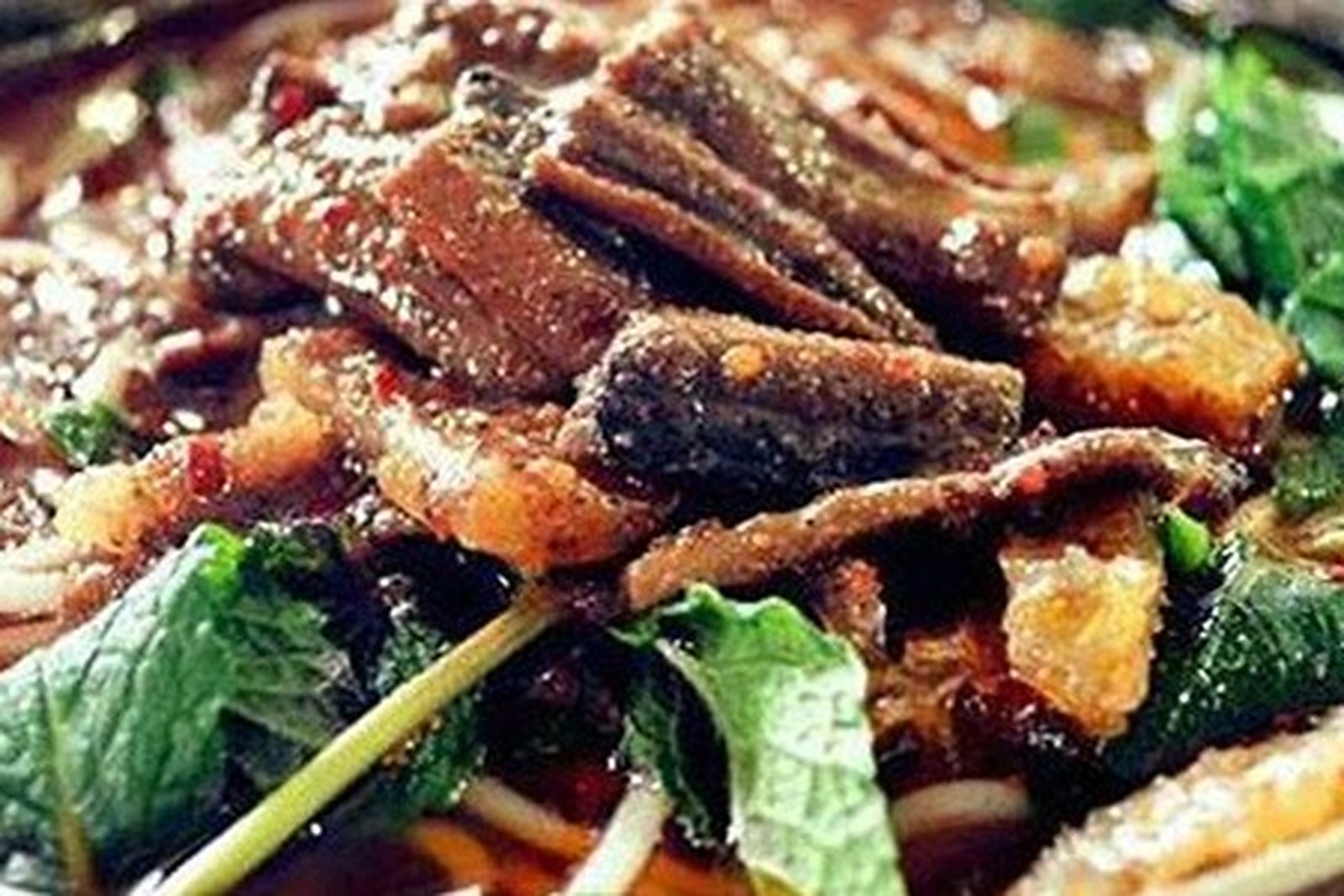
The mechanism is the eel and the red oil. The eels are cleaned and cut into finger-length segments, sometimes scored, then thrown into a hot wok with more oil than seems reasonable; the oil is what carries the 干辣椒 gān làjiāo dried chili, the 花椒 huājiāo, the 姜 jiāng and 蒜 suàn, and what keeps the meat from tightening. The braise is short and fierce — the eel should come out 滑嫩 huá nèn slippery-tender with a little bite in the bone — and a handful of 韭菜 jiǔcài and 薄荷 bòhé mint goes in at the last second for colour and lift. The bowl is built in reverse of soup noodles: the 米线 mǐxiàn, just scalded in boiling water and drained, goes in first, the eel and its 红油 hóngyóu chili oil are ladled over the top, and the eater is expected to toss everything from the bottom, because the oil pools under the noodles. Eat it fast, while the noodles are still hot and slick; let it sit and the 米线 mǐxiàn soaks up every drop of oil and turns heavy.
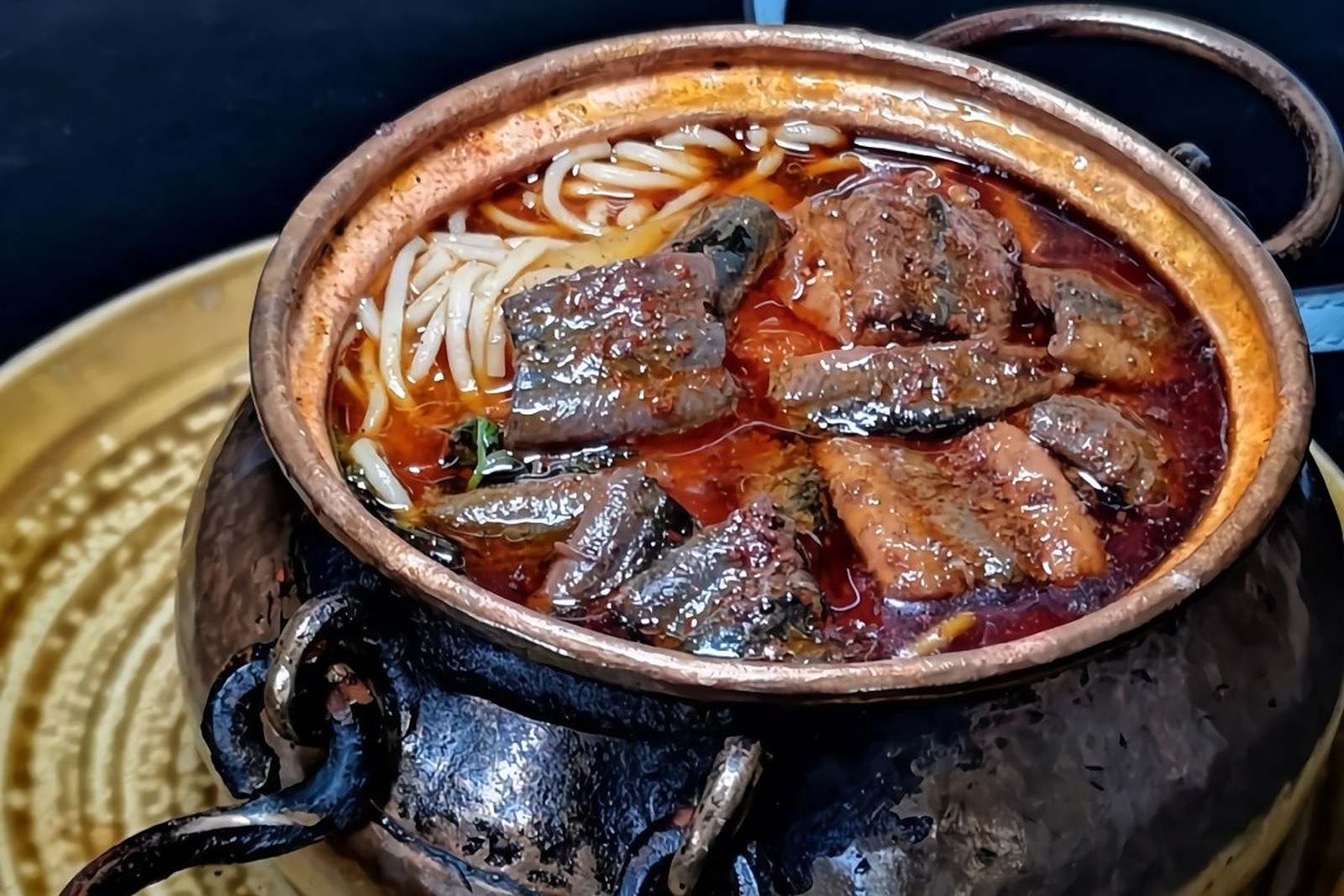
Locals eat it early, standing or at a plastic stool. The honest move is a morning-only shop or a 街边摊 jiēbiān tān street stall near a market or the old streets of 玉溪 Yùxī city, in the window of roughly six to ten in the morning, and the rule is to go early — the good pots cook a fixed number of eels and 卖完就收 mài wán jiù shōu close when they run out worth confirming. A bowl runs about 8-15 yuan, more for the 血酱 xuèjiàng version worth confirming. The 油条 yóutiáo is not decoration: torn into pieces and dipped into the leftover sauce at the bottom of the bowl, it is the traditional finish, and a cup of 豆浆 dòujiāng soy milk, sweet or plain, is the cooling counterweight to the chili. There is no real season — the pot sells year-round — but summer mornings, when the appetite needs the shock, are when the queues are longest.
Words and Names
鳝鱼米线 Shànyú Mǐxiàn eel rice noodles · 鳝鱼 Shànyú eel · 黄鳝 Huángshàn ricefield eel · 米线 Mǐxiàn rice noodles · 红烧 Hóngshāo red-braising · 爆炒 Bàochǎo wok-frying · 重油重辣 Zhòng Yóu Zhòng Là heavy oil, heavy chili · 血酱 Xuèjiàng blood sauce · 鳝血 Shànxuè eel blood · 红油 Hóngyóu chili oil · 干辣椒 Gān Làjiāo dried chili · 花椒 Huājiāo Sichuan pepper · 韭菜 Jiǔcài Chinese chives · 薄荷 Bòhé mint · 姜 Jiāng ginger · 蒜 Suàn garlic · 滑嫩 Huá Nèn slippery-tender · 油条 Yóutiáo fried dough stick · 豆浆 Dòujiāng soy milk · 早点 Zǎodiān breakfast · 卖完就收 Mài Wán Jiù Shōu close when sold out · 玉溪 Yùxī Yuxi · 云南 Yúnnán Yunnan · 过桥米线 Guòqiáo Mǐxiàn crossing-the-bridge rice noodles
What the Locals Know
- Go before eight: the eel is cooked in batches and the good shops 卖完就收 mài wán jiù shōu — close when the pot is empty — so a late breakfast means no eel at all worth confirming.
- Toss the bowl from the bottom: the 红油 hóngyóu and sauce settle under the 米线 mǐxiàn, and eating from the top gives you plain noodles while the last mouthful is pure chili oil.
- The 血酱 xuèjiàng version — eel blood stirred into the braise for a dark, thick gloss — is the old-school marker; a shop that offers it processed its eels in-house worth confirming.
- 重油重辣 zhòng yóu zhòng là is the dish’s identity, not an accident; ask for less chili and you get a polite bowl that is no longer the real thing.
- Finish with 油条 yóutiáo dipped in the leftover sauce and a 豆浆 dòujiāng to cool the heat — that pairing is the local breakfast formula.
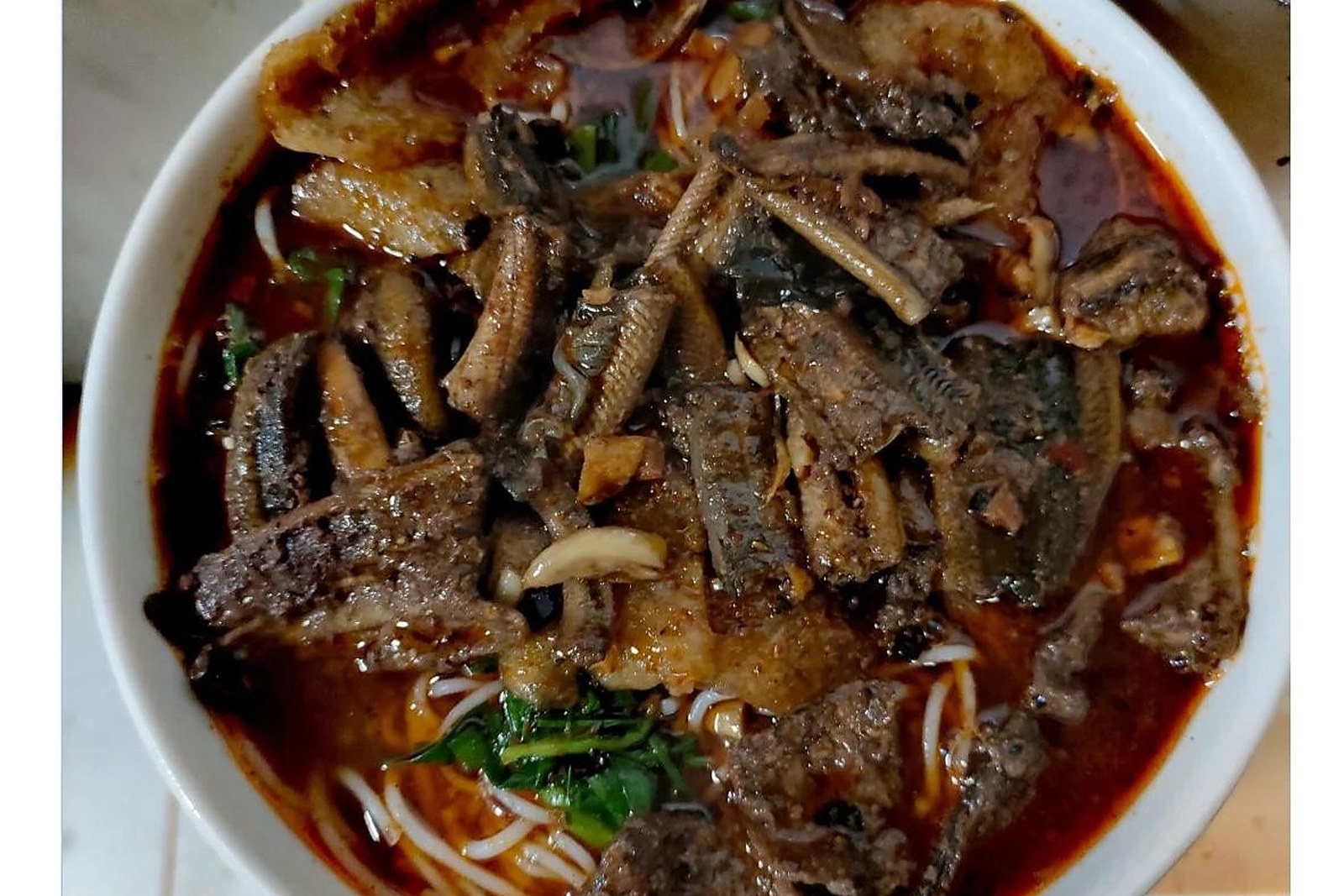
flowcloud would say that the eel rice noodles are Yuxi’s morning fuel — red-braised 黄鳝 huángshàn segments drowned in 红油 hóngyóu over hot 米线 mǐxiàn, tossed from the bottom, finished with 油条 yóutiáo dipped in the sauce — and that the honest move is the six-a.m. stall before the pot runs dry, because in this city breakfast is supposed to be heavy, red and fast. All checked October 2026.
Where to find it: the breakfast shops and 米线 mǐxiàn counters of 玉溪 Yùxī city, served from the morning until the bowls run out (worth confirming the details); a bowl costs a few yuan, and the honest hour is early, when the 鳝鱼 shànyú eels are fresh and the queues are local. All checked October 2026.