
Zangxiang Pork — the Forest Pig of the Nyingchi Valleys
放养山林食橡果,皮薄肉香天下殊 Fàngyǎng shānlín shí xiàngguǒ, pí báo ròu xiāng tiānxià shū – Raised free in the mountain woods on acorns; thin-skinned, fragrant meat unlike anywhere else
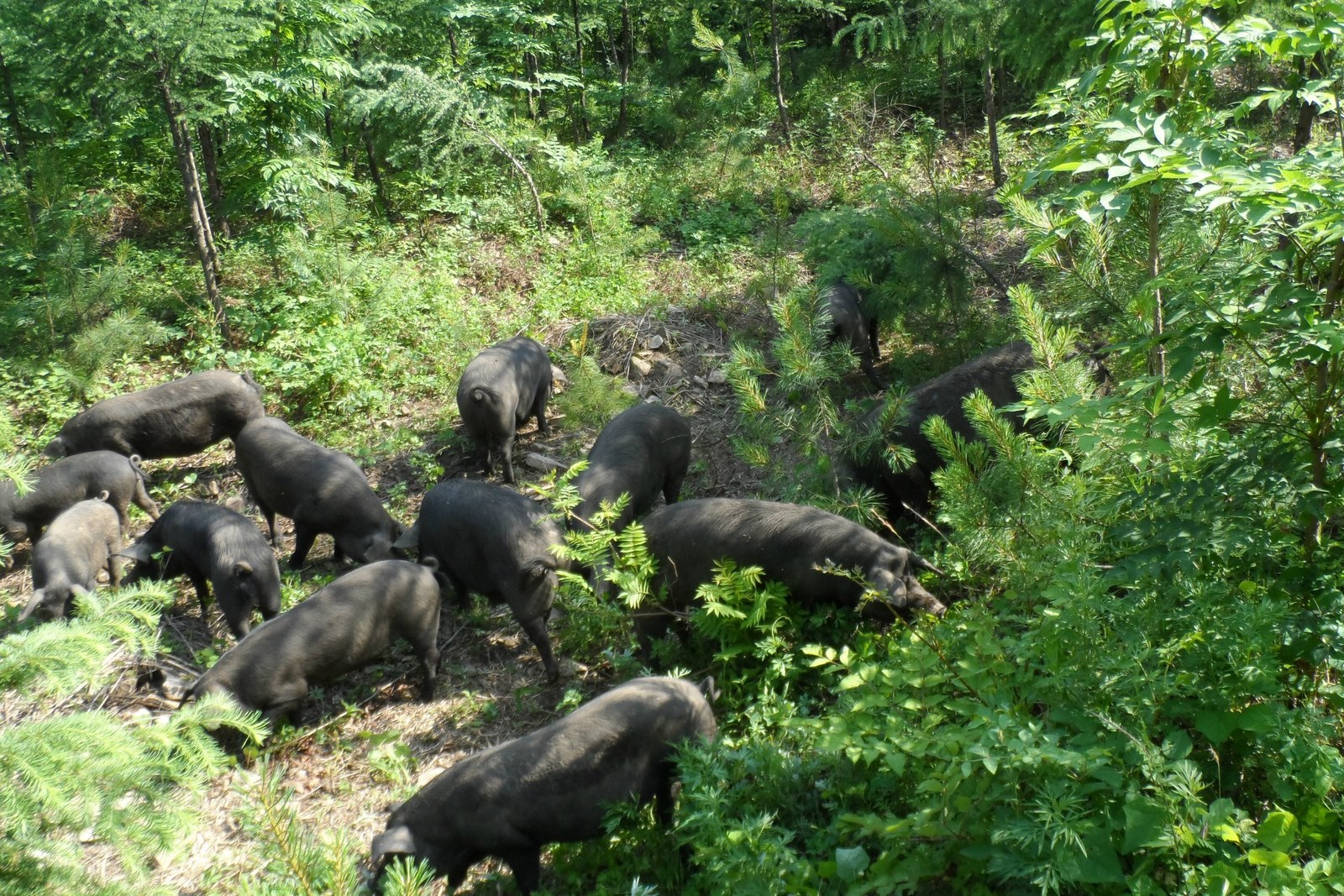
藏香猪 Zàngxiāng Zhū Meet the zangxiang, the fragrant pig – a small black breed that lives half-wild in the forests around 林芝市 Línzhī Shì Nyingchi’s valley villages, farrowing under the oaks and foraging on roots, mushrooms and acorns. Full-grown, it is barely the size of a medium dog; slow-raised over a year or more on what the forest provides, it develops pork of an intensity that shocks first-time eaters.
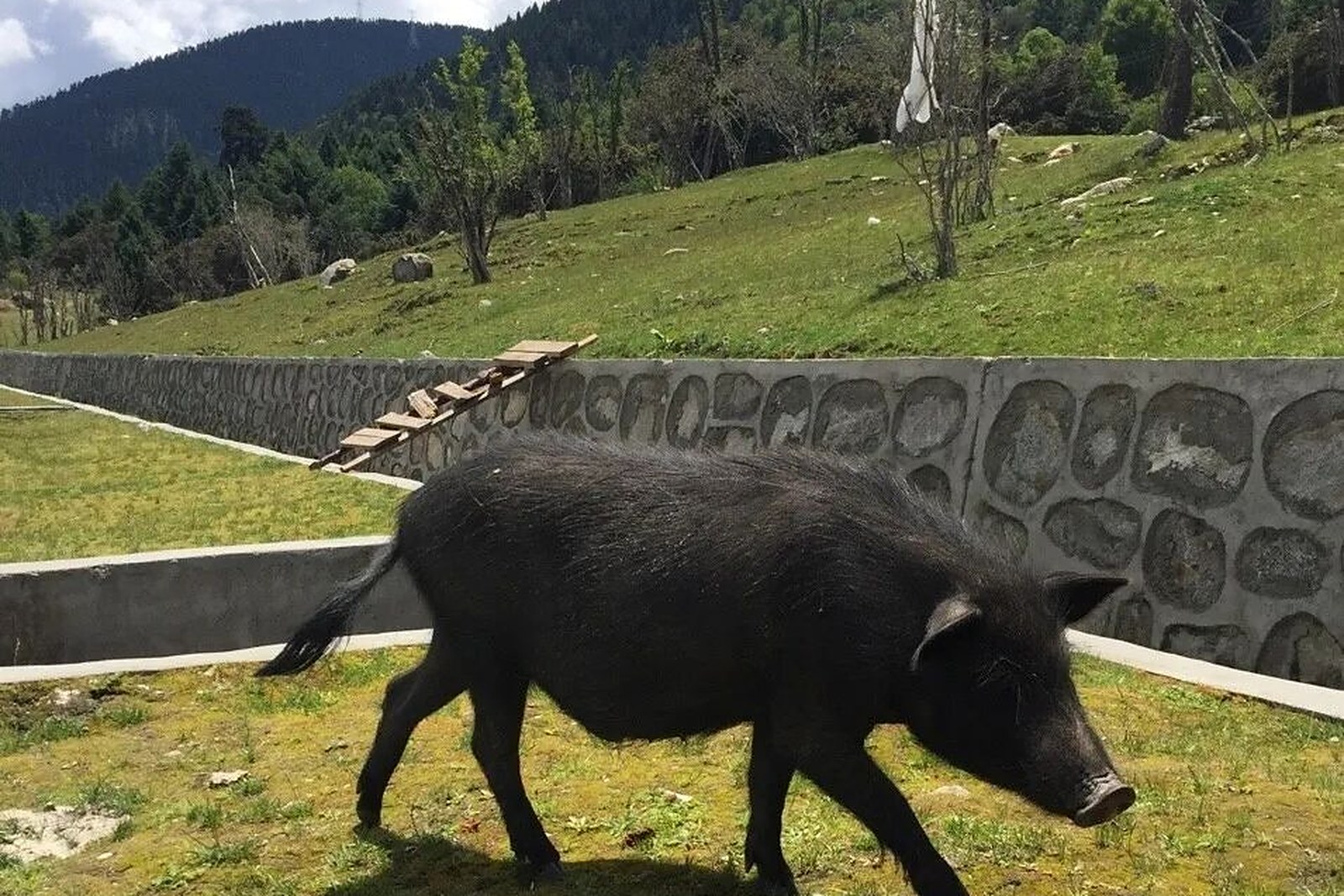
The flavor is the lifestyle rendered in meat: dense, dark, faintly sweet and aromatic, with thin skin and a fat layer that renders to crisp rather than grease. Village kitchens know what to do with it – festival season means whole piglets roasted over wood fires, skin crackling, meat deep pink under it, while everyday tables slice the pork for wok dishes with local chilies or simmer it with potatoes from the same fields the pigs root at the edge of.
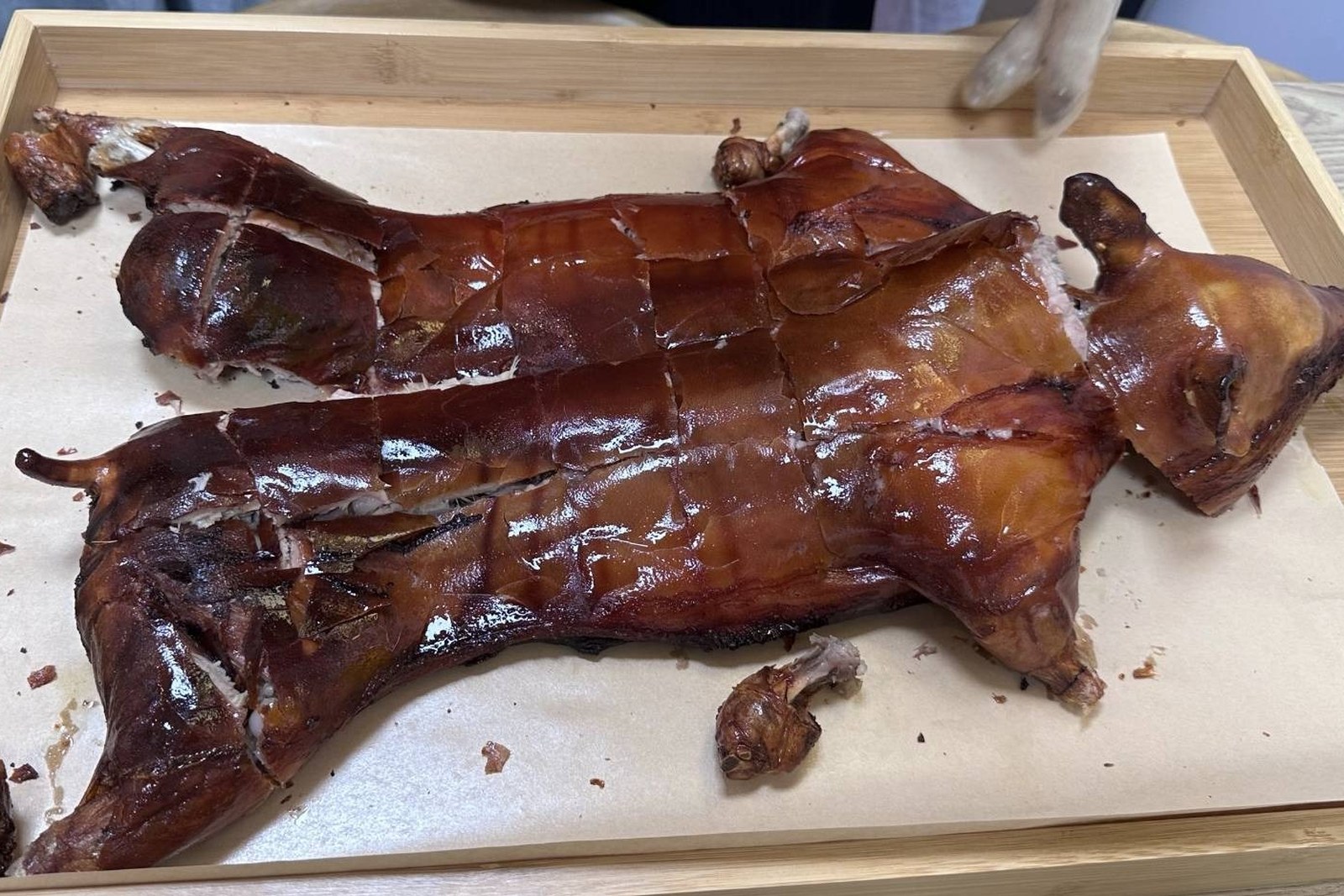
The classic preparations are village ones. 烤藏香猪 kǎo Zàngxiāng Zhū roast zangxiang pig is the festival centerpiece; stir-fried with peppers and garlic scapes it is the everyday plate; cold cuts come with highland barley flatbread and butter tea. Cured and smoked hams hang in farmhouse kitchens through winter, and the broth from a zangxiang bone base is the quiet secret behind many a village noodle bowl.
Travelers meet the breed twice: alive and on the plate. Drive any valley road at dusk and the pigs are there, trotting home through the trees or rooting along the fence lines – unmistakably pigs, unmistakably at home. Farm visits and village restaurants around 八一镇 Bāyī Zhèn Bayi, Lulang and Bomi put both encounters on one day, and the contrast is the point: this is pork with a landscape in it. For a plateau where meat usually means yak, the forest pig is Nyingchi’s own flavor.
Words and Names
藏香猪 Zàngxiāng Zhū the zangxiang “fragrant pig”, the miniature free-range breed of the Nyingchi forests; 烤藏香猪 kǎo Zàngxiāng Zhū the whole roast piglet of festival tables; 青冈林 qīnggāng lín the oak woods that are the breed’s main forage ground; 熏腊肉 xūn làròu the smoked and cured hams of farmhouse kitchens; 糌粑 zānba tsampa, the barley flatbread served alongside. The same 林芝市 Línzhī Shì Nyingchi holds more flavors worth chasing: 鲁朗石锅鸡 Lǔlǎng shíguō jī the soapstone-pot chicken of the forest sea, 波密蜂蜜 Bōmì Fēngmì the blossom honey of the wet valley, 墨脱荞麦饼 Mòtuō Qiáomài Bǐng the buckwheat bread of the hidden land, or 青冈菌 Qīnggāng Jùn the oak-forest mushrooms of the rains – four more doors into the same Nyingchi table.
What the Locals Know
The pigs’ taste changes with the season – autumn pork fattened on acorns and mushrooms is the year’s best, and locals time their cured hams to it. Village-roasted piglet is by reservation, not menu: ask a day ahead. And real zangxiang is never cheap – the price is the proof of the years in the woods. All checked November 2026.
flowcloud would say zangxiang pork is the forest keeping a ledger – acorns in, flavor out, and every village grill balancing the books.
Where to find it: Village restaurants around Lulang and the Bayi suburbs roast and fry the breed to order; Bomi’s town kitchens and the night-market grills cover the western valleys. All checked November 2026.