
The broth is the colour of weak tea and it smells like the inside of a winery. 糟粕醋 zāopò cù is a vinegar made from the lees left over after rice wine has been pressed — the 酒糟 jiǔzāo, the spent grain — which are mixed with water, salted, and left to sour for days or weeks until the liquid turns sharp and slightly funky and faintly sweet all at once. In Hainan it is used as a hotpot base, boiled hard with seafood and vegetables in it, and eaten with a bowl of rice noodles on the side. Nothing else in China tastes like it. Chinese hotpots are fermented, spicy, numbing or clear, but almost none of them are sour, and the sourness here is not the clean citric sourness of a lime or the acetic bite of a bought vinegar; it is the rounded, slightly yeasty sourness of something that has been alive.
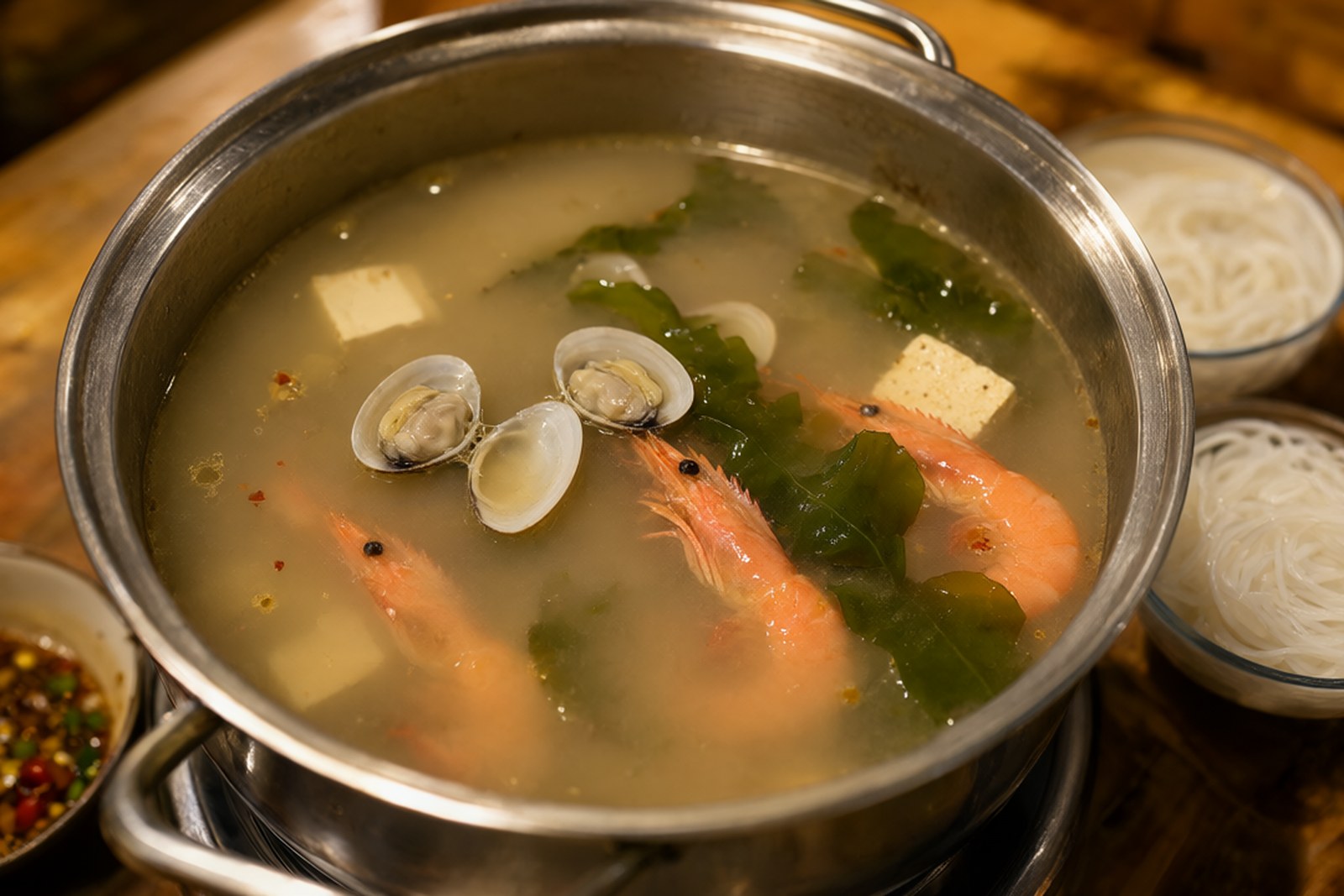
The dish belongs to 铺前 Pūqián, a small port town in 文昌 Wénchāng on the island’s northeast coast, where the wine lees were a by-product of the local distilleries and the sea was a few metres away. The traditional version was a street food of the working port: a pot of the sour broth kept at a roll, whatever had come off the boats that morning dropped into it, and a handful of noodles to make it a meal. Over the last two decades it has moved down the coast to 海口 Hǎikǒu and become a restaurant dish, first in the old town and now in chains, but the logic has not changed. The broth is the seasoning and the seafood is the content, and almost nothing else is added, because anything strong would fight the sour.
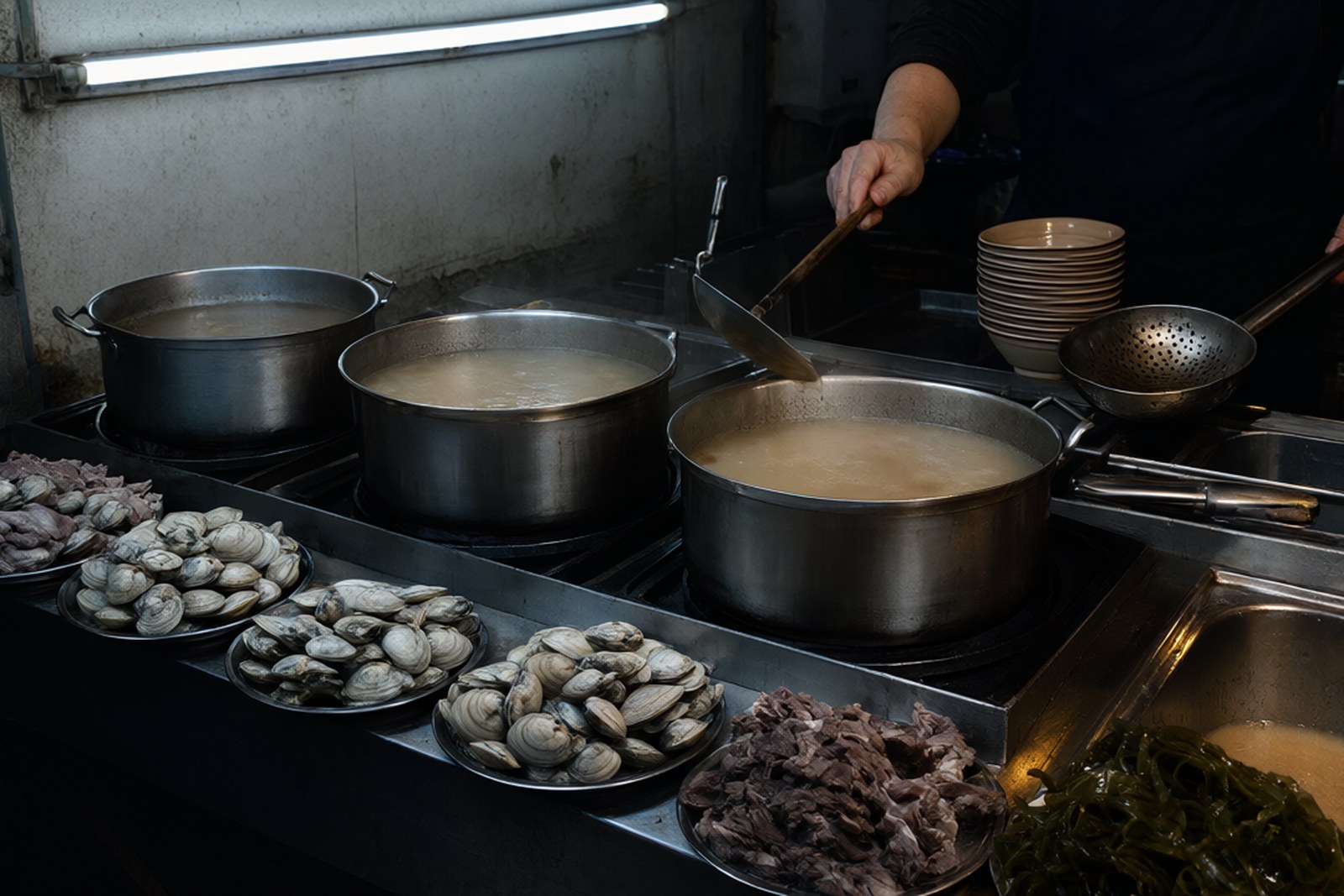
What Goes In
The canonical set is 海白 hǎibái, small pale clams, which open in the broth and give it salt and a marine edge; 牛杂 niúzá, beef offal, which is the older and more traditional addition and the one visitors are least prepared for; 海菜 hǎicài, a local seaweed that goes in at the last moment and keeps a squeak; and 粉 fěn, thin rice noodles, cooked separately or dropped in at the end to soak up what is left. Prawns, squid, fish balls and 沙虫 shāchóng, the sipunculid worm that Hainanese consider a delicacy, all appear depending on the shop. Vegetables are limited on purpose: cabbage, water spinach, a few mushrooms, and the mustard greens that hold up in a sour broth. A small bowl of 辣椒酱 làjiāo jiàng with 小青桔 xiǎo qīngjú sits alongside for dipping, and a spoon of the broth is poured over the noodles as the sauce.
The serving is deliberately unstyled. The pot comes to a portable burner in the middle of the table, the plates of raw seafood are stacked around it, and you cook your own in the order you like, remembering that clams take a minute and offal takes longer. The broth reduces as the meal goes on and gets stronger and saltier, which is why the noodles come last and why locals order a top-up of plain broth halfway through.
Words and Names
糟粕醋 zāopò cù is the vinegar, and the dish is usually ordered as 糟粕醋火锅 zāopò cù huǒguō, the hotpot, or 糟粕醋粉 zāopò cù fěn if it comes over noodles. 酒糟 jiǔzāo is the rice-wine lees it is fermented from, and 铺前糟粕醋 Pūqián zāopò cù names the town of origin, which is the mark of the good stuff. 海白 hǎibái are the small clams, 牛杂 niúzá beef offal, 海菜 hǎicài the local seaweed, 沙虫 shāchóng the sipunculid, 粉 fěn the rice noodles. 酸 suān is sour, and the word a local will use to describe the broth when it is right is 酸得开胃 suān de kāiwèi, sour in the way that opens the appetite.
What the Locals Know
Judge the broth before you cook anything: a proper 糟粕醋 is cloudy rather than clear, smells faintly of rice wine and the sea at the same time, and tastes sour with a sweet grain behind it. If it is thin and sharply acetic, the lees were short-fermented or the pot has been topped up with bought vinegar, and no amount of seafood will fix it. Order the clams first, because they season the pot for everything after. Eat the noodles last, with a ladle of the reduced broth over them, and ask for 加汤 jiā tāng, more broth, when the level drops rather than adding water yourself. Locals eat this as a full meal rather than a snack, and rarely before evening. A bowl of 糟粕醋粉 at a street stall costs ten to twenty yuan; a full seafood hotpot for two at a restaurant runs one hundred to two hundred, depending on whether 沙虫 and 牛杂 are on the table.
flowcloud would say that zaopo vinegar is the one hotpot that tastes of patience rather than of heat, since the whole dish is a by-product that someone refused to throw away and the sourness has to be waited for instead of bought.
Where to find it: the 铺前镇 Pūqián Zhèn stalls in Wenchang if you are going that far, and in Haikou the 骑楼老街 Qílóu Lǎojiē area and the neighbourhoods around 金盘 Jīnpán and 府城 Fǔchéng, where the older shops sit. Ask for 糟粕醋火锅, start with 海白 and 海菜, and finish with 粉 and a ladle of the broth.