
Scales Standing Up: Zengbeng Carp
鳞酥骨脆跃盘中,糖醋浇香满堂风 Lín sū gǔ cuì yuè pán zhōng, tángcù jiāo xiāng mǎn táng fēng – Scales crisp, bones brittle, the fish leaps on the plate; sweet-sour sauce pours fragrance across the hall
罾蹦鲤鱼 zēngbèng lǐyú Zengbeng carp is the 天津市河北区 Tiānjīn Shì Héběi Qū Hebei District banquet showpiece that arrived still arguing with the cook – a whole carp fried so hard its scales stand up like a fish leaping in a lifting net, the 罾 zēng of the name, then doused tableside in a hot sweet-sour glaze that hisses against the crust. The dish dates to the old river-city restaurants of late Qing Tianjin, and its trick has not changed: the fish goes into the wok with scales on, twice-fried until every scale lifts and crisps into edible lace.
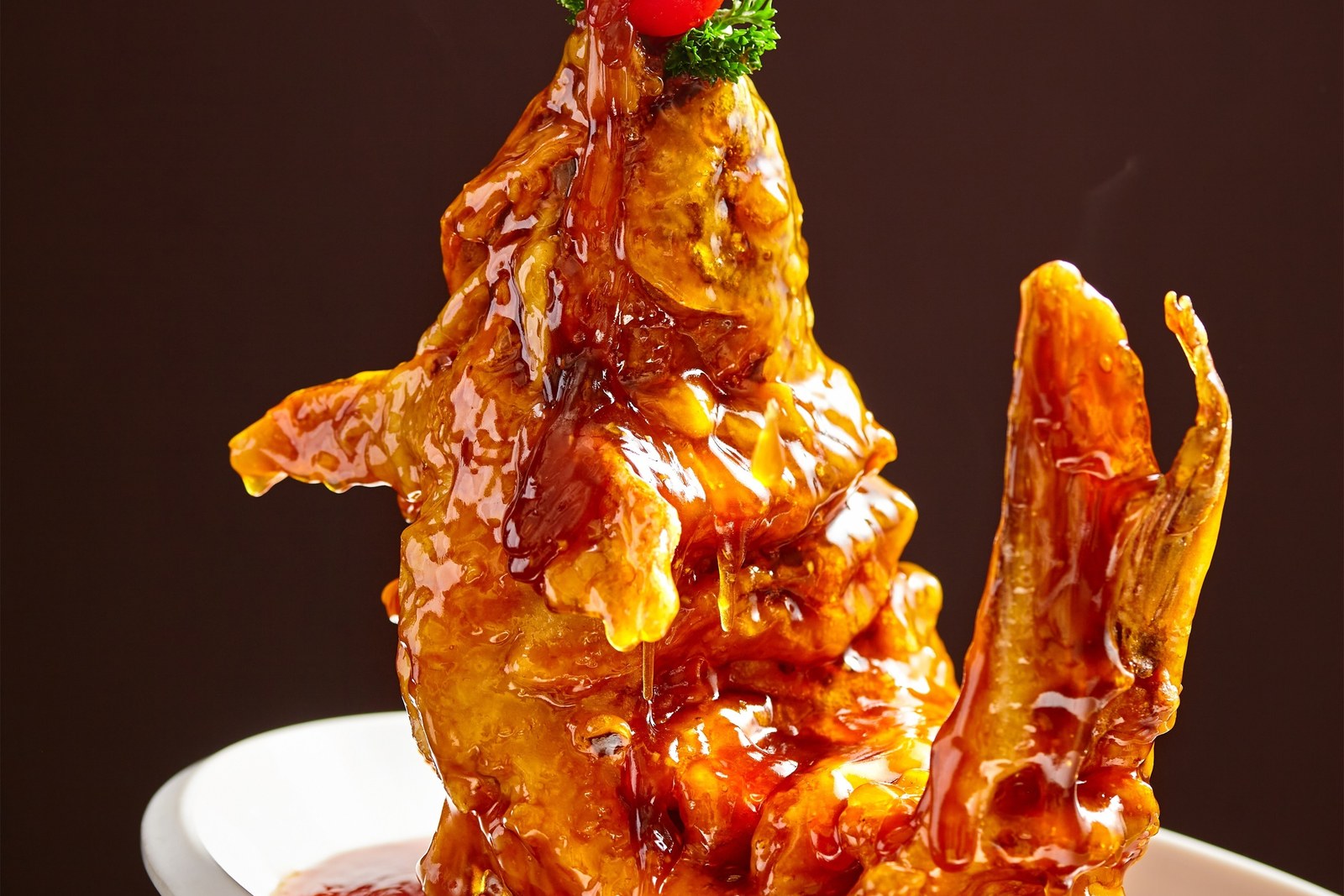
The eating is theater first. The glaze pours over the arched body with an audible crackle, the sauce pools around the belly, and the first chopstick pull comes away with scale, skin and flesh in one amber shard. Sweet, sour, faintly savory, with the bones fried to snackable brittleness – the dish argues that a carp, the cheapest fish in the river, can hold a banquet table by itself.
Old Tianjin menus tell the provenance. The classic house for the dish stood by the wharves, where net fishermen brought live carp up from the Haihe, and the kitchen’s answer to a cheap, bony fish was double frying and a lacquer of 糖醋 tángcù sweet-sour that turns bone into texture. Restaurants across the city keep the recipe today, and the best versions still bring the sauce out separately, pouring it in front of you so the crackle is part of the service.
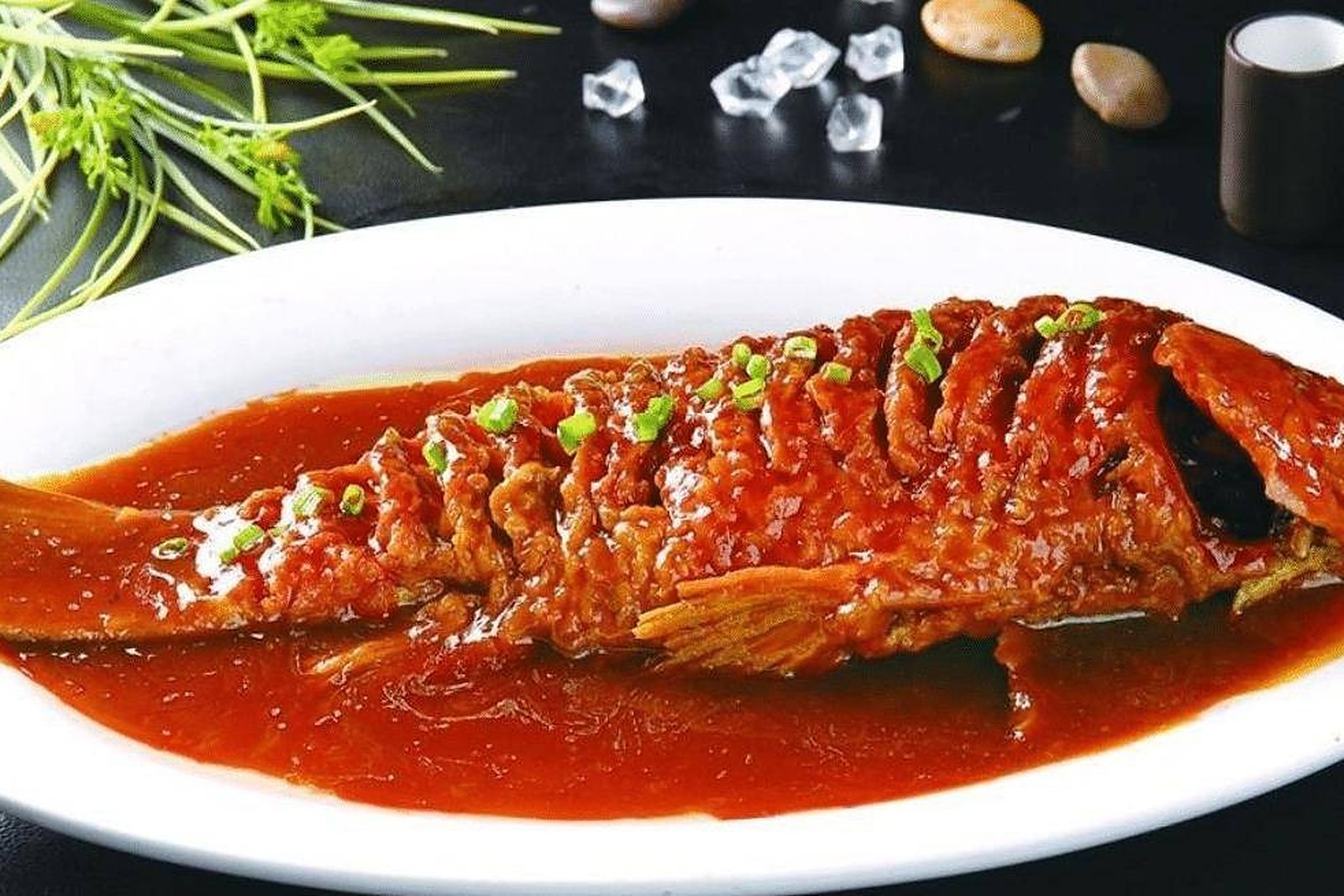
Order it as the centerpiece of a Tianjin table – it sits beside a vegetable and a soup and does all the announcing. Judge the kitchen by the tail: it should stand stiff and fried, and the scales should glitter like caramelized coins. Leftovers, should they exist, are said to eat well cold; locals have rarely needed to test the claim.
The same district holds more flavors worth chasing: 锅塌里脊 guōtā lǐjǐ the egg-wrapped tenderloin, 老爆二 lǎobào’èr the twice-fried offal stir-fry, 四大扒 sìdà bā the Four Great Braises, or 茶汤 chátāng the millet paste poured from a dragon-mouth urn – four more doors into the same Hebei District table.
Words and Names
罾蹦鲤鱼 zēngbèng lǐyú zengbeng carp, “the fish that leaps the lifting net”; 罾 zēng the square lifting net that names the dish; 糖醋 tángcù the sweet-sour glaze; 带鳞 dài lín cooked with scales on, the dish’s signature; 天津教案–not this one – the river wharves that supplied the carp.
What the Locals Know
Eat it loud and eat it fast – the crust waits for no conversation. The scales are not a mistake but the whole point, and a proper zengbeng carp should still be audibly crisp two bites in. If the fish arrives lying flat and soft, the kitchen doubled down on sauce instead of fire, and the table has learned what it needs to know. All checked November 2026.
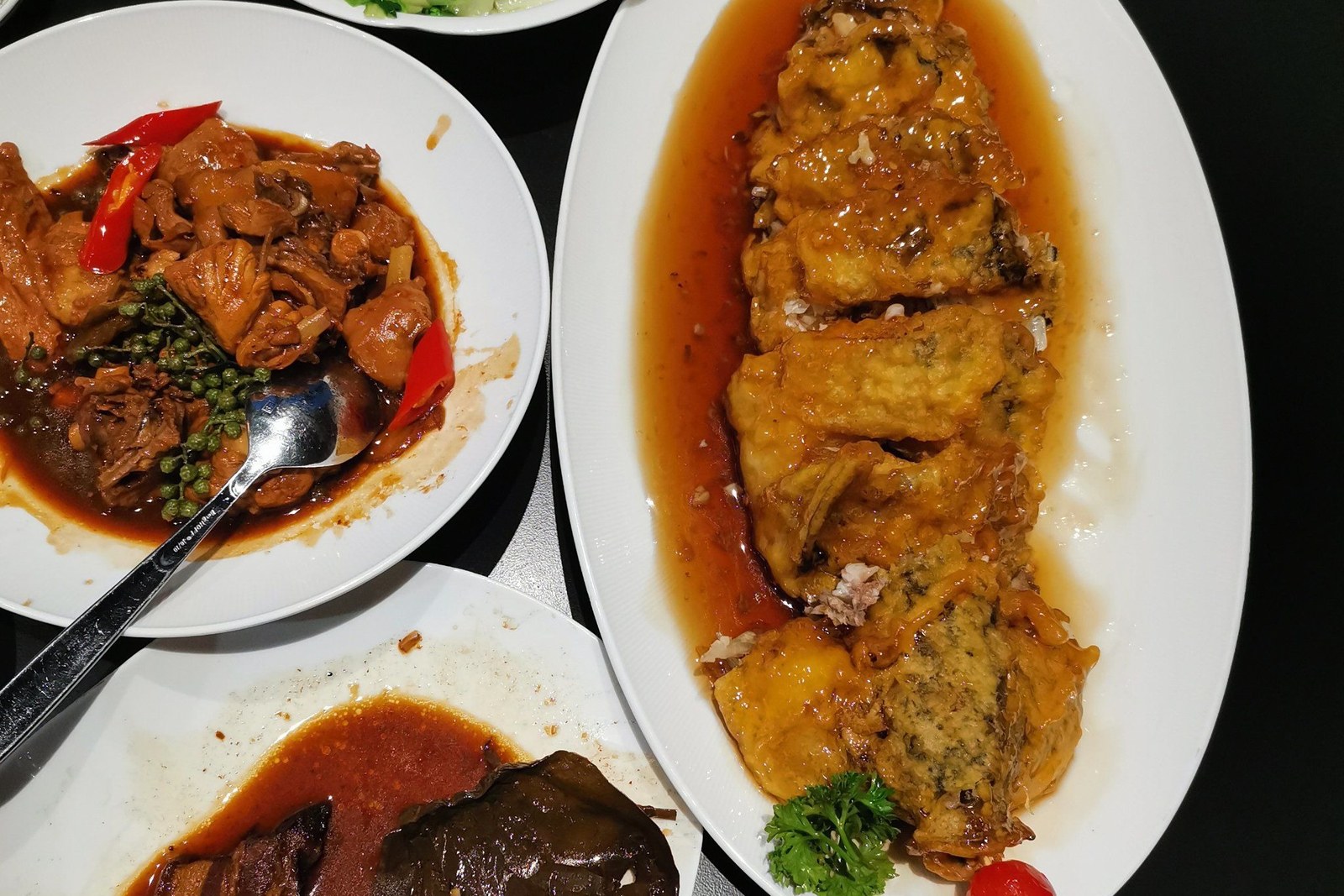
flowcloud would say zengbeng carp is Tianjin humor on a plate: a fish cooked to look like it is still fighting, sweetness poured over it like applause, and bones you can eat – the river’s cheapest fish having the last laugh.
Where to find it: The old-city banquet houses and river-side restaurants around 天津市河北区 Tiānjīn Shì Héběi Qū Hebei District keep zengbeng carp on the banquet menu – order it by name, and ask for the sauce poured at table. All checked November 2026.