
Zhajiang Noodles: The Slow-Fried Sauce of the Old Beijing Noodle Bowl
小火慢炸酱油亮,八样菜码拌一碗。Xiǎohuǒ màn zhá jiàng yóu liàng, bā yàng càimǎ bàn yī wǎn – A small fire slow-fries the sauce until it gleams; eight kinds of topping mixed into one bowl.
老北京炸酱面 lǎo Běijīng zhájiàng miàn old-Beijing fried-sauce noodles is a dish whose name is its recipe: 炸酱 zhájiàng means “fried sauce”, and the frying is the whole craft – 干黄酱 gān huángjiàng dry yellow soybean paste, usually mellowed with a spoon of 甜面酱 tiánmiànjiàng sweet flour sauce, is stirred in pork fat over the smallest flame for the better part of half an hour until the sauce darkens and the oil separates and rises – 出油 chūyóu, the oil comes out – leaving the kitchen smelling of toasted soybean rather than salt (worth confirming the exact paste blend and ratio, which families argue about). The classic finish is 小碗干炸 xiǎo wǎn gān zhá, a ladle of that glossy sauce over 手擀面 shǒugǎn miàn hand-rolled noodles, buried under 菜码 càimǎ – vegetable toppings cut to season: 黄瓜丝 huángguā sī cucumber shreds, 豆芽 dòuyá soybean sprouts, 萝卜丝 luóbo sī radish shreds, celery, cooked soybeans and more, with the full version counting to eight in the height of the season (worth confirming the canonical eight – every household lists a different eight). And there is the fork-in-the-road question every counter will ask: 锅挑儿 guōtiǎor straight from the pot, noodles hot and sauce clinging, or 过水 guòshuǐ rinsed, noodles cool and springy.
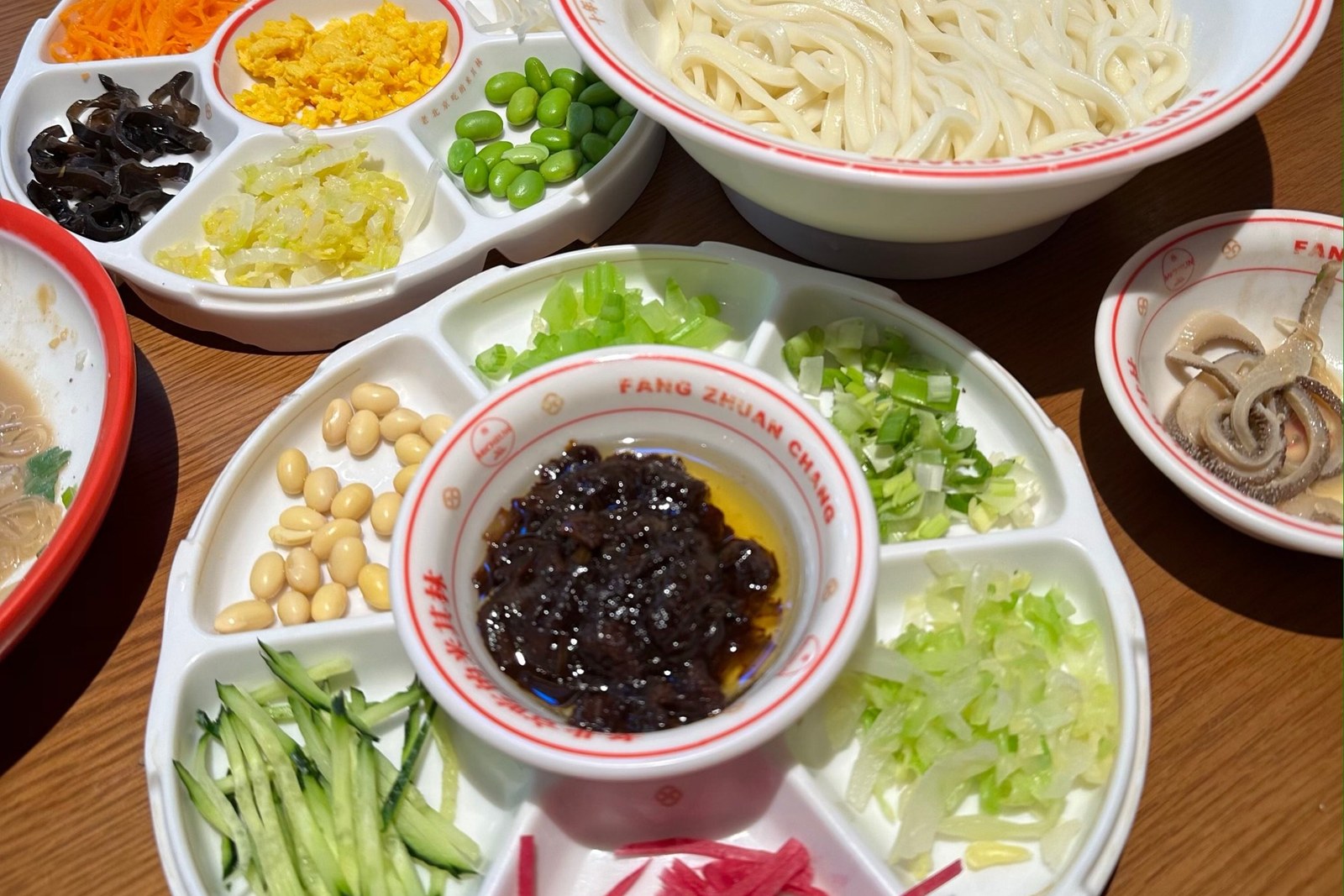
The honest grade is about who is cooking. This is, first and last, a home dish – the kind of lunch a Beijing grandmother runs like a clock – and the restaurant gap is real: a bowl at an ordinary noodle house in 东城区 Dōngchéng Qū Dongcheng District runs roughly 20-40 yuan, generous with 菜码 càimǎ and honest with sauce, while banquet-hall versions – a dozen little topping dishes arrayed like jewellery around the bowl – sell ceremony at several times the price (worth confirming – prices sit lower at hutong counters and higher at famous-name doors). The honest order is lunch, not dinner; a counter or a family-style shop, not a tourist street. Judge the sauce by the oil – a clear ring of dark oil on top means it was fried properly, while a grey paste straight from the jar was not – and if the shop asks 锅挑儿 guōtiǎor or 过水 guòshuǐ, answer without hesitation, because locals hear that question as a test of whether you have eaten this before.
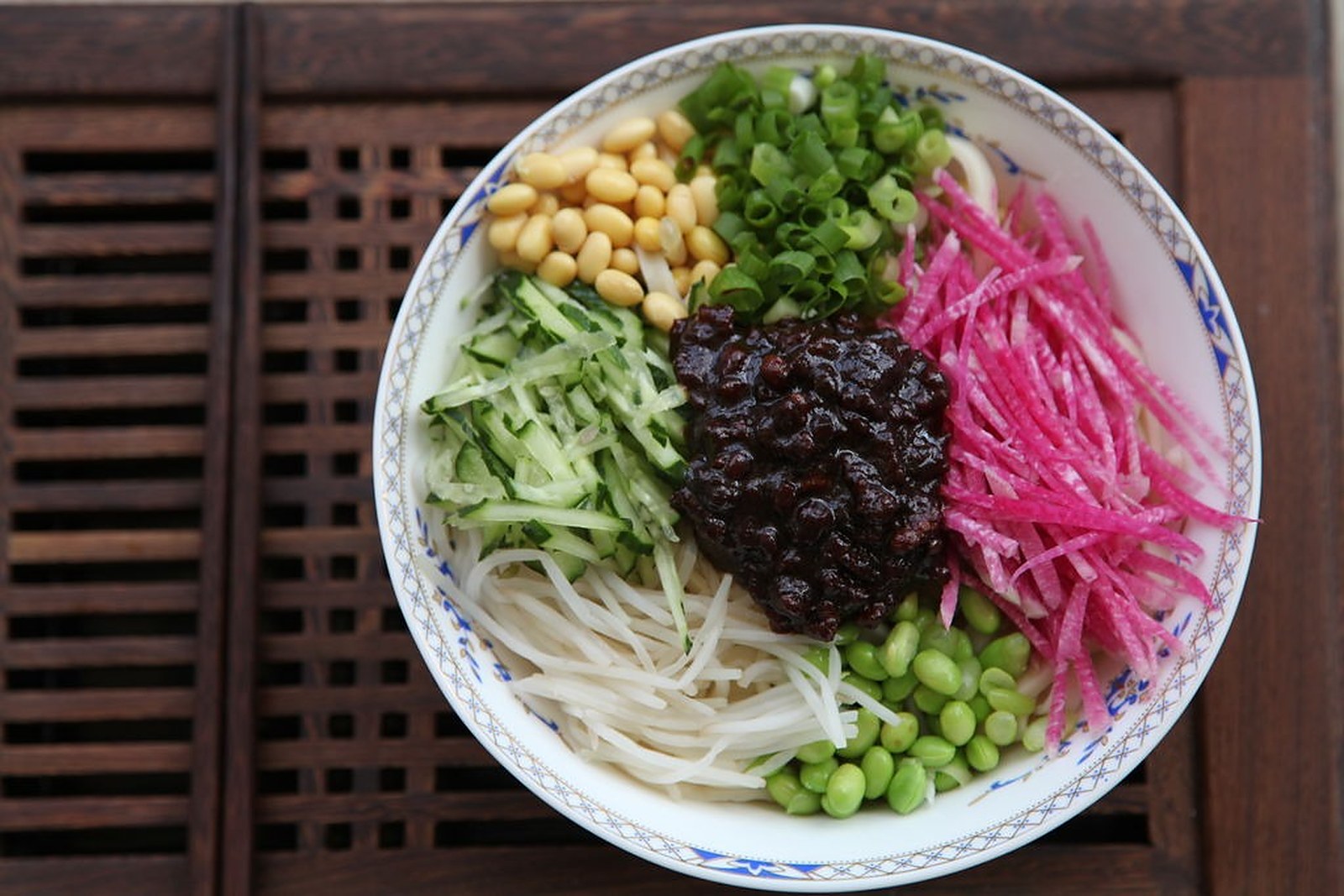
The wry truth is that 炸酱面 zhájiàng miàn is over-rated as a restaurant destination and under-rated as a home craft: visitors arrive expecting a noodle monument and meet a bowl that lives or dies on one pot of sauce and one knife – there is no secret ingredient, only patience at the stove, which is exactly what a busy kitchen cannot spare. The 菜码 càimǎ run on the calendar – cucumber and radish in spring and summer, the preserved and pickled ones deeper into the year – so the same bowl is a different dish in April and November, and regulars read the toppings like a date stamp. Season matters for temperature too: 过水 guòshuǐ cool belongs to summer, 锅挑儿 guōtiǎor hot belongs to winter, and ordering against the season is the surest way to mark yourself a tourist at a hutong counter (worth confirming which houses keep hand-rolled noodles year-round).
The self-deprecating footnote: a food writer will count the topping plates like an auditor, announce that the eight 菜码 càimǎ are “eight seasons in one bowl”, explain the difference between 黄酱 huángjiàng and 甜面酱 tiánmiànjiàng to a counter owner who has fried sauce longer than the writer has been alive, and then drag the noodles through the sauce until every white shred turns brown – which is the honest grade: 老北京炸酱面 lǎo Běijīng zhájiàng miàn is a dish where the writer’s precision ends at the first slurp, and the sauce always wins on points.
Words and Names
老北京炸酱面 Lǎo Běijīng Zhájiàng Miàn old-Beijing fried-sauce noodles · 炸酱 Zhájiàng fried soybean paste · 干黄酱 Gān Huángjiàng dry yellow soybean paste · 甜面酱 Tiánmiànjiàng sweet flour sauce · 菜码 Càimǎ seasonal noodle toppings · 锅挑儿 Guōtiǎor noodles straight from the pot (unrinsed) · 过水 Guòshuǐ rinsed noodles (served cool) · 小碗干炸 Xiǎo Wǎn Gān Zhá small-bowl dry-fry sauce finish
What the Locals Know
- The oil ring is the résumé: a properly fried 炸酱 zhájiàng shows a clear layer of dark oil above the paste – a grey, dry paste was scooped from a jar, not fried (worth confirming the details).
- Answer the noodle question: 锅挑儿 guōtiǎor hot and clinging for winter, 过水 guòshuǐ cool and springy for summer – hesitating is how the counter knows you are new.
- The 菜码 càimǎ are the calendar: toppings rotate with the season, and a bowl that serves the same eight all year is coasting on the name (worth confirming the details).
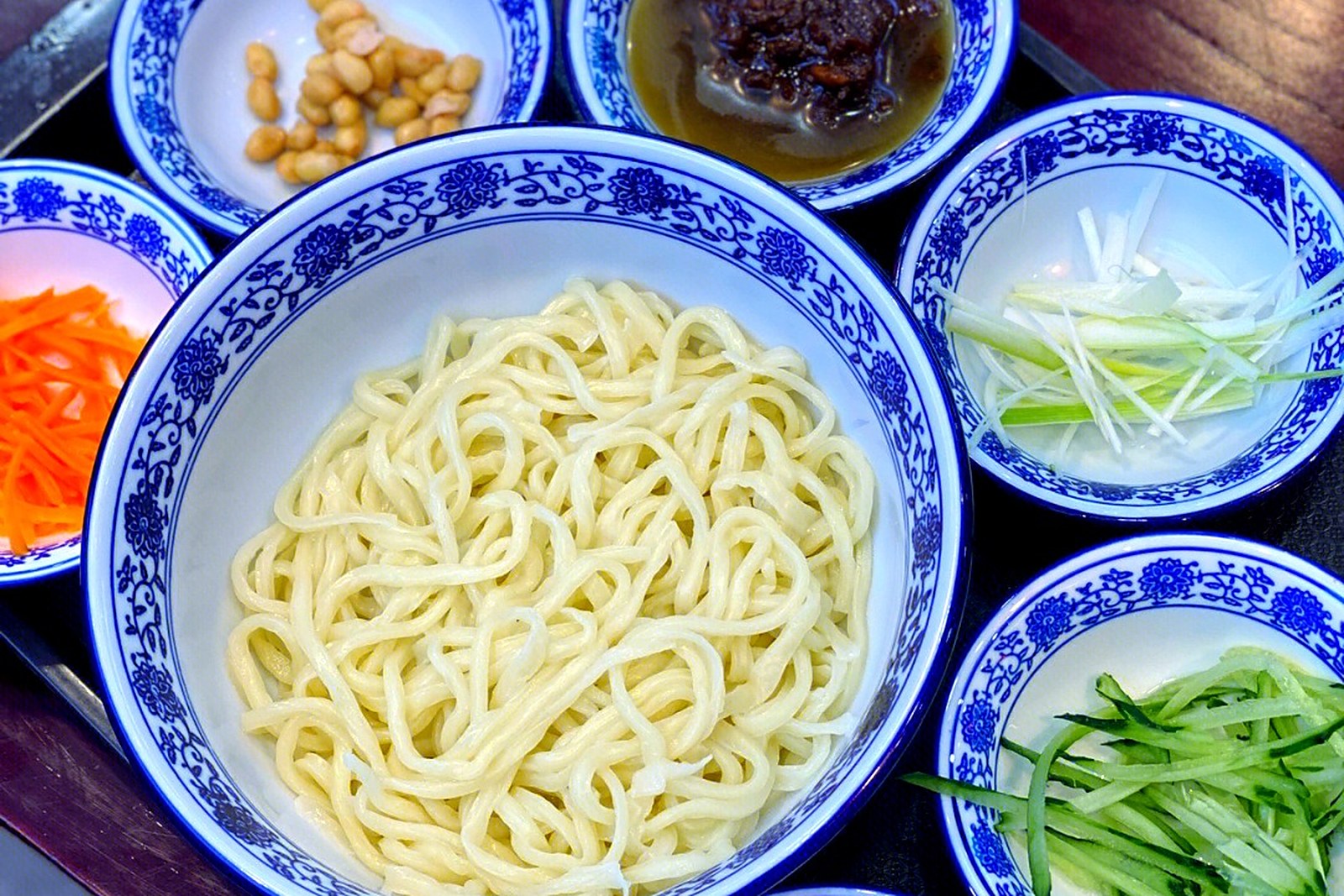
flowcloud would say that the 老北京炸酱面 lǎo běijīng zhájiàng miàn is a sauce dish wearing noodles – 干黄酱 gān huángjiàng dry yellow paste fried slow in pork fat until the oil rises, spooned over 手擀面 shǒugǎn miàn and dressed with seasonal 菜码 càimǎ, hot as 锅挑儿 guōtiǎor or cold as 过水 guòshuǐ – and that the honest move is to eat it at lunch at a plain counter, answer the rinse question without blinking, and judge the sauce by its oil ring, because this is a home dish that restaurants can imitate but not replace. All checked October 2026.
Where to find it: neighborhood noodle houses and hutong counters across 东城区 Dōngchéng Qū Dongcheng District – roughly 20-40 yuan a bowl (worth confirming the details); eat it at lunch, mix hard, keep the sauce-to-noodle ratio honest, and verify the paste was fried rather than scooped. Zhajiang noodles are the slow-fried sauce of the old Beijing noodle bowl, home before restaurant. All checked October 2026.