
Golden Oysters: Zha Lihuang
海蛎裹雪入锅黄,咬破酥壳满口鲜 Hǎilì guǒ xuě rù guō huáng, yǎo pò sūké mǎnkǒu xiān – Oysters cloaked in white go gold in the wok; crack the crisp shell and the mouth fills with the sea
炸蛎黄 zhá lìhuáng Fried oysters are 天津市红桥区 Tiānjīn Shì Hóngqiáo Qū Hongqiao District’s tribute to its river-and-sea address – plump oysters dredged in a light batter and fried to a gold crust that stays crisp over a interior of briny, almost custardy flesh. The dish belongs to the old Tianjin canon of 小海味 xiǎo hǎiwèi small-sea flavors, and the city’s river markets once judged the season by the oysters’ arrival.
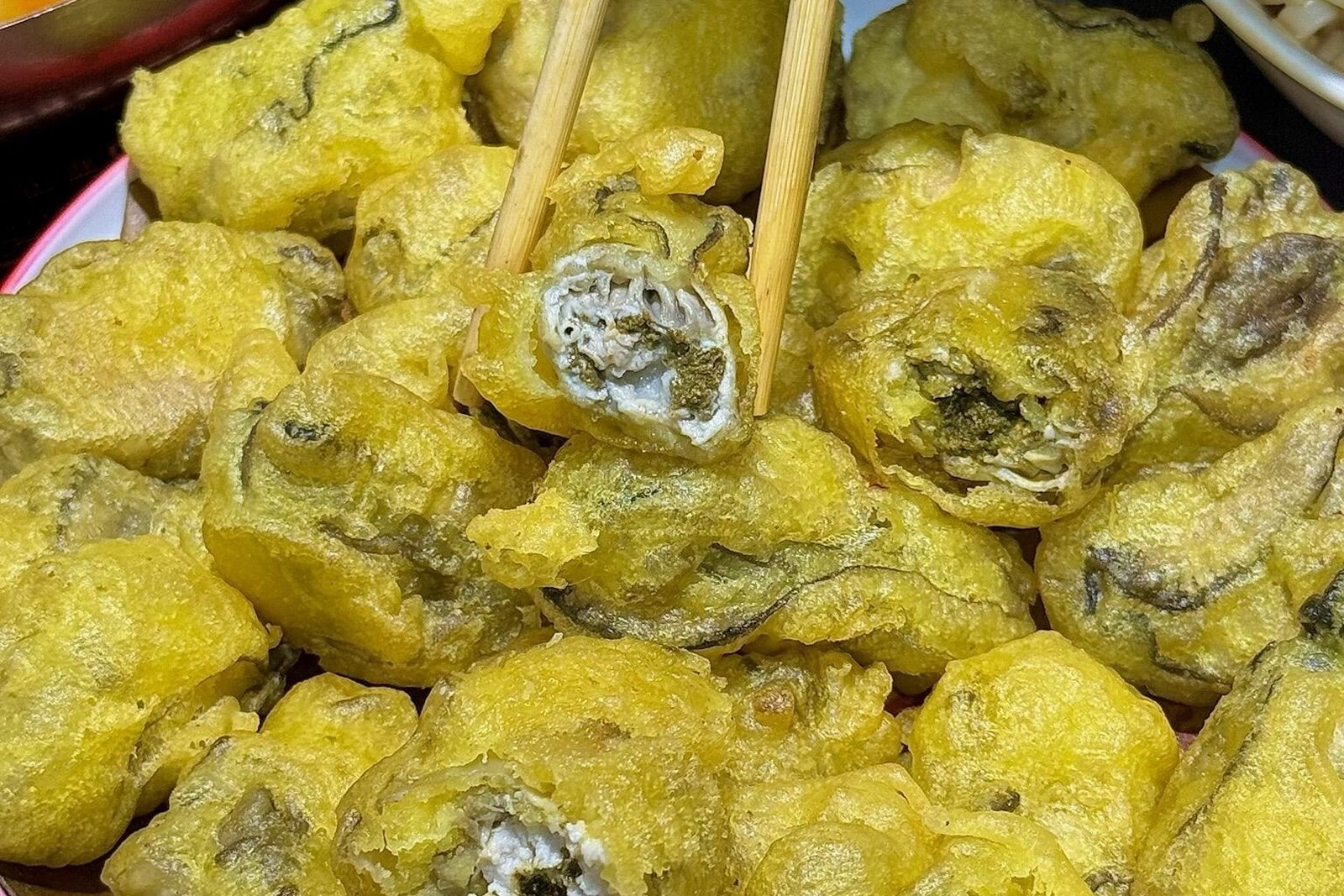
The frying is brief and hot. Shelled oysters are drained, dusted, and dipped in a thin egg-flour veil – too thick and the crust hides the oyster, too thin and the juice escapes. Thirty seconds a side in oil that shimmers but never smokes, and the shells come out like amber pebbles, each hiding one clean bite of estuary.
The eating is built on contrast. The crust snaps with a whisper of salt, the oyster inside stays cool and mineral, and a dip of 花椒盐 huājiāo yán pepper-salt or a squeeze of vinegar sharpens the seam between them. Old-school tables serve them on white plates with the tradition of silence: the first bite is supposed to do the talking.
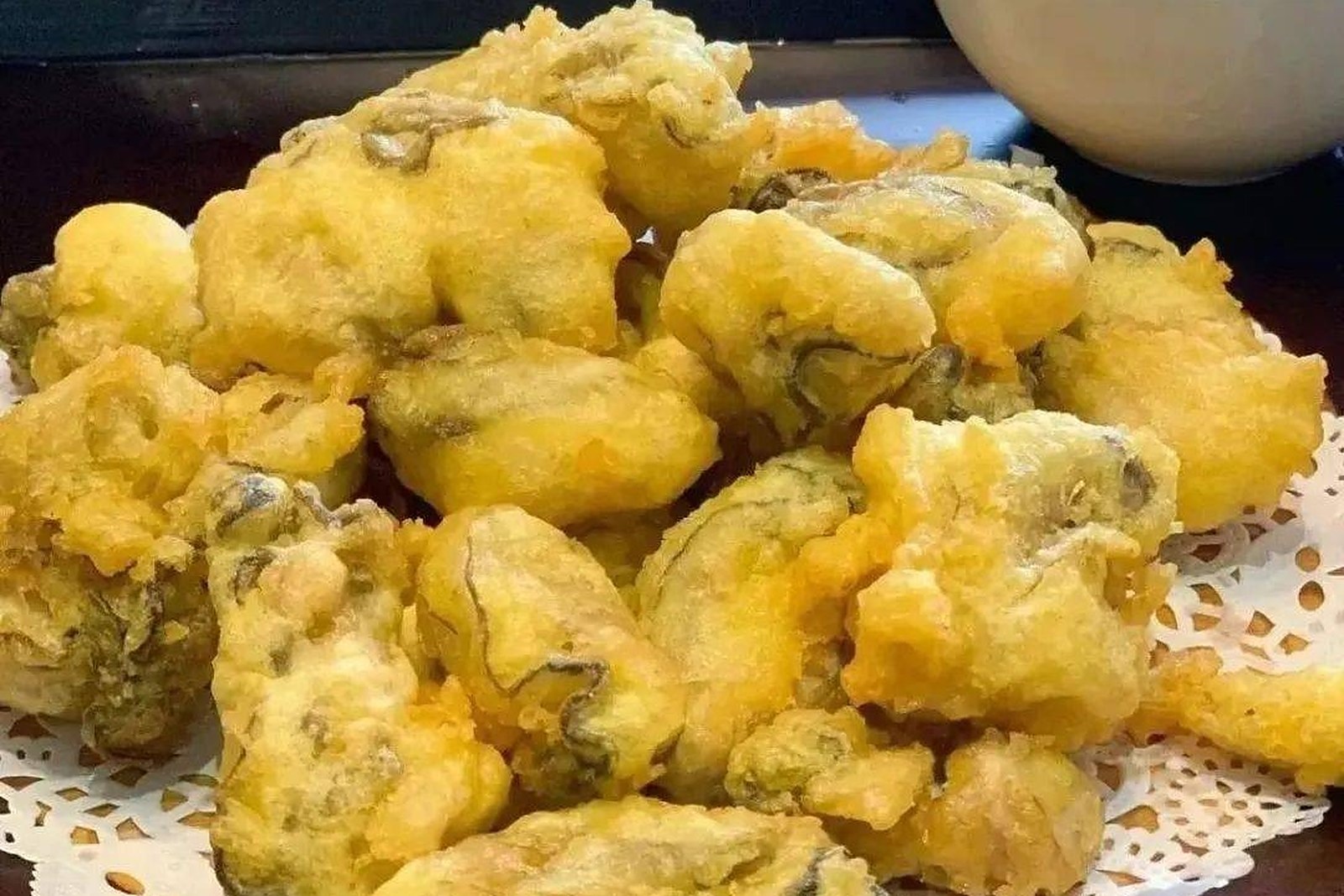
Find them in season – the cold-water months plump the oysters, and the quarter’s restaurants hang small chalk notices when the good batch lands. Order them as a starter beside a soup, share a plate, and judge the kitchen by the sound: a proper 炸蛎黄 crackles when the plate is set down, not just when it is bitten.
The same district holds more flavors worth chasing: 它似蜜 tā sì mì the honey-glazed lamb, 牛肉烧饼 niúròu shāobǐng the beef-stuffed biscuit, 捞面 lāomiàn the festival noodles, or 羊汤 yángtāng the white mutton broth – four more doors into the same Hongqiao District table.
Words and Names
炸蛎黄 zhá lìhuáng fried oysters; 蛎黄 lìhuáng the oyster meat, “the oyster’s yolk”; 面糊 miànhú the thin batter veil; 花椒盐 huājiāo yán the Sichuan-pepper salt dip; 小海味 xiǎo hǎiwèi the small-sea flavor canon of old Tianjin.
What the Locals Know
Eat them within minutes – the crust waits for nobody, and carryout oysters are a different, sadder dish. Locals judge the batter by its translucence: you should see the oyster’s grey-green edge through the gold, and if you cannot, the kitchen has built a wall instead of a veil. All checked November 2026.
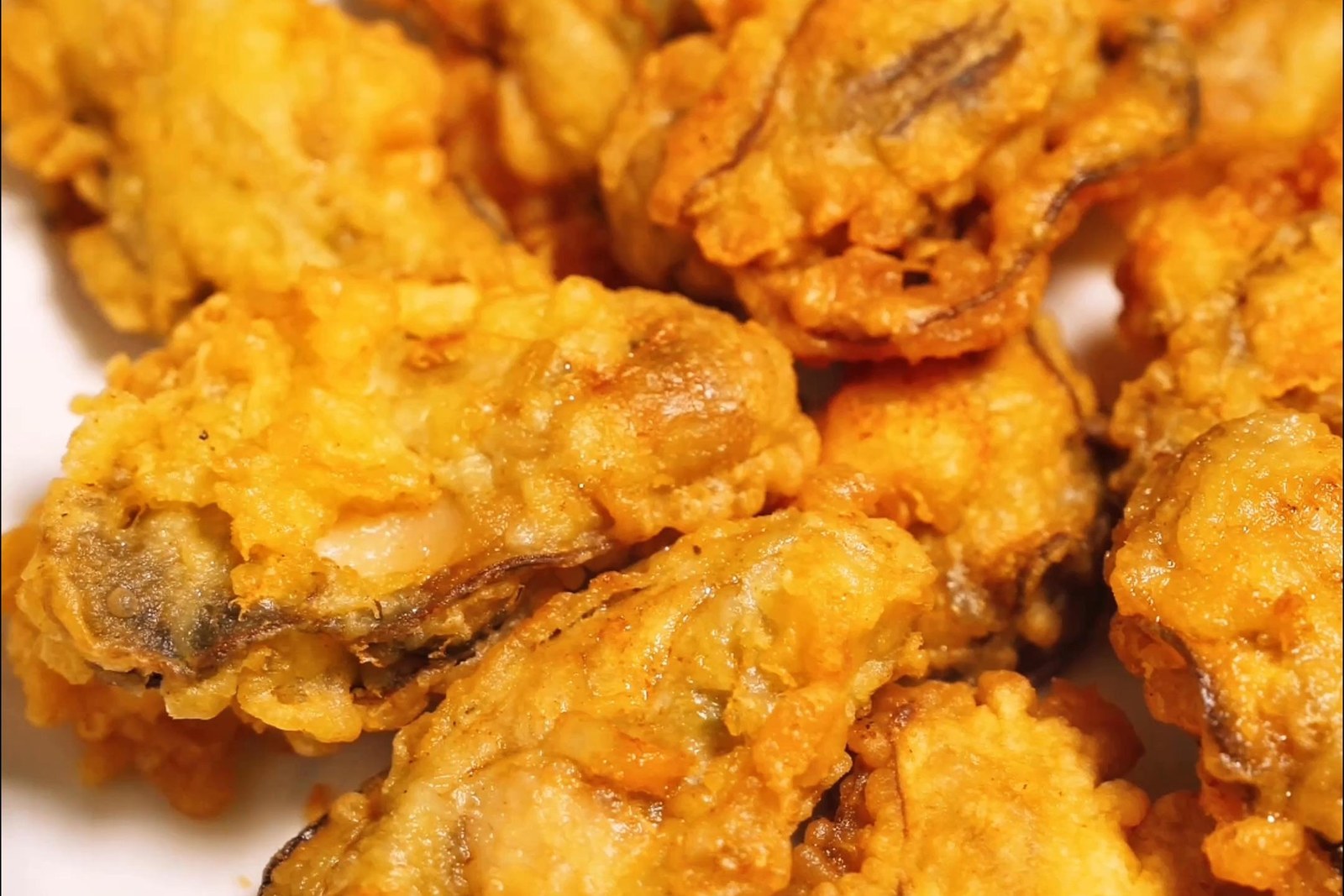
flowcloud would say fried oysters are the estuary wearing jewelry: sea folded in gold, salt whispering through crust, and a plate that sounds like the river bed crackling under your teeth.
Where to find it: Tianjin-style restaurants and the seafood houses around 天津市红桥区 Tiānjīn Shì Hóngqiáo Qū Hongqiao District run fried oysters in the cold months – ask for 蛎黄 fresh-fried and the pepper-salt on the side. All checked November 2026.