
The first thing to understand about 张豆花 Zhāng Dòuhuā is that the shop and the craft are two different names, and the district keeps them apart on paper. The shop is one business on 碚峡路 Bìxiá Lù Beixi Road, No. 80, a short walk right from the back gate of Beibei Park. The craft is 北碚豆花传统制作技艺 Běibèi Dòuhuā Chuántǒng Zhìzuò Jìshù, the traditional Beibei technique for making tofu pudding, and on 27 January 2014 the Chongqing municipal government entered it in the fourth batch of intangible-heritage representative projects, with Beibei District named as the applying district. That document is the one that matters, because it registers the technique as a craft of the whole district rather than as the private property of a single counter. The founder 张正元 Zhāng Zhèngyuán is a municipal-level bearer, and on 4 July 2024 the individual-business operator on the licence changed from him to his son 张杰 Zhāng Jié. The record describes a transfer of the registered operator and nothing more – it is not reported as a sale, and no price appears anywhere.
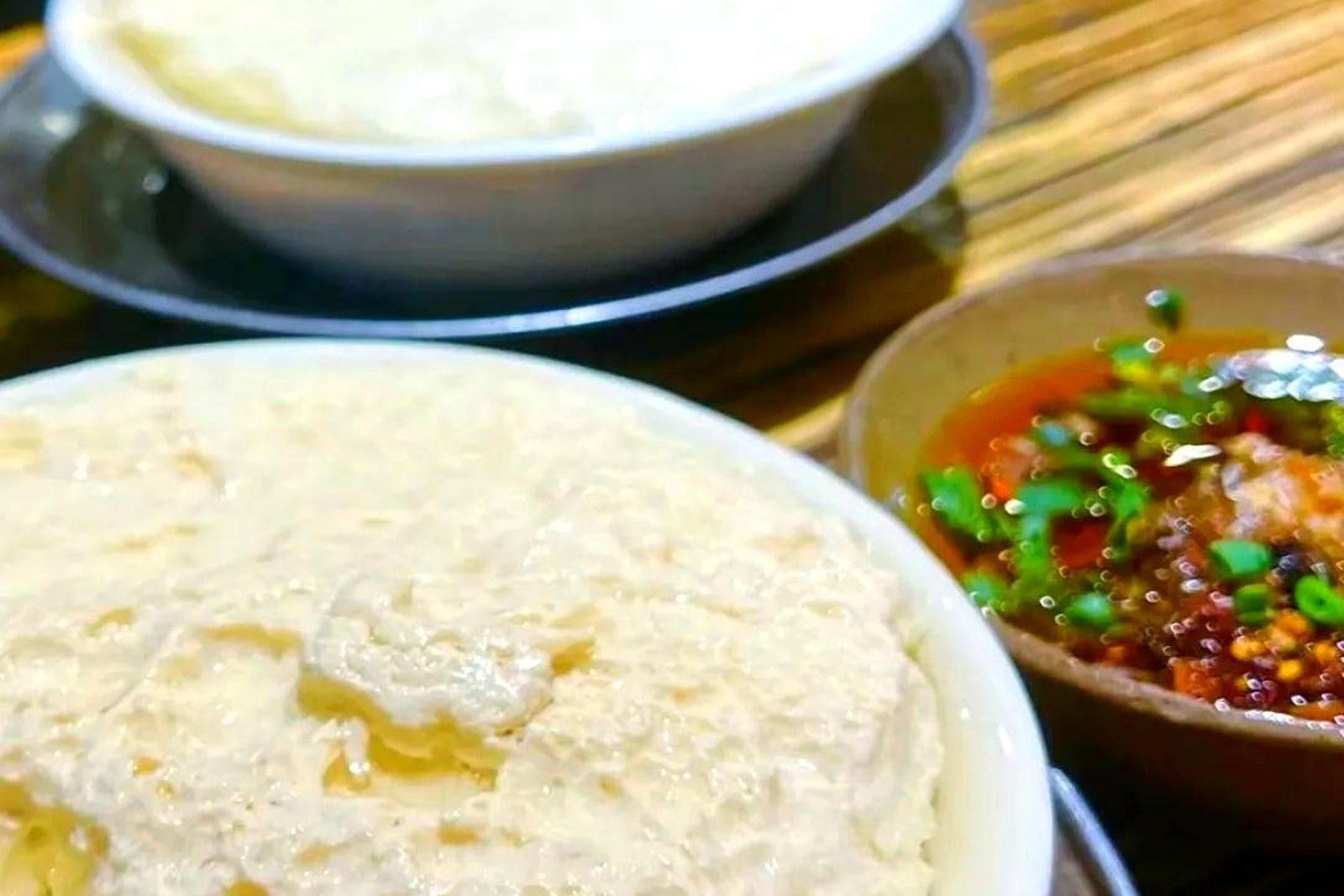
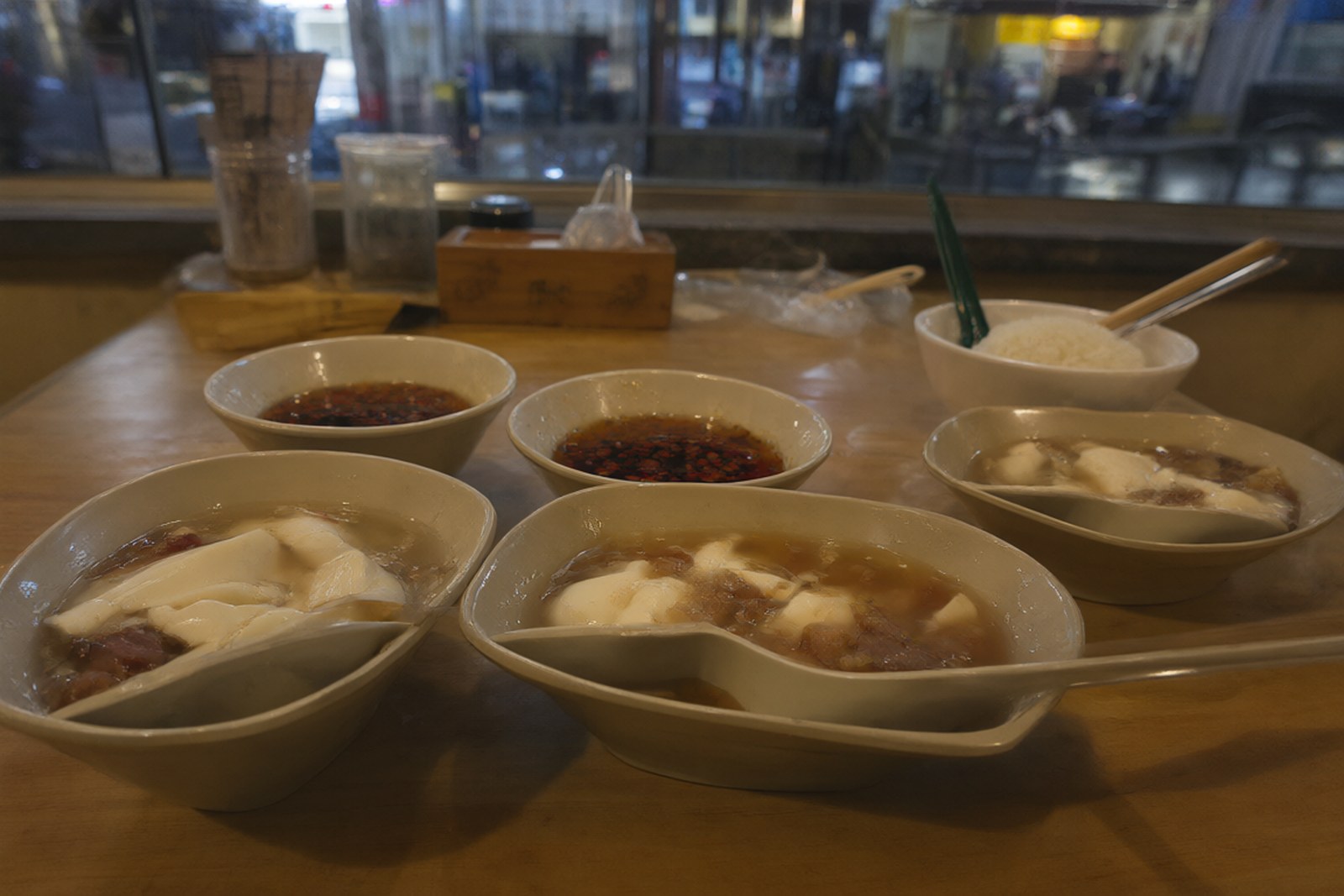
What the customer actually eats is one pot of soybean slurry that sets into three textures at once, and the three are not three recipes but three moments of the same curd. 荷叶豆花 Héyè Dòuhuā lotus-leaf tofu is the loose one, lifted out of the bowl; 嫩豆花 Nèn Dòuhuā tender tofu is the soft-set middle; 老豆花 Lǎo Dòuhuā old tofu is the firmest, the one that holds an edge. Four words judge all three and they are the shop’s own rather than a travel writer’s: 滚 gǔn, 嫩 nèn, 绵 mián, 白 bái – rolling, tender, cottony, white. The first is about movement, the second about how little it resists, the third about the grain rather than the texture, and the fourth about colour, because a pale curd in a white bowl is the first thing a regular checks. None of the four is measurable, all four are checkable by anyone who has eaten the thing twice.
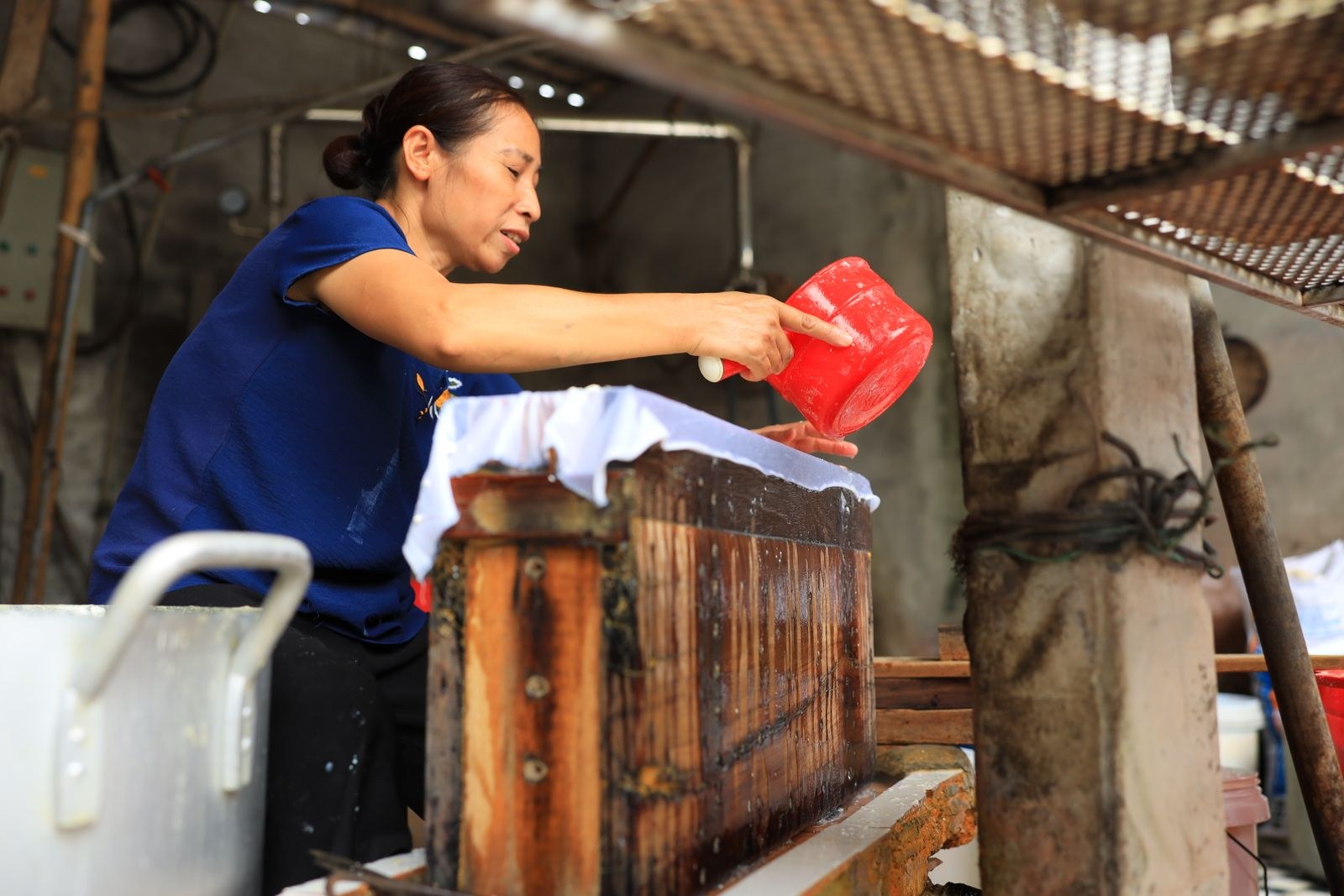
The dip is the second half of the dish and the reason this is not a bowl of plain curd. It is built from more than twenty medicinal spices together with more than a dozen condiments, and the word used for the aromatics is 中药 zhōngyào, the same word as for the ingredients of a traditional pharmacy. The sauce is not poured over the pudding; it sits beside it in its own dish and the diner controls the amount, which is the only way a twenty-spice mixture stays usable. Underneath, the making is older than the shop and is registered separately. Beans are chosen and soaked, the slurry is pushed through a stone mill, it is filtered through cloth, and it is set with 胆水 dǎnshuǐ brine; the setting is done by scattering a salt brine evenly over the surface with a flick of the wrist, and the pattern it leaves is called 鱼籽眼 yúzǐyǎn, fish-roe eyes. The whole craft is traditionally made with 嘉陵江 Jiālíng Jiāng Jialing River water and is called 河水豆花 hé shuǐ dòuhuā river-water or 活水豆花 huó shuǐ dòuhuā living-water tofu for that reason, and its history is traced to the late Qing and early Republican period. In 2001 the district named Zhang Douhua one of its 北碚名小吃 Běibèi Míng Xiǎochī famous Beibei snacks.
What puts the craft in a historical register rather than a culinary one is a single dinner. In 1933 Lu Zu-fu, who had been running the Jialing Three Gorges rural reconstruction out of Beibei since 1927, gave a 豆花宴 Dòuhuā Yàn tofu banquet of thirty-six small dishes for the eighteenth annual meeting of the China Science Society. He sent the Minsheng Company’s ship 民贵轮 Mínguì Lún to Shanghai to bring the scientists upriver, and hired more than two hundred sedan chairs to carry them up Jinyun Mountain. The food is the part that survived; the numbers that make it memorable are the ones in the record, and the meeting is the single documented occasion on which Beibei tofu was served as an argument rather than as supper. Two further dates sit either side of the modern shop without quite belonging to it: a 2023 listing as a Chongqing time-honoured brand in a seventh batch, which rests on a single encyclopaedia entry and is reported here as reported, and the district’s own 2001 naming of the shop as a famous Beibei snack. What the tofu is not is a Wulong or Longxing-style pressed tofu sheet – those belong to the eastern river towns and are written elsewhere – because Beibei’s pudding is set to be eaten with a dip, not pressed into something to be sliced and fried.
Words and Names
张豆花 Zhāng Dòuhuā the shop, at 碚峡路 Beixi Road No. 80, Beibei District, founded by 张正元 Zhāng Zhèngyuán, a municipal-level bearer, with the registered operator changed to his son 张杰 Zhāng Jié on 4 July 2024. 北碚豆花传统制作技艺 Běibèi Dòuhuā Chuántǒng Zhìzuò Jìshù, the Beibei traditional tofu-pudding technique, listed 27 January 2014 in Chongqing’s fourth batch of intangible-heritage representative projects with Beibei as the applying district; made with 嘉陵江 Jialing water and called 河水豆花 river-water or 活水豆花 living-water tofu; set with 胆水 brine scattered to leave 鱼籽眼 fish-roe eyes. One pot gives 荷叶豆花 lotus-leaf, 嫩豆花 tender and 老豆花 old, judged 滚 gǔn, 嫩 nèn, 绵 mián, 白 bái, and eaten with a dip of more than twenty medicinal spices and more than a dozen condiments. The craft was served as a thirty-six-dish 豆花宴 tofu banquet to the China Science Society’s eighteenth annual meeting in 1933, on Lu Zu-fu’s initiative.
What the Locals Know
The people who eat this judge it in a fixed order and the order has not changed in decades. First the colour, against the white of the bowl, because a curd gone grey or yellow has been held too long after setting. Then the surface, which should be dimpled rather than glassy, since a dimpled surface is the fish-roe pattern the brine leaves and a glassy one means the curd was set from a colder slurry. Then the four words, of which 绵 is the one people argue about: cottony means the grain breaks rather than shears, and a regular will press a spoon into the surface and watch how it lifts. Then the dip, which is judged by whether the twenty spices are legible one at a time, and a diner who cannot pick out the pepper from the ginger has been given a blend that was steeped too long. The other half of the local knowledge is about the two places that are not this one. A short way up the hill, in the old town of Pianyan, 田豆花 Tián Dòuhuā is described locally as the oldest tofu shop there, small enough for six or seven tables, with a pudding so soft it has to be ladled rather than lifted – and that is the opposite problem, deliberately solved, because a pudding that holds its shape and a pudding that pours are two different products from the same pot. Buyers also ask the only question that matters commercially, which is whether the shop still runs the craft itself or has bought in, and the answer this page can give is documentary: the technique is registered to the district, the founder is a named bearer, and the son now holds the licence.
flowcloud would say that Beibei’s tofu is a district craft with one shop attached to it – 北碚豆花传统制作技艺 listed by the Chongqing municipal government on 27 January 2014 in the fourth batch of intangible-heritage representative projects, made with 嘉陵江 Jialing water and traditionally called 河水豆花 river-water or 活水豆花 living-water tofu, set with 胆水 brine scattered until it leaves 鱼籽眼 fish-roe eyes, and served as three textures from one pot – 荷叶豆花 lotus-leaf, 嫩豆花 tender, 老豆花 old – judged on 滚 gǔn, 嫩 nèn, 绵 mián and 白 bái, with a dip of more than twenty medicinal spices and more than a dozen condiments. 张豆花 on Beixi Road No. 80 was founded by 张正元, a municipal bearer, and the registered operator passed to his son 张杰 on 4 July 2024. The craft is older than the shop: in 1933 Lu Zu-fu served a thirty-six-dish 豆花宴 tofu banquet to the China Science Society’s eighteenth annual meeting. All checked October 2026.
Where to find it: the shop at 碚峡路 Bìxiá Lù Beixi Road, No. 80, Beibei District, roughly a hundred metres right from the back gate of Beibei Park, in the 天生 Tiānshēng / 朝阳 Cháoyáng subdistrict area. The only opening hours and average head on any published record are an undated encyclopaedia entry giving 07:00 to 20:30 and about 25 yuan a head, and no 2026 notice confirms either, so treat both as a snapshot to check rather than a schedule. Local listings put the average head for the whole old-town snack group around 10 to 43 yuan depending on the shop, which is a figure from aggregator pages rather than any posted price. In Pianyan Ancient Town, which belongs to Jindaoxia Town, 田豆花 is the oldest tofu shop in the old town and runs a deliberately softer pudding than the Beibei Road original. Beixi Road runs within walking distance of Line 6’s Zhuangyuanbei station, so the shop is reachable on the metro; the craft itself is not on any visiting list and no tour of the making is published. No prices are quoted beyond the two local-listing figures above.