
Zhangmiao Street Eats: Workers’ Breakfast Windows, Pan-Fried Buns and the 1960s One-Street Shopping Belt of Baoshan District, Shanghai
张庙长街晨市早,豆浆油条伴馄饨。Zhāngmiào cháng jiē chénshì zǎo, dòujiāng yóutiáo bàn húntún – On Zhangmiao’s long street the morning market starts early; soy milk and fried dough sticks keep company with the wontons.
张庙一条街小吃 Zhāngmiào yī tiáo jiē xiǎochī Zhangmiao One-Street snacks is the breakfast and snack trade of the 长江西路 Chángjiāng Xī Lù Changjiang West Road stretch through 张庙 Zhāngmiào Zhangmiao in 宝山区 Bǎoshān Qū Baoshan District, Shanghai – the workers’ commercial street raised in the 1960s as the housing estate’s own “一条街” yī tiáo jiē “one street”, a single continuous line of shops built to serve the factory housing behind it, and still running its market face today. The register is the city’s most basic and most durable: 豆浆油条 dòujiāng yóutiáo soy milk and fried dough sticks at the dawn windows, 锅贴 guōtiē pan-fried potstickers browned on the flat griddles, 小馄饨 xiǎo húntun small wontons ladled from the morning pots, and 大饼 dàbǐng baked flatbread wrapped around whatever the pocket wants, a breakfast belt measured in loose change and eaten standing or on plastic stools (worth confirming the details – which window holds which corner turns over as estate streets do, and the specific doors are best confirmed on the street rather than recited). The clientele is the estate itself: retirees walking their morning loop, workers eating before the shift, school-run families at the crossing. The blunt definition: the one street the workers built to feed themselves, still at the griddle – the taste of Baoshan eaten off a paper wrapper in the morning cold.
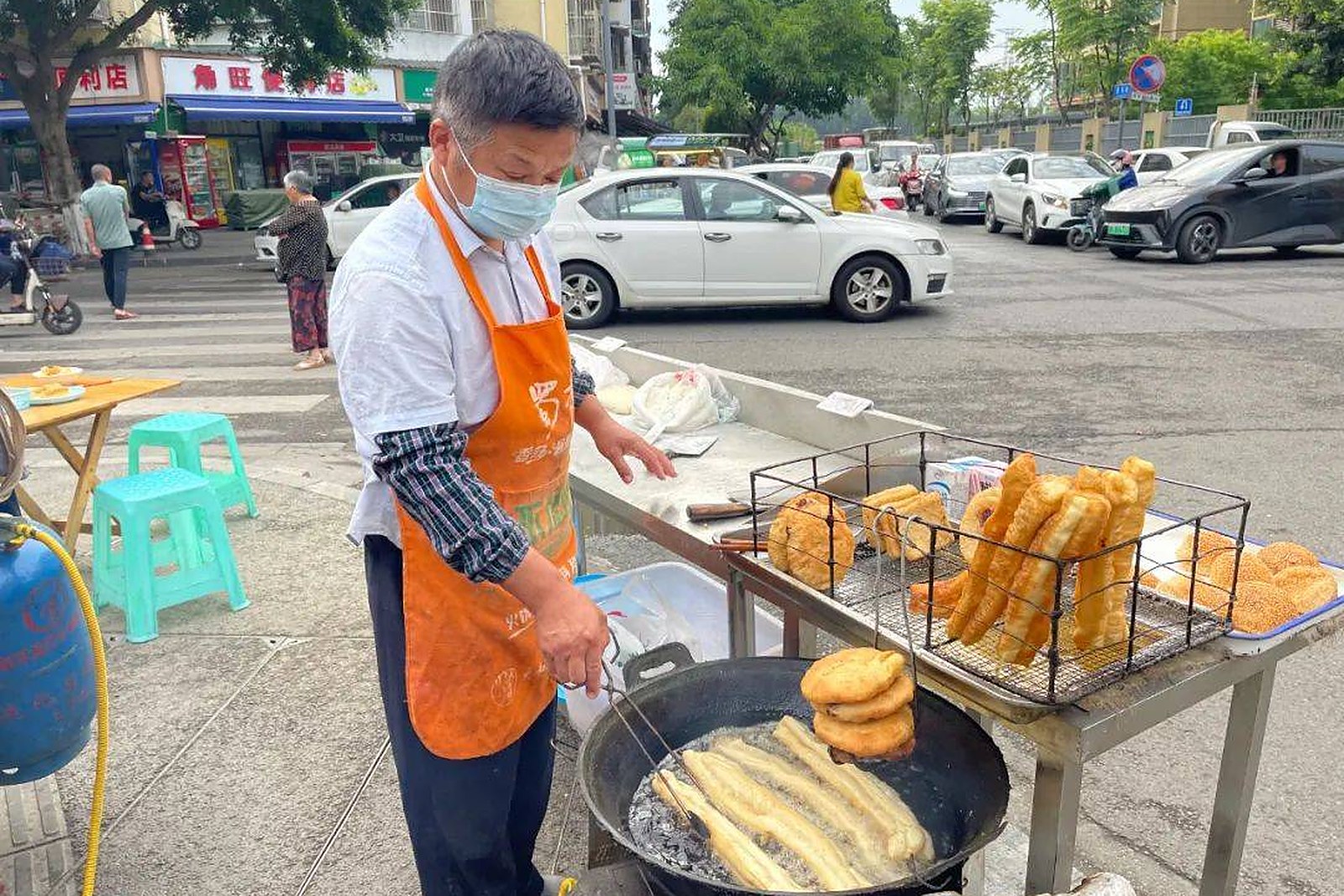
Call it honestly: estate money on a dawn clock. Getting there is one door: 地铁1号线 dìtiě yī hào xiàn Metro Line 1 to 通河新村站 Tōnghé Xīncūn zhàn Tonghe Xincun station puts the street within a short walk, with 共康路站 Gòngkāng Lù zhàn Gongkang Road station as the second approach for the row’s other end – the belt runs along 长江西路 Chángjiāng Xī Lù Changjiang West Road between the two. The pricing is the point: a soy-milk-and-dabing breakfast or a bowl of small wontons runs to loose-change money, a plate of potstickers and a wonton bowl together to still-cheap money – though exact figures are worth confirming the details on rather than quoting, the windows being small, family-run and priced for the daily queue. The crowds run to the estate’s clock: the dawn wave belongs to the retirees and the shift workers, the school-run hour thickens the queue, and a weekday mid-morning, when the griddles cook for the remaining regulars and the street belongs to its residents, is the eater’s own hour (worth confirming the details for individual windows’ hours, which follow the breakfast trade rather than any posted sign).
The honest star is the street itself, and the snacks are graded against it. What gets oversold is the “hidden breakfast paradise” framing: guides sell a nostalgia carnival of endless windows, and a first-timer may meet an ordinary estate street of shopfronts, hardware stores and breakfast windows – which is not the disappointment but the point. What repays the effort is grading the row the way the estate does: a soy-milk window judged by whether the beans are ground on site rather than poured from a thermos, a potsticker griddle judged by whether the batch turns over fast enough to keep the bottoms crisp, a wonton pot judged by whether the broth is the same pot the morning regulars have drunk from for years. The test costs nothing: eat down the street in courses – a dabing here, a wonton bowl there – rather than filing into one window, and take the one with the retiree queue rather than the photograph queue (worth confirming the details – the windows migrate with the leases, and today’s plain shutter may be next season’s remembered one).
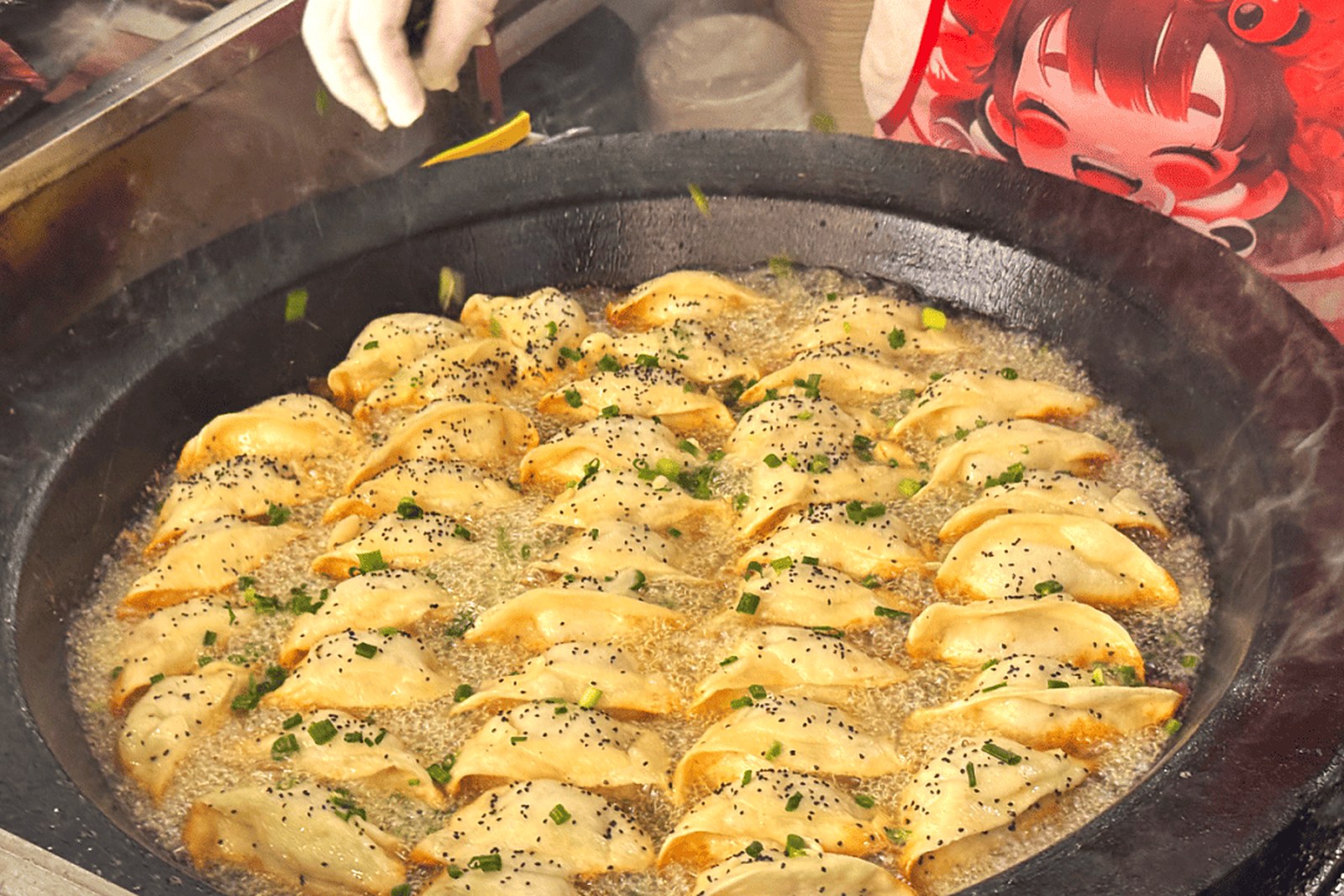
The street’s deepest habit is the breakfast walk: residents who take the same loop every morning – wontons at one window, a dabing at the next, the paper wrapper warm in the hand – a routine the street has run since the estate was new. Time it right – an early Line 1 ride out on a weekday – and the street explains itself better than any guidebook page: the estate built the shops, and the shops have outlived the factories that filled them (worth confirming the details – which windows keep the full dawn service today, the breakfast clock thinning as the estate ages).
The rest of this Baoshan list keeps other tables: the old-street mutton morning of 罗店羊肉 Luódiàn yángròu Luodian lamb steams a metro ride north, the old-port benbang rooms of 吴淞老镇本帮菜 Wúsōng Lǎozhèn běnbāng cài Wusong Old Town eats simmer down the river mouth, the shopping-district matrix of 牡丹江路商圈餐饮 Mǔdānjiāng Lù shāngquān cānyǐn Mudanjiang Road dining stacks up at the riverside core, and the park-gate mall tables of 顾村周边美食 Gùcūn zhōubiān měishí Gucun area eats line the cherry-season ring – one district, four more tables, all inside 宝山区 Bǎoshān Qū Baoshan District; and when the breakfast-morning needs a bed or a broader route, the stay-and-street notes for the district pick up where the griddles leave off.
Words and Names
What the Locals Know
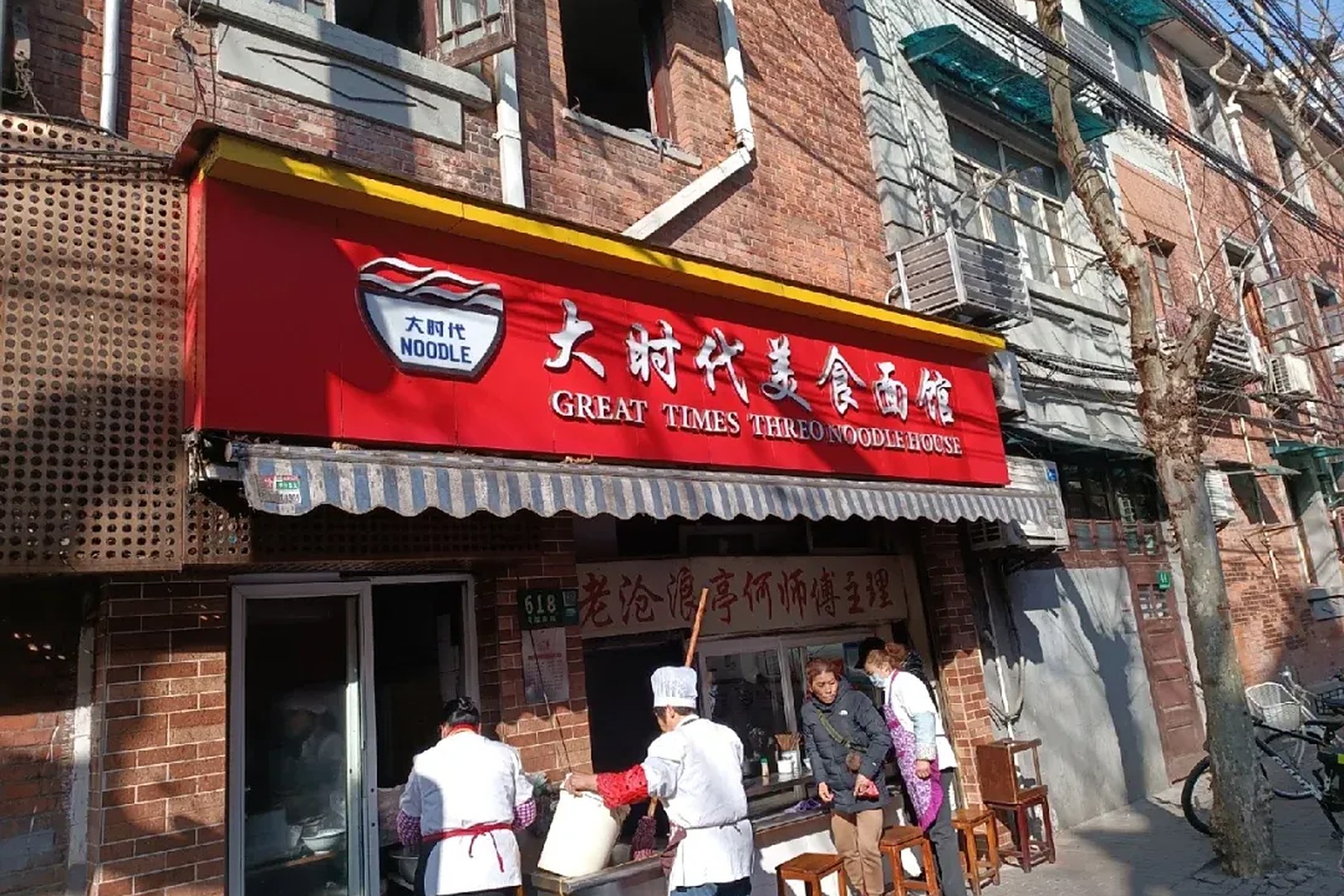
flowcloud would say that the 张庙一条街小吃 Zhāngmiào yītiáo jiē xiǎochī is the 1960s workers’ street’s morning belt, youtiao pots and the soy-milk steam of Baoshan District, Shanghai – a 市井早点 shìjǐng zǎodiǎn discipline where the shift-work clock answers the flat-pan guotie and the wonton ladles along the shopfronts – and that the honest move is to stand at the counter with the first batch, eat while the oil still crackles, and let the neighbourhood queue cast the vote, because the street was built for breakfast and breakfast keeps the street. All checked October 2026.
Where to find it: 宝山区 Bǎoshān Qū Baoshan District, Shanghai – the breakfast and snack belt along 长江西路 Chángjiāng Xī Lù Changjiang West Road through 张庙 Zhāngmiào Zhangmiao, the 1960s “一条街” yī tiáo jiē “one street” built to serve the factory estate, reached from 通河新村站 Tōnghé Xīncūn zhàn or 共康路站 Gòngkāng Lù zhàn on Metro Line 1, where the street keeps the dawn clock – the early wave the retirees’ and shift workers’, the school-run hour the thickest queue, weekday mid-morning the eater’s own (worth confirming the details – which breakfast window holds which corner today, estate-street doors turning over as estate streets do); loose-change to still-cheap money, so call it worth confirming the details rather than a fixed number, and let the retirees’ morning loop cast the vote. Zhangmiao street eats is the workers’ breakfast windows, pan-fried buns and the 1960s one-street shopping belt of Baoshan District, Shanghai – the taste of 宝山区 Bǎoshān Qū Baoshan District eaten where the estate still feeds itself at dawn. All checked October 2026.