
昭通洋芋香,街角烤一筐。Zhāotōng yángyù xiāng, jiējiǎo kǎo yī kuāng – Zhaotong potatoes are fragrant; a street corner roasts a basketful.
昭通洋芋 Zhāotōng Yángyù Zhaotong potatoes – 洋芋 yángyù being the Yunnan-Sichuan word for the 土豆 tǔdòu spud that the rest of China calls 马铃薯 mǎlíngshǔ – are the humble backbone of the city’s 街头小吃 jiētóu xiǎochī street-snack life, and the plateau grows them so well that a 昭通 Zhāotōng person will tell you, with a straight face, that their 洋芋 yángyù is better than 米饭 mǐfàn rice, which is the kind of local patriotism that is also roughly true. The signature move is the 烧洋芋 shāo yángyù roasted potato: small 高原 gāoyuán highland potatoes thrown onto a 木炭 mùtàn charcoal brazier or into a 铁锅 tiěguō dry-wok and turned until the skin blackens and cracks and the inside goes floury and sweet, then split and stuffed with 辣椒面 làjiāo miàn chili powder, 折耳根 zhé’ěrgēn fishy-stem herb, 香菜 xiāngcài coriander and a dab of 酱 jiàng sauce. The honest shape is that this is poor-person food that won, a snack built from the cheapest calorie on the plateau that now anchors every night market and 校门口 xiàoménkǒu school gate in the city. A 烧洋芋 shāo yángyù runs about 3-8 yuan a piece from a 路边摊 lùbiān tān roadside stall (worth confirming – the price tracks the size and the topping bar, and the 网红 wǎnghóng internet-famous stalls in the centre quote higher than the 老阿姨 lǎo āyí auntie with the 煤炉 méilú coal stove), and the thing to know is that the 洋芋 yángyù itself is the star: a properly floury 高原 gāoyuán potato needs no rescue, and a watery, waxy impostor from the lowlands is why some travellers shrug at a dish the locals adore.
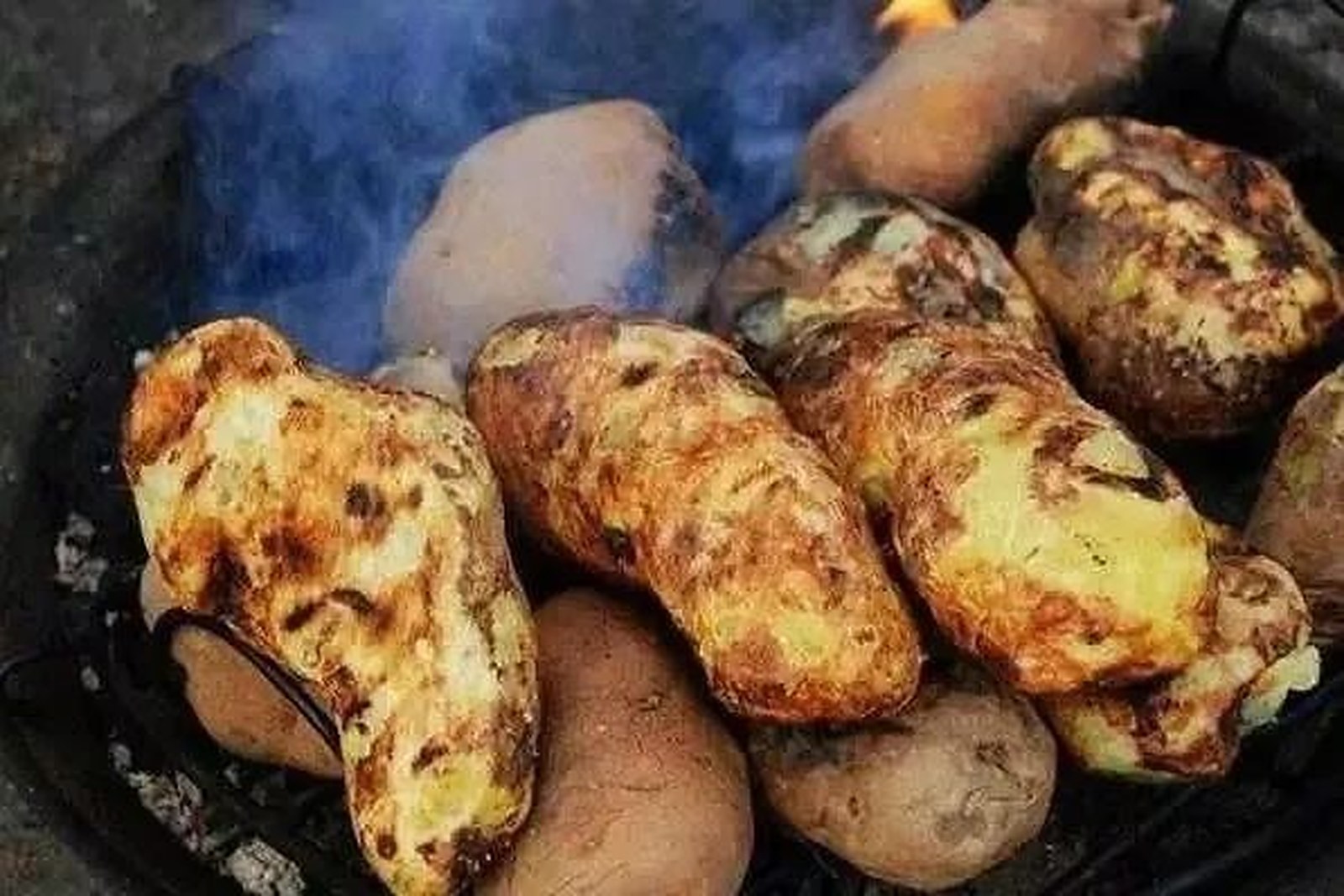
The mechanism is the flour. 昭通 Zhāotōng sits high and cool, and the 高原 gāoyuán potatoes there grow slow in thin soil into dense, low-moisture, starch-forward tubers that 烧 shāo roast to a dry, sweet, almost 栗子 lìzi chestnut mealiness the way a 北方 běifāng northern 土豆 tǔdòu never quite does – the 烧洋芋 shāo yángyù lives or dies on that flour, because a wet potato just steams inside its skin and arrives sad. The comparison locals draw is with the 烤红薯 kǎo hóngshǔ roasted sweet potato of any Chinese winter street and with the 炸洋芋 zhá yángyù fried-potato chunks that share the same stall – same 洋芋 yángyù, different heat – but the 烧 shāo dry-roast is the 昭通 Zhāotōng one, the version with the blackened skin you peel with your fingers. The topping bar is the other half: 折耳根 zhé’ěrgēn (the 鱼腥草 yúxīngcǎo fishy-smelling herb that divides China into lovers and flee-ers) is the 昭通 Zhāotōng default, and a stall without it is a stall for tourists, while the 辣椒面 làjiāo miàn should be the local 糊辣 húlà toasted kind, dusty red and faintly smoky rather than the bright orange oil kind. The honest caveat for a writer is that 洋芋 yángyù prep in 昭通 Zhāotōng is a whole family – 烧 shāo, 炸 zhá, 洋芋粑粑 yángyù bābā potato cakes, 洋芋丝 yángyù sī shredded – and lumping them as one potato dish is the lazy outsider’s move, so name which one you mean (worth confirming the local names, because stall signage mixes them).
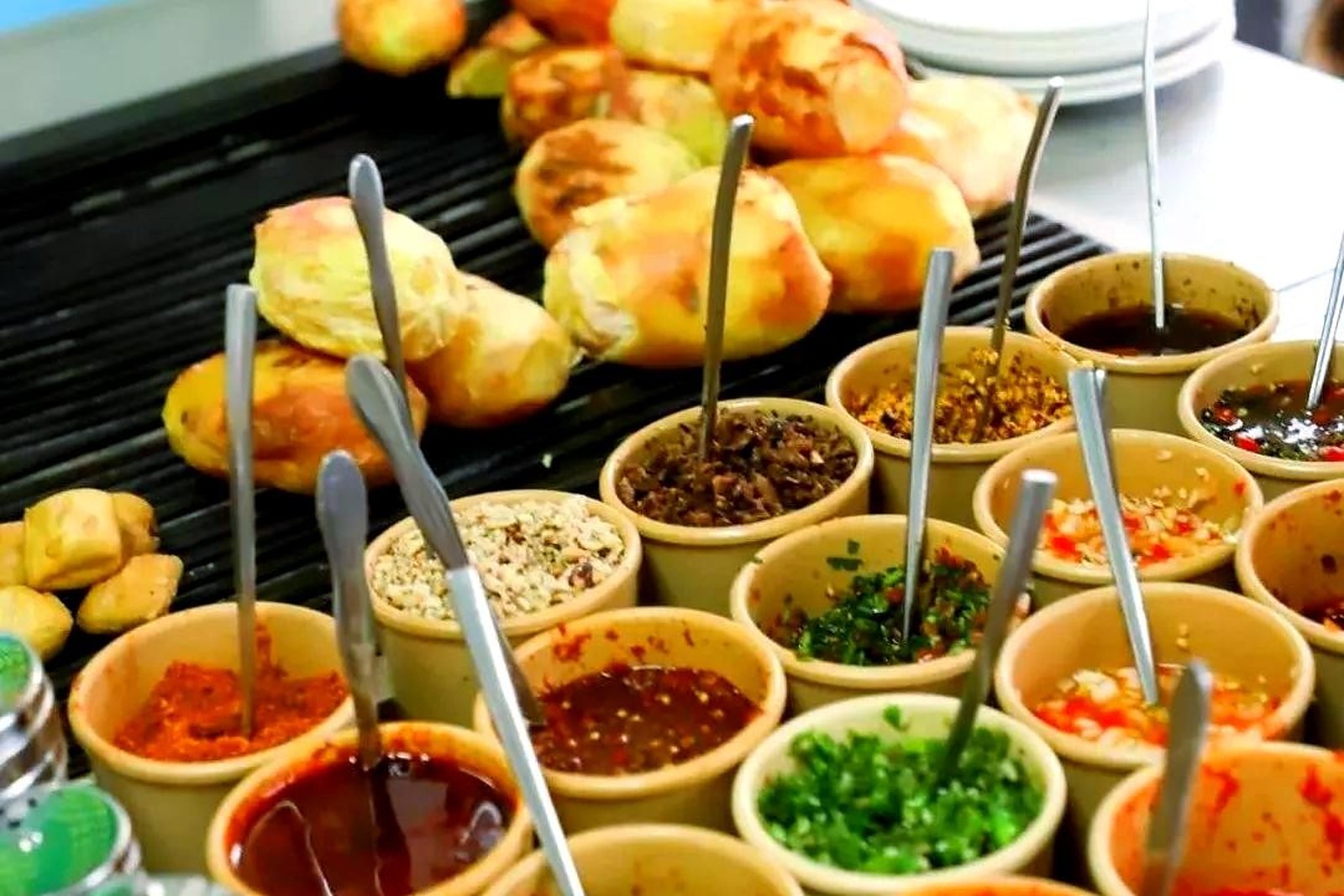
Locals eat them standing up, at a 路边摊 lùbiān tān or a 夜市 yèshì night market, the 洋芋 yángyù in one hand and the 折耳根 zhé’ěrgēn stem poking out. The move, if you are a visitor, is to find the 老阿姨 lǎo āyí with the longest local queue and the blackest 铁锅 tiěguō – the 网红 wǎnghóng photo stalls are fine but the auntie’s 煤炉 méilú is where the flour shows – and to ask for the 烧洋芋 shāo yángyù with the full topping bar, 折耳根 zhé’ěrgēn included, because ordering it plain is to order half the dish. The honest season is all year, since a 洋芋 yángyù keeps and a brazier burns in any weather, but the snack is at its most itself on a cold evening when the 烧 shāo aroma carries down the street and the queue is short. The honest test of a 昭通 Zhāotōng 烧洋芋 shāo yángyù is the inside: cut or split one and it should be dry and meal, not wet and glassy, and the skin should come off in a sheet, not stick and tear – a 洋芋 yángyù that fails that test was the wrong tuber or the wrong fire. The 校门口 xiàoménkǒu school gates and the older 居民区 jūmínqū neighbourhoods are where the real stalls hide, though exactly which corner runs the best one is a 昭通 Zhāotōng argument no visitor will ever win (worth confirming current stall locations – they move with the seasons and the 城管 chéngguǎn patrols).
Where to find them: 昭通 Zhāotōng night markets, 校门口 xiàoménkǒu school gates and 居民区 jūmínqū neighbourhood 路边摊 lùbiān tān – a 烧洋芋 shāo yángyù about 3-8 yuan a piece (worth confirming the details); find the longest local queue, take the full topping bar with 折耳根 zhé’ěrgēn, and judge it by the dry, meal inside. Zhaotong potatoes are the highland spud that runs the street, best eaten standing up on a cold evening. All checked October 2026.
Words and Names
昭通洋芋 Zhāotōng Yángyù Zhaotong potatoes · 洋芋 Yángyù potato (Yunnan-Sichuan word) · 土豆 Tǔdòu potato (general) · 烧洋芋 Shāo Yángyù charcoal-roasted potato · 高原 Gāoyuán high plateau · 折耳根 Zhé’ěrgēn fishy-stem herb (fishwort) · 鱼腥草 Yúxīngcǎo houttuynia / fishy herb · 辣椒面 Làjiāo Miàn chili powder · 街头小吃 Jiētóu Xiǎochī street snacks · 路边摊 Lùbiān Tān roadside stall · 洋芋粑粑 Yángyù Bābā potato cake · 校门口 Xiàoménkǒu school gate
What the Locals Know
- The flour is everything: a 昭通 Zhāotōng 高原 gāoyuán 洋芋 yángyù roasts dry and meal like a 栗子 lìzi chestnut, and a wet, waxy lowland impostor is why visitors sometimes shrug at a dish locals adore – so judge the inside, not the sign.
- The topping bar is half the dish: 折耳根 zhé’ěrgēn is the default and a stall without it is a tourist stall; take the full bar, 折耳根 zhé’ěrgēn included, because plain is half a 烧洋芋 shāo yángyù.
- The auntie beats the 网红 wǎnghóng: the 老阿姨 lǎo āyí with the blackened 铁锅 tiěguō and the long local queue is where the potato shows its flour, not the photo stall with the higher price.
- Name the prep: 昭通 Zhāotōng 洋芋 yángyù is a family – 烧 shāo, 炸 zhá, 粑粑 bābā, 丝 sī – so say which one you mean, and verify the stall signage, which mixes them (worth confirming the details).
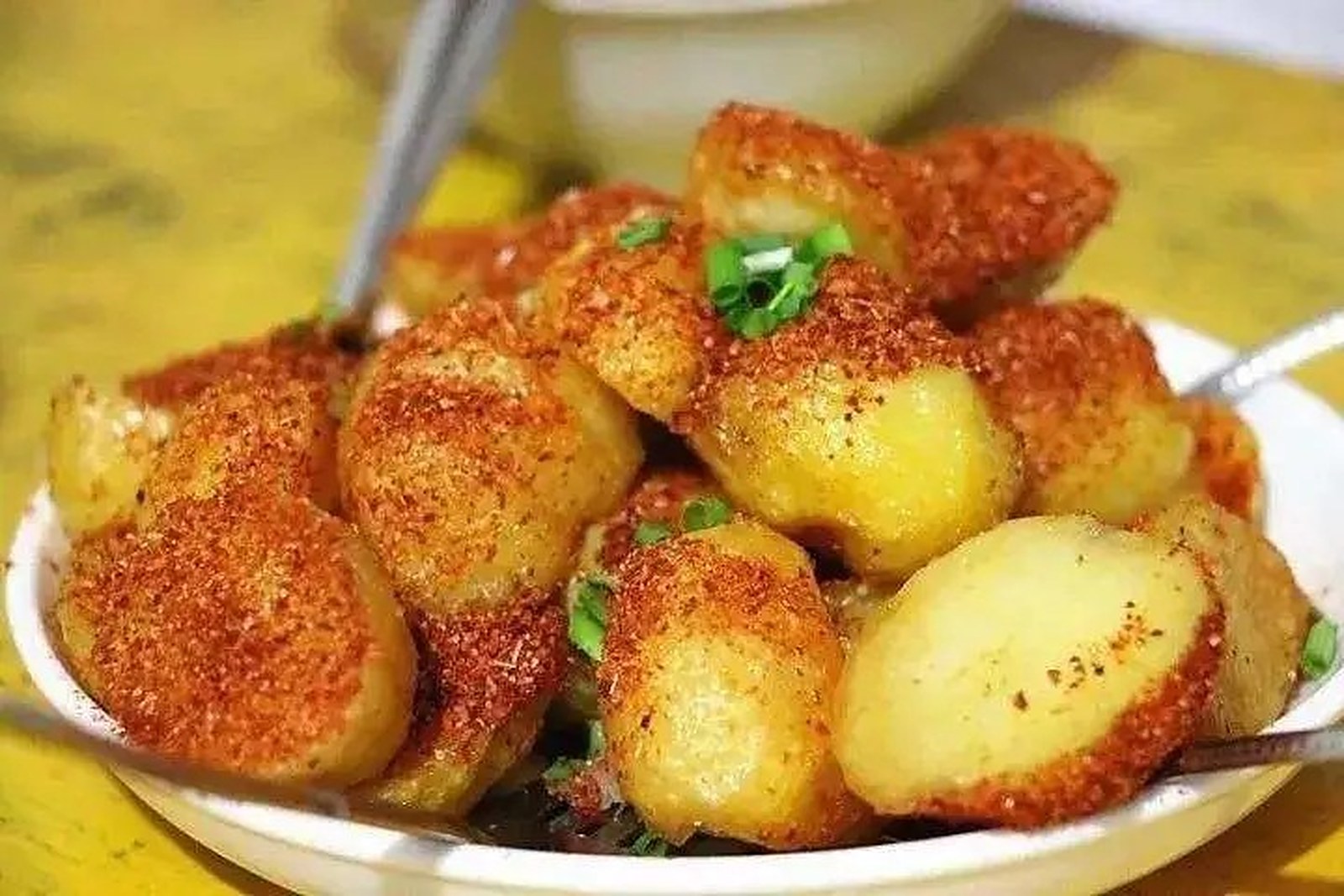
flowcloud would say that the 昭通洋芋 zhāotōng yángyù is the 高原 gāoyuán highland potato that runs the city’s 街头小吃 jiētóu xiǎochī – roasted 烧 shāo on a brazier, split and loaded with 折耳根 zhé’ěrgēn and 辣椒面 làjiāo miàn – and that the honest move is to follow the longest local queue, take the full topping bar, and judge it by the dry meal inside, because the flour is the star and the auntie’s 铁锅 tiěguō beats the photo stall. All checked October 2026.
Where to find it: 昭通 Zhāotōng night markets, 校门口 xiàoménkǒu and 居民区 jūmínqū 路边摊 lùbiān tān – a 烧洋芋 shāo yángyù about 3-8 yuan (worth confirming the details); find the long queue, take 折耳根 zhé’ěrgēn, eat it standing up on a cold evening. Zhaotong potatoes are the highland spud of the street. All checked October 2026.