
The Black Vinegar That Rules a City’s Shelf: Zhenjiang Xiangcu
酸而不涩香微甜,愈久愈香存愈鲜 Suān ér bù sè xiāng wēi tián, yù jiǔ yù xiāng cún yù xiān – Sour but never harsh, fragrant with a trace of sweet; the longer it rests, the more fragrant it keeps
正文:镇江香醋 Zhènjiāng Xiāngcù Zhenjiang aromatic vinegar is the condiment that owns this city – a black, glossy vinegar brewed from glutinous rice by solid-state fermentation, aged in vats until the raw sourness rounds into something softer: 酸而不涩 suān ér bù sè, “sour without astringency,” with a fragrance that lifts the whole dish. The craft runs back to 1840, when the Hengshun house began vinegar-making that would become the city’s flagship; the drink-adjacent brewing quarter by the canal turned out vinegar, altars of soy and wine, and a shipping trade that carried 「CHINKIANG VINEGAR」 Chinkiang vinegar into Western kitchens a century before most Chinese condiments had romanised names. Today the city brews the bulk of China’s famous black vinegar here, and every table in town – noodle shop to banquet hall – keeps a bottle within arm’s reach.
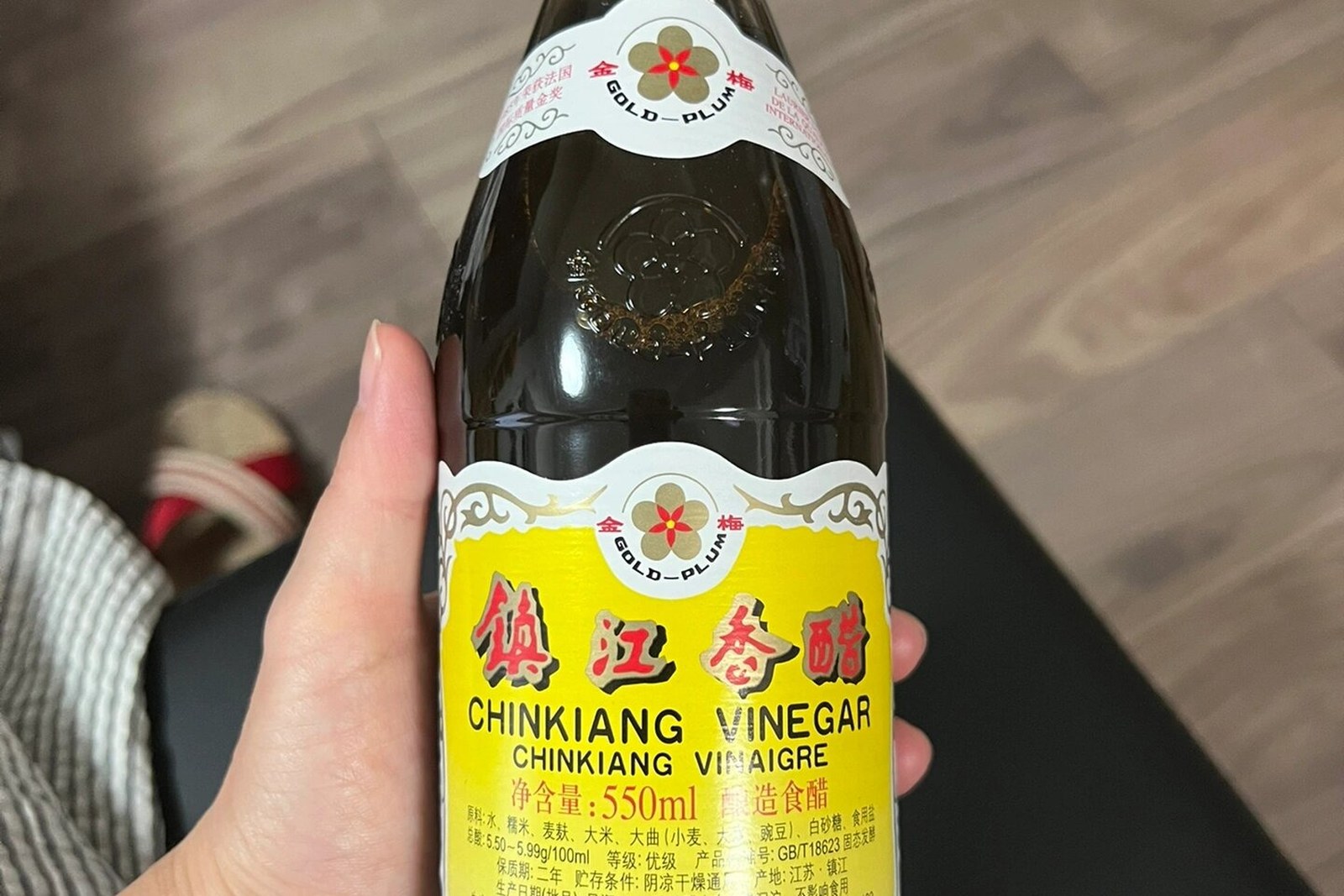
The vinegar’s texture is the tell. Good Zhenjiang vinegar pours syrup-thin, coats the spoon, and tastes layered: bright acid first, then grain sweetness, then the maillard depth of the aged mash. The classic test pour is over 水晶肴蹄 Shuǐjīng Yáotí crystal pork aspic with a mound of shredded ginger – the vinegar cuts the jelly, the ginger wakes the acid, and the pairing is written into the city’s three oddities as 肴肉不当菜 yáo ròu bú dàng cài, aspic eaten not as a dish but as a staple.
The brewery side of the city is worth a detour for anyone who thinks vinegar is vinegar. The Hengshun museum lines up the old craft: glutinous rice steamed, squared into vinegar-peat cakes, turned daily by hand through weeks of solid fermentation, soaked and pressed, then aged in ceramic vats through summers that concentrate everything. The modern plants run the same sequence on industrial scale – the vinegar shops along the way sell five-year and ten-year grades, vinegar sachets for the road, and the city’s other legacy products, from pickled goose gizzards to soy pastes.
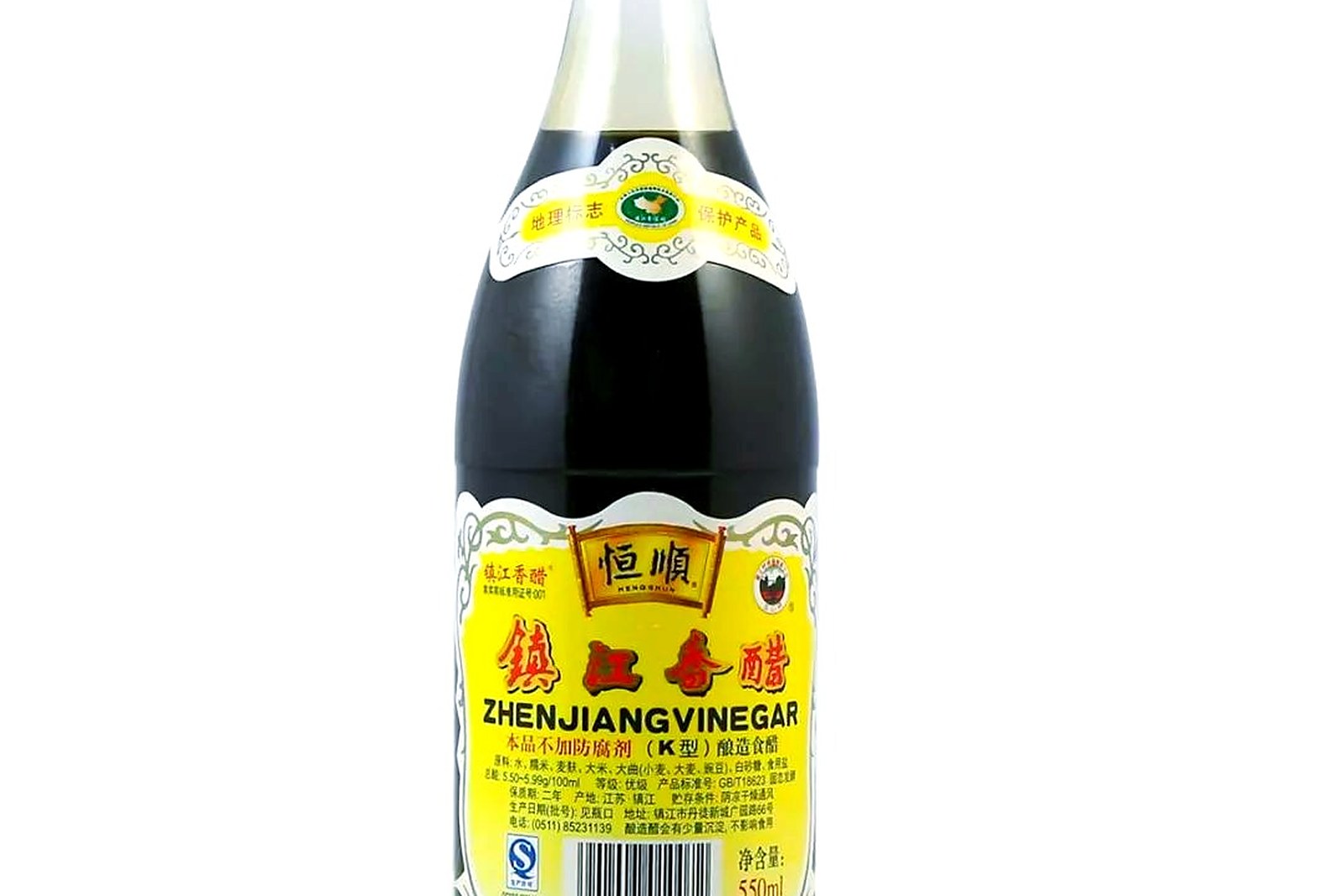
Take a bottle home – the standard 550-millilitre golden-cap bottle costs pocket change and outclasses the “Chinkiang” imitations sold abroad. At the table, the city’s rule of thumb: dark vinegar for dips and aspic, a lighter hand for noodles, and never cook the fragrance out – it goes on at the end, or not at all.
The same city holds more flavors worth chasing: 锅盖面 Guōgài Miàn the pot-lid noodles, 水晶肴蹄 Shuǐjīng Yáotí the crystal aspic, 东乡羊肉 Dōngxiāng yángròu the Dongxiang mutton, or 白汁鮰鱼 Báizhī Huíyú the white-braised hui fish – four more doors into the same 镇江市 Zhènjiāng Shì Zhenjiang City table.
Words and Names
What the Locals Know
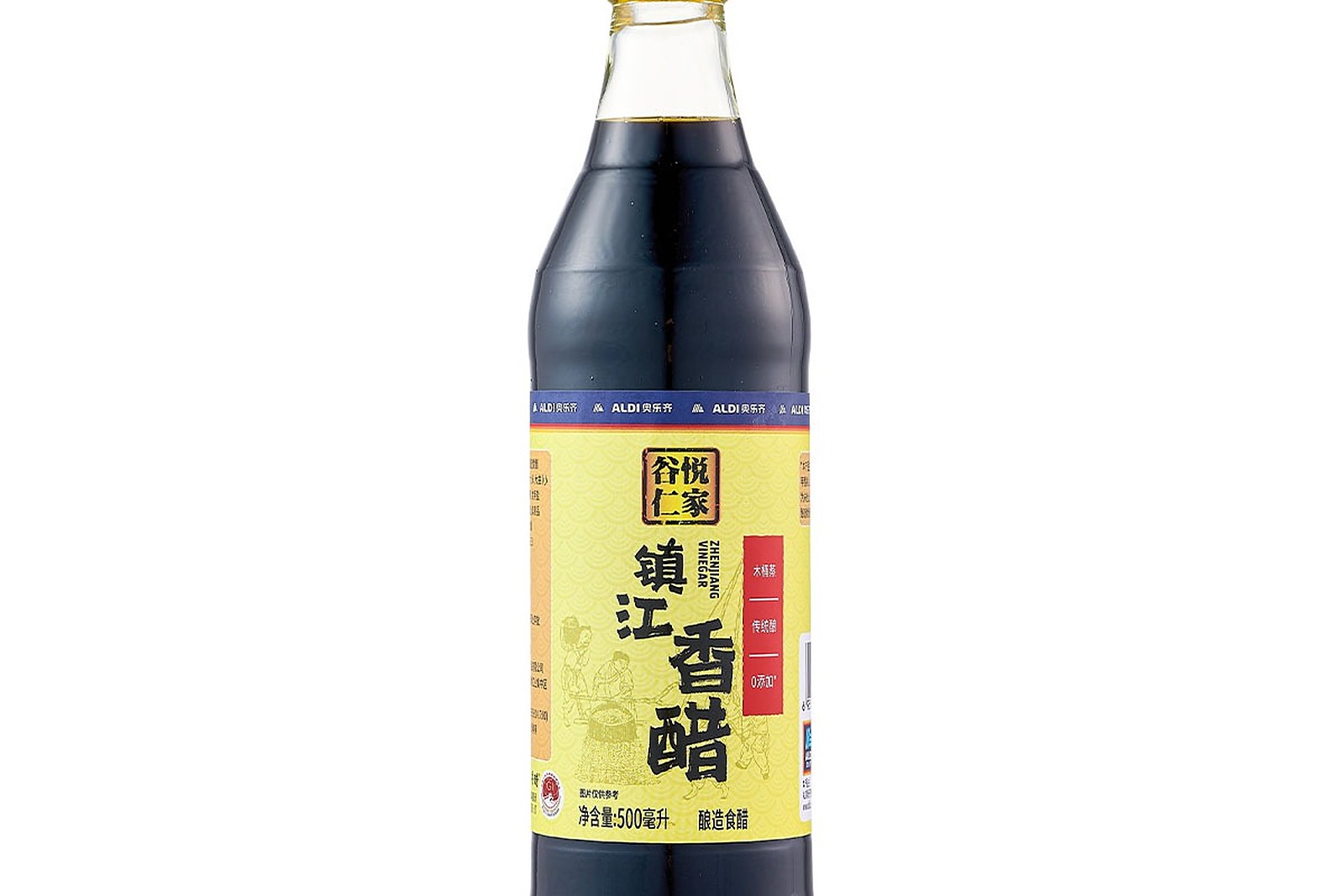
flowcloud would say Zhenjiang’s vinegar is the city’s patience made edible: glutinous rice, weeks of turning, years of waiting – and a black drop at the end of it that rewires whatever it touches. All checked November 2026.
Where to find it: Every grocery in Zhenjiang stocks the local vinegar, the Hengshun shops around the centre carry the full aged range, and the brand museum near the brewer’s quarter explains the craft in an hour; buy the 550ml standard bottle for the table, the ten-year grade for gifts, and remember the rule – it improves on the shelf, never spoils, and goes on at the last minute. All checked November 2026.