
Zhenru Lamb: White-Cut Mutton, Mutton-Soup Noodles and the Old-Town Winter Table of Putuo District, Shanghai
古镇炉烟羊肉白,面汤一碗慰冬寒。Gǔzhèn lú yān yángròu bái, miàn tāng yī wǎn wèi dōng hán – In the old town’s stove smoke the white-cut lamb; one bowl of noodle broth comforts the winter cold.
真如羊肉 Zhēnrú yángròu Zhenru lamb is the old mutton tradition of 真如古镇 Zhēnrú gǔzhèn Zhenru Old Town, the historic market quarter around 兰溪路 Lánxī Lù Lanxi Road and 北石路 Běishí Lù Beishi Road in 普陀区 Pǔtuó Qū Putuo District, Shanghai – a riverside town that traded long before the city grew out to meet it, and whose name is kept on the map by 真如寺 Zhēnrú Sì Zhenru Temple, one of the oldest wooden buildings in Shanghai, and by the metro station that took the temple’s name. The town’s kitchen has one famous line: 白切羊肉 báqiē yángròu white-cut mutton, boiled whole, chilled, sliced thin and eaten at room temperature with a dish of soy and ginger, and 羊汤面 yáng tāng miàn mutton-soup noodles, the same broth ladled over wheat noodles and crowned with slices of the boiled meat (worth confirming the details – which house holds the oldest stove, and whose broth the neighbourhood votes for, shifts with the telling). The blunt definition: a suburban market-town speciality, one of the lamb districts old Shanghainese recite alongside their winter tonics, cooked the plain way – water, ginger, time – and eaten in canteen-bright rooms where the regulars order by holding up fingers.
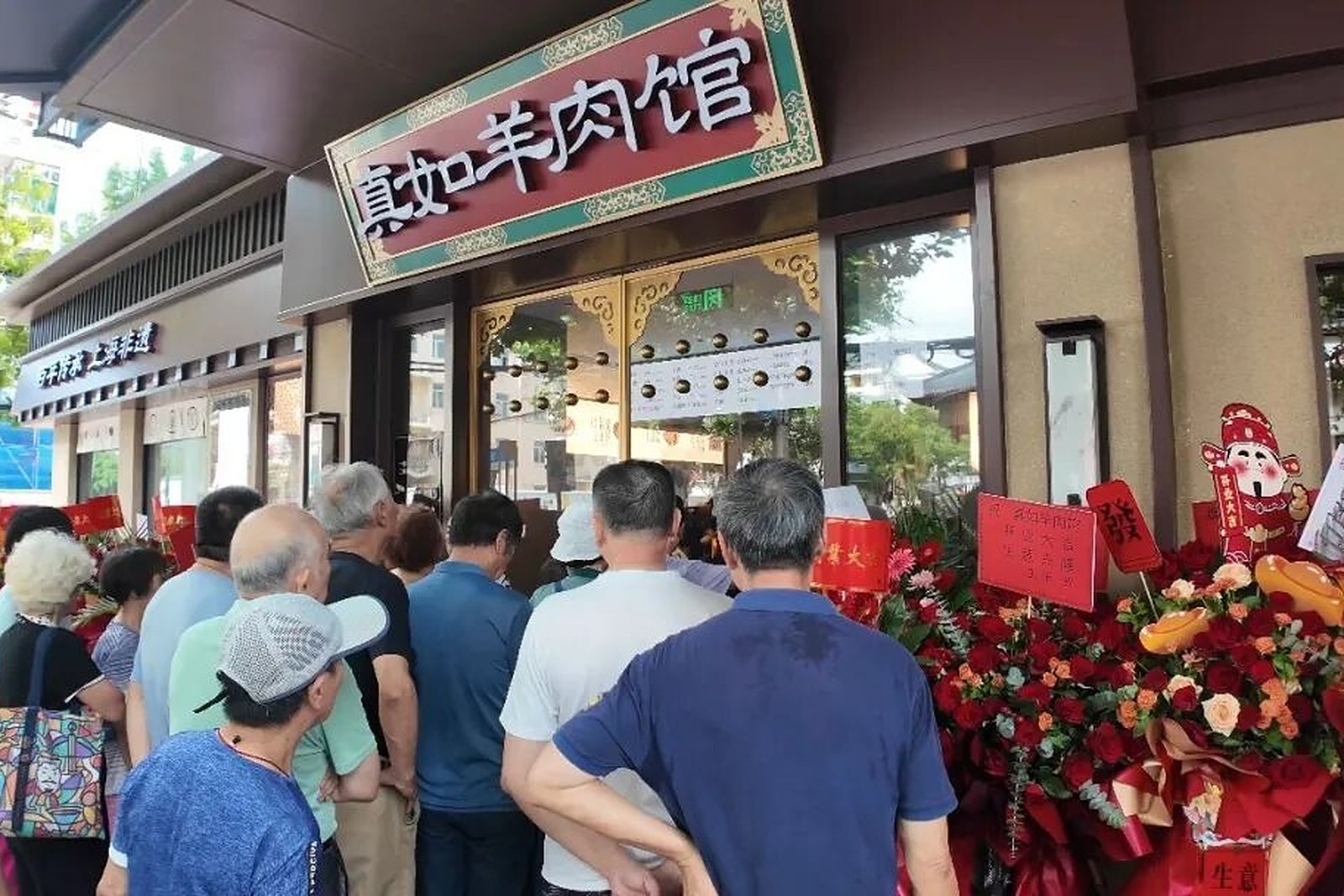
Call it honestly: old-town money on a winter clock. Getting there is one ride: 地铁11、14号线 dìtiě shíyī shísì hào xiàn Metro Lines 11 and 14 to 真如站 Zhēnrú zhàn Zhenru station put the old town’s eating streets within a short walk. A bowl of mutton-soup noodles and a plate of the white-cut price at casual-neighbourhood money – this is working-suburb arithmetic, not boutique-dining money – though each shop’s menu runs its own brackets, so every door is worth confirming the details on rather than quoting. The season is the operating condition: the trade is 冬令 dōnglìng winter-season by instinct, at its fullest from the first cold snap through the Spring Festival, when lamb counters that idle in July run all day and the soup pots never fully cool; a weekday mid-morning in deep winter, when the first trays of sliced mutton land and the broth is at its clearest, is the eater’s own hour, and the shops close early by city standards (worth confirming individual shops’ hours, which follow the season and the weather more than any posted sign).
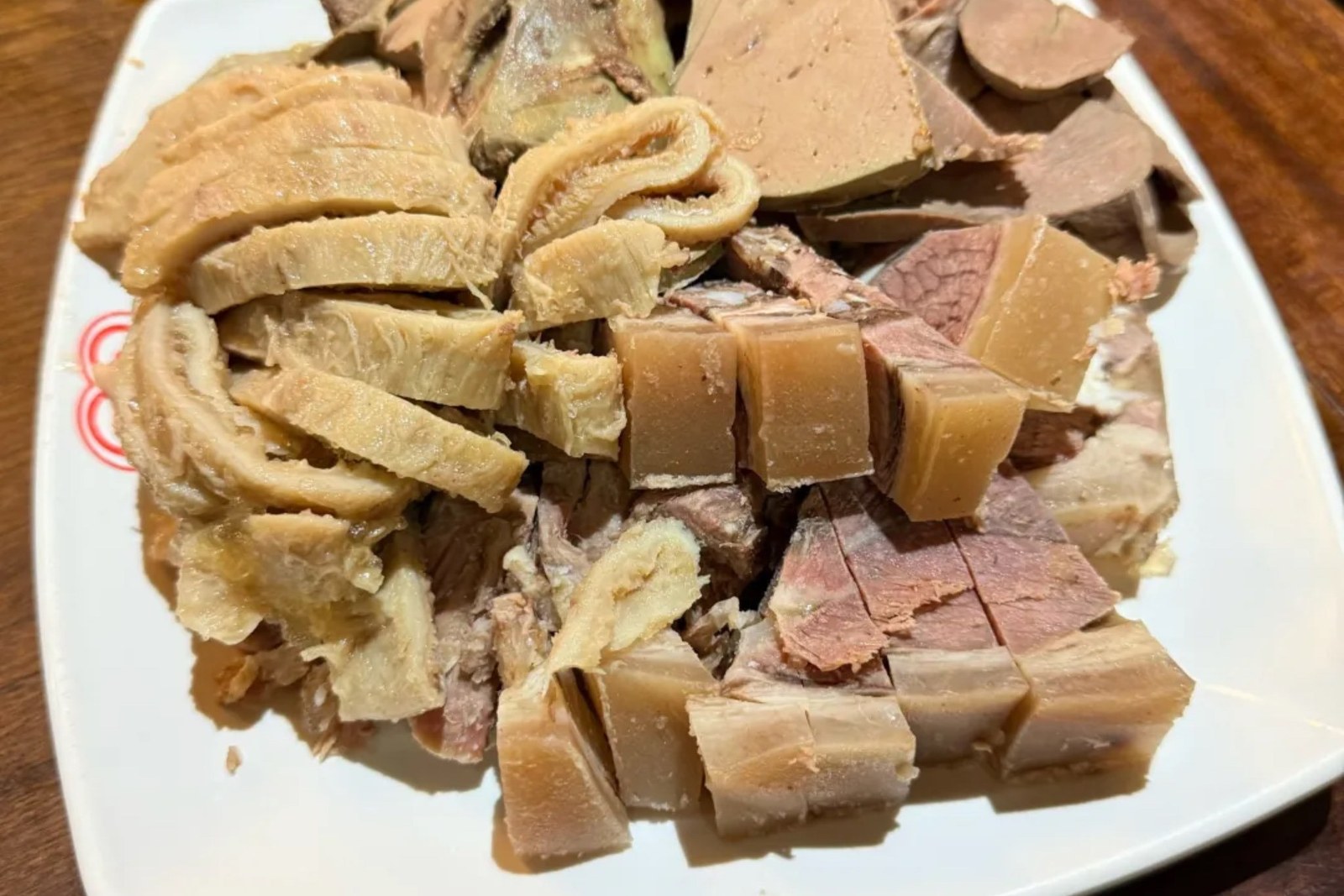
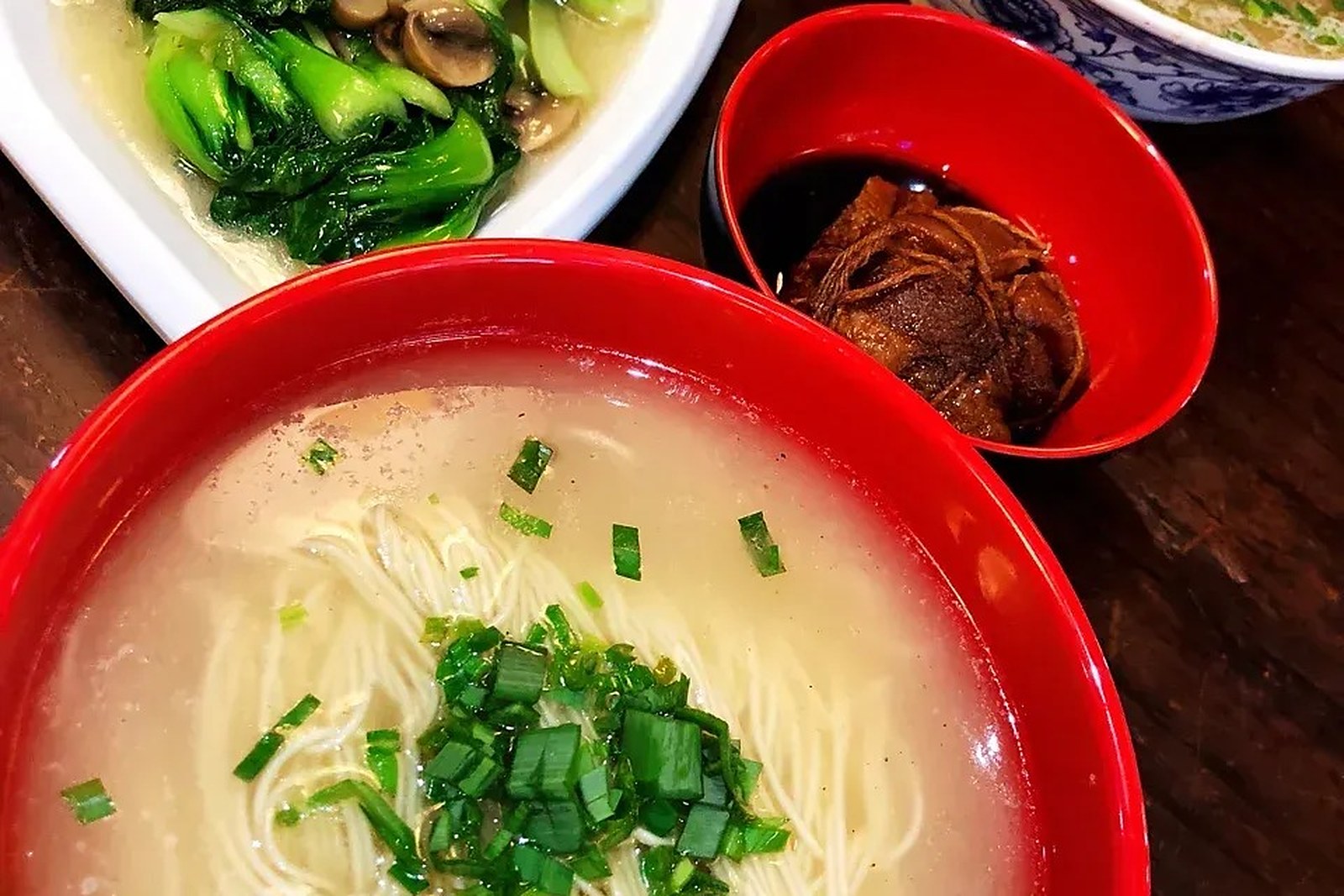
The honest star is the cold lamb, judged warm-hearted. What gets oversold is the “famous lamb town” framing: guides sell a pilgrimage dish, and a first-timer arriving in August may find the trade half-asleep and the soup a shadow of its winter self. What repays the effort is grading the plate the way the locals do: 白切羊肉 báqiē yángròu judged by its clean set – the slices should hold together yet tremble, the fat should taste sweet not heavy, and there should be no trace of the gamey smell that lesser kitchens disguise with spice – and the 羊汤面 yáng tāng miàn judged by the broth drunk before any dressing is added, milky-white from long boiling, salted by the bone and the hours rather than the ladle. The test costs nothing: eat the first slice unseasoned, and drink the first spoon of soup straight – a kitchen that can pass both has been boiling the same way for generations, and needs no menu poetry to prove it (worth confirming the details – each shop keeps its own broth, and the pots differ).
Nearly everything else on this Putuo list keeps other doors: the neighbourhood snack shops of 曹杨新村食肆 Cáoyáng Xīncūn shísì Caoyang Village eats run their estate trade a metro stop or two south, the warehouse-wall cups of 莫干山路咖啡 Mògànshān Lù kāfēi Moganshan Road cafes pour beside the Suzhou Creek art compound, the mall food floors and street kitchens of 大渡河路美食 Dàdùhé Lù měishí Daduhe Road food cover the Changfeng circuit, and the home-style tables of 武宁路家常菜 Wǔníng Lù jiāchángcài Wuning Road home cooking wait in the new-village interior – one district, four more tables, all inside 普陀区 Pǔtuó Qū Putuo District; and when the winter eating day needs a bed or a broader plan, the stay-and-street notes for the district pick up where the soup bowl leaves off.
Words and Names
- 真如羊肉 Zhēnrú yángròu / Zhenru lamb · the old town’s mutton tradition - 真如古镇 Zhēnrú gǔzhèn / Zhenru Old Town · the market quarter that keeps the trade - 白切羊肉 báqiē yángròu / white-cut mutton · boiled, chilled, sliced thin, eaten plain - 羊汤面 yáng tāng miàn / mutton-soup noodles · the broth bowl the town is graded by - 冬令 dōnglìng / winter season · the clock the trade runs on - 进补 jìnbǔ / winter tonic · the eating logic behind the season - 羊肉馆 yángròu guǎn / mutton restaurant · the plain dining rooms of the town - 真如寺 Zhēnrú Sì / Zhenru Temple · the ancient temple that named the town and the station - 兰溪路 Lánxī Lù / Lanxi Road · the eating street of the old town - 北石路 Běishí Lù / Beishi Road · the crossing street nearby - 真如站 Zhēnrú zhàn / Zhenru station · the Lines 11 and 14 approach - 普陀区 Pǔtuó Qū / Putuo District · the Shanghai district holding the old town
What the Locals Know
flowcloud would say that the 真如羊肉 Zhēnrú yángròu is the white-cut mutton, mutton-soup noodles and the old-town winter table of Putuo District, Shanghai – a 冬令 dōnglìng discipline where the cold lamb’s clean set answers the steam on the shop windows – and that the honest move is to come in deep winter, taste the slice and the broth unseasoned, and trust the kitchen whose soup needs no dressing, because the temple built the town and the broth built the queue. All checked October 2026.
Where to find it: 普陀区 Pǔtuó Qū Putuo District, Shanghai – the mutton houses of 真如古镇 Zhēnrú gǔzhèn Zhenru Old Town around 兰溪路 Lánxī Lù Lanxi Road and 北石路 Běishí Lù Beishi Road, a short walk from 真如站 Zhēnrú zhàn on Metro Lines 11 and 14, where the trade keeps the winter clock – fullest from the first cold snap to the Spring Festival, weekday mid-morning the eater’s own, summer the off-season (worth confirming the details – which old shop holds the famous stove today, and each door’s hours, which follow the weather); the bowl-and-plate combo prices at casual-neighbourhood money, so call it worth confirming the details rather than a fixed number, and let the undressed broth cast the vote. Zhenru lamb is the white-cut mutton, mutton-soup noodles and the old-town winter table of Putuo District, Shanghai – the taste of 普陀区 Pǔtuó Qū Putuo District eaten where the market town learned to boil a clean pot. All checked October 2026.