
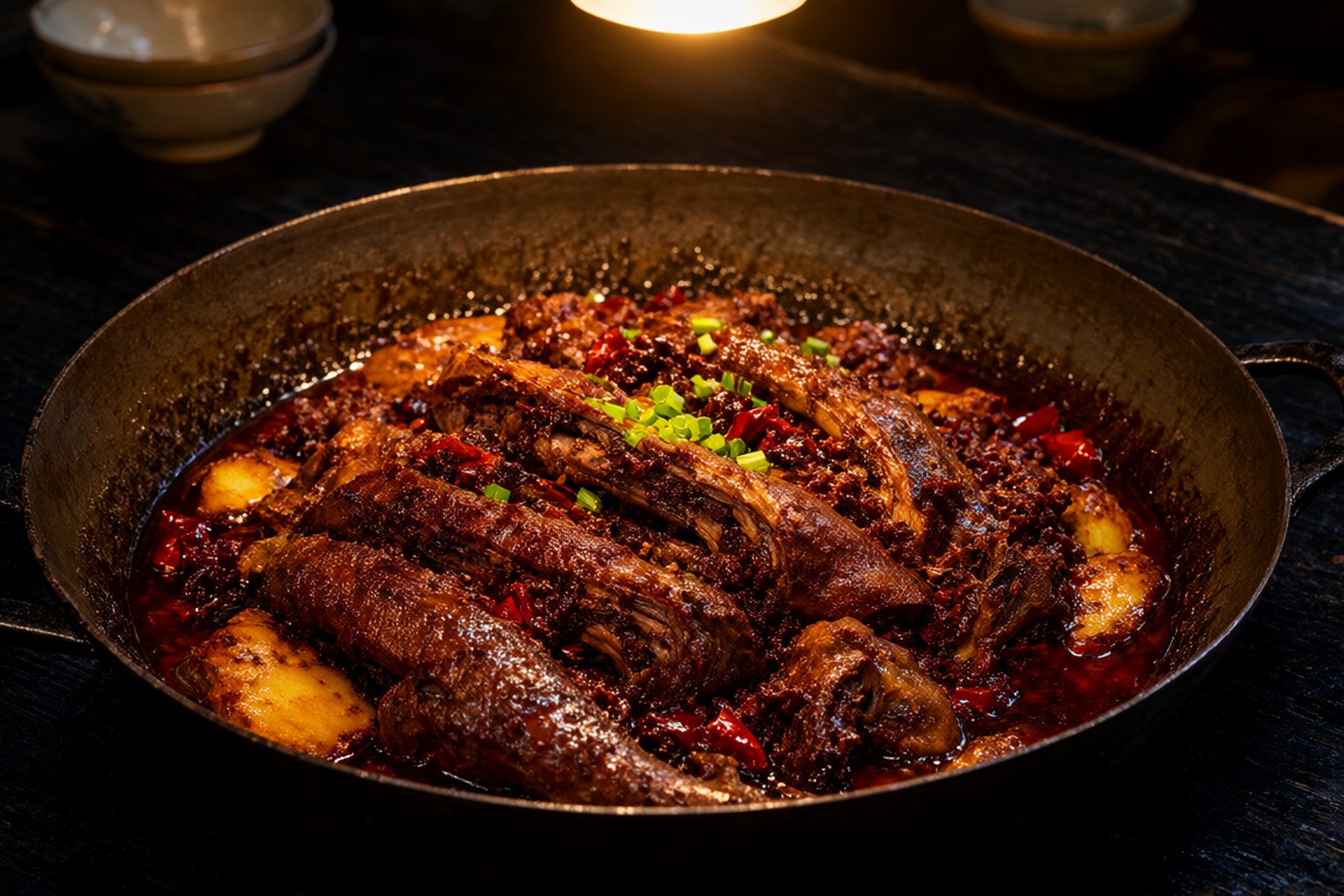
The smell reaches you before the plate does: ginger, dark bean paste, and duck fat rendered down until it is almost a lacquer. The birds are 芷江鸭 Zhǐjiāng yā, a local 麻鸭 máyā of about a kilo and a half, chopped small — through the bone, thumb-length pieces — and cooked until the skin is the colour of old mahogany and the meat comes off the bone with a push. There is very little sauce; what there is has been reduced onto the meat rather than left in the pan. You eat it with rice and a bowl of pickled vegetables and, if it is winter, a bottle of beer you do not refrigerate.
芷江 Zhǐjiāng is a small county town in the west of 怀化 Huáihuà that most people outside China have never heard of and that every Chinese schoolchild has seen on a page of the history book. On 21 August 1945, the Japanese delegation landed at the airfield here and submitted its surrender document to the Chinese military — the formal act that ended eight years of war in China, three weeks before the papers were signed on the USS Missouri. The town calls itself 受降城 Shòuxiángchéng, the City of the Surrender, and the duck is the local dish that got carried along with the name.
What Makes It Work
Start with the bird. 芷江鸭 Zhǐjiāng yā is a small local duck raised on rice fields and water weeds, and it is killed young, at around 1.5 kilograms, before the flesh toughens; anything much larger will stew for an hour and still resist. The duck is chopped raw, bone and all, and the first stage of cooking is dry — a hot wok, no oil beyond what the skin gives up, until the water is driven out and the pieces start to colour. Only then does the fat go in, along with 老姜 lǎojiāng old ginger sliced thick, 花椒 huājiāo, and the local 甜酱 tiánjiàng — a sweet fermented bean paste, dark as tar, that is the ingredient most associated with this town. Water, a lid, twenty minutes. Finally 青红椒 qīnghóng jiāo green and red chillies and 蒜苗 suànmiáo, and a hard few minutes at the end to tighten everything down.
The result is a dish that is less hot than it smells and more aromatic than it looks. The sweet bean paste is doing the heavy lifting: it brings a faint molasses edge to the duck fat that stops the chilli from simply burning. If someone hands you a version that is scarlet and blazing and tastes of nothing but capsaicin, they have used too much chilli and not enough paste.
The other county dish worth knowing is 芷江炒鸭 Zhǐjiāng chǎo yā, the stir-fried duck, which is the weeknight version: pieces browned with ginger and fresh chilli and then simmered briefly in water, no bean paste, sharper and looser, and the one most households actually make for themselves.
Words and Names
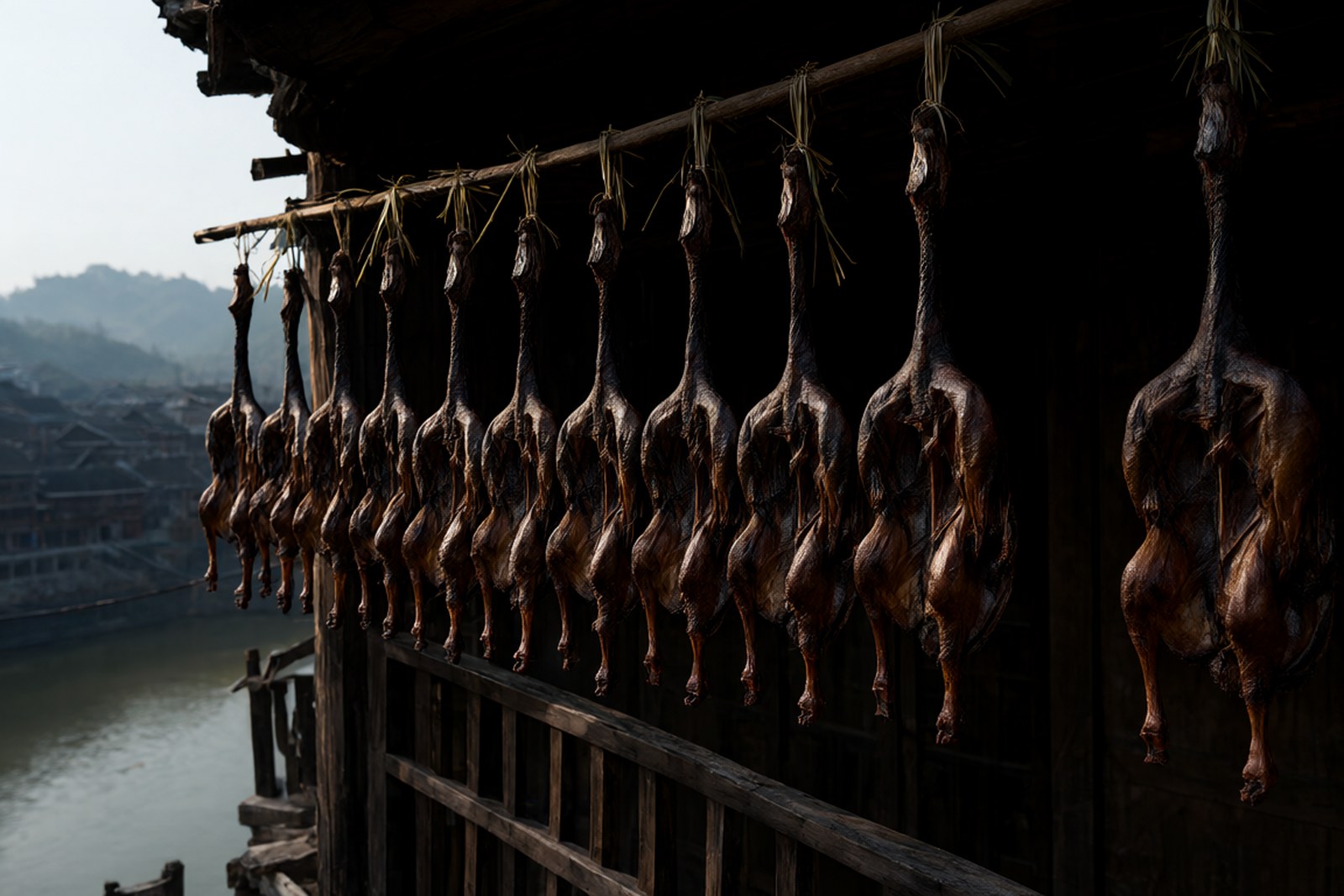
芷 zhǐ is the name of a river plant, an angelica; 江 jiāng is a river. 鸭 yā is duck, and 麻鸭 máyā, “hemp duck”, is the general term for the small speckled southern ducks that most of Hunan cooks. 受降 shòuxiáng means to accept a surrender, and the 受降纪念坊 shòuxiáng jìniànfāng — the memorial arch on the site — is the town’s other claim on the national memory. 侗族 Dòngzú, the Dong, are about half the population of the county, and the local kitchen is a Dong kitchen as much as a Han one: pickled fish, sour bamboo, and a great deal of 糯米 nuòmǐ glutinous rice.
What the Locals Know
Order the 炒鸭 on a Tuesday and the 鸭 on a holiday. The bean-paste version is banquet food; locals eat the plainer stir-fried duck at home.
Ask for 带皮 and for the wings. The skin is the best part of the bird when it has been properly fried, and the wing tip that has spent the longest in the paste is the piece people fight over.
Eat it with 芷江酸萝卜 Zhǐjiāng suān luóbo. The town’s pickled radish is sharp and slightly sweet, and it cuts the fat better than any tea.
Go to the market neighbourhoods, not the memorial. The restaurants around the 受降纪念坊 shòuxiáng jìniànfāng are priced for coach parties. Walk fifteen minutes into the older streets and the same duck costs a third less.
Where to Eat It
A whole duck serves three or four for ¥90–160, depending on the bird and the neighbourhood; a plate of the stir-fried version runs ¥45–70. The county town is small enough to cross on foot, and the best places are the ones with a wok at the front door and a hand-written menu. 怀化南站 Huáihuà Nán Zhàn on the high-speed line is about forty minutes away, and the county is served by its own station on the old line as well.
flowcloud would say that few towns in the world have a dish named after not losing, and that a place which remembers its hardest week by cooking a duck in sweet bean paste has a firmer grip on how memory actually works than any monument does.
Where to find it: 芷江鸭 (Zhǐjiāng yā), 芷江侗族自治县 (Zhǐjiāng Dòngzú Zìzhìxiàn), 怀化市 (Huáihuàshì), 湖南 (Húnán). Best in the older streets away from the 受降纪念坊 (shòuxiáng jìniànfāng). Whole duck ¥90–160. Ask for the skin, order the pickled radish alongside, and understand that the name on the town is not the only thing it is known for.