
石板糍粑 Shíbǎn ciba, the stone-slab rice cake of 中山古镇 Zhōngshān Gǔzhèn, Zhongshan Ancient Town, is the old salt-road street’s signature snack: glutinous rice steamed, hammered to paste in the wooden trough, then griddled in patties on a heated flat stone and sold hot, rolled in soybean flour and brown sugar. The slab is the point: each snack stall keeps a flat stone over the fire on which the patties blister and puff, and the hammering is theatre, the two-man wooden mallets working the rice in the shopfront where the queue forms. It is the porter’s food of the old salt road, and the town has never let it become anything fancier.
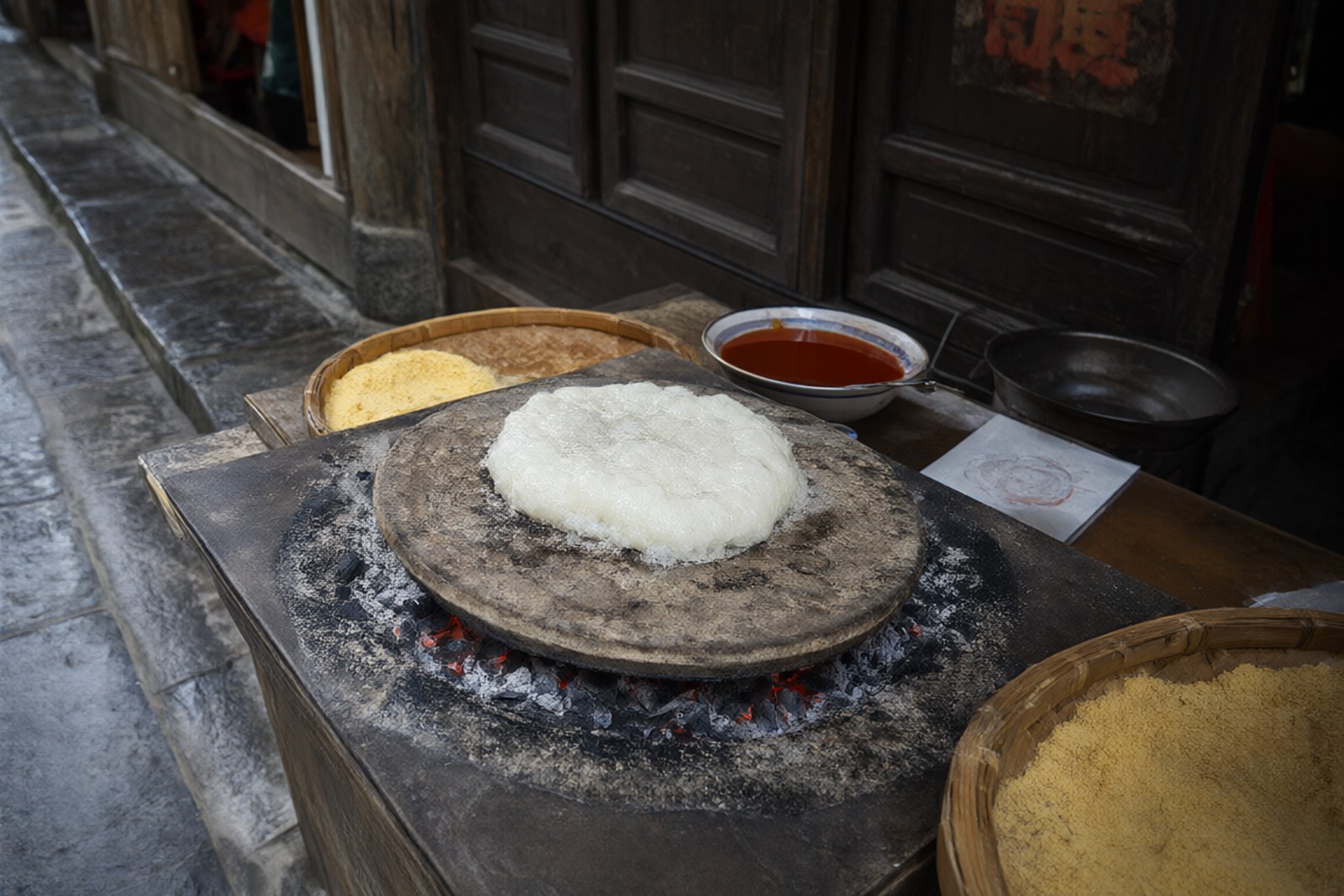
The stone is the technology and the story. A griddle of flat stone holds a heat different from iron – gentler, steadier, slow to scorch – and on it the hammered rice patty does what the format wants: blisters, puffs, and takes a leopard-spotted toast without drying, turned with a bare hand and a wet cloth by a cook who judges the moment by feel. The format suits a lane economy: a stone, a fire, a trough and a tub of rice are a stall’s entire capital, and the patty sells hot with nothing more than soybean flour and brown sugar for dressing. In Zhongshan the format is the street’s shared grammar – stall after stall runs the same stone – and the honest page reports the format rather than any single famous stall.
The hammering is the street’s theatre and the trade knows it. The glutinous rice goes into the wooden trough steamed and whole, and two cooks work it with heavy wooden mallets – one striking, one turning and wetting the mass between blows – until the grain disappears into a glossy, elastic paste, the work done in the shopfront precisely where the queue can watch. The rhythm is the show and the smell is the advertising: scorched rice and hot stone carry the length of the old street. The patty off that trough, griddled and rolled in soybean flour and brown sugar, is the whole product – a hot, chewy mouthful that tastes of rice, toast and nothing else, which is the point of a snack this old.
The food’s history is the salt road’s history. Zhongshan was a trade street on the salt route – the raised wooden shop-houses and the flagstone lane worn hollow by the porters who carried salt over the ridges – and ciba is porter’s food by design: rice and sugar, dense calories for the climb. The street that fed the porters still runs the same snack. What the record supports is the town, the format, the slab, the trough and the soybean-flour dressing; it does not name a founding stall, a famous house or a posted price, and none is invented here. The lane’s continuity is the credential, and it is checkable by walking it.
What the visitor does is eat them standing up, the way the street intends. The patties are sold hot off the stone, rolled in soybean flour and brown sugar, and the first bite should be taken in front of the stall while the blistered crust still crackles – the cake hardens as it cools, and a ciba carried away is a different, chewier food than a ciba eaten at the stone. The queue tells the truth in a town of stalls running the same format. All checked October 2026.
Words and Names
石板糍粑 Shíbǎn ciba, the stone-slab rice cake of 中山古镇 Zhōngshān Gǔzhèn, Zhongshan Ancient Town, 江津区 Jiāngjīn Qū, Jiangjin District: glutinous rice steamed, hammered to paste in the wooden trough by two cooks with heavy mallets, then griddled in patties on a heated flat stone until blistered and puffed, sold hot rolled in soybean flour and brown sugar. The town is a Ming-Qing trade street of raised wooden shop-houses on the salt road, the lane worn hollow by porters. The format runs at many stalls rather than one famous house; no founding stall, posted price or brand is on the public record consulted, and none is invented here.
What the Locals Know
The local knowledge is timing, not toppings. Ciba is a food with a clock: hot off the stone the crust crackles and the inside is stretchy and soft, twenty minutes later the whole patty has firmed into a chew, and a day-old cake is for toasting again or for nothing – so the locals eat at the stall and buy extras only to re-toast at home. The second thing locals know is the making: the two-mallet rhythm in the trough is a skill, and a stall that hammers its own rice in the shopfront is showing you the freshest product, while a stall working from a pre-made block is selling the format without the craft. What the record does not carry is any ranking of stalls, and the page declines to make one – the queue and the trough are the review, and both are visible from the lane.
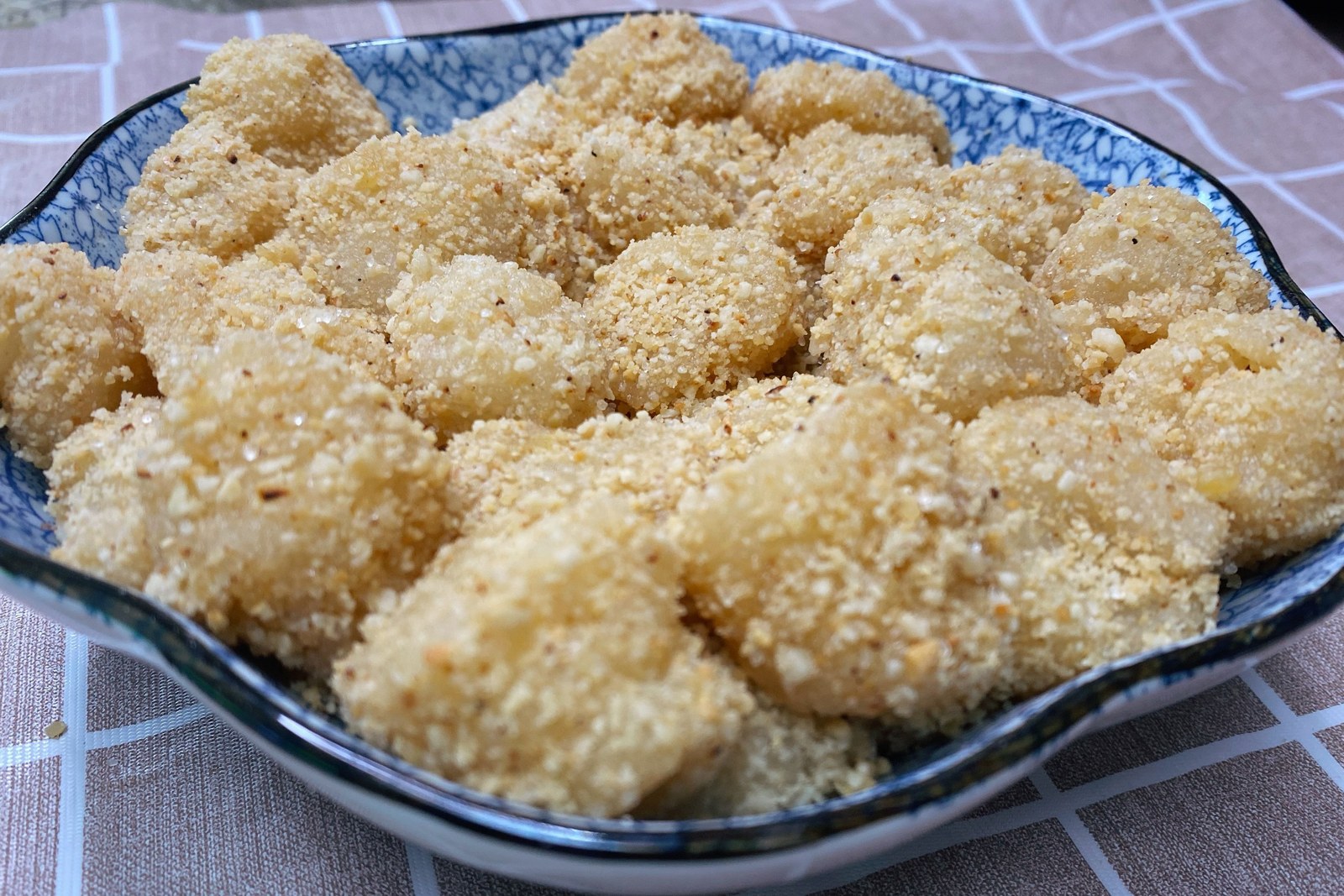
flowcloud would say that Zhongshan stone-slab ciba is the salt-road porter’s snack still working – glutinous rice hammered to paste in the wooden trough by two mallets, griddled in patties on a heated flat stone until it blisters and puffs, sold hot off the stone rolled in soybean flour and brown sugar, the format of every snack stall on the old street of 中山古镇 Zhongshan Ancient Town – and that the honest page names the street’s format rather than any famous stall, with no founding house or price on the record and none invented. All checked October 2026.
Where to find it: the stone-slab stalls run the length of the old street at 中山古镇 Zhōngshān Gǔzhèn, Zhongshan Ancient Town, 江津区 Jiāngjīn Qū, Jiangjin District, along the raised wooden shop-house lane above the river; no specific stall address, posted price or brand is on the public record consulted and none is invented here, and the queue in front of a working trough is the practical guide. The snack is eaten hot at the stall, and extra cakes travel only to be re-toasted. Pair this page with the Zhongshan ancient town and riverside-inn pages for the street and the water the snack belongs to, and with the pepper chicken page for the lowland table that contrasts it.