
Steamed Straight Off the Boat: Zhoushan Swimming Crab
秋蟹正肥膏满壳,清蒸一盏醉秋风 Qiū xiè zhèng féi gāo mǎn ké, qīngzhēng yī zhǎn zuì qiūfēng – In autumn the crabs fatten and the roe fills the shell; one plain-steamed plate and the autumn wind goes to your head
舟山梭子蟹 Zhōushān suōzixiè the Zhoushan swimming crab is the East China Sea’s blue swimmer, and Zhoushan’s ports land the catch the rest of the country measures itself against. The season writes the calendar: from late summer the crabs run fat, by the 白露 Báilù White Dew tide in September the roe-heavy females lead the market, and the city eats them in a two-month procession of steamer baskets, vinegar dishes and crab-feast family tables.
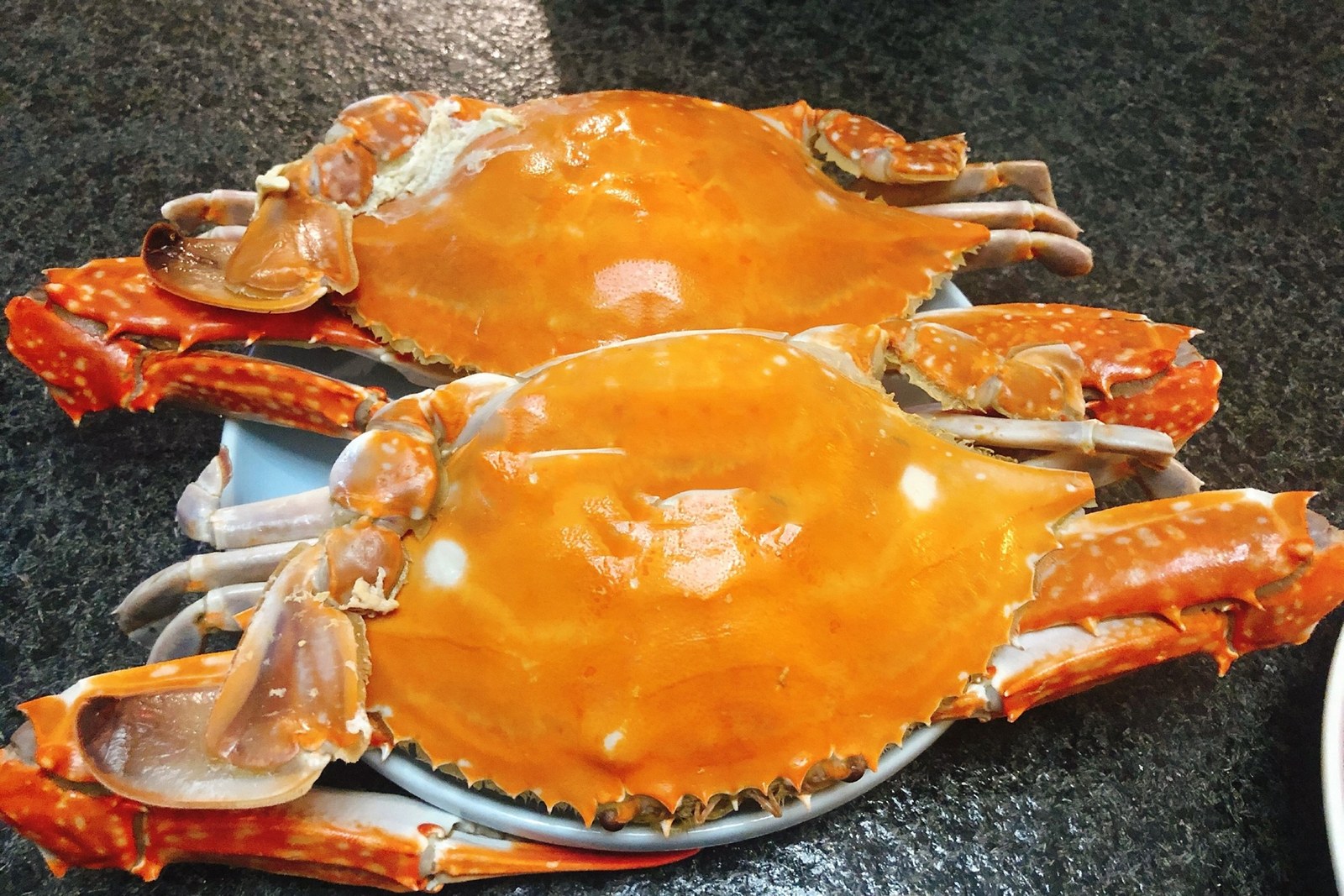
The orthodox treatment is the plainest: 清蒸 qīngzhēng steamed whole, minutes only, with ginger-vinegar on the side – the test of a crab too fresh to hide behind sauce. The shell lifts to reveal orange roe packed against dense, sweet flakes of meat, and the table goes quiet for a while. The other classic is raw: 红膏炝蟹 hóng gāo qiàng xiè, the roe-heavy crab cured in brine and served sliced as the archipelago’s ceremonial cold dish – silk-textured, salt-sweet, the dish grandmothers reserve for New Year tables.
The crab economy is visible everywhere. Shenjiamen’s quay auctions run by the crate, the night markets stack the day’s swimmers in blue crates like coolers, and the seafood streets steam them to order beside the woks. Prices swing with the tides and the weather – a stormy night raises the morning market – and the regulars read the crates the way bettors read form guides, pressing shells and weighing claws before committing.
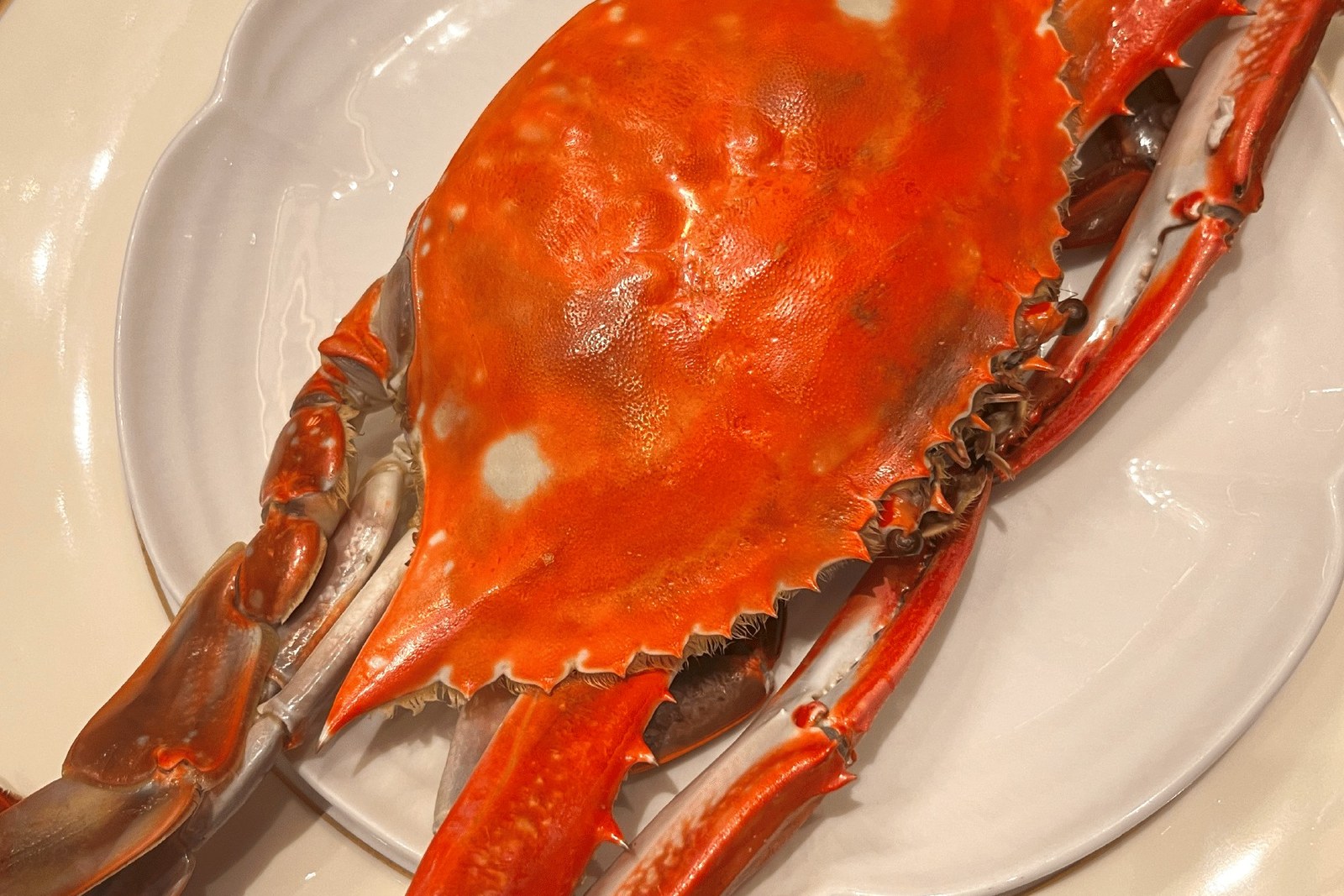
Eating crab here is a two-hand, no-rush affair: cracking, dipping, sorting the meat from the architecture, with rice or plain noodles to catch the roe. The city’s crab porridge – rice simmered in crab stock with a whole chopped swimmer – is the morning-after form, and the crab roe noodles at the harbor counters are the bridge between crab season and noodle season. Autumn in Zhoushan is not a menu; it is a crab with a calendar attached.
The same coast holds more flavors worth chasing: 舟山带鱼 Zhōushān dàiyú the silver hairtail, 大黄鱼 dàhuángyú the yellow croaker, 海鲜面 hǎixiān miàn the harbor noodle bowl, or 嵊泗贻贝 Shèngsì yíbèi the Shengsi mussels – four more doors into the same 舟山市 Zhōushān Shì Zhoushan City table.
Words and Names
梭子蟹 suōzixiè the swimming crab, the autumn king; 清蒸梭子蟹 qīngzhēng suōzixiè plain-steamed crab; 红膏炝蟹 hóng gāo qiàng xiè brine-cured roe crab, the ceremonial cold dish; 白露 Báilù White Dew, the September tide that starts the season; 蟹糊 xiè hú the crab paste condiment.
What the Locals Know
Pick by heft and by shell firmness – a heavy crab with a hard shell and tight-flapping underside is full. Ask for females in autumn if roe is the point; the roe is the orange mass under the shell. And try the cured version at least once at a family table: raw brine-cured crab is the archipelago’s certificate of freshness, and kitchens that dare to serve it are kitchens to trust.
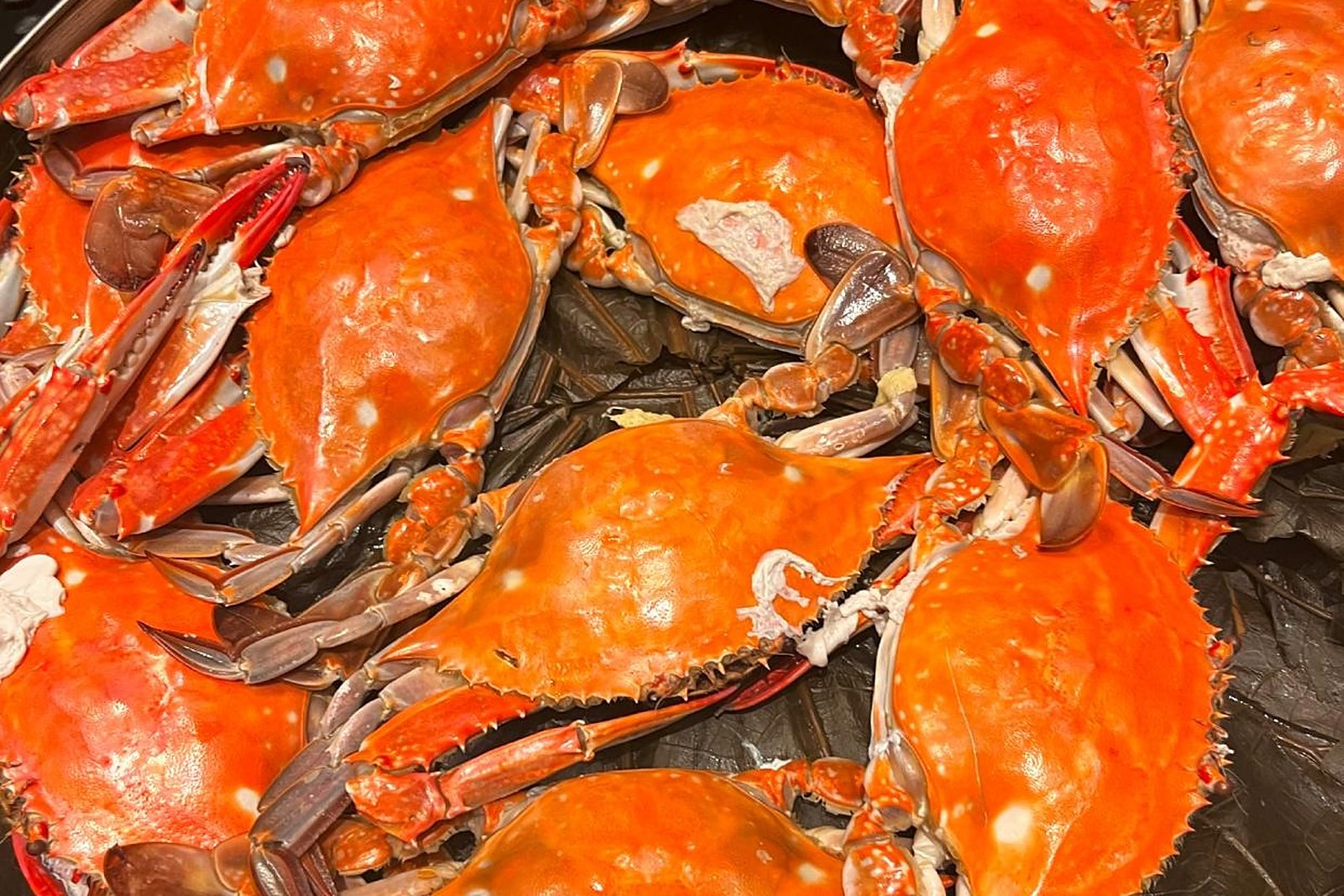
flowcloud would say the Zhoushan crab season is the sea publishing a monthly magazine: steamed in September, cured by New Year, and every issue makes the last one look like a draft. All checked November 2026.
Where to find it: Crab runs every market and seafood street in 舟山市 Zhōushān Shì Zhoushan City from late summer – steamed whole crabs price by weight at the night markets, the cured version appears at deli counters and family tables, and the season peaks around the September-October tides. All checked November 2026.