
The Soup That Owns the Table: Zhoushan Yellow Croaker
雪菜黄鱼汤色白,渔家至味是本鲜 Xuěcài huángyú tāng sè bái, yújiā zhìwèi shì běnxiān – With mustard greens the yellow croaker’s broth turns white; the fisherman’s highest flavor is freshness itself
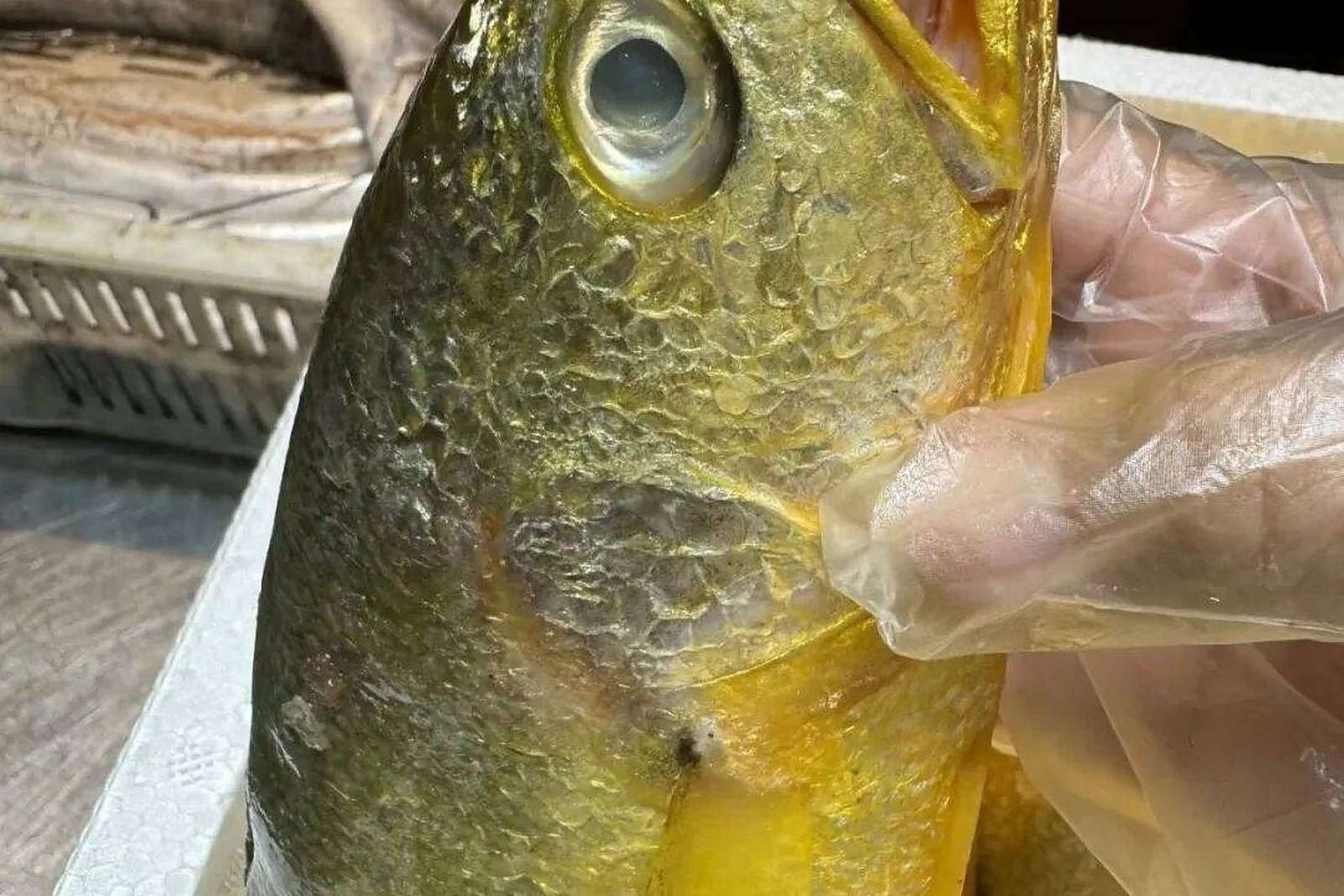
大黄鱼 dàhuángyú the yellow croaker is the legendary fish of the East China Sea – golden-coated, drum-mouthed, once so abundant that in the old days the schools could be heard drumming through the hulls at night, and so pursued that the wild fish became a treasure priced like jewelry. Zhoushan’s 岱衢洋 Dàiqú Yáng waters were the croaker’s classic ground, and the archipelago remains the fish’s spiritual home: farm-raised croaker keeps the soup on every table, while the rare wild one still makes the news when it comes up in a net.
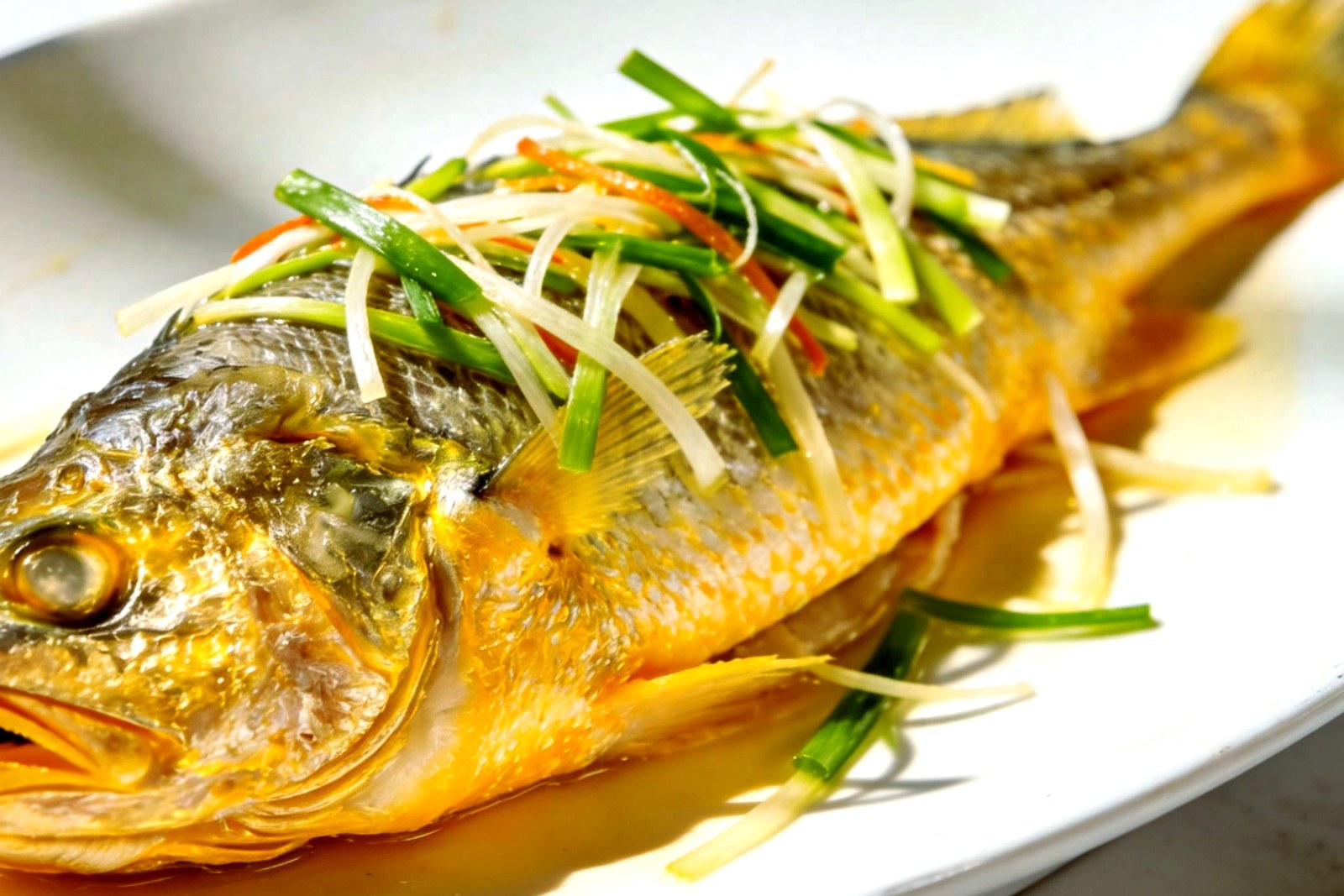
The signature dish is 雪菜大汤黄鱼 xuěcài dàtāng huángyú – croaker simmered whole with snow mustard greens into a broth the color of milk, sharp-green and ocean-sweet at once. It is the dish every Zhoushan family claims its own version of, the soup that opens banquet fish courses, and the meal that mothers prescribe for everything from exams to heartbreak. The braised form runs second: whole croaker glazed in soy until the golden skin shines like lacquer.
The croaker economy has a museum-worth history: the 黄鱼汛 huángyú xùn – the great spring croaker runs – built Shenjiamen’s fortunes, the drumming schools gave the fish its nickname “drum fish,” and the collapse of the wild stock in the last century turned the fish into the coast’s cautionary tale and its recovery project. Fish farms around the archipelago now rear the croaker in sea cages, and the taste argument – cage versus memory – runs at every table.
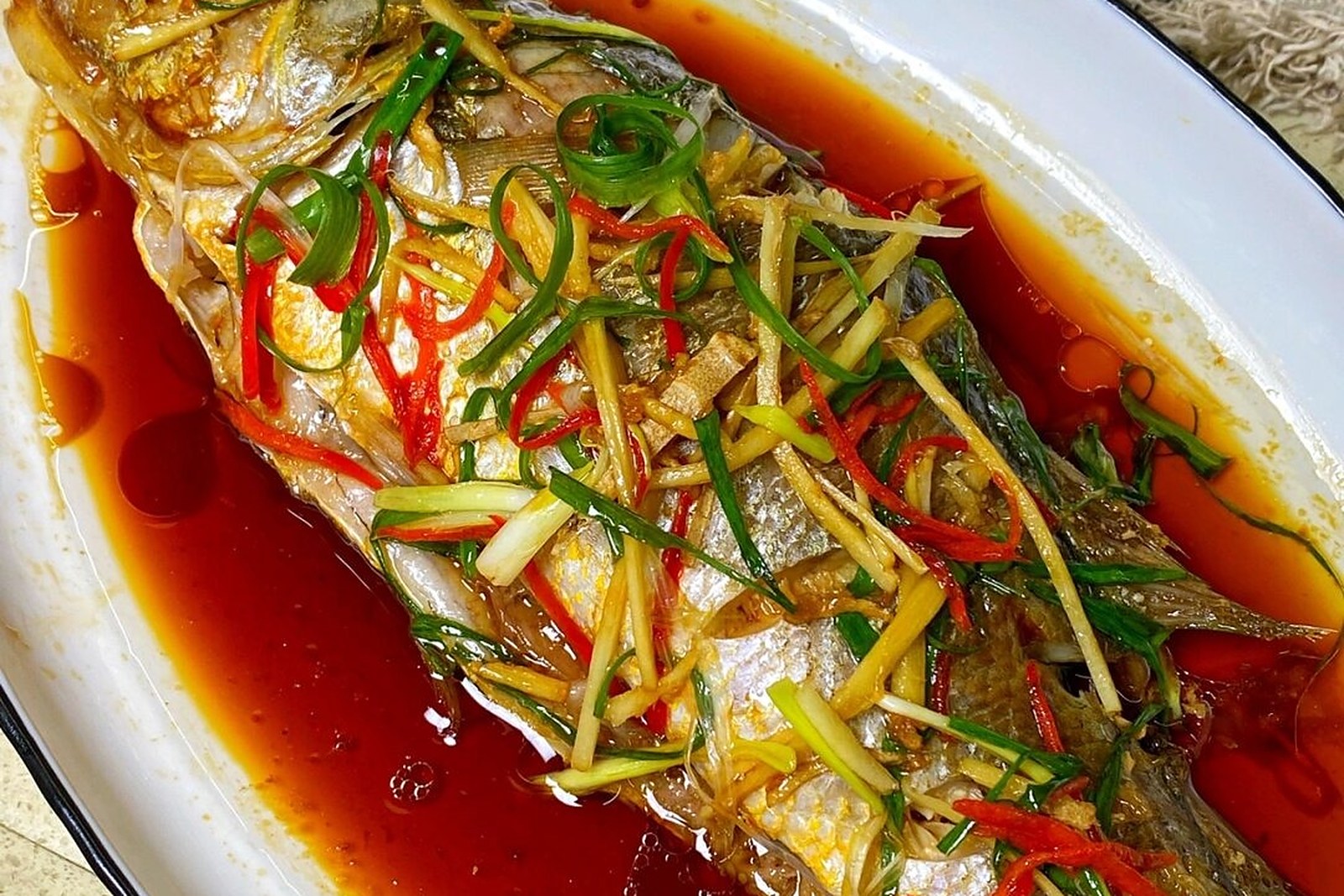
Eating it here is ordering by the pot: the soup arrives whole-fish, greens on top, broth steaming; the meat lifts off the bone in yellow-tinged flakes; the broth gets drunk first by the locals, who know the greens’ salt has already seasoned it. At the night markets, smaller croaker skewer-grill beside the hairtail; at the banquet tables, the soup opens the fish course the way soup should – with everyone agreeing, again, that freshness needs no invention.
The same coast holds more flavors worth chasing: 舟山带鱼 Zhōushān dàiyú the silver hairtail, 梭子蟹 suōzixiè the autumn swimming crab, 海鲜面 hǎixiān miàn the harbor noodle bowl, or 嵊泗贻贝 Shèngsì yíbèi the Shengsi mussels – four more doors into the same 舟山市 Zhōushān Shì Zhoushan City table.
Words and Names
大黄鱼 dàhuángyú the yellow croaker, “drum fish”; 雪菜大汤黄鱼 xuěcài dàtāng huángyú croaker soup with snow mustard greens, the classic; 红烧黄鱼 hóngshāo huángyú soy-braised whole croaker; 黄鱼鲞 huángyú xiǎng wind-dried croaker, the pantry form; 岱衢洋 Dàiqú Yáng the classic croaker fishing grounds off Daishan.
What the Locals Know
Order the soup, not the fillet – croaker is a whole-fish proposition and the broth is the point. Farm-raised is honest food and fair-priced; wild croaker at market prices is either a celebration or a scam, so ask which and believe the answer accordingly. And salt the soup never: the pickled greens carry the seasoning, and the fish carries the rest.
flowcloud would say the yellow croaker is the East China Sea’s biography in one pot: abundance, collapse, farming and recovery – simmered with greens into a white broth that tastes, each generation, like the memory of the last one. All checked November 2026.
Where to find it: The croaker soup is a fixture at every seafood restaurant and family kitchen across 舟山市 Zhōushān Shì Zhoushan City – farm fish keeps it affordable at seafood streets, the braised whole fish anchors banquet menus, and the wind-dried 鲞 hangs in market stalls for home pots. All checked November 2026.