
The Golden Pilaf: Lamb, Carrot and Rice Done the Tarim Way
羊肉焖黄饭,油润一锅金 Yángròu mèn huángfàn, yóurùn yī guō jīn – Lamb steams the yellow rice; oil and patience turn one pot to gold
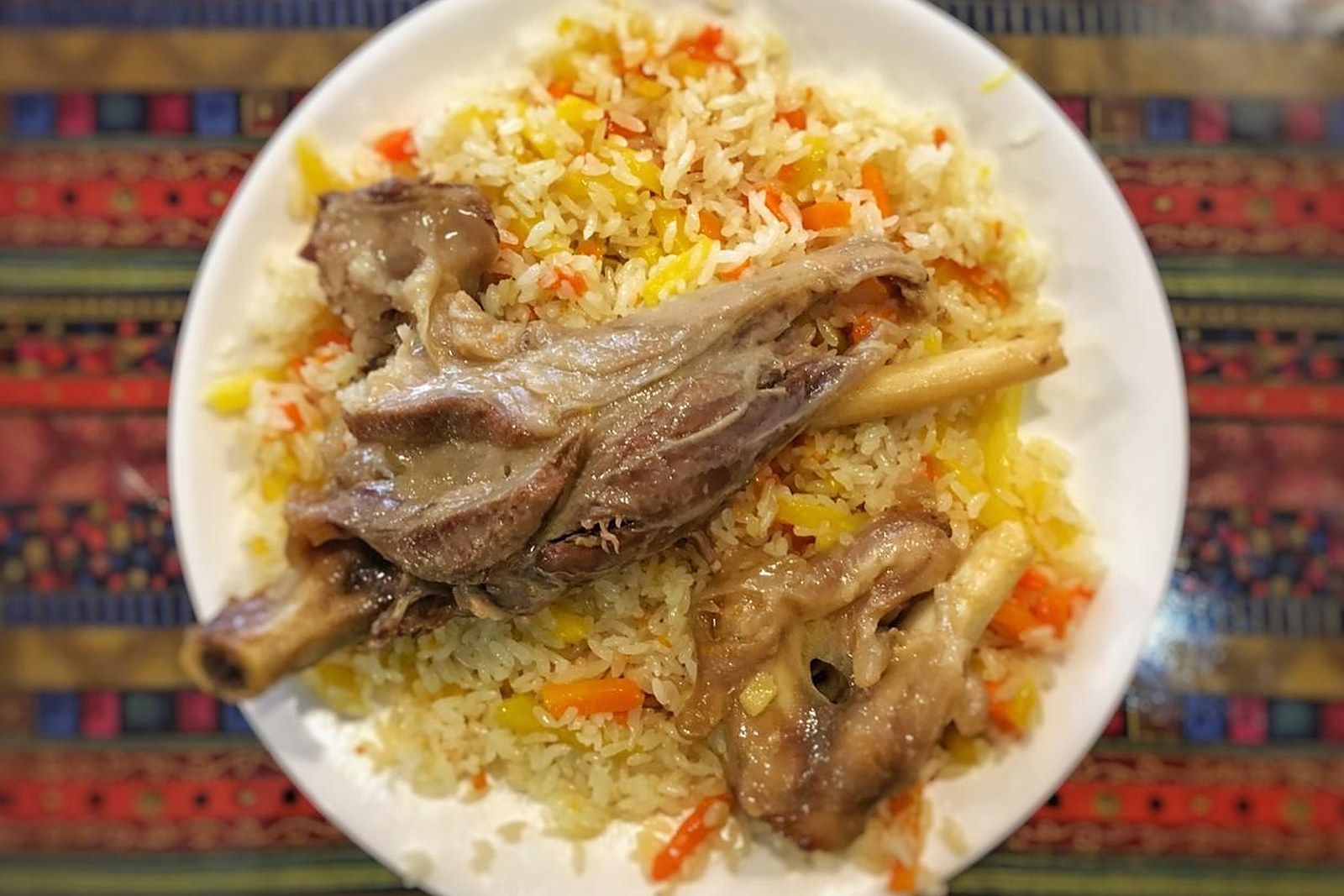
正文:手抓饭 Shǒuzhuāfàn lamb pilaf is the weekday king of the 阿拉尔市 Ālā’ěr Shì Aral City table – mutton, yellow carrot, onion and rice cooked in one cauldron until every grain stands glossy and separate, the rice drunk on mutton fat and carrot sweetness. The name says “grabbed by hand” from the old custom, though spoons have long since won the argument; the essence survives in the eating anyway, because a proper pilaf needs no help – not broth, not sauce, not a single extra spoon of anything.
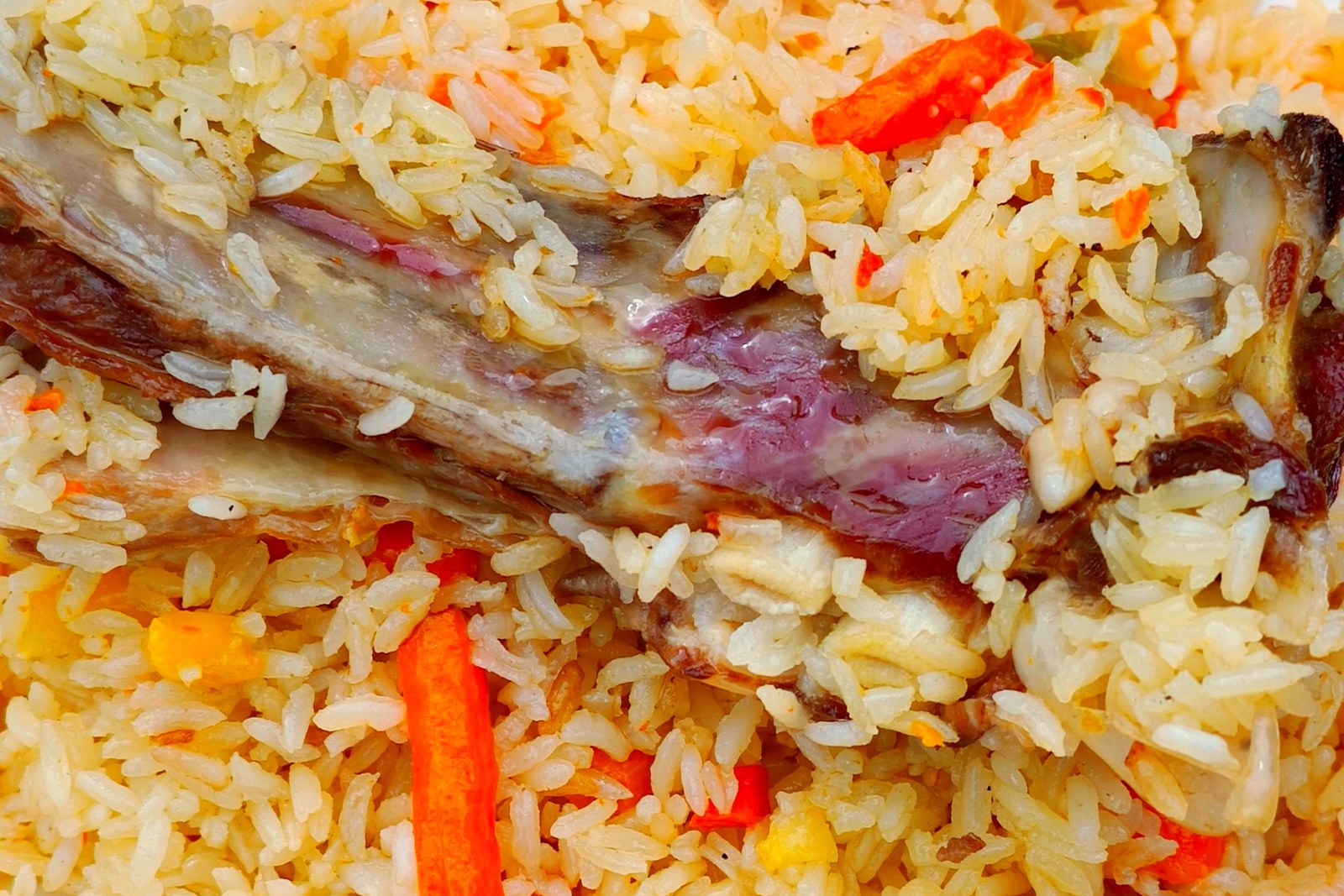
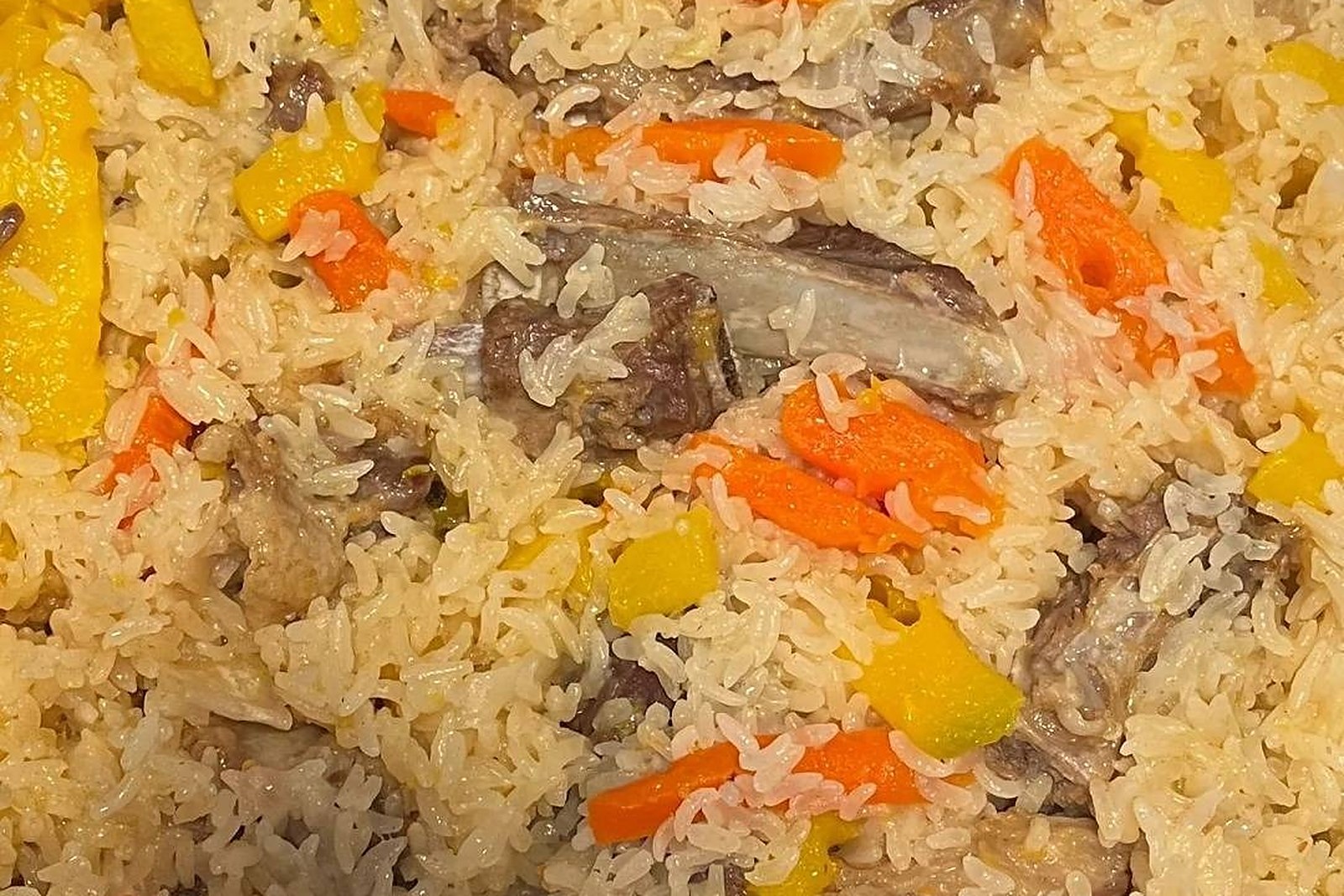
The method is a monument to economy. Mutton on the bone – rib, shoulder, the occasional proud shank – browns in oil with onions until the kitchen smells like a festival; carrot cut into finger-thick batons goes in next, followed by the rice and just enough water, and then the cauldron’s lid does the rest. No stirring, no peeking: the steam cycles through the layers, the carrot surrenders its colour to the grain, and when the lid finally lifts the pot reads like strata – gold rice, amber carrot, dark meat, all of it steamed to the same result.
Aral’s pilaf has a Tarim signature. The oasis carrot – long, yellow and impossibly sweet – is the region’s own, and the sheep graze the salt-bush ranges upriver, so the meat arrives pre-seasoned by the land. Kitchens here also hold to the horse-oil tradition for festive pots, which gives the grain a glaze and a fragrance that vegetable oil only hints at; the daily canteen pot uses rendered mutton fat and still empties by one o’clock. Raisins and chickpeas appear in the celebration versions, buried like treasure to be found.
Beyond the pilaf, the same 阿拉尔市 Ālā’ěr Shì Aral City holds other flavors: 塔河烤鱼 Tǎ Hé Kǎoyú Tarim river roasted fish, 大盘鸡 Dàpán Jī Big Plate Chicken, 馕坑肉 Nángkēng Ròu naan-pit roasted lamb, and 阿拉尔红枣 Ālā’ěr Hóngzǎo Aral red dates – four more doors into the same 阿拉尔市 Ālā’ěr Shì Aral City. With the pilaf settled, our Aral travel map fills the day.
Pilaf time is lunch time. The cauldrons fire at dawn, the rice goes in mid-morning, and by noon the queue at the window moves with the certainty of a ferry – office workers with their own bowls from home, taxi crews in shifts, the occasional visitor photographing the great copper pot as it tilts. Plates are portioned with a single practiced sweep: rice mounded, rib laid across, a spoon of the pot’s own oil over all. Sit, eat, drink the tea, go – the whole ceremony fits a lunch hour with room to spare.
The dish also answers the desert’s calendar. Winter pots run fattier and deeper, with the meat’s marrow left in the bone for the patient; summer kitchens lighten the oil and add cool yogurt on the side; and during the festivals the cauldrons multiply – one plain, one with raisins, one sweetened for the children – and the neighbourhood smells of it from morning till the last plate. A traveller who eats pilaf once at a festival table understands it forever.
Practicalities first. Pilaf costs pocket money and eats like a feast; the cauldron houses open at eleven and sell out by two in the working quarters, while the food-street shops keep portions till evening. Ask for “duo fang rou” – extra meat – if the day has earned it, and take the tea unsweetened: the pilaf carries its own sweetness in the carrot.
Beyond the cauldron houses, the dish makes the best packed lunch on the desert roads – wrapped in paper, it rides an afternoon of driving and lands still fragrant. Families pack it for the poplar-gold trips in October; you should too.
Words and Names
What the Locals Know
flowcloud would say Aral’s pilaf is the oasis distilled to one cauldron: yellow carrot from the fields, lamb off the salt ranges, rice that drank its gold honestly – lunch as the land intended, eaten while the pot’s still steaming and the queue still hoping. All checked November 2026.
Where to find it: The cauldron houses in Aral’s working quarters fire from eleven and sell out by two, with the food-street shops holding portions till evening; order the rib plate with extra carrot, take the unsweetened tea, and reach for the raisin version on festival days. All checked November 2026.