
Zhuangyuan Cake: The Century-Old Tea Cake of Fengjing Stamped with the Red Word “Zhuangyuan”, Glutinous Rice and Bean-Paste or Jujube-Paste Fillings and the Lucky Word Handsover of Jinshan District, Shanghai
状元红印糕面暖,枣泥豆沙糯米香。Zhuàngyuán hóng yìn gāo miàn nuǎn, zǎoní dòushā nuòmǐ xiāng – The red seal “zhuangyuan” warms the cake’s face; jujube paste, bean paste and glutinous rice keep their fragrance.
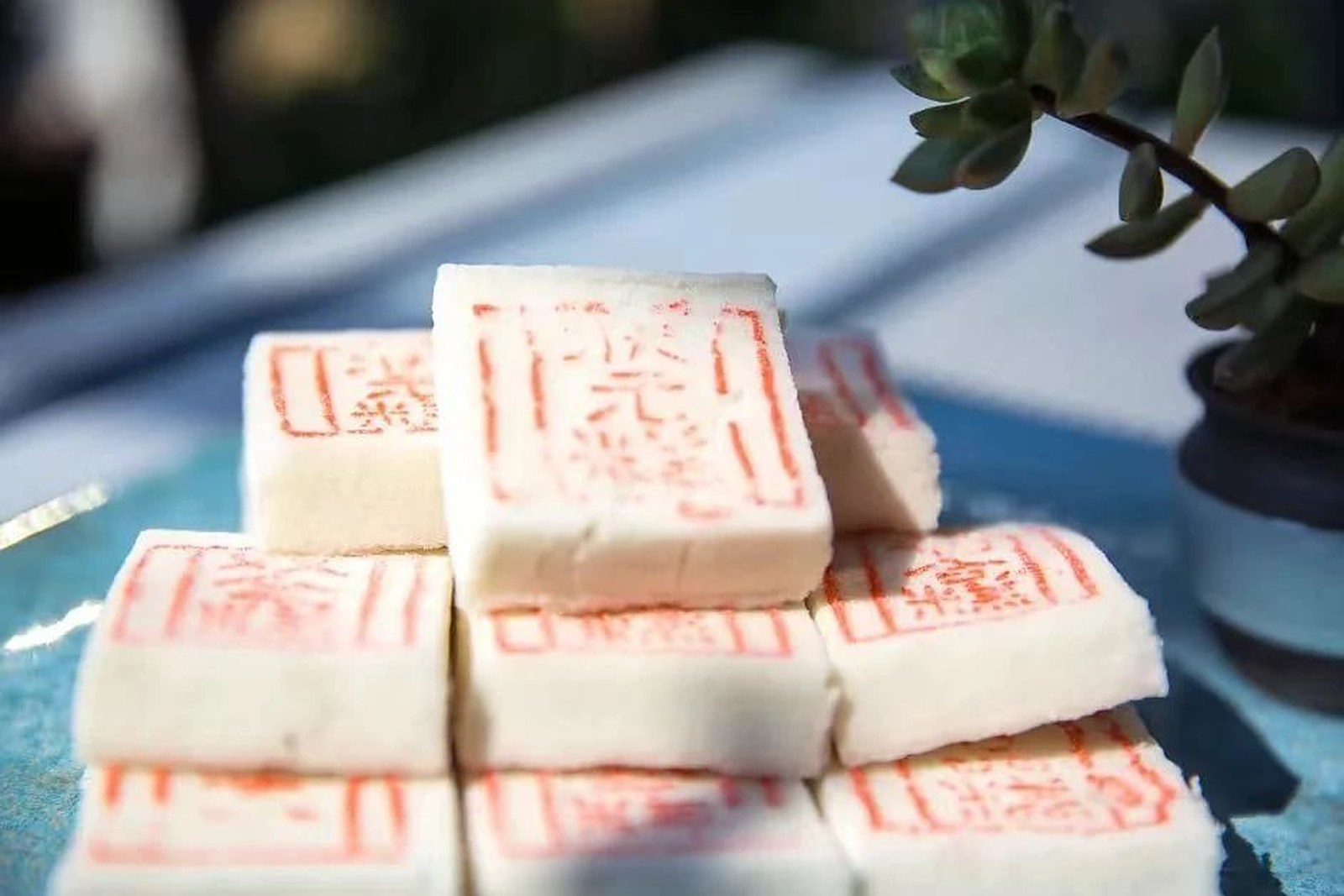
枫泾状元糕 Fēngjīng zhuàngyuán gāo Fengjing zhuangyuan cake is the tea-cake trade of 枫泾古镇 Fēngjīng Gǔzhèn Fengjing Old Town in 金山区 Jīnshān Qū Jinshan District, Shanghai – the same water town that keeps the Ding trotter’s braise, keeping a sweeter register in its 百年茶食 bǎinián cháshí century-old tea-food counters: a pale cake of 糯米粉 nuòmǐfěn glutinous rice flour, pressed into its mould and steamed or baked in batches, wrapped around 豆沙馅 dòushā xiàn red-bean paste or 枣泥馅 zǎoní xiàn jujube paste, and stamped on its face with the red characters 状元 zhuàngyuán – the top graduate of the old imperial examinations – so that every cake carries a wish for the first place in the family’s own examinations of life (worth confirming the details – which shop holds which frontage and whose stamp turns over as old towns do, and the specific doors are best confirmed on the street rather than recited). The cake is a 讨口彩 tǎo kǒucǎi lucky-word food by design: bought for exam-season students, for new households, for elders’ birthdays, and folded into the 手信 shǒuxìn handsovenir bags of every visitor leaving the water town. The clientele is the town’s own gifting calendar plus the weekend tide; the blunt definition: a water town that pressed a scholar’s honour into rice flour – the taste of Jinshan eaten one red stamp at a time.
Call it honestly: tea-counter money on a gifting clock. Getting there is one door: 枫泾古镇 Fēngjīng Gǔzhèn Fengjing Old Town sits at Jinshan District’s north-western corner, reached by bus or road ride from the city’s south-west, the cake counters strung along the same covered-street reach as the old town’s other food trades (worth confirming the details for the connecting services, the approaches shifting with the old town’s season arrangements). A single cake prices at pocket change, a boxed dozen at street-snack-to-souvenir money, a seated tea table beside the counter at casual-neighbourhood money – though exact figures are worth confirming the details on rather than quoting, the counters being small, family-run and repriced by batch and gift season. The crowds run to the calendar: exam seasons and holidays stack the buying queues and thin the boxes early, weekend middays bring the visitor tide up the covered streets, weekday mornings belong to the residents’ tea loop, and a weekday mid-morning, when the batches come warm from the mould and the street belongs to its own, is the eater’s own hour (worth confirming the details for individual counters’ hours, which follow the baking batches more than any posted sign).
The honest star is the stamp and the crumb, graded batch by batch. What gets oversold is the “scholarly relic” framing: guides sell a museum cake where every box carries examination luck, and a first-timer may meet an ordinary counter of stacked boxes, tea windows and souvenir shelves – which is not the disappointment but the point. What repays the effort is grading the cake the way the town does: a cake judged by whether the 糯米粉 nuòmǐfěn crumb holds its moisture without turning gluey, a filling judged by whether the 豆沙 dòushā bean paste tastes of beans cooked down that week and the 枣泥 zǎoní jujube paste of fruit rather than sugar alone, a stamp judged by whether the red 状元 zhuàngyuán characters were pressed clean and proud. The test costs nothing: buy one cake warm from the batch before you buy the boxes, break it and watch whether the crumb stays soft to the last bite, and buy where the local families’ gift bags queue rather than where the painted signboards hang – a town that has stamped the same characters for generations grades its counters daily, and the gifting queue is the certificate (worth confirming the details – the counters migrate with the leases, and today’s plainest window may be next season’s remembered one).
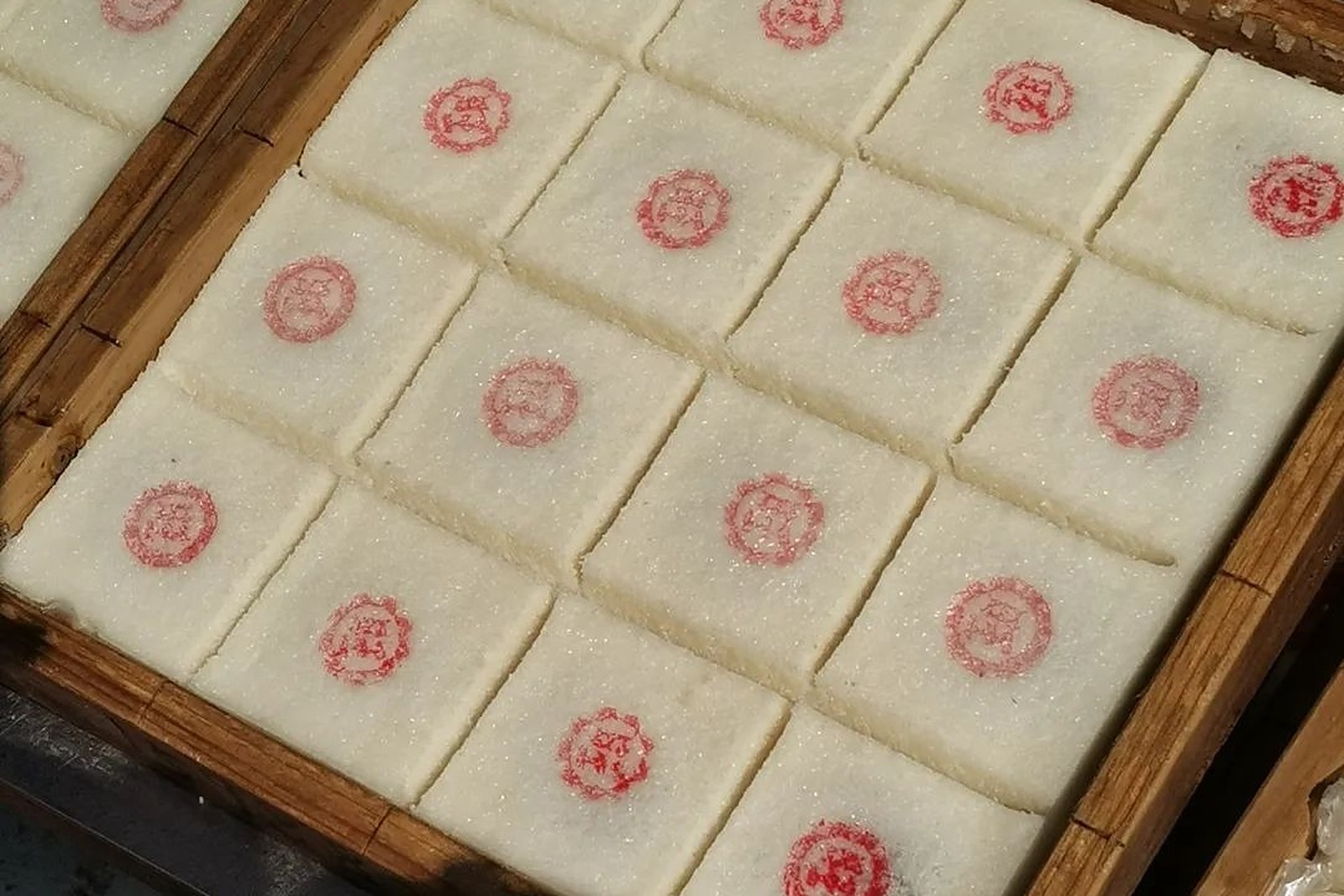
The town’s deepest habit is the exam-season arithmetic: grandmothers who buy the cake for a grandchild sitting the entrance examinations, households that set it on the table before a result is posted, the red stamp doing its quiet work of blessing a family’s own top graduate – a trade the moulds have carried longer than any guidebook page. Time it right – a weekday morning, the batch warm – and the cake explains the town better than any plaque: the water town sat for the same examinations once, and the stamp keeps the score (worth confirming the details – which counters still press and steam the cakes on site today, the trade thinning toward central production as the gift boxes grow).
The rest of this Jinshan list keeps other tables: the hundred-year braise of 枫泾丁蹄 Fēngjīng dīngtí Fengjing Ding trotter simmers in this same old town, the sea-breeze platters of 金山嘴渔村海鲜 Jīnshānzuǐ yúcūn hǎixiān Jinshanzhou fishing-village seafood steam at the bay wharf to the south, the white-cut winter mutton of 张桥羊肉 Zhāngqiáo yángròu Zhangqiao mutton warms the district’s village tables, and the flat July peaches of 吕巷蟠桃 Lǚxiáng pántáo Lüxiang pan peaches ripen in the orchard park to the east – one district, four more tables, all inside 金山区 Jīnshān Qū Jinshan District; and when the water-town morning needs a bed beside the creek or a broader route, the stay-and-street notes for the district pick up where the red stamps leave off.
Words and Names
What the Locals Know
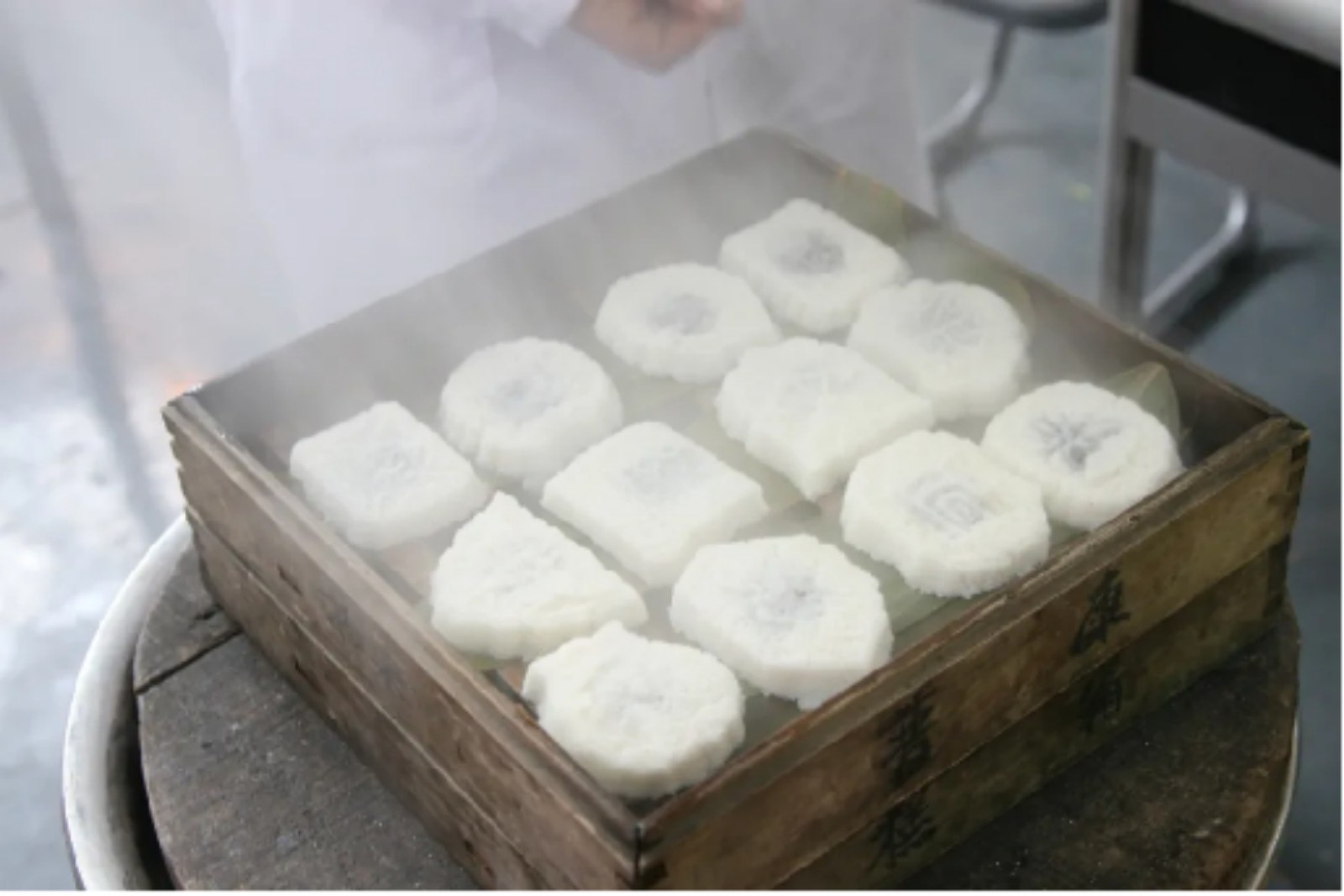
flowcloud would say that the 枫泾状元糕 Fēngjīng zhuàngyuán gāo is the century-old tea cake and the lucky-word handsovenir of Jinshan District, Shanghai – a 讨口彩 tǎo kǒucǎi discipline where the red 状元 zhuàngyuán stamp on the cake’s face answers the 糯米粉 nuòmǐfěn glutinous crumb and the 豆沙枣泥 dòushā zǎoní bean-and-jujube fillings of the water town – and that the honest move is to buy one cake warm from the batch, break it before you buy the boxes, and let the gifting queue cast the vote, because the examinations changed their name and the stamp never did. All checked October 2026.
Where to find it: 金山区 Jīnshān Qū Jinshan District, Shanghai – the tea-cake belt of 枫泾古镇 Fēngjīng Gǔzhèn Fengjing Old Town, where the 百年茶食 bǎinián cháshí counters keep the 糯米粉 nuòmǐfěn glutinous-rice cakes stamped with the red 状元 zhuàngyuán characters and filled with 豆沙馅 dòushā xiàn red-bean paste or 枣泥馅 zǎoní xiàn jujube paste, reached by bus or road ride from the city’s south-west into the old town’s gate streets (worth confirming the details for the connecting services and which counter holds which frontage today, water-town doors turning over as water towns do), where the counters keep the gifting clock – exam seasons and holidays the stacked queues, weekend middays the visitor tide up the covered streets, weekday mid-morning the eater’s own; pocket-change to souvenir-box money, so call it worth confirming the details rather than a fixed number, and let the local gift-bag queue cast the vote. Zhuangyuan cake is the century-old tea cake of Fengjing stamped with the red word “zhuangyuan”, glutinous rice and bean-paste or jujube-paste fillings and the lucky-word handsovenir of Jinshan District, Shanghai – the taste of 金山区 Jīnshān Qū Jinshan District eaten one red stamp at a time. All checked October 2026.