
八刀汤 bā dāo tāng, the eight-cut soup, is the breakfast that 紫金县 Zǐjīn xiàn eats and claims, and the name is a rule rather than a decoration: eight cuts of a freshly killed pig, taken from eight parts of the animal, each cut exactly one, and dropped into boiling water for a few minutes. It is usually 猪心 zhū xīn, heart, 猪肝 zhū gān, liver, 猪腰 zhū yāo, kidney, 猪粉肠 zhū fěn cháng, the small intestine, 猪肺 zhū fèi, lung, 猪红 zhū hóng, congealed blood, 瘦肉 shòu ròu, lean meat, and 猪利 zhū lì, tongue, though the list varies with the shop. Nothing else is added but salt, white pepper and a scatter of spring onion.
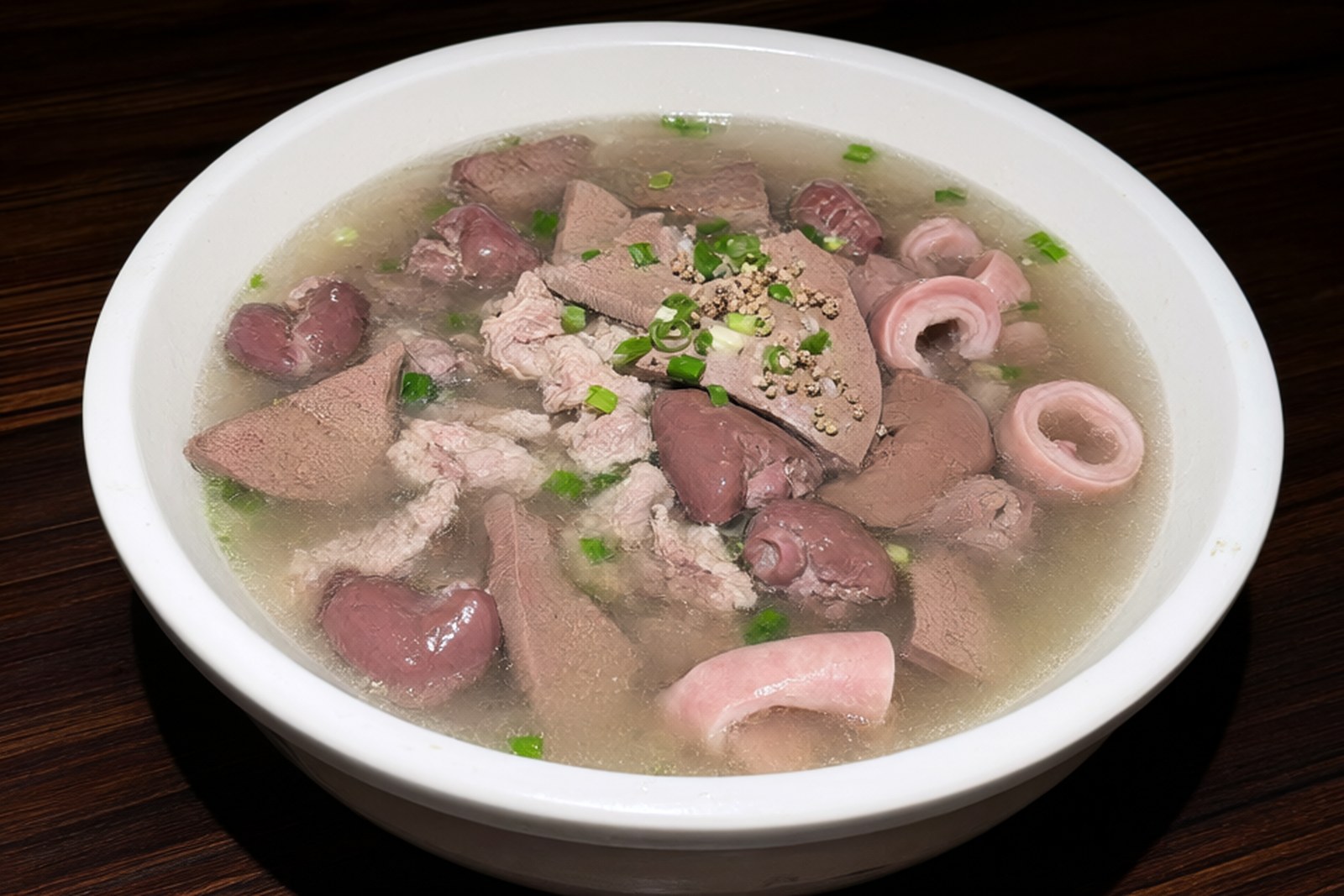
The point is that the pig is killed that morning, in the hours before the shop opens, and that everything in the bowl is minutes old. That is why the soup is clear and not cloudy: the offal goes into water already at a rolling boil, in a pot that is kept going all morning, and it stays in only long enough to set, which is two or three minutes. Cook it any longer and the liver goes chalky and the kidney goes hard, so the timing is the whole craft, and a 八刀汤 shop is judged on whether the pieces arrive just done. The water is changed or topped up through the morning and the broth never becomes a long-simmered stock, which is exactly the opposite of how the rest of Guangdong makes soup.
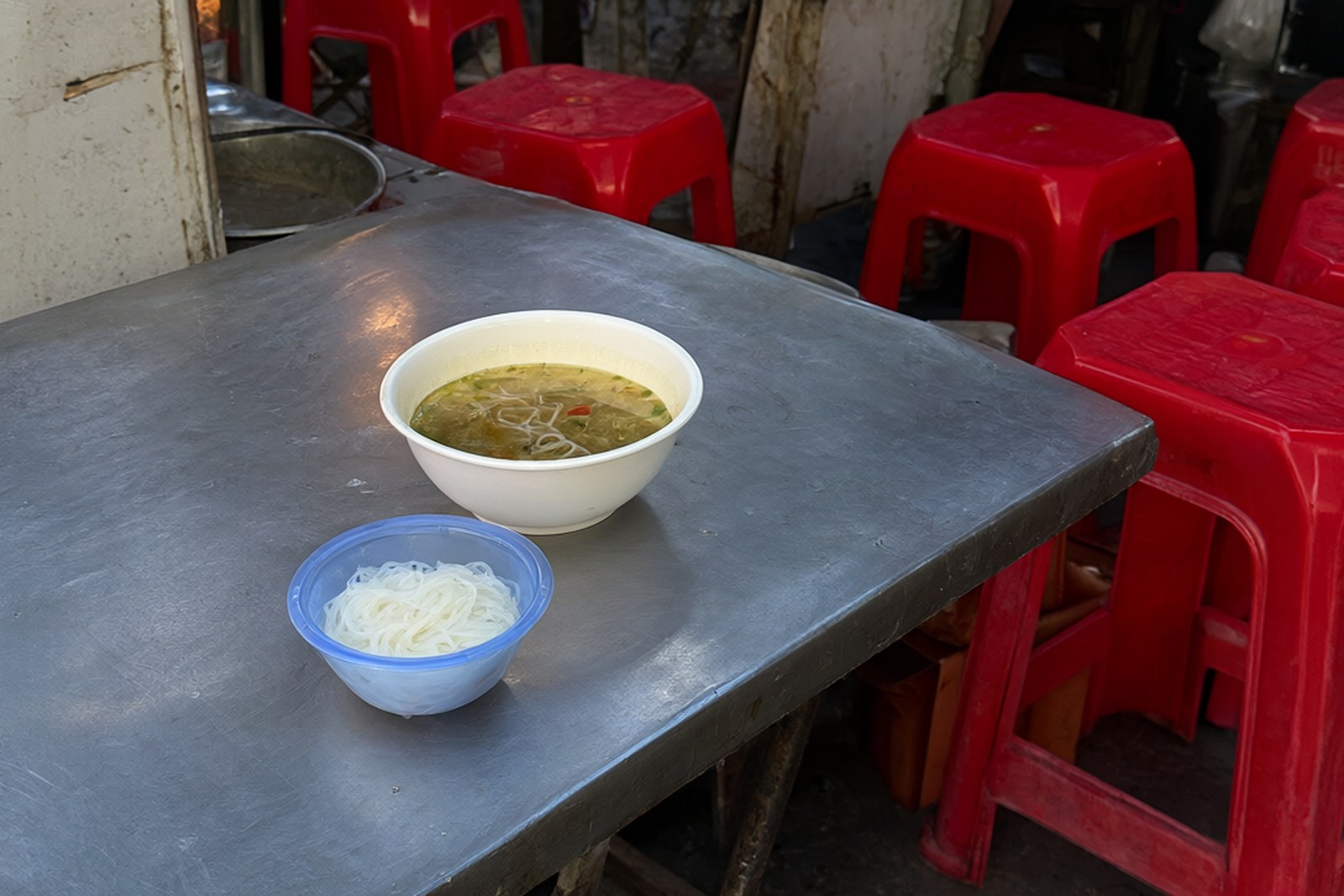
What is in the bowl is offal, and that is not a problem to hide. Guangdong eats more of the animal than most places, and 紫金’s version is at the plain end of that tradition: the pieces are cut thin, so that what they are is visible, and the seasoning is salt and pepper, so that what they taste of is themselves. A first bowl will tell you whether you like fresh liver or kidney, because there is nothing here to disguise them. A regular will order 八刀汤 with a bowl of rice noodles or a bowl of rice alongside, and eat the offal with a spoon and the noodles with chopsticks.
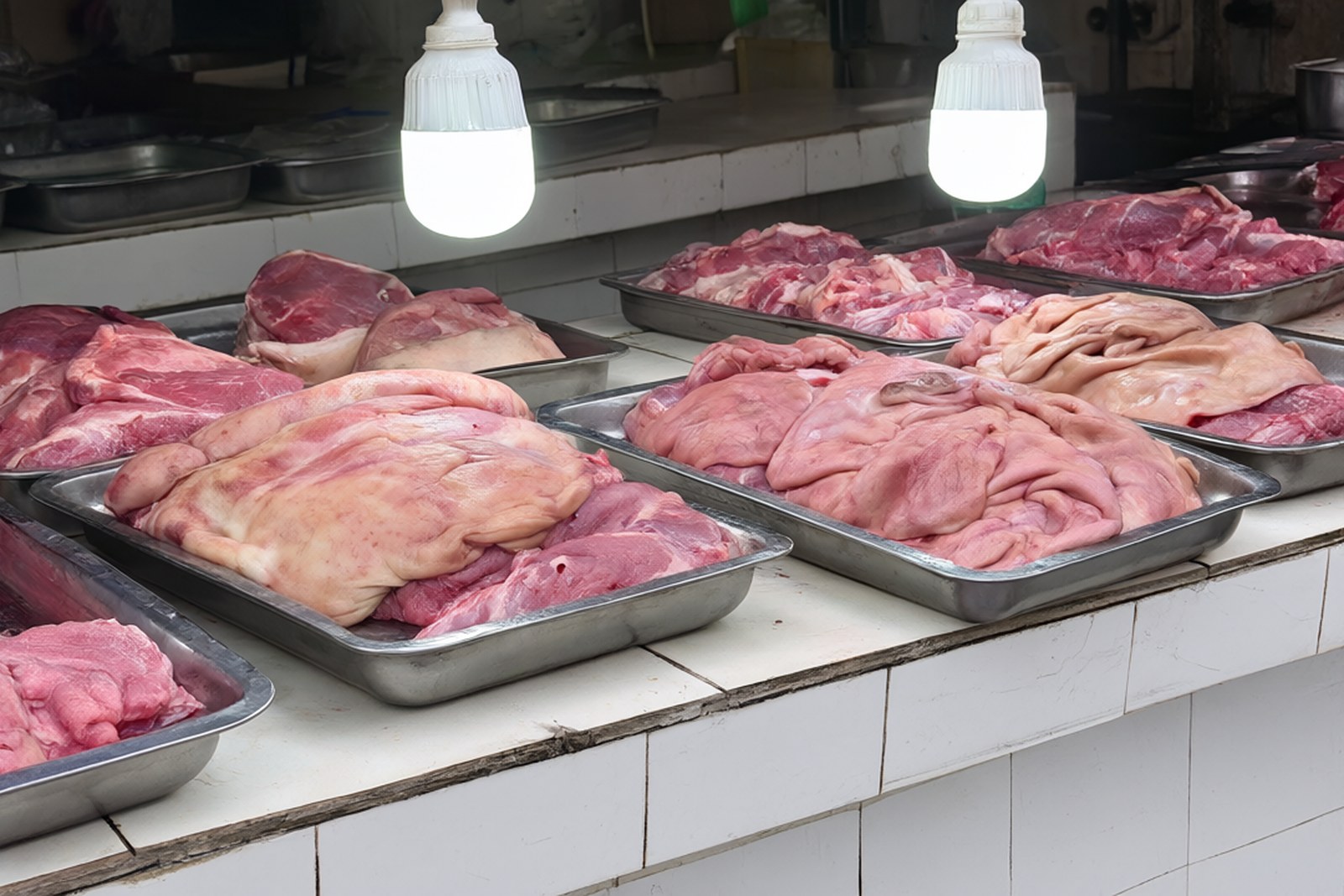
紫金 is a hill county on the upper reaches of the 东江, and the soup belongs to its mornings. The shops open at five or six, the pot is on from before that, and by nine the good meat has gone; a 紫金 breakfast of 八刀汤 and 米粉 costs somewhere between ten and twenty yuan and is finished standing up at a low table. The county is also known for its tea, grown on the slopes around the town, and for 紫金椒酱 Zǐjīn jiāo jiàng, a fierce local chilli paste that appears on every table and is worth carrying home. Two mornings here, one for the soup and one for the market, is the honest way to see the town.
Words and Names
八刀汤 bā dāo tāng is the eight-cut soup: 八 bā eight, 刀 dāo knife or cut, 汤 tāng soup. 猪心 zhū xīn heart, 猪肝 zhū gān liver, 猪腰 zhū yāo kidney, 猪粉肠 zhū fěn cháng small intestine, 猪肺 zhū fèi lung, 猪红 zhū hóng congealed blood, 瘦肉 shòu ròu lean pork and 猪利 zhū lì tongue. 紫金椒酱 Zǐjīn jiāo jiàng is the county’s chilli paste, 米粉 mǐ fěn rice noodles, and 紫金县 Zǐjīn xiàn is the county itself.
What the Locals Know
Go early, before eight, because the point of the dish is that the pig was killed that morning and the shop sells out rather than keeping the meat over. Tell the shop which parts you want and which you do not; they assume you have preferences and it is not rude to say so. Eat the offal first, while it is still just set, and do not let it stand in the bowl. Ask for the 紫金椒酱 on the side rather than in the soup, and use it sparingly, because it is hot enough to erase everything else in the bowl.
flowcloud would say that a county which takes eight parts of a pig killed before dawn, cuts each of them once, and puts them into boiling water for two minutes with nothing but salt and pepper, has made a dish that can only exist where the animal is butchered at the door, and has decided that freshness is the only seasoning it needs.
Where to find it: the 八刀汤 shops of 紫金县, open from about five in the morning and sold out by mid-morning, most of them around the town market; the same shops serve rice noodles to go with it. A bowl is ¥10 to ¥20 and a bowl with noodles ¥12 to ¥25, and a jar of 紫金椒酱 to take away ¥15 to ¥35. 紫金县 is reached by road from 河源市 in about an hour, up into the hills on the eastern side of the 东江.