
Chongqing
Where to go in Chongqing
Tap a city on the map — or use the list underneath it — to narrow the food, the places to stay and the things to see down to that city.
Has stories
Nothing filed yet
Selected
Newest in Chongqing
The three most recent stories in each section, wherever they are in the province.
 FoodQianjiang District
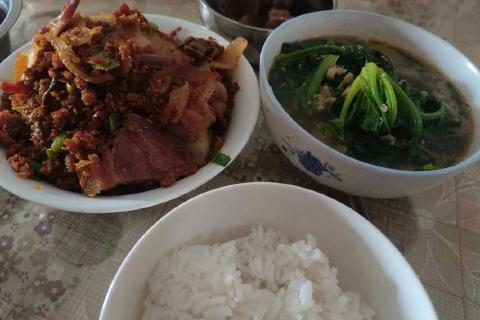
Zha-Haijiao with Cured Pork, the Tujia Stir-Fry
15 October 2026
 FoodQianjiang District
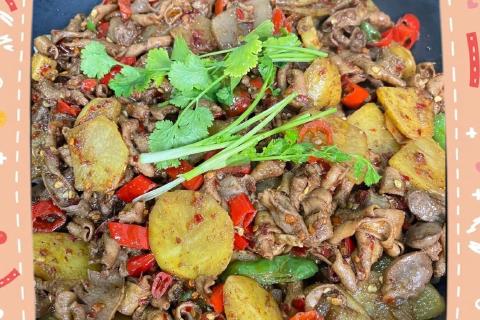
Qianjiang Chicken Offal, the Sour-Hot Opener of the Old Street
15 October 2026
 FoodQianjiang District
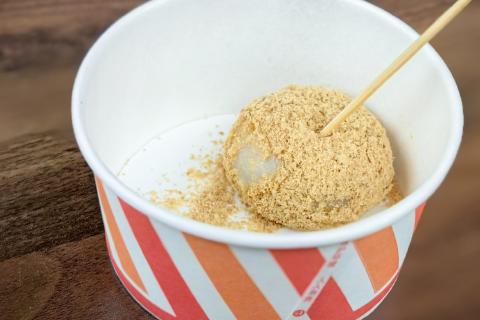
Madagun, the Horse-Rolling Sweet of the Old Street
15 October 2026
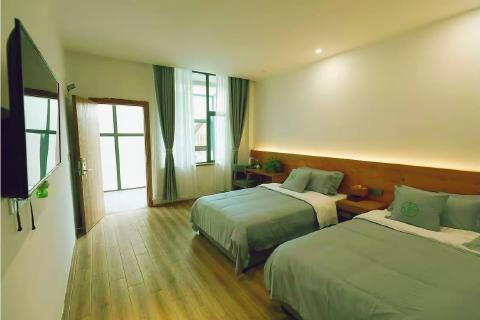 StayBishan District
Family Stays Near Guanyintang Wetland Park in Bishan
30 October 2026
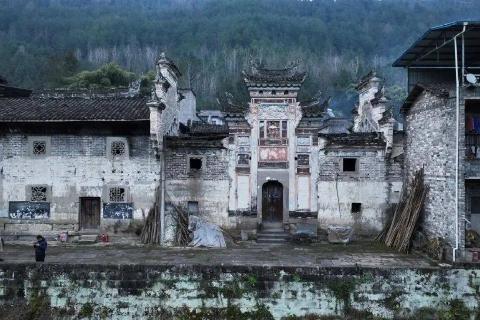 StayYunyang County
Liming Ancient Village Courtyard Stays
30 October 2026
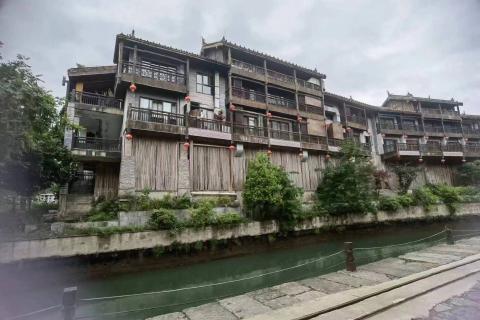 StayQianjiang District
Zhuoshui Stilt-House Homestays, the Night Inside the Old Town
15 October 2026
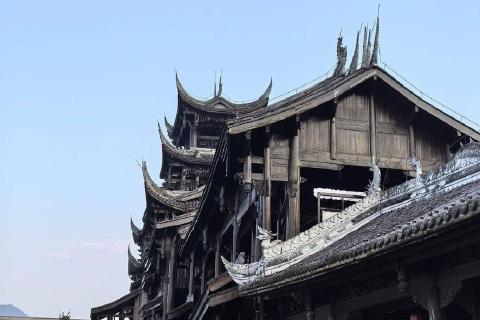 TravelQianjiang District
Zhuoshui: the Millennium Town, the Wooden Bridge and the Dark River
15 October 2026
 TravelQianjiang District
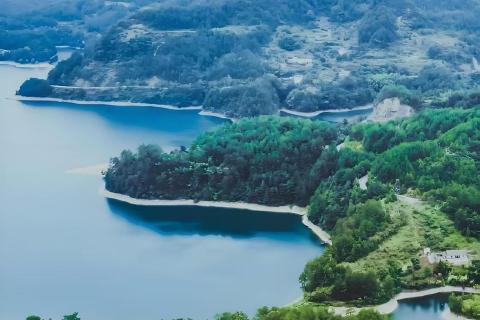
Xiaonanhai: the Earthquake's Barrier Lake
15 October 2026
 TravelQianjiang District
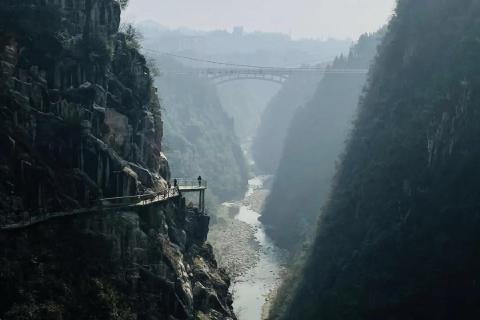
Urban Grand Canyon: the Gorge in the Middle of Town
15 October 2026
Browse by city
Showing all of Chongqing
Food0
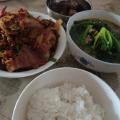 Zha-Haijiao with Cured Pork, the Tujia Stir-Fry
Qianjiang District
Zha-haijiao with cured pork (渣海椒炒腊肉, Zhāhǎijiāo Chǎo Làròu) is the county's Tujia-register stir-fry and a Wuling-range staple: 渣海椒 — the fermented chilli 'residue' left after chilli is chopped, salted and fermented with corn meal in a jar —
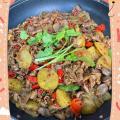 Qianjiang Chicken Offal, the Sour-Hot Opener of the Old Street
Qianjiang District
Qianjiang chicken offal (黔江鸡杂, Qiánjiāng Jīzá) is the county's signature dish and its most exportable name: chicken gizzard, liver and intestine cooked fast in a sour-hot register — the pickled chilli and sour stock that opens a table — ser
 Madagun, the Horse-Rolling Sweet of the Old Street
Qianjiang District
Madagun (马打滚, Mǎdǎgǔn) is the county's traditional sweet snack: a glutinous rice ball, filled or plain, rolled in roasted soybean flour (黄豆粉) until it wears a pale-yellow coat — the 'horse rolling' of the name being the vendor's hand motion
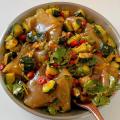 Green Bean Noodles, the County's Cool Summer Thread
Qianjiang District
Green bean noodles (绿豆粉, Lǜdòu Fěn) are the county's cool-weather noodle: a batter of ground green bean and rice, set into thin sheets and cut into wide, flat strands, served cold or at room temperature dressed with vinegar, chilli oil and
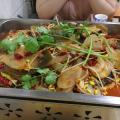 Apeng River Grilled Fish, the County's Water Plate
Qianjiang District
Apeng River grilled fish (阿蓬江烤鱼, Āpéng Jiāng Kǎoyú) is the county's fish dish, named for the river that supplies it: a whole fish grilled over charcoal and finished on the table's heat with the sauce, following the regional canon that the c
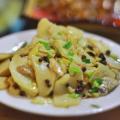 Youyang Green-Bean Noodles, the Fifteen-Yuan Summer Bowl
Youyang Tujia and Miao Autonomous County
Youyang green-bean noodles (酉阳绿豆粉, Yǒuyáng Lǜdòufěn) are the county's starch-noodle staple: mung-bean batter set into sheets, cut into wide strips, and served cool and dressed with the region's sour-hot seasoning.
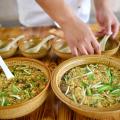 Tujia Oil-Tea Soup, the Bowl That Is Also a Greeting
Youyang Tujia and Miao Autonomous County
Tujia oil-tea soup (土家油茶汤, Tǔjiā Yóuchá Tāng) is the county's hosted bowl: tea fried in oil, boiled and pounded with grains and seasonings into a savory soup that is served to guests as the household's first answer to a visitor.
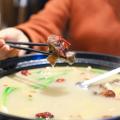 Tujia Cured Ribs, the County's Winter Ledger
Youyang Tujia and Miao Autonomous County
Tujia cured ribs (土家腊排骨, Tǔjiā Là Páigǔ) are the county's cured-meat pot: ribs salted and smoked in the cold season — the twelfth lunar month is the curing month (腊月) — then stewed into a pot with the county's winter vegetables.
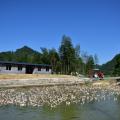 Mawang Duck, the Town That Became a Dish
Youyang Tujia and Miao Autonomous County
Mawang duck (麻旺鸭, Máwàng Yā) is the county's place-name dish: the duck of Mawang Town (麻旺镇), the township whose name attaches to the bird the way a breed attaches to a valley.
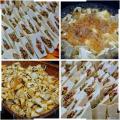 Gongtan Stuffed Tofu, the Wharf Town's Pocket
Youyang Tujia and Miao Autonomous County
Gongtan stuffed tofu (龚滩酿豆腐, Gōngtān Niàng Dòufu) is the old town's signature: tofu pockets filled and braised, the wharf town's answer to the river trade's everyday protein.
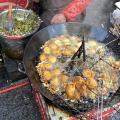 Youbaba, the Tujia Fried Golden Cakes
Xiushan Tujia and Miao Autonomous County
Youbaba (油粑粑, Yóubābā) is the county's Tujia fried snack: a small round cake of rice-and-bean batter with a savoury filling — usually the local pickles and chilli — deep-fried until the outside goes golden and crisp while the inside stays soft.
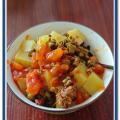 Xiushan Rice Tofu, the Sour-Hot Cool Jelly
Xiushan Tujia and Miao Autonomous County
Xiushan rice tofu (秀山米豆腐, Xiùshān Mǐdòufu) is the county's cool-weather snack: a jelly made from rice and bean flour, set firm and cut into cubes, then dressed sour-hot with vinegar, chilli oil and the local pickles — the Wuling range's sta
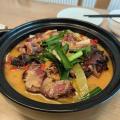 Tujia Cured Rib Soup Pot, the Mountain's Winter Table
Xiushan Tujia and Miao Autonomous County
The Tujia cured rib soup pot (土家腊排骨汤锅, Tǔjiā Làpáigǔ Tāngguō) is the county's communal dish: cured pork ribs from the mountain smokehouses, stewed into a soup pot at about 60 yuan per person, with the county's mountain vegetables going in after.
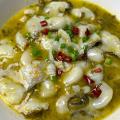 Hong'an Pickled-Vegetable Fish, the Pot That Cooks Three Provinces
Xiushan Tujia and Miao Autonomous County
Hong'an pickled-vegetable fish (洪安腌菜鱼, Hóng'ān Yāncàiyú) is the border town's signature dish and its geography on a plate: a fish pot whose three ingredients come from three provinces — Chongqing's pickled vegetables (重庆腌菜), Guizhou's tofu
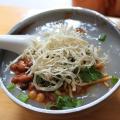 Chicken-Silk Tofu Brains, the Six-Yuan Morning Bowl
Xiushan Tujia and Miao Autonomous County
Chicken-silk tofu brains (鸡丝豆腐脑, Jīsī Dòufu Nǎo) are the county's breakfast dish: soft tofu brains (豆花) in a savoury broth topped with shreds of chicken (鸡丝), at about 6 yuan a bowl.
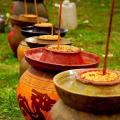 Zha Wine, the Three-Year Buried Corn Wine of the Tujia
Shizhu Tujia Autonomous County
Zha wine (咂酒, Zājiǔ) is the county's Tujia fermented drink and its ritual register: a wine brewed from corn (玉米酿), buried in the ground for about three years (埋地三年) to mature, and served by heating in a copper pot (铜壶煮).
 Watershield Fish, the 'Ginseng of the Waters' on the Table
Shizhu Tujia Autonomous County
Watershield fish (莼菜鱼, Chúncài Yú) is the county's elegant dish: a river fish cooked with watershield (莼菜), the aquatic plant whose glossy, slippery leaves have earned it the regional nickname 'ginseng of the waters' (水中人参), at about 50 yuan per person.
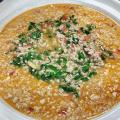 Heza, the Tujia's Soy-and-Greens Pot
Shizhu Tujia Autonomous County
Heza (合渣, Hézā) is the county's Tujia household dish and the range's plainest comfort food: soybeans ground to a coarse milk, cooked with greens (青菜) into a thin, savoury pot that is eaten as a staple rather than a side.
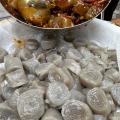 Dujuanzi, the Fern-Root Roll of the Tujia Range
Shizhu Tujia Autonomous County
Dujuanzi (都卷子, Dūjuǎnzi) is the county's Tujia-register snack: a jelly made from fern-root starch (蕨根粉), set into a sheet, rolled, and cut into strips, then dressed sour-hot with vinegar, chilli and garlic at about 10 yuan a serving.
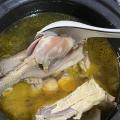 Coptis Chicken Stew, the Bitter-Root County's Signature
Shizhu Tujia Autonomous County
Coptis chicken stew (黄连炖鸡, Huánglián Dùn Jī) is the county's signature dish and its most literal expression of place: a local chicken stewed with coptis root (黄连), the bitter medicinal rhizome the county is famous for producing — 'Home of t
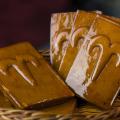 Yangjiao Dried Bean Curd, the Old Brand of Wulong's Travel Trade
Wulong District
Yangjiao dried bean curd (羊角豆干, Yángjiǎo Dòugān) is the travel-food of Wulong — the thing visitors buy by the string at the bus station and the Fairy Mountain gate, and one of the older brand names in the Chongqing dried-tofu trade.
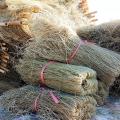 Wulong Sweet Potato Starch Noodles, the Hotpot's Essential Order
Wulong District
Wulong sweet potato starch noodles (武隆苕粉, Wǔlóng Sháofěn) are the wide, grey-brown, slightly chewy noodles that every Chongqing hotpot table orders last — the item that goes into the pot when everyone has stopped eating meat and the room ha
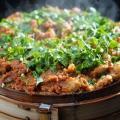 Wulong Bowl-by-Bowl Mutton, Steamed One Bowl at a Time
Wulong District
Wulong bowl-by-bowl mutton (武隆碗碗羊肉, Wǔlóng Wǎnwǎn Yángròu) is the district's signature cold-weather dish: mutton — both the meat and the offal — portioned into small steam bowls, one per person, served with a clear, pepper-scented broth tha
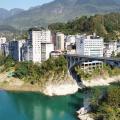 Jiangkou River Fish, Caught Where the Furjiang Meets the Wujiang
Wulong District
Jiangkou river fish (江口鱼, Jiāngkǒu Yú) is the river-fish dish of the Wujiang's upper reaches, named for Jiangkou town, where the Furjiang — the same river that runs through the Three Bridges' gorge — joins the Wujiang.
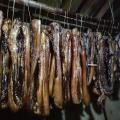 Highland Cured Pork and Highland Potatoes, the Wulong Winter Larder
Wulong District
The Wulong highlands — the same plateau that makes Fairy Mountain a summer retreat — make the district's winter larder.
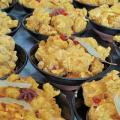 Yushan Three Fragrances, the Steamed Trio
Pengshui Miao and Tujia Autonomous County
Yushan three fragrances (郁山三香, Yùshān Sān Xiāng) is the old salt town's steamed trio: minced meat, egg and sweet potato layered and steamed together, the dish named for its three fragrances — 肉香 (the meat's), 蛋香 (the egg's) and 红薯香 (the sweet potato's).
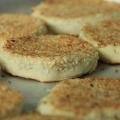 Yushan Rolled Crisp, the Two-Hundred-Year Pastry
Pengshui Miao and Tujia Autonomous County
The Yushan rolled crisp (郁山擀酥饼, Yùshān Gǎn Sūbǐng) is the old salt town's non-heritage pastry: a rolled, laminated crisp passed down for more than two hundred years (传承 200 多年的非遗美食), and the county's standard 伴手礼 (souvenir gift).
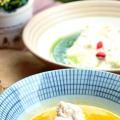 Yushan Chicken-Bean Curd, the Dish That Hides Its Chicken
Pengshui Miao and Tujia Autonomous County
Yushan chicken-bean curd (郁山鸡豆花, Yùshān Jī Dòuhuā) is the county's signature and its riddle: the local boast is 'eat the chicken without seeing chicken, eat the bean without seeing bean' (吃鸡不见鸡、吃豆不见豆) — a dish whose chicken has been whipped
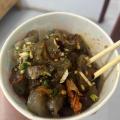 Du Juanzi, the Sour-Hot Rolled Snack
Pengshui Miao and Tujia Autonomous County
Du juanzi (彭水嘟卷子, Péngshuǐ Dū Juǎnzi) is the county's sour-hot rolled snack: a thin batter sheet rolled, cut and dressed in the region's sour-hot register.
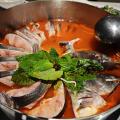 Miao Sour-Soup Fish, the Red Broth's Fish
Pengshui Miao and Tujia Autonomous County
Miao sour-soup fish (苗家酸汤鱼, Miáojiā Suāntāngyú) is the county's Miao kitchen's pot: fish stewed in a fermented sour soup — the Miao tradition's red sour broth (红酸汤), built on fermented tomato rather than on pickled vegetable — with the fish
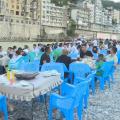 Wuxi Grilled Fish, the Weigh-Then-Grill Street of Mantan Road
Wuxi County
Wuxi grilled fish (巫溪烤鱼, Wūxī Kǎoyú) is the county's signature dish, and it has an address: Mantan Road's grilled-fish street (漫滩路烤鱼一条街) by the old city of Daning, where the shops run as a single trade row.
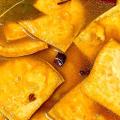 Salt-Brine Tofu, the Baoyuan Spring's Kitchen Form
Wuxi County
Salt-brine tofu (盐卤豆腐, Yánlǔ Dòufu) is the county's tofu register, and its distinction is the brine: the salt of the Baoyuan spring — the same source that built Ningchang's five-thousand-year industry — is the coagulant tradition behind the
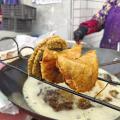 Piao'er Cakes, the Old Street's Sweet Iron
Wuxi County
Piao'er cakes (瓢儿糕, Piáo'er Gāo) are the county's traditional snack: a small sweet cake cooked in the laddle-shaped irons (瓢儿, 'little gourds') that give the dish its name, batter poured into the hot moulds and turned until the outside sets
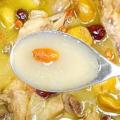 Highland Chicken Pot, the Mountain's Plain Register
Wuxi County
The highland chicken pot (高山土鸡煲, Gāoshān Tǔjī Bāo) is the county's plain dish: mountain-raised chickens cooked in a pot with water and time, the bird's own flavour carrying the broth.
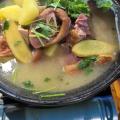 Cured Knuckle Stew with Potatoes, the Winter Pot
Wuxi County
The cured knuckle stew with potatoes (腊猪蹄炖洋芋, Làzhūtí Dùn Yángyù) is the county's winter dish: cured pork knuckles from the mountain smokehouses, stewed slowly with the highland potatoes the county grows in quantity, until the knuckles give
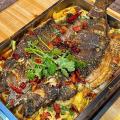 Wushan Grilled Fish, the Charcoal Plate of the River Front
Wushan County
Wushan grilled fish (巫山烤鱼, Wūshān Kǎoyú) is the county's signature dish: a whole fish grilled over charcoal until the skin blisters and chars, then set on a continuing heat with the classic Wushan dressing — pickled chilli (泡椒) — and the co
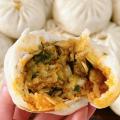 Wushan Buns, the One-Yuan Morning Steamer
Wushan County
Wushan buns (巫山包子, Wūshān Bāozi) are the county's breakfast institution: old-dough (老面) fermented steamed buns sold at about 1 yuan each, in two registers — cured-pork filling (腊肉馅) or plain vegetable (菜包).
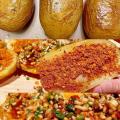 Pit-Cooked Highland Potatoes, the Five-Yuan Street Fire
Wushan County
Pit-cooked potatoes (炕洋芋, Kāng Yángyù) are the county's street snack: small highland potatoes cooked dry in a shallow pan or pit — 炕, the dry-heat method that makes them without water — until the skins wrinkle and the insides meal, then ser
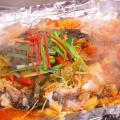 Paper-Wrapped Fish, the Garlic Parcel
Wushan County
Paper-wrapped fish (纸包鱼, Zhǐbāoyú) is the county's second fish register and the gentler one: the fish and its seasonings are sealed in paper and cooked through on the table's heat, arriving at the table as a parcel that is opened at the chair.
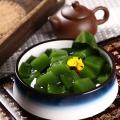 Emerald Cold Powder, the Leaf-Made Summer Jelly
Wushan County
Emerald cold powder (翡翠凉粉, Fěicuì Liángfěn) is the gorge country's summer jelly, made not from a starch but from the leaves of a local tree — the 'edible leaf' whose mucilage sets on heating into a translucent green jelly, cut into cubes an
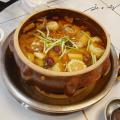 Guzi Chicken, the Heritage Clay Jar of Fengjie
Fengjie County
Guzi chicken (盬子鸡, Gùzǐ Jī) is the county's non-heritage (非遗) signature: a local chicken slow-cooked in a special clay jar (盬子, gùzi), the vessel's design trapping the steam so the bird cooks in its own moisture rather than in added water.
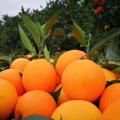 Fengjie Navel Oranges, the Poem City's Winter Crop
Fengjie County
Fengjie navel oranges (奉节脐橙, Fèngjié Qíchéng) are the county's agricultural fame and its standard souvenir: a navel orange grown in the gorge country's warm valley microclimate, in season through winter, and sold everywhere from the orchard
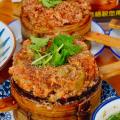 Fengjie Geger, the Bamboo Steamers of the Old Street
Fengjie County
Fengjie geger (奉节格格, Fèngjié Gége) is the county's breakfast institution: the little bamboo steamers of coated, steamed meat that eastern Chongqing shares with its neighbours, sold at 8–12 yuan a basket from the old street's shops.
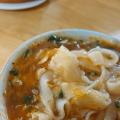 Dada Noodles, the Hand-Made Sheets of the Three Turns
Fengjie County
Dada noodles (搭搭面, Dādā Miàn) are the county's noodle dish and its old-town breakfast: handmade dough slapped and torn into irregular sheets — 搭搭 is the sound of the dough hitting the board — cooked soft and served in a light soup or dresse
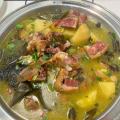 Cured Knuckle Soup Pot, the Set for Two at Eighty-Eight
Fengjie County
The cured knuckle soup pot (腊猪蹄汤锅, Làzhūtí Tāngguō) is the county's communal dish: cured pork knuckles from the mountain smokehouses stewed into a soup pot, sold as a set for two at about 88 yuan, and served with the county's highland bambo
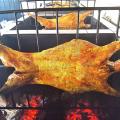 Roasted Mountain Goat Ribs, the Plateau's Wild Register
Chengkou County
The roasted mountain goat ribs (高山烤羊排, Gāoshān Kǎoyángpái) are the county's grill dish, and they exist because of the plateau: free-range goats (跑山羊, pǎoshān yáng — 'running mountain goats') graze the high slopes above the grasslands, and t
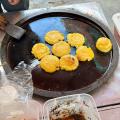 Potato Patties, the Highland Street Snack
Chengkou County
Potato patties (洋芋粑粑, Yángyù Bābā) are the county's street snack: highland potatoes — the Daba slopes' dense, small, high-altitude crop — boiled, mashed with a little starch and seasoning, then pan-fried into patties crisp at the edge and soft at the middle.
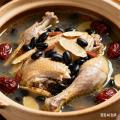 High-Mountain Chicken Soup, the County's Plainest Bowl
Chengkou County
The high-mountain free-range chicken soup (高山土鸡汤, Gāoshān Tǔjī Tāng) is the county's plain dish: a mountain-raised chicken — slow-grown, walked hard on the plateau's slopes — cooked in spring water with nothing else, until the broth is chic
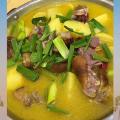 Cured Pork Knuckle Hotpot, the Twenty-Year Local Pot
Chengkou County
The cured pork knuckle hotpot (腊猪脚火锅, Làzhūjiǎo Huǒguō) is the county's communal dish: knuckles from the same winter smokehouse as the cured pork, stewed for hours until the collagen gives way and the broth turns milky, then served as a hot
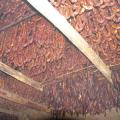 Chengkou Cured Pork, the Daba Mountain Smokehouse Standard
Chengkou County
Chengkou cured pork (城口老腊肉, Chéngkǒu Lǎolàròu) is the county's flagship food and its most portable reputation: pork cured and cold-smoked for months in the high mountain air, then hung in farmhouse rafters until the fat turns amber and the
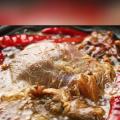 Zhao's Red-Broth Beef, the Non-Heritage Bowl of Nanyang Avenue
Dianjiang County
Zhao's Beef (赵牛肉) is Dianjiang's signature meat dish and a non-heritage (非遗) local brand: beef — shin, tendon and lean — stewed in a clear red broth whose heat builds slowly rather than announcing itself, served at the flagship shop on Nany
 Stone-Mill Tofu Jelly, the Bowl Dianjiang Argues About
Dianjiang County
Dianjiang stone-mill tofu jelly (垫江石磨豆花, Diànjiāng Shímò Dòuhuā) is the county's table standard: soybeans ground slowly on a stone mill, boiled, and set with brine into a curd so soft it is eaten with a spoon, served not with sugar but with
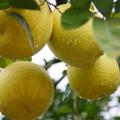 Huangsha Pomelo, the October Sweetness of the Hills
Dianjiang County
The Huangsha Shatian pomelo (黄沙白柚) is the fruit Dianjiang's hill country is known for: a Shatian-line pomelo grown on the slopes around Huangsha town, picked in the autumn and at its sweetest in the October–November window.
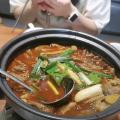 Huangsha Hotpot: Tripe and Spring Bamboo in One Pot
Dianjiang County
Huangsha hotpot (黄沙火锅) is the county's winter pot, and a different animal from the Chongqing mainstream: the base is a beef-tripe stew (牛杂锅底) into which the fresh spring bamboo shoots of the season are dropped as they come.
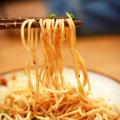 Cheng's Cold Noodles and the Hu-Lake-Shell Chilli
Dianjiang County
Cheng's Cold Noodles (程凉面) is the county's summer snack, sold from the shop by the west gate bridge (西门桥): wheat noodles cooled and dressed with the region's signature chilli preparation — the 胡辣壳 (hú-là-ké, 'foreign-chilli-shell'), a dried
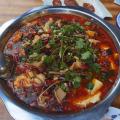 Yangtze Fish Pot, the River on the County's Table
Fengdou County
The Yangtze fish pot (长江江鲜鱼锅) is the county's river dish: fresh-caught fish from the Yangtze's Fengdu reach, cut into sections and stewed in a pot built for the table — a broth of preserved vegetable and chilli, or the plainer clear soup th
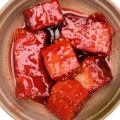 Xianjia Fermented Tofu, the County's Ageing Cube
Fengdou County
Xianjia fermented tofu (仙家豆腐乳, Xiānjiā Fùrǔ) is the county's preserved-bean specialty: cubes of firm tofu inoculated, aged and bottled in a brine of rice wine, chilli and spices until they soften into the salty, alcoholic, umami-dense condi
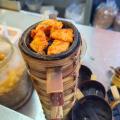 Steamer Baskets: the Bamboo Column of Eastern Chongqing
Fengdou County
Steamer baskets (蒸格格, Zhēng Gégé) are eastern Chongqing's small-steam tradition, shared across the region and claimed locally in both Fengdu and neighbouring Dianjiang: small bamboo steamers in which sliced meat — lamb, pork ribs or tripe —
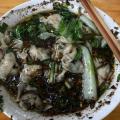 Ghost City Wontons, the Bowl Named After the Hill
Fengdou County
Ghost City wontons (鬼城抄手, Guǐchéng Chāoshǒu) are the hill's namesake bowl: thin-skinned pork wontons in a clear, pepper-finished broth, sold in Ming Mountain town's restaurant rows and named, with the county's usual commercial instinct, aft
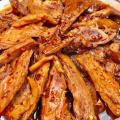 Fengdu Spicy Chicken, the Non-Heritage Red Bowl
Fengdou County
Fengdu spicy chicken (丰都麻辣鸡, Fēngdū Málàjī) is the county's signature cold dish and a non-heritage (非遗) local craft: poached chicken cooled and torn into pieces, then dressed not in a sauce ladled over but in a red oil massaged through — ch
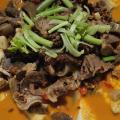 Fengjie Mutton Bowl
Fengjie County
The Fengjie Mutton Bowl is the county's winter warmer: goat mutton stewed with ginger and herbs into a peppery red broth, served in individual bowls through the cold months.
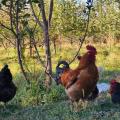 Fengjie Free-Range Chicken
Fengjie County
Fengjie Free-Range Chicken is the hill-reared local bird ranging the orchard and woodland, valued for firm, yellow-skinned meat that shines in a clear-broth or sesame-oil poach.
 Fengjie Pickles
Fengjie County
Fengjie Pickles are the county's jar-fermented vegetables -- mustard greens, cowpea and chilli lacto-fermented into a sour, crunchy side that cuts the richness of gorge-country cooking.
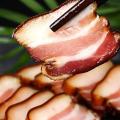 Fengjie Cured Bacon
Fengjie County
Fengjie Cured Bacon is the county's winter-smoked pork: legs and bellies cured with salt and spices then slow-smoked over wood until the fat turns amber and the meat keeps through the spring.
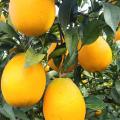 Fengjie Navel Orange
Fengjie County
Fengjie Navel Orange is the county's flagship geographic-indication crop: a late-ripening seedless navel grown on the terraced Yangtze slopes, sweet and thin-skinned, the backbone of the local orchard economy.
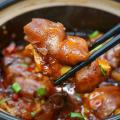 Yunyang Goat Feet
Yunyang County
Yunyang Goat Feet is the county's lamb specialty: goat feet blanched to remove gaminess, then simmered in a twenty-spice broth for hours until the tendon turns soft and the broth is rich, a late-night cold-weather bowl.
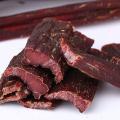 Biaocao Beef Jerky
Yunyang County
Biaocao Beef Jerky is Yunyang's near-century dried-beef craft from Biaocao township: local grass-fed beef cured with natural spices and slow-roasted to a chewy, deeply fragrant strip, a take-home specialty.
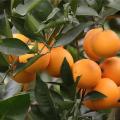 Yunyang Red Orange
Yunyang County
Yunyang Red Orange is a red-fleshed navel-orange variety grown across a dozen Yangtze-slope townships: smooth deep-orange skin, thin rind, juicy sweet-tart flesh with a rose note when fully ripe, a geographic-indication crop.
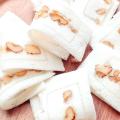 Yunyang Taopian Cake
Yunyang County
Yunyang Taopian Cake is the county's glutinous rice peach-slice cake: white as jade, it rolls up and unrolls without breaking, made from glutinous rice, walnut kernel and sugar by century-old houses such as Wang Dahang, a municipal intangible heritage.
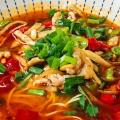 Yunyang Xiaomian
Yunyang County
Yunyang is China's fresh-noodle capital: more than 100,000 Yunyang noodle-makers run shops nationwide, and the alkaline wheat noodles that anchor Chongqing xiaomian are largely Yunyang-made; back home the breakfast bowl is a thin, springy noodle under chilli oil and a dozen seasonings.
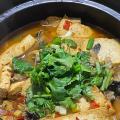 Yangtze River Fish
Zhong County
Yangtze River Fish is the river-town table: catfish and river fish stewed home-style, often with tofu, the county's everyday taste of the Yangtze.
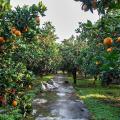 Zhongxian Orange
Zhong County
Zhongxian Orange is the county's headline crop: riverside terraces of citrus hanging fruit from winter into spring, eaten fresh and pressed into NFC juice across the 'Orange Township of the Three Gorges'.
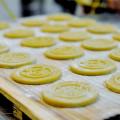 Xiangshan Honey Cake
Zhong County
Xiangshan Honey Cake is the county's traditional honey-glazed tea cake: crisp outside, soft and honeyed within, tied locally to legends of the poet Bai Juyi.
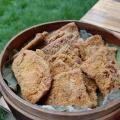 Shibao Steamed Tofu
Zhong County
Shibao Steamed Tofu is the steaming-vat classic of Shibao town: firm tofu slices seasoned and steamed until the sauce sinks in, a fixture of the countryside banquet table.
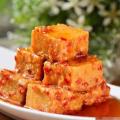 Zhongzhou Fermented Tofu
Zhong County
Zhongzhou Fermented Tofu is the county's century-old fermented-tofu craft: red-square cubes aged in spiced brine until velvet-fine and deeply savoury, a rice-porridge companion and the county's most famous name-brand bite.
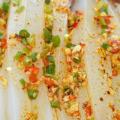 Liangping Liangfen
Liangping District
Liangping Liangfen is the summer street staple: mung-bean jelly knife-shaved into ribbons, bathed in red-oil garlic dressing and smashed peanut, the cooling counterpoint to the district's rich duck and tofu.
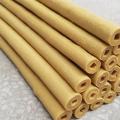 Liangping Doujin
Liangping District
Liangping Doujin is the district's signature soy craft: thin tofu muscle rolled from simmered soy-milk skin, hung to dry on bamboo rods, then stewed or hot-pot braised into a springy, umami strand.
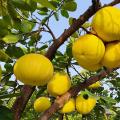 Liangping Pomelo
Liangping District
Liangping Pomelo is a national geographical-indication fruit: a heavy yellow pomelo with seedless pale flesh, floral and honeyed, grown in the sandy soils along the Pingba river terraces.
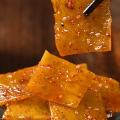 Yuanyi Dried Tofu
Liangping District
Yuanyi Dried Tofu is a municipal intangible heritage from Yuanyi town: firm soy sheets pressed, five-spice braised then air-dried to a chewy, deeply savoury square, a Liangping bite for a hundred years.
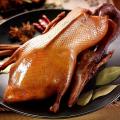 Zhang Duck
Liangping District
Liangping Zhang Duck is the district's century-old braised-roast duck: cured, smoked over camphor-wood tea and slow-braised in a spiced master stock until the skin glistens mahogany, the late-night train-station souvenir of all Chongqing.
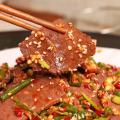 Pepper-Ma Beef
Kaizhou District
Kaizhou pepper-ma beef is the district's heritage dried-beef craft: prime beef cured, steamed, then fried with numbing peppercorn and chilli until crisp at the edges, a spicy chewy souvenir of Kaizhou.
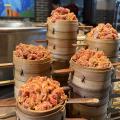 Lamb Gege
Kaizhou District
Kaizhou lamb gege are the palm-sized bamboo-steamer bites Liu Bocheng's son asked about when returning his ashes home: lamb, pork rib or tripe dusted with rice flour and chilli, steamed soft and peppery above a bed of sweet potato.
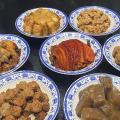 Great Mixed Steaming
Kaizhou District
Kaizhou Great Mixed Steaming is the dish Marshal Liu Bocheng missed most from home: a half-metre bamboo steamer layering beef, pork rib, tripe, lamb and sweet potato, steamed until meat and vegetable broth fuse, Kaizhou's banquet centrepiece.
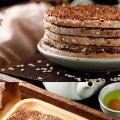 Bingbao Mooncake
Kaizhou District
Kaizhou Bingbao mooncake is a municipal intangible heritage from Linjiang town with over 400 years of history: a paper-thin crisp cake of flour, vegetable oil, rock sugar, candied fruit and sesame, light, fragrant and sweet, a Chongqing-north-east Mid-Autumn favourite.
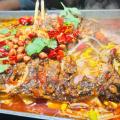 Linjiang Grilled Fish
Kaizhou District
Kaizhou Linjiang grilled fish is the district's riverside signature and a close cousin of Wanzhou's famous roast: fish cured and charcoal-grilled then braised in an iron pan with dozens of spices and vegetables, the late-night staple of Linjiang town's bustling night market.
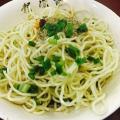 Wanzhou Cheng Liangmian
Wanzhou District
Wanzhou Cheng liangmian is the district's heritage cold noodle, a four-hit of sour-sweet-ma-la lifted by a secret wasabi-garlic water, the cool street refresher that locals reach for through the humid summers.
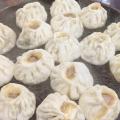 Wanzhou Tangbao
Wanzhou District
Wanzhou tangbao, the local soup dumpling, are paper-thin parcels with a hot broth that bursts on the first bite, dipped in red-oil vinegar -- a delicate counterpoint to the chilli tables of the river city.
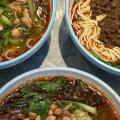 Wanzhou Zajiang Noodles
Wanzhou District
Wanzhou zajiang noodles are the district's breakfast cipher: alkali noodles tossed with a dry, glossy pork-zajiang topping until every strand is coated, the morning wake-up call of Wanzhou.
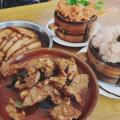 Wanzhou Gege
Wanzhou District
Wanzhou gege are the district's bamboo-steamer bites -- lamb, pork rib or tripe layered over sweet potato in palm-sized woven bamboo cages and steamed soft and peppery, the everyday street staple of the river city.
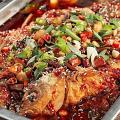 Wanzhou Grilled Fish
Wanzhou District
Wanzhou grilled fish is the district's signature and the dish that earned Wanzhou the title China's Hometown of Grilled Fish in 2018: fish cured, charcoal-grilled then braised in an iron pan with 30-plus spices and vegetables, crisp outside and tender within.
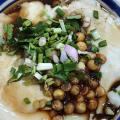 Rongchang Tofu Pudding
Rongchang District
Rongchang tofu pudding is the silky river-tofu pudding of the district, served warm with a savoury soy-chive sauce or a sweet syrup, a gentle counterpoint to the chilli tables.
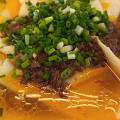 Rongchang Puge Noodles
Rongchang District
Rongchang puge noodles are the district's sheet noodles -- wide hand-pulled ribbons boiled and dressed in a rich bone broth with chilli and scallion, a hearty bowl from the craft towns.
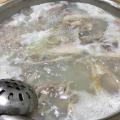 Rongchang Mutton Soup
Rongchang District
Rongchang mutton soup is the district's warming broth, stewed with ginger and herb into a milky, peppery soup in the Panlong style, eaten through the cool months by the river.
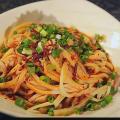 Rongchang Yellow Liangfen
Rongchang District
Rongchang yellow liangfen is the district's signature cold jelly snack: a trembling bowl of yellow pea-or-rice starch dressed in chilli-garlic oil with a crush of peanut, eaten standing on the street.
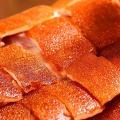 Rongchang Roast Pork
Rongchang District
Rongchang roast pork is the district's signature dish, built on the famed Rongchang pig: young pork roasted over fruit-wood until the skin is glass-crisp and the meat stays juicy, a centrepiece across Chongqing tables.
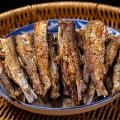 Shuangjiang River Snacks
Tongnan District
Shuangjiang river snacks are the fried and steamed small eats along the old town's river landing, built from the Fu River's small fish and shrimp, a cheap, salty bite by the water.
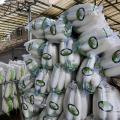 Tongnan Radish
Tongnan District
Tongnan radish comes from a district that is an upper-Yangtze vegetable base; its fat sweet radishes are eaten fresh, pickled into a crunchy kraut, or dried for the winter pantry.
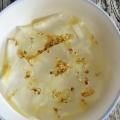 Tongnan Cold Jelly
Tongnan District
Tongnan cold jelly is the district's summer street snack: a trembling bowl of sweet-pea or rice starch jelly in chilled syrup with a crush of peanut and osmanthus, eaten standing on hot days.
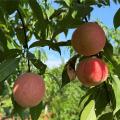 Tongnan Yellow Peach
Tongnan District
Tongnan yellow peach is the district's signature stone fruit, heavy and honey-sweet, grown in the warmer river-bend orchards and eaten fresh or canned across Chongqing.
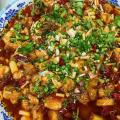 Tongnan Tai'an Fish
Tongnan District
Tongnan Tai'an fish is the district's signature river dish: live carp from the Fu and Qiong rivers cut and dry-braised in a numbing mala broth with tender tofu, the dish that anchors Tongnan's fish tables by the water.
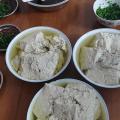 Tongliang Tofu-Rice
Tongliang District
Tongliang tofu-rice is the simple country set of silken tofu pudding, a bowl of steamed rice and a salty-chili dipping sauce, the everyday meal of the Tongliang countryside.
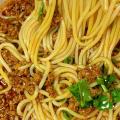 Tongliang Rice Noodles
Tongliang District
Tongliang rice noodles are the thin rice-thread breakfast of the district seat, dressed with a savoury minced-meat topping and chili oil, eaten standing at the morning stalls.
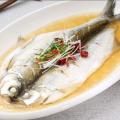 Anju River Fish
Tongliang District
Anju river fish comes from the fathead and carp pulled from the Fu River at the old town of Anju, steamed or dry-braised with pickled chillies at the riverside restaurants, fresh and mild.
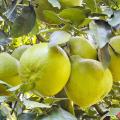 Tongliang Pomelo
Tongliang District
Tongliang pomelo is the district's signature citrus, a heavy honey-sweet pummelo grown along the Fu River, peeled and eaten fresh or candied, a Chongqing autumn gift.
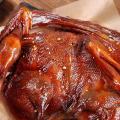 Tongliang Pressed Duck
Tongliang District
Tongliang pressed duck is the district's best-known cured meat: whole ducks salted, pressed flat and air-dried into a firm, amber, long-keeping duck that is steamed or braised for festivals and given as a Chongqing gift.
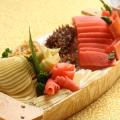 Baoding Mountain Vegetarian Cuisine
Dazu District
Baoding Mountain vegetarian cuisine is the meat-free temple cooking of the Dazu Rock Carvings at Baoding, built from tofu, mushrooms and mountain vegetables into shapes of meat and fish, eaten by pilgrims descending the cliff shrines.
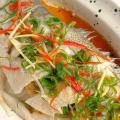 Longshui Lake Fish
Dazu District
Longshui Lake fish comes from the clear waters of Longshui Lake, the district's 'little West Lake': fathead and carp steamed, braised or floated in a light broth at the lakeside restaurants, fresh and mild against the scenery.
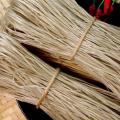 Wangu Sweet-Potato Vermicelli
Dazu District
Wangu sweet-potato vermicelli is the hand-pulled, crystal-clear noodle of Wangu town, dressed cold with chili-garlic oil or simmered into hotpots and stews, prized for its springy bite and clean sweet-potato taste.
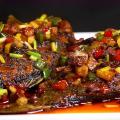 Youting Crucian Carp
Dazu District
Youting crucian carp is the river fish of the Chengdu-Chongqing rail town Youting: live crucian killed to order, cracked and dry-braised or simmered in a numbing mala broth with tender tofu, the dish that puts Dazu on Chongqing's fish map.
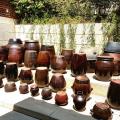 Dazu Winter Vegetable
Dazu District
Dazu winter vegetable is the district's oldest celebrated preserve: cabbages salted, spiced and aged through three winters into a glossy, umami-rich condiment that deepens braises and a famous local fried rice, a craft over a century old in Dazu District.
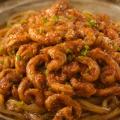 Yongxin Braised Intestines
Qijiang District
Yongxin braised intestines are pig intestines from Yongxin town slow-simmered over a low flame until soft and springy, golden and oily without being greasy, and traditionally paired with crisp tender bamboo shoots.
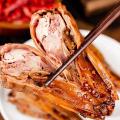 Dongxi Liu's Black Duck
Qijiang District
Dongxi Liu's black duck is an intangible-heritage food from Dongxi Ancient Town: quality duck in a pure-natural spice and herb marinade, lacquered in an old master stock to an oil-black sheen, tender with a long aftertaste and sold buy-and-go as a souvenir.
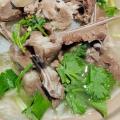 Anwen Lamb of Qijiang
Qijiang District
Anwen lamb is free-range black goat from Anwen town, simmered with Chinese herbs and a secret spice mix until tender and fragrant without grease, served in red or clear broth with steamed-lamb baskets, lamb rice-noodle soup and roast lamb, and vacuum-packed to travel.
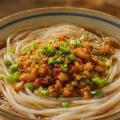 Qijiang Rice Noodles
Qijiang District
Qijiang rice noodles are the local breakfast soul: thin, resilient ribbons of Guichao rice in a long-simmered bone broth topped with a braised-meat shaozi, the two dominant styles being Fuhuan with its chunky meat granules and Ganshui with its darker, hard-shelled oily meat bits.
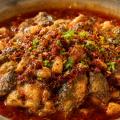 Beidu Fish of Qijiang
Qijiang District
Beidu fish is Qijiang's single most famous dish and the head bowl of Chongqing's 'Yuyi 360 Bowls' in 2024: live fish killed to order at the old Beidu ferry crossing on the Qijiang River, cooked many ways -- mala fish bright and numbing, pickled-cabbage fish sour and refreshing, tomato fish sweet and mild.
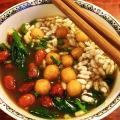 Nanchuan Oil Tea
Nanchuan District
Nanchuan oil tea is the savoury 'ganjintang' breakfast broth: toasted rice beaten into a fragrant oily tea, served with congee, pickles and crisp-fried peanuts -- the bowl that opens a Nanchuan morning.
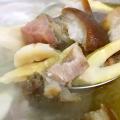 Jinfo Mountain Smoked Bacon
Nanchuan District
Jinfo Mountain smoked bacon is high-mountain pork cured and cold-smoked over cypress branches -- salty-savoury and never greasy -- eaten sliced cold, braised with the spring bamboo shoots, or dropped into the mountain hotpot.
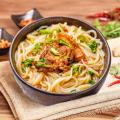 Nanchuan Rice Noodles
Nanchuan District
Nanchuan rice noodles are the local breakfast soul: springy rice ribbons in a long-simmered bone broth, topped with braised beef, zhajiang or intestine, the xiaohe free-range-chicken noodle (小河土鸡米粉) being the one locals name first.
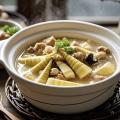 Nanchuan Mountain Chicken
Nanchuan District
Nanchuan mountain chicken is the district's free-range bird raised on the high slopes and slow-cooked with the mountain's selenium- and strontium-rich spring water -- above all braised with square bamboo shoots in the headou-town style (方竹笋炖鸡) that travellers ask for by name.
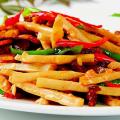 The Square Bamboo Shoots of Jinfo Mountain
Nanchuan District
Jinfo Mountain square bamboo shoots -- fangzhusun -- are the dish that made Nanchuan a name across Chongqing: crisp, fibre-free shoots grown above a thousand metres on the world-heritage mountain, eaten stir-fried, in clear soup, braised with pork or dried, and celebrated on the documentary <风味人间> as a southern-Chongqing delicacy.
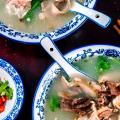 Bowl after Bowl of Tongle Lamb
Fuling District
Up in the Tongle highlands the winter dish is served one small bowl at a time. Tongle bowl lamb -- dates, by the account on record, to 1714, the fifty-third year of the Kangxi reign, and the meat is the town's own black goat, a hill breed whose flesh runs finer and less goaty than the lowland kind. The craft passed down runs smoking, blanching, stir-frying and stewing in sequence, the bowl filled with tender pieces in a clear, spice-fragrant broth topped with scallion; diners order by the bowl and keep count by the pile. The making was entered on Chongqing's municipal intangible heritage list in 2019, the dish joined the Yuwei 360 selection in 2024, and in 2025 it was honoured on that list for cultural value -- a mountain smallholding dish that outlived every fashion.
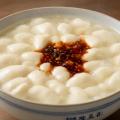 Douhua Rice at Any Hour
Fuling District
Douhua fan -- tofu pudding with rice -- is the district's everyday institution rather than its showpiece, and all the more telling for that. The douhua is made soft, in the living-water style: ladled gently from the day's batch so it holds its wobble, served warm with steamed rice out of the zengzi and a tray of condiments the diner mixes personally -- chilli oil, garlic, scallion, crisp soy beans, pickles -- finished with a ladle of oil so hot it hisses on the dish. Shops do a steady trade from early morning, when the first bowl goes with rice as breakfast, through to the evening, and the meal stays cheap enough to be a daily habit rather than an occasion. A local legend even attaches a wandering Tang emperor to it; the plainer truth is that a working river town needed exactly this kind of fast, hot, restorative plate.
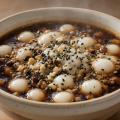 Sweet Oil Fermented Rice, Since 1799
Fuling District
You laozao is Fuling's own dessert, and the story on record gives it a date: the Spring Festival of 1799, when a hurried cook out of rice-ball dough simmered fermented rice with eggs and the fillings meant for the balls, and the guests liked it better than the original. The real thing is built slowly -- a laozao base fried in pork leaf-lard with black sesame, candied tangerine peel, walnuts, peanuts, honeyed dates, goji berries and both brown and rock sugar, simmered for a couple of hours until the kitchen smells of lard and wine together -- then finished to order with small glutinous rice balls and a poached egg. Rich, warm, faintly boozy, it is the district's highest form of hospitality and a listed intangible heritage, honoured on the Yuwei 360 list for cultural value.
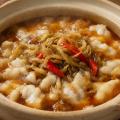 Zhacai Fish, the Signature Bowl
Fuling District
Zhacai yu is the dish the district put its own name on: fresh river fish -- grass carp above all -- simmered in a broth built on aged wind-dried zhacai, leaf and head together, until the pickle's sour salt cuts through the richness of the flesh and the broth tastes of both at once. The district's cooking contest recognises three formal flavour types, salt-savoury, mala and pickled-pepper, and restaurants argue their own variants the way other towns argue hotpot bases. In 2024 the dish was named head bowl dish of Chongqing's Yuwei 360 list, and in 2025 the list's most touristic dish -- the official stamp on what locals already treated as the one plate a visitor must order.
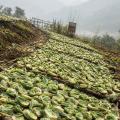 The Pickle That Conquered the World's Tables
Fuling District
Fuling zhacai begins with a vegetable that hardly exists outside the upper Yangtze: the qing cai tou, a knobbly stem mustard sown in autumn and cut in the weeks before spring. The traditional craft hangs the peeled heads on ropes through the coldest weeks, letting the mountain wind dry them for some twenty days -- the wind-dehydration step that gives the best grade its name -- before they are salted, pressed and salted again through three rounds of each, mixed with spice, packed hard into clay jars and sealed for at least 289 days of ferment. The result is crisp, briny, faintly sweet, with a texture no fresh vegetable holds. The name zhacai itself -- pressed vegetable -- comes from the pressing. A registered geographical-indication product with more than a century of craft behind it, it is at once the district's signature industry and the seasoning half of half its cooking.
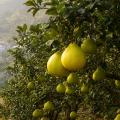 The Pomelo They Call a Natural Canned Fruit
Changshou District
Changshou's orchard hills gave the district a fruit with a national reputation: the shatian pomelo, nicknamed the 'natural canned fruit' for its ability to keep months in a cool room without losing its honeyed flavour. A geographic-indication product grown across nearly one hundred thousand mu, the Changshou pomelo has thick, easy-to-peel skin, fine almost fibreless flesh and a juice that runs sweet with barely a trace of acid. The harvest peaks in late autumn, when the 'ten-li pomelo country' fills with picking crowds and the villages press the surplus into pomelo-honey tea and candied peel. Locals eat it fresh after rich meals, gift it by the crate at New Year, and the fruit fairs of October turn the slow-city roads into one long market.
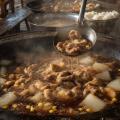 Pork Intestine Rice, the Worker's Bowl
Changshou District
Feichang fan -- braised pork-intestine rice -- is Changshou's working-town classic, a dish built around the premise that patience beats expense. Pork intestines are turned, salted and rinsed through hours of washing, then braised slowly with white radish in a heavy broth of soy, rock sugar, ginger and the shop's spice bag until the pieces yield to the chop- sticks but keep their bite. The rice bowl is assembled to order: hot steamed rice, a ladle of intestine and radish with its brown gravy, pickles on the side, a free bowl of broth soup beside. The old shops near the bus station have served the same bowl for decades to drivers, porters and market traders, and the breakfast-to-lunch queue still moves on faith. It is heavy, honest food, and the district defends it as proudly as its lake.
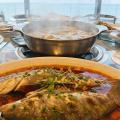 The Whole-Fish Tables of the Lake
Changshou District
Changshou Lake's restaurants are built on one certainty: the fish is always in open water an hour before it is on the table. The reservoir's clean, deep water grows firm-fleshed silver carp, grass carp and wuchang fish, and the lakeside villages have organized the whole fish into a set banquet -- the quanyu yan. It moves from boiled fish flooded with sizzling chili oil, to a milky fish-head soup simmered with tofu, to fish noodles pressed from minced fish and starch, crisp-fried fish chunks with Sichuan pepper salt, and pickled-pepper fish slices to close. Tanks at the door hold the day's catch alive; diners point, the fish is weighed, and the kitchen takes it from there. The feast is the standard celebration meal for families across the district, and weekend car parks fill with Chongqing plates.
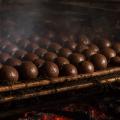 The Smoked Blood Tofu of the Winter Kitchens
Changshou District
Changshou's signature cured food is xue doufu, blood tofu -- a winter craft that turns three humble things into one dense, smoky block. Fresh pig's blood is blended with crumbled firm tofu and minced pork, seasoned and pressed into rectangular blocks, then hung over cypress and orange-wood smoke for weeks until the surface darkens to mahogany and the interior sets firm. The result is sliced thin and stir-fried with garlic sprouts and chili, or layered into clay-pot stews where the smoke mellows into the broth. Every family that kills its New Year pig makes its own; the district's vacuum-packed versions travel well, and it is the gift locals carry when they visit relatives in the city. The best blocks come from the winter markets, still warm from the smokehouse.
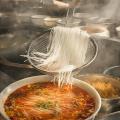 Rice Noodles for the Morning Crowd
Changshou District
Changshou rice noodles are the district's opening ritual: rice soaked overnight, wet-milled each morning and pressed into round, glassy strands that hold a spring the dried commercial noodle never has. The shops blanch a basket of strands for seconds, tip them into a bowl and drown them in the broth of the customer's choosing -- clear chicken with ginger, red-braised beef, or the local favourite, fatty pork with pickled mustard greens. The toppings are standardized by habit: fried peanuts, chopped scallion, a spoon of chili oil, pickled long beans. The morning queue outside the old shops is part of the townscape, and regulars are greeted by bowl order, not by name. A bowl costs little more than a bus ride, and the shops sell out by mid-morning.
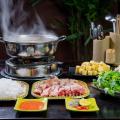 The Spicy Pot of the Evening Streets
Yongchuan District
Xiaoyang hotpot is Yongchuan's contribution to the endless family of Sichuan-Chongqing hotpots, distinguished by its broth base: a simmering pot of bone stock enriched with chili bean paste, a generous measure of Sichuan peppercorn, star anise, cinnamon bark and a house blend of dried spices that varies from shop to shop. The name comes from the neighbourhood where the style first appeared, and the original shops still cluster along the evening streets, their outdoor tables packed with diners dipping thin slices of beef, tripe, duck blood, lotus root and glass noodles into the bubbling pot. The ritual is unhurried; a hotpot meal lasts two hours easily, and the conversation matters as much as the eating. The broth is meant to deepen through the meal, absorbing the flavours of whatever has been cooked in it, so the last bowl of soup is considered the finest.
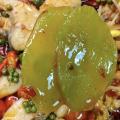 Whole River Fish in Sizzling Chili Oil
Yongchuan District
The boiled fish of Yongchuan is a study in temperature: whole river fish, scaled and gutted but left intact, are poached in barely-simmering water seasoned with ginger and scallion until the flesh just sets, then carefully transferred to a large serving bowl. Over the fish goes a mound of dried chilies, Sichuan peppercorns, sliced garlic and fresh chili rings, and finally a ladle of oil heated until it smokes is poured over everything at once. The sizzle fills the restaurant, the aromas rise in a cloud, and the oil layer seals in both heat and flavour. Riverside restaurants in the district seat compete on the quality of their fish -- most hang open tanks at the water's edge and let customers watch the fish swim before choosing. The flesh should be delicate, the spice bright and numbing, and the dish is always served with steamed rice, because the oily broth makes an excellent rice companion.
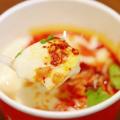 Silken Beancurd from the River Town
Yongchuan District
Zhutu town, tucked along the Yangtze tributaries, is known for one dish above all: silken beancurd so tender it trembles when the clay pot is lifted. Fresh soybeans are soaked overnight, ground in the morning and boiled into milk, then coagulated with a measured dose of gypsum water. The resulting curd is scraped gently into individual bowls and served piping hot, each diner stirring in their own condiments from the table -- a spoonful of chili oil, a dash of soy sauce, chopped scallion, sometimes a pinch of sesame paste. The best shops in Zhutu grind their own beans each day and serve the curd within an hour of coagulation; the texture is the whole point, a wobbling softness that dissolves on the tongue. It is eaten at every meal, but especially at breakfast, where a bowl of hot beancurd with a steamed bun constitutes the day's opening ritual.
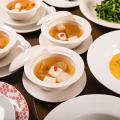 The Nine-Bowl Feast of the Old Town
Yongchuan District
Songgai old town keeps alive one of the basin's great communal banquet traditions: the nine-bowl feast, a set meal of nine large ceramic bowls served family-style to everyone at the table. The bowls are fixed by custom -- braised pork belly in dark soy, stewed chicken with mushrooms, fish in brown sauce, steamed meatballs wrapped in lotus leaf, fried pork ribs, braised tofu puffs, leaf-wrapped minced meat, a seasonal vegetable stir-fry and finally a sweet dessert bowl of red beans or sweet potato. The occasion matters more than the venue; weddings, funerals, temple festivals and New Year all call for the nine bowls, and in Songgai the cooking still begins at dawn in the family courtyard, with neighbours arriving to chop, fry and carry. Sitting down to the feast means sitting beside strangers who become, for the meal, relatives.
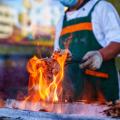 The Fire-Grilled Tofu Snack That Travels
Yongchuan District
Yongchuan's most portable fame is a snack that fits in a coat pocket: small squares of fermented soybean curd, pressed flat and sun-dried until the outer skin toughens and wrinkles, then sold vacuum-sealed in bags or grilled to order on charcoal skewers. The craft goes back decades, rooted in the district's tradition of preserving foods for the road, and the best makers still ferment their curd in earthen jars buried in the cellar through winter. At the snack stands along the main roads, stacks of the dried tofu turn slowly over open flame until the skins blister and split, releasing a smoky, salty fragrance that draws passersby. Brushed with chili oil and dusted with ground Sichuan peppercorn, a skewer costs a few yuan and lasts as a treat for the rest of the journey. It is the taste people carry home to show their friends back in the city.
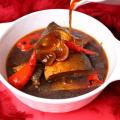 River Fish From Where Three Rivers Meet
Hechuan District
The Jialing, the Qu and the Fu rivers all meet inside Hechuan, and the mixed, cold, deep water they make has fed a boat-kitchen trade for as long as the city has stood. The fish comes out of the confluence whole and goes back to the table the same way: braised in chili bean paste with the fat still on, or boiled in the numbing-hot style that floods the pot with dried chili and green pepper, the flesh firm because the water is cold and the fish move. Riverside restaurants hang their tanks at the water's edge and let you pick the fish before it is cooked, and the evening tables run out over the embankment with the two currents visibly braiding behind the chairs. It is the district's geography served as dinner -- three rivers, one pot, and a city that has always eaten from the point where they join.
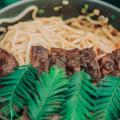 The Thick Rice Noodles of the Morning Street
Hechuan District
Every district in the basin has its noodle, and Hechuan's is a rice noodle with heft: a stiff rice dough pressed into thick, square-cut strands that stay springy under a heavy ladle of broth. The local name -- 'little-water noodles' -- comes from the sparing hand with soup: the bowl is mostly noodle, the topping nearly solid. Beef braised in chili bean paste is the standard, pork intestine the connoisseur's order, and the stalls run from dawn until the afternoon stockpot empties. The texture is the argument -- these strands need chewing, and the chili oil clings to them in a way thin noodles never manage. Locals judge a street by its noodle stall, and the queues outside the long-standing counters are the district's most reliable morning clock.
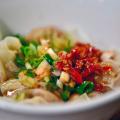 Chicken Wontons in a District-Seat Bowl
Hechuan District
The wonton counter is where the district seat eats its breakfast, and Hechuan's version breaks from the basin norm in one detail: the filling is minced chicken, not pork, beaten with ginger water until it turns springy, folded into thin wrappers and dropped into a clear chicken broth, or drained and dressed with red chili oil, soy and crushed Sichuan pepper for the dry bowl. The shops that claim the century-old lineage still wrap by hand in the window, trays of pleated wontons marching out faster than the steam can rise, and the morning queue orders by number without looking at a menu. The chicken filling is lighter than pork and the broth is kept bare so the wrapper's texture leads. A dry bowl with an extra spoon of chili crisp is the regulars' answer to a cold morning.
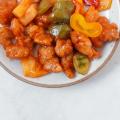 The Sweet-and-Sour Slices That Became a Sichuan Classic
Hechuan District
The pork dish that carries the district's name is a study in texture: lean slices dusted in egg-and-starch, fried until the edges lift and turn gold, then glazed hot in a sour-sugar sauce with ginger, garlic and scallion so the coating drinks the glaze without going soft. Sichuan menus across the basin list Hechuan pork slices as a classic, and the restaurants here defend the recipe -- the sweetness up front, the vinegar catching at the back, no tomato in the pan. It is a home-kitchen dish that restaurants adopted, the kind of plate a family orders to balance the hot dishes around it, and in Hechuan it anchors every banquet table as the local calling card. The debate over which street invented it has run for decades and been settled only in the usual way: every family swears its own.
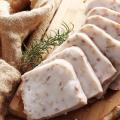 The Wafer-Thin Walnut Candy of the Salt Road
Hechuan District
Hechuan's oldest confection is a rice cake that behaves like paper. Glutinous rice is soaked, roasted, ground and steamed into dense loaves with rock sugar and a kernel of walnut in every slice, and the loaves are then cut thin enough to curl without snapping -- the test the old candy houses still judge their batches by. The trade goes back to the salt-road decades of the 1840s, when the district's shops turned river-borne sugar and mountain walnuts into a sweet that travelled well, and the brands that survived the century keep the same hand-presses and the same thin blades. It is the souvenir three generations of travellers have carried home from the district seat, and the shops on the old street still cut and box it while you watch. A fresh slice is dry, faintly chewy and nut-heavy rather than sweet -- tea is assumed.
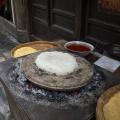 Rice Cakes off the Hot Stone Slab
Jiangjin District
Zhongshan old town's signature snack is ciba -- glutinous rice steamed, hammered to paste in the wooden trough, then griddled in patties on the town's signature heated stone slab. The slab is the point: the town's lanes run on the format, each snack stall keeping a flat stone over the fire on which the patties blister and puff, turned with a bare hand and a wet cloth, sold hot off the stone rolled in soybean flour and brown sugar. The hammering is theatre and the trade knows it -- the two-man wooden mallets work the rice in the shopfront where the queue forms, and the smell of scorched rice carries the length of the old street. It is the old salt-road porter's food, cheap calories for the climb, and the town has never let it become anything fancier. Eat them standing up, the way the street intends.
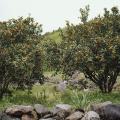 Winter Oranges off the Yangtze Terraces
Jiangjin District
Jiangjin's citrus trade is a century old and Cantonese in origin -- grower families who moved up the river and planted the Yangtze terraces above the district seat with the broad-peel oranges the trade calls guangan. The variety that made the name is the Jingcheng orange, a deep-gold winter fruit that holds on the tree into the cold months and ships without refrigeration, which is why the railside packing sheds grew here rather than elsewhere. The picking season runs from late autumn through the new year, and the district still runs it as an institution: cooperative orchards, the winter boxes sold on the stem, the drive-in picking rows close enough to the city for a Chongqing weekend. The fruit is the everyday kind -- sweet, plain-skinned, built for the pocket rather than the display case -- and the trade's longevity is the point: a district that has sold the same orange off the same slopes for four generations.
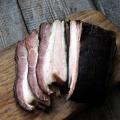 Mountain Bacon from the Forest-Park Farms
Jiangjin District
The Simian Mountains' farm kitchens cure their winter pork the old way: salt and Sichuan pepper rubbed into the cuts, a week of pressing under stone, then weeks hanging in the smokehouse above the wood fire -- hardwood, cypress and pine mixed -- until the rind turns amber and the fat goes translucent. The high cold of the forest park does half the work; the smoke does the rest. The result, laolarou, is the mountain's table fat and its souvenir: sliced thin and steamed with dried radish or garlic sprouts at every farmstay table, sold in waxed bundles at the roadside for the drive home. The trade runs on the same calendar it always has -- pigs slaughtered at the coldest new year, the smokehouse loaded through January, the first spring slices the year's prize. Restaurants in the district seat build whole specials around a farm's particular smoke, and the good batches sell out before the season turns.
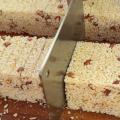 A Century of Puffed-Rice Candy from the River Port
Jiangjin District
Jiangjin rice candy -- mihuatang -- is the district's confection export and one of Chongqing's oldest packaged sweets: puffed glutinous rice pressed into a white slab with malt syrup and peanuts, cut into bars, wrapped in wax paper. The trade formalised in the river-port town of Baisha in the early twentieth century, where the candy houses took the farmhouse puffed-rice snack and industrialised it for the Yangtze steamer trade; the rose trademark that came to stand for the whole category dates from that era and still runs the largest lines. The texture is the whole argument -- shatter, then melt, the syrup only just holding the grains together -- and the recipe has resisted every temptation to modernise it. In Chongqing the candy is what the railway traveller bought and what the Spring Festival tin holds; in the district it is still a working industry, with the factory shops along the old streets selling the day's bars over the counter.
 The Pepper Chicken of China's Sichuan-Pepper Hometown
Jiangjin District
Jiangjin grows more Sichuan pepper than anywhere in the country -- the Jiuyeqing nine-leaf green variety, grown on the district's hillsides, oil-rich enough to carry the national protected-origin mark, and dried by the ton for kitchens across China. The local kitchen keeps one dish as its own calling card: pepper chicken, a whole bird braised in a green-pepper broth heavy with fresh nine-leaf peppercorns, served in the clay pot it cooked in. The order of sensation is the district's signature -- the green pepper numbs before it burns, and the chicken is cooked through in that oil until the meat itself carries the aroma. Farm restaurants on the district roads hang the dish out as their main signboard, and the pepper harvest each late summer brings the picking crews whose baskets feed both the spice trade and the kitchen pots. It is a one-crop cuisine in the best sense: the whole menu argues for the pepper, and the pepper wins.
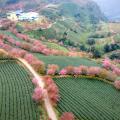 Cherry Season in the Cloud-Mist Valley
Bishan District
The cherry valley sits at Lingshui Village in Batang township, on the lower slopes of Yunwu Mountain in the district's far north: a valley of cherry trees that blossoms in March and opens for pick-your-own in April, with a viewing platform at the head of the rows and a street of farm restaurants below it. The season is short and the traffic is concentrated -- the blossom weeks and the picking weeks bring most of the year's visitors into roughly a month, and the village organises itself around that month. The rest of the year the valley trades on the mountain: hiking out of the cloud line, farm lunches, the view down to the Qinglong Lake basin. Cherries are the anchor crop, but the page is about the calendar -- a valley that runs at festival pitch for a season and at picnic pitch the rest of it.
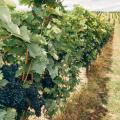 Table Grapes and the Picking Season at Daxing
Bishan District
Daxing, a township west of the county seat, is where Bishan grows its table grapes: rows of trellised vines around the town's grape square, picked over a season that runs from high summer into autumn and sold mostly to drive-in buyers from the Chongqing side. The district has leaned into the crop hard enough to build its fairs around it -- the grape square doubles as the event ground, and picking is the product rather than the market stall. The varieties are the standard southern China table set, grown under the humid-season management that hillside Chongqing demands. What makes the stop worth a page is the format: the u-pick rows sit close to the town, the season is long enough to plan a weekend around, and the square gives the harvest a civic address. It is fruit farming run as an amenity, which is the form the Chongqing peri-urban market pays for.
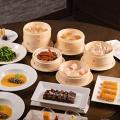 The Eight-Bowl Banquet of the Bishan Countryside
Bishan District
Shui ba wan -- the eight bowls -- is the countryside feast format of rural Bishan: eight steamed dishes served in rough ceramic bowls on a square Eight-Immortals table, the meal a village throws for weddings, house-raisings and the new year. The canonical bowls run to the steamed pork belly with rice flour, the crispy-fried whole fish, the braised chicken, the taro and the preserved-vegetable dishes that a farm household could prep ahead and steam in batches -- feast food built for a hundred covers out of a village kitchen. Township restaurants in Bishan still run the format as a set, priced for a table rather than a plate, and the modern versions are larger and cheaper than the ceremonial originals they copied. It reads as folk cooking because it is: the eight bowls are what the countryside agreed a proper meal looks like, and the agreement has outlived the occasions that created it.
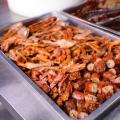 A District That Eats Its Rabbit a Dozen Ways
Bishan District
Bishan's second signature, after the fish, is rabbit. The district is one of the heavier rabbit-eating corners of the country, and the local trade has multiplied one animal into a menu: Tang rabbit 唐兔 cold cuts, Cai rabbit, jade rabbit, pressed board rabbit, then the hot kitchen's braised rabbit, sour-soup rabbit, rabbit hotpot and shredded rabbit stir-fry. The everyday form is the cold-cut counter -- Tang rabbit is the one locals queue for at meal times, buying a box to take home the way another town buys roast duck. The meat itself is lean to the point of austerity, which is why the formats lean on fat, chilli and broth to carry it. What the district actually sells is the habit: rabbit as a weekday staple rather than a novelty plate, in a county that has kept the habit longer than most.
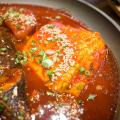 The Post-Station Fish That Started Chongqing's Jianghu Cuisine
Bishan District
Laifeng fish comes from Laifeng Post, the stopping place on the old Chengdu-Chongqing post road that shared the rank of the 'four famous stations' with Longquan, Shuangfeng and Baishi. The town sat on fish-and-rice land -- the Jiaqing-era Bishan gazetteer lists seven fish of the Binan River as tribute items -- and when the motor road replaced the horse path in 1933, the stations died but Laifeng kept the traffic. In the mid-1970s two local cooks, Deng Yongquan and Tang Zhirong, rebuilt the traditional Sichuan whole-fish braise around a heavy base of chillies and Sichuan pepper -- numbing, hot, scalding, tender -- and by 1988 the small town counted more than a hundred and twenty restaurants serving little else. The trade now calls the format the ancestor of Chongqing jianghu cuisine: spicy-gravy whole fish came first, and laziji, taro chicken, Youting crucian and Taian fish are its descendants. The cooking craft is a municipal intangible-heritage item, and the dish is still cooked the old way -- the fish served submerged in red oil under a raft of chillies it is eaten out from under.
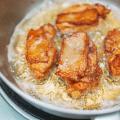 The Fire-Onion Crisp Pork of Tiaodeng Town
Dadukou District
Tiaodeng fire-onion crisp pork, huo cong surou, is a district-level intangible-heritage item of Tiaodeng Town: lean pork marinated with huo cong, the local fire onion, then coated and deep-fried to a hollow crisp. The onion is the point -- a small sharp allium grown on the Tiaodeng river flats that gives the pork its name and its bite -- and the craft is protected as heritage rather than published as a recipe. A maker's name and a workshop address are not on any public record, so this page names the craft and the place, not a shop.
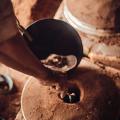 Stone-Mill Tofu and the River Fish of the Old Wharf
Dadukou District
The ancient town of Yidu eats two things it has always eaten: a stone-mill tofu pudding, douhua, lifted out in a slab and eaten with a numbing-malab dipping sauce, and the river fish of the old Dadukou wharf -- longsnout catfish, jiangtuan, braised, and the sauerkraut fish, suancaiyu, that the Yangtze towns all claim. The town was a working ferry crossing and a fishing reach before it was a scenic street, and both dishes are the wharf's, not a restaurant chain's. No single shop publishes an address, an hour or a price for either.
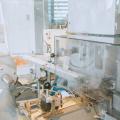 The Noodle Maker With a Digital Central Kitchen
Dadukou District
Lailaizhuyi, the 'come-and-do-it' Chongqing-noodle brand, landed a digital central kitchen in Dadukou and was named a specialised 'little giant' (专精特 新) SME in 2026, which is why it sits inside the district's Chongqing-noodle industry cluster rather than as a lone shop. The product is the retort-pouched noodle meal -- wheat noodle, a zhacai and pea-shoot topping, a separate chilli oil -- built for a pantry rather than a bowl on a street. The piece is about the cluster and the factory, not a counter you can walk into.
 The Base That Fills Eleven Lines in Dadukou
Dadukou District
Hong Jiujiu, the red 99, is the hotpot base brand of Chongqing Hong Sanjiu Food, a company founded in 1993 and headquartered in Dadukou with eleven production lines and an annual capacity reported around one hundred thousand tonnes. The product is the brick of pressed chilli, douban and spice that a home cook drops into oil and water, and the district names it among its signature foods. This is a factory story: the numbers are the company's and the district's, and none of them is a restaurant address.
 The Oil Dip That Outsells Every Other in Chongqing
Dadukou District
Xintian's hotpot oil dip is a Chongqing time-honoured brand made in Dadukou, the blended saucer condiment -- sesame, peanut, crushed chilli and a dozen further items -- that sits beside the broth rather than in it. Trade reporting puts it first in national hotpot-dip sales with a market share reported around sixty-five percent, and the formula is held as a trade secret rather than published. What the district sells now is the bottled dip and the dipping set, not a seat at a table, so this page is about the condiment and the company, not a restaurant.
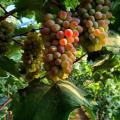 Thirty-Five Thousand Kilograms of Grapes and the Winter Table
Beibei District
Jingguan is the district's fruit town and, since 2024, one of the first national agricultural industry strong towns. On 7 July 2026 the district grape association reported 400-odd mu of grapes ripe in Jingguan alone, about 350,000 jin expected, sold at 10 to 15 yuan a jin for roughly 3 million yuan, with picking to the end of September; the wider district figure the year before was 1,300-odd mu, more than ten varieties and over 10 million yuan, with picking into mid-October. After the fruit comes the district agriculture committee's own answer to what else is worth eating, published as three winter rural routes in January 2025. The first begins with a highland lamb hot pot festival above 1,000 metres at Jindaoxia, then runs to Pianyan, to Liuying, and to the red yew base and citrus orchards at Sansheng. Treat that as a 2025 document: no 2026 route has been published, and the lamb festival is seasonal with no return announced.
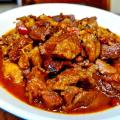 Three Braised Dishes and Five Old Brand Names
Beibei District
Beibei's signature braise is the tuochao -- beef, trotter and intestine cooked in a pressure pot or a special stewing pot until they give way at once, the three together called the three ba. Between 1927 and 1949 Lu Zu-fu ran Beibei town's restaurant and inn trade under a set of names locals still recite, three ba, four xiang, six shun, eight jing, and those were the only public canteens in the city. The old town still runs several ba-beef houses of real standing age. What is solid and checkable is the roll of brands: Beibei holds five Chongqing time-honoured brands -- Beiquan noodles, Jiafu hotpot, Bawang hotpot skewers, Jiaxian foods and Zhang Douhua -- of which Jiafu and Bawang are in the fourth batch certified on 9 June 2017, and Jiaxian the thirty-fourth entry of the fifth batch in November 2020. None of the shops publishes an address, an hour or a price.
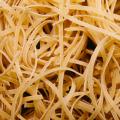 A Village Noodle, a Machine's Heat, and a Hundred Years
Beibei District
This is the other Beibei noodle, and it is a village one rather than a factory one. The Gufo Xu handmade noodle technique entered Chongqing's fifth municipal batch in November 2015, alongside Yubei-style pickles and Beibei cloth art, and it is named for the place it was formed and passed down in -- Gufu Village in Sansheng Town -- where it has run for over a century. It is southern-style noodle making, with two details worth travelling for: the dough must be mixed with Gufu village water, and the second kneading uses the heat generated by the machine's own transmission to flash-bake the flour, so the strands come out thin, quick-cooking and non-fading in the wok. Old photographs of the Beibei street around 1927 already show Xu's Noodle Shop and Tang's Noodle Shop trading side by side. The workshop still runs under Xu Zhonghai, and it is a family operation rather than a shop you can be shown around: no street number, opening hours or price has ever been published for it.
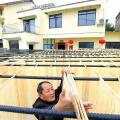 Eighteen Steps to a Half-Millimetre Hollow Noodle
Beibei District
Beiquan's noodles are hollow, and keeping them that way takes eighteen named processes and about ten hours, everything done by hand except the drying. The technique entered Chongqing's second municipal intangible-heritage batch in September 2009, with Xiao Lang as bearer. The strand comes out at roughly half a millimetre across with a channel down the middle, which is why the saying goes that it is thin as paper, cooks the moment it hits water and turns to paste in the wok -- and why it is boiled with salt and scallions only, never soy and never chilli. The lineage runs to 1868, through a Beiquan noodle-making cooperative and a state-run factory, to the present company incorporated on 14 December 2009 with ten staff in 2024. The documented origin is a 1927 refinement by a Fujian-born maker; the story of a temple monk's dough gone wrong is local legend, and is better told as such.
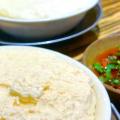 One Pot of Three Textures, Listed as a Craft in 2014
Beibei District
Zhang Douhua has been on Beixi Road No. 80 long enough for the technique behind it to be written down. Beibei tofu entered Chongqing's fourth batch of municipal intangible heritage on 27 January 2014, the shop's founder Zhang Zhengyuan is a municipal bearer, and on 4 July 2024 the business passed to his son Zhang Jie. The signature is a single pot of soybean slurry that sets into three textures at once -- lotus-leaf, tender, and old -- judged on rolling, tenderness, softness and whiteness, and eaten with a dipping sauce built from more than twenty medicinal spices. The craft is older than the shop: it is called river-water or living-water tofu because the water comes from the Jialing, and in 1933 Lu Zu-fu served a thirty-six-dish tofu banquet to the eighteenth annual meeting of the China Science Society. Local listings put the average head around 25 yuan.
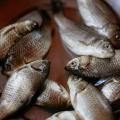 Slim-Farmed Fish on the Wubu, and the Prawns Beside Them
Banan District
Banan's river is the Yangtze. It is not the Wujiang, and there is no registered Wujiang fish brand here, which is worth saying plainly because the confusion is common. What the district does have is two named ecological-fishery products: slim-farmed fish, which means growing the fish without forcing fast weight onto them, and the freshwater prawn Macrobrachium rosenbergii. The Longma Valley base in Ersheng is one of the main farms. The cooking follows the same logic as the farming: fish dishes built around peas, pickled chillies and pickled mustard greens rather than around one dominant spice, which is how the district's own fish dish, a pickled-mustard greens and pea fish, ended up on the city list. Ask what the fish ate that week.
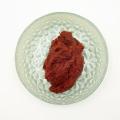 The Bean Paste Fermented in Huimin, for Its Own Reasons
Banan District
This is a story about fermentation as industry rather than as lunch. The Douxiang bean paste works in Huimin subdistrict, and the same family line can be traced in one continuous run: a 1993 home workshop, a Zhou Lang workshop in 1998, a Weixiangyuan brewery in 2001, incorporation in 2011, and in 2026 the Banan Zhou family traditional bean-paste production technique entered the district intangible-heritage list. The process uses a paired-culture fermentation, two strains working together, which is modern chemistry applied to an old skill. Around it sits a pickle industry: five companies, a hundred million yuan a year, and twenty-three thousand mu of contract planting behind them.
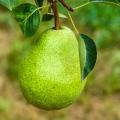 One Bud, One Leaf, and a Pear Named After a Hill
Banan District
Banan's agricultural reputation rests on two things that ripen in different weeks. The Ersheng pear took its geographical-indication certification mark in March 2020 and its agricultural geographical indication the following month; a single fruit runs from two hundred to four hundred and fifty grams, and the orchards sit on Baixiang Mountain and Tianping Mountain in Ersheng, with Shilin Mountain in Shengdengshan. The tea is picked differently. Banan Silver Needle takes one bud and one leaf before Qingming; the district has 31,400 mu of tea, 33,000 tonnes in 2023 and 280 million yuan of processing value. Mountain City brand Chongqing Tuocha goes back to 1951 and is the only small-leaf compressed tea in China.
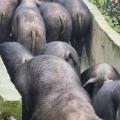 The Black Pig of Jiangjia, Cured Slowly on Purpose
Banan District
Most cured pork is a byproduct of raising pigs quickly. The black pig from Jiangjia is raised slowly on purpose: three hundred days on a regimen that sounds expensive and is, using spring water drawn from two hundred and fifty metres down and put through reverse osmosis. The soil in Jiangjia is rich in zinc and selenium, and the result is measurable rather than merely claimed: a colour score of 3.8 against an industry average of 3.0, and intramuscular fat of 5.1 percent where an ordinary pig gives about 3. At the 2025 China International Meat Industry Week the cured pork took gold and the sausage silver. Jiangjia shipped 12,000 head in 2025, and orders for the cured gift boxes ran thirty percent ahead of the year before.
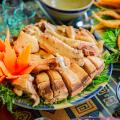 The Three Treasures of Mudong Town
Banan District
A duck fried crisp since 1935, a jujube pickled the old way, and a pickle that took the whole town off the map of Chongqing. Mudong, an hour up the Yangtze from the centre, has three foods that carry the district's name, and each one has a paper trail longer than most village histories. The duck was made by a man named Qiu Yong, sold under his own name from 1948, and renamed in the 1960s when the town label replaced the family one. The jujube became district intangible heritage in 2007. The pickle is the least famous and the most telling, because it is the one that stayed ordinary. Eat them in that order, on the same street, in one sitting.
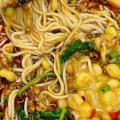 Pea Noodles Beside the Airport, Thirty Years
Yubei District
两路机场豌豆面 -- the noodle shop that grew up next to the runway: Chongqing Jiangbei International Airport has been running since January 1990, but the food that made the north of the city worth a detour is not the airport's own and never has been -- the Long family pea-noodle shop on the Lianglu side of the district has been trading about 30 years, long enough that the district's own overview lists its airport pea noodles among Yubei's named snacks, and the order that settles the table is a bowl of pea-and-minced-pork noodles with a bowl of mung-bean soup, which is the shape the whole district's eating has taken since the industrial estates and the airport arrived: noodles built for people with a shift, not for a trip, sold at the counter to people who have twenty minutes and a bus to catch.
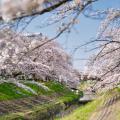 Three Flowers and Six Fruits on Three Ridges
Yubei District
三花六果 -- the agricultural line of three parallel ridges: before the 2025 reorganisation Yubei governed nineteen subdistricts and eleven towns between the Longwangdong, Tongluo and Mingyue ridges with the Yangtze and Jialing on either side, and the district's own agricultural register is the six fruits that hold national geographical-indication registration -- Yubei pear-orange, approved in December 2012 and also called Tongjing pear-orange after its main growing area, and Yubei crooked-mouth plum, approved in December 2011 and grown on more than 11,000 mu around Yinhe village at about 52.2 grams a fruit, listed in the 2013 national catalogue of famous farm products -- joined by Xinglong bayberry, Dawan golden peach and the blueberries of Shichuan, Muer and Cizhu; the three flowers are the pear, plum and wild cherry blossom that open along the same ridges, with the pear blossom at Fangniuping and the wild cherry on Yungui Mountain, and Daxing's white rock cured pork, a district-level heritage dish, is the reason to eat the district rather than only photograph it.
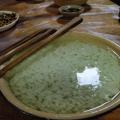 The Tofu Pudding That Floats in the Bowl
Yubei District
洛碛水上漂豆花与龙兴龙筋豆干 -- two river-town tofu dishes, one from the Yangtze bank and one from the Yulin: Luozhi, the hometown of the Song scholar Feng Shixing, sets its bean curd fine enough to hang suspended in the bowl, half-sunk and half-floating in an earthenware bowl, which is what the name means and why you cannot scoop it the way you would elsewhere in Chongqing, and the shop in Longxing that has fed travellers on it for 38 years keeps the shop's own seasoning on the table and builds a meal around it at about 28 yuan a head, adding steamed pork belly, braised pork intestine and pork steamed with rice flour, so that the second of the two -- long-jin dried tofu, the town's own, listed among its twelve intangible-heritage crafts with brown sugar, yinmi and palm weaving -- is the dried opposite of a pudding made not to be lifted.
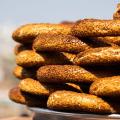 Twelve Steps Under an Inverted Pot
Yubei District
土沱麻饼 -- the pastry made in a sealed clay dome: also called inverted-pot or suspended-pot crispy sesame cake, it came out of Tutao, a township on the lower Jialing, and is listed as Chongqing municipal intangible heritage in 2014 -- the craft is twelve named steps, from washing the sesame and pressing out the oil through to watching the colour of the finished cake, with a filling of sugar, sesame oil, winter melon paste and candied kumquat that can be extended with ham, osmanthus, rose or date paste, and the bake is the part nobody else in Chongqing does: the dough goes in a flat pan with a second pan inverted over it and the two are closed into a sealed dome lined with yellow clay, so the pastry sits between a yin flame and a yang flame and the shell has to be right or nothing sets; Chen Guoen opened the Zhenjiangzhai shop on Tutao old street and the third generation is now Li Cheng.
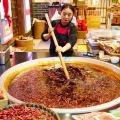 Where Water-Boiled Fish Was Invented
Yubei District
翠云水煮鱼 -- the dish that gave one township a national title: shuizhu yu is usually traced to Cuiyun, in the north of the old Yubei District, and in 2007 the Chinese Culinary Association named the district China's hometown of water-boiled fish, with the dish itself entering the district's first intangible-heritage list in 2009 -- the method fries the numbing fragrance of Sichuan pepper and the heat of dried chilli out of the oil first, and the whole craft lives in how thick the fish slices are cut and how much oil goes in, because a thin slice and a hot pot make the same dish taste thin; along the old Highway 210 three fish run in sequence, Yubei boiled fish, Cizhu green-chilli fish and Muer's dingsheaf eel soup, the last of them a district-level heritage dish built on a flower that grows in the ditches beside the road.
 The Canteen That Reopened a Housing Estate
Jiulongpo District
民主村社区食堂 -- the canteen and coffee row that came back with the housing: the estate the district rebuilt on the keep-renovate basis through 2022 and 2023, phase one done in April and chosen for the national casebook of complete communities in December, its ground floors now carrying more than a hundred coffee bars, small restaurants and craft shops run by the residents themselves -- the plate, not the postcode, is the point: a community canteen serving the old blocks' walk-up residents, coffee and late grills on the reworked stone paths outside, and a stroller-and-three-generation clientele the district did not have in this quarter five years ago.
 The Night Market Between the Computer Malls and the Factory
Jiulongpo District
南方花园夜市 -- the district's after-dark street food, in the strip where the old electronics city gives way to the residential blocks: the Nanfang Garden stretch is a city-designated特色夜市, and the surrounding lanes have run on a schedule of their own -- grilled brain, skewers and pot-stuck stews after the office towers empty, the queue stalls out front of the 建设厂 factory compound at dusk, a 49-stall food street sorted into snack, noodle and rice zones, and the district's mall kitchens behind it all, whose 2026 accounts put the area's restaurant and food trade at 7.2 billion yuan and keep the biggest complex in the city on the No.1 retail spot for a fifth year running.
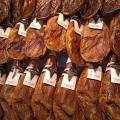 The Duck That Rode the Ancient Post Road
Jiulongpo District
白市驿板鸭 -- the smoked bird that carried Chongqing's name down the old post road: Baishiyi was the first station on the Chengdu-Chongqing highway, inn after inn for travellers, and 'pressed duck with good wine' became its couplet; the duck is parked, not pressed, two bamboo slats crossed from collarbone to leg opening it into a fan the local saying calls 干绷, dried, then smoked over chaff for the better part of an hour, the 1937 county gazetteer already listing its cured duck as earning thousands a year alongside the local sweets -- flown out as a gift by the passengers of the airfield that opened here in June 1940, filed as city-level intangible heritage in 2011, and in the 1980s named with Beijing roast duck and Nanjing salted duck as one of the country's three famous ducks.
 The Teahouse a Professor Refused to Lose
Jiulongpo District
黄桷坪交通茶馆 -- the city's most argued-over tea room: opened in 1987 in what had been the staff canteen of the Huangjueping transport company, a 1960s brick hall of uneven timber beams, twenty-odd bare tables and a Sichuan-opera stage nobody has performed on for decades, and the last teahouse in the city still holding its 1980s shape -- covered-bowl tea from seven in the morning for a few yuan, chess and birdcage and long arguments, the film location the whole country now recognises; in 2005 the transport company gave up the lease to an internet-cafe owner, and academy professor 陈安健 matched the rent out of his own pocket to keep the room, with a retired company worker running it ever since.
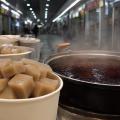 The Cool Jelly Made of Rice and Corn Meal
Jiulongpo District
杨家坪凉糕 -- the cold-sweet counter that has outlived every mall around it: a stall in the Yangjiaping underground market where the couple who run it sell a jelly no other shop in Chongqing makes, set with glutinous rice AND cornmeal so it comes out a pale brown rather than the yellow of a rice-only lianggao, cut into blocks like opaque jelly and drowned in brown sugar -- started as a hand-cart, earned a name from a passer-by who smelt something good in the tunnel, and was let into the mall in 1996 in a stall of under eleven square metres the management had to make room for by the northwest gate; the month of failed batches behind the recipe is the whole craft, the same counter's cold liangmian and cold wide tiaopi running the rest of the year.
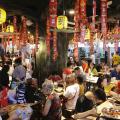 Dinner Where the Sha-Ci District Began
Shapingba District
三峡广场餐饮 -- eating on the square that carries the district's whole timeline: the Sha-Ci cultural quarter the wartime years grew along this road, the commercial square laid out in 1997 around the Three Gorges theme, and the high-speed rail sunk beneath it since 2018's national-first station-over-station build -- hotpot rows, river-grill houses and old-name noodle counters strung between the culture-reenactment sculptures, a district's dining room built on top of its own history.
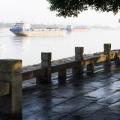 The Wharf Dish That Left the Wharf
Shapingba District
磁器口毛血旺 -- the offal-and-blood stew that the wharf town sent out to the whole country: duck-blood curd, tripe, ham and sprouts in a red-oil broth built for porters and boatmen who wanted heat and value in one bowl, the dish's Ciqikou roots now claimed on signboards along the very lane where it is still ladled; the birth-date traditions disagree and are left alone -- what the record supports is the wharf economics of cheap offal and heavy spice, and a stew that rode the same trade routes as the town's porcelain.
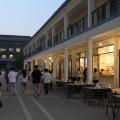 A Food Street Graded by Twenty-Year-Olds
Shapingba District
大学城熙街食记 -- the campus food economy at Huxi: a street built by and for the hundred-thousand students the university town moved west, priced by allowance rather than by occasion -- griddles, skewers, noodle bowls, bubble tea and the late-supper grills that only start when the libraries close; the quarter's rhythm is the academic calendar itself, emptying for the holidays and refilling each September, the most honest price discovery in the city's food scene.
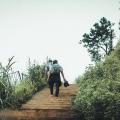 Finding Chicken in a Mountain of Chilies
Shapingba District
歌乐山辣子鸡 -- the tables in the woods: a road of thirty-odd courtyard kitchens over about a kilometre of the Gele Mountain road, where the dish is a game played against the diner -- cubed chicken dry-fried into a wok-mountain of Sichuan chilies and numbing peppercorns, the eating as search-and-rescue, the found pieces dry and fragrant where Jiangbei's peppercorn chicken simmers in green broth; the forest tables began as farmhouse stops on the mountain drive and grew into the dish's most famous address, one street keeping one wok-craft busy for thirty years.
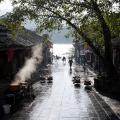 A Town That Never Closed for a Thousand Years
Shapingba District
磁器口小吃 -- the snack economy of a town that never stopped living: a porcelain-shipping wharf grown from a Song-dynasty market town on the Jialing (the founding years sit at 998-1003 in the official divisions), kilns firing on the slopes, stone lanes that were never emptied the way the city's later old streets were, and a snack canon that rode the wharf traffic out -- the three treasures of the town plus the fried-dough twists that now queue along the main lane; eating here is not a heritage recreation but the same wharf-side trade at the same stone steps, one river century after another.
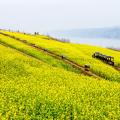 The Island That Grew Its Own Table
Nan'an District
广阳岛餐桌 -- eating from the largest green island in the upper Yangtze: a river islet once slated for three million square metres of real estate, stopped outright in August 2017, restored as an ecological island and reopened to the public from October 2021 -- and the food followed the restoration: rapeseed-flower fields with beehives, island-grown honey, rapeseed oil, orange juice and sorghum wine, an eco-restaurant serving the island's own 广阳宴; a seasonal table that exists because the island stopped being built and started being farmed again.
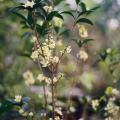 A Hillside Recipe Five Generations Deep
Nan'an District
上新街贾氏桂花酒 -- the sweet osmanthus wine of a family workshop at Shangxinjie's roadside: a recipe carried from the late Qing through five generations, certified a municipal intangible heritage in 2014, the fifth generation taking over in 2018; every eighth lunar month the family climbs Nanshan to gather the blossom, then three hundred hand stirs and osmanthus-wood vats do the rest -- a bottle of the hill's own produce and family time, the drink that pairs this batch's southern slope with its chicken.
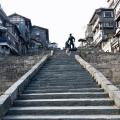 A Stone Born of a Legend
Nan'an District
弹子石老街食记 -- eating up a nine-terrace hill at the two rivers' meeting point: the name keeps a boulder from a Yu-the-Great birth legend, the wharf below was a working landing for centuries, and the street reopened in June 2018 with the old place names -- Wang family courtyard, customs stone -- written back into a stepped market of tofu-pudding rice, steamed pork slices and roasted sweet-potato skewers, the plain dockside foods walking the same stairs the ferrymen did.
 Dinner Along the Old Treaty Waterfront
Nan'an District
南滨路餐饮 -- eating on top of chapter one of Chongqing's modern history: the 1891 treaty port made this bank the city's window -- customs checks, foreign firms, the French naval barracks of 1902-03, a warehouse that hid 3,694 crates of the Palace Museum collection in 1938 -- and after a century of sleep the buildings reopened in 2018 and after as restaurants, museums and night-market stalls; dinner here is eaten under restored arcades with the reason for the harbour written on the walls, the night economy kept deliberately to the last course of the story.
 The Chicken That Cooks in Mountain Water
Nan'an District
南山泉水鸡 -- the hillside dish that grew into a two-kilometre street and then a district festival: the documented layer starts with a mountain-road restaurant in 1993 simmering free-range chicken in spring water and finding the pot impossible to keep filled, while village memory insists the boil-up is older; one bird served three ways, a street of chicken houses climbing Huangjueya, the avian-flu winter of 2005 that nearly ended it, and the government-adopted spring-water chicken festival that turned a dish into the district's calendar -- with the scholarship of a proper culinary history underneath, not a recommendation list.
 The Town That Throws a Feast for the New Year Pig
Jiangbei District
五宝镇百家宴 -- the winter feast of Jiangbei's only town, an hour east under Mingyue Mountain where the district runs out into river terraces: the old Sichuan custom of slaughtering the year's pig and cooking the 刨猪汤 for the whole village, scaled up since the first pig festival of 2006 -- the town is called the cradle of Chongqing's pig festivals -- into tables numbered in the hundreds (220 at the eleventh edition) and crowds past three thousand, eight big bowls at a sitting from steamed pork to smoked sausage, and a farm-stay economy that grew from nothing to two dozen households on the strength of a few cold weeks each winter.
 Dinner Where the Ferry Used to Land
Jiangbei District
北滨路食廊 -- the riverside eating belt on the north bank of the Jialing, anchored by a dining quarter whose oldest name is a ferry: 莺花渡, the Yinghua crossing of Qing-dynasty gazetteers, praised by the prefect Wang Erjian as the prettiest landing on the river -- a name the banks lost for a century until the Liujia Wharf dining street opened in December 2014 and deliberately wrote it back onto the wall; today a corridor of private kitchens, seafood counters, tea houses and late hours running along the road built from 1997 and completed to 11.68 kilometres in 2005, all of it facing the Yuzhong skyline the way a dining room faces its window.
 Where Chongqing Eats at Midnight
Jiangbei District
大九街深夜食堂 -- the night-food economy of the district the guidebooks call Nine Streets, though it is one 360-metre main strip in a 0.7-square-kilometre zone: a bar district built inside a skeleton of unfinished towers and old factories (a Li'er-Chang'an works, a textile warehouse), started in 2009, finished in 2012, chained together as the Big Nine Streets in 2015 and named a founding national night-culture-and-tourism cluster in 2021 with a reported 100,000 night visitors a day and 8 billion yuan a year -- and underneath the neon, the food this page owns: charcoal, skewers, crayfish, 24-hour noodle counters and the wonton stalls that mark last orders at three.
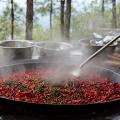 The Chicken That Made a Mountain Famous
Jiangbei District
铁山坪花椒鸡 -- the dish that turned a reforested ridge into a dining destination: a farmhouse shop in the black-pine woods in 1998 started simmering chicken in green Sichuan peppercorns until the local saying became 'hunting for chicken in the pepper', half a pound of peppercorns to a bird across a four-pepper craft of fresh local green, Hanchuan dried, and the oils timed to the minute; the boatman-origin story stays a story, the documented arc runs from a queues-by-late-afternoon mountain road around 2000 to a festival with written standards in 2014, a producers' alliance in 2020, a first-batch district landmark dish in 2022 and a place among Chongqing's ten most charming dishes in 2025 -- one dish keeping a forest full of farm tables busy.
 The Other Haochi Street
Jiangbei District
观音桥好吃街 -- Jiangbei's snack commons on East Ring Road No. 59, where a near-derelict hardware-and-builders' market (the old Jianxin market) was cleared with 11 million yuan in 2012 and reopened in 2015 as two hundred-odd licensed micro-kitchens serving the Guanyinqiao shopping mile at 15 to 25 yuan a head -- a street run since 2017 on a joint-operation revenue-share that turned a pilot stall's 30,000-yuan month into a 210,000-yuan one, added a 2021 B branch inside a failing mall's ground floor, and by 2019 had begun exporting its snack brands as more than a thousand franchises nationwide. Same name as the Bayi Road street across the river, other bank, other story.
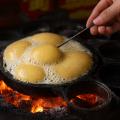 Flatiron Cakes and Oil Tea, the Morning Beyond the Noodle
Yuzhong District
熨斗糕与油茶 -- the morning without a code: rice cakes griddled in ten-centimetre iron moulds shaped like laundry irons at the foot of the Zhangjiahuayuan stairs since 1998, and urban 'oil tea', a thick rice paste under a raft of fried sanzi dough that contains no tea at all; neither dish is on any heritage list, and that is the point of the piece.
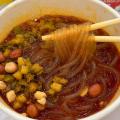 Hot and Sour Noodles, Eaten Standing Up at Bayi Road
Yuzhong District
八一路好吃街酸辣粉 -- hot-and-sour sweet-potato starch noodles cut by hand into boiling water, dressed with vinegar, chilli oil and soy-braised pork, a Sichuan-Chongqing street food with no certified birthplace; what Bayi Road owns is the scene -- a strip of standing-room stalls that took shape in 1997 at the foot of the pedestrian street, where the paper bowl is the table and the best-known stall has been ladling since 1992.
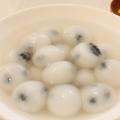 Shancheng Tangyuan, the Sweet That Walked to Chongqing
Yuzhong District
山城小汤圆 -- the longan-sized filled rice balls whose family craft dates to 1911 in Hangzhou and whose Chongqing shop dates to the early 1940s on Bao'an Road, today's Bayi Road, re-planted with the local water-milled rice dough and renamed 'Shancheng' -- mountain city -- in 1964; listed as district heritage in 2016 and on the municipality's sixth municipal intangible-heritage list in 2019, the deliberate sweet bowl in one of China's most fiercely spicy cities.
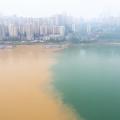 Chongqing Hotpot, Boiled Up from the Wharf
Yuzhong District
重庆火锅 -- the tallow pot that began as wharf food: boatmen and porters simmering discarded beef offal in a fiery broth at the river gates of the peninsula, with every origin account agreeing on the essentials -- a wharf, porters, offal and beef tallow -- and disagreeing only on which wharf; the technique entered the municipality's intangible-heritage list in 2019, by the end of 2025 the city counted some 38,000 hotpot restaurants and a 330-billion-yuan value chain, and in 2025 it began passing the country's first local law for a single dish.
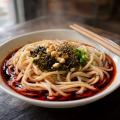 Chongqing Xiaomian and the Words You Say Before Breakfast
Yuzhong District
The city's breakfast built in the bottom of the bowl — thin alkaline noodles under a dozen seasonings and fried chilli oil, ordered in code and gone in two minutes.
Nothing filed in this section yet.
Stay0
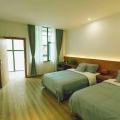 Family Stays Near Guanyintang Wetland Park in Bishan
Bishan District
The streets south of Guanyintang National Wetland Park — 观音塘国家湿地公园 *Guānyīntáng Guójiā Shīdì Gōngyuán* — hold some of the quietest, most family-friendly rooms in Bishan's urban area, from budget inns to apartment-style hotels with kitchenettes and washing machines. For travellers who want park walks and lotus ponds on the doorstep without giving up county-town conveniences, this is the side of town to aim for.
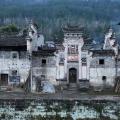 Liming Ancient Village Courtyard Stays
Yunyang County
Lí míng gǔ cūn, Péng shì zōng cí páng de xiāng cūn zhù sù — Village inns near the Peng Family Ancestral Halls in Liming Ancient Village.
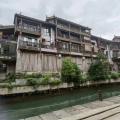 Zhuoshui Stilt-House Homestays, the Night Inside the Old Town
Qianjiang District
The Zhuoshui stilt-house homestays (濯水古镇吊脚楼民宿) are the old town's small-stay category: rooms in the town's Tujia stilt houses and river-side lanes — the named properties include the Bamao Island hotel (芭茅岛酒店) and the Smoke-House Inn (烟房客栈)
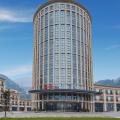 Zhenyi Hotel, the Four-Star Value on Wuling South
Qianjiang District
Zhenyi Hotel (臻逸酒店) is the county's value four-star: from about 172 yuan a night at No.
 Longxin Rose Hotel, the Five-Star on Xinhua Avenue
Qianjiang District
The Longxin Rose Hotel (重庆隆鑫玫瑰酒店) is the county's second five-star: from about 271 yuan a night at No.
 Hampton by Hilton, the Chain Standard at Yilong Plaza
Qianjiang District
The Hampton by Hilton Qianjiang (重庆黔江希尔顿欢朋酒店) is the county's international-chain option: a four-star hotel from about 317 yuan a night at Yilong Times Plaza, No.
 Guifeng Jinlan Hotel, the Five-Star Number on Wuling Avenue
Qianjiang District
The Guifeng Jinlan Hotel (重庆黔江贵丰金澜酒店) is the county's five-star flagship: from about 354 yuan a night at No.
 Yushun Business Hotel, the Eighty-Nine-Yuan Transfer
Youyang Tujia and Miao Autonomous County
The Yushun Business Hotel (宇顺商务酒店) is the county's economy anchor: from about 89 yuan beside the Chengnan bus station (城南汽车站旁), the county's number-two-selling budget stay.
 Shidai Hotel, the County Seat's Standard Room
Youyang Tujia and Miao Autonomous County
The Shidai Hotel (酉阳时代大酒店) is the county seat's three-star standard: from about 184 yuan at No.
 Lianghe Academy, the Nine-Hundred-Yuan Morning
Youyang Tujia and Miao Autonomous County
The Lianghe Academy (酉阳两河书院) is the county's three-star luxury outlier: a from-about-911-yuan stay at Hewan Village (河湾村), Youshuihe Town (酉水河镇), where the product is the morning — the cloud-and-mist (晨起云雾缭绕) that comes off the river bend at first light.
 Hexie Villa, the Terrace-View Night at Tianma
Youyang Tujia and Miao Autonomous County
The Hexie Mountain Villa (酉阳和谐山庄) is the county's countryside night: from about 153 yuan at Tianma Village Group 2 (天马村 2 组), Shuangquan Township (双泉乡), positioned for the Huatian terraces (花田梯田) — the free 4A (graded February 2023) terrace
 Gongtan's Riverside Inns, the Wujiang at the Window
Youyang Tujia and Miao Autonomous County
Gongtan's riverside inns (龚滩临江客栈) are the old town's homestay layer: the Yang family inn (杨家客栈) and the 'Misty-Rain Gongtan' (烟雨龚滩) among them, at about 200–400 yuan a night.
 Xingyue Hotel, the Stars and Moon by the Station
Xiushan Tujia and Miao Autonomous County
The Xingyue Hotel (星月酒店) is the county's station-side economical option: at No.
 Qiaodeng Hotel, the Three-Star at the Lantern Plaza
Xiushan Tujia and Miao Autonomous County
The Qiaodeng Hotel (巧登酒店) is the county's lantern-plaza three-star: at No.
 Manju Boutique Hotel, the Station-Shop Boutique
Xiushan Tujia and Miao Autonomous County
The Manju Boutique Hotel (漫居精品酒店) is the county's boutique option at the station branch: No.
 Junyi Hotel, the Three-Star Number by the Great Roundabout
Xiushan Tujia and Miao Autonomous County
The Junyi Hotel (秀山君逸大酒店) is the county seat's three-star anchor: at No.
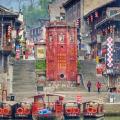 Hong'an Border Town Homestays, the Night the Town Lights Up
Xiushan Tujia and Miao Autonomous County
The Hong'an border-town homestays (洪安边城吊脚楼民宿) are the border town's small-stay band: rooms in the town's stilt houses at roughly 200–300 yuan a night, whose product is the town after the day visitors leave — the river dark, the far bank's l
 Xituo Stilt-House Homestays, the Night on the Cloud Ladder
Shizhu Tujia Autonomous County
The Xituo stilt-house homestays (西沱古镇吊脚楼民宿) are the ancient town's small-stay band: rooms in the town's terraced stilt houses at roughly 150–300 yuan a night, whose product is the address — sleep inside the 1,314-step town rather than passi
 Wenxi Hotel, the Comfortable Number at Times Plaza
Shizhu Tujia Autonomous County
The Wenxi Hotel (闻喜酒店) is the county seat's comfortable mid-band: from about 192 yuan a night at Times Plaza, No.
 Tianyao Hotel, the High-Grade Room on Chengdong East Road
Shizhu Tujia Autonomous County
The Tianyao Hotel (石柱天尧酒店) is the county seat's high-grade anchor: from about 318 yuan a night on Chengdong East Road (城东路), Nanbin town, tel 023-73208888, with river-view rooms among its categories.
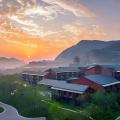 Huangshui Wellness Hotel, the Forest Room at the Visitor Centre
Shizhu Tujia Autonomous County
The Huangshui Wellness Hotel (石柱黄水康养酒店) is the plateau's comfort stay: from about 409 yuan a night inside the Huangshui visitor reception centre (黄水游客接待中心), tel 023-81505888.
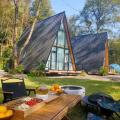 Huangshui Forest Cabins, the Window on the Forest Sea
Shizhu Tujia Autonomous County
The Huangshui forest cabins and grassland homestays (黄水镇森林木屋/草原民宿) are the plateau's small-stay band: timber cabins and homestays among the forest at roughly 200–400 yuan a night, whose product is the window — the forest sea (林海) at eye lev
 Yunjin Meishu: Detached Villas Inside the Forest Park
Wulong District
Yunjin Meishu Hotel (云锦美墅酒店) is the top of the Xiannvshan stay ladder: a three-star property of detached villas inside the Fairy Mountain forest park itself, at Tielu group in Xiannv village.
 Rongrong Jinke: Wulong's Full-Service Hotel by the Station
Wulong District
Rongrong Jinke Hotel (荣融金科大酒店) is the upper bracket of Wulong's county-town stay offer: a full-service property on Furong East Road, a few minutes from the railway station, pitched at business travellers and the first-night arrivals who wan
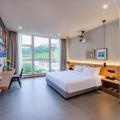 Muxi: a Riverside View and a Soaking Tub on Furong East Road
Wulong District
Muxi (木夕美宿) is the design-conscious option in the county town: a boutique stay occupying the upper floors of the Rongrong building on Furong East Road, trading on two things the big hotels cannot manufacture — river-facing rooms and in-room soaking tubs.
 Jingxiang Shiguang: Three Stars at the Door of the Tourist Centre
Wulong District
Jingxiang Shiguang Viewing Hotel (静享时光观景酒店) is a three-star property on Cuiyun Road in Xiannvshan town, close to the tourist reception centre — the practical base for the Three Bridges and Longshui Gorge day.
 Guanshilou: a Terrace, a Pot of Tea and the View of the Stone
Wulong District
Guanshilou Homestay (观石楼民宿) is a three-star family-run stay at No.
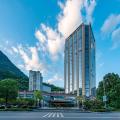 Qianlong Hotel, the Central Room Between the Sights
Pengshui Miao and Tujia Autonomous County
The Qianlong Hotel (黔龙酒店) is the county's central-position stay: at No.
 The Seat's Economy Belt, the Hundred-Fifty-Yuan Night
Pengshui Miao and Tujia Autonomous County
The county seat's economy belt (县城经济酒店) is the county's budget layer: the no-name and small-chain hotels at about 150–300 yuan a night, spread through the town's central streets.
 Mowei's Forest Cabins, the Mountain's Priced Night
Pengshui Miao and Tujia Autonomous County
The Mowei forest cabins (摩围山森林木屋别墅) are the mountain's own stay: cabin-style rooms inside the 4A scenic area's 91-percent forest, at the 1,300-metre elevation that is the mountain's product.
 Jiuli Hotel, the Two-Hundred-Sixty-Yuan Base by the City
Pengshui Miao and Tujia Autonomous County
The Jiuli Hotel (九黎大酒店) is the county's named base for the cultural city: from about 260 yuan, positioned near Chiyou Jiuli City (近九黎城) so the night show and the 19:30 lighting are a short run rather than a drive.
 Hanting at the Cross Street, the Chain's Standard Room
Pengshui Miao and Tujia Autonomous County
The Hanting at Pengshui's Cross Street (汉庭彭水十字街店) is the county's chain-standard room: a comfort-category stay at Building B, Linjiang Garden, Wujiang East Road, Shizui Community (石嘴社区乌江东路临江花园 B 栋).
 Wuxi Hotel, the Eighty-Yuan Room by the Old Town's River
Wuxi County
Wuxi Hotel (巫溪大酒店) is the county's economical anchor: from about 80 yuan a night at No.
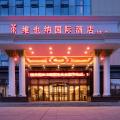 Werner Business Hotel, the Clean Mid-Band on Fengyi Road
Wuxi County
Werner Business Hotel (巫溪维尔纳商务酒店) is the county's business mid-band: from about 180 yuan a night at No.
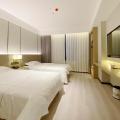 Mazhenba New District Hotels, the New-Town Band
Wuxi County
The Mazhenba new-district hotels (马镇坝新区酒店) are the county seat's newest room band: a cluster of recent business hotels in the new district, running roughly 160–280 yuan a night, whose selling points are the buildings' newness and the distri
 Jinxi Hotel, the Three-Star Number on Chunshen Avenue
Wuxi County
Jinxi Hotel (巫溪金溪酒店) is the county seat's three-star anchor: from about 165 yuan a night at No.
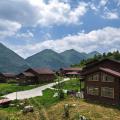 Hongchiba Cabins, the Night Under the Plateau Stars
Wuxi County
The Hongchiba cabins and homestays (红池坝木屋/民宿) are the plateau's overnight category: timber cabins and guesthouses near West-Flow Lake, where the scenic area's supporting facilities are concentrated, at roughly 260–400 yuan a night with the
 Riverfront View Homestays, the Weekend Window on the Yangtze
Wushan County
The riverfront view homestays (滨江路江景民宿) are the county's small-stay band: owner-run rooms along the river front whose product is the window — the Yangtze below and the Wu Gorge's walls across the water — at roughly 200–320 yuan a night, wit
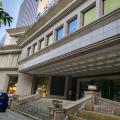 Pinghu Business Hotel, 185 Metres from the Lesser Three Gorges
Wushan County
Pinghu Business Hotel (平湖商务酒店) is the county's proximity stay: an economical business hotel on Pinghu East Road (平湖东路 900 号), whose entire pitch is the address — 185 metres from the Lesser Three Gorges cruise departure.
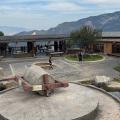 Night Mooring Wushan, the Courtyard at Ningjiang Ford
Wushan County
Night Mooring Wushan (夜泊巫山) is the county's flagship stay and the No.1 on the Yangtze-Three-Gorges local-character hotel list: a four-star property at about 1088 yuan a night, built as a courtyard compound (四合院) inside Ningjiang Ford Park (
 Muzi Hotel, the Three-Star Number on Jingyun Road
Wushan County
Muzi Hotel (巫山木子酒店) is the county's three-star mid-band: from about 181 yuan a night at No.
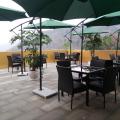 Hongru Villa, the Homestay with the Sunrise Balcony
Wushan County
Hongru Villa (巫山鸿儒山庄) is the county's small-stay category: a two-star homestay (2 星民宿) from about 159 yuan a night at No.
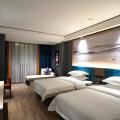 Times Hotel, the Economical Number on Kuizhou Road
Fengjie County
Times Hotel (奉节时代酒店) is the county's economical anchor: from about 130 yuan a night at No.
 Qutang Riverside Boutique Homestays, the Window on the Gate
Fengjie County
The Qutang riverside boutique homestays (瞿塘江边精品民宿) are the county's small-stay band: owner-run houses along the river above the Qutang reach, at roughly 300–550 yuan a night, whose product is the most direct version of the county's view — t
 Mengchao Hotel, the Riverside Number on Shicheng West Road
Fengjie County
Mengchao Hotel (奉节梦巢酒店) is the county's mid-band riverside number: from about 149 yuan a night at Binjiang International, No.
 Fengjie Hotel, the Four-Star Number on Renhe Street
Fengjie County
Fengjie Hotel (奉节饭店) is the county's four-star flagship: from about 247 yuan a night at No.
 Binjiang Road River-View Hotels, the Qutang Frontage
Fengjie County
The Binjiang Road river-view hotels (滨江路江景酒店) are the county's view band: a run of river-facing hotels along the county seat's frontage at roughly 260–400 yuan a night, whose entire product is the window — the Yangtze below and, looking up-
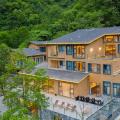 Yunran Mountain House, the Homestay in Songbai Village
Chengkou County
Yunran Mountain House (城口云染山房) is the county's designed homestay: a three-star-rated guesthouse (3 星民宿) from about 498 yuan a night at No.
 Wanda Jinhua Hotel, the County's Five-Star Base on Dongda Street
Chengkou County
The Wanda Jinhua Hotel (城口万达锦华酒店) is the county's five-star option and its luxury-list No.1: from about 288 yuan a night at No.
 Shixiang Hotel, the Three-Star Economical Base of Gecheng
Chengkou County
The Shixiang Hotel (城口仕祥大酒店) is the county's three-star economical anchor: from about 162 yuan a night at No.
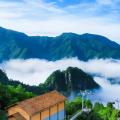 Kangu Starry-Sky Homestay, the Cliff-Edge Night Above the Gorge
Chengkou County
The Kangu starry-sky homestays (亢谷星空民宿) are the gorge's overnight category: small owner-run houses on the cliff edge above Kangu Valley, whose entire product is the night — the gorge below, the dark sky above, and, in season, a village mark
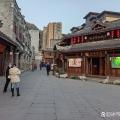 Daba Mountain Hotel, the Four-Star Number on Dongda Street
Chengkou County
The Daba Mountain Hotel (城口大巴山酒店) is the county's four-star number at No.
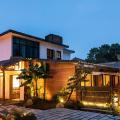 Songjian Xiaozhu: Star Rooms and a Spring Bath at Mingyue's Foot
Dianjiang County
Songjian Xiaozhu (松间小筑) is the small guesthouse at the foot of Mingyue Mountain, built around the two things the mountain has and the county seat does not: dark sky and spring water.
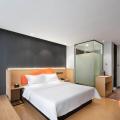 IU: the Smart Room with the Free Late-Night Bite
Dianjiang County
IU Hotel (IU 酒店) in the county seat is the modern economy option: the chain's smart-room standard — app-controlled lighting and climate, compact efficient layout — plus the chain's signature courtesy of a free late-night snack at the front desk.
 Houxi Tea House: a Courtyard Room Behind the Stream
Dianjiang County
Houxi Tea House (后溪茶舍) is the county's courtyard-style stay: a converted old house behind the stream on the county seat's edge, built around a courtyard and a tea room rather than a lobby and a lift.
 The County Seat's 100-Yuan Room, and When It Is Enough
Dianjiang County
Dianjiang's county-seat business hotels are the county's stay workhorses: the 100–200 yuan band of unbranded and lightly branded properties along the main avenues, built for the travelling salesmen and the blossom-weekend overflow, and the
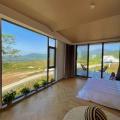 Blossom Inn: a Room Facing the Flower Sea
Dianjiang County
Blossom Inn (花间堂) at the Peony & Cherry World park is the stay that sells one thing: a room facing the flower sea, so that the March bloom begins at the window rather than at the park gate.
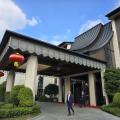 West Bank: the Hotel Beside the Temple-Fair Stage
Fengdou County
West Bank Hotel (西岸酒店) is the Nantian Lake-area stay at No.
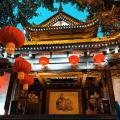 Old Town Theme Inn: a Night in the Ancient Street
Fengdou County
The Old Town theme inns (古城古街主题客栈) are the county's heritage-register stays: rooms in the restored ancient-street quarter, furnished in the local idiom — old timber, lantern light, the courtyard pattern — and priced in the 180–320 yuan band
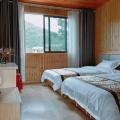 Linjiang View: a Window on the Yangtze and Ming Mountain
Fengdou County
The Linjiang view homestays (临江观景民宿) are the county's small-stay category: owner-run rooms along the river front whose entire product is the window — the Yangtze below and Ming Mountain's roofs across the water, in a house rather than a hotel.
 Light VIP: the Four-Star Room on West Pingdu Avenue
Fengdou County
Light VIP Hotel (丰都莱特贵宾楼) is the county's upper-bracket stay: a four-star property at No.
 Huayi Zhenpin: Three Stars by the River, Close to the Ghost City
Fengdou County
Huayi Zhenpin Hotel (华逸·臻品酒店) is a three-star property at No.
 Summit of Three Gorges Stay
Fengjie County
The Summit of Three Gorges Stays are hilltop guesthouses and camping near the Sanxia Zhidian viewpoint, above the clouds with the gorge laid out far below.
 Tiankeng-Difeng Stay
Fengjie County
The Tiankeng-Difeng Stays are lodgings at the foot of the karst belt: resort hotels and farmsteads for the sinkhole, the crevice and the cave walks.
 Qutang Gorge View Hotel
Fengjie County
The Qutang Gorge View Hotels are first-line Yangtze-view hotels along the riverfront by Kuimen, watching cargo ships thread the gorge gate and the cliffs light up at dawn.
 Baidi City Inn
Fengjie County
The Baidi City Inns are guesthouses and small hotels clustered around the White Emperor City scenic approach, steps from the historic hill and the gorge overlook.
 Fengjie County Hotels
Fengjie County
Fengjie County Hotels cluster along the Yangtze terraces and the commercial core of the county seat, offering the widest room and dining choice and a practical base for Baidi City and the gorges day trips.
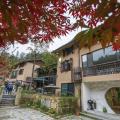 Qishan Grassland Farmstay
Yunyang County
The Qishan Grassland Farmstays are countryside farmsteads on the Qishan alpine grassland: cool-summer stays, farmhouse cooking and walks to the wind-power ridges.
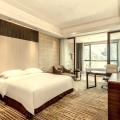 Riverside Hotel
Yunyang County
The Riverside Hotels are first-line Yangtze-view hotels along Nanbin Road by Zhangfei Temple, watching cargo barges slide past and the river light up at dusk.
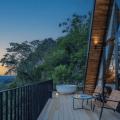 Longgang Scenic Stay
Yunyang County
The Longgang Scenic Stays are lodgings inside or at the foot of the Longgang (Dragon Jar) 5A geopark: cliffside resorts, guesthouses and camping for the glass sky-bridge and the alpine grassland.
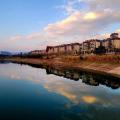 Yunyang City Hotels
Yunyang County
Yunyang City Hotels cluster along the Yangtze-side avenues and the Three Gorges Ladder City commercial strips, offering the widest room and dining choice and a practical base for Longgang and Zhangfei Temple day trips.
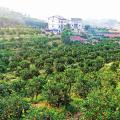 Orange Grove Farmstay
Zhong County
The Orange Grove Farmstays are countryside farmsteads among the groves: fruit-season picking, field paths and farmhouse cooking.
 River View Hotel
Zhong County
River View Hotels are first-line Yangtze-view hotels in the county town, watching cargo barges slide past and sunset toward Huanghua Island.
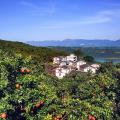 Orange Sea Homestay
Zhong County
The Orange Sea Homestays are farm lodgings ringed by citrus groves in the scenic area, with blossom perfume, farmhouse kitchens and orchard-view balconies.
 Zhongxian City Hotels
Zhong County
Zhongxian City Hotels cluster along the Zhongzhou Avenue shopping streets, offering the widest room and dining choice, a practical base for Shibaozhai and Orange Sea day trips.
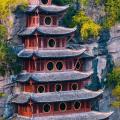 Shibaozhai Riverside Stay
Zhong County
Shibaozhai Riverside Stays are riverside inns a short walk from the 'Pearl on the Yangtze', with morning river fog and cruise-ship lights passing at night.
 Zhushan Bamboo Resort
Liangping District
The resorts of Zhushan town are bamboo-themed hotels and hot-spring lodges deep in the Baili grove, pairing soak-and-sleep slow living with forest hiking trails.
 Huashi Fort Stay
Liangping District
The stays at Huashi Ancient Fort are mountain-inn rooms on the cliff terraces of a restored Ming military stronghold, with sunset over the basalt walls and valley below.
 Liangping City Hotels
Liangping District
The hotels in Liangping's urban area cluster around the Renmin Square and the high-street malls, offering the widest room and dining choice, a practical base for temple, bamboo and fort day trips.
 Shuanggui Temple Stay
Liangping District
The stays by Shuanggui Temple are quiet courtyards and lodgings a short walk from the 'first Zen court', for pilgrims and stillness seekers who want incense at dawn.
 Baili Bamboo Homestay
Liangping District
The homestays in the Baili Bamboo Sea are wooden cabins and bamboo huts set among a hundred li of Mingyue-mountain bamboo, with morning mist over the grove and stargazing decks above the canyon.
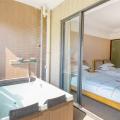 Wenquan Town Hotels
Kaizhou District
The hotels in Wenquan town pair the district's hot-spring culture with the fairy-cave karst scenery, a warm soak after the drive up to Xuebaoshan, a slow riverside overnight east of the lake.
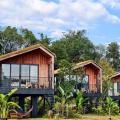 Xuebaoshan Mountain Lodges
Kaizhou District
The stays at Xuebaoshan Mountain Resort are the alpine lodges and music camps of Kaizhou's 2,626 m Qinba ridge: wooden cabins with heated floors and stargazing windows above the cloud-sea meadows of Mashaying.
 Zhoudu Village Homestays
Kaizhou District
The stays near Liu Bocheng's former residence lodge visitors in Zhoudu village, the marshal's birthplace, steps from the red-study lanes, memorial hall and the streamside farmland of the Shuaixiang countryside.
 Kaizhou City Hotels
Kaizhou District
The hotels in Kaizhou's urban area cluster around the government square and New Century department store, offering the widest room and dining choice, a practical base camp for lake and mountain day trips.
 Hanfeng Lake Hotels
Kaizhou District
The hotels by Hanfeng Lake sit on the shore of the Three Gorges' largest man-made lake, with lake-view rooms, morning promenades and easy reach of the Water Sports Club, Juzi Garden and the Kaizhou Ancient Town.
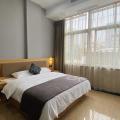 Stays Near Wanzhou North Station
Wanzhou District
The stays near Wanzhou North Station put rooms by the high-speed rail hub for visitors arriving on the 100-plus daily trains, a practical base before the waterfall and the cliff town.
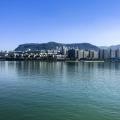 Stays in the Three Gorges Reservoir Area
Wanzhou District
The stays in the Three Gorges reservoir area sit in the Pinghu tourism belt with slow water views, riverside parks and the boat piers that frame the gorges gateway.
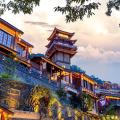 Stays at Tianshengcheng Cultural Block
Wanzhou District
The stays at Tianshengcheng cultural block lodge visitors among the stilt-house lanes of the Song-era cliff town, lantern-lit at night above the old walls, steps from the grilled-fish street below.
 Hotels in Wanzhou's Urban Area
Wanzhou District
The hotels in Wanzhou's urban area cluster around Gaosuntang and the Wanda plaza, offering the fullest range of rooms, dining and car-hire for a base-camp visit to the gorges and the waterfall.
 Stays Along the Yangtze Riverfront
Wanzhou District
The stays along the Yangtze riverfront put visitors by the Binjiang road and Shiji pier, with the placid-lake night cruise and the lit Pailou bridge reflected on the water, a calm overnight above the river.
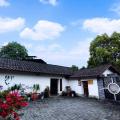 Rongchang Countryside Stays
Rongchang District
The countryside stays of Rongchang are village homestays in the district's farmland, for visitors who want the pottery towns and flower fields at a slower pace without leaving the fields.
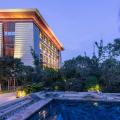 Stays Along the Rongfeng River
Rongchang District
The stays along the Rongfeng River sit by the Rongfeng and Laixi waterways with water views and slow walking paths, a calm overnight beside the water that frames the old town.
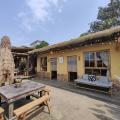 Stays at the Anfu Pottery Town
Rongchang District
The stays at the Anfu pottery town are farmhouse and guesthouse rooms among the kilns of Anfu, where Rongchang ceramics are still thrown and fired, for visitors who want the craft at first light.
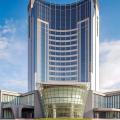 Hotels in Rongchang's Urban Area
Rongchang District
The hotels in Rongchang's urban area cluster around the district seat and the high-speed rail station, offering the fullest range of rooms, dining and car-hire for a base-camp visit to the craft towns.
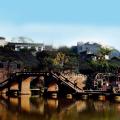 Stays in Wanling Ancient Town
Rongchang District
The stays in Wanling Ancient Town lodge visitors inside the Ming-Qing river town, with stone lanes and the old garrison walls a short walk away, a calm overnight beneath the lantern-lit walls.
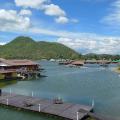 Resorts at the Fu-Qiong Confluence
Tongnan District
The resorts at the Fu-Qiong confluence sit where the Fu and Qiong rivers meet, with lakeside rooms, water views and a slow boating calm beside the sandbars.
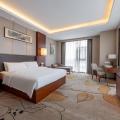 Stays Near the Dafu Temple
Tongnan District
The stays near the Dafu Temple are simple lodgings by the Giant Buddha cliff and the riverside park, for visitors who want the rock Buddha at first light before the coaches arrive.
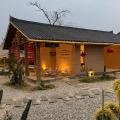 Stays at Chongkan Flower Town
Tongnan District
The stays at Chongkan flower town are farmhouse and guesthouse rooms among the rapeseed terraces, booked out for the spring blossom season when the golden fields draw Chongqing city crowds.
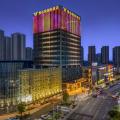 Hotels in Tongnan's Urban Area
Tongnan District
The hotels in Tongnan's urban area cluster around the district seat and the high-speed rail station, offering the fullest range of rooms, dining and car-hire for a base-camp visit to the flower fields and the Buddha.
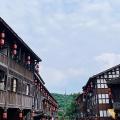 Stays in Shuangjiang Ancient Town
Tongnan District
The stays in Shuangjiang Ancient Town lodge visitors inside the Ming-Qing river town, with carved-stone lanes and the Yang family residence a short walk away, a calm overnight beneath the lantern-lit walls.
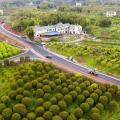 Stays Along the West Suburb Greenway
Tongliang District
The stays along the West Suburb Greenway are farmhouse lodgings strung along Tongliang's rural cycling path, with orchards and pummelo groves a short ride from the district seat.
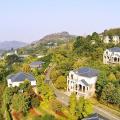 Resorts at Xuantian Lake
Tongliang District
The resorts at Xuantian Lake sit among the water and islands of the district's scenic reservoir, with lake-view rooms, boating and a slow-water calm.
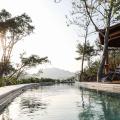 Hot-Spring Resorts on Baiyue Mountain
Tongliang District
The hot-spring resorts on Baiyue Mountain sit on the wooded ridge above Tongliang, with mineral-soaking pools and cool air for a weekend soak among the karst rocks.
 Hotels in Tongliang's Urban Area
Tongliang District
The hotels in Tongliang's urban area cluster around the district seat and the high-speed rail station, offering the fullest range of rooms, dining and car-hire for travellers using Tongliang as a base for the dragon town and lake.
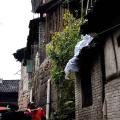 Homestays in Anju Ancient Town
Tongliang District
The homestays in Anju Ancient Town lodge visitors inside the Ming-Qing riverside town on the Fu River, with carved-lintel lanes and a calm overnight beneath the lantern-lit walls a short walk from the old bridge.
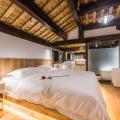 Stays in Changzhou Ancient Town
Dazu District
The stays in Changzhou Ancient Town lodge visitors inside the Song-style reconstructed town beside the Dazu Rock Carvings museum, with lantern-lit lanes and teahouses a short walk from the carving shuttle.
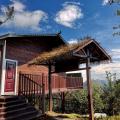 Forest Stays on Yulong Mountain
Dazu District
The forest stays on Yulong Mountain sit inside the Jade Dragon forest park above Dazu, with wooded homestays and summer-cool air for hikers who want the karst ridges and bird song without leaving the trees.
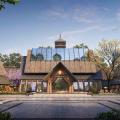 Lakeside Resorts at Longshui Lake
Dazu District
The lakeside resorts at Longshui Lake sit among the water and islands of the district's scenic lake, with lake-view rooms, a hot-spring feel and water sports, a calm overnight counterpoint to the crowded carving sites.
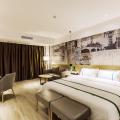 Hotels in Dazu's Urban Area
Dazu District
The hotels in Dazu's urban area cluster around the district seat and the high-speed rail station, offering the fullest range of rooms, dining and car-hire for travellers using Dazu as a base for the rock carvings.
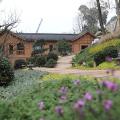 Stays at Baoding Mountain
Dazu District
The stays at Baoding Mountain put you steps from the Dazu Rock Carvings cliff sculpture, with guesthouses and a heritage hotel at the scenic gate for visitors who want the Thousand-Hand Guanyin at first light before the coaches arrive.
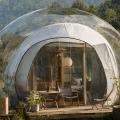 Camping on the Huaba Alpine Grassland
Qijiang District
Camping on the Huaba alpine grassland puts you at 1,600 metres on the Chongqing-Guizhou border, the 'Chongqing Shangri-La', in starry bubble houses and clove tents on a flower prairie, with simple inns for those who prefer walls.
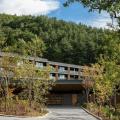 Summer Resorts at Hengshan and Gaomiao
Qijiang District
The summer resorts at Hengshan and Gaomiao sit around 1,100 metres in the 'Chongqing cool capital', 8°C below the main city in summer among 100,000 mu of forest, with rooms that fill first on summer weekends.
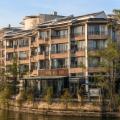 Lakeside Resorts at Dingshan Lake
Qijiang District
The lakeside resorts at Dingshan Lake sit at 900 metres on the 'first lake of Chongqing-Guizhou border sentiment', with lake-view rooms, a whole-fish banquet and the Seven-Confucian-holes Han tombs a short walk away.
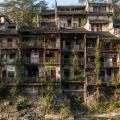 Riverside Homestays in Dongxi Old Town
Qijiang District
The riverside homestays in Dongxi Old Town are old houses converted on the river in a thousand-year wharf town, beside the 5,000-year banyan group and the salt-horse ancient road -- a calm, original alternative to the crowded Ciqikou.
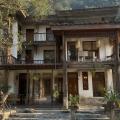 Stays on Gujian Mountain
Qijiang District
The stays on Gujian Mountain sit at the foot of the free 4A scenic area whose Jingyin Temple and Yang Bridge draw cloud-sea pilgrims, with villa and forest homestays a short climb from the trailhead and summer rooms that must be booked ahead.
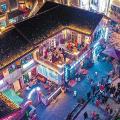 Hotels in Nanchuan's Old Town
Nanchuan District
The hotels of Nanchuan's old town are the city-centre rooms within a short walk of East Street (东街), the restored old quarter with its flagstone lane, snack stalls and the morning oil-tea houses.
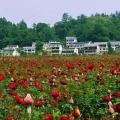 Eco-Farm Stays of the Twelve Golden Flowers
Nanchuan District
The eco-farm stays of the Twelve Golden Flowers are the Daguan garden belt where a different flower opens every month and fruit is there for the picking, with farmstay courtyards and the origin-point hotel (大观原点) as the anchor.
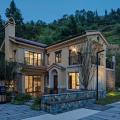 Lakeside Stays at Lixiang Lake
Nanchuan District
The lakeside stays of Lixiang Lake are guesthouses and a European-styled lakeside town on the national wetland, with lake-view rooms, lakeside cycling and the church spire mirrored in the water.
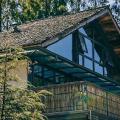 Forest Lodges at Shanwangping
Nanchuan District
The forest lodges of Shanwangping are guesthouses and small inns in the karst-forest park below the twin-colour woods, where a water-fir-and-cryptomeria stand turns one side gold and the other green, with camping grounds for the cool summer nights.
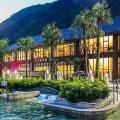 Resorts at the Foot of Jinfo Mountain
Nanchuan District
The resorts at the foot of Jinfo Mountain are the Tianxing-Town cluster below the west gate and the north-gate hotels, with the strontium hot-springs (天星国际温泉城) a short walk away and the cable car to the summit on the doorstep.
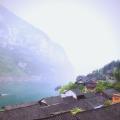 Wujiang-Side Inns at Baitao
Fuling District
Baitao is the Wujiang river town that guards the road to Plant 816, and its small guesthouses and town hotels exist largely for the cave's visitors: plain, inexpensive rooms, strong river-fish cooking at dinner, and the green gorge water running past the embankment. An overnight here turns the underground works into a relaxed full-day visit rather than a dash from the district seat, and puts the gorge road -- the start of the Wujiang gallery country -- at the door first thing in the morning.
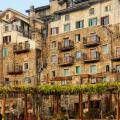 Nights in the Wine Town
Fuling District
Meixin Wine Town, the European-styled theme town in Lingshi, is the district's oddest resort: faux-continental streets, a vineyard, amusement rides and a long list of family attractions, with its own hotels and guesthouses inside the gate. Staying over rather than day-tripping is the difference between the town's daytime crowds and its quiet lamp-lit evenings, and the in-house rooms run from family quarters to themed suites. The practical draw is logistics: the wine town sits on the tourist line between the district seat and the Wuling Mountain sights, so a night here splits a drive that would otherwise double back.
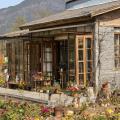 Stays in the Damu Flower Valley
Fuling District
Damu township sits on a high plateau an hour's climb above the Yangtze, cool enough for the flower fields that give the Damu Flower Valley its seasons of bloom and the town its nickname as a mountain garden. The stays are small hotels and farm guesthouses scattered between the flower fields and woodland -- simple, clean, priced for Chongqing weekenders, and cold at night in the way the lowland never is. The valley's display beds, the adjoining forest park walks and the township's farmhouse kitchens make up a slow two-day visit that needs no other agenda.
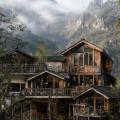 Mountain Lodges below the Great Rift
Fuling District
The hamlets of Wuling Mountain township, at the gates of the Great Rift Valley and the national forest park, hold the district's concentration of mountain lodges: farmhouse guesthouses and small inns on terraces above the gorge, most of them serving the same kitchen's smoked pork and fern-cakes at dinner. Forest cover here runs past ninety-five percent, and even in high summer the nights sit far below the temperatures of the river plain, which is exactly why Chongqing families book weeks here. The practical pattern is one or two nights, with the rift valley on one day and the forest park's high meadows on the next.
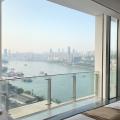 Riverfront Rooms above the Confluence
Fuling District
The district seat sits where the Wujiang runs into the Yangtze, and its best-known hotels line the combined waterfront facing the confluence: mid-rise business hotels with two-river views, the night lights of the bridges and the ferry pontoons below. The Jinxiu Square pier, where the two-river night cruise boards, is a short walk along Binjiang Road, and the Baiheliang museum stands on the same stretch of shore, which makes these the natural base for a one-night riverside stay. Rooms on the river side are worth requesting; the town side faces the working streets and their morning noise.
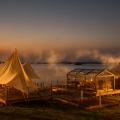 Starlit Camps and RV Decks on the Lake Shore
Changshou District
The western shore of Changshou Lake has become the district's camping ground: lawned bases above the water with tent platforms, star-gazing cabins and paved motorhome pitches, all facing the sunset side of the lake. The operators keep communal barbecue pits, hot showers and small shops, and rent out fishing gear for the shore marks below the sites. The rhythm is the water's own -- afternoon swimming and kayaking, the islands going copper at sunset, night skies clear enough for the Milky Way, and a dawn loud with birdsong from the reserves across the bay. Families take the cabins, road-trippers the RV decks, and Chongqing's weekend tent crowd the lawns; midweek the shore empties and the lake belongs to whoever booked it.
 Business Hotels in the District Seat
Changshou District
The district seat's hotel belt runs along the pedestrian streets and the station roads: chain business hotels with reliable beds, strong showers, buffet breakfasts and the sort of front desks that print boarding passes without being asked. Prices sit well below central Chongqing for comparable standards, which makes the town a practical base for the whole district -- the ancient town is a short ride away, the lake shuttle leaves from the station square, and Bodhi Mountain's gate is inside the city's own street grid. Evenings go to the riverside walks and the food streets, where the intestine-rice and noodle shops keep late hours. For travellers moving through by rail, the station-adjacent hotels make a one-night stop entirely painless.
 Quiet Rooms at the Foot of Bodhi Mountain
Changshou District
The slopes below Bodhi Mountain have accumulated a scatter of homestays and small hotels that trade on one thing: stillness. Pilgrims book them to climb the longevity ladder at dawn, when the ten thousand steps are empty and the temple forests smell of incense and wet leaves; walkers book them to have the mountain's trails on the doorstep. The rooms are simple and clean, breakfasts lean on the district's own table -- rice noodles, eggs, pickles, tea -- and the evening sound is insects rather than traffic. A few of the houses are converted farm buildings with courtyards and persimmon trees; others are newer builds with terraces facing the city plain. Rates stay modest year-round, and the operators will pack an early breakfast for a summit sunrise walk if asked the night before.
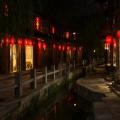 Inns in the Lantern-Lit Old Town
Changshou District
Changshou ancient town keeps a modest row of inns inside and around its grey-brick streets, most of them courtyard houses converted in the town's building boom but managed with genuine local warmth. The rooms are modern behind the old facades; the selling point is the evening, when the lanterns come on along the water channel, the fountain square fills with dancing retirees, and the food lanes send up steam and chili smoke. Guests step out of the inn door straight into the town's best rice-noodle and intestine-rice shops, and the shuttle to the lake and Bodhi Mountain stops nearby. Light sleepers should ask for rooms off the square; the square's evening crowd keeps its own schedule.
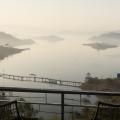 Lake-View Rooms above the Islands
Changshou District
The resort belt around Changshou Lake town has grown into a full range of lake-view hotels, from mid-rise blocks with balconies over the water to compact family lodgings a stone's throw from the boat docks. What they sell is the same: wake to mist lying in the bays, watch the islands turn from grey to green as the sun climbs, and step out to fishing decks and boat-club jetties. Most offer breakfast with fish on the table, and the larger hotels can arrange boat charters and guide services for the bird reserves. Weekends bring Chongqing families in numbers, so the water-facing rooms go first; midweek the lake returns to the fishermen and the egrets. For a two-day lake trip, a room facing the water is worth the small premium over the town's back-street options.
 Farm Homestays on the Fruit Mountain
Yongchuan District
Huaguo Mountain's rural tourism zone is dotted with village homestays operated by farming families who rent out spare rooms during the busy seasons. The accommodations are deliberately unsophisticated: clean bedrooms with attached bathrooms, a common living area with plastic chairs, and a kitchen where meals are prepared from the family's own garden and livestock. Breakfast typically includes homemade pickles, fresh eggs and porridge; dinner is often a shared meal featuring whatever the orchards and vegetable patches have yielded that week. The experience appeals to urban visitors seeking authenticity -- the sound of cicadas through the afternoon, the sight of farmers harvesting in the distance, and the absence of Wi-Fi in some of the older houses. During blossom season in spring and harvest time in autumn, bookings fill weeks in advance.
 Modern Hotels in the District Seat
Yongchuan District
The district seat maintains a respectable selection of modern business hotels, concentrated around the main shopping districts, the government offices and the train station. Expect standard chain offerings: comfortable beds, reliable air conditioning, fitness centres, rooftop pools at the upscale end, and breakfast buffets that include both local and international items. The district seat is compact, so from virtually any hotel the main attractions, markets and restaurants are within a short taxi ride or a long walk. Evening strolls along the lakeside promenades are a popular pastime, and the shopping malls stay open late. Rates are significantly lower than in central Chongqing for comparable standards, making the district seat an economical base for exploring the wider area.
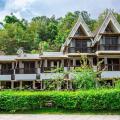 Family Hotels Near the Animal Park
Yongchuan District
The satellite suburb hosting the Lehe Ledu animal park and amusement park has developed a strip of budget and mid-range hotels catering primarily to families visiting the attractions. These are practical establishments: clean rooms, free parking, breakfast buffets, and often complimentary shuttle service to the park gates. The advantage is proximity -- you can walk back for a nap between rides, or return to your room to change before an evening show. Most of the hotels are relatively new, built to accommodate the growing visitor traffic to the park, and they compete on amenities like children's play areas and family suites. For parents managing young children through a full day of animal encounters and roller coasters, the convenience of a nearby hotel is not a luxury but a necessity.
 Forest Lodgings Among Tea and Bamboo
Yongchuan District
The Tea-Bamboo Forest resort area offers a range of mountain lodgings, from family-run guesthouses with verandas facing the green slopes to small boutique hotels built into the hillside. The common thread is the setting: rolling hills planted with alternating bands of tea bushes and bamboo, the same landscape filmed for Zhang Yimou's Ten Thousand Swords. Nights are cool and quiet, broken only by insects and the occasional distant rooster. Many of the lodgings serve breakfast featuring local produce -- tea eggs, bamboo shoots, fresh eggs from the owners' own hens -- and some arrange guided walks through the plantations. The area is popular with photographers and nature lovers, and early morning mist in the bamboo groves is worth the alarm clock.
 Courtyard Rooms Inside the Ancient Town
Yongchuan District
Songgai old town keeps a modest selection of guesthouses inside its walled perimeter, most of them converted courtyard houses along the quieter lanes away from the main drag. The rooms are wood-framed, simply furnished and clean, with attached bathrooms added in recent renovations. What you pay for is the location: waking up to the sound of the Yangtze below, walking out onto stone lanes before the tour buses arrive, and having the town essentially to yourself after the day visitors leave. Breakfast is usually congee with pickled vegetables, prepared in the family kitchen downstairs. The town is small enough that you will meet the innkeeper everywhere you go; this is a community, not a hotel chain. Book ahead for weekends and festival periods, when the nine-bowl feasts bring overflow guests.
 River-Confluence Hotels in the District Seat
Hechuan District
The district seat's hotels line the embankment where the two currents meet, and the better rooms look straight down the braid -- green over grey, the colour line running mid-river until dusk takes it. Business towers hold most of the stock: compact floors, reliable air-conditioning, breakfast on the top floors with the confluence under the window. What the location buys is the evening -- the night market along the embankment, the riverside promenade with the pagoda lit downstream, and the boat kitchens a short walk down the stairs. Prices sit well under Chongqing city for the same standard, parking is painless, and the high-speed rail to the metropolitan core runs every half hour. For travellers working through the district by bus and foot, it is the obvious hub.
 Lakeside Rooms on the Island Lake
Hechuan District
Shuanglong Lake sits in the western hills an hour from the city, a reservoir folded into wooded slopes and dotted with islands, and the shore keeps a loose ring of fish-farm guesthouses and lakeside terraces. The days are boats -- hire one to cross between the islands, fish the calm bays, or simply sit out the afternoon on a pontoon deck while the egrets work the shallows. The guesthouses are family-run, the fish on the table came out of the lake that morning, and the price of a weekend room still reads like a typo. Cool air, dark water, wood smoke at dusk -- the lake is the district's slow option, the counterweight to the fortress and the walled town, and the reason many visitors end up staying an extra night they had not planned.
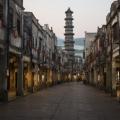 Rooms Along the Pagoda Street
Hechuan District
Wenfeng old street is the district seat's riverfront quarter -- arcade buildings rebuilt along the old footprint, the nine-storey Qing pagoda at its head, and the confluence ferries working the water below the terraces. The hotels here put you over the arcade: upper-floor rooms with the river behind the rooftops, lantern light on the street until late, and the pagoda close enough to lean out and count its storeys. It is the practical base for the district -- buses to the fortress and Laitan start nearby, the night market is two streets over, and the morning noodle counters open before the tourists reach the pagoda. Rooms range from business floors to small river-facing doubles; ask for the confluence side, because the sunrise over the meeting of the rivers is the view the whole district is named for.
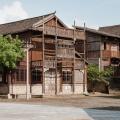 Guesthouses Inside the Urn City
Hechuan District
Laitan's old town keeps a handful of courtyard guesthouses inside the Qing walls, and staying overnight is the difference between seeing the town and having it. The day coaches leave by mid-afternoon; after that the urn city is yours -- the gate tunnel empty, the stone lanes lamp-lit, the cliff-shrine of the Second Buddha a short stair away and quiet enough to hear the river below. The inns are converted courtyard houses, wood-framed rooms around a small yard, breakfast cooked in the family kitchen, and the better ones feed dinner from the town's own smoked and salted larder. Bring cash and patience: this is a village that runs on handshake terms. The reward is the rare thing -- a walled town with a thousand carved buddhas on its doorstep, and nobody else in the frame at dawn.
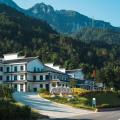 Staying Under the Fortress Walls
Hechuan District
The hill below the Diaoyu fortress carries a short row of hotels and farmhouses that live off the fortress trade -- plain buildings on the approach road, terraced gardens over the Jialing, and the kind of kitchens that grill river fish for guests who stayed for the sunset gate. The day crowds climb the fortress and leave by late afternoon, which is exactly when the hill gets good: the ramparts empty, the river haze gathers, and the gate trail is a ten-minute walk from the front desk. Rooms are simple and cool-sleeping in the hill air, the higher floors take the river view, and the farmhouse end of the row serves the district's own dishes -- pork slices, river fish, morning noodles -- rather than a generic menu. Book the weekend early; the hill is the district's busiest day trip and its quietest evening.
 Riverside Room Bands in the District Seat
Jiangjin District
The district seat at Jijiang runs a plain, honest hotel trade on the riverside strip inside the Yangtze bend: business hotels and county-town staples in bands that start around a hundred yuan for a clean twin and top out well before the city's scale. The trade is the district's own -- the pepper merchants, the candy-factory travellers, the visiting engineers -- plus the weekenders staging for the waterfall mountain. What the strip offers is position: the river promenade out the front, the old-town streets behind, the bus station and the drive into the mountains both minutes away. The better floors of the newer blocks sell the river view; the older staples near the bus station sell the early departure. It is a county-town hotel market in the classic form, and the prices have not forgotten it.
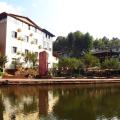 The Farmstay Hamlets Inside the Forest Park
Jiangjin District
Inside the Simian Mountains park the farmstay hamlets run the standard mountain package: a farm table heavy on the household's own smoked pork and spring vegetables, plain upstairs rooms, the bonfire pit lit when the crowd is right, and the trailheads a walk from the gate. The hamlets sit in the valleys the forest roads serve -- orchard villages and tea slopes -- and the hosts are the families who farm the terraces between the guest weeks. The two-day rhythm governs everything: arrive before the coaches, eat at the long table, walk the gorge or the lake path in the afternoon, sleep under quilts in the mountain cold, leave after breakfast with a bundle of bacon in the boot. The pricing stays at the agritainment band the Chongqing market expects, and the better hamlets book out through the summer heat-escape season weeks in advance.
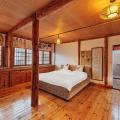 Guesthouses Under the Black Slope
Jiangjin District
Baisha's guesthouse trade runs cheap and plain under the black-rock slope that gives the river-port town its name. The stock is the converted sort: old courtyard houses and shopfront rooms on the Qing streets, family-run, twin rooms priced for the film crews and the town's own visitors rather than for a resort market. The town's economy keeps the beds full in an unusual way -- the film-studio trade shoots the lanes for period drama, and the productions board where the town boards, which keeps the guesthouse standard honest. For the traveller the town works as a base: the Yangtze landing stairs, the long old streets, the wartime-college buildings, all walkable from a room that costs the same as a city meal. The better courtyard stays have kept their timber screens and their small gardens; ask for those, and for the quiet side off the main lane.
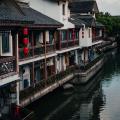 Rooms Over the River on the Old Verandas
Jiangjin District
Zhongshan old town's lodging is built into its own shopfronts: the raised wooden stilt-houses along the Sunxi River keep guest rooms on their upper floors, with the veranda railings over the water and the old street's flagstones below the window. The river runs quick and green under the floorboards -- waterfall-fed, cold enough that the rooms stay cool without help -- and the night sound is the water and the river stones moving. The inns are small, most under a dozen rooms, run by the same families that keep the downstairs teahouse or kitchen; dinner is whatever the river and the smokehouse supplied. The trade is the Chongqing weekend couple and the photographers who come for the morning mist on the water. What the town sells is proportion -- the whole street is still the height and width the salt porters knew, and a room in it costs little more than a meal.
 The Hotel Bands of the Waterfall Mountain
Jiangjin District
The Simian Mountains scenic area runs a two-tier hotel trade. At the entrance town the driver-friendly blocks take the tour-coach overnighters -- clean twins, parking for the self-driving families, the breakfast built around the 7 a.m. gate opening. Higher in the park, around Longtan Lake, sit the resort properties: lakeview floors, forest verandas, the pricing that follows the leaf season and the summer heat-escape trade. The district's cool-mountain position does the selling -- the park sits a vertical world above the Chongqing basin, and the summer weekend crowd books the lake floors weeks out. What the bands share is the format: everything inside or at the gates of the park, everything organised around the waterfall itinerary, nothing that requires driving the mountain roads after dark. Book the lake tier for the view, the gate town for the price, and either way the falls are the morning's first walk.
 Caravan Plots Beside Xiuhu Lake
Bishan District
Xiuhu Caravan Camping Park, where Xuesong Road meets Daishan Avenue, is the district's purpose-built answer to the self-driving family: a fenced compound of hard-standing caravan plots and fixed cabins, arranged in numbered courtyards on the lake side of the road. The format imports the RV-park model -- book a plot, plug in, use the shared baths and the barbecue stands, walk into Xiuhu Park across the street -- and runs it at municipal-park scale, with the night fountain show as the after-dinner programme. For the no-rig traveller the cabins do the same job at a cabin price. The park fills on holiday weekends and runs quiet midweek; the plots nearest the lake gate are the ones to ask for. It is a lodging type the district has that the neighbouring districts mostly do not, which is the reason it earns its page.
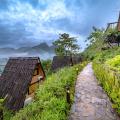 The Farmstay Rows Under the Cloud-Mist Ridge
Bishan District
Yunwu Mountain's farmstay trade is the mature end of the Chongqing agritainment business: a forest resort villa that seats four hundred in its dining halls and beds a hundred upstairs, cottage properties like Yunxigu running the quieter family trade, and the farm-restaurant street at Batang below the cherry valley filling in the day traffic. The standard package is two days -- drive up in the morning, farm lunch, fishing or the rowboat lake in the afternoon, bonfire barbecue and fire-pot chicken in the evening, wake to the cloud line and leave after breakfast. The kitchens are the draw as much as the beds: fire-pot chicken, old-duck soup, whole roasted lamb for booked groups, the spring-water vegetables from the slopes. Rooms run from plain twins to the villa's en-suite floors, priced for the group coach trade on weekdays and the family trade on weekends. This is rural lodging run at industrial scale, and it works.
 Lakeside Canteen-Hotels at Qinglong Lake
Bishan District
Qinglong Lake's lodging is the canteen-hotel format: a small set of establishments on the shore that run a restaurant downstairs and rooms upstairs, built for the company-outing and family-reunion trade. Linyuan Villa is the one the reviews name -- a farm restaurant graded four stars in the agritainment scheme, big enough to take a fifty-person team-building weekend, with a bonfire pit and barbecue court for the evening. Taoyuan Cottage sits a hundred metres from the water with the view rooms; the DeYang resort property works the same trade further up the shore. The formula is straightforward -- eat the farm table, boat or walk the lake in the afternoon, sleep to frog noise -- and the pricing stays in the couple-of-hundred-yuan band that the Chongqing weekend market treats as fair. Book ahead for the April and October peaks; the better view rooms go first.
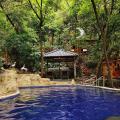 A Forest Hot Spring with a Waterfall Bath
Bishan District
Tianci Huatang Forest Hot Spring, at 8 Wenquan Road on the town's northern edge, is Bishan's established bath complex: forested grounds, a cascade-style hot pool run -- the 'waterfall bath' is its signature -- and a day-ticket format that starts at 59 yuan, with massage and private-pool packages above it. The trade is half-day and full-day rather than overnight: Chongqing families drive out, bathe through the afternoon, eat on the grounds and leave before dark, and the complex prices accordingly. The water and the tree cover are the product -- a hot-spring afternoon that reads as a park visit rather than a resort stay. For the overnight crowd it functions as the town's amenity: the business hotels are minutes away, and a bath ticket is the standard evening add-on to a Bishan weekend. Book the weekday slots if the weekend queues are a concern; the pools are sized for the Saturday crowd they actually get.
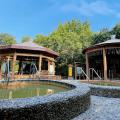 Hot-Spring and Village Stays in the West
Dadukou District
Tiaodeng Town, the district's western rural end, offers the low-rise alternative: the Nanhai Hot Spring Centre, an AAA温泉, with its spring-side rooms, and the village guesthouses around the Tiaodeng river and the Jin'ao fields. This is the district's country accommodation -- no high-rise, no metro at the door, a car or a bus to the core -- and the hot spring is the one paid draw among them. Rates are quoted by the platforms by season; the spring's own ticket is separate from any room.
 Sleeping by the Steel-Town Museum
Dadukou District
Staying by the Chongqing Industrial Culture Park means sleeping inside the memory of the steel works -- the Yidu Road corridor where the museum stands, the streets the 重钢 workers once filled, and a handful of hotels within walking distance of the 1905 steam engine. It is a base for the industrial-heritage day: the museum is free and closed Mondays, so a Sunday night puts the engine and the old workshops within a morning's walk. Rates are the district's mid-range band, quoted by the platforms rather than posted by the hotels.
 A Dozen Courtyards Above the Terraced Fields
Dadukou District
Jin'ao Mountain, south-west of the district, carries a rural-homestay cluster -- Changjiang Shiju, Shanyuxi Yun, Jinao Bieyuan and Duoduo Xiaoyuan among a dozen courtyard stays -- above the terraced-flower fields of Tiaodeng Town's Shipan Village. They are low-rise courtyard houses with a mountain or a field view, run as family guesthouses rather than hotels, and the cluster is the reason the mountain reads as a place to stay rather than only a place to hike. None publishes a standard tariff; rates are quoted by the platforms season by season.
 The Apartment-Hotel Belt of the Old Core
Dadukou District
Jiugongmiao, the Nine-Palace-Temple subdistrict, is Dadukou's old commercial core, and its accommodation is the apartment-hotel belt -- self-contained rooms with a kitchenette, scored in the high nines on the booking platforms and priced as a band from budget apartment hotels to mid-range chains. The district's first shopping street and its metro line meet here, which is why the belt works as a base rather than a destination. Rates run from about one hundred to one hundred sixty yuan a night on the platforms, and every figure is a platform quote.
 Riverside Rooms on the Fourth Terrace
Dadukou District
The guesthouses and inns inside Yidu Ancient Town sit on the fourth of the town's four terraces above the Yangtze, a short walk down to the wharf and the old Chengyu railway. They are small -- courtyard rooms, a riverside teahouse converted to lodging, a handful of themed stays -- and the town is free to walk and paid to sleep. Rates are quoted by the booking platforms rather than posted by the houses, and none of the inns publishes an official tariff, so treat any number as a platform figure to check.
 What a Night in Beibei Costs on a Measured October Date
Beibei District
This is a price ladder rather than a recommendation list, and every figure is a single-night snapshot for October 2026. At the bottom, non-standard and economy rooms run from about 100 to 186 yuan. Mid-range chains cluster between 236 and 321: a business hotel on Beixi Road at 236 with a gym and shared work space, one within walking distance of Line 6's Zhuangyuanbei station at 241, and the Wanda Plaza branch group at 282, 290, 316 and 321. Above that, mid-to-upscale runs 275 to 440, topping out at the five-star Wyndham Beibei at 440 across 413 reviews, with the Haiyu Hot Spring next to the university at 307, which has its own spring and garden. The practical point is that Line 6 and the university, not the scenic sites, are what make Beibei work as a base.
 White Windmills Above the Canyon and a Winery in the New West
Beibei District
Jindaoxia Xiying is the one to aim for: it stands inside Jindaoling Forest Park on the park's highest peak, about twenty minutes' drive from Pianyan Ancient Town, with a white windmill and coloured cabins that locals have nicknamed after hobbit holes. The district's January 2025 winter route named six village guesthouses in all, and not one of the six has a published rate, an address or a telephone number, which is worth knowing before you build a trip around them. Around the scenic gate, farm stays sit within a few hundred metres of the entrance. The odd one out is an hour and a half away: a winery guesthouse in Shunlong Village, Daxing Town, at 133 yuan, attached to a working winery. Daxing only became part of Beibei in November 2025, transferred in from Yubei, so it is new territory rather than old Beibei.
 A Dead Village School With a Spiral Stair and Fifteen Rooms
Beibei District
Xianggen Xiangshe is a courtyard compound in Hexing Village, Liuying Town, that used to be an abandoned primary school, converted by a couple into an all-timber guesthouse of fifteen rooms -- some accounts say ten-odd -- with a hall, a bar, a reading room and a tea room. The second-floor rooms are lofts sleeping four, reached by a spiral wooden stair, and the yard keeps a century-old well. It sits 12 km from Jindaoxia and 7 km from Pianyan Ancient Town, and the kitchen runs soups, roast lamb and chicken, rabbit, and cured pork from its own pigs. Every number here is a 2021 snapshot: rooms were listed from 300 to 3,000 yuan across weekday, weekend and holiday tiers, the big soup pot 388, dishes about 120 a head, breakfast free. It appears on the district's own winter route list, which is the current reason to go.
 Six National Relics and a 145-Yuan Hot Spring Inn
Beibei District
Jingangbei sits in the same stretch of Beibeiquan Road as the Jialing River Hot Spring Park that Lu Zu-fu built in 1927, the country's first public hot-spring park, and the area around it holds six components of the Jialing Three Gorges rural-reconstruction group: Nongzhuang, Panshi, Zhulou, Bolinlou, Shufanlou and Huafangzi, the last of them Liang Shuming's former home. The old village inn scores 4.3, runs from 145 yuan, has an outdoor pool and a children's playground, and lists rooms such as an infinity-edge hot spring view room and a courtyard with a private bath. Soaking at the village spring is a separate charge again: 88 yuan adult, 138 for two, 168 for a family of two adults and one child. One warning: Mianren Academy is a building name inside that group, and it is not the same building as Bolinlou or Shufanlou.
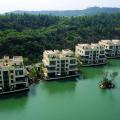 Thirty-One Villas on a Cliff Inside a Spring Park
Beibei District
The Bolian Resorts and Spa sits inside Beibei Hot Spring Park, which is the reason the address is the attraction: thirty-one villa rooms step down a steep bank above the Jialing, with Jinyun Mountain to the south and a temple founded in 423 AD beside them. Trip.com scores it 9.4 out of 10 across 273 reviews. On price, take the band and ignore any single figure -- rooms are quoted from roughly CNY 800 to CNY 3,500 depending on room type and season, with top-tier suites running into the thousands, and one booking surface shows a CNY 6,550 lowest rate that is one room type on one date rather than a going rate. Hot-spring admission is separate: CNY 348 adult, 174 child, 1,044 for two adults and two children. No source confirms whether the 1,600-year-old temple itself admits visitors, so ask at the desk.
 Forest Rooms Above a Cave That Never Changes Temperature
Banan District
At the top of Banan's price range are the forest retreats on the slopes above Dongwenquan, and they are priced for the view and the quiet rather than for proximity: a mountain guesthouse in the Banzhulin group runs from about 838 yuan, and a courtyard homestay at Nanpeng with a bathtub facing the hills from about 867. The reason to pay it is what sits underneath. The hot cave at Dongwenquan is a karst cavity shaped like an inverted gourd, 1.5 metres at the entrance and 2.7 across, holding 43 degrees the year round, in a scenic area that takes up 31.47 square kilometres on the Wubu River. The spring water runs between 38 and 53 degrees. Stay in the hills above it, not in the town below.
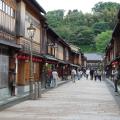 Eleven Rooms at the Bridgehead, in the Old Town of Yudong
Banan District
Before 2009 the district government sat in Yudong, and Yudong is still the old town while Longzhouwan is the new one. This is the accommodation that old town leaves behind: eleven rooms in a single building on Bayi Avenue at the head of the old bridge, opened in 2010, with a 24-hour front desk and no breakfast. Ctrip scores it 4.3, which is a rating built on twelve reviews and should be read that way. One review from late 2024 mentions cockroaches and ageing equipment. The reason to stay anyway is the walk: the riverside road starts at this bridge and runs eighteen kilometres to the Nan'an side, and the Dajiang industrial compound sits a short walk away.
 Landlord Houses and Courtyards in Fengsheng
Banan District
Fengsheng is the one town in Banan that three counties share, and the guesthouses there are the old houses rather than new builds beside them. Shiquantang, on Fushou Street, was a Republican-era mansion built for the Liu family with three entrances and four courtyards, and it now takes guests into those courtyards; it lists from 181 yuan on one booking site and between 120 and 183 on another, which is worth knowing before you book. The village guesthouses run quieter, from a 112-yuan supply-and-marketing inn to a 266-yuan art hotel inside the colour forest. The town itself is free, open all night, and the 2011 best-alley lane is twenty metres long.
 Five Yuan to the Island, Sleeping on Mudong's River Street
Banan District
Mudong is a working river town, which is why its guesthouses are on the water rather than up a hill. The riverside street runs a few hundred metres of stone and plaster with a handful of inns on it, the best of them around three to four hundred yuan a night, two of them with the kind of corner suite that looks both ways at once. What makes the address unusual is the ferry: a five-yuan boat across to Zhongba Island, where more than six hundred people live, last sailing at six in the evening. Some listings quote two yuan instead. Both numbers are in circulation and it is worth asking at the desk before you plan the return.
 Bathhouse Rooms on the Nanquan Hot Spring Belt
Banan District
Banan holds close to half of Chongqing's hot spring resource, and Nanquan is the part of it closest to the city: a subdistrict with a metro station, a national scenic-grade street, and hotels whose rooms have their own tubs. The Chongqing Nanquan Hotel opened in 2020, scores 4.7 on Ctrip across more than twelve hundred reviews, and sits 3.7 km by road from the Huaxi metro station. Its room types run from garden-view twin baths to a family suite themed on a submarine cartoon. If you want the same water for less, the Dongfang Hot Spring Hotel on Huaxi's Yunan Avenue starts around 184 yuan a night, and a courtyard guesthouse further out runs from 159. Book the room by what you want to do after the water, not by the tub.
 A Hot Spring Weekend on the Far Side of a Border
Yubei District
统景温泉度假周末 -- a spa weekend that belongs to a different district now: the Tongjing hot spring on the Yulin River was Yubei's until 7 November 2025, when Dawan, Tongjing, Daxing, Xinglong and Cizhu were transferred to Beibei as part of dissolving the district, and that transfer is the first thing to understand before booking, because the resort's own booking pages still print the old address -- a national AAAA site and five-star-rated spring combining calcium-sulphate hot water with a calcium-bicarbonate cold spring at about 20 C, 48 soaking pools, dry and wet saunas, a fish spa, a wave pool and a swimming pool under one ticket, with rooms from about 160 and breakfast-and-ticket packages from 888, private villa baths available, and the resort's own advice being to book three days ahead in winter and ten days ahead on a weekend, which is the single most useful sentence on any hot-spring page in this city.
 Guesthouses Inside a Protected Old Town
Yubei District
龙兴古镇民宿 -- rooms inside a national historical town: Longxing's protected core is about 50,000 square metres of Ming-and-later timber-frame housing, and the guesthouses that have moved into it, from a designer-garden house to a courtyard conversion to a hotel in the film city next door, run from about 80 yuan to 720, with one property's own range reaching past 5,000 -- a spread that has less to do with luxury than with which side of the wall a room sits on, because the town's two streets of quality lodging and night trade were designated as such after the town had already been a filming location for a decade, so what you are booking is a room in a town that is still lived in, where the tofu shop has been open 38 years, the brown sugar and yinmi are made in the open, and the film city's 1:1 wartime street closes the street off at night rather than the town shutting up.
 A Serviced Apartment Thirty Storeys Above the Lawn
Yubei District
中央公园高层服务公寓 -- the register above the shopping malls: off Qiucheng Avenue and Maohua Road in Xiantao the towers go thirty floors and up, and the rooms let by the floor are apartments, not hotel rooms -- a kitchenette, a washing machine, a desk you could work at, a window that looks down 900 square mu of sunlit lawn because the park below is Chongqing Central Park's middle section, which is why the high floors cost what they cost and the low floors cost what they cost, and the names in this stack are the serviced-apartment kind (Ka-si, Lixiangjia, Quanduo, Songxia) rather than the chain kind, with the Yuelai trade-show belt and two Line 10 stations in between; the counter-intuitive booking advice is to book a low floor if the view is not the point, because the high floors here trade on the lawn and the low floors trade on the malls.
 Hotels Inside the Convention-and-Park Belt
Yubei District
悦来会展与中央公园一带住宿 -- the belt that a trade show built: north of Chongqing the airport's runway is 4F and the flat reclaimed land beside it became a convention city, so the accommodation between Yuelai and Central Park runs on event calendars rather than on tourists -- mid-scale chains at about 110-330 yuan and light-luxury and upper-mid-scale at 400-600, with the Chongqing International Expo Centre, the Yuelai Art Museum over the water from it, and the Halo mall, Longfor Paradise Walk, Wuyue Plaza and Dayuecheng all walkable and three Line 10 stations laid along the district's main north-south axis, Central Park, Central Park West and Central Park East, which makes this the one Chongqing address where a room is priced by when a hall opens and a hall is built for trade shows that book the year ahead; a Wyndham whose Chinese restaurant is a 140-metre walk from the centre sets the tone.
 The Price Ladder Around the Airport
Yubei District
江北机场周边住宿 -- what the airport does to the price of a room around it: a 1990 airport 21 km north-east of the centre with three terminals and 44.6 million passengers a year has grown, in the blocks either side of 空港大道 and 双龙大道, a ladder that runs from about 80 yuan for a two-star with a car park up through 150-310 for the mid-scale chains and 400-470 for the upper tier, and the thing that separates the cheap end from the rest is not the room but the pickup service -- several of the budget houses advertise a driver who meets you in the arrivals hall, and one of the budget chains near the airport is remembered by regulars for its ex-soldier chauffeur -- which is why the bottom of this ladder is not the budget option a traveller expects, while the 20-minute free shuttle between Terminal 2 and Terminal 3 and Line 10 stopping at both decide which end of it you sleep at.
 The District That Counted Its Rental Beds
Jiulongpo District
九龙坡长租住房 -- the bed as counted stock, not as hospitality: over the last five-year plan this district reported raising 13,700 units of affordable rental housing and 5,560 units of talent apartments, alongside a national first batch of urban-renewal pilots and thousands of old-estate rehomed residents -- a register of its own, where a lease is signed by the year and priced for people who work in the district, placed along the light-rail lines between the digital malls, the factories and the new town rather than in a resort strip, and the thing to understand before booking anything overnight here is that the district does most of its sleeping stock on lease, not on tourist rate.
 Beds at the Foot of the Two Egongyan Crossings
Jiulongpo District
谢家湾住宿 -- beds at the interchange where the city changes bank: the light-rail stop the district's own river walk is built around, minutes on foot from the pedestrian shopping streets and the old factory food lanes, and from the two crossings that have traded the river back and forth for a century -- the road bridge finished in 2000 and the rail bridge that followed in 2019, which took the walkway back off the road deck and gave the district its first bridge you can stand on and watch the barges go under -- the register of a stop chosen by lines and crossings rather than by skyline, with the whole west-bank market district spread out on one side and the far bank twenty minutes away.
 Rooms Above the Renovated Workers' Estate
Jiulongpo District
民主村住宿 -- sleeping inside the district's flagship urban-renewal block: housing built in stages from the 1950s to the 1990s for the staff of a state machine-tool plant, more than a hundred blocks of which the oldest are over seventy years old, taken up in 2022 and reworked on a keep-renovate-demolish-add basis rather than cleared, phase one finished in April 2023, and named to the national list of complete communities in its first casebook that December -- the rooms here are the upper floors of a reworked estate, above a ground floor of residents' coffee bars, canteens and craft shops, with the metre-and-a-half rail platforms and the 1950s red-brick walkways outside the door.
 Rooms Above the Old Yangjiaping Walking Street
Jiulongpo District
杨家坪住宿 -- beds over a shopping street that still functions as a street: the district's old commercial heart around the pedestrian lanes, the walking street, the underground arcade and the half-dozen small counters that kept their own trade through three decades of mall-building, where the value of a room is set by how quickly you can walk down to the noodles, the duck-intestine rice noodles, the cornmeal jelly and the late grill -- an older, lower-ceilinged, more local register than the new mall towers a few hundred metres north, the shortest walk to the metro in the district, and the cheapest city-centre-near sleep in Chongqing's west bank.
 Beds Built Above the Computer Malls
Jiulongpo District
石桥铺数码城住宿 -- beds on the floor above the wholesale tech market: Shiqiaopu went from a single 1998 computer hall to five IT malls in a decade and, at its peak, took some seventy per cent of the city's electronics turnover, so the rooms around it were never built for tourists but for the merchants, the fixers and the buyers who came to stock up and needed to sleep close to the trading floor -- chain business hotels and monthly-let apartments converted out of the same office towers, walkable to the metro lines and the bus yards, the register of the district's biggest second-hand economy and its longest-running late-evening business day.
 Slow Stays on the Western Slope
Shapingba District
歌乐山西线住宿 -- the district's low-key hill-and-lake end: farmhouse-inn heritage turned small guesthouses on the Gele Mountain road and the western flats toward the resort belt, priced like the countryside they sit in, chosen by Chongqing families for weekends of forest steps and chicken courtyards rather than by itinerary -- the quietest register in the batch, a bed for the mountain mornings the day-trip crowds never see.
 River Rooms on Shabin Road
Shapingba District
沙滨路住宿 -- the district's quiet river frontage: apartments and hotels along the Sha-Bin stretch of the Jialing, the bank that faces neither the postcard peninsula nor a CBD canyon but its own green waterline -- rooms priced by river aspect in a register the other banks never bothered with, the riverside walk below and the campus district behind, the bed chosen for the quietest water in the city.
 Hotels Above a High-Speed Rail Hub
Shapingba District
三峡广场住宿 -- the district's business beds around the hub where the high-speed line passes beneath the shopping streets: Sanxia Square's towers with the railway station sunk below them, rooms built for one-night city breaks and early trains, the check-in chosen by minutes-to-platform rather than by view -- a district that put its hotel floor plans on top of the timetable, with the square's cultural promenade as the lobby's front garden.
 Budget Beds in Chongqing's College Town
Shapingba District
大学城熙街住宿 -- the west-side campus district the city built this century: the university town master-planned from 2003, campuses moving in from 2005, and Xijie -- the student street at its heart -- setting the price floor for the whole district; hostels, budget chains and short-let apartments within a night-market's walk of the lecture halls, beds aimed at twenty-year-olds and visiting parents, the quietest value register in Chongqing and the busiest late-supper street on the west bank.
 A Night in Ciqikou Before the Crowds Arrive
Shapingba District
磁器口住宿 -- the town's own evenings and mornings: guesthouse and inn rooms above the old lanes that trade on the hours the day-trippers do not own -- the lantern-lit lanes after the buses leave, the wharf quiet at first light, tea on a courtyard step while the town wakes back into its working day; priced from homely to river-view, chosen for the rhythm of a living town rather than a skyline, an easy rail ride from the city's centre and a world apart from it after dark.
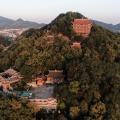 Temple Bells on the Hillside Above Chongqing
Nan'an District
老君洞山腰住宿 -- the small-guesthouse belt on the temple slope between Laojun Dong's Taoist terraces and the botanical garden: courtyards and hillside rooms strung along the old pilgrim paths above Huangjueya, bells and birdsong instead of traffic, the city's haze below like a second sea -- the district's quietest beds, chosen for the temple mornings and the garden afternoons on either side of the stay.
 Sixteen Rooms in a Century-Old Compound
Nan'an District
龙门浩老街住宿 -- beds inside the restored consulate-era compounds themselves: a boutique hotel conversion of heritage buildings on the old street -- a former American embassy compound villa and a old bank house among them -- keeping the stone walls, the step streets and the river porch of the treaty port, with the peninsula's lights across the water for a nightcap view; the rarest register on the south bank, sleeping in the history rather than beside it.
 A Night Beside the Old French Barracks
Nan'an District
弹子石住宿 -- sleeping at the confluence end of the south bank: rooms above and behind the 2018-reopened old street, the restored French naval barracks of 1902-03 as the neighbourhood's front landmark, the Yangtze running past the windows toward Chaotianmen, and the ten-minute taxi radius that keeps both the old street's evening and Nanbin Road's riverfront within an easy walk of the bed.
 Slow Mornings on Nanshan Hill
Nan'an District
黄桷垭南山民宿 -- the guesthouse scatter above Huangjueya old street, ten slow minutes and a whole register from downtown: courtyards behind the ridge, morning fog over the camphor slopes, tea instead of tower lobbies, prices that read country rather than city -- the bed chosen for the quiet of the hill that has kept an old post road, a poet's childhood street and the botanical garden as its neighbours.
 Sleeping on Chongqing's Old Treaty-Port Waterfront
Nan'an District
南滨路住宿 -- rooms along the river frontage where Chongqing first opened to foreign trade in 1891: consulates, customs houses and foreign barracks once lined this bank, and the hotels built here in the boom years now hold the same view those verandas did -- the whole Yuzhong peninsula and Chaotianmen confluence across the water, lit at dusk; the bed chosen for the window that looks back at the old city from the new riverfront, with the restored treaty-port buildings downstairs as the district's evening walk.
 A Night in the Forest, Stays on the Iron Mountain Ridge
Jiangbei District
铁山坪住宿 -- the district's forest resort belt, half an hour and a whole register away from the shopping mile: more than thirty villas, farmstays and small mountain hotels scattered through the 14.93-square-kilometre park that the city developed from 2009 and listed at 4A in April 2014 -- cool-air weekends, Pine-forest verandas, peppercorn-chicken dinners downstairs, and prices that read like a different district from the towers across the river; the bed chosen for the trees, not the skyline.
 The River Front Row, Stays Along Beibin Road
Jiangbei District
北滨路住宿 -- the linear riverfront where the road came first: begun in December 1997, its 11.68-kilometre first phase open by September 2005, and the hotels and apartments strung along it like beads on the one line the bank allows -- south-facing rooms in the morning light and the evening lamps of the peninsula across the water, priced by floor and aspect along the widest band in the district, with the Liujia Wharf food quarter as the densest knot of the string. A bed chosen by the window, in a district where the window is the amenity.
 Stays for the Street That Wakes at Ten
Jiangbei District
九街住宿 -- the soundproofing economics of sleeping next to the city's loudest block: apartments and small hotels inside the night district itself, priced by their distance from the noise -- street-facing low floors that trade on being in it, back-street and inner-court rooms with double glazing that trade on sleep, and hourly-to-weekly flexibility that absorbs the crowds the Guanyinqiao hotels send over when they fill; a micro-market that exists because the block was finished in 2012, expanded in 2015 and nationally listed in 2021, and never quite closes.
 Rooms That Look Back at the Peninsula
Jiangbei District
江北嘴住宿 -- beds in the financial district that was planned from nothing: the old Jiangbeicheng town cleared from 2002, the CBD plan approved in 2003, cranes from 2005, and rooms that face the one view money could not build -- the whole Yuzhong peninsula across the water, lit at dusk, with Hongyadong's glow at one end; since the Qiansimen bridge opened in April 2015 the view has been walkable, and the district's hotels price their windows by the angle of that skyline, the mirror image of every east-bank river-view room the site has written so far.
 Sleeping Above the Shopping Mile
Jiangbei District
观音桥商圈住宿 -- rooms stacked over the busiest shopping district north of the Yangtze, where Longfor's Beicheng Tianjie opened in 2003 and gave the district its first vertical mall and the towers behind it their logic: hotel lobbies on the ground floor, rooms ten to thirty floors up, the pedestrian street directly below, and every price premium in the district convertible into walking minutes from the mall -- the bed chosen for what is under it, 130 to 1,200 yuan as of late 2026, by walking distance rather than by star.
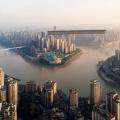 Chaotianmen Raffles Stays, Under the Mast of the Sail
Yuzhong District
朝天门来福士 -- sleeping inside the skyline at the very tip of the peninsula: eight towers on the old wharf joined by the 300-metre Crystal sky bridge laid across four of them at 250 metres up, with the Two Rivers night cruises below on the water and the observation park above; the wharf is now a plaza and a cruise terminal, and the night boat is the wharf's living memory.
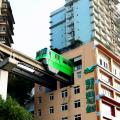 Eling and Lianglukou, the Quiet Flank on Line 1
Yuzhong District
鹅岭与两路口住宿 -- the mid-line flank between the pedestrian circle and the river gates: the ridge of Eling with its Testbed 2 cultural park in the old printing factory, Liziba where the monorail threads through a residential block, and the guesthouses and hotels strung along Eling Zhengjie and Zhongsan Third Road -- a base priced for arriving by metro rather than for stepping out into a crowd.
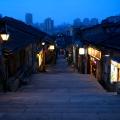 Shibati and the Lower City, Sleeping on the Slope
Yuzhong District
十八梯民宿 -- guesthouses on the slope between the upper and lower city, around the Eighteen Steps traditional quarter entered on the national list of tourism and leisure streets in its fourth batch (2025): courtyard houses on the old lanes, duplex attics with private baths behind the stairway, and the minsu belt of Nanjimen and Baixiang Street below, all within a few minutes' walk of the Jiaochangkou interchange.
 Hongyadong Riverview Stays, the Three Prices of a Window
Yuzhong District
洪崖洞江景房 -- the river-view rooms of the Jialing side, priced by what the window frames: a direct view across to the Qiansimen Bridge and the eleven storeys of stilt houses, a side view, or a city view; the official lighting schedule runs from 19:30 to 23:00, three and a half hours an evening, which is exactly the number of hours a river view is worth here.
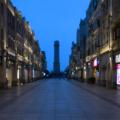 Hotels Around Jiefangbei, Where the Street Is the Lobby
Yuzhong District
解放碑步行街住宿 -- the lodging logic of China's first commercial pedestrian street (laid out in 1997): rooms priced by the walk rather than the view, ringed around the monument at the crossing of Minzu, Minquan and Zourong roads, with Bayi Road's food street one block over and the metro stations of Jiaochangkou, Linjiangmen and Xiaoshizi on the rim of the circle.
Nothing filed in this section yet.
Travel0
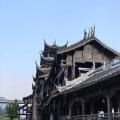 Zhuoshui: the Millennium Town, the Wooden Bridge and the Dark River
Qianjiang District
Zhuoshui (濯水, Zhuóshuǐ) is a 5A-rated (December 2020) complex at Zhuoshui town, and the county's flagship — a three-part product on one ticket (100 yuan in both seasons): the thousand-year old town (千年古镇) laid out as 'five streets, seven la
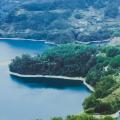 Xiaonanhai: the Earthquake's Barrier Lake
Qianjiang District
Xiaonanhai (小南海, Xiǎonánhǎi) is a 4A-rated (December 2005) lake at Xiaonanhai town — a barrier lake (地震堰塞湖) formed when an earthquake dammed the river valley, leaving a still, green, mountain-ringed lake that now serves as the county's summer retreat.
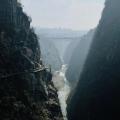 Urban Grand Canyon: the Gorge in the Middle of Town
Qianjiang District
The Urban Grand Canyon (城市大峡谷, Chéngshì Dàxiágǔ) is the 4A-rated (December 2016) gorge that runs through the county seat itself, at Zhoubai Street — a cleft cut into the city's fabric, spanned by the Cihang Bridge (慈航桥) and walked on the cl
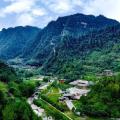 Thirteen Tujia Villages: the Mountain Villages' Living Custom
Qianjiang District
The Thirteen Tujia Villages (土家十三寨, Tǔjiā Shísānzhài) are a 4A-rated (August 2017) cluster of Tujia mountain villages at Xinjian Village, Xiaonanhai town — thirteen traditional settlements on the slope country above the lake, developed as a
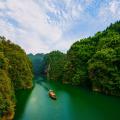 Shenturtle Gorge: the Apeng River's Turtle-Shaped Reach
Qianjiang District
Shenturtle Gorge (神龟峡, Shénguī Xiá) is a 4A-rated (December 2017) river gorge on the Apeng River (阿蓬江), reached by cruise boat at 120 yuan in both seasons.
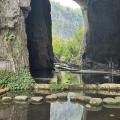 Taoyuan: the Peach Blossom Spring You Enter Through a Cave
Youyang Tujia and Miao Autonomous County
The Taoyuan Scenic Area (酉阳桃花源, Yǒuyáng Táohuāyuán) is a 5A-rated (graded January 2012), 100-yuan-a-head site at No.
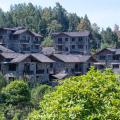 Nanmuwan: the Golden-Thread Grove
Youyang Tujia and Miao Autonomous County
Nanmuwan (楠木湾, Nánmù Wān) is a 4A-rated (graded June 2024 — the county's newest), 60-yuan-a-head site at Jinsi Nanmu Village (金丝楠村), Liangzeng Township (两罾乡) — a village built around a community of golden-thread nanmu (金丝楠木, Phoebe zhennan) old trees.
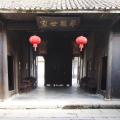 Longtan: the Dragon-Pool Town and the Martyr's House
Youyang Tujia and Miao Autonomous County
Longtan Ancient Town (龙潭古镇, Lóngtán Gǔzhèn) is a 4A-rated (graded November 2012), free-access town at No.
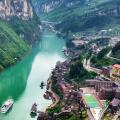 Gongtan: the Old Town Hung on the Wujiang Bank
Youyang Tujia and Miao Autonomous County
Gongtan Ancient Town (龚滩古镇, Gōngtān Gǔzhèn) is a 4A-rated (graded September 2010), free-access town on the Wujiang river (乌江) bank — a wharf town of the river trade, kept as its own monument: the bluestone old street (青石板老街) climbing the ba
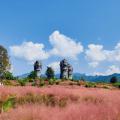 Dieshi Huagu: Stone Layers Under a Sea of Flowers
Youyang Tujia and Miao Autonomous County
Dieshi Huagu (叠石花谷, Diéshí Huāgǔ) is a 4A-rated (graded October 2022), 99-yuan-a-head site at Zhaying Village (扎营村), Banxi Town (板溪镇) — the county's engineered landscape: stacked-stone layers (叠石层) set into a valley floor, flower seas (花海)
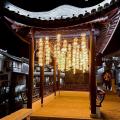 Xijie: the Millennium Bluestone Street of Zhonghe
Xiushan Tujia and Miao Autonomous County
The Xijie Folk Culture Scenic Area (西街民俗文化景区, Xījiē Mínsú Wénhuà Jǐngqū) is a 4A-rated (February 2018), free-access heritage street at Zhonghe Street — the county seat's millennium-old lane line, paved in bluestone (青石板路) and hung with the
 Shiti Ancient Town: the Rolled-Cave Gate on the Youshui
Xiushan Tujia and Miao Autonomous County
Shiti Ancient Town (石堤古镇, Shítī Gǔzhèn) is an unrated, free-access old town on the Youshui River (酉水河) — the river's reach that the county shares with its western neighbours — whose one dated landmark is a rolled-cave gate (卷洞门) from the la
 Phoenix Mountain: the Lantern Culture's Home Ground
Xiushan Tujia and Miao Autonomous County
The Phoenix Mountain Lantern Culture tourism area (凤凰山花灯民俗文化旅游区, Fènghuáng Shān Huādēng Mínsú Wénhuà Lǚyóuqū) is a 4A-rated (December 2018), free-access area three kilometres south of the county seat — the mountain where the county's lanter
 Hong'an Border Town: One Foot in Three Provinces
Xiushan Tujia and Miao Autonomous County
Hong'an Border Town (洪安边城, Hóng'ān Biānchéng) is a 4A-rated (December 2021), free-access town at the junction of Chongqing, Hunan and Guizhou (渝湘黔三省交界) — the prototype of Shen Congwen's Border Town (《边城》), the novel that fixed this kind of
 Chuanhegai: China's Table Mountain at 1,200 Metres
Xiushan Tujia and Miao Autonomous County
Chuanhegai (川河盖, Chuānhé Gài) is the county's newest graded attraction — 3A, graded December 2025 — and free to enter: a plateau at about 1,200 metres whose flat top and steep sides have earned it the name 'China's table mountain' (中国桌山).
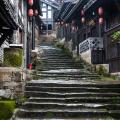 Xituo Ancient Town: the Cloud-Ladder Street and the Salt Carriers
Shizhu Tujia Autonomous County
Xituo Ancient Town (西沱古镇, Xītuǒ Gǔzhèn) is a 4A-rated (December 2020), free-access ancient town on the Yangtze's south bank — and the most physically distinctive address in the municipality.
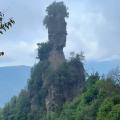 Wanshou Mountain: the Female General's Battlefield Above the Seat
Shizhu Tujia Autonomous County
Wanshou Mountain (万寿山, Wànshòu Shān) is a 4A-rated (March 2020) historical mountain at Nanbin Street, directly above the county seat — 65 yuan in both seasons.
 Guanghan Palace: the Cold Palace Cave of Qiyao Mountain
Shizhu Tujia Autonomous County
Guanghan Palace (广寒宫, Guǎnghán Gōng) is a 4A-rated (December 2021) show-cave complex on Qiyao Mountain at Jinling township — 80 yuan in both seasons — a karst cave with an underground dark river (地下暗河) whose interior holds a constant 18°C.
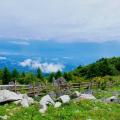 Qianye Grassland: the Karst Meadow and Its Stone Sprouts
Shizhu Tujia Autonomous County
The Qianye Grassland (千野草场, Qiānyě Cǎochǎng) is a 4A-rated (September 2016) karst grassland at Yankou, Yuchi town — 45 yuan in both seasons — where the meadow grows over the region's limestone, so the grass is studded with 石芽 (stone sprouts
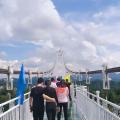 Dafengbao: the Glass Bridge over the Primeval Forest
Shizhu Tujia Autonomous County
Dafengbao (大风堡, Dàfēngbǎo) is a 4A-rated (December 2011) mountain destination beside the Huangshui National Forest Park (黄水国家森林公园) at Huangshui town — 55 yuan in both seasons — whose products are the 原始森林 (primeval forest) and the view over
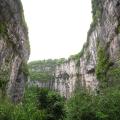 Tiansheng Three Bridges: Three Natural Stone Arches in One Sinkhole
Wulong District
Tiansheng Three Bridges (天生三桥, Tiānshēng Sānqiáo) is the headline act of the Wulong Karst, inscribed on the UNESCO World Natural Heritage list, and the reason most travellers ever hear the name Wulong at all.
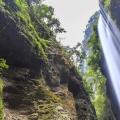 Longshui Gorge: A Crack in the Earth With a Waterfall in It
Wulong District
Longshui Gorge (龙水峡地缝, Lóngshuǐxiá Dìfèng) is a 'ground fissure' canyon — the karst's other signature form, where the earth has split open along a fault rather than collapsed into arches.
 Furong Cave: Five Wonders of Speleothem in One Chamber
Wulong District
Furong Cave (芙蓉洞, Fúróng Dòng) is the cave component of the Wulong World Heritage property — and the argument, made by many a local guide, that Wulong's most astonishing landscape is the one you cannot photograph properly.
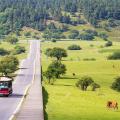 Fairy Mountain: 33,000 Hectares of Forest and Grassland at 1,900 Metres
Wulong District
Fairy Mountain (仙女山, Xiānnǚshān) is a national forest park on the north bank of the Wujiang, some 200 kilometres from central Chongqing, and the other half of the Wulong World Heritage story — where the Three Bridges go down, Fairy Mountain goes up.
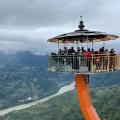 Baima Mountain: A Flying Kiss, a Tea Garden and the 4D Cinema
Wulong District
Baima Mountain (白马山, Báimǎshān) is the newer, louder half of Wulong's tourism offer: a 4A-rated (November 2019) mountain park in Baoyan Village, Baima town, built around a high tea garden, a pair of glass observation platforms marketed as t
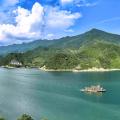 Wujiang Gallery: the Free Entry, the Priced Boat
Pengshui Miao and Tujia Autonomous County
The Wujiang Gallery (乌江画廊, Wūjiāng Huàláng) is a 4A-rated (graded June 2018) scenic river reach at Wanzu Town (万足镇) — the county's stretch of the 'thousand-li river, hundred-li gallery' the whole region markets.
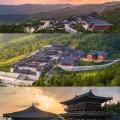 Mowei Mountain: the Forest Mountain at Thirteen Hundred Metres
Pengshui Miao and Tujia Autonomous County
Mowei Mountain (摩围山, Mówéi Shān) is a 4A-rated (graded November 2017), 50-yuan-a-head forest mountain — 91 percent forest cover at an average elevation of about 1,300 metres, with the Yunding Temple (云顶寺) near the summit, stone-forest and c
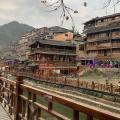 Luojiatao: the Free Miao Village on the Hill
Pengshui Miao and Tujia Autonomous County
Luojiatao Miao Village (罗家坨苗寨, Luójiātuó Miáozhài) is a 3A-rated (graded October 2020), free-access Miao settlement at Taiyuan Town (太原镇) — a village of the Miao stilted-house type, kept as a living聚落 rather than a rebuilt show street.
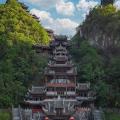 Chiyou Jiuli City: the Miao Ancestor's City on the Wujiang
Pengshui Miao and Tujia Autonomous County
Chiyou Jiuli City (蚩尤九黎城, Chīyóu Jiǔlí Chéng) is a 4A-rated (graded June 2016), 90-yuan-a-head cultural city on the Wujiang bank at Dianshui Street (靛水街道) — the county's statement of Miao identity, built around Chiyou (蚩尤), the ancestor the
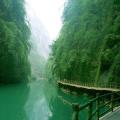 Ayi River: the Gorge You Raft, Float and Ride
Pengshui Miao and Tujia Autonomous County
The Ayi River (阿依河, Āyī Hé) is a 5A-rated (graded January 2020), 90-yuan (peak) / 70-yuan (off-peak) river gorge at No.
 Wuxi County Museum: the Salt Museum of a Mountain County
Wuxi County
The Wuxi County Museum (巫溪县博物馆, Wūxiān Bówùguǎn) is the county's 2A-rated (September 2023) museum — free, at No.
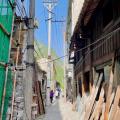 Ningchang Ancient Town: Five Thousand Years of Salt
Wuxi County
Ningchang Ancient Town (宁厂古镇, Níngchǎng Gǔzhèn) is the county's heritage core and its oldest story: an unrated, free-access ancient town whose entire reason for existing is salt.
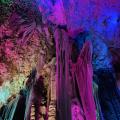 Lingwu Cave: the Dark River, the Cable and the Raft
Wuxi County
Lingwu Cave (灵巫洞, Língwū Dòng) is a 4A-rated (October 2022) adventure complex on the Daning River, built as three separately ticketed rides on one address: the cave itself with its elevator (溶洞+电梯, 50 yuan), the cross-river cable car plus d
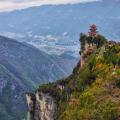 Lanying Grand Canyon: Asia's Deepest Valley and Its Cliff Road
Wuxi County
The Lanying Grand Canyon (兰英大峡谷, Lányīng Dàxiágǔ) is a 4A-rated (April 2024) free-admission canyon whose claim is depth: the 'first deep valley of Asia' (亚洲第一深谷), a slot cut so far into the mountain that the walls close the sky.
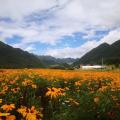 Hongchiba: the Highland Flower Sea and the Milky Way
Wuxi County
Hongchiba (红池坝, Hóngchíbà) is a 4A-rated (November 2012) high-mountain resort at Wenfeng town — the county's flagship plateau destination, built around a named pool (the 'red pool' of the name) and the summer flower sea that covers its grassland.
 Wushan Museum: the Wu Culture and the Dragon-Bone Slope
Wushan County
Wushan Museum (巫山博物馆, Wūshān Bówùguǎn) is a 4A-rated (September 2019) county museum at No.
 Wu Gorge & Goddess Peak: the Sky Road Above the Gorge
Wushan County
The Wu Gorge & Goddess scenic area (巫峡·神女景区, Wūxiá Shénnǚ Jǐngqū) is a 4A-rated (May 2014) mountain-gorge complex on the Yangtze's south bank, where the Wu Gorge — the middle and most poetic of the Three Gorges — runs below a ridge road built along the cliff.
 Wenfeng: the Hill Behind Town with the Red Frame
Wushan County
Wenfeng (文峰景区, Wénfēng Jǐngqū) is the 4A-rated (December 2017) hill directly behind the county seat — the town's own garden ridge, holding a Zhenshui Pagoda (镇水塔) built in the old flood-pacifying tradition, paths through the slope's pines,
 Three Gorges Light: the Cliff-Wall Night Cruise from Jiuma Wharf
Wushan County
Three Gorges Light (三峡之光情境夜游, Sānxiá Zhī Guāng Qíngjìng Yèyóu) is a 4A-rated (February 2023) night cruise departing from Jiuma Wharf (九码头) on Ningjiang Road: about an hour on the Yangtze in front of the county seat, during which the gorge w
 Lesser Three Gorges: the Daning River's Three-Fold Gorge Run
Wushan County
The Lesser Three Gorges (巫山小三峡—小小三峡, Wūshān Xiǎosānxiá) are a 5A-rated (May 2007) cruise on the Daning River, a Yangtze tributary entering from the south at Ningjiang Road 111, Gaotang Street — three gorges in sequence: Dragon Gate, Ba Wu a
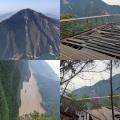 Three Gorges Summit: the Red-Jia Ridge Above the Poem City
Fengjie County
Three Gorges Summit (三峡之巅, Sānxiá Zhīdiān) is the 4A-rated (October 2020) ridge destination on Chijia Mountain (赤甲山), above Baidi town at Shibiao Village — the high viewpoint over the whole Qutang system, and the county's sunset-and-cloud-sea address.
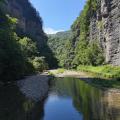 Longqiao River: the Underground River and Its Natural Bridge
Fengjie County
Longqiao River (龙桥河景区, Lóngqiáo Hé Jǐngqū) is a 4A-rated (September 2019) river-valley destination in Longqiao Tujia township, south of the county seat — a valley built around an underground river (地下河) that surfaces, runs, and disappears a
 Kuizhou Museum: the Poem City's Memory on Shicheng East Road
Fengjie County
The Kuizhou Museum (夔州博物馆, Kuízhōu Bówùguǎn) is the county's 4A-rated (September 2019) museum — free, at No.
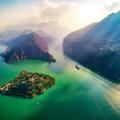 Baidi City & Qutang Gorge: the Orphan's Entrustment and the Ten-Yuan Gate
Fengjie County
Baidi City & Qutang Gorge (白帝城·瞿塘峡, Báidì Chéng·Qútáng Xiá) is the county's 5A-rated (July 2022) flagship at Baidi town — a two-part product in one ticket: the Baidi fortress-city on its peninsula above the Yangtze, and the view down into Q
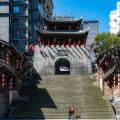 Tucheng Red Army Old Street: the Revolutionary Quarter of the Sichuan-Shaanxi Base
Chengkou County
Tucheng Red Army Old Street (土城红军老街, Tǔchéng Hóngjūn Lǎojiē) is a 4A-rated (December 2021) heritage quarter on Tucheng Road in Gecheng Street — the county seat's preserved revolutionary quarter, where the old street's timber houses carry th
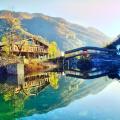 Kangu Valley: the Free Gorge at the Heart of the Daba Mountains
Chengkou County
Kangu Valley (亢谷, Kànggǔ) is a 4A-rated (June 2016) primeval canyon at Xingtian Village, Dong'an town, in the deep fold of the Daba Mountains that forms the county's northern edge — and, remarkably for a graded scenic area, admission is free.
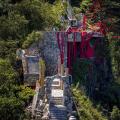 Kangjia Village: the New Lookout Above Kangu Valley
Chengkou County
Kangjia Village (亢家寨, Kàngjiāzhài) is the county's newest graded attraction — 3A, graded September 2025, ticketed at 20 yuan in both seasons — built at Xingtian Village, Dong'an town, the same village address as Kangu Valley.
 Huang'anba Grassland: the High Pasture Under the Cloud Sea
Chengkou County
Huang'anba Grassland (黄安坝草原, Huáng'ānbà Cǎoyuán) is the high plateau pasture on the county's southern flank — one of the highest mountain grasslands in Chongqing, unrated and free, where the Daba range flattens into open grass before dropping away again.
 Feidu Gorge: the Waterfall Reach Below the Grassland
Chengkou County
Feidu Gorge (飞渡峡, Fēidù Xiá) is the waterfall reach that runs down from the Huang'anba plateau — unrated, open 08:00–18:00, and free, a gorge of successive falls and pools whose water carries the plateau's clarity straight into the valley.
 Sanhe Lake: the Wetland Loop on Dianjiang's New Side
Dianjiang County
Sanhe Lake Wetland Park (三合湖湿地公园, Sānhéhú Shīdì Gōngyuán) is a 4A-rated (February 2023) wetland park on the new-development side of Dianjiang, and the district's free, flat, everyday green: a ringed lake with a loop path, restored wetland p
 Peony and Cherry World: A Million Trees in March Bloom
Dianjiang County
Peony & Cherry World (牡丹樱花世界, Mǔdān Yīnghuā Shìjiè) is a 4A-rated flower park at Shixian Village, Xinmin town, in Dianjiang's north, planting roughly a million peony, cherry and other spring-flowering trees on rolling hillside.
 Mingyue Mountain: the Ancient Road to a Sea of Clouds
Dianjiang County
Mingyue Mountain (明月山, Míngyuèshān) is the unrated, free ridge west of Dianjiang — the county's quiet counterweight to the ticketed flower parks.
 Lihua Yuan: the Plum-Blossom Source of Wudong
Dianjiang County
Lihua Yuan (李花源, 'Plum-Blossom Source') is a 3A-rated (October 2020) free blossom area at Yuejiang Village, Wudong town, in Dianjiang's hill country — a valley-side planting of plum that turns white in early spring and gives the county its
 Kaizhi Peak: Peonies Growing Out of the Rock
Dianjiang County
Kaizhi Peak (恺之峰旅游区, Kǎizhīfēng) is a 4A-rated scenic area in Peony Village, Taiping town, in the hills north-east of Dianjiang county seat, built around a botanical oddity: the mountain peony (山水牡丹) — a wild peony that grows not in garden
 Xueyu Cave: the Snow-Jade Cave of Baoluan
Fengdou County
Xueyu Cave (雪玉洞, Xuěyù Dòng) is a 4A-rated (December 2005) show cave at Rizhaoba Village, Baoluan town, south of the county seat — named for the colour of its formations: the white, jade-veined speleothems that give the chambers their snow-on-jade look.
 Shuanggui Mountain: the Free Hill Across the River
Fengdou County
Shuanggui Mountain (双桂山国家森林公园) is the unrated, free national forest park on the south bank, facing Ming Mountain's Ghost City across the Yangtze — the county's local hill, wooded, quiet, and ticketed at zero.
 Nantian Lake: the High Plateau Lake and Its Winter Ski Field
Fengdou County
Nantian Lake (南天湖, Nántiān Hú) is a 4A-rated (December 2018) high-mountain lake destination in Sanhe Street on the county's southern plateau — a reservoir set in rolling highland at roughly 1,400 metres, developed into Chongqing's winter an
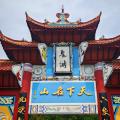 Ming Mountain: the Ghost City and Its Bridges of the Dead
Fengdou County
Ming Mountain (丰都名山, Fēngdū Míngshān) is the hill the rest of China knows as the Ghost City — a 4A-rated (January 2001) complex on the north bank of the Yangtze at Ming Mountain town, where two thousand years of Confucian, Daoist and Buddhi
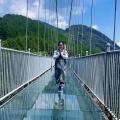 Jiuchongtian: Nine Heavens of Skywalk
Fengdou County
Jiuchongtian (九重天, 'Nine Heavens') is a 4A-rated (December 2018) mountain experience park at Lianhua Cave Village, Shuanglu town — the county's high-altitude thrill layer, built around the 连天栈道, a walkway engineered onto the ridgeline so th
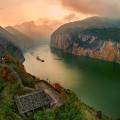 Summit of the Three Gorges
Fengjie County
The Summit of the Three Gorges is the highest viewpoint over the gorges: a cliff-edge terrace above Kuimen where the Yangtze, the Qutang cliffs and the far ridges unfold in one wide sweep.
 Tiankeng-Difeng
Fengjie County
Tiankeng-Difeng is Fengjie's karst wonder: the Xiaozhai Tiankeng, the world's largest sinkhole, and the Tianjing Crevice, a narrow cleft cut deep into the limestone.
 Kuimen
Fengjie County
Kuimen is the gate of the Qutang Gorge, the towering cliff pair that frames the river's entry into the gorges, immortalised on the back of the ten-yuan banknote.
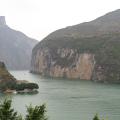 Qutang Gorge
Fengjie County
Qutang Gorge is the shortest and most vertiginous of the Three Gorges: eight kilometres of perpendicular cliff walls where the Yangtze is squeezed to a fraction of its width between Chijia and Baiyan mountains.
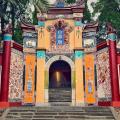 Baidi City
Fengjie County
Baidi City is the White Emperor City above the Qutang Gorge entrance: a Three-Kingdoms shrine and poetry terrace where Liu Bei entrusted his son to Zhuge Liang, and Li Bai began his dawn departure down the river.
 Pu'an Dinosaur Fossil Site
Yunyang County
The Pu'an Dinosaur Fossil Site is the Pu'an dinosaur fossil group in the south of the county, a globally significant concentration of Jurassic dinosaur bones and tracks, the source of the 'Yunyang dinosaur' finds.
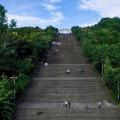 Three Gorges Ladder City
Yunyang County
Three Gorges Ladder City is Yunyang's hill-climbing old town around Panshi Fortress and the Yunyang Tower, a 4A riverside cultural district of steps, gardens and a lakeside greenway loop.
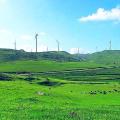 Qishan Grassland
Yunyang County
Qishan Grassland is an alpine meadow at 900-1500 m in the south of the county, part of the Longgang scenic belt: rolling green slopes, wind turbines, summer cool and a snow/grass play area.
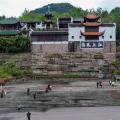 Zhangfei Temple
Yunyang County
Zhangfei Temple is the riverside shrine to the Shu general Zhang Fei, relocated stone by stone when the Three Gorges dam flooded its original site; a 4A temple of steles, halls and Three-Kingdom lore above the Yangtze.
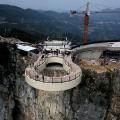 Longgang Sky Bridge
Yunyang County
Longgang Sky Bridge is the Dragon Jar: a 5A geopark built around a giant natural stone jar, headlined by the Cloud Sky Glass Bridge, a cantilevered walkway over a 700-metre-plus drop, plus caves, canyons and the Shisun River.
 Zhongzhou Museum
Zhong County
Zhongzhou Museum is the county's teller of stories: Han-dynasty finds, Three Gorges rescue archaeology and the zhong culture exhibits, a rainy-day anchor in the county town.
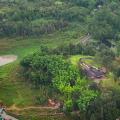 Huanghua Island
Zhong County
Huanghua Island is the river-crowned islet of a Southern Song fortress town: archaeology, wetland ecology and a ferry crossing from the county shore.
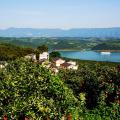 Three Gorges Orange Sea
Zhong County
The Three Gorges Orange Sea is ten thousand mu of citrus on the Yangtze slopes of Tujing township: blossom in spring, fruit in winter, and a lookout over the river bend.
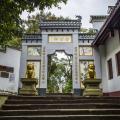 Baigong Temple
Zhong County
Baigong Temple is the memorial shrine to Bai Juyi's governorship of Zhongzhou: old courtyards, poetry steles and the heart of the county's 'loyalty culture'.
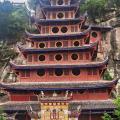 Shibaozhai
Zhong County
Shibaozhai is the 'Pearl on the Yangtze': a 12-storey wooden pavilion built against the lone Yuyin Hill without a single nail, ringed by a cofferdam after the Three Gorges impoundment turned it into a river island.
 Liangping Heritage Crafts
Liangping District
Liangping Heritage Crafts gathers the district's three national intangible heritages under one roof: woodblock New Year paintings, woven bamboo curtains and lantern opera, a living workshop of Chongqing folk art.
 Wenfeng Pagoda
Liangping District
Wenfeng Pagoda is Liangping's scholarly landmark: a tall Qing brick pagoda on the basin edge, climbed for a 360-degree sweep of the bamboo-rimmed plain and the town below.
 Huashi Ancient Fort
Liangping District
Huashi Ancient Fort is a restored Ming cliff stronghold of basalt walls and stone watchtowers hanging above a forested gorge, Liangping's most dramatic viewpoint.
 Baili Bamboo Forest
Liangping District
The Baili Bamboo Sea is a hundred-li blanket of bright bamboo across the Mingyue Mountains: plank paths, suspension bridges and a sea of green rustling above the Pingba basin.
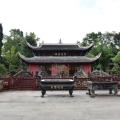 Shuanggui Temple
Liangping District
Shuanggui Temple is the 'first Zen court under heaven': a vast Qing monastic complex with twin osmanthus trees, a 700-year-old ginkgo and the patriarchate of Master Poru Shan, Southwest China's Zen heart.
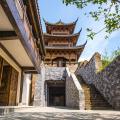 Kaizhou Ancient Town
Kaizhou District
Kaizhou Ancient Town is a living museum of Han-Tang, Ming-Qing and Republican architecture by the lake, with the Hanfeng-yinxiu water-screen light show on weekends and a riverside night market of local eats.
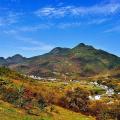 Xuebaoshan Forest Park
Kaizhou District
Xuebaoshan National Forest Park is the Qinba ridge's high wild: a 2,626 m alpine meadow, thousand-year cliff cypress, cloud-sea sunrise camps and autumn crimson valleys, the green lung above Kaizhou.
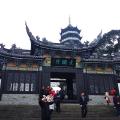 Juzi Garden
Kaizhou District
Kaizhou Juzi Garden is China's first imperial-exam theme park: reconstructed Qing-era examination sheds and the Wenfeng pagoda, with hanfu bridge-crossing rites and a night boat show over the lake, celebrating Kaizhou's scholarly past.
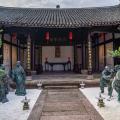 Liu Bocheng Memorial
Kaizhou District
The Liu Bocheng Memorial and Former Residence is Kaizhou's red-landmark core: a national museum with a 3D hologram of the marshal's battles and his restored Qing-era mud-wall farmhouse in Zhoudu village, closed Mondays.
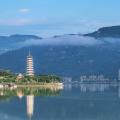 Hanfeng Lake
Kaizhou District
Hanfeng Lake Tourism Resort is the Three Gorges' largest man-made lake -- 15 sq km of open water with a national wetland park, 75 migratory bird species, sunset wooden-sail boat tours, lakeside cycling and the illuminated Ancient Town across the water.
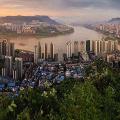 Three Gorges Pinghu Riverfront
Wanzhou District
The Three Gorges Pinghu riverfront is the Binjiang promenade, the Shiji-pier night cruise and the Wangjiang stairway that drops from the old town to the Yangtze, the everyday river life of Wanzhou.
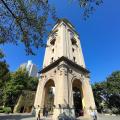 Xishan Park and the West Mountain Bell Tower
Wanzhou District
Xishan Park and the West Mountain Bell Tower are the old hilltop park and the 1937 bell tower above the river, one of the Yangtze's three great bell towers and a quiet lookout over the placid lake.
 Chongqing Three Gorges Migration Memorial
Wanzhou District
The Chongqing Three Gorges Migration Memorial is China's only national first-class museum dedicated to the million-strong Three Gorges resettlement, free with advance booking and closed on Mondays.
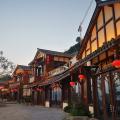 Tianshengcheng Cultural Block
Wanzhou District
Tianshengcheng cultural block is the Song-era anti-Mongol cliff town rebuilt as stilt-house lanes with a night light show, Wanzhou's answer to Hongyadong and free to enter by day and night.
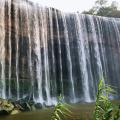 Wanzhou Grand Waterfall
Wanzhou District
Wanzhou Grand Waterfall at Ganning town is Asia's widest single-drop waterfall, 151 m wide and 64.5 m high, with raft viewing and a walk-through water curtain where a rainbow often forms in the spray.
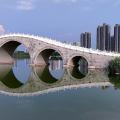 The Rongfeng and Laixi Rivers
Rongchang District
The Rongfeng and Laixi Rivers are the twin waterways that braid through Rongchang, with riverside parks, footbridges and the slow boating that frames the old town and the craft country beyond.
 Rongchang Grass Cloth (Xiabu)
Rongchang District
Rongchang grass cloth, xiabu, is the ramie-cloth textile of the district, spun and woven by hand into a cool, lustrous summer fabric, a national intangible heritage of the upper Yangtze.
 Rongchang Folding Fans
Rongchang District
Rongchang folding fans are the district's intangible-heritage craft, a bamboo-and-paper fan of painted, jointed leaves made in the old fan workshops that still turn them out by hand.
 Rongchang Pottery at Anfu
Rongchang District
Rongchang Pottery at Anfu is the thousand-year ceramic craft of the district, one of China's three famous pottery traditions, still thrown and glazed in working kilns among the clay hills.
 Wanling Ancient Town
Rongchang District
Wanling Ancient Town is the Ming-Qing river town of Rongchang, formerly Luokong, a grid of stone lanes, the garrison walls and the streamside teahouses above the water.
 The Fu-Qiong River Confluence
Tongnan District
The Fu-Qiong river confluence is where the Fu and Qiong rivers join on the district's north-west flank, a wide water meeting with sandbars, ferries and the river-bend farmland beyond.
 Chen Tuan's Hometown
Tongnan District
Chen Tuan's hometown is the Chongkan shrine to the Taoist sage Chen Tuan, born in Tongnan, with his ancestral hall and the legend of his sleep-cultivation told in the gardens.
 Shuangjiang Ancient Town
Tongnan District
Shuangjiang Ancient Town is the Ming-Qing river town of Tongnan, a grid of carved-stone lanes, the Yang family residence and the birthplace of the Yang brothers, one of Chongqing's best-kept old towns.
 The Dafu Temple Giant Buddha
Tongnan District
The Dafu Temple Giant Buddha is the seated rock Buddha of the Tongnan Dafu Temple, one of the largest carved Buddhas of the lower Fu River, set in a Qing-dynasty temple yard above the water.
 The Chongkan Rapeseed Flowers
Tongnan District
The Chongkan rapeseed flowers are Tongnan's spring sea of gold, thousands of hectares of rapeseed terraces around Chongkan town that draw Chongqing city crowds from March for the blossom.
 The Qiu Shaoyun Memorial
Tongliang District
The Qiu Shaoyun Memorial is the red-tourism shrine to the Korean-War hero Qiu Shaoyun, born in Tongliang, with his monument, exhibition hall and the martyr's native village preserved as a lesson in discipline.
 Xuantian Lake
Tongliang District
Xuantian Lake is the scenic reservoir of Tongliang, a chain of wooded islands and clear water for boating, lakeside walking and bird-watching beside the Baiyue foothills.
 Baiyue Mountain
Tongliang District
Baiyue Mountain is the forested ridge above Tongliang, a karst park of strange rocks, a cliff temple and hot-spring headwaters, laced with hiking trails and cool enough for summer escapees.
 The Tongliang Dragon
Tongliang District
The Tongliang Dragon is the national-intangible dragon dance of the district, whose fire dragon and lantern dragon are rehearsed and shown at the dragon-culture park and ignite every Spring Festival night.
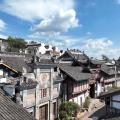 Anju Ancient Town
Tongliang District
Anju Ancient Town is the Ming-Qing river town on the Fu River, a grid of carved-stone lanes, a Confucian temple and a lakeside wall walk that is one of Chongqing's best-kept old towns.
 Changzhou Ancient Town
Dazu District
Changzhou Ancient Town is the Song-style reconstructed cultural quarter of Dazu, built around the old Changzhou prefecture name with lantern lanes, a Dazu Rock Carvings museum and craft lanes for hardware and bamboo weaving.
 Yulong Mountain
Dazu District
Yulong Mountain, the Jade Dragon range above Dazu, is a forest park of karst ridges, streams and the Yuntai cliff temple, laced with hiking trails and cool enough to draw summer escapees from Chongqing.
 Longshui Lake
Dazu District
Longshui Lake is the district's 'little West Lake', a chain of wooded islands and clear water for boating, lakeside walking and bird-watching, with the Baiyun Temple on its shore and the carvings a short drive away.
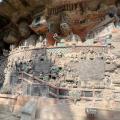 Dazu Rock Carvings at Beishan
Dazu District
The Dazu Rock Carvings at Beishan hold the finest of the district's early carving in the Buddha Bay caves, a century of Tang-to-Song refinement crowned by the revolving-sutra cave and the serene Sun-Moon Guanyin.
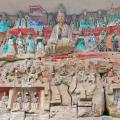 Dazu Rock Carvings at Baoding Mountain
Dazu District
The Dazu Rock Carvings at Baoding Mountain are the crown of the UNESCO site: a cliff-wide tableau of Song-dynasty Buddhist sculpture including the 31-metre Reclining Buddha and the gilded Thousand-Hand Guanyin, carved as one devotional walk.
 Qijiang Farmers' Printmaking Institute
Qijiang District
The Qijiang Farmers' Printmaking Institute keeps a national intangible-heritage woodblock tradition of bold, warm colour; visitors can watch the prints or try the carving and inking themselves in the Qijiang urban area.
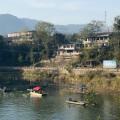 Dingshan Lake
Qijiang District
Dingshan Lake is the border-sentiment lake at 900 metres, for boating, lakeside fishing and a ring-lake hike, with the Seven-Confucian-holes Han tombs on its shore and about 1.5 hours' drive from the Qijiang seat.
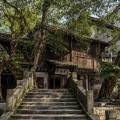 Dongxi Ancient Town
Qijiang District
Dongxi Ancient Town is a thousand-year wharf town more original than Ciqikou, with the Taiping Bridge, a 5,000-year banyan group, the salt-horse ancient road and the Wan Tian Gong guild hall, free to roam.
 Laoying Mountain and Its Dinosaur Footprints
Qijiang District
Laoying Mountain is part of the Qijiang National Geopark, holding the world's largest ancient-bird footprint fossils and vivid danxia red-rock landforms -- a low-traffic gem for dinosaur-footprint and geology lovers.
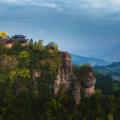 Gujian Mountain
Qijiang District
Gujian Mountain is the free 4A summit above the Qijiang seat, with the Jingyin Temple, the Yang Bridge and a famous cloud sea, and the 'as you wish' mood that draws hikers and pilgrims to its wooded ridges.
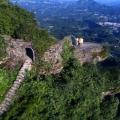 Longyan Fortress
Nanchuan District
Longyan Fortress is the Southern-Song cliff citadel (龙崖城) on Mazui Mountain above Sanquan town that held off the Mongol armies for eighteen years, called the 'unbeaten city'; stone gates, step lanes and an inscribed cliff make a low-traffic historical gem.
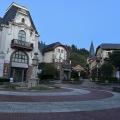 Lixiang Lake Wetland
Nanchuan District
Lixiang Lake National Wetland Park is the lake south of the seat with a European-styled lakeside town, ring-route cycling, 亲子 barbecue and stargazing camps -- the easy half-day the district pairs with Shenlong Gorge.
 Shanwangping Karst Park
Nanchuan District
Shanwangping Karst National Eco-Park is the twin-colour forest where one slope glows gold and the other stays green, with stone-forest karst, eco-bridges and the S-bend road photographers come for. Listed at 58 yuan; open 8:30-16:30.
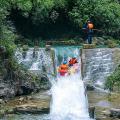 Shenlong Gorge
Nanchuan District
Shenlong Gorge is a deep Y-shaped karst gorge south of the district seat with tiered waterfalls, vine-hung cliffs and a clear creek for summer wading and rafting, plus a hiking trail and a camping pitch. Listed from 20 yuan; open 8:00-18:00.
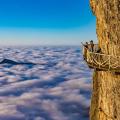 Jinfo Mountain
Nanchuan District
Jinfo Mountain is the district's 5A showpiece and a UNESCO World Heritage karst summit: the ancient-azalea garden in spring, the underground Buddha Cave (古佛洞) with its saltpetre pits, the Golden Buddha sunset, the summer cool and the winter ski field. West gate 180 yuan with cable car and shuttle; north gate 150 yuan; hours 8:00-17:30.
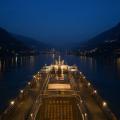 Night Water Between Two Rivers
Fuling District
The easiest hour in Fuling after dark is on the water: the Wujiang gallery two-river cruise boards at 20:00 from the Wujiang No.3 pontoon by Jinxiu Square, runs out past the confluence where the Wujiang's greener water meets the Yangtze, and loops back along the lit riverfront -- bridges, the pagoda hill, the museum's pale shell on the shore. Boarding is listed at 48 yuan, the boats are glazed against the river wind, and the view of the two-river city from midstream beats any embankment angle. On festival nights the riverfront crowds double, so buy early and board dry.
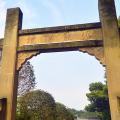 The Garden Where the Changes Were Pointed Out
Fuling District
On the Yangtze cliff below the district seat, the Song-dynasty scholar Cheng Yi spent his exile years lecturing by the river and commenting on the Book of Changes in a cave -- the tradition that gives Dianyi Garden its name, and the reason the site is counted among the cradles of Cheng-Zhu Neo-Confucianism. The modern park climbs the cliff through pavilions and inscribed stones to the cave itself, with the Yangtze running wide below. Admission is listed at 28-30 yuan, hours 9:00-17:00, and the site is close enough to the riverside museums to share a morning.
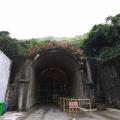 Plant 816, the Underground Maze
Fuling District
In the 1960s the state began tunnelling a complete nuclear-industry plant into the mountains above Baitao: Plant 816, dug by tens of thousands of engineering troops for seventeen years, hollowed into the world's largest man-made cave complex, and never commissioned. Declassified and opened as a 4A scenic area, it is now visited on foot -- halls the size of factory floors inside the mountain, reactor pits, galleries and cross-tunnels stacked in levels, the concrete raw and the scale absurd. The story of the soldiers who dug it, and the martyrs' account kept at the site, is half the experience; the other half is simply walking through a mountain that was hollowed out by hand.
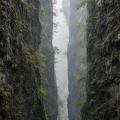 The Great Rift of Wuling Mountain
Fuling District
The district's 5A showpiece is a tear in the karst: Wuling Mountain Great Rift Valley, a gorge system whose walk runs down ladders and ledges into the Qingtianxia slot canyon, where the walls close to a few metres and the light goes blue-green, then out across the Tianmen Cave suspension bridge strung high between the walls. The full three-dimensional route uses shuttle buses and the Ping'an Pavilion cableway back out of the gorge; the combined admission with shuttle and cableway is listed at 75 yuan, and entry closes at 16:00 from an 8:30 opening, so an early start is the whole game. Cool air, tight rock and long drop -- it is the finest single landscape day in the district.
 The River's Underwater Ledger
Fuling District
For twelve centuries the stone ridge called White Crane Reef lay bare each low-water winter, and the generations who could read the water carved fish, eyes and dated inscriptions onto it -- a working ledger of the Yangtze's dry years that modern hydrologists still cite. When the Three Gorges reservoir drowned the ridge for good, engineers sealed it inside an arched chamber on the riverbed and built the world's first museum visitors reach without diving: long escalators down through the shaft, then a flooded viewing gallery where portholes look out onto the inscriptions in the green water. Admission is listed at 50 yuan, hours 9:00-17:00, and the visit pairs naturally with the two-river cruise that boards a short walk away.
 Slow City in the Pomelo Countryside
Changshou District
South of the lake the district has branded its farm belt 'Changshou Slow City' -- a stretch of citrus and pomelo country where the roads narrow, the villages whiten their walls, and the orchards take over the hills. The 'ten-li pomelo country' is the heart of it: orchard roads planted in shatian pomelos, cycling loops signed between villages, orange groves from the lake's famous summer-orange farms, and homestays that set their tables from the fields. Autumn is the season that justifies the trip -- picking baskets everywhere, fruit fairs along the slow-city avenue, and the smell of pomelo flowers' cousin, the cracking of thick skins, drifting over the lanes. Spring brings the citrus blossom and the cycling crowds. The whole zone is flat-ish, easy riding, and built deliberately for people to do nothing much, slowly.
 Three Thousand Steps Down the Old Street
Changshou District
Sandaogu -- 'three bends' -- old street is what remains of the Qing dynasty's merchant road up the river bluff: three thousand stone steps climbing the hillside in three great sweeping bends, lined with bamboo-and-timber houses whose bay windows lean over the stair. It is called the last surviving old street of the Three Gorges river towns, and walking it top to bottom reads like a vertical market history -- the gate arches, the old shopfronts with their plank counters, the shared wells, the small temples where the stairs rest between bends. The climb is real but gentle, broken by teahouses that pour refills for climbers, and the upper bends open river views back over the Yangtze bridges. The street's residents still live their daily routine along it, so walk quietly and buy your tea from the windows that open onto the steps.
 A Town Built Around the Wish for Long Life
Changshou District
Changshou ancient town is the district's purpose-built longevity-culture quarter: two thousand mu of grey brick, carved archways and opera stages laid out between the new district and the foot of Bodhi Mountain. Purists may note the town's youth, but the streets do what good streets do -- the water channel runs the length of the main lane, the teahouses fill their benches by mid-afternoon, and the evening fountain square pulls three generations of dancers. The food lanes are the honest centre: rice-noodle shops, intestine-rice bowls, pomelo-honey drinks and the smoke of grilled tofu skewers. Festival weekends bring opera performances and longevity-banquet long tables; weekdays the town relaxes into a neighbourhood with lanterns. It pairs naturally with a Bodhi Mountain climb -- temple morning, town evening.
 The Longevity Climb up Bodhi Mountain
Changshou District
Bodhi Mountain rises 598 metres directly above the city, and the district has turned its slopes into a single sustained metaphor: the climb for long life. The 'longevity ladder' counts ten thousand steps from the gate to the summit temples, each flight marked with characters and blessing stones; locals treat the dawn climb as their morning exercise and visitors soon fall into the same rhythm. The legend ties the hill to Bodhidharma, and the temple courts halfway up carry incense smoke under old banyans, with cliff inscriptions weathering beside modern prayer walls. The summit opens a full panorama over the Yangtze plain and, on clear days, the lake's distant glitter. The forest paths that drop off the ladder's spine are quieter, moss-stepped alternatives for walkers who want the hill without the counting.
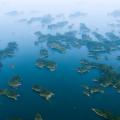 Two Hundred Islands Spelling Longevity
Changshou District
Changshou Lake is the landscape that gave the district its modern fame: a 65-square-kilometre reservoir of the 1950s Shizitan dam project, the largest man-made lake in southwest China, with 203 islands scattered across its bays like a spilled archipelago. From the ridge roads the islets are said to spell the character for longevity -- the 'heaven-granted longevity island' that photographers climb for at dawn. Boat routes thread the main channels past fishing rafts and bird reserves that shelter dozens of egret and waterfowl species; the lakeside eight views collect the classic stops, from the great dam to the orange orchards on the islands. The novel Red Cliff's author wrote here, and the shore keeps that literary memory in its memorials. Come for a boat day, stay for the fish banquet, and let the slow ferry pace reset a city-quickened clock.
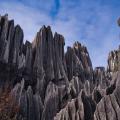 Karst Pillars Rising from the Valley Floor
Yongchuan District
The Shisun Mountains present a striking karst landscape of limestone pillars and peaks rising abruptly from a relatively flat valley floor, interspersed with caves, sinkholes and sections of underground river. The geology here is millions of years old, and the area preserves fossil evidence of ancient marine life embedded in the limestone formations. Hiking trails connect the principal peaks, with viewpoint platforms offering panoramic vistas over the surrounding farmland and, on clear days, the distant ranges of the Wuling Mountains. The caves have been developed for tourist access with lighting and walkways, revealing stalactites, stalagmites and underground chambers. Compared to the more famous karst landscapes further north in Guizhou, Shisun receives fewer visitors, offering a quieter experience for those interested in geology and outdoor walking. The local tourism board has invested in signage and interpretive displays explaining the geological processes that shaped the landscape.
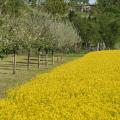 Pear Blossoms, Vineyards and Country Trails
Yongchuan District
Huaguo Mountain, literally 'fruit mountain,' is a hilly rural area planted with orchards of pear trees, peach trees, grape vines and other fruit-bearing crops, transformed in recent years into one of the region's most popular rural tourism destinations. Spring brings the spectacle of pear blossoms covering the hillsides in white and pink, drawing photographers and picnickers from across the province. Autumn is harvest season, when visitors can pick fruit directly from the trees and vines at participating farms. Beyond the orchards, the zone offers cycling trails through the countryside, designated camping sites, and farm-to-table restaurants that prepare meals using ingredients grown on-site. The experience is deliberately rustic and unhurried, appealing to urban families seeking a weekend escape into the countryside without venturing far from civilisation.
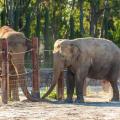 Southwest China's Largest Wildlife Park
Yongchuan District
Lehe Ledu Animal Theme Park is one of the largest and most comprehensive wildlife parks in southwestern China, housing elephants, tigers, lions, giraffes, zebras, pandas and hundreds of bird species in spacious, semi-natural enclosures. The park's signature attraction is the safari section, where visitors either drive their own vehicles or ride in park-operated shuttles through open-range habitats, observing animals at close range and even feeding certain species from the vehicle windows. Adjacent to the wildlife park is an amusement park with roller coasters, water slides and a daily circus performance. The scale of the operation makes it a full-day destination, and many visitors combine it with an overnight stay at one of the nearby family hotels. Educational programmes for school groups are a major part of the park's mission, and interpretive signage throughout the grounds emphasises conservation themes.
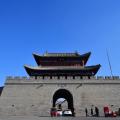 A Thousand-Year-Old Town on the Yangtze
Yongchuan District
Songgai is one of the better-preserved ancient towns along the Yangtze in this region, with a history stretching back over a millennium. The walled town retains its Ming dynasty gate towers, a network of narrow stone lanes winding between black-tile-roofed buildings, and a waterfront lined with wooden stilt houses that traders constructed centuries ago to store goods above the flood line. At the centre stands a Ming dynasty theatre platform, still used for traditional performances during festivals. The town's defensive walls, built to protect against river pirates, enclose a compact area that can be walked in twenty minutes, though the alleys reward lingering. Take the local ferry across to the opposite bank for the best panoramic view of the town skyline against the hills. The evening atmosphere, with lanterns lit along the waterfront, is particularly evocative.
 The Film Landscape of Tea and Bamboo
Yongchuan District
The Tea-Bamboo Forest National Park is a vast tract of rolling hills planted with alternating bands of tea bushes and bamboo groves, a landscape so distinctive that Zhang Yimou chose it as the filming location for his martial arts epic Ten Thousand Swords. Walking the forest trails, you pass through stretches of knee-high tea plants tended by local farmers, then emerge into towering bamboo groves where the light filters down in green shafts. The park has developed marked hiking routes of varying lengths, tea-tasting pavilions, and workshops where craftsmen carve decorative objects from local bamboo. Early morning visits reward you with mist gathering in the hollows between the hills, and the air smells of damp earth and green leaves. It is a landscape designed for slow movement -- there is no rush here, only the rhythm of footsteps on dirt paths and the rustle of bamboo in the breeze.
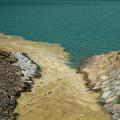 Where Three Rivers Meet
Hechuan District
The district is named for the geography, and the geography is best read from the water's edge: the green Jialing comes down from the north, the grey Fu from the southeast, and the two currents braid past the city point in a visible line of colour before the joined river turns south. The embankment promenade traces the meeting -- morning is for the flat light and the fishing rods, evening for the lamps and the braided water going dark. The bridge decks give the aerial angle, the pagoda street gives the foreground, and the ferry that still works the confluence gives the river's own view for pocket change. It costs nothing, takes an hour, and explains the city: three rivers made the harbour, the harbour made the town, and the town grew rich enough to build walls on the hill above them.
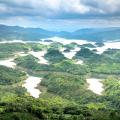 The Island Lake of the Western Hills
Hechuan District
West of the city the hills fold around a long reservoir -- Shuanglong Lake, the 'double dragon' water, wooded islands standing in calm green water an hour from the district seat. The lake's trade is boats: hire one at the slip to work the island channels, fish the quiet bays with the farm crews, or walk the shore path where the egrets fish the shallows at first light. The water stays cool through summer, the hills catch the mist most mornings, and the photograph everyone leaves with is a lone island tree over flat water. There is no ticket gate and little ceremony -- a slip, a few guesthouses, the fish restaurant at the dam -- which is precisely the appeal. Pair it with the western-roads farm stops on the way back, and let the lake be the slow half of the district.
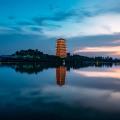 The Nine-Storey Pagoda Above the Three Rivers
Hechuan District
The brick pagoda at the head of Wenfeng street has watched the confluence since the Qing -- nine storeys of grey brick built to pin the river spirits and mark the harbour for boats working three rivers. The street below it is the district seat's riverfront quarter: arcade buildings along the old footprint, tea houses and snack counters, lantern strings over the stones, and the river path running out beneath the terrace walls. Climb the pagoda for the whole geography at once -- the green Jialing and the grey Fu braiding past the city point -- then walk the street with a bowl of the district's noodles and let the evening lights take the water. It pairs with the fortress in the morning and the confluence at dusk, and it is the easiest half-day in the district: bus, pagoda, street, river, done.
 The Urn City and the Cliff Buddhas
Hechuan District
Laitan is two things stacked on one hilltop: a Qing walled town with one of the basin's rare urn-city gate arrangements -- an inner gatehouse that traps an attacker inside a stone courtyard -- and, below the walls, the Rock Shrine of the Second Buddha, a Tang-and-Song cliff complex of carved figures that survived the centuries in remarkable condition. The town itself is black-tile lanes, wooden arcades and a Ming theatre platform, small enough to cross in ten minutes and dense enough to fill an afternoon. The shrine is the treasure: hundreds of figures in tiers under the rock overhang, painted and gilded, working incense at the foot. Coaches from the city run the morning rounds, the last of them leaves by late afternoon, and the town that remains after dark is the one the guesthouses are for.
 The Fortress That Broke a Khan
Hechuan District
The hill the locals call Diaoyu -- Fishing Rod Hill -- carries the fortress that changed the thirteenth century. Song China's garrison held these walls against the Mongol armies for thirty-six years, and in 1259 the Great Khan Mönge died on this ridge, a death that recalled the armies from Europe and the Middle East and made the hill famous far beyond the basin. The walls still crown the cliffs above the Jialing: the Giant Gate and Water-Gate tunnels, the cisterns that outlasted the sieges, the cliff inscriptions, and the viewing rampart where all three rivers show at once. Give the visit a half day -- the gate trail up, the wall walk along the crest, the old temple and the prison-era cells, and the long look down the river the defenders watched. It is the reason the district earns the word 'fortress' in every guidebook, and the walls earn it in person.
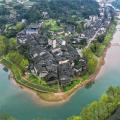 The Film-Set Town Between Two Rivers
Jiangjin District
Tanghe sits between its two rivers in the district's south, and it has the luck of a townscape that survived the twentieth century whole: the Ming-Qing wooden arcades run street after street, the stone stair-lanes climb the hill between courtyard houses and ancestral halls, and the temple stages still stand where the river traders built them. That completeness is why the costume-drama crews keep arriving -- Tanghe has stood in for old Sichuan in a shelf of productions, and the town leans into the trade without rebuilding itself for it. The streets are quiet between shoots, which is when to come: the arcades to walk, the old stages to find, the river confluence at the bottom of the stairs. It pairs naturally with Baisha for a two-town day, and with the mountain road onward to the Zhongshan side of the district. The town charges little and pretends nothing; the fabric is the attraction.
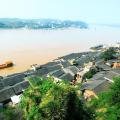 The River Port the Cameras Never Leave
Jiangjin District
Baisha, on the Yangtze upstream of the district seat, is the district's old cultural capital: a river port grown rich on the shipping trade, its long Qing-dynasty streets climbing the black slope that named it, its lanes and courtyards intact enough that the period-drama industry never really stopped filming there. The town's stock runs from the stone landing stairs up through the arcaded shop streets to the old Academy hall and the wartime college buildings -- Baisha hosted a run of relocated schools in the 1940s, and their campuses survive in the town's upper lanes. The film trade is the working proof of the townscape: crews arrive, dress a lane, shoot, leave, and the street simply resumes being itself. For the visitor it is the district's deepest half-day -- the port stairs, the black-rock view over the river, and the guesthouse trade that lets the evening stay slow.
 Six Thousand Steps Cut for Love
Jiangjin District
The Love Ladder is a real staircase with a real story. In the 1950s Liu Guojiang, then a nineteen-year-old, led the widowed Xu Zhaoci up the mountain outside Zhongshan town to live beyond the reach of the gossip; to keep the way climbable he spent the next half-century cutting stone steps into the cliff path -- some six thousand of them, hand-chiselled, climbing the whole face of the mountain to the couple's house at the top. The story surfaced in the 2000s and made the pair national figures; both have since died, and the staircase is the monument. The climb from the valley is half a day's work, steep and real, the steps uneven exactly where a chisel left them. At the top the old house keeps the couple's things as a small museum. Whatever the romance trade has made of the name, the object itself is plain and extraordinary: fifty years of one man's labour, still doing its job underfoot.
 The Salt-Road Street on the Sunxi River
Jiangjin District
Zhongshan old town is what a mountain salt port looks like when nothing replaced it: a single raised street of Ming-Qing wooden shop-houses running a kilometre and a half along the Sunxi River, the stilt foundations standing in the waterline gravel, the flagstone lane worn hollow by the porters who carried the salt over the ridges. The town's shops still trade from the old counters -- the ciba stone slabs, the teahouses, the tobacco baskets -- and the back lanes climb the slope among courtyards that predate the street. The river below runs green and cold from the mountain, with the fishermen's rafts working the pools. What the town protects is proportion and continuity: no reconstruction, no new street pretending, just the original wooden fabric kept inhabited. It is the district's most atmospheric half-day, and the inns over the water make it an easy overnight.
 The 158-Metre Ribbon of Wangxiangtai
Jiangjin District
Wangxiangtai Falls, in the Simian Mountains National Scenic Area, is the drop the province bills as China's tallest single-curtain waterfall: a 158-metre plunge off a scarred grey cliff into a green boxed gorge, wide enough to fill the amphitheatre the viewing platforms ring. The park arranges itself around the water -- the plank road descends the gorge wall to a platform level with the fall's base mist, the side paths work the smaller cascades, and Longtan Lake sits upstream as the quiet half of the itinerary. The flow is the mountain's own: rain-swollen through summer into a thundering sheet, and in the dry season a narrower ribbon that shows the cliff's height honestly. The name means 'gazing toward home', from the terrace shape of the rock, and the district has made the falls its postcard. Come early: by mid-morning the coach-lottery crowds own the platform, and the mist photograph belongs to the first hour.
 The French Gothic Church on Jintang Lake
Bishan District
Loudetang Church stands on the shore of Jintang Lake at Zhengxing, and nothing about the countryside around it prepares you for it: a grey-white French Gothic church built in 1899-1902 by the Paris Foreign Missions Society with Boxer-indemnity funds, modelled on the shrine town of Lourdes and dedicated to Our Lady of Lourdes. The main hall is about six hundred square metres under a blue vaulted ceiling on ten octagonal stone columns that the light leaves shadowless; the vault is shaped to carry a whisper its length, and the cloister upstairs runs on porcelain balusters. The grounds kept two of the forty-eight wells the fathers are said to have sunk -- prospecting holes, local tradition insists -- and the gas fields struck nearby after liberation made Bishan one of Chongqing's first gas-using counties. Used as a granary and then a middle school through the decades when such buildings rarely survived, it came back to the church in 1989 and is now a protected site: the best-preserved Catholic church in the southwest, in a lake village an hour from the metro.
 Ten Thousand Doors in a Mountain Museum
Bishan District
The Dayuanxiang Museum, set in a reconverted factory site in Bishan's hills, is a private collection grown into one of the country's serious folk museums: tens of thousands of salvaged buildings parts from Sichuan's demolished courtyards and temples -- wooden doors by the thousand, window lattices, ancestral screens, stone tanks, Carl-era carvings -- racked and displayed in long sheds the visitor walks through as though down a street of removed facades. The Sichuan-school woodcarving is the scholarly draw: opera scenes, figure panels and lattice geometry carved by workshop hands whose trade has otherwise vanished. It is a collector's argument in building form -- that the demolition century deserved a salvage century -- and the mountain-factory setting gives it the warehouse solemnity the material needs. For the Chongqing visitor it pairs naturally with the wetlands and parks as the district's one indoor, all-weather sight.
 Qinglong Lake and the Old Stockade in the Cloud Mist
Bishan District
Qinglong Lake National Forest Park lies in the Yunwu Mountains off Datang township in the district's far north, a reservoir landscape the guidebooks have taken to calling the little Jiuzhaigou of east Sichuan -- steep forested slopes dropping into clear green water, side inlets, waterfalls after rain. The lake carries tour boats and hire craft; the Qinglong pagoda on its north shore climbs to a view of the whole basin for a token ticket. Above the water sits Gumuzhai, the stockade of a Southern-Song-era defensive settlement built against the Mongol campaigns -- walls, gate stumps and the mountain's military history folded into what is otherwise a hiking reserve. The park pairs with the cherry valley and the farmstay rows below it, which is how the weekend traffic actually runs: lake and pagoda in the afternoon, bonfire and farm table in the evening, the stockade wall for the morning after.
 The West's First National Urban Wetland
Bishan District
Guanyintang National Wetland Park holds the western-China first: the first urban wetland in the region graded national under the city-wetland programme, and it remains the standard-setter -- 677 recorded plant species, rare and foreign specimens among them, planted out as an open-air plant museum with the species labelled where a visitor can read them. The grounds sit inside the built-up town, free to enter, and run from deep reed-bed habitat to formal garden terraces carrying stone tablets that tell the old Bishan scenic canon -- the eight views, the 'Maolai fairyland' among them -- on scannable plaques. Tea stalls work the water edge in the warm months. It is a wetland that behaves like a botanic garden, and the grading recognised the planting rather than the remoteness: this is habitat engineering as civic ornament, done early enough to be the template.
 Xiuhu Park and the Bridge of the Zhuangyuan
Bishan District
Xiuhu Park, the free park on Daishan Avenue at the county seat's west edge, is Bishan's showpiece: around five hundred mu of lake and wetland under a skyline of antiqued pavilions and covered bridges, built on ground Guo Moruo once described with the phrase '黛山秀湖' -- dark hills, elegant lake -- that the district has adopted as its caption. The park's signature pieces are the Zhuangyuan Bridge, carrying the name-boards of the district's two Song-dynasty examination champions, Feng Shixing and Pu Guobao, and the Hanlin Yuan-style court that hosts calligraphy displays; after dark the lake runs a 68-metre laser music fountain. Twenty kilometres of waterside and forest walking paths thread the grounds, and the antiqued building group stages twelve and a half centuries of county history as scenery. It is the rare municipal park that functions as the district's main sight, its evening programme and its identity all at once.
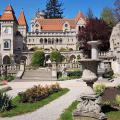 The Castle Bakery That Became a Park
Dadukou District
Huashengyuan Golden Cake Dream Kingdom, at 123 Fengxiang Road, is an AAA theme park graded in February 2010 -- five European-style castle buildings on 170 mu of woodland, the district's longest-running paid attraction. It is a bakery industrial-tourism project: visitors see the cake, mooncake and bread lines, the Huashengyuan museum and a cake DIY, then walk the castle grounds. The adult ticket is 30 yuan, the child 20, with summer hours 8:00 to 22:00 and winter 8:00 to 21:00; the traditional-pastry craft behind it was listed as municipal intangible heritage in 2011.
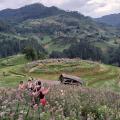 Terraced Flowers and a County-Exam Legend
Dadukou District
Jin'ao Mountain rural complex, graded AAAA in April 2024, spreads across the terraced fields of Shipan Village in Tiaodeng Town -- about 200 mu of five-colour terraced flower sea in season -- with the Jinao Temple's Zhuangyuan well and the legend of 'ten Jinao, nine jinshi', the county-exam graduates the mountain is said to have produced. It is a rural-tourism complex rather than a scenic ticket: the flowers are seasonal, the temple is a working one, and the homestay cluster on the slope is the part you can book. No uniform gate tariff is published; the fields are free to walk in season.
 The Water-Drop Bridge Over the Yangtze
Dadukou District
The Baijusi Yangtze Bridge opened at zero hour on 24 January 2022, linking Dadukou to Ba'nan. Its main bridge is 1,384 metres long with a 660-metre main span -- the world's longest-span rail-and-road steel-truss cable-stayed bridge -- and its two 236-metre towers are water-drop shaped, the tallest in central Chongqing. The upper deck is an eight-lane expressway, the lower deck reserves a channel for Line 18, and the whole project runs about 3.7 kilometres. There is no toll and no viewing deck; the bridge is crossed, not visited.
 The 1905 Steam Engine and the Steel Works It Served
Dadukou District
The Chongqing Industrial Museum, at 999 Yidu Road, is built on the former Chongqing Iron and Steel型钢厂 site and graded AAAA in February 2023. Its treasure is an 8,000-horsepower twin-cylinder steam engine made in Sheffield in 1905, shipped west in 1938 and used in 1952 to roll the first rail of New China -- the中华 38-kilo rail of the Chengyu railway. The park is free, 9:00 to 17:00, closed Mondays; the 'Steel Soul' hall sits on the 1938 钢迁会 workshop, a seventh-batch national key relic. The museum hall itself is ungraded; the AAAA is the park's.
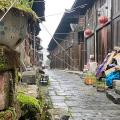 Three Streets and Nine Lanes Above the Yangtze
Dadukou District
Yidu Ancient Town -- called Masangxi until 2019 -- stands under the Masangxi Yangtze Bridge in Dadukou, about 17,000 square metres of restored wharf town on four terraces, opened 24 January 2017 and free all day. It keeps a three-streets-and-nine-lanes layout, two preserved old buildings -- the Li Zhushan residence and the old supply cooperative -- and the scenery is the bridge, the old Chengyu railway and the old wharf. The rebuild followed a 'four-originals' rule, original area, height, foundation and form, which is why the lanes read as old rather than as new.
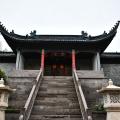 Eight Memorial Halls, One Telephone Number, One Closing Day
Beibei District
The district's own 2021 directory lists eight museums and memorial halls under one set of hours -- 9:00 to 17:00, last entry 16:30, closed Mondays except on public holidays -- and one telephone number, 023-68325828. Fudan's wartime campus is the anchor: it taught in Xiaba from February 1938 to May 1946, trained more than 3,000 students across five colleges and some two dozen departments, and lost a professor, Sun Hanbing, in the 27 May 1940 bombing. Lu Zu-fu's hall occupies Wenchang Palace, a 1644 hall of 1,473 square metres and a national key relic listed in 2013, while Y.S. Yan's former home was listed the same year, and in 1943 he was named with Einstein among the ten most revolutionary contributors in the world. Zhang Zizhong's tomb opens different hours, and its gate number, 516, is the date he died. The eighth hall breaks the pattern completely: the honour-dormitory hall at Chengjiang closes on public holidays and sits 4.8 km from the nearest bus stop, in the town where Blue Wenbin paid for Chongqing's first canal, whose dam was rebuilt in 1931 into the city's first stress dam, 15 metres high and 78 metres long.
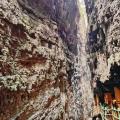 Five Kilometres of Limestone Above a Twenty-Seven-Kilometre Gorge
Beibei District
Jindaoxia is a karst gorge, and the standard line walks it in about five kilometres past a thousand-step cloud stair, a fright platform, a knife-hiding cave, Lion Head Gorge, a hanging waterfall and a slot called One-Line Sky; in winter there is a six-kilometre light walk from the south gate to the north, with a cable car and canyon boating sold as add-ons. The entrance is 8:30 to 16:00. The ticket price is the part nobody has settled -- one platform starts at 69.90 yuan, a traveller's note says 80, and a gate-plus-cable-car-plus-boat combination appears at both 123 and 128, with no official tariff published, so the range as it stands is the honest answer. Below the canyon the Jialing runs its own Three Gorges -- Libi, Wentang and Guanyan -- for 27 kilometres, entirely inside Beibei. Do not confuse it with Wushan's Three Gorges on the Daning River, nor with the Tongjing boat rides.
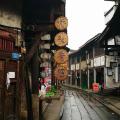 Stilt Houses, Flagstones, and a Stage Rebuilt by Donations
Beibei District
Pianyan was founded in 1655 as a market called Jielongchang and made a town in 1759, named for the thirty-metre cliff that leans away from it to the northwest; it was one of Chongqing's first batch of historic towns in 2002 and later a national historic town. It belongs to Jindaoxia Town, since August 2005, which trips people up constantly. The core keeps nine relic sites -- a martial temple, an ancient opera stage, the Yuwang Temple rebuilt in 1832 and restored by public subscription in 2003, and Duanmeng Academy -- alongside close to fifty Bayu houses, with stilted structures on the hillside and flagstone lanes between them. It is free, open 8:00 to 17:00. A renewal project begun in September 2023 put nearly 200 million yuan into about 20,000 square metres of the old core; by 2024 the town was taking 1.32 million visitors for over 80 million yuan and had added 1,100 jobs.
 A Spring Older Than the Dynasty and the Park Built Over It
Beibei District
The Hot Spring Temple at Beibei was founded in 423 AD, in the Jingping first year of the Liu Song dynasty, and the spring beside it is one of the earliest in the world still in use, which is where the district's name as a hot-spring homeland comes from. A Qing-dynasty grand secretary, Zhang Penghe, cut the three characters First Spring into the rock above the river. In 1927 Lu Zu-fu built the Jialing River Hot Spring Park on the same ground -- the first public hot-spring park in China -- and his very first document as district chief was a subscription appeal to build it. The spring count is given two ways: an older account says ten springs and 3,628 tonnes a day at about 37 C, a 2019 account more than twenty springs and 6,000 to 8,636 tonnes a day held near 38 C, with radon, which is rare among Chinese springs. Ticket status is unresolved -- platforms list the area as free while charging for Rahuadong and the pool separately, and no official tariff is published, so ask at the gate.
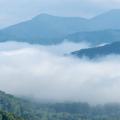 Nine Peaks, Ninety-Six Percent Forest, and a Sunrise to Book
Beibei District
Jinyun Mountain is a national nature reserve of 7,600 hectares with 96.6 percent forest cover. It holds 246 plant families in 992 genera and 1,966 species, 51 of them nationally protected rarities including the dove tree, silver fir and red yew, plus 189 terrestrial vertebrate species across 21 orders. Mean temperature is 13.6 C and mean rainfall 1,611.8 mm, which is why twelve of the gullies carry perennial springs. Nine peaks run north to south, from Chaori and Xianglu to Yuzhian at about 1,050 metres; Shizi, at 864 metres, is the one people climb for sunrise, and between 00:00 and 06:00 that viewing platform has to be booked through the district's WeChat mini-program, with a down-mountain shuttle leaving about 06:10 for 5 yuan. Sources disagree on the gate -- three platforms say free, 12 yuan, and zero yuan -- and none is a government notice, so treat the posted price on site as the only reliable one. The cable car is separate and consistent: about CNY 30 up, 40 return.
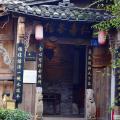 Fifteen Watchtowers and a Guild Hall on the Banan-Fuling-Nanchuan Line
Banan District
Fengsheng is the only town in Banan that touches three counties at once -- Banan to the west, Fuling to the east, Nanchuan to the south -- and it kept the buildings that go with that position. It was rated a national A-level site in December 2016, is free, and never closes. The oldest structure still standing is Song, and the historic building stock covers 26,900 square metres at 89 percent intact. There are fifteen watchtowers and eighteen forts, a Ming-dynasty Hunan and Hubei guild hall called Yuwang Palace, and a Republican mansion, Shiquantang, with three entrances and four courtyards. The Shizijie lane, about 20 metres long and 2.5 wide, was named Chongqing's prettiest alley in 2011. The town was a Chongqing historic town in April 2002, a national one in December 2008, and a national health town in 2017.
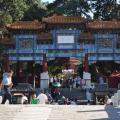 Forty-Three Degrees, Constantly, Underground in Banan
Banan District
The gate of the Dongwenquan scenic area is free. Inside it, the Vetkas sub-scenic area charges 69.90 yuan for an adult and 39.90 for a child, and those are two different things rather than a contradiction -- one is a whole district-level scenic area, the other a facility inside it. Hold on to that before you go. Dongwenquan is a national A-level site, rated in 2015, covering 31.47 square kilometres on the Wubu River forty kilometres from the main city, in five parts. What draws people is the hot cave: a karst cavity 1.5 metres at the mouth and 2.7 across, shaped like an inverted gourd, sitting at 43 degrees through every season of the year. Water comes out between 38 and 53 degrees, and the daily extractable volume is 50,000 cubic metres. Banan holds nearly half of the city's hot spring resource, and this is where you can stand in the middle of it.
 The Warehouse That Became a Museum in May 2025
Banan District
Mudong Water Post Museum opened on 18 May 2025, the forty-ninth International Museum Day, and it was built out of two listed buildings that had very different jobs. One was the Mudong patrol office, a Qing-dynasty tax post on the river. The other was the Qian Dexing cargo house, a Republican-era depot where goods changed hands on the Yangtze. Together they make 1,917 square metres and about 9.5 million yuan of work, holding 350-odd graphics, 200-odd objects and twenty installations across three themes. First public showings include the Pingtan Jilue, a Song-dynasty record, and a post-station copper seal. Open Tuesday to Sunday, 9:00 to 17:00, closed Mondays. The Qian Dexing building doubles as the Mudong Worthies Hall.
 One Museum, Four Branches, and the War Sites Inside Them
Banan District
Banan Museum sits on the sixth floor of the culture and arts centre in Longzhouwan, open 9:00 to 17:00 with last entry at 16:30, closed on Mondays, free, and the phone number is 023-62330215. It holds a little over twelve thousand objects, two hundred and ten of them graded as precious, and its permanent exhibition runs in three parts: ancient Banan, modern Banan, and Banan's intangible heritage. That last section is not a token: the district has two national-level items, eleven municipal ones and fifty-six district ones. The arrangement to understand before you go is the branch system. Four of the museum's sites stand in the old war villages around Nanquan, which means the relic buildings that do not admit visitors can still be entered through the museum's own exhibitions. Come on a Tuesday through Sunday.
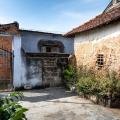 Five Villas, One National Relic, and No Door Open
Banan District
Nanquan holds the most substantial anti-Japanese-war site group in Banan, and it is the only national-level one: published on 5 March 2013 as the seventh batch of national key cultural relic units, number 7-1878, dated 1938 to 1946, and it runs to five separate properties. Tingquanlou, Lin Sen's villa from 1937. Kongyuan, the residence of Kong Xiangxi. The principal's residence, built in 1940. The villa of Chen Lifu and Chen Guofu. And the Peng family house, standing since 1822, where the Central Political School resumed classes in 1938 and where the Southwest College was founded in 1946. No source publishes opening hours or a ticket for any of the five. Walk the streets, look at the facades, and go inside the exhibits next door.
 1.53 Square Kilometres of Lawn, and No Drones
Yubei District
重庆中央公园 -- the largest urban central park in Asia, and the rules you have to read first: broken ground in 2011 and open in 2013 at 4.6 billion yuan, Central Park covers 1.53 square kilometres and runs 2.4 km north to south between the airport's obstacle-limitation zone and the Yuelai convention centre, with roughly 300 mu of sunlit lawn in its middle section -- about twenty-eight football pitches -- a 200-mu mirror lake with a boardwalk round it in the south, the city's largest music fountain group in the north, streams in the woods and two thousand eight hundred underground parking spaces across three garages; the rules are the interesting part: because the whole park sits inside the airport's clearance envelope drones are banned outright, tents are allowed but cannot be pegged, and no open flame is permitted at all, so a park built as a piece of enormous suburban landscaping is a place where nothing flies and nothing is pegged down.
 The Bed Under Glass, and a Park With Three Museums in It
Yubei District
渝北博物馆与碧津一园三馆 -- two small museums, one inside a city park: the Yubei Museum opened in 1997 and is a national second-grade folk-customs museum of 2,337 square metres, a concrete-frame pseudo-palace hall joined to a wedding courtyard in the eastern-Chongqing style, and what it is known for is two Qing and Republican objects -- a six-post five-eave carved bed and a carved household shrine, both all-gilt, the two heaviest carved beds and shrines anyone in the province can put a name to -- plus a history show in three parts running from the 1759 split of Jiangbei off Ba County through the industrial town to the livable city, free, closed Mondays, and a note on the two neighbouring museums, the 2018 history-and-culture hall across the road and the folk village, ancient bed museum and art museum inside Bijin Park, which is a 1987 park with a 54-metre pagoda charging 3 yuan and is free at all hours.
 The District That Was Abolished in November 2025
Yubei District
渝北为什么没有了 -- a district dissolved by announcement: on 7 November 2025 the Chongqing municipal government published 渝府发〔2025〕15号 and Yubei District, together with Jiangbei, stopped being a district, both folded into a newly created Liangjiang New Area -- the new area takes the old Jiangbei, the old Yubei minus five northern towns, and five subdivisions from Beibei, and after the change the municipality counts 25 districts plus this one, with Liangjiang at 31 subdistricts and 11 towns, about 1,360 square km and 3.52 million people, and Beibei, which gained Dawan, Tongjing, Daxing, Xinglong and Cizhu, at 1,100 square km and 600,000; the name itself goes back further than either -- Yubei is simply north of the city, because the city was Yuzhou -- and the district was created on 17 December 1994 by abolishing Jiangbei County, and what follows is why the name survives in addresses and search results when the administration does not.
 The Town That Became a Film Set
Yubei District
龙兴古镇与民国街 -- six hundred years of river town, then a 1:1 wartime street: 36 km from the city centre on Highway 210, Longxing took the name of Longxing market in 1844 when Longcang Temple was renamed, after the legend of the Ming Jianwen Emperor hiding in the cave under the shrine's altar on his way into Sichuan, and its river is the same river -- the Yulin, formerly Taihong, whose sixty-six bends give the town its water -- while the protected core still holds about 50,000 sq m of Ming-and-later buildings, two and three storeys of timber frame, small grey tile, bamboo infill and whitewashed wall, with clan halls, an old stage, a guillotine house and the surviving shops of a hundred-year-old distiller, tofu shop, oil mill and brewery, and twelve intangible-heritage crafts among them Longxing brown sugar, long-jin dried tofu, yinmi and sugar painting; entry to the town is free and the national AAAA movie city built inside it is not -- a reconstruction of the wartime capital's streets used by The Continent and Chongqing Negotiations, sold now at about 77 yuan against the 40 yuan its 2020 district publicity route still quoted.
 Photographing Terminal 3 From Inside Security
Yubei District
重庆江北机场T3 -- the terminal worth photographing, and the honest way to see it: opened 22 January 1990, Chongqing Jiangbei International Airport is 21 km north-east of the city, and Terminal 3 took over on 29 August 2017 in the same six hours that Terminal 1 closed -- 537,000 sq m in an H around a central E hall with four piers, 48 m tall and 1,060 m long, wrapped in 150,000 sq m of curtain wall of which 75,000 is cable-supported and the largest such system in Asia, with film-faced metal panels standing in for bamboo to build the region's stilted houses inside; there is no public viewing route and no ticket, so this is airside photography on a boarding pass, not a visit -- the third floor's camellia-and-turbine Phoenix, the fifty-metre scroll, the opera-mask wall, and the outdoor platform at the end of the J and M gates looking out over the apron are all past security, which is why the advice here is to build the trip around a real flight and leave the connection long.
 The Zoo That Was Laid Out for Steel Workers
Jiulongpo District
重庆动物园 -- the green lung on the district's western shoulder, planned in 1953 around Taohua Creek on land taken in January 1954, finished by December as the West District Park and opened to the public on 24 January 1955 with eleven species and sixty animals; a decade of steel expansion decided the park should be a zoo built for the city's industrial workers and the city at large, it was renamed in October 1960 and now covers 48 hectares on the slopes -- the panda house rebuilt in 1989 into a hillside of rock, cave and falling water, the 1962 goldfish hall with its three thousand square metres of water, and the rare cats the district is quietly proudest of.
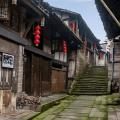 The Water Post Where a Province Was Founded
Jiulongpo District
铜罐驿 -- a Ming water station on the Yangtze below the district, listed a hundred and twenty li southwest of the county seat in the Qianlong county gazetteer and once one of Chongqing's three great water stations, with both the Chengdu-Chongqing and the Xiangyu railways crossing and halting at the town above the old quay; about 8,000 square metres of the street survive, the slow green train still runs in from the south station in forty minutes, and citrus has been grown on these slopes for over two thousand years -- a variety an emperor named 大红袍, 1,000-odd orchards and 5,000-odd mu by the early Republic, four hundred laden boats at the height of the trade; the enlarged meeting of the Sichuan provincial party committee met here in February 1928, in the house of 周贡植, now a patriotic-education base after a 2017 repair.
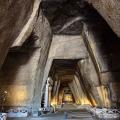 The Arsenal Cut Into the Rock Under the Bridge
Jiulongpo District
建川博物馆 -- the country's first cave anti-war museum, carved into a hillside under the Egongyan bridge: the arsenal on this site is the Hanyang works moved inland from Hubei during the war, its machinists cutting cave workshops into the rock above the river to get production out of reach of the bombers, later one of the country's larger light-weapon plants; the caves then served the postwar construction-machinery works that turned to making motorcycles and vehicle compressors, which began moving out in 2003 and left the last machine behind in July 2009; the site was listed a national key cultural relic unit in 2013 and opened in June 2018 as eight themed museums -- 'for peace, collect the war' -- on the moving's stated aim.
 Where China's First Railway Left the City
Jiulongpo District
九龙坡站 -- the small riverside station the country's first new railway departed from: at the Chengdu groundbreaking ceremony of 15 June 1950 the builders were handed a banner and carried it straight here, and track reached Jiulongpo in August of that year, where the first steam locomotive was fired up; the full 505-km Chengdu-Chongqing line opened on 1 July 1952 and the first train out of Chongqing left this platform, which stayed the city's only station -- and its busiest freight yard on a river wharf doing water-and-rail transshipment -- until Caiyuanba replaced it in 1959; renamed Chongqing South in 1988, closed in June 2024 for the line's rebuilding, and standing on the footprint of the airfield the government leased off this same new embankment in 1938, the wartime gateway where the 1945 negotiations opened.
 The Tank Depot That Made an Art District
Jiulongpo District
黄桷坪坦克库 -- the arsenal sheds that became the country's most famous young-artist address: a 12,000-square-metre tank warehouse first used by the state metals company from 1966 and later for parking actual tanks, bought back by the fine arts academy at the end of 2000 for about seven million yuan, partly turned into teaching space in 2001 and opened in 2005 as a non-profit art centre with 200-plus studios let at a few hundred yuan a term -- a Soviet T105 tank still parked at the gate, the academy itself founded in 1940 and only just leaving this quarter for University City, a 1.25-km graffiti street running from the old railway hospital to the 501 art base, and a closed-door rebuild announced in 2021 that has left the sheds weathered while the quarter waits.
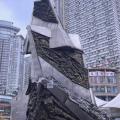 Three Gorges Square, Shapingba's Living Room
Shapingba District
三峡广场 -- the district square that reads as a walk-through museum of the river it is named for: laid out from 1997 around the Three Gorges theme, its promenades carrying gorge reliefs, ship sculptures and the stories of the reservoir counties, the shopping streets around it rebuilt through the decade and the high-speed station opened beneath in 2018 as the country's first station-under-district build -- free, central, and the meeting point the whole district sets its watches by.
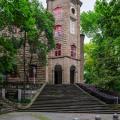 A Stroll Through Chongqing University's 1929 Campus
Shapingba District
重庆大学老校区 -- the oldest campus green in the district, opened in 1929 on the slopes between the river and Gele Mountain: Republican-era brick halls and gate lodges that stood through the wartime capital years when the university shared its quads with national institutions, Democracy Lake at the campus heart, and a national heritage listing (2019) over the early architecture -- a working campus that doubles as the city's most walkable open-air museum of modern Chinese education.
 Zhazidong and Baigongguan, Sites of the Red Crag Spirit
Shapingba District
红岩革命遗址 -- the places of remembrance on Gele Mountain's lower slopes: the former prison sites of Zhazidong and Baigongguan where revolutionary martyrs were held in the war and civil-war years, preserved since liberation as part of the Hongyan memorial line and honoured as the soil of the Red Crag spirit -- quiet exhibition halls, the martyrs' cemetery nearby, entry free with reservation, and a visit that the city treats as its own civic rite of remembrance.
 The Mountain of Song Above Shapingba
Shapingba District
歌乐山 -- the forested ridge whose name means song and joy, the district's green balcony above the campus plain: a national forest park of pine walks and lookout galleries, free to enter, with the mountain's dense historical layer folded into the same slopes -- wartime residences, the martyrs' memorial ground below, the winding road the chicken courtyards line -- a hill where the city's weekend of steps, pines and viewpoints has been running since the river port below was still a porcelain wharf.
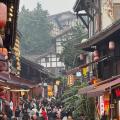 The Thousand-Year Town That Never Stopped Living
Shapingba District
磁器口古镇 -- the porcelain-port town at the foot of Gele Mountain where the Jialing bends: founded in the Song years the official record places at 998-1003, grown rich on kiln-ware and salt, never abandoned through the centuries that emptied other old streets, still a market of stone lanes, teahouses and temple courtyards under its 4A listing -- the rare old town whose claim is continuity, an afternoon's wander from porcelain-kiln history to wharf snacks to the river beach below the steps.
 A Garden of a Thousand Greens on Nanshan Hill
Nan'an District
南山植物园 -- the living plant collection on the ridge above the city: a botanical garden founded on Nanshan's slopes and grown into the municipality's chief garden -- the landscaped bonsai and rose gardens, the big exhibition greenhouse of subtropical flora, the ancient huangjue trees and the camellia collections that give the hill its spring -- a whole-day garden where the city comes up the mountain to smell the seasons, a short ride below the viewpoint and the temple.
 The Wartime Villas in Nanshan's Pine Forest
Nan'an District
重庆抗战遗址博物馆 -- the wartime command hill of the former capital: when Chongqing held out as China's wartime capital, the villas on this forested ridge of Nanshan were where the leadership lived and worked through the bombing years, the compound of pine-shaded 1930s-40s buildings preserved since as a museum district -- the reception hall, the residences, the air-raid shelter -- a quiet historical park of the war years on the mountain above the city.
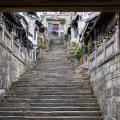 Nine Tiers of Old Chongqing Above the River Confluence
Nan'an District
长嘉汇弹子石老街 -- the nine-level slope street reopened in June 2018 where the Jialing meets the Yangtze: an old water-and-land wharf under a Yu-the-Great birth-stone legend, cleared to slums and reborn as the port-culture spine of the south bank -- Wang family courtyard, the customs stone, an aquarium and theatres folded into terraced lanes -- with the confluence view from the top steps and the working river still passing below, the south bank's answer to Hongyadong across the water.
 The Street Where Chongqing First Opened Its Doors
Nan'an District
龙门浩老街 -- the terraced lane below Dongshuimen bridge where the treaty port actually landed: consular villas and bank buildings from the 1890s onward stacked down a hillside of stone steps, restored and reopened on 22 September 2018 as the riverside face of the port's history -- the old customs beach, the bridge overhead, the peninsula across the water, and a street that reads as the front porch of Chongqing's opening to the world.
 One Tree on Nanshan Ridge with the Whole Peninsula in View
Nan'an District
南山一棵树观景台 -- the ridge-top platform named for a single surviving huangjue tree, and the classic across-the-river vantage over the peninsula: the viewing galleries stack down the slope so the city lies spread from Hongyadong's gold to the two bridges' light-trails, tour buses climb the mountain road nightly for it, and the mountain behind holds the temple, the gardens and the wartime villas that make Nanshan the district's green spine; the country's most photographed skyline view, from the bank where you see it whole.
 Where Xu Beihong Painted Through the War
Jiangbei District
石家花园徐悲鸿旧居 -- the brick garden villa the merchant Shi Rongting built above the Jialing in 1931, and the four years it spent hosting Chinese painting's wartime generation: Xu Beihong lived here from 1942 to 1946, painted in a stone cellar cut into the hillside while air raids passed overhead -- the great 'Baren Drawing Water' was born here -- and the preparatory office of the wartime China Art Academy sat in the garden with Zhang Daqian and Wu Zuoren among the names; restored and reopened as a free museum in June 2020, closed Mondays, sixteen minutes from Dashiba station -- the quietest important room in Jiangbei.
 Where the Yangtze Squeezes Through Tongluo Gorge
Jiangbei District
铁山坪森林公园 -- the forested rampart east of the city where the Yangtze narrows into Tongluo Gorge: a Ming-end iron chain once slung across the water against an invading army, a forest clear-felled and replanted -- closed to cutting in 1978, seeded by aircraft, a park in 1988, 14.93 square kilometres of pine with better than ninety percent cover and a 4A listing in April 2014; a cliff-top gorge walk, a cloud ladder of steps to the ridge lawns, a Tang-era temple rebuilt in 2001, and the smell of Sichuan pepper drifting up from the farm tables at the mountain's gates.
 Ten Thousand Osmanthus Trees Above the City
Jiangbei District
鸿恩寺森林公园 -- the hilltop park that kept a temple's name after the temple was gone: founded in the Ming Yongle years, burned and rebuilt in 1838, requisitioned in the war years and demolished in the 1950s, so that only 'Hong'en' -- the great kindness, from a legend of wild geese saving a fugitive emperor -- survives in the park opened in May 2009; sixty-odd varieties of osmanthus, ten thousand trees deep, that make the slope the city's autumn fragrance event, and the seven-storey Hong'en Pavilion at about 468 metres, whose gallery of eaves looks down on both rivers at once. Free, 6:30 to 21:30, sixteen minutes on foot from Dashiba station.
 The Lawn Where Chongqing Puts On Its Skyline
Jiangbei District
江北嘴中央公园 -- the riverside lawn of the northern CBD, directly across the water from the Chaotianmen confluence: the Grand Theatre of 2009, gmp's pale-green glass hull on its peninsula tip -- the 'lonely sail distant shadow' a design partner drew from the harbour it replaced -- beside the science museum of the same year, free and built for children, a central park lawn that fills with wedding photographs on fine weekends, and a riverbank walk where the city's lights come on across the water at dusk; a district assembled since 2002 out of a demolished old town, now the lawn where Chongqing looks at its own skyline.
 The Bridge That Became a Street
Jiangbei District
观音桥步行街 -- a name that keeps a bridge nobody can find: a stone crossing recorded in an 1849 stele and a Qianlong-era flat bridge of 1790, a ferry legend of a Guanyin-answered village, then vegetable fields until the 1966 Jialing River bridge dropped the city's traffic on the north bank -- and the shopping mile built between 2003 and 2005 that became the southwest's first Famous Commercial Street in 2006, a 4A scenic area in 2010, a founding national night-culture cluster in 2021 and a national tourism-and-leisure street in November 2023, all of it free, open, and the meeting point the district sets its watches by.
 Huguang Guild Hall, Where the Migrants Left Their Ledger
Yuzhong District
湖广会馆 -- the guild-hall complex beside Dongshui Gate on the Yangtze shore, the largest surviving ensemble of its kind, raised by the Hunan, Hubei and Guangdong migrant communities of the great 'Huguang fills Sichuan' migration: Yuwang Palace, the Qi'an and Guangdong guild houses, three carved wooden stages and the migration museum that keeps the ledger of where the peninsula's people came from.
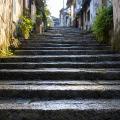 Shancheng Lane and the Third Footpath
Yuzhong District
山城巷与第三步道 -- the cliffside walk above the Yangtze, from the Zhongxing Road entrance up past the 1930s Hou mansion, the former French hospital compound of Ren'ai Tang and Consulate Lane: the city's old hillside footpath system read the slow way, with the stilt houses of Hongyadong visible across the river as the contrast the lane never became.
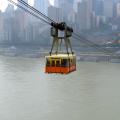 The Yangtze River Cableway, from Commute to Ride
Yuzhong District
长江索道 -- the aerial cableway of 1987, the first 'corridor in the air' across the Yangtze and for years the commuter bridge between the peninsula and the south bank, now a sightseeing crossing of 1,166 metres above the water; a piece of public transport that outlived its job and turned into the city's slowest, highest commute.
 Jiefangbei, the Monument That Changed Its Name Twice
Yuzhong District
解放碑 -- the People's Liberation Monument at the heart of the peninsula, first raised in 1941 as the wooden 'Spiritual Fortress' of the wartime capital, rebuilt in stone after the war as the Victory Memorial, renamed again in 1950, and since 1997 the anchor stone of the pedestrian street laid out around it -- the first commercial pedestrian street in western China.
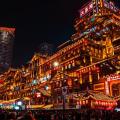 Hongyadong: Eleven Storeys of Stilt Houses on the Jialing
Yuzhong District
Eleven terraces of stilt houses wired onto a river cliff — the brightest night view in Chongqing, and the argument about whether it should exist at all.
Nothing filed in this section yet.