
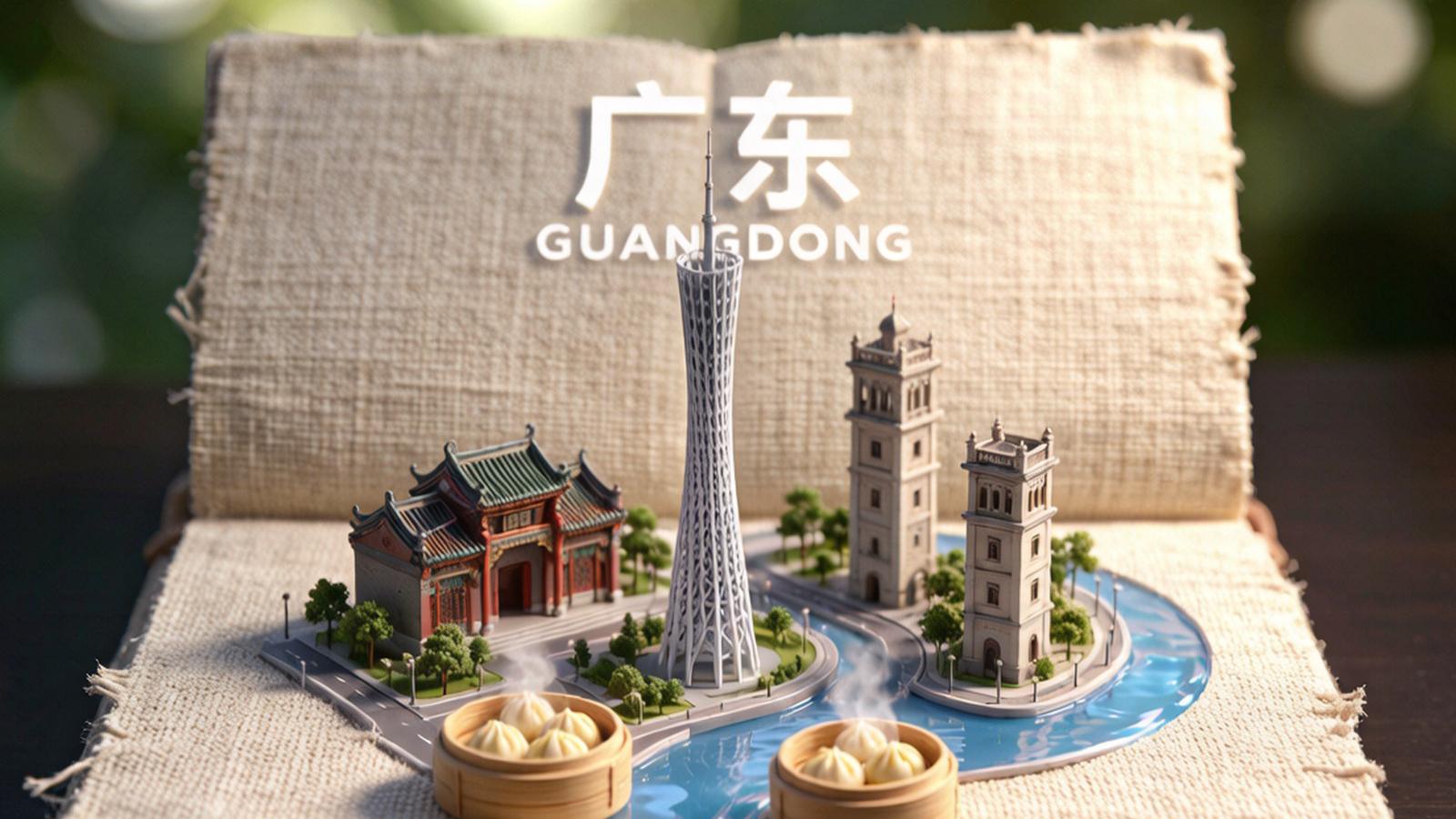
Guangdong
Where to go in Guangdong
Tap a city on the map — or use the list underneath it — to narrow the food, the places to stay and the things to see down to that city.
Has stories
Nothing filed yet
Selected
Newest in Guangdong
The three most recent stories in each section, wherever they are in the province.
 FoodZhuhai
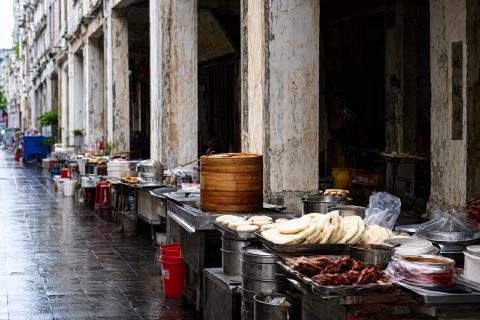
Doumen's Old Street Bites, Cured on the Waterfront
2 October 2026
 FoodZhuhai
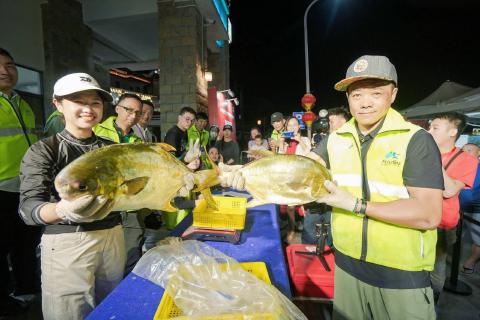
The Wanshan Islands, Urchins and Deep-Water Fish
2 October 2026
 FoodZhuhai
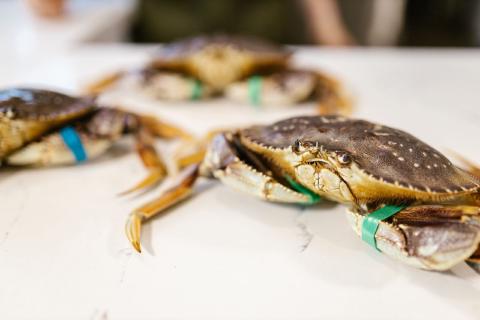
Zhuhai's Double-Shell Crab, One in a Hundred
2 October 2026
 StayGuangzhou
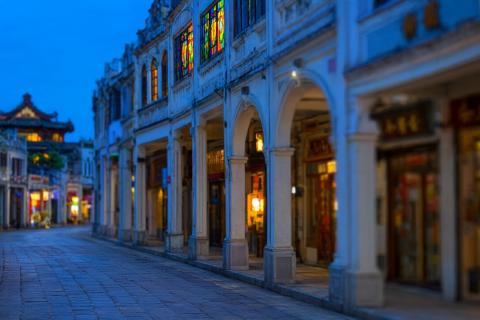
Xiguan Old Town, Sleeping in the Arcade City
2 October 2026
 StayGuangzhou
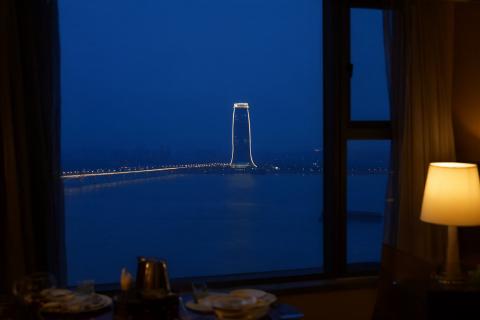
Canton Tower Riverview Stays, Sleeping Inside the Skyline
2 October 2026
 StayZhuhai
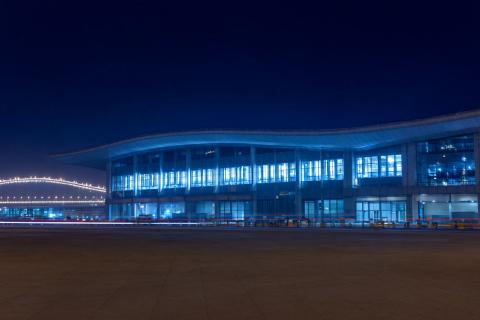
Zhuhai-Macao Border-Port Stays, the Overnight Base
2 October 2026
 TravelZhuhai
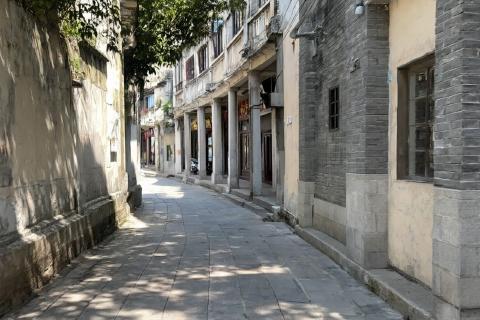
Tangjiawan Old Town, the County Seat of Famous Names
2 October 2026
 TravelZhuhai
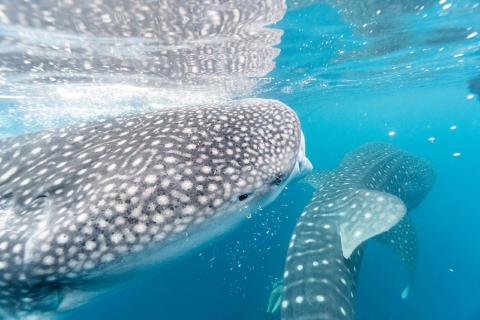
Chimelong Ocean Kingdom, the Ocean Park on Hengqin
2 October 2026
 TravelZhuhai
Qinglu Road and the Fisher Girl
2 October 2026
Browse by city
Showing all of Guangdong
Food0
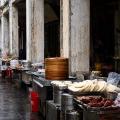 Doumen's Old Street Bites, Cured on the Waterfront
Zhuhai
斗门旧街非遗小吃 -- the Late-Qing and Republican arcade street that Doumen eats on: Huangsha clams from the Shangheng shallows, the duck bundle of Hengshan (provincial intangible heritage, 2013) and Pipa duck of Hushan, shrimp-rice cakes and pot-edge cakes, and the salt-and-dried larder of a water town that has always been richer in river and sea than in field.
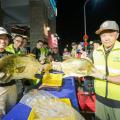 The Wanshan Islands, Urchins and Deep-Water Fish
Zhuhai
万山群岛深海洋牧场 -- the city's open-sea fishery, held up by two national marine-ranch demonstration zones at Wanshan and Wailingding and by the Lingding Ranch No. 1 truss-type smart cage, a platform rather than a net; the archipelago is described by the trade as a fish granary, and what reaches the tables is deep-water fish and sea urchin rather than the estuary's farmed species.
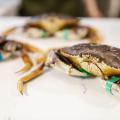 Zhuhai's Double-Shell Crab, One in a Hundred
Zhuhai
斗门青蟹与重壳蟹 -- the mud crab of the Doumen flats and the local habit of naming it at six stages of its life (immature female, water crab, meat crab, double-shell crab, roe crab, butter crab); the double-shell crab, the one that has shed a shell without hardening the next, is reckoned at about one crab in a hundred, and is handled as the district's seasonal delicacy rather than its staple.
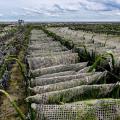 Hengqin Oysters, the Bowl-Shell Oysters Between Two Shores
Zhuhai
横琴生蚝 -- the estuarine oyster of the Hengqin mudflats, sold as the bowl-shell oyster and described by the trade as large, white, fat, tender and crisp in that order; a Guangdong famous trademark and origin-marked product since 2008, with the Hengqin oyster-opening technique entered on Zhuhai's ninth municipal intangible-heritage list in May 2016, and shucked to order on the shore.
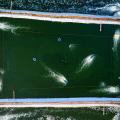 Baijiao Sea Bass, the Fish That Made a District's Name
Zhuhai
白蕉海鲈 -- Zhuhai's first national geographical-indication protected product (2009) and the first GI in Guangdong's aquaculture, farmed in the brackish channels around Baijiao town in Doumen; the demonstration zone for the mark was approved for development in December 2023, and Doumen hosted the first China Year-Fish Expo in December 2022, which is where the year-fish economy was launched.
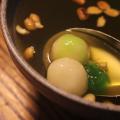 Tangbusui, Dongkeng's Sweet Glutinous Balls
Dongguan
糖不甩 -- Dongkeng's glutinous balls boiled, skewered and lacquered in ginger syrup with crushed peanut and shredded egg, the 'yes' ball of the old matchmaking问答 and the sweet must-eat of the town's Er-Yue-Er fair.
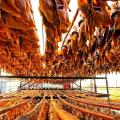 Baisha Oil Duck, King of the Cured Birds
Dongguan
白沙油鸭 -- the cured duck of Humen's Baisha village, rice-fattened for eleven days and air-dried three weeks into the lacquered bird listed in 2012 as provincial intangible heritage and counted among Dongguan's three signature gifts.
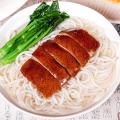 Houjie Laifen Under the Roast Goose
Dongguan
厚街烧鹅濑粉 -- the town's pencil-soft rice laifen drowned in roast-goose dripping broth, the longevity bowl of local birthday feasts, whose laifen craft carries provincial heritage status and a town-government trademark of 2019.
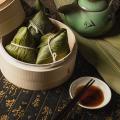 Daojiao Zongzi, the Dongguan Take on the Wrap
Dongguan
道滘裹蒸粽 -- the town zongzi raised to provincial intangible heritage in 2012, salted egg yolk, lotus seed and winter-melon strand packed with the pork into frost leaves, some 25 million pieces wrapped for the 2025 Dragon Boat season.
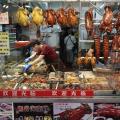 The Lychee-Wood Roast Goose of Dalingshan
Dongguan
大岭山荔枝柴烧鹅 -- the 2019 municipal intangible-heritage goose fired over fragrant lychee wood in the roast-goose street of Ailingkan village, skin cracked thin over juice kept in, the town feast dish of clan days and weekends alike.
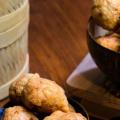 Xiaolan's Fried Dace Balls, Served Under Chrysanthemum Petals
Zhongshan
小榄炸鱼球 -- hand-chopped mud carp paste with cured pork, fried to gold and eaten with chrysanthemum petals and fermented clam dip, core dish of the flower town whose festival is national heritage.
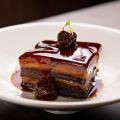 Shaxi Kourou, the Pork Belly That Crowns a Nine-Basket Banquet
Zhongshan
沙溪扣肉 -- Longdu's 'king of dishes', pork belly nailed, fried and steamed skin-down with kudzu or taro and wild betel spice, crown of the Jiu Da Gui banquet on the municipal heritage list since 2023.
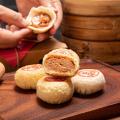 The Almond Biscuit of Zhongshan, Which Contains No Almond
Zhongshan
咀香园杏仁饼 -- mung-bean flour pressed in wooden moulds around sugar-cured pork since 1918, a provincial heritage craft since 2009, with its museum-factory now in the Torch Development Zone.
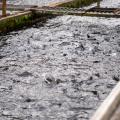 Crispy Grass Carp, the Fish Fed on Broad Beans Until It Snaps
Zhongshan
东升脆肉鲩 -- grass carp fed soaked broad beans for 110 to 130 days until the flesh turns crisp, a GI product since 2008 and a pond industry of nearly 58,000 tonnes and 1.88 billion yuan.
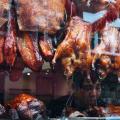 Shiqi Roast Squab, the Dish That Became Zhongshan's Calling Card
Zhongshan
石岐乳鸽 -- squab of a crossing-bred local pigeon, red-cooked from a Macanese prototype in white brine and malt sugar, a municipal heritage craft since 2022 and Zhongshan's fourth national GI product in 2025.
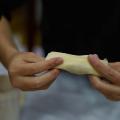 Meilong Cai Bao Guo, the Greens Inside a Rice Skin
Haifeng County
梅陇菜包粿 of 海丰县梅陇镇 -- a translucent rice-skin parcel of mustard greens, peanuts and dried shrimp, steamed by the tray and eaten by the plate.
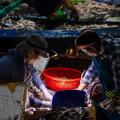 Jiazi Fish Balls, Slapped By Hand at the Old Port
Lufeng
甲子鱼丸 of 陆丰市甲子镇 -- fish pounded to paste and slapped until it springs, dropped into clear soup at a harbour town older than the roads.
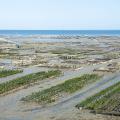 Chenzhou Oysters, the Winter Crop of the Tide Flats
Shanwei
晨洲蚝 from 红草镇晨洲村, the village that calls itself 中国蚝乡 -- milk-white oysters off the flats, fat from autumn through spring.
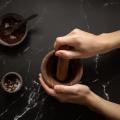 Luhe Lei Cha, the Hakka Tea You Eat With a Spoon
Luhe County
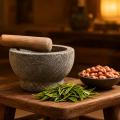
陆河擂茶, ground in a stone 擂钵 with a wooden 擂棍 and sesame, peanuts and herbs -- a provincial intangible heritage since 2012, drunk salty and thick.
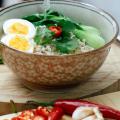 Shanwei Cai Cha, the New Year Bowl Poured Over Rice
Haifeng County
The 菜茶 of 海丰县 -- rice under a heap of stir-fried greens, dried shrimp, squid and peanuts, flooded with hot stock, handed round at 正月.
 Leicha Gruel, the Bowl That Is Both Tea and Rice
Yunan County
The 擂茶粥 of the Yunfu hills, pounded tea poured into rice gruel and eaten for breakfast.
 Yunan Seedless Wampee, the Two Trees Everything Came From
Yunan County
The 无核黄皮 of 郁南县, grown from two mother trees planted in a garden in 1934.
 Xinxing Preserved Plum, Ninety Days in Salt
Xinxing County
The 话梅 of 新兴县, salted for three months, dried, and sweetened back into a sour-sweet fruit.
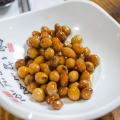 Luoding Black Bean, a Year Under the Sun
Luoding
The 豆豉 of 罗定市, salted and fermented through a full turn of seasons until the beans go black.
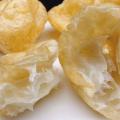 Luoding Fish Cake, Fried From a Cold Pan
Luoding
The 皱纱鱼腐 of 罗定市, a puffed fish cake piped into cool oil and fried to a wrinkled silk skin.
 Sanhua Plum, the June Fruit of One Village in Wengyuan
Wengyuan County
The 三华李 of 三华村 in 翁源县, a plum picked hard, eaten over weeks, and famous under its village's name.
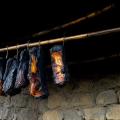 Ruyuan Smoked Pork, Hung a Metre Above a Slow Fire
Ruyuan Yao Autonomous County
The 烟熏肉 of the 过山瑶 in 乳源瑶族自治县, cured over specific woods because the wrong one turns it bitter.
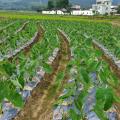 Zhangxi Taro, the Root That Only Tastes Right in One Village
Lechang
The 香芋 of 张溪村 near 乐昌市, a taro with a geographical indication and a name in Guangdong's kitchens.
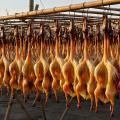 Nanxiong Pressed Duck, Seven Steps and a Weighed Handful of Salt
Nanxiong
The 板鸭 of 南雄市, a winter duck salted to the gram, pressed flat and hung in the wind.
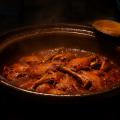 Meiling Chilli Goose, the Dish of the Pass Road
Nanxiong
The 梅岭鹅王 of 南雄市, a goose braised hard with local chillies at the old Guangdong-Jiangxi pass.
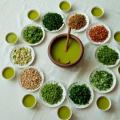 Jiexi Leicha, the Meal That Is Pounded, Not Steeped
Jiexi County
The 擂茶 of 揭西县, tea and mountain herbs ground to a green paste and poured over rice as a full meal.
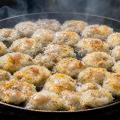 Jieyang Oyster Omelette, Fried in Lard Over a Fierce Flame
Jieyang
The 蚝烙 of 榕城, small sweet oysters in a sweet-potato batter, flipped whole in one movement.
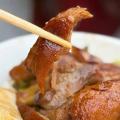 Longjiang Pork Trotter Rice, Four Hours in the Master Stock
Huilai County
The 隆江猪脚饭 of 惠来县, where the trotter is cut into four named joints and braised to mahogany.
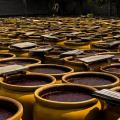 Puning Bean Paste, Three Months Under the Sun
Puning
The 豆酱 of 洪阳镇, turned by hand twice a day in hundreds of glazed crocks until the beans go gold.
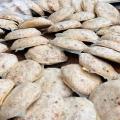 Pingpong Kueh, the Cake That Crackles Like a Serve
Jieyang
The 乒乓粿 of 揭阳市, a translucent rice cake whose filling is roasted until the grain bursts.
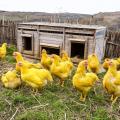 Xinyi Huaixiang Chicken, Yellow Beak to Yellow Foot
Xinyi
The 怀乡鸡 of 信宜市, a slow-grown mountain bird with yellow skin, yellow feet and a thousand years of breeding behind it.
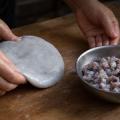 Dianbai Cuttlefish Cake, the Dish No Banquet Goes Without
Maoming
The 墨鱼饼 of 电白, pounded or chopped depending on which harbour you ask, and fried to a yellow edge.
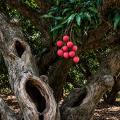 Gaozhou Lychee and the Orchard That Fed a Tang Court
Gaozhou
The 荔枝 of 根子镇 in 高州市, where the old trees are named, counted, and still fruiting after thirteen centuries.
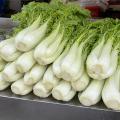 Shuidong Stem Mustard, the Vegetable With No Fibre
Maoming
The 水东芥菜 of 电白, a hearted mustard whose stem snaps like celery and whose family once refused to sell the seed.
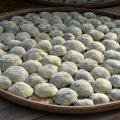 Huazhou Juhong, the Peel That Only Grows on One Soil
Huazhou
The 化橘红 of 化州市, a bitter citrus peel with a velvet coat that vanishes the moment the tree is planted anywhere else.
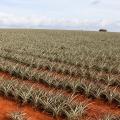 Xuwen Pineapple, a Hundred Years of the Bali Strain
Xuwen County
The 菠萝 of 徐闻县, brought from Singapore in 1926 and now grown on thirty-five thousand hectares of red volcanic soil.
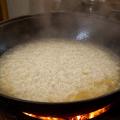 Anpu Chicken Rice, Cooked in the Stock of Its Own Bird
Lianjiang
The 鸡饭 of 安铺镇 in 廉江市, local rice simmered in chicken stock and lard over a wood fire and served beside the poached bird.
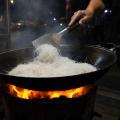 Wuchuan's Battered Wok and the Noodles It Fries
Wuchuan
The 烂镬炒粉 of 吴川市, rice noodles fried in a wok whose rim has been beaten down flat so that the whole of it is hot.
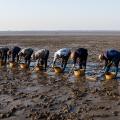 Suixi Sand Worms, Taken from the Tidal Flat
Suixi County
The 沙虫 of 遂溪县, a sipunculid dug out of the sand at low tide and eaten briefly cooked, so that it stays sweet and firm.
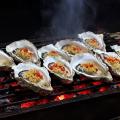 Zhanjiang Grilled Oysters, from the Tidal Flat to the Charcoal
Zhanjiang
The 生蚝 of 湛江市, shucked at the night market and grilled over charcoal with garlic and chilli until the liquor just turns.
 Hakka Niang Jiu, the Sweet Rice Wine of the Dongjiang
Heyuan
The 娘酒 of the 东江 Hakka, glutinous rice fermented with a local yeast into a sweet amber wine, drunk warm and cooked with chicken.
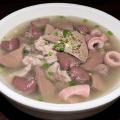 Zijin Badaw Tang, the Eight Cuts in the Morning Bowl
Zijin County
The 八刀汤 of 紫金县, eight parts of a freshly killed pig dropped into boiling water and eaten with rice noodles at breakfast.
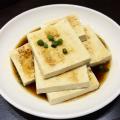 Chetian Tofu, the Bean Curd of a Longchuan Village
Longchuan County
The 车田豆腐 of 龙川县, pressed harder than an ordinary tofu and sold in slabs, fried or braised in the county's kitchens.
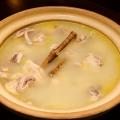 Wuzhimaotao Soup, the Root That Smells of Milk
Dongyuan County
The 五指毛桃 of the 东源 hills, a wild fig root simmered for hours with a free-range chicken, milky and faintly coconut.
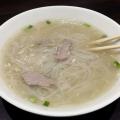 Heyuan Mipai Fen, the Flat Noodle Dried in the Sun
Heyuan
The 米排粉 of 河源, rice ground, steamed into thin sheets, shredded and dried on bamboo frames in the open air.
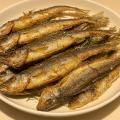 Lianshan Rice-Field Fish, Grown in the Paddies
Lianshan Zhuang and Yao Autonomous County
The 禾花鱼 of 连山, small carp raised in the flooded rice fields and eaten whole, crisp-fried or braised, when the rice comes in.
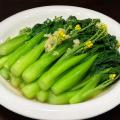 Lianzhou Choy Sum, the Sweet Green of the Winter Fields
Lianzhou
The 连州菜心, a flowering choy sum that sweetens with the first frost and is the vegetable the county sends all over the province.
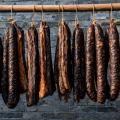 Dongpi Cured Meats, the Winter Flavour of Lianzhou
Lianzhou
The 东陂腊味 of 连州市, pork and liver and sausage cured in the cold air of the northern hills and hung to dry through the winter.
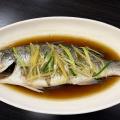 Beijiang River Fish, the Catch of Qingyuan's Own River
Qingyuan
The 北江河鲜, the river fish landed along the Beijiang and cooked simply at the water's edge, steamed or in a clear soup.
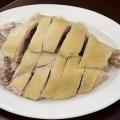 Qingyuan Chicken, the Bird the City Is Named For
Qingyuan
The 清远麻鸡, a small-boned free-range bird the city has raised for centuries and eats poached, sliced and barely dressed.
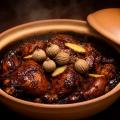 Amomum Chicken, the Yangchun Dish That Smells of the Forest
Yangchun
The 春砂仁焖鸡, a braised chicken scented with the fragrant amomum villosum that grows only in the hills of 阳春市.
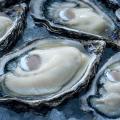 Chengcun Oyster, the Fat Shellfish of Yangxi's Mangrove Bay
Yangxi County
The 程村蚝, the large, sweet oyster grown in the warm shallow waters of 阳西县, eaten raw, steamed or grilled.
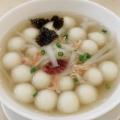 Yangjiang Xian Yuanzi, the Savoury Rice Balls That Open the New Year
Yangjiang
The 咸汤圆, a bowl of soft glutinous-rice balls in a meat-and-seafood broth that the city eats as the year turns.
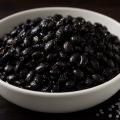 Yangjiang Fermented Black Beans, the Seasoning a City Built Its Name On
Yangjiang
The 阳江豆豉, a fragrant fermented black bean that has been made here for centuries and that flavours a hundred dishes across the south.
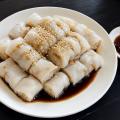 Yangjiang Zhu Chang Lu, the Rolled Rice Noodles of Every Morning
Yangjiang
The 猪肠碌, a tight roll of rice noodle filled with a savoury mix and dressed in soy and sesame, the snack the city eats at every hour.
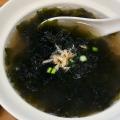 Raoping Haishan Seaweed Soup, the Island's Bowl of the Tide
Raoping County
The delicate laver gathered on the rocks of 海山 in 饶平县, simmered into a broth that tastes of the open sea.
 Chaozhou Glutinous-Rice Cake, the Pink Peach Steamed for the New Year
Chaozhou
The 红桃粿, a peach-shaped rice cake dyed a deep pink and stuffed with salted rice, steamed over the fire and browned before it is served.
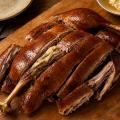 Chaozhou Braised Goose, the Bird That Absorbs a Whole Ladle of Dark Broth
Chaozhou
The city's 卤鹅, a goose simmered in a soy-and-spice braise until the flesh takes on the dark glaze, carved cold at the front of every old shop.
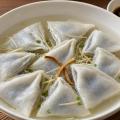 Gulou Fish Dumplings, Wrapped in a Village on the Water
Heshan
Triangular dumplings whose wrapper is pounded fish paste rather than dough, poached in broth and eaten with a dip of soy and shredded ginger.
 Enping Lai Fen, the Noodles Sold by Weight
Enping
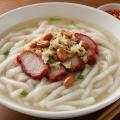
Thick hand-pressed rice noodles, slippery and faintly sour, sold by the jin in the market and served in a plain bone broth with a spoon of fried garlic.
 Magang Goose, the Bird Kaiping Roasts Whole
Kaiping
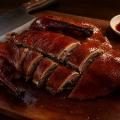
A heavy grey goose from the village of Magang, poached in a soy master stock and then roasted, or braised with taro in a claypot.
 Taishan Mud Crab, Sweet from the Brackish Water
Taishan
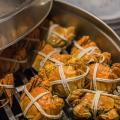
Green-backed mud crabs from the tidal flats at the mouth of the Tan River, steamed whole with ginger and eaten with a vinegar dip.
 Taishan Eel Rice, the Claypot That Named a County
Taishan
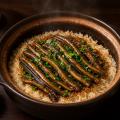
Rice cooked in a claypot with strips of freshwater eel laid over it, the whole pot finished with a spoon of the eel's own oil and a scatter of coriander.
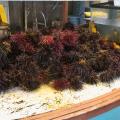 Dapeng Sea Urchin, Rich Enough to Eat Plain
Shenzhen
Purple urchins lifted from the reefs off Dapeng in spring, split and eaten raw with a spoon, or folded into a sticky rice dumpling.
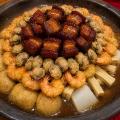 Poon Choi, the Basin the Villages Eat Together
Shenzhen
Layers of pork, dried seafood, tofu skin and radish built up in a wooden basin and simmered together, a Hakka New Year dish that feeds a whole table.
 Gongming Roast Pig, Skin Like Crackling Glass
Shenzhen
A whole suckling pig roasted over charcoal until the skin lifts in sheets, carved at the table and eaten with a smear of hoisin.
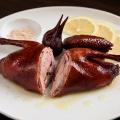 Guangming Roast Pigeon, Crisp Skin and All
Shenzhen
Squab roasted hard and fast until the skin blisters, a Guangming district specialty that travels badly and is therefore always eaten on the spot.
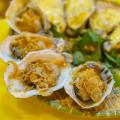 Shajing Oysters, the Shellfish That Named a Bay
Shenzhen
Oysters raked from the mudflats where the Pearl River meets the sea, eaten raw on the shell or steamed under garlic and vermicelli.
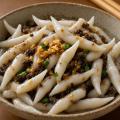 Rat Rice Noodles, the Little Tails Dabu Rolls by Hand
Dabu County
Short hand-rolled rice noodles that taper at both ends, boiled and tossed with pork and scallion; the shape is the whole joke and most of the pleasure.
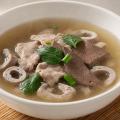 San Ji Di Soup, the Three Graduates in a Bowl
Jiaoling County
Lean pork, liver and kidney cut thin and poached for seconds in a light broth, named after the three top ranks of the imperial examination and drunk with noodles at breakfast.
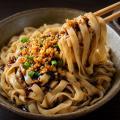 Hakka Yan Mian, the Bowl That Starts a Meizhou Morning
Meizhou
Thick wheat noodles tossed while hot with lard, dark soy and a heap of fried shallots, eaten at eight in the morning with a bowl of liver soup alongside.
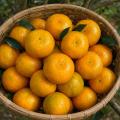 Deqing Gonggan, the Mandarin That Peels in One Piece
Deqing County
A mandarin grown along the river in the west of the prefecture, thin-skinned and sweet, with dry honeycomb pith that lets the whole peel come away in a single strip.
 Guangning Bamboo Shoots, Eaten Fresh for a Few Weeks a Year
Guangning County
The county grows more bamboo than anything else, and in early summer the shoots are dug, peeled and eaten within a day of coming out of the ground, braised with pork or simply boiled.
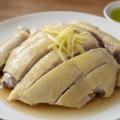 Sihui Tea-Oil Chicken, Cooked in Camellia Oil
Sihui
A free-range chicken poached, then dressed in the oil pressed from camellia seeds, which gives the skin a faint green gloss and an aroma that has nothing to do with sesame.
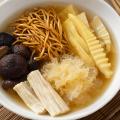 Dinghu Shangsu, the Vegetarian Feast of the Mountain
Zhaoqing
A monastery dish of mushrooms, bamboo shoots, lily buds and bean curd cooked separately and combined in a clear sauce, still served at the foot of the mountain it is named for.
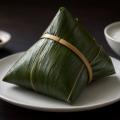 Zhaoqing Zongzi, the Pyramid Wrapped in Reed Leaves
Zhaoqing
A four-cornered parcel of glutinous rice, mung bean and pork belly boiled for hours in a wrapping of reed leaves, sold by the roadside all year and not only at the festival.
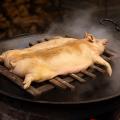 Jun'an Steamed Pig, a Whole Carcass Cooked Over Water
Foshan
A young pig seasoned with five-spice and salt, stretched on a frame and steamed whole until the skin sets and the fat runs clear, then chopped and sold by weight.
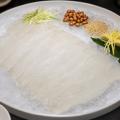 Shunde Raw Fish, Sliced So Thin It Looks Like Paper
Foshan
Freshwater fish filleted and cut into translucent slices, served cold with shredded ginger, spring onion, peanuts and a dish of oil and soy that each diner mixes.
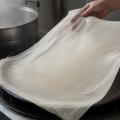 Chencun Rice Noodle, Rolled Thin and Served Cold or Hot
Foshan
A sheet of rice noodle steamed thinner than paper in one town south of the city, folded and cut into ribbons and dressed either with soy and hot oil or in a clear broth.
 Manggong Cake, the Blind Man's Biscuit Foshan Still Makes
Foshan
A small round biscuit of rice flour, peanut and sesame pressed into a mould and baked hard, sold in paper packets at the gate of the ancestral temple.
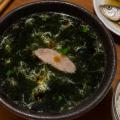 Nan'ao Seaweed Soup, the Island's Bowl of the Tide
Nan'ao County
Fine dark seaweed gathered off the rocks of the island and simmered into a light soup with pork slivers and egg, salty in the way only something from the sea is.
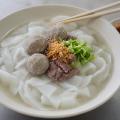 Kway Teow, the Flat Rice Noodle Shantou Eats at Breakfast
Shantou
Wide ribbons of fresh rice noodle blanched for a few seconds and dressed at the table, topped with beef balls, tripe or a spoon of fried shallot.
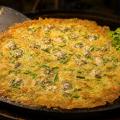 Oyster Omelette, the Street Griddle Shantou Runs On
Shantou
Small local oysters folded into a batter of sweet potato starch and egg, fried hard on a flat iron, and eaten with fish sauce and a scatter of coriander.
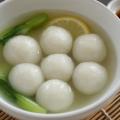 Dahao Fish Balls, Made From Fish Still Moving
Shantou
A district on the south bank where the fish is filleted, beaten and shaped by hand the same morning, so the balls stay springy and taste of the sea rather than of filler.
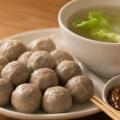 Shantou Beef Balls, the Ones That Bounce
Shantou
Lean beef pounded to a paste with a little starch and salt until it springs back under the thumb, then dropped into clear broth and served with a dip of satay sauce.
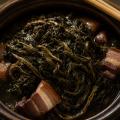 Sulao Vegetable, Luofu Mountain's Household Green
Boluo County
A leaf mustard grown only in one valley on Mount Luofu, dried into a sweet, fibreless green that southern cooks reach for as a soup base.
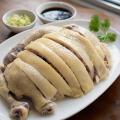 Longmen Bearded Chicken and the Tuft Under Its Beak
Longmen County
One of Guangdong's four famous birds, free-ranged in Longmen's hills for four months and served plainly poached to keep the bite.
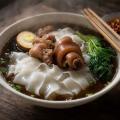 Hengli Tangfen, the Noodle Bowl Huizhou Eats at Any Hour
Huizhou
Rice noodles under a broth of pork bone and toasted dried flatfish, topped with braised pig trotter or beef brisket, for about ten yuan.
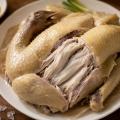 Dongjiang Salt-Baked Chicken, Cooked in a Bed of Hot Salt
Huizhou
The Dong River's Hakka classic, a whole chicken wrapped in paper and buried in heated coarse salt until the skin tightens and turns gold.
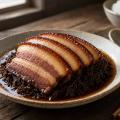 Meicai Kourou, Pork Belly Under a Layer of Preserved Greens
Huizhou
Thick slabs of pork belly steamed over Huizhou's dried mustard greens until the fat goes translucent and the greens drink the sauce.
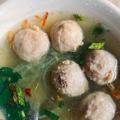 Chaozhou Beef Balls: The Bounce Test
Chaozhou
Hand-hammered beef balls so springy they bounce off the table, the pride of Chaoshan cooking in eastern Guangdong.
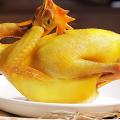 Salted Baked Chicken: The Hakka Classic
Meizhou
A whole chicken baked inside a mound of hot salt, producing the most tender, gently salty bird in Cantonese cooking.
 Hakka Stuffed Tofu: A Home Dish
Meizhou
Guangdong's classic Hakka dish, tofu pockets stuffed with savoury pork.
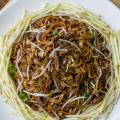 Dry-Fried Beef Ho Fun
Guangzhou
Guangdong's examination question: Shahe rice noodles, beef and bean sprouts in a screaming wok, and a plate with no oil left in the bottom if it was made properly.
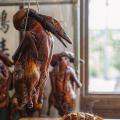 Roast Goose
Guangzhou
Cantonese roast goose with blistered mahogany skin, a five-spice and fermented-bean marinade, and a bowl of plum sauce on the side.
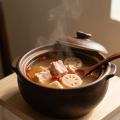 Old-Fire Soup
Guangzhou
Cantonese slow-simmered soup — bones blanched, then three patient hours over a bare trembling fire, salted only at the end.
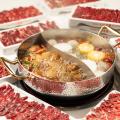 Chaoshan Beef Hotpot
Chaozhou
Chaoshan beef hotpot: hand-cut marbled beef swished for seconds in a clear beef broth, with a satay and sha-cha dip.
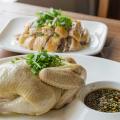 White Cut Chicken
Guangzhou
Guangdong's test of a kitchen — poached chicken served cool with a ginger-scallion dip, and all about the texture of the skin.
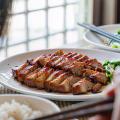 Char Siu
Guangzhou
Cantonese BBQ pork glazed with honey and maltose, charred at the edges and lacquered a deep, glossy red.
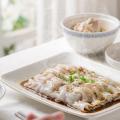 Rice Noodle Rolls
Guangzhou
Silky steamed rice sheets rolled around pork, shrimp or egg and dressed with sweet soy — Guangzhou's breakfast of choice.
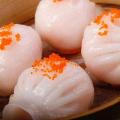 Har Gow
Guangzhou
The king of dim sum: translucent dumplings with a pleated crescent top and a whole shrimp curled inside.
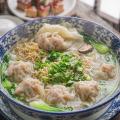 Wonton Noodles
Guangzhou
Thin egg noodles with pork-and-shrimp wontons in a clear broth, served in a small bowl with a bamboo pole's worth of bounce.
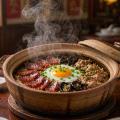 Claypot Rice
Guangzhou
Rice cooked to a crisp crust in a clay pot, topped with sausage, chicken or eel, finished with soy and the scrape of the 饭焦.
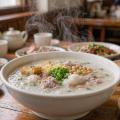 Boat Congee
Guangzhou
A Pearl River sampan's congee — smooth rice porridge crowded with fish, squid, peanuts and a shower of scallion.
 Double-Skin Milk
Foshan
Shunde's delicate set milk pudding with a wrinkled 'double skin' on top — served warm, chilled, or with red beans.
Nothing filed in this section yet.
Stay0
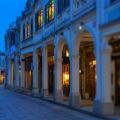 Xiguan Old Town, Sleeping in the Arcade City
Guangzhou
西关老城民宿 -- guesthouses inside the working arcaded old town of Liwan: Enning Road of 1931, the longest and most complete qilie shophouse street left in the city, micro-renovated in 2016 rather than demolished, now a national 4A scenic area (2020) with the city's first intangible-heritage street and, since 2022, a place on the national list of tourism and leisure streets -- rooms over courtyards and shared walls where the neighbourhood is the amenity, a world away from the villa gardens of Dongshankou and the lobby towers of the new axis.
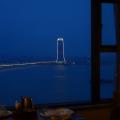 Canton Tower Riverview Stays, Sleeping Inside the Skyline
Guangzhou
珠江新城塔楼江景住宿 -- the tower hotels of the CBD across the river from the Canton Tower, a district a 1993 master plan raised out of warehouse land and a State Council approval in 2005 made a central business district: rooms strung up the towers of the Zhujiang New Town skyline -- among the densest clusters of 300-metre buildings in the country -- where the window sells the river bend, the old axis and the tower's own light show, and the lobby is seventy-plus floors below.
 Zhuhai-Macao Border-Port Stays, the Overnight Base
Zhuhai
拱北/青茂/横琴口岸 -- the lodging question as a timetable: Gongbei's crossing runs 06:00 to 01:00 the next day, Qingmao has been open around the clock since 2021-09-08, Hengqin is open around the clock with the Macao LRT two minutes from its hall, and the Zhuhai port of the Hong Kong-Zhuhai-Macao Bridge never closes; the article prices the trade in minutes rather than in stars and writes about the base, not the resort.
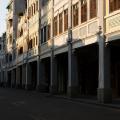 Tangjiawan Old-Town Homestays
Zhuhai
唐家湾古镇 -- the old county seat of the modern era, on the national list of historic and cultural towns since 2007, where ancestral halls and merchant houses along Shanfang Road have been turned into small hotels and guesthouses, and the neighbouring village of Huitong -- laid out in 1732 with 38 Guangdong houses on three streets and eight lanes -- keeps a courtyard guesthouse behind its gate tower.
 Dong'ao Island Stays
Zhuhai
东澳岛 -- the Wanshan island with the shortest crossing (about 50 minutes from Xiangzhou, 40 from Hengqin) and the widest spread of beds: a five-star resort on its own beach at 923 Lvdao Road beside Nansha Bay's so-called diamond sand, a mid-range resort village behind it, and the fishermen's guesthouses around Dong'ao Bay pier, all on one 4A-rated island with a Qing gun battery above the shore.
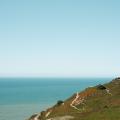 Wailingding Island Stays
Zhuhai
外伶仃岛 -- the outermost islet of the Wanshan archipelago, where the ferry timetable is the gate: one boutique hotel of 49 rooms opened in 2022 a minute's walk from the pier, the Lingding Bay renewal quarter added a cluster of apartments and guesthouses behind it, and the island rations its own water and power, so a cancelled sailing is a cancelled stay.
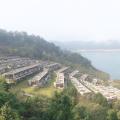 Tangxia Sanzheng, the Town's First Hot-Spring Hotel
Dongguan
三正半山 -- the 558-room resort the city credits with rewriting Dongguan's no-hot-spring history in 2018, thirty-eight soaking pools on the hillside, ten minutes by taxi from the Dongguan South high-speed rail station.
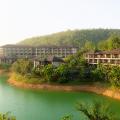 Humen's Fengtai Garden Hotel
Dongguan
丰泰花园 -- the 430-room garden resort that carries a Luban award and a 2008 five-star plaque, rainforest-hot-spring bathing under glass, about eight kilometres from the Humen high-speed rail station.
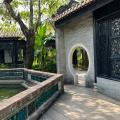 Keyuan and Xiabafang, the Creative-District Stays
Dongguan
莞城与万江 -- beds around the 1850 garden, the riverside studios of Xiabafang -- the 'Dongguan Gulangyu' -- and the old flour-and-rice mill quarter reborn as the Pushuwan hotel, the walkable overnight base for the city's heritage core.
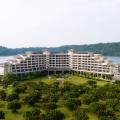 Songshan Lake Hyatt, Beds on the Tech Lake Shore
Dongguan
松山湖 -- the Hyatt Regency that opened in 2008 on the reservoir lake shore, a 275-room resort with the region's first infinity pool facing the water, across the lake from Huawei's European-village campus.
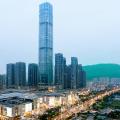 InterContinental Dongguan, High in the Guomao Tower
Dongguan
民盈·国贸中心 -- the InterContinental lodged inside the 423-metre tower that owns the Dongguan skyline, 285 rooms styled on Keyuan garden by CCD, a ¥850-and-up base over the Hongfu Road metro stop.
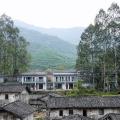 Qixi Village, Six Homesteads in the Hills of the City's Lung
Zhongshan
五桂山街道's 旗溪 -- six guesthouses in one Hakka village, led by 原野之上, in 2025 the first national C-grade tourist guesthouse in Zhongshan, inside the new green belt around Wugui Mountain.
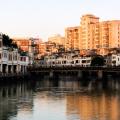 Shiqi Old Town and the East, Where a 1986 Landmark Returns
Zhongshan
石岐 and 东区 -- the 1986 Fuhua Hotel and its first-self-designed revolving restaurant reopening in October 2026 with 195 rooms, facing a 459-room Hilton, chain beds between ¥224 and ¥448.
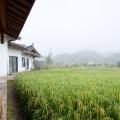 Yakou Village, Rice Paddies and the Homestays of a Rural Star
Zhongshan
南朗街道's 崖口 -- 6.37 million visitors in 2025 drawn by claypot rice, mudflats and an 8.5-km coastline, with paddy-view homestays from about ¥195 beside the free 5A Sun Yat-sen zone.
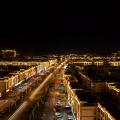 Beds in the Lighting Capital, Booked Around the Lamp Fair
Zhongshan
古镇镇 -- beds inside a thousand-million-yuan lighting cluster, a 250-room Westin against the veteran Guomao Hotel, where the 2026 lamp fair runs three times a year and fair week sets the price.
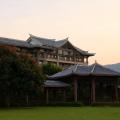 The Hot Spring Resort Where China's Opening-Up Checked In
Zhongshan
中山温泉宾馆 -- the first Sino-foreign cooperative hotel, opened 28 December 1980 and rebuilt in 2023 around 388 rooms and 48 soaking pools, where Deng Xiaoping said 'no turning back' in 1984.
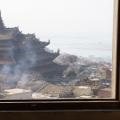 Pilgrim Rooms at Jieshi and Beach Stays at Jinxiang
Lufeng
Guesthouses around 玄武山元山寺 in the old garrison town of 碣石镇, and fishing-village rooms on 金厢滩 along the bay.
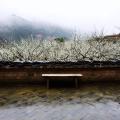 Hot Springs and Plum Blossom Farmhouses in Luhe
Luhe County
Hakka 民宿 across 上护镇 and 水唇镇 in the 中国青梅之乡 -- plum blossom in January, hot springs all year, and hills on every side.
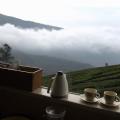 Mountain Rooms Below Lianhua Peak, in Haifeng
Haifeng County
Stays under 莲花山's 1337.3 m -- the highest point on the eastern Guangdong coast -- among the tea gardens and hot springs of 海城镇.
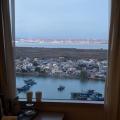 City Hotels on the Shore of Pinqing Lake
Shanwei
品清湖, mainland China's largest coastal lagoon at about 23 km², ringed by 36 km of shore and a 21.3 km greenway -- 汕尾's own waterfront address.
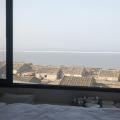 Seaview Stays on the Red Bay and the Zheliang Peninsula
Shanwei
Rooms along 遮浪半岛 of 红海湾, where the sea runs rough on one side of the road and glassy on the other; 121 village guesthouses recently upgraded.
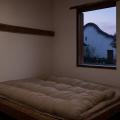 A Minsu Beside a Ming-Qing Village at Dawan
Yunan County
A farmhouse stay at 大湾镇 in 郁南县, next door to one of the best-kept groups of old houses in the west.
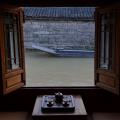 A Riverside Inn at Yunan, Above the Nanjiang
Yunan County
An inn in 郁南县 on the 南江, the old water road that carried the county's trade south.
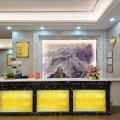 A City Hotel at Luoding, on the Old River Road
Luoding
A hotel in 罗定市, where the 泷江 runs and the county's academy and old streets sit close by.
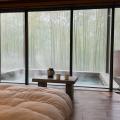 A Hot-Spring Lodge Below Guoen Temple
Xinxing County
A lodge at the 龙山 springs in 新兴县, in the country the sixth patriarch came from.
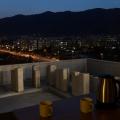 A City Hotel at Yunfu, Where the Stone Trade Sits
Yunfu
A hotel in 云浮市 among the stone yards that gave the city its trade, with 蟠龙洞 a short drive out.
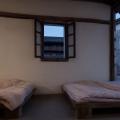 A Hakka Minsu Beside a Walled Compound in Shixing
Shixing County
A farmhouse stay in 始兴县 next to one of the county's walled Hakka compounds, in a county that counts hundreds of them.
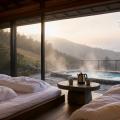 A Hot-Spring Lodge in the Ruyuan Hills
Ruyuan Yao Autonomous County
A lodge at the springs below 南岭 in 乳源瑶族自治县, with the 广东大峡谷 a morning's drive away.
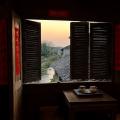 A Riverside Inn at Nanxiong, an Hour From the Pass
Nanxiong
An inn in 南雄市 on the road to the 梅关, where the old migration route up from 珠玑巷 left the province.
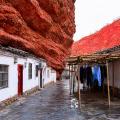 A Guesthouse in the Danxia Village, Under the Red Cliffs
Renhua County
A family guesthouse in 瑶塘村 at the foot of 丹霞山 in 仁化县, where the cliff path starts from the lane.
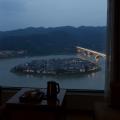 A City Hotel on the Beijiang at Shaoguan
Shaoguan
A hotel above the 北江 at 韶关市, with 风采楼 and the old town a short walk along the embankment.
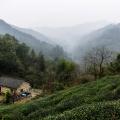 A Minsu at Cukeng Village, Under the Waterfall
Jiexi County
A farmhouse stay at 粗坑村 in 揭西县, in a Hakka hamlet of tea terraces below the 黄满磜 falls.
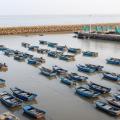 A Seaside Lodge at Shenquan, Where the Fishing Port Faces the Sea
Huilai County
A guesthouse at 神泉镇 in 惠来县, on a stretch of sand with the 神泉港 fishing fleet working offshore.
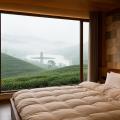 Jingming Hot Spring Resort, Two Thousand Two Hundred Mu of Tea
Jiexi County
A resort at 京溪园镇 in 揭西县, built around tea terraces and hot pools at the foot of 大北山.
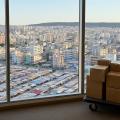 A Herb-Market Hotel in Puning, Where the Trade Sleeps Next Door
Puning
A business hotel in 普宁市 within reach of the 中药材 market, the largest window the south has onto the herb trade.
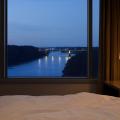 A Riverside Hotel at Rongcheng, Above the Rong River
Jieyang
A hotel on the north bank of the 榕江 at 揭阳市, with the old walled town and its arcades a walk away.
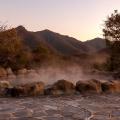 A Hot-Spring Lodge on the Xijiang at Xinyi
Xinyi
A lodge on the 西江 in 信宜市, where the water comes out of the ground above eighty degrees and the hills start at the gate.
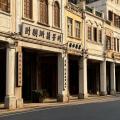 A Minsu in the Juhong Country at Huazhou
Huazhou
A family minsu in 化州市 with peel-drying trays on the roof and the smell of the citrus in the yard all winter.
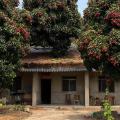 An Orchard Lodge Under the Old Lychee Trees at Genzi
Gaozhou
A lodge in the lychee groves of 根子镇 in 高州市, where the trees in the yard are older than the village around them.
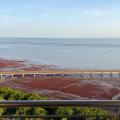 A Seaside Hotel on the Shuidong Bay
Maoming
A hotel above the 水东湾 in 电白, with the mangrove channel in front and the open beach a short drive round the headland.
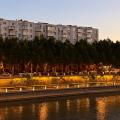 A City Hotel on the Xiaodong River at Maoming
Maoming
A hotel on the 小东江 in downtown 茂名市, with the oil-city grid on one side and the river park on the other.
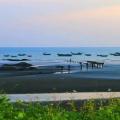 A Minsu on the Bay at Wuchuan's Jizhao
Wuchuan
A family guesthouse on the 吉兆湾 coast of 吴川市, among the rocks and the small bays that give the place its name.
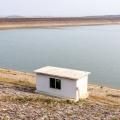 A Lodge on the Shore of the Hedi Reservoir
Lianjiang
A lakeside place to sleep on the great reservoir at 河唇镇 in 廉江市, built by hand in 1958 and still the water of the peninsula.
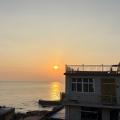 A Coast Minsu at Wushi on the Leizhou Shore
Leizhou
A guesthouse on the western shore of 雷州市, where the sun sets over the Gulf of Tonkin and the fishing boats come in below.
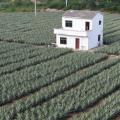 A Minsu in the Pineapple Fields of Xuwen
Xuwen County
A farmhouse among the pineapples of 曲界镇 in 徐闻县, with the rows running to the horizon on every side of the yard.
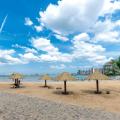 A City Hotel Above the Bay at Zhanjiang
Zhanjiang
A hotel on the waterfront of 湛江市, with the bay below the window and the seafood streets of the old town a short walk inland.
 A City Hotel Above the Dongjiang in Heyuan
Heyuan
A practical hotel on the riverfront of 河源市, with the 东江 below the window and the markets and noodle shops a short walk inland.
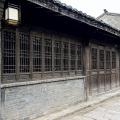 An Inn in the Old Lanes of Tuocheng
Longchuan County
A converted house in 佗城镇, the county town the Qin founded, a lane away from the old well and the Confucian hall.
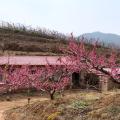 A Minsu in the Peach Orchards of Lianping
Lianping County
A farmhouse among the 鹰嘴蜜桃 orchards of 连平县, with the fruit on the trees in summer and the hills behind the house.
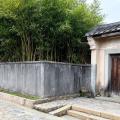 A Guesthouse Inside the Su Family Walled Village
Dongyuan County
A room in a Hakka 围屋 at 苏家围 on the 东江, where the bamboo runs to the water and the ancestral hall still stands.
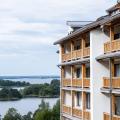 A Lakeside Resort on the Shores of Wanlu Lake
Dongyuan County
Rooms above the green water of 万绿湖, with the wooded islands offshore and the reservoir's own fish on the dinner menu.
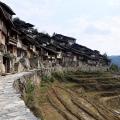 A Guesthouse in a Yao Mountain Village
Liannan Yao Autonomous County
A family house among the stone terraces and timber houses of a Yao village, with the mist on the ridge and the drums of the village below.
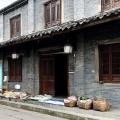 An Inn in the Old Town of Lianzhou
Lianzhou
A converted shophouse in the lanes of old 连州, where the market street is on the doorstep and the city's long history is in the walls.
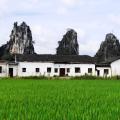 A Farmstay Among the Karst Peaks of Yingde
Yingde
A working farmhouse in the 英西 country, with tea bushes and rice fields at the door and the limestone peaks standing over the valley.
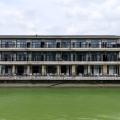 A Riverside Hotel on the Beijiang in Qingyuan
Qingyuan
Rooms above the green water of the 北江, where the river traffic passes under the window and the old town is a short walk inland.
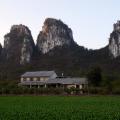 A Forest Lodge Above the Stone Peaks of Chunwan
Yangchun
A hillside lodge outside 春湾, looking over the karst stone forest, with the cool air of the 阳春 hills coming down the slope.
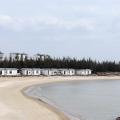 A Moon Bay Resort on the Shaba Coast of Yangxi
Yangxi County
A seaside resort on 沙扒's Moon Bay, where the sand is soft and the seafood comes off the boats a few steps from the door.
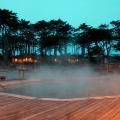 A Coastal Hot-Spring Resort Above the Yangjiang Shore
Yangjiang
A resort set among the sea-pine groves where the hot springs run to the edge of the beach and the tide is a short walk below.
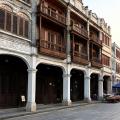 A Boutique Hotel in the Lanes of Old Yangjiang
Yangjiang
Rooms behind a restored shophouse facade in the old quarter, where the morning market is on the doorstep and the river is a short walk.
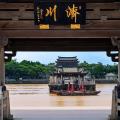 An Inn on the Han River Facing the Guangji Bridge
Chaozhou
Rooms above the 韩江, looking straight across the water at the bridge, with the morning boats working the sandbar.
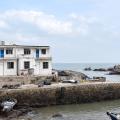 A Homestay on the Haishan Coast of Raoping
Raoping County
A seaside guesthouse on 海山, where the fishing boats come in below the window and the seaweed beds are a short walk along the shore.
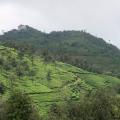 A Tea-Farm Homestay on Fenghuang Mountain
Chaozhou
A room among the 凤凰 single-bush tea terraces, where the morning mist comes down the ridge and the owner brews what the plot grew.
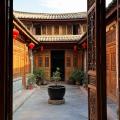 A Guesthouse Under the Memorial Arches of Paifang Street
Chaozhou
Rooms behind a carved wooden facade on 牌坊街, where the arches overhead are lit at dusk and the old town is on the doorstep.
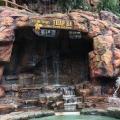 A Hot Spring Resort in the Hills of Enping
Enping
Thermal pools fed from a fault line under the western hills, the reason 恩平 calls itself the hot spring town of Guangdong.
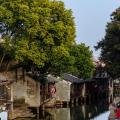 A Lodge on the Water in Gulou
Heshan
A low guesthouse among the fish ponds and banyan roots of the 古劳 wetlands, reached by a causeway and a footbridge.
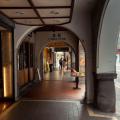 An Inn in the Arcades of Chikan
Kaiping
A restored arcade shophouse on the old river street, where the upper floor still looks out over the three-kilometre colonnade.
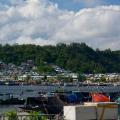 A Seaview Guesthouse on Shangchuan Island
Taishan
Rooms a minute from the sand on the island the ferries reach from Taishan, with fishing boats working the bay below the windows.
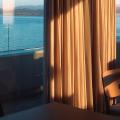 A Seaview Hotel on the Shekou Waterfront
Shenzhen
A tower with the harbour in front and the ferry pier next door, the easy base for anyone arriving from Hong Kong by boat.
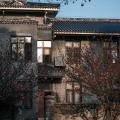 A Guesthouse Inside the Walls of Dapeng
Shenzhen
Rooms in a restored courtyard house within the Ming-era walls, a few minutes from the fortress gates and the fishing harbour.
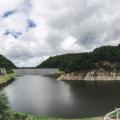 A Lodge Above Changtan Lake
Jiaoling County
Rooms on the wooded slope above a reservoir in the far north of the province, with the water below and the Hakka hills behind.
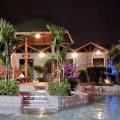 A Hot Spring Lodge in Fengshun
Fengshun County
A low lodge built around its own mineral pools in a county that sits on a fault line and has been selling hot water for centuries.
 A Riverside Hotel in Hakka Xingning
Xingning
A business hotel on the 宁江 in a town that has produced more scholars per head than almost anywhere in the Hakka country.
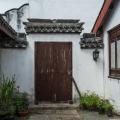 Sleeping Beside the Hakka Museum of Dabu
Dabu County
A converted family house a few minutes from the county museum, keeping the wide rooms, high ceilings and tiled courtyards of the old Hakka plan.
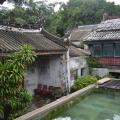 A Night Inside a Hakka Wai Long Wu
Meizhou
A guesthouse built into a semicircular Hakka enclosed house, where the rooms ring a courtyard and the ancestral hall still stands at the middle of the plan.
 An Inn in Sihui, Where the Jade Is Cut
Sihui
A modest guesthouse in the town that has traded in jade for centuries, within walking distance of the workshops and the market, with a courtyard and plain, quiet rooms.
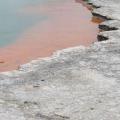 A Hot-Spring Resort in the Hills of Huaiji
Huaiji County
A compound of outdoor pools fed from a spring in the hills, with rooms around a garden and the county's limestone country and cave villages a short drive away.
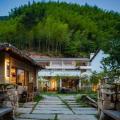 A Homestay Inside the Bamboo Forest of Guangning
Guangning County
A family house at the edge of the plantation where the whole horizon is bamboo, with meals cooked from what was dug that morning and a wood-fired bath in the courtyard.
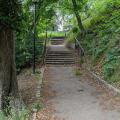 A Lodge in the Forest Below Dinghu Mountain
Zhaoqing
A small place up the valley among old trees, where the road ends and the trails begin, with a stream, birdsong and no reason to go back down into town before dark.
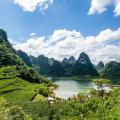 A Hotel on the Shore of Star Lake
Zhaoqing
A tower on the waterfront road with the seven limestone peaks across the water from the window, the city's old pavilions within walking distance and the park gates at the foot of the building.
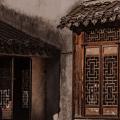 A Courtyard Hotel in the Lanes of Chancheng
Foshan
A restored house behind a plain street wall in the old district, arranged around an open court, with a few rooms, a tea room and no traffic within earshot.
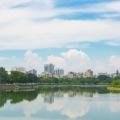 A Lake-View Hotel Above Qiandeng Lake
Foshan
A tower on the edge of the new city's central lake, with the water and the park below the window and the old town half an hour away by metro.
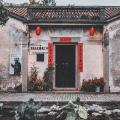 An Inn Beside Qinghui Garden in Daliang
Foshan
A small guesthouse in the old quarter of Daliang, a short walk from the Lingnan garden, with rooms set around a planted court and the town's food streets outside.
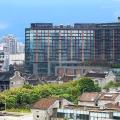 A Boutique Hotel a Lane From the Ancestral Temple
Foshan
A converted tong lau a few minutes on foot from the temple and the old lanes, with rooms over a courtyard and the whole historic core within walking distance.
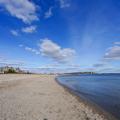 A Beachfront Resort on Nan'ao Island
Nan'ao County
Low white buildings above a long crescent of sand on the island's east coast, with the fishing boats working off the point and nothing between the room and the sea.
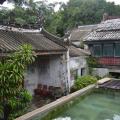 A Courtyard Hotel Behind an Old Town Facade
Shantou
A converted merchant house whose blank street wall hides a courtyard, a few rooms and a tea table, a minute from the arcades and the harbour.
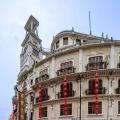 A Guesthouse in the Xiaogongyuan Arcades
Shantou
A small hotel on the upper floor of a restored 1930s arcade building, where the rooms open onto a covered walkway and the old town is directly below.
 A Waterfront Hotel Facing Shantou Bay
Shantou
A tower on the bay with the whole harbour in view, the ferry piers below it and the lights of the south bank across the water after dark.
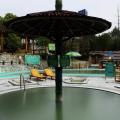 A Hot Spring Retreat at the Foot of Luofu Mountain
Boluo County
A low resort in the wooded valley beside Mount Luofu, built around forest pools and the old pilgrimage trail up to the Taoist halls.
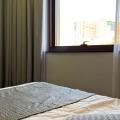 A Boutique Hotel Above the Shore of West Lake
Huizhou
A converted riverside building in the old quarter, a short walk from the Su Causeway and the night market along the East River.
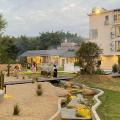 A Nankunshan Guesthouse with Its Own Hot Spring
Longmen County
A small forest house on the road up Nankunshan, where each room gets a private stone tub fed by hot mineral water from below the ridge.
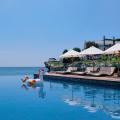 A Seaview Resort on Xunliao Bay's White Sand
Huidong County
Rooms opening onto a stretch of pale sand on Huidong's coast, with an infinity pool aimed at the water and the fishing boats beyond it.
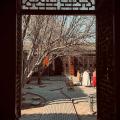 Chaozhou Old Town Inn
Chaozhou
A small inn in a restored old house inside Chaozhou's historic core, steps from the archway street and the boat bridge.
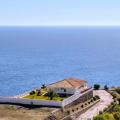 Nan'ao Island Coast Guesthouse
Nan'ao County
A family-run sea-view guesthouse on Nan'ao Island off Shantou, where you sleep to the sound of the waves.
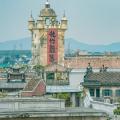 Kaiping Diaolou Village Guesthouse
Kaiping
Sleep inside a UNESCO-listed 碉楼 watchtower in the rice fields of Kaiping — original steep stairs, golden evening light, and the whole village to wander.
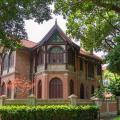 Dongshankou Villa Stay
Guangzhou
Four hundred fair-faced red-brick villas in Guangzhou's Dongshankou, and guesthouses converted from them — the quietest address in the old city. From about ¥300.
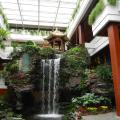 Garden Hotel Guangzhou
Guangzhou
A 1980s grande dame with a 21,000-square-metre garden, an outdoor waterfall pool and eight restaurants in the heart of the city.
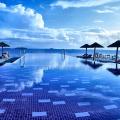 InterContinental Shenzhen Dameisha
Shenzhen
A resort on Dameisha beach in Yantian, with an infinity pool spilling towards the sand and the whole of Mirs Bay in view.
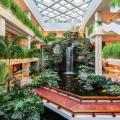 White Swan Hotel
Guangzhou
Guangzhou's 1983 riverside landmark on Shamian Island, built around a three-storey indoor waterfall and still the city's classic address.
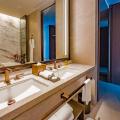 The St. Regis Shenzhen
Shenzhen
The St. Regis inside KK100 — the lobby on the 96th floor, rooms stacked up to the 100th, and Shenzhen laid out below.
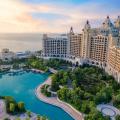 Chimelong Hengqin Bay Hotel
Zhuhai
A vast seaside resort hotel inside the Chimelong complex, with pools, a water park and rooms that face the South China Sea.
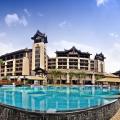 Xilegu Hot Spring
Qingyuan
A hillside hot-spring resort in Qingyuan's countryside — outdoor radon pools, forest air and a very long weekend.
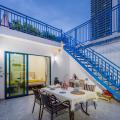 Shuangyue Bay Minsu
Huidong County
A minsu on the twin crescents of Shuangyue Bay, with a sea-view terrace and the beach two minutes down the lane.
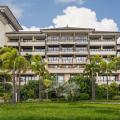 Hailing Island Minsu
Yangjiang
A seaside guesthouse at Hailing Island's Ten-Mile Silver Beach — simple rooms, a fish market next door, and the sea at the window.
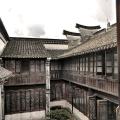 Lingnan Tiandi Boutique
Foshan
A boutique guesthouse in Foshan's restored Lingnan Tiandi, sleeping in a grey-brick qilou shophouse beside the Ancestral Temple.
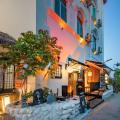 Jiaochangwei Minsu
Shenzhen
A painted seaside minsu at Jiaochangwei in Dapeng, Shenzhen — the beach lane by the old fortress, all guesthouses and surfboards.
Nothing filed in this section yet.
Travel0
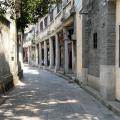 Tangjiawan Old Town, the County Seat of Famous Names
Zhuhai
唐家湾古镇 -- the old town of a county that used to call itself the model county of Zhongshan, and the birthplace of an improbable roll of names: Tang Shaoyi, first premier of the Republic, whose Gongleyuan garden still stands; Su Zhaozheng, leader of the seamen's strike; Tang Guoan, first president of Tsinghua; and the woodcut artist Gu Yuan -- with the neighbouring village of Huitong, laid out in 1732, behind them.
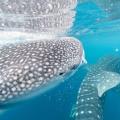 Chimelong Ocean Kingdom, the Ocean Park on Hengqin
Zhuhai
珠海长隆海洋王国 -- the ocean park at Fuxiang Bay on Hengqin, a marine-themed park and not the wildlife park of the same group in Panyu, Guangzhou: a whale-shark exhibit among the largest in the world, beluga and penguin halls, a nightly parade and fireworks over the lagoon, and a hotel group of its own next door.
 Qinglu Road and the Fisher Girl
Zhuhai
情侣路与珠海渔女 -- the seafront that named itself after a statue: the 1982 Fisher Girl on her rock in Xianglu Bay is the city emblem, and the city is candid that the sculpture came first and the legend was written afterwards; the road runs from there past the beach to Yelizhou island, where the Sun and Moon Shells of the Zhuhai Grand Theatre sit on the water.
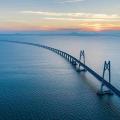 The Hong Kong-Zhuhai-Macao Bridge
Zhuhai
港珠澳大桥 -- 55 km of bridge, artificial island and undersea tunnel opened on 2018-10-24, linking the Hong Kong Special Administrative Region with Zhuhai and the Macao Special Administrative Region: two artificial islands, the dolphin-shaped eastern island open as a viewing deck, a 6.7 km immersed tunnel under the shipping channel, and a reserve for the Chinese white dolphin along the line.
 Wailingding Island, the Outermost Isle on the Lingdingyang
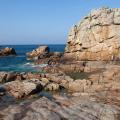
Zhuhai
外伶仃岛 -- the furthest island of the Wanshan group, reached only by sea from Xiangzhou or Hengqin: Lingding Peak at 311.8 m, the Shijing park of weathered granite, the coastal path the islanders call the jade belt, and the couplet from Wen Tianxiang's poem carved into the rock in Mao Zedong's own hand -- on the same water the poem was written about.
 Guanyinshan, the Private National Forest Park
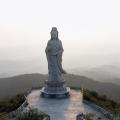
Dongguan
广东观音山国家森林公园 -- the country's first privately-run national forest park, in Zhangmutou, where a 33-metre Guanyin statue assembled from 999 granite blocks stands over the 488-metre summit the park calls its buddha-light peak.
 Nanshe, the Ming-Qing Village of the Xie Clan
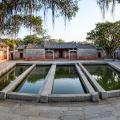
Dongguan
南社明清古村落 -- the single-surname village founded in the Southern Song, thirty-two ancestral halls ranked along four boat-shaped ponds, national key heritage since 2006 and a national 4A shared with nearby Tangwei under one listing.
 Weiyuan Fort and the Naval Battle Museum
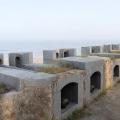
Dongguan
威远炮台 -- the crescent-shaped coastal fort Guan Tianpei built in 1835 with forty gun positions along 360 metres of stone, where he fell in the 1841 battle, now paired with the Naval Battle Museum on the same national heritage site.
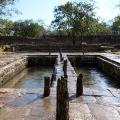 Humen, Where the Opium Went Into the Pools
Dongguan
鸦片战争博物馆 -- the museum complex over Lin Zexu's two opium-destruction pools, where 2.37 million pounds of confiscated opium went into lime and seawater from June 3 1839, a 1982 national key heritage site and Dongguan's first national first-grade museum.
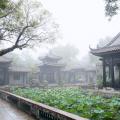 Keyuan, the Smallest of the Four Lingnan Gardens
Dongguan
可园 -- the 2,204-square-metre garden built by Zhang Jingxiu from 1850, smallest of the four great Lingnan gardens, where the exiled painters Ju Lian and Ju Chao lived ten years and developed the splash-ink-and-water method that seeded the Lingnan school.
 Wugui Mountain, the Fragrant Hills That Named Old Xiangshan
Zhongshan
五桂山 -- a lone 300-square-kilometre range whose 531-metre crown is Zhongshan's highest, whose incense legend gave the old county of 1152 its name, Fragrant Hills, before 1925 renamed it Zhongshan.
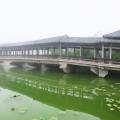 Zhan Garden, the Largest Private Classical Garden of Lingnan
Zhongshan
中山詹园 -- an estate begun in 1998 by Huang Yuanxin for his parents, built over five years by hundreds of Suzhou and Hangzhou craftsmen, opened in August 2003 with 120 mu and a bridge named for his father.
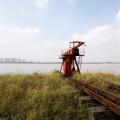 Qijiang Park, a Shipyard Reborn as a Landscape Landmark
Zhongshan
岐江公园 -- the Yuezhong shipyard that closed in 1999, turned by Yu Kongjian into an eleven-hectare industrial-heritage park against 99 percent expert opposition, opened in October 2001 and given an ASLA Honor Award in 2002.
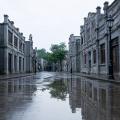 Zhongshan Film City, Three Hundred Productions in Four Countries
Zhongshan
中山影视城 -- built from 1998 at 150 million yuan for a TV biopic, with streetscapes of China, Britain, America and Japan plus a Tang-style Chang'an Town, and nearly 300 productions since 2001.
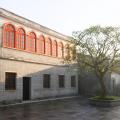 Cuiheng Village, Where Sun Yat-sen Was Born and Modern China Began
Zhongshan
孙中山故居纪念馆 -- the two-storey 1892 house Sun Yat-sen raised with remittances from his brother, free to enter in the 5A hometown zone that drew 5.1 million visitors in 2024.
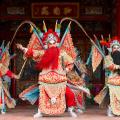 The Four Rare Operas of Hailufeng
Shanwei
正字戏, 西秦戏, 白字戏 and 陆丰皮影戏 -- four stage traditions kept alive in 海陆丰, three of them national intangible heritage, in a place of three spoken tongues.
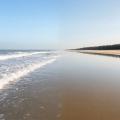 Zheliang Peninsula, Where One Sea Runs Two Ways
Shanwei
遮浪半岛 between 红海湾 and 碣石湾 -- a strip of land where the windward sea breaks in surf and the leeward stays flat, the coast's oldest surf-watching spot.
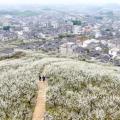 Walled Hakka Villages and Plum Blossom in Luhe
Luhe County
陆河县's 九厅十八井 houses and rammed-earth 围龙屋 in the hills, and the 青梅 orchards that made a Hakka county China's plum capital.
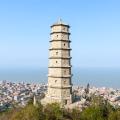 Xuanshan Mountain and the Yuan Shan Temple at Jieshi
Lufeng
玄武山元山寺 at 陆丰市碣石镇, first built in 1127 and grown into eastern Guangdong's largest temple complex, above a Ming-dynasty garrison town.
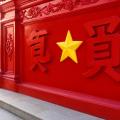 The Red Palace and Red Square, and the Peasant Who Made a Soviet
Haifeng County
海丰县's 红宫红场 -- the 1927 congress hall and the square where 彭湃 proclaimed China's first rural Soviet, now a national heritage site.
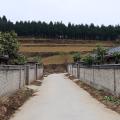 The Sixth Patriarch's Country Around Longshan
Xinxing County
The 六祖故里 of 新兴县, the hills and villages Hui Neng grew up in, south of the temple he founded.
 The Old Houses at Dawan, on the Nanjiang Road
Yunan County
The 大湾古建筑群 of 郁南县, a stretch of late Ming and Qing merchant houses along the 南江.
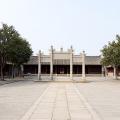 The Luoding Academy, a County's Confucian Hall
Luoding
The 学宫 of 罗定市, a Qing rebuild of a Ming hall on the county's old ceremonial axis.
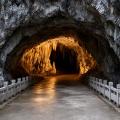 Panlong Cave, Where the Stone Flowers Grow Sideways
Yunfu
The 蟠龙洞 of 云浮市, a limestone cave whose 宝石花 ignores gravity and is still forming.
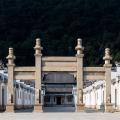 Guoen Temple, the House Hui Neng Built and Was Carried Back To
Xinxing County
The 国恩寺 of 新兴县, the sixth patriarch's family temple, the only one China ever honoured with the prefix 国.
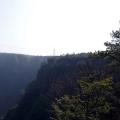 The Guangdong Grand Canyon, a Crack in the Plateau
Ruyuan Yao Autonomous County
The 广东大峡谷 at 乳源瑶族自治县, a deep rift in the 南岭 plateau with a waterfall on its floor.
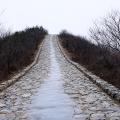 Zhuji Lane and the Meiguan Pass Road
Nanxiong
The 珠玑巷 and 梅关古道 of 南雄市, the flagged road over the pass that hundreds of surname histories start from.
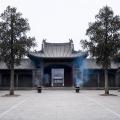 Nanhua Monastery, the Sixth Patriarch's House
Shaoguan
The 南华寺 outside 韶关市, the Chan monastery where 惠能 taught and where the school he founded still keeps his hall.
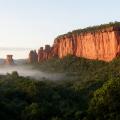 Danxiashan, Where the Landform Got Its Name
Renhua County
The red sandstone of 丹霞山 in 仁化县, a world natural heritage site and the type locality for danxia landform.
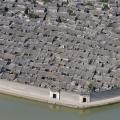 Deanli, the 773-Room Village of a Qing Admiral
Puning
The 德安里 of 洪阳镇 in 普宁市, where a hundred houses face one ancestral hall in the 百鸟朝凰 plan.
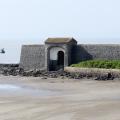 Jinghai, the Garrison Town That Predates the County
Huilai County
The 靖海古城 of 惠来县, a Ming coastal defence post whose three gates and 600 metres of wall still stand.
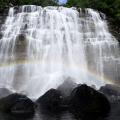 Huangmanzhai, Five Falls Down Three Hundred Metres
Jiexi County
The 黄满磜瀑布群 of 京溪园镇 in 揭西县, five steps of water dropping into an emerald pool.
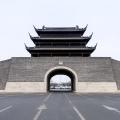 Jinxian Gate, the One Gate the City Kept
Jieyang
The 进贤门 of 揭阳市, a Ming gate and tower built to raise the district's crop of scholars.
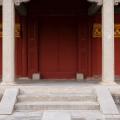 The Jieyang Confucian Temple, Where a Revolutionary Worked in 1925
Jieyang
The 揭阳学宫 of 榕城区, the largest Confucian building group in Lingnan and a 1925 headquarters of the eastern expedition.
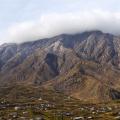 Tianmashan, the Mountain Village Where Nobody Hurries
Xinyi
The 天马山 of 信宜市, a thousand-metre ridge on the Guangxi border with a village of a few hundred people and a very long waiting list of years.
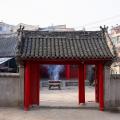 The Xian Furen Temple at Gaozhou
Gaozhou
The 冼太庙 of 高州市, a walled hall to the woman who held this coast together for three dynasties, and the tower behind it.
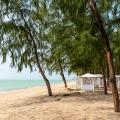 The Romantic Coast, Five Kilometres of Private Shore
Maoming
The 浪漫海岸 at 博贺镇, a walled stretch of casuarina, sand and styled pavilions that behaves more like a resort than a beach.
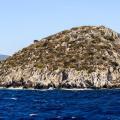 Fangji Island, Where the Water Clears to Eight Metres
Maoming
The 放鸡岛 off 电白, the largest island on this coast, with rock ledges, sea caves and a reputation for visibility.
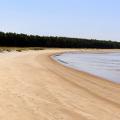 China's First Beach and the Windbreak Behind It
Maoming
The 中国第一滩 of 电白, twelve kilometres of sand backed by the shelter belt that was the country's first and is still its longest.
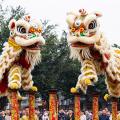 Suixi Lion Dance, the Lions That Work on Stilts
Suixi County
The 醒狮 of 遂溪县, southern lions with painted heads and a team of acrobats under them, on poles three metres off the ground.
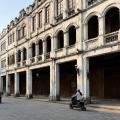 Anpu, the Old Port Town on the Jiuzhou River
Lianjiang
The 骑楼 streets of 安铺镇 in 廉江市, an old trading town at the mouth of the 九洲江 with a tower, a temple and a river market.
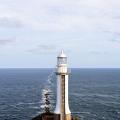 The Lighthouse at Xuwen, the Southernmost Point of the Mainland
Xuwen County
The 灯楼角 of 徐闻县, where the Qiongzhou Strait meets the Gulf of Tonkin, with a coral reef off the point and a Han port behind it.
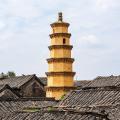 Leizhou, the Old Prefecture of the Thunder God
Leizhou
The old walled town of 雷州市, with the Tang 雷祖祠, the Ming 三元塔, the 西湖 and the arcaded streets of the prefecture.
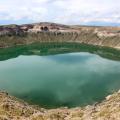 Huguangyan, the Lake That Fell Out of the Sky
Zhanjiang
The 玛珥湖 of 湖光岩 in 湛江市, a volcanic crater lake with no inlet and no outlet that neither dries nor overflows.
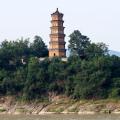 Guifeng Pagoda, the Song Tower on the Dongjiang
Heyuan
The 龟峰塔 of 河源市, a seven-storey brick pagoda raised in 1132 on the hill beside the 东江 and reopened after a long restoration.
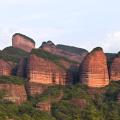 Huoshan, the Red Cliffs Above Longchuan
Longchuan County
The 霍山 of 龙川县, a red sandstone massif of cliffs, chasms and hilltop temples, one of the old scenic mountains of the province.
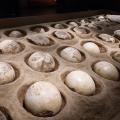 The Dinosaur Eggs of Heyuan, the City Built on a Nest
Heyuan
The 河源恐龙博物馆, where more than ten thousand fossil eggs recovered from the city's red beds are stored, studied and displayed.
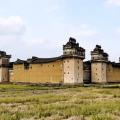 Linzhai, the Four-Cornered Towers of a Hakka Village
Heping County
The 林寨古村 of 和平县, a cluster of Qing fortified courtyard houses known as 四角楼, built by one family on the river flats.
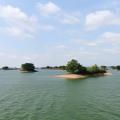 Wanlu Lake, the Reservoir the Forest Filled In
Dongyuan County
The 万绿湖, a flooded hill country of over a thousand wooded islands behind the 新丰江 dam, and the largest artificial lake in the province.
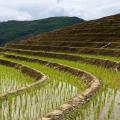 Oujia Terraces, the Rice Steps of Lianshan
Lianshan Zhuang and Yao Autonomous County
The 欧家梯田, terraced paddy climbing a hillside in long green steps, flooded and mirror-bright in spring and gold at the harvest.
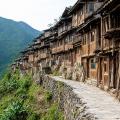 Nangang, the Yao Village on the Mountain Shoulder
Liannan Yao Autonomous County
The 南岗千年瑶寨, a Yao settlement of stone lanes and timber houses built along a ridge, reached by a long stair and lived in still.
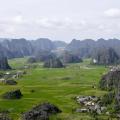 Yingxi Peak Forest, the Karst Corridor of Yingde
Yingde
The 英西峰林走廊, a valley of rice fields and villages threaded between hundreds of limestone peaks, walked or cycled at field level.
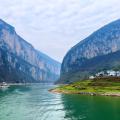 Huangchuan Three Gorges, the River Cut Through the Hills
Lianzhou
The 湟川三峡, a stretch of the 连江 where the water runs between sheer green cliffs and old stone villages stand above the bank.
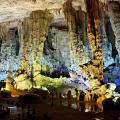 Lianzhou Underground River, the Cavern You Cross by Boat
Lianzhou
The 连州地下河, a vast limestone cavern with a river running through its lower levels, crossed on foot above and by boat below.
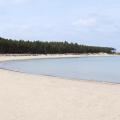 Moon Bay, the Long Crescent of Sand on the Yangxi Coast
Yangxi County
The 月亮湾 of 阳西县, a broad crescent of pale sand backed by sea-pine, where the water is shallow enough to walk far out.
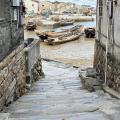 Danao, the Fishing Village That Hangs Over the Tide
Yangjiang
The 大澳渔村, an old fishing village on stilts and stone above the harbour, where the women still mend nets on the quay.
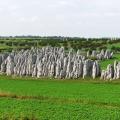 Chunwan Stone Forest, the Karst Pillars of the Yangchun Hills
Yangchun
The 春湾石林, a scattering of sheer limestone peaks and stone pillars rising straight out of the fields and orchards of the small town.
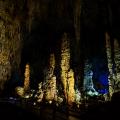 Lingxiao Cave, the Great Limestone Hall of Yangchun
Yangchun
The 凌霄岩, a vast karst cavern of soaring pillars and mirrored pools beneath the hills of 阳春市, entered up a long stone stair.
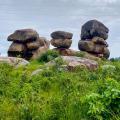 Qinglan Geopark, the Stone Forest of Raoping's Hills
Raoping County
A canyon of granite and weathered rock in 饶平, with a sinkhole and a short boardwalk through the cool green floor.
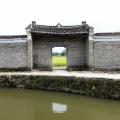 Longhu, the Walled Village on the Edge of the Old County
Chaozhou
A moated village of ancestral halls and stone lanes that has kept its layout since the Ming, a short drive from the city.
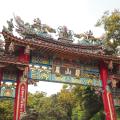 The Han Wengong Shrine, Where the City Honours Its Exiled Teacher
Chaozhou
The temple built to Han Yu, the Tang official who brought learning to Chaozhou, set against the green of 韩山 across the river.
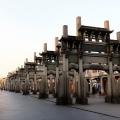 Paifang Street, the Lane of Arches at the Heart of Old Chaozhou
Chaozhou
A lane of stone memorial arches, one for every scholar the city produced, with the old shops and tea houses strung between them.
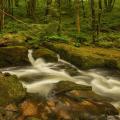 Qixingkeng, the Forest Above Enping
Enping
A protected valley of primary broadleaf forest on the western edge of the province, with streams, waterfalls and a very old banyan.
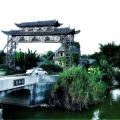 Gulou, the Village That Floats on Banyan Roots
Heshan
A wetland of fish ponds, lotus and old banyans west of Heshan, worked by boat and criss-crossed by stone slab bridges.
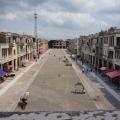 Chikan, the Arcade Town the River Built
Kaiping
Three kilometres of colonnaded shophouses along the Tan River, built by overseas Chinese money and still half lived-in.
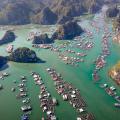 Shangchuan Island, the Beach at the End of the Ferry
Taishan
The larger of the two Chuandao islands, reached by boat from 山咀港 and ringed with sand, granite headlands and a few fishing villages.
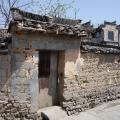 Gankeng, a Hakka Village Inside Longgang
Shenzhen
A rebuilt Hakka settlement of grey-brick lanes and ancestral halls in the hills of Longgang, half heritage site and half weekend market.
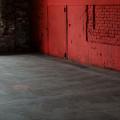 OCT Loft, the Factory That Became an Art District
Shenzhen
A 1980s electronics factory converted into galleries, studios and cafes, with the original concrete and pipework left in place.
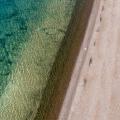 Xichong, the Long Beach at the Edge of Shenzhen
Shenzhen
A four-kilometre crescent of sand on the Dapeng peninsula, the longest beach in the city and one of the few that still feels remote.
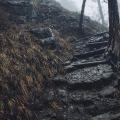 Wutong Mountain, the Peak Above the City
Shenzhen
The highest point in Shenzhen at 943 metres, climbed on stone steps through cloud forest, with the whole bay laid out from the summit.
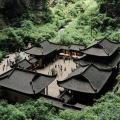 Qiaoxi, a Hakka Village Kept by Its Own Families
Meizhou
A valley of sixteen Hakka houses and a stream at the back of 雁洋, restored by the families who own them rather than by a developer.
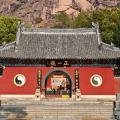 Yinna Shan and the Temple of Lingguang
Meizhou
A Tang-founded temple on the flank of a mountain over 1,200 metres high, with two ancient cypresses in the courtyard, one dead and one alive, said to have been planted by the founding monk.
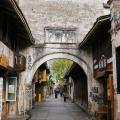 Songkou, the River Port the Hakka Left From
Meizhou
A half-abandoned trading town on the 梅江 where emigrant ships once loaded, with arcaded streets, stone wharves and a literary pagoda standing above the bend.
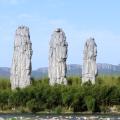 Wuzhishi, the Five Stone Fingers of Pingyuan
Pingyuan County
A granite massif split by vertical joints into five upright pillars above the 差干 river, with plank paths bolted to the cliff face and the Jiangxi border a few kilometres beyond the ridge.
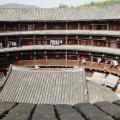 Huae Lou, the Round Hakka House Built to Be Defended
Dabu County
A three-ring circular Hakka house of rammed earth and timber, raised in 1608 and still standing, with one gate, one well and a plan that is a fortification as much as a home.
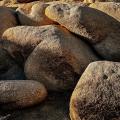 Fengkai Longshan, a Hillside of Rounded Granite Peaks
Fengkai County
A park of pale granite domes and weathered boulders above the West River, with forest between them, boardwalks over the gaps and the boundary stone of old Guangdong and Guangxi.
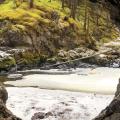 Huaiji Yanyan Cave, a Limestone Hall Full of Swifts
Huaiji County
A river cave through a hill of grey limestone, tall enough to hold a temple inside it, where thousands of swifts nest in the roof and the boats go in at the low water of winter.
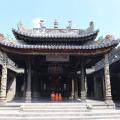 Deqing Longmu Temple, Where the Dragon Mother Is Worshipped
Deqing County
The ancestral temple of the goddess of the West River, rebuilt many times over two thousand years, with stone columns, carved beams and a constant traffic of pilgrims from across the delta.
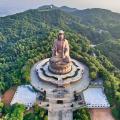 Xiqiao Mountain, the Volcano That Became a Park
Foshan
An extinct volcanic massif southwest of the city with cliff carvings, a lake in the old crater, temples on the slopes and a viewing platform above the Pearl River delta.
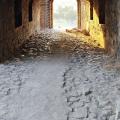 Nanfeng Kiln, the Chimney That Has Burned for Five Centuries
Foshan
A wood-fired dragon kiln still in use beside the old pottery quarter, where the workshop lanes, the clay and the fired ware are all part of the same working street.
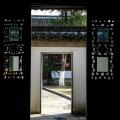 Liang Garden, the Smallest of the Four Lingnan Gardens
Foshan
A compact Qing scholar's garden of ponds, corridors, rockeries and lattice windows in the middle of the city, built by a family of calligraphers and still full of their inscriptions.
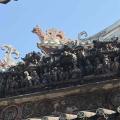 Foshan's Ancestral Temple, Roofs Full of Ceramic Figures
Foshan
A Ming-dynasty temple to the north god whose halls carry the densest ridge-tile sculpture in the region, with a courtyard of iron and stone and a working shrine inside.
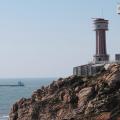 Nan'ao's Lighthouse Bay, the End of the Island Road
Nan'ao County
The southern tip of the island, where the road stops at a lighthouse above a rocky shore and the wind comes straight off the open sea.
 Queshi, the Granite Hills Across the Bay
Shantou
A park of bare granite outcrops, caves and temples on the south shore, reached by ferry from the city and climbed by stone steps cut between the boulders.
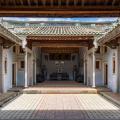 Chen Cifang's Residence, a Merchant House Built on Two Traditions
Shantou
A sprawling late-Qing compound outside the city where Chinese courtyard planning meets imported tiles, glass and concrete, room after room of it still furnished.
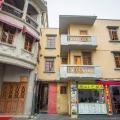 Xiaogongyuan, the Arcade Quarter at the Centre of Old Shantou
Shantou
A radial grid of 1930s shophouses built around a small park, its colonnades running for blocks and its facades restored after decades of neglect.
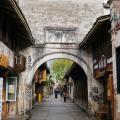 Pinghai Ancient City, a Ming Garrison Still Standing
Huidong County
A walled coastal outpost founded in 1385, its four gate towers and cross-shaped main street still dividing the town into four quarters.
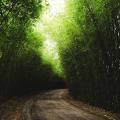 Nankunshan, the Cool Green Island on the Tropic Line
Longmen County
A forested massif in Longmen where waterfalls cut through bamboo and the temperature drops enough to make it Guangzhou's summer escape.
 Xunliao Bay and the White Sand the Locals Call a Gift
Huidong County
A long arc of unusually fine sand on the Huidong coast, fronted by clear shallows on one side and a beach of weathered boulders on the other.
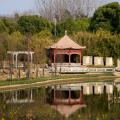 Huizhou West Lake and the Years Su Dongpo Spent Here
Huizhou
Five lakes threaded by causeways and old bridges, the city's free 5A park and the place a banished poet turned into a second Hangzhou.
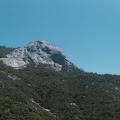 Luofu Mountain: The Taoist Peak
Huizhou
A Taoist mountain of granite, temples and medicinal herbs in Boluo county, Guangdong, climbed for close to two thousand years.
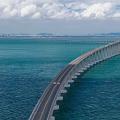 Nan'ao Island: Shantou's Islet
Nan'ao County
An island of beaches and wind farms off eastern Guangdong.
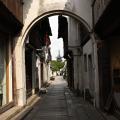 Dapeng Fortress: A Ming Sea Town
Shenzhen
A walled Ming naval fortress in the east of Shenzhen.
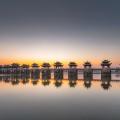 Chaozhou Guangji Bridge
Chaozhou
China's only openable bridge: twenty-four stone piers and a middle span of eighteen boats that is untied and pulled apart every evening at half past five. Ticket ¥20.
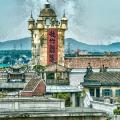 Kaiping Diaolou
Kaiping
UNESCO-listed watchtowers standing in the rice paddies of Kaiping — East-meets-West concrete fantasies built by returning overseas Chinese.
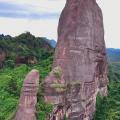 Danxia Mountain
Shaoguan
The mountain that named a landform: red sandstone cliffs, pillars and gorges at Shaoguan, part of UNESCO's China Danxia World Heritage.
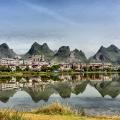 Seven Star Crags (Zhaoqing)
Zhaoqing
Seven limestone peaks standing in a still lake at Zhaoqing — karst caves, Tang-dynasty cliff inscriptions and bamboo rafts, an easy run from Guangzhou.
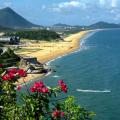 Hailing Island
Yangjiang
Yangjiang's holiday island — the busy 大角湾 beach, the empty Ten-Mile Silver Beach, and the 800-year-old Nanhai No.1 shipwreck in its museum.
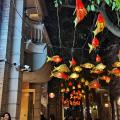 Foshan Lingnan Tiandi
Foshan
A restored quarter of arcaded shophouses beside Foshan's Ancestral Temple — lanterns, ceramics, lion dances and late-night teahouses.
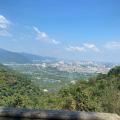 Dinghu Mountain
Zhaoqing
One of the four famous mountains of Lingnan and a UNESCO Biosphere Reserve — temples, waterfalls and the cleanest air in the Delta.
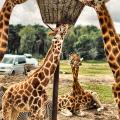 Chimelong Safari Park
Guangzhou
One of Asia's largest wildlife parks, on the southern edge of Guangzhou — giant pandas, white tigers, koalas and a walk-through safari.
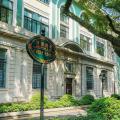 Shamian Island
Guangzhou
A former British and French concession island in the Pearl River, with 150 colonial buildings, leafy avenues and the White Swan Hotel.
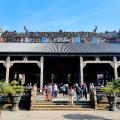 Chen Clan Ancestral Hall
Guangzhou
The 1894 Chen Clan Ancestral Hall — the finest Lingnan building in Guangzhou, its roof ridges crowded with glazed ceramic figures.
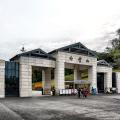 Baiyun Mountain
Guangzhou
Guangzhou's green lung — 382 metres of forested hills, morning walkers, teahouses and a view over the whole Pearl River Delta.
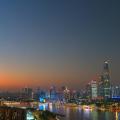 Canton Tower
Guangzhou
Guangzhou's 600-metre 'slim waist' — the twisting steel landmark on the Pearl River, with the world's highest Ferris wheel bolted to its roof.
Nothing filed in this section yet.