6500 Chaozong Street
There is a number painted on the wall of this hotel, and it belongs to the street outside.
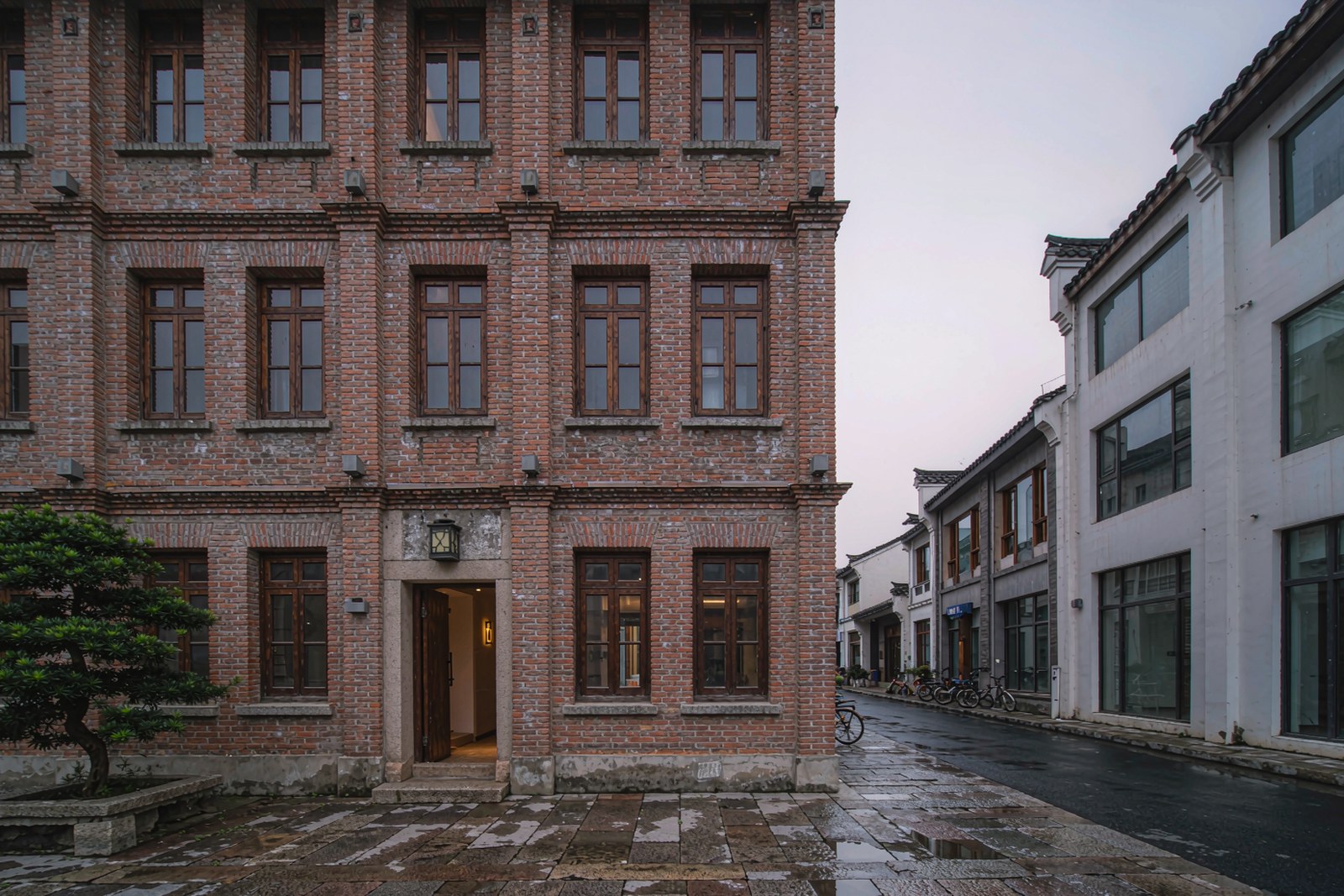
潮宗街 (Chaozong Street) is paved with 6,500 slabs of granite. It is the oldest granite-slab street left in Changsha — six hundred years of people walking on the same grey stones, worn smooth and slightly uneven, so that a suitcase makes a rattling noise the whole way down. The hotel that opened on the corner of 潮宗街 and 永清巷 has called itself 6500 and it is hard to think of a better name for a building that intends to be of its street and not merely on it.
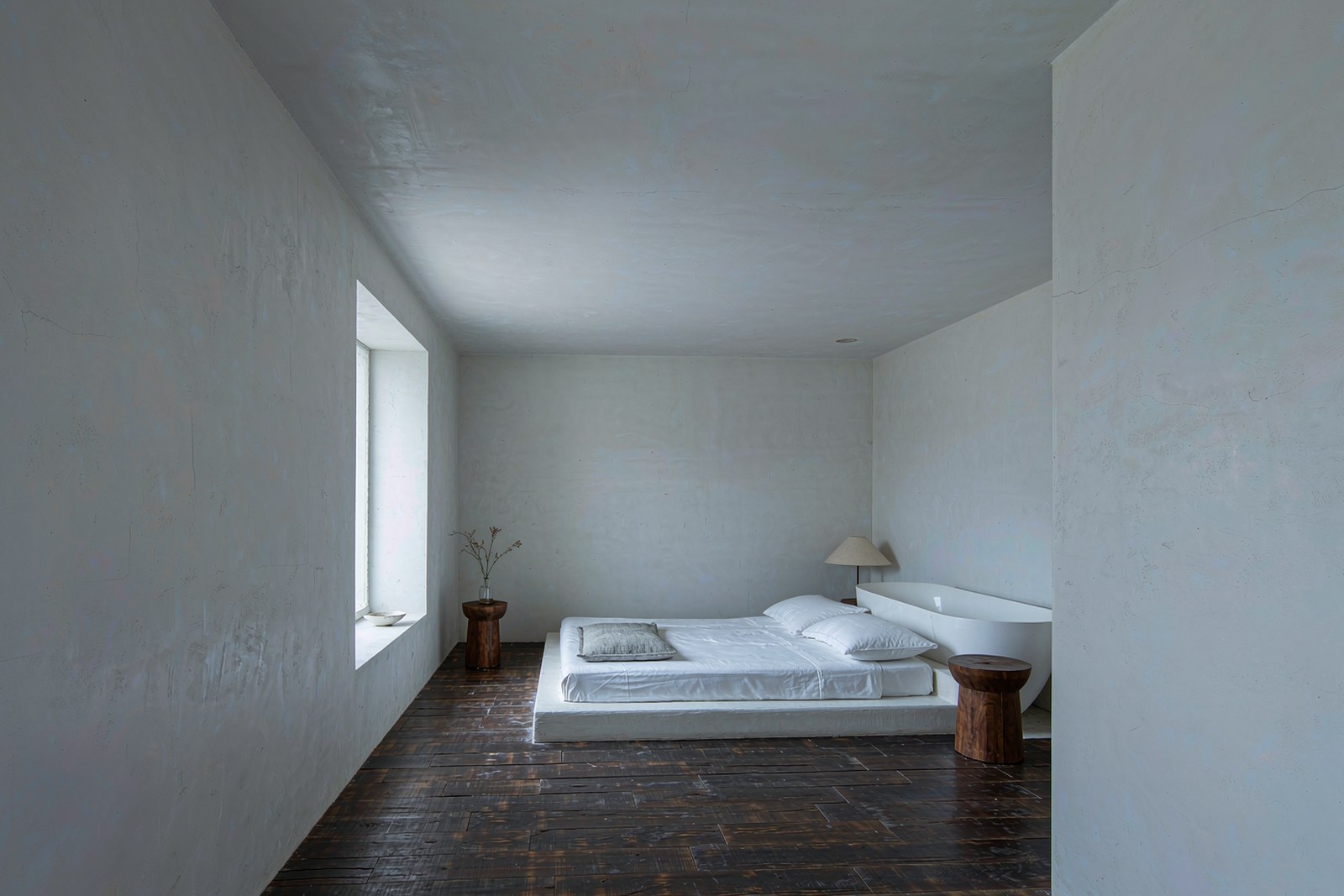
What you notice first, though, is the brick. The façade is old red brick, deliberately unpainted and a bit uneven, with the bedding of a much older building, and behind it the rooms are almost aggressively plain — pale walls, dark wood, no pattern anywhere, no attempt to be photogenic. The design line is described in the Chinese coverage as 大道至简, 新旧融合: the simplest possible reduction of the new, fused into the old. It won a design award for it, and the restraint is the point. Nothing here is shouting.
The Street It Belongs To
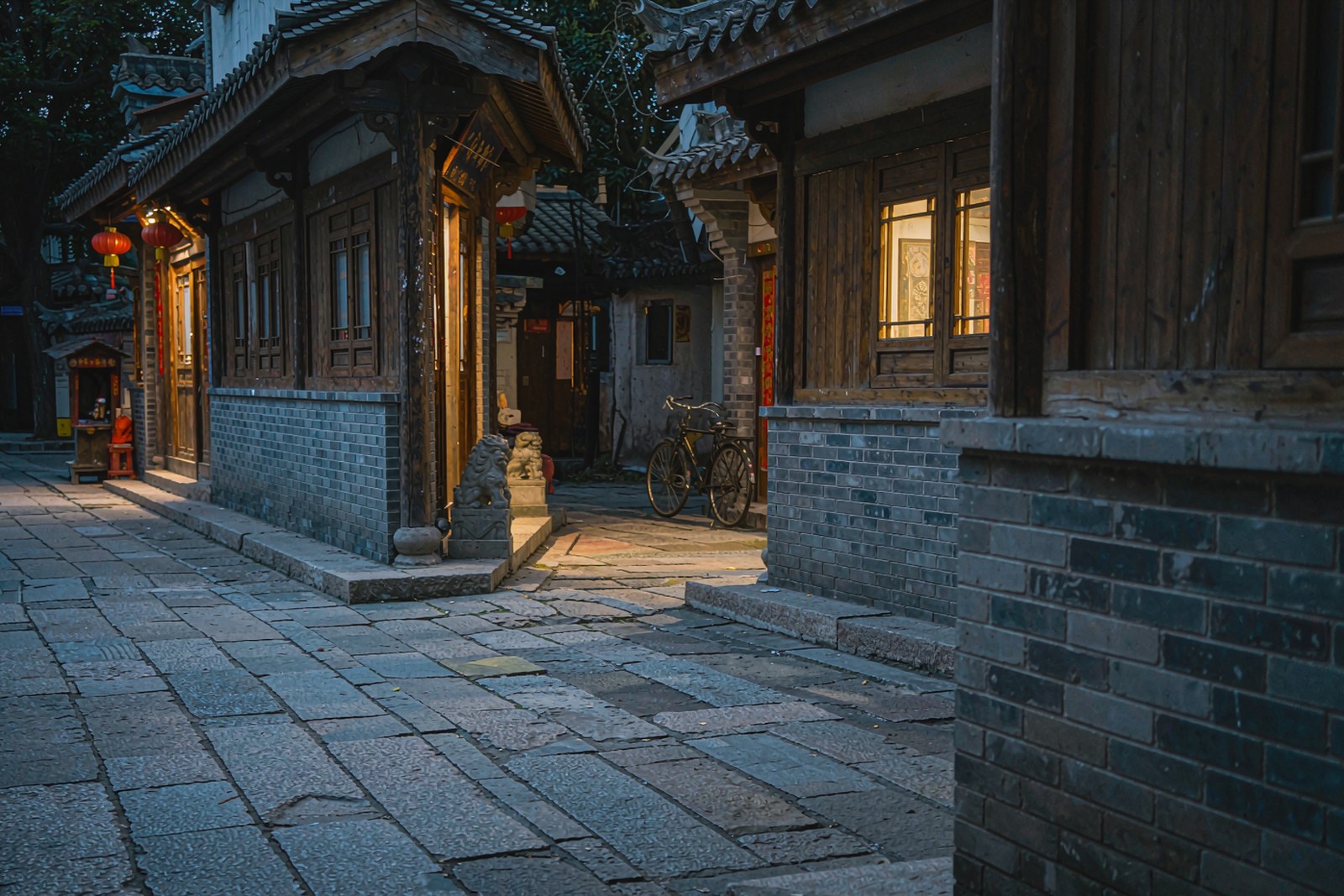
潮宗街 is not a themed reconstruction. It is a real street that was allowed to decay and then carefully repaired. The old city’s commercial life ran along it; the buildings are traditional blue-brick and timber, and the district holds a dense concentration of listed and immovable-heritage structures. Since 2018 the area has been the subject of one of Changsha’s more careful “organic renewal” programmes — the phrase the city uses for keeping the walls and changing the plumbing — and 44 publicly owned buildings on the street itself were brought back into use.
What that produced is a street where a tea-drinking grandfather and a 22-year-old with a camera share the same thirty metres of stone. The anchors now include 长沙十二时辰, a three-storey bookshop inside a repaired old building that was named one of Hunan’s most beautiful bookshops of 2023, and which keeps a courtyard, a 20-metre reading table and a drinks list named after the old Chinese hours. Around it: coffee, small design shops, a couple of bars, and a great deal of 臭豆腐.
Staying here means you are twenty minutes’ walk from the 五一广场 chaos and inside something much quieter. That is the calculation, and it is a good one.
The Rooms
There are a few dozen rooms and they are laid out as a set of variations rather than a hierarchy of sizes. The entries worth knowing:
- 宋墙 · Cloud Dream King — the entry-level king room; plain, quiet, well-lit
- 沙水 · King with freestanding tub — a tub set into the room, L’Occitane-adjacent Lelabo amenities
- 雅里 · Wabi-sabi Suite with tub — the design-forward suite; Dyson hairdryer, Lelabo bath products
- 梓园 · Panoramic Suite with oversized tub — the largest of the conventional suites
- 巷梦 · Terrace Suite with tub — a private terrace over the lane
- 楠木 · Balcony Suite — looks out over the old-town rooftops; the one to ask for
- 麻时 · Extra-large Twin — the family/interior room
- Designer’s Blind Box Room — you do not choose the room; the house chooses for you
That last one tells you what kind of hotel this is. The 盲盒 — “blind box” — is a mainstream Chinese retail concept, and offering a room as one means the management is confident that a guest who did not pick will still be pleased. At 4.9 stars across more than 1,700 reviews, that confidence is not misplaced.
Facilities are what you would expect in a five-star boutique and a couple of things you would not: a library, a tearoom, a small gym, a café and restaurant, a garden, a shared workspace, and a luggage-lifting robot that turns up at your door instead of a porter. There is a private butler service and bicycles to borrow. Parking exists but is limited, and you should not drive here.
What It Costs
The entry room starts at roughly ¥1,000 a night, and the suites climb from there — listings vary between about ¥1,000 and ¥1,200 for the standard rooms depending on the platform and the date, and weekend and holiday rates on the street are noticeably higher than midweek. That puts it in the same bracket as the city’s international five-stars.
Which raises the obvious question: why would you pay Grand Hyatt money for a guesthouse? Three reasons, and they are the whole argument for this place.
First, the scale. There are dozens of rooms, not hundreds. The corridors are quiet because there is nobody in them.
Second, the street. You can walk out of the door at ten at night and be on a granite lane lit by shop windows, with a bookshop still open and old men playing cards on a table by the wall. That is not available at any of the towers.
Third — and this is the part that is hard to buy — the building is old and has been left old. The brick is the brick. In a city that burned down in 1938 and knocked down most of what survived, a hotel that keeps an authentic wall instead of a marble one is doing something the international chains structurally cannot.
Practicalities
Location: 潮宗街, at the 永清巷 junction, 开福区 — the old city’s north-west quarter, between 黄兴北路 and 湘江中路. Walkable to 五一广场, 太平街 and 坡子街; roughly two metro stops to 橘子洲 and three to 岳麓山. Metro line 1 to 培元桥, or line 2 to 五一广场, then a short walk.
Best for: travellers who have already done the big-hotel thing and want to sleep inside the city rather than above it; couples; anyone who intends to spend the evening in the old streets rather than in the room. Less good for people with a car, people who want a pool, and people who want to be able to see the skyline from the bath.
Book: the rooms with a terrace or balcony (巷梦, 楠木) are the ones that justify the price, and they go first. Midweek rates are materially lower, and this is a hotel where midweek is also when the street is at its best.
flowcloud would say that the correct measure of a hotel in an old city is not how well it insulates you from the street but whether you can still hear it at night — and that 6,500 worn slabs of granite make a better floor for a hotel than any amount of marble.
Where to stay: 6500·潮宗街 (6500 Chaozong Street), 潮宗街 at 永清巷, 开福区, Changsha. Rooms from about ¥1,000; terraces and balcony suites higher, weekends and holidays steeper. Metro line 1 to 培元桥 or line 2 to 五一广场. A quiet lane twenty minutes’ walk from 五一广场.