
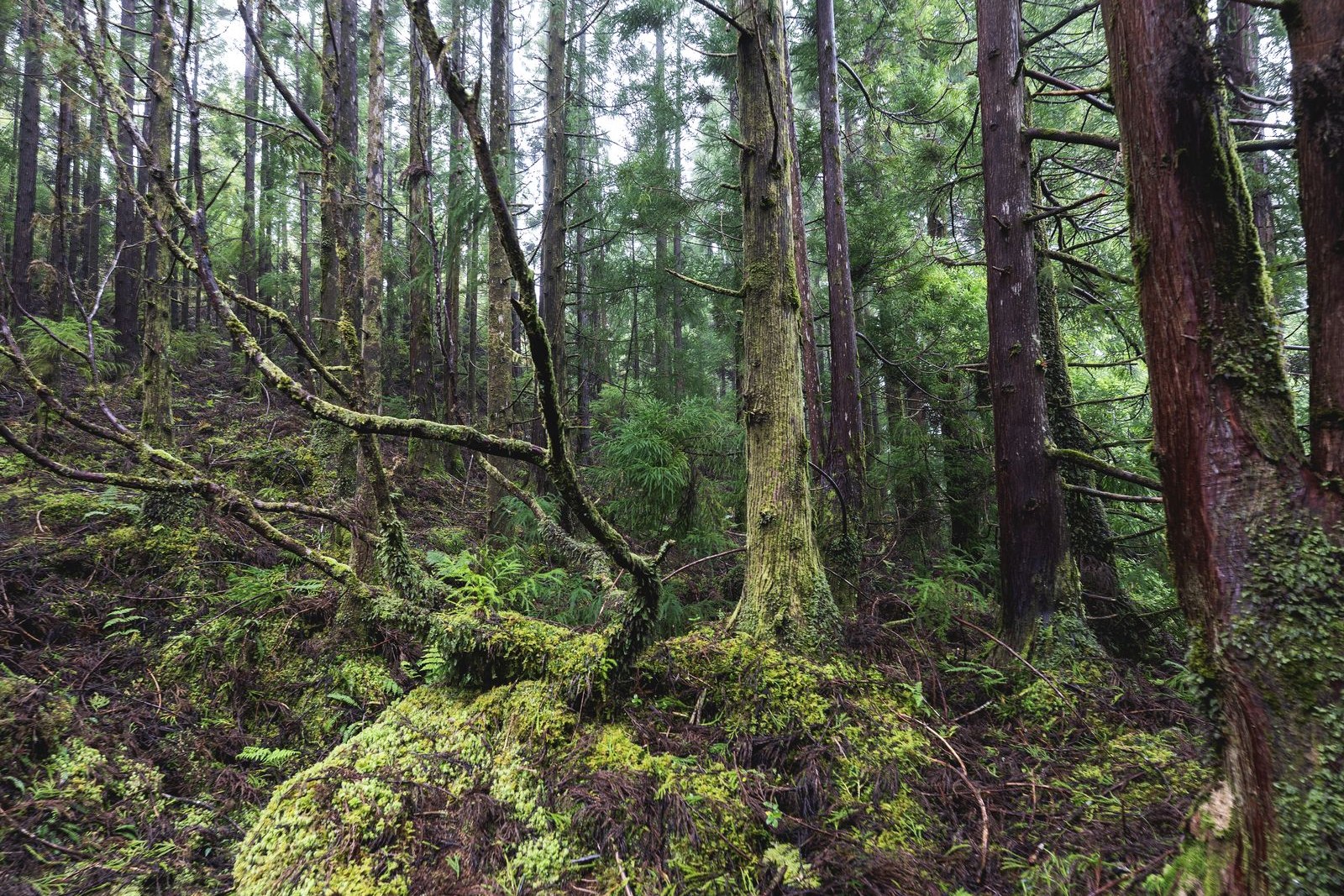
The road up from 五道水 Wǔdàoshuǐ runs beside a river that is a startling green, and then it starts to climb and the forest closes over it, and after a while you notice that you have stopped being able to see the sky in the way you are used to. The trees here are enormous — trunks you cannot get your arms around, a canopy so continuous that the light underneath it comes down in columns, and a floor of moss and ferns instead of undergrowth. There is no view, no viewpoint, no cable car and no railings. 八大公山 Bādàgōng Shān, in the far north of 桑植县 Sāngzhí Xiàn, is one of the largest surviving areas of primary mid-subtropical broadleaf forest in China, and almost nobody outside the province has heard of it.
Where This Is
桑植县 Sāngzhí Xiàn is the northernmost county of 张家界 Zhāngjiājiè, in north-western 湖南 Húnán, a mountainous, thinly populated district on the edge of the 武陵 Wǔlíng ranges. It is best known for two things: being the birthplace of 贺龙 Hè Lóng, the marshal and one of the founders of the People’s Liberation Army, and for the 桑植民歌 Sāngzhí míngē, the Sangzhi folk songs, which are on the national list of intangible cultural heritage and are worth hearing if you get the chance — a good local 农家乐 nóngjiālè will often have someone who can sing them.
八大公山 Bādàgōng Shān is the massif at the top of the county, protecting a national nature reserve and a stretch of forest that was never cleared because it was too far from anywhere to make clearing it worthwhile. It has been formally protected since the 1980s, and the combination of altitude, rainfall and inaccessibility has left a genuine piece of old-growth temperate-to-subtropical transitional forest with a flora and fauna list that includes several species that survive in very few other places — among them the 珙桐 gǒngtóng, the dove tree, whose white bracts hang from the branches in spring and look like a flock of small birds.
The reserve is also the source of the 澧水 Lǐshuǐ, one of Hunan’s major rivers, and the water coming off the mountain is what you see from the road, running clear and fast over boulders.
A Working Lodge, Not a Resort
Let me be straightforward about what accommodation here is. There is no luxury lodge at 八大公山 Bādàgōng Shān. What exists is a modest number of small guesthouses, farmhouse lodges and reserve-adjacent 农家乐 nóngjiālè, in 五道水镇 Wǔdàoshuǐ Zhèn and the villages around the protected area boundary, plus basic hotels in 桑植县 Sāngzhí Xiàn town about an hour down the road.
A good version of the former is a family house with a few guest rooms, a wood-fired kitchen, a yard with a view of the ridge, and hosts who know every trail in the neighbourhood and will take you up one. Rooms are plain and clean, with an electric blanket or a heated pad for the cold months, and the food is whatever the family grows, cures or finds in the forest: cured pork, wild greens, mushrooms, bamboo shoots, chicken, and — a local speciality — the small fish from the streams.
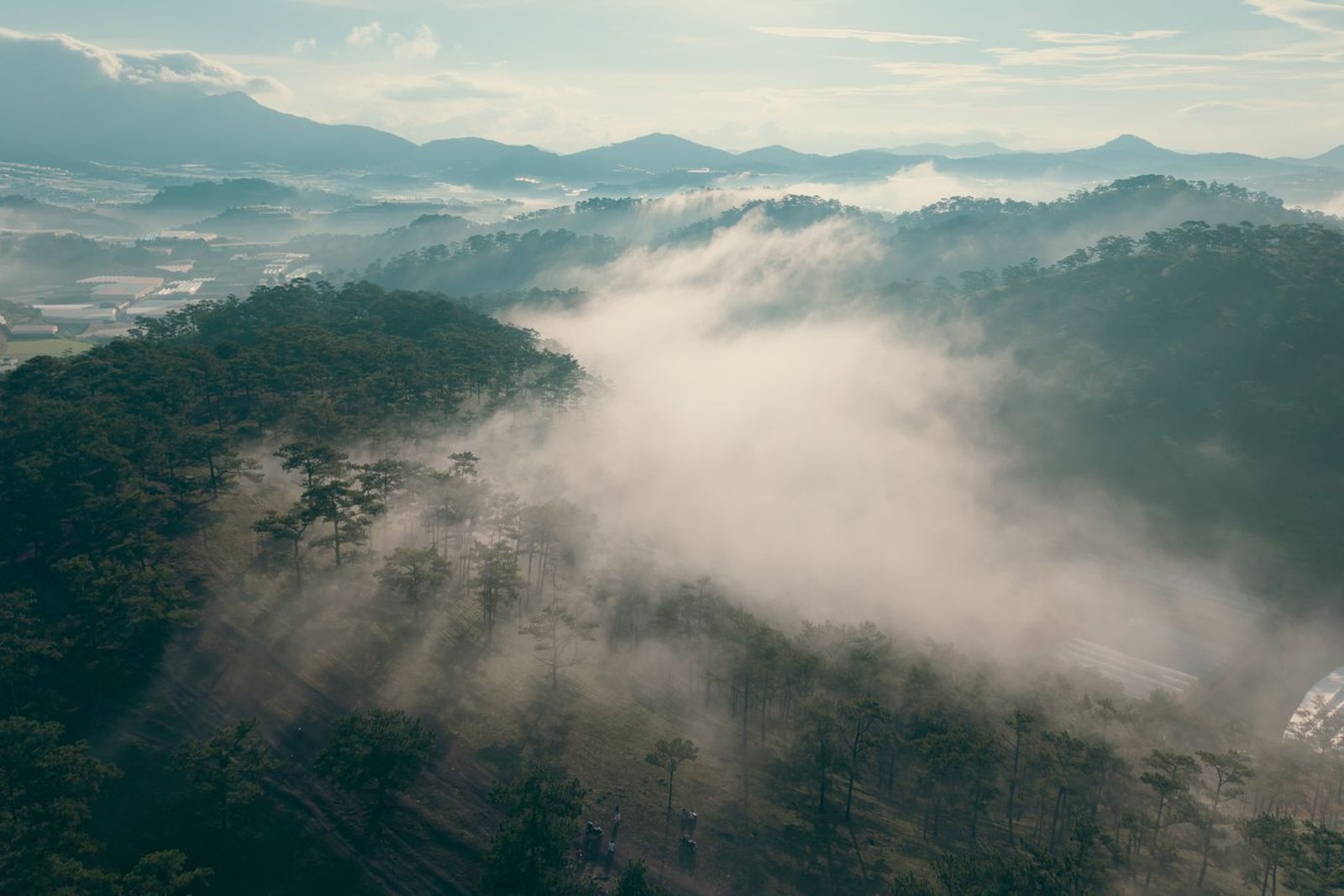
What you get for the lack of facilities is silence, darkness and an altitude that makes the nights genuinely cool even in August. The night sky here, with no town within an hour and no light on the ridge, is one of the best you will see in eastern China. And the mornings are worth the trip on their own: mist in the valley, the smell of wet forest, and, if you are lucky and quiet, the sound of things moving in the trees that you will not be able to identify.
Practicalities
Price. Village lodges and 农家乐 (nóngjiālè) near the reserve boundary run about ¥120–280 a night. Basic hotels in 桑植县 (Sāngzhí Xiàn) town are ¥150–350. Meals, usually provided as a set of home dishes, are ¥50–80 per person. There is no high season here in the sense the rest of 张家界 (Zhāngjiājiè) has one; the busiest weeks are around the October holiday.
Address. 八大公山 (Bādàgōng Shān) national nature reserve, 五道水镇 (Wǔdàoshuǐ Zhèn), 桑植县 (Sāngzhí Xiàn), 张家界 (Zhāngjiājiè), north-western 湖南 (Húnán). About 60–90 minutes by road from 桑植县 (Sāngzhí Xiàn) town, and roughly three hours from 张家界 (Zhāngjiājiè) city.
Rooms. Small family-run lodges and guesthouses with doubles and triples, simple and clean, generally with heating for the winter and sometimes a shared bathroom; a few larger places in 五道水镇 (Wǔdàoshuǐ Zhèn) take groups. Ask about heating, ask whether they cook all meals, and ask whether they can provide a guide for a day’s walk — this is not a place to wander off into without knowing where you are going.
Getting there. The nearest rail and air access is 张家界 (Zhāngjiājiè), which is served by high-speed rail and an airport; from there it is roughly three hours by road, via 桑植县 (Sāngzhí Xiàn) town or 五道水镇 (Wǔdàoshuǐ Zhèn). A car and driver is the practical arrangement, and it is worth arranging for the whole stay, because there is no local transport to speak of and no signal in parts of the reserve. Bring cash, since card and phone payment coverage is patchy, and bring a warm layer whatever the season.
flowcloud would say that a forest which survived because nobody could be bothered to walk that far is a better argument for leaving places alone than any sign at a gate, and that the sound of a mountain with nothing on it is worth three hours of road.
Where to stay: Badagongshan village lodges, 八大公山 (Bādàgōng Shān), 五道水镇 (Wǔdàoshuǐ Zhèn), 桑植县 (Sāngzhí Xiàn), 张家界 (Zhāngjiājiè), north-western Hunan. Simple family lodges and 农家乐 (nóngjiālè) from about ¥120 a night, basic hotels in 桑植县 (Sāngzhí Xiàn) town ¥150–350; meals ¥50–80 per person. Roughly three hours by road from 张家界 (Zhāngjiājiè) city or its rail station, and 60–90 minutes from 桑植县 (Sāngzhí Xiàn) town. Bring a car and driver, cash and a warm layer; ask the hosts to walk you up a trail, and be outside before breakfast for the mist.