
白查村 Báichá Cūn, Baicha village, stands in 江边乡 Jiāngbiān Xiāng, Jiangbian township, in the eastern hills of 东方市 Dōngfāng Shì, Dongfang City, and it is one of the most completely preserved Li villages on the island: a hillside of low houses built in the inverted-boat form, the 黎族船型屋 Lízú chuánxíngwū, whose building technique, the 黎族船型屋营造技艺 Lízú chuánxíngwū yíngzào jìyì, is carried on the second national list of intangible cultural heritage. The village is also on a longer list now, having been included in 2022 among the sites nominated for the dual natural-and-cultural World Heritage listing of Hainan’s rainforest and Li settlements, and in June 2025 a provincial plan put Baicha alongside Wuzhishan’s Chubao and Changjiang’s Hongshui inside a zoning scheme for their protection. What makes this a stay article rather than a sightseeing one is the row of rooms built outside the protected ground: here the guest sleeps in a new, modern room and walks over to look at the old houses, and that distinction is the whole of this piece.
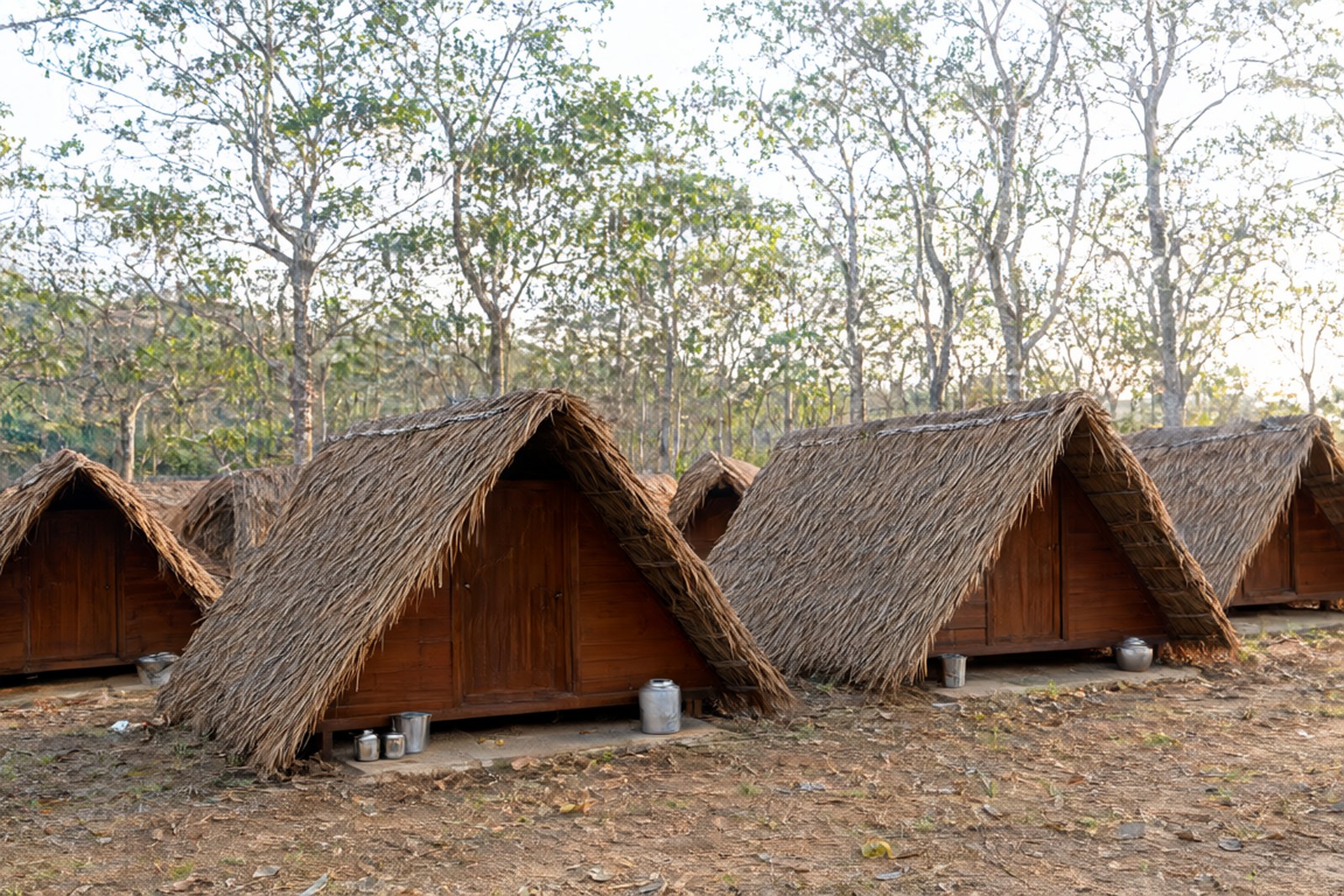
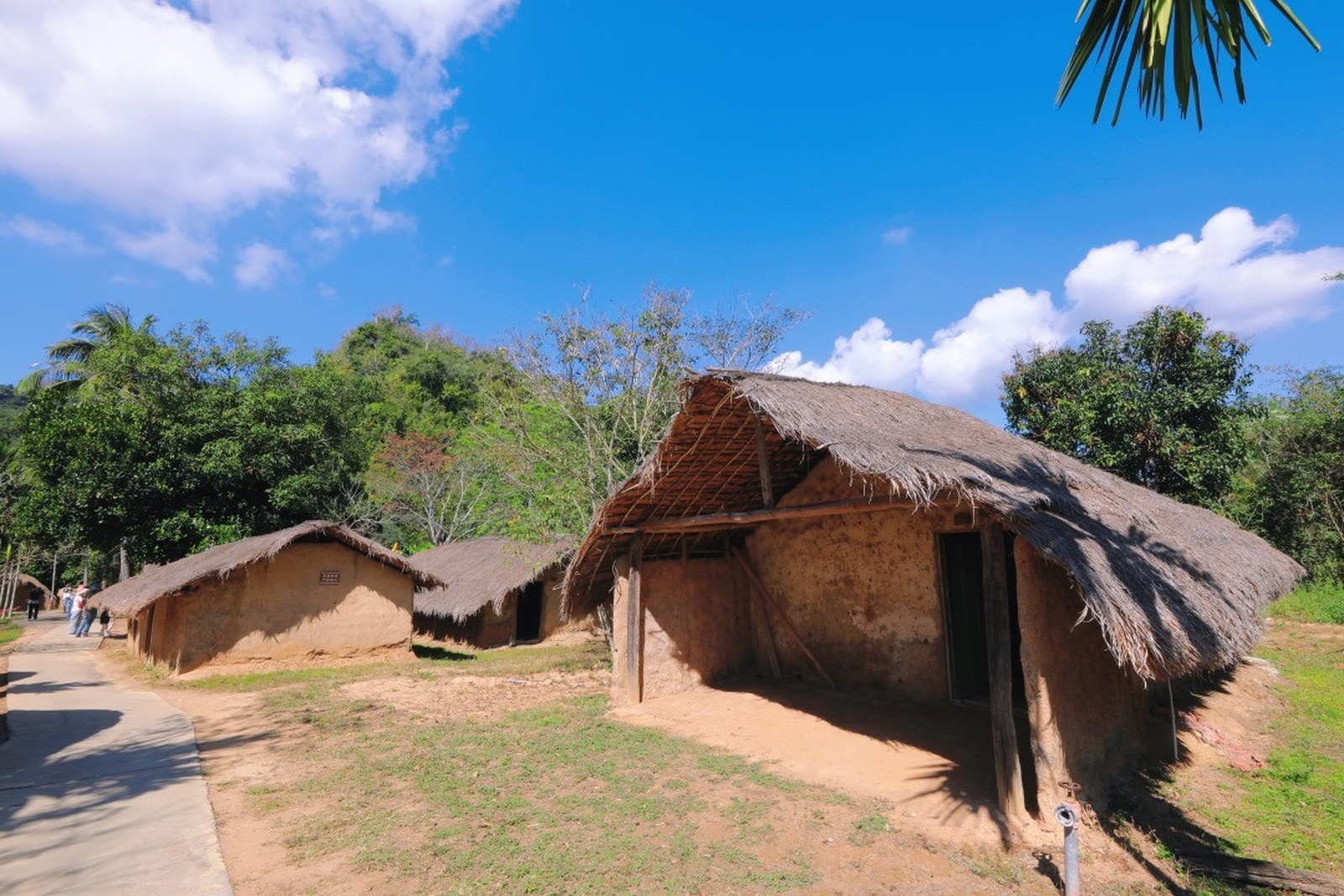
The houses are the exhibit and they are not beds. The city and the province describe Baicha as the Li people’s last spiritual homeland, and the boat-shaped houses – some of them raised over a shallow dug floor, their roofs curving down almost to the ground – are a protected building form rather than lodging, so this article is firm on the point: a visitor looks at them and photographs them, and sleeps somewhere newly built. The support facilities were deliberately placed outside the protection zone. 白查驿站 Báichá Yìzhàn, the Baicha Rest Stop, run by a local Li-and-Miao cultural tourism group, holds a village museum, a cultural-creative shop, a Li and Miao craft workshop, a food-tasting hall, a set of themed guest rooms and a study base; the local account notes that the settlement’s homestay resources were put back to work as the visitor numbers rose, helped along by the 环热带雨林国家公园旅游公路 Huán Rèdài Yǔlín Guójiā Gōngyuán Lǚyóu Gōnglù, the ring tourist highway around the national rainforest park, which reached the village after it opened. No independent booking-platform figure exists for the Rest Stop’s rooms or its study beds, so this article records them as the facilities the source describes and leaves the numbers to the counter.
The one house with a live listing is 白查村黎乡宿 Báichá Cūn Líxiāngsù, the Baicha Village Li Countryside Homestay, newly opened and carried as economy or non-standard lodging, at a spot the platform places about 351 metres north-west of the charging station at the village rest stop. Its October 2026 snapshot reads 298 yuan on Ctrip against 291 on Tongcheng, with rooms named for the hills, a Li-countryside king and a Li-countryside twin, and the house keeps a restaurant, a 24-hour front desk and shared-area wifi, with no car park of its own; its phone is 18117721996. The opening year is given only as new, with no year attached, so it is printed that way, and the star labels differ between platforms, which makes the tenancy a non-standard room rather than a rated hotel – so book it as a clean modern room at a heritage village, not as a hotel with a rating. The price band for the whole band is therefore a single figure, about 290 to 300 yuan from the one confirmed house, and no other number is invented here.
A stay here buys one thing that no other bed in the city does, and it is time with a technique that nearly went out. The boat-shaped-house craft, by the reporting, was once down to about five practising inheritors and has since been brought back past twenty, with more than two hundred young people in the surrounding villages said to have picked it up, a revival worth knowing when you stand in front of the houses, because what you are looking at is a living craft rather than a ruin. The village’s biggest days now come with the calendar: in 2026 the 三月三 Sānyuè Sān, the Double Third Festival, made 白查村 Báichá Cūn one of its main-venue sites, with a heritage-listing support event held among the boat houses on 19 and 20 April. The practicalities are simple and rural: the village sits in 江边乡 Jiāngbiān Xiāng, Jiangbian township, one of the city’s two townships, up in the eastern hills rather than on the coast; the last road is the ring highway that reached it recently; there is no rail platform at the village; and the facilities, the museum, the workshop and the food hall, are daytime affairs around a small cluster of rooms. Come for the houses, sleep in the new room, and leave the old ones alone.
What the Rooms Are Like
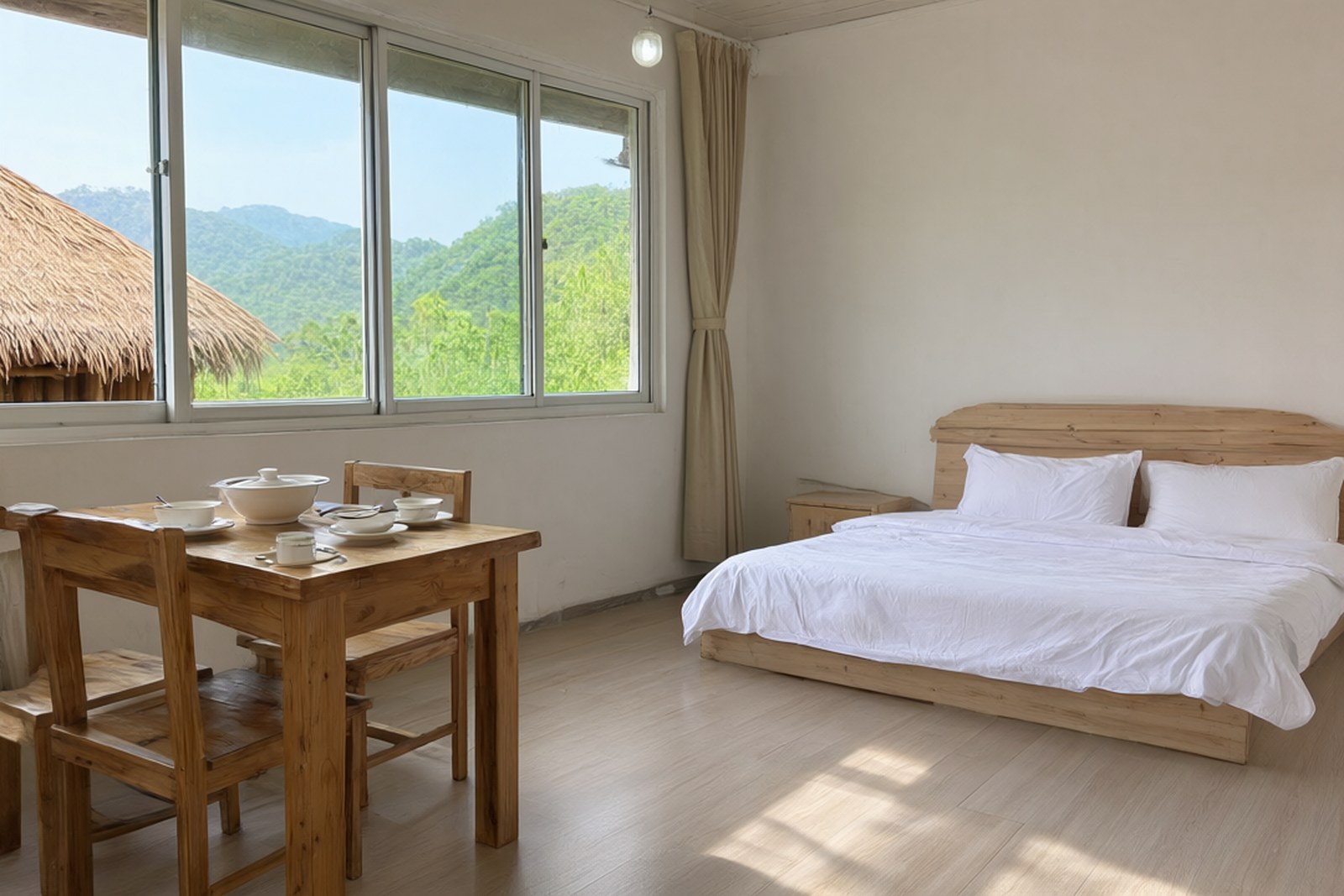
Room counts and firm rates for the Rest Stop are not published, and the Li Countryside Homestay is the only house with a live figure, so the honest guidance is to book the confirmed house and to ask the Rest Stop at the counter for its rooms. Expect a modern, plain, non-standard room with a bed, a bathroom and a restaurant downstairs rather than a resort; the reason to be here is outside the door. Ask whether breakfast is included and how far the room is from the boat-house cluster, since the heritage ground is a walk away rather than the property itself, and confirm the access and parking situation, because the Li Countryside Homestay lists no car park. The one thing this article will not do is describe a night inside a boat-shaped house, because no such room is sold.
Practicalities
Price. On 2 October 2026 the snapshot read 白查村黎乡宿 Báichá Cūn Líxiāngsù from 298 yuan on Ctrip against 291 on Tongcheng, a band of roughly 290 to 300 yuan for the one house with a figure; the 白查驿站 Báichá Yìzhàn Rest Stop’s themed rooms and study beds are described by the sources but carry no published rate, so no price is printed for them. Every figure is a snapshot that floats.
Address. The band addresses itself by the village and the township: the Li Countryside Homestay about 351 metres north-west of the charging station at the village rest stop in 江边乡白查村, and the Baicha Rest Stop within the village in 江边乡 Jiāngbiān Xiāng, Jiangbian township. Pin by the village name; the last stretch is hill road, and confirm the turn with the house.
Rooms. Choose the newly built room beside the museum ground, and be clear about what it is: modern accommodation next to the heritage village, not a night inside a boat-shaped house, which is protected and not for sleeping. Room counts are not published, so ask for the room type and the distance to the boat-house cluster, and confirm breakfast and parking, since the Li Countryside Homestay lists no car park.
Getting there. 江边乡 Jiāngbiān Xiāng, Jiangbian township, has no rail platform, so the last leg is a car. The city’s two high-speed stops are both on the coast, 东方站 Dōngfāng Zhàn, Dongfang station, in 八所镇 Bāsuǒ Zhèn, Basuo Town, and 金月湾站 Jīnyuèwān Zhàn, Jinyuewan station, in 板桥镇 Bǎnqiáo Zhèn, Banqiao Town; there is no Banqiao station on the line, and 感城站 Gǎnchéng Zhàn, Gancheng station, built in 1958, is a conventional-line stop. From Dongfang station the run to 三亚 Sānyà is about an hour and ten minutes for 47 to 61 yuan and to 海口东 Hǎikǒu Dōng about an hour and twenty-four minutes for 84 to 92, both snapshots. By road the village is reached up the hill country, most recently by the ring tourist highway around the national rainforest park; leave the driving time to navigation. All distances and times are snapshots to check against navigation.
Where to stay: the newly built room at 白查村黎乡宿 Báichá Cūn Líxiāngsù if a confirmed bed beside the heritage village is the point, a themed room or a study bed at 白查驿站 Báichá Yìzhàn if the museum and workshop are the draw and the counter confirms a rate, and the day’s figure taken from the platform for either – both in 江边乡 Jiāngbiān Xiāng, Jiangbian township, beside the boat-shaped houses of 白查村 Báichá Cūn, Baicha village.
flowcloud would say that the best way to protect a village is to let people sleep next to it, and that the correct way to stay at Baicha is in a new room with the old ones a short walk away, because a boat-shaped house that keeps its roof is a heritage site and a boat-shaped house that takes guests is a mistake.