
Under the Grape Trellis: Farmstay Courtyards on the Regimental Farms
庭院葡萄架,团场烟火情 Tíngyuàn pútaojià, tuánchǎng yānhuǒ qíng – A grape trellis in the courtyard; the working warmth of the regimental farms
正文:团场庭院住宿 Tuánchǎng Tíngyuàn Zhùsù the bingtuan farmstay courtyards open the working farms around 图木舒克市 Túmùshūkè Shì Tumushuke City to guests – walled courtyards under grape trellis, rows of poplar shade, and the regimental-farm landscape as a front garden. The Corps farms built this oasis plot by plot, and their homesteads keep the build: mud-brick walls painted pale, dormer windows over the tool room, trellises planted by grandparents and producing table grapes by the basket. A night here is the region’s most domestic experience – melon patches, chicken runs, drying chilis on tarps, and the irrigated hush of a farm going about its evening.
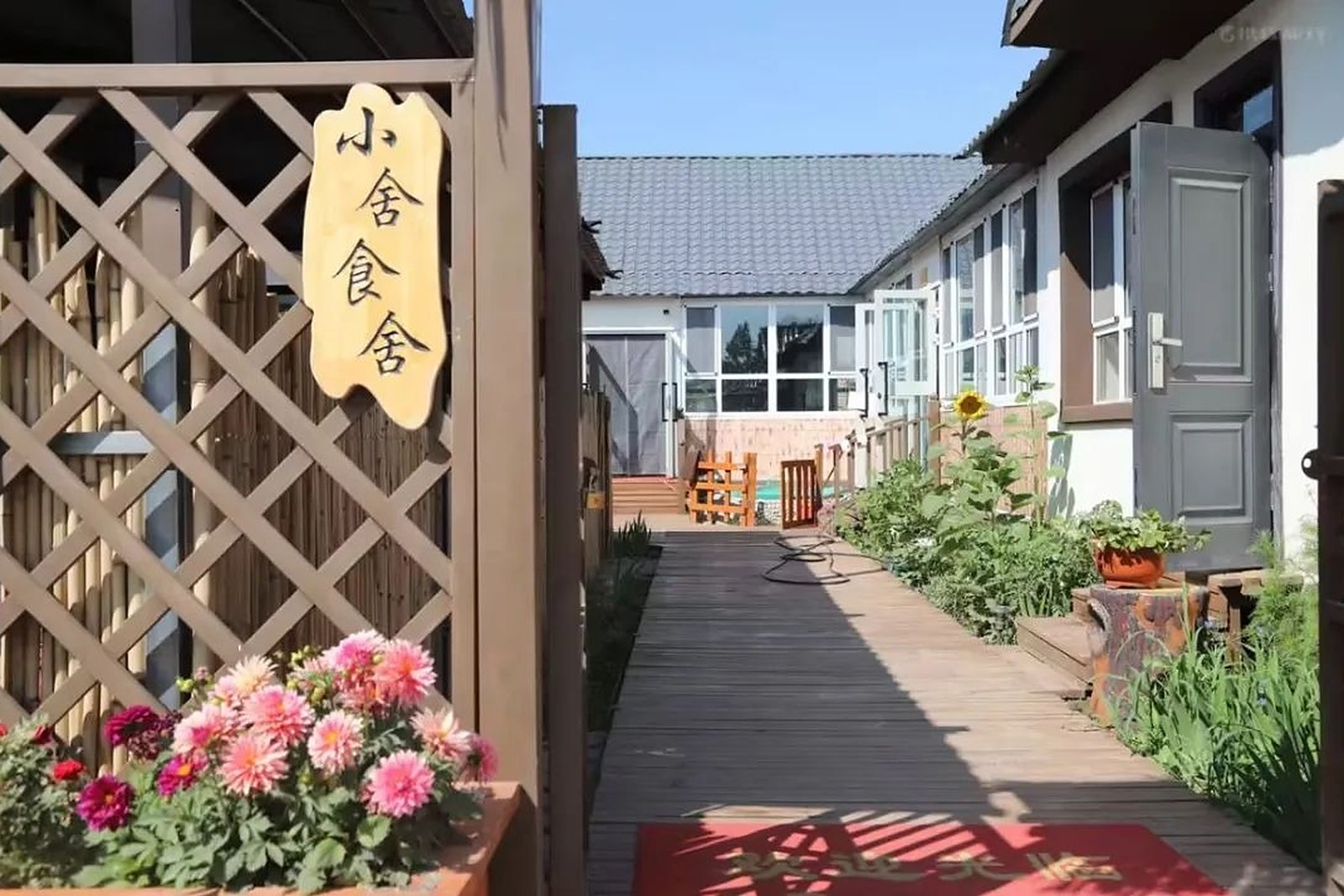
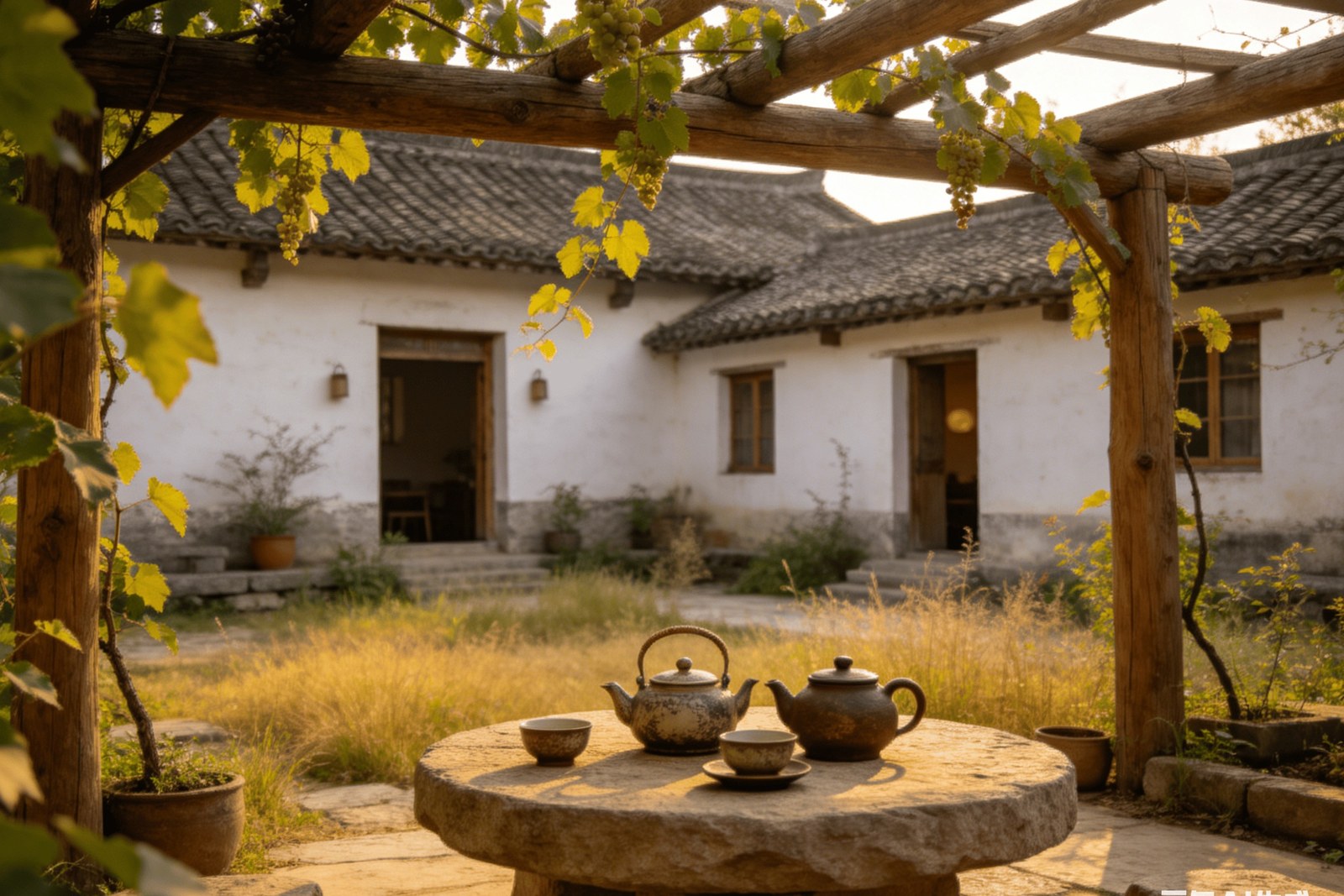
The courtyard is the room. Guests drink tea under the trellis while the host family’s supper simmers; the day’s pick – melons in season, grapes, tomatoes that taste of the sun’s argument – sits in basins to be eaten without ceremony; and the farm’s rhythm sets yours: irrigation turns with the canal schedule, machinery comes home at dusk, and the dogs conduct the starlings’ aerial audit at dawn. Rooms are simple and warm – brick walls, thick quilts, electric blankets for the cold months – with the shared or private bath spelled out honestly at booking.
Meals are the farmstay’s headline. The family table runs on what the farm grows: hand-pulled noodles, eggs from the yard, lamb from the pen or the neighbor’s, and the season’s fruit by the basin rather than the plate. Guests who want to help peel, pull or pit are welcome; guests who want to sit in the shade while the trellis filters the evening light are welcome too – the courtyard’s whole theory is that both count as participating.
The Stays
Families book the farmstays for the working-livestock show and the space: courtyards where children can run, animals to count, and the pick-your-own melon mornings that no hotel replicates. Slow travellers and cyclists use the farms as the oasis’s natural stages – a night per regimental farm strings the whole district into a route. Photographers come for the textures: trellis light at six, chili tarps at seven, and the poplar lines holding the dust down like stage rigging.
Practical notes keep it smooth. Confirm hot-water hours – the solar and boiler systems run on the farm’s schedule, not yours; ask what the farm is picking this week, because the table follows the harvest; and book by phone a day or two ahead in season, since the courtyard rooms are few and the autumn grape weeks go first. Bring small cash for the farm-stand fruit; the kettle, like the welcome, never switches off.
Beds settled, the same 图木舒克市 Túmùshūkè Shì Tumushuke City holds other bases: 图木舒克市区住宿 Túmùshūkè Shìqū Zhùsù city stays on the avenue, 唐王城周边住宿 Tángwáng Chéng Zhōubiān Zhùsù Tangwang-ruins-area stays for the early walls, 小海子周边住宿 Xiǎohǎizi Zhōubiān Zhùsù Xiao Haizi-area stays for the sunset water, or 胡杨林公园周边住宿 Húyáng Lín Gōngyuán Zhōubiān Zhùsù Huyang-park-area stays for the forest cabins – four more doors into the same 图木舒克市 Túmùshūkè Shì Tumushuke City. With beds settled, our Tumushuke travel map fills the days.
The Stays
flowcloud would say the farmstay courtyards are the Corps’ founding idea still hosting guests: a trellis planted by grandparents, a table fed by the fields outside the wall, and a night that runs on canal-time and kettle-light – the oasis at its most domestic, and proud of it. All checked November 2026.
Where to stay: Take the courtyard rooms under the trellis for the best shade, ask what the farm is picking for the freshest table, and confirm hot water hours – the village boilers run on schedule, not on demand. All checked November 2026.