
博鳌镇 Bó’áo zhèn is the point where the 万泉河 Wàn quán hé finally reaches the sea, and a hotel room here looks out on a piece of geography that is hard to match anywhere else on the island. Three rivers arrive at the same place – the 万泉河, the 龙滚河 Lóng gǔn hé and the 九曲江 Jiǔ qū jiāng – and they come in around three islands, 东屿岛 Dōng yǔ dǎo, 鸳鸯岛 Yuān yāng dǎo and 沙坡岛 Shā pō dǎo, with three low hills, 龙潭岭 Lóng tán lǐng, 文阁岭 Wén gé lǐng and 回益岭 Huí yì lǐng, standing behind them and the 沙美内海 Shā měi nèi hǎi, an inland lagoon, in between. Stay on the water side and the whole of it is in front of you: the lagoon immediately below, the river mouth beyond it, and the sand spit of 玉带滩 Yù dài tān separating the river from the open 南海 Nán hǎi on the far side.
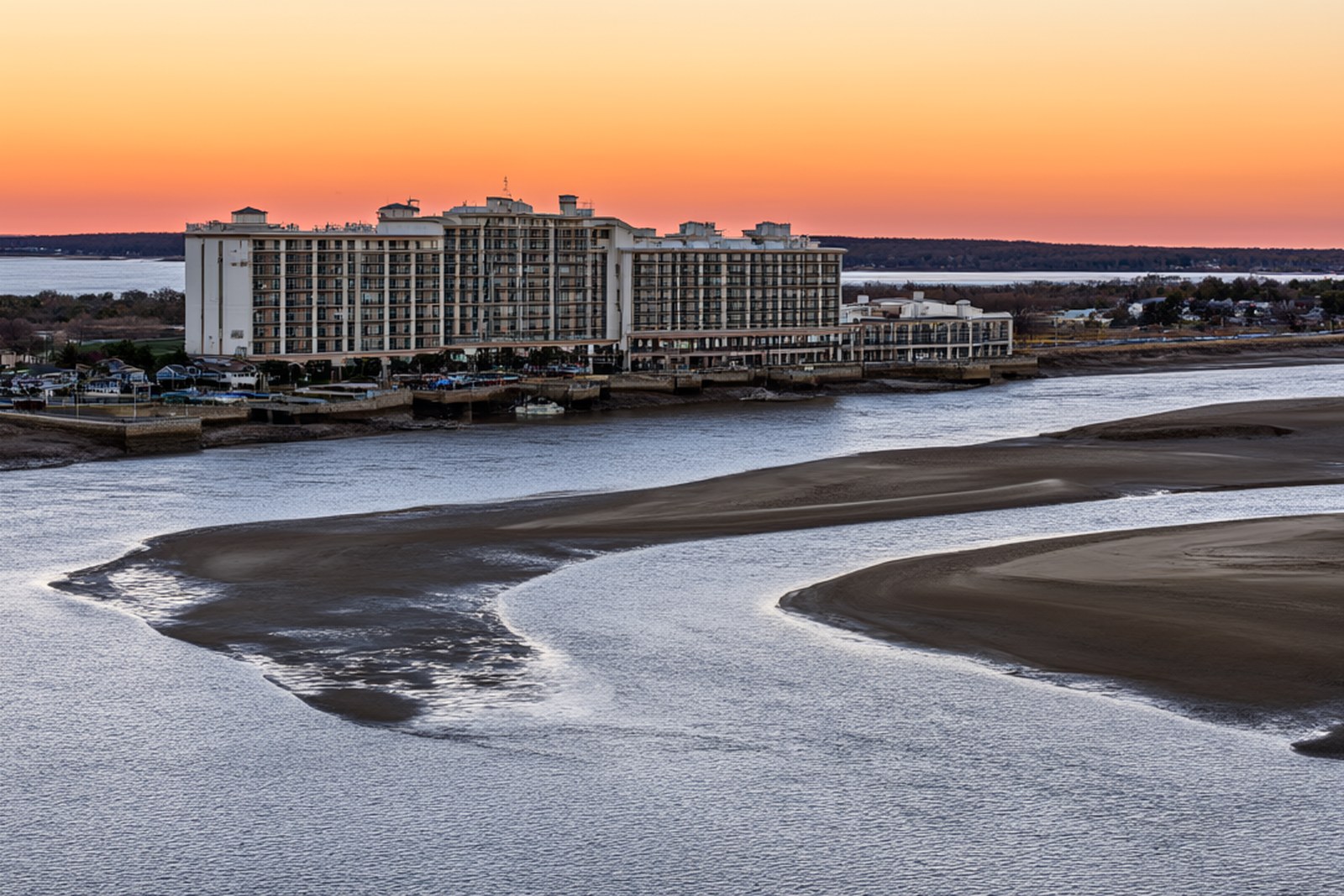
Until 2001 this was a fishing village with a fine harbour and no reason for anyone outside the county to know its name. On 26 February 2001 the Boao Forum for Asia held its founding conference here, the first annual meeting followed and the permanent site was built on 东屿岛, and the effect on the town was immediate and total: a small place on a river mouth became the venue for a regional summit, with an airport, a high-speed station and a coast road to go with it. The forum’s own judgement, repeated in every account of why it chose 博鳌, is that the site has hill, water, island and sand in one view, and that the river mouth is one of the best-preserved mouths of its kind anywhere – which is the sort of sentence that means nothing until you are standing on the balcony looking at it.
The other layer of the place is the villages. Behind the lagoon, 南强村 Nán qiáng cūn, 沙美村 Shā měi cūn and 留客村 Liú kè cūn have been kept and improved rather than replaced, and 留客’s 蔡家宅 Cài jiā zhái, the courtyard house of an emigrant family, is the set piece of the county’s rural programme; the villages fill with visitors during the forum’s week in spring and are quiet the rest of the year. The 玉带滩 is reached by boat from the landing near the forum site rather than by road, which keeps the crowds on a schedule and the spit itself more or less empty, and the 万泉河 upstream can be walked or cycled along its bank through coconut and betel country.
The food is the county’s own and it is within twenty minutes of the hotel. 潭门’s harbour is south along the coast and supplies the seafood; 温泉鹅 wēn quán é, the county’s poached goose, is on every restaurant list, and 嘉积鸭, the duck that came back from Malaya a century ago, is the other; 嘉积’s 杂粮 shops, which are the island’s best sweet-soup kitchens, are about thirty minutes inland; and the ordinary 海鲜 hotpot is what people eat at the water on a warm evening, with a plate of river prawns and a plate of the day’s fish and nothing done to either of them. The river itself gives 万泉河 prawns and small crabs, which are worth ordering for the flavour rather than the size.
What the Rooms Are Like
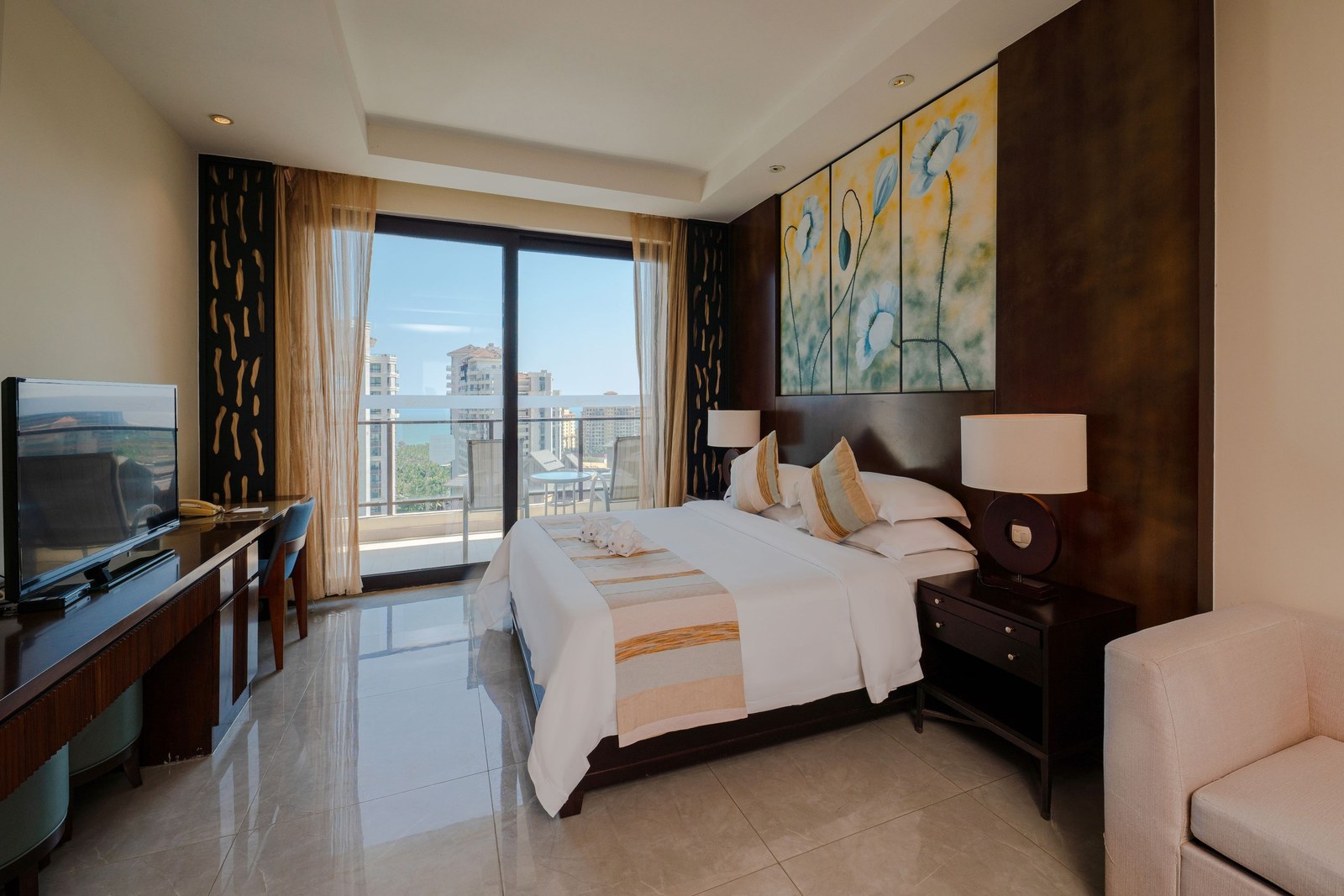
Expect a room of thirty to forty square metres with a firm bed, strong air conditioning, a clean bathroom with a shower and often a bath, and a balcony facing the lagoon or the river mouth. The newer hotels here are built for conferences and holiday traffic and are finished to a higher standard than an ordinary provincial city hotel, with pool, gym and breakfast buffet. Ask for a high floor facing the water rather than the coast road, since the view is the entire reason for the price, and confirm that the hotel registers foreign guests, which the larger ones do. Interconnecting rooms and family suites are common, and the water-facing ones book out first in the forum week.
Practicalities
Price. A double in a 博鳌 waterfront hotel runs ¥280 to ¥700 a night in the shoulder season, with the forum week in spring, the October week and the Spring Festival at the top of that range and often fully booked a month ahead. Water-facing rooms and higher floors cost more, and breakfast is usually in the rate.
Address. The hotel is at 博鳌镇 Bó’áo zhèn, 琼海市, Hainan, on or within a few minutes of the 东屿岛 and the 沙美内海 waterfront, about twenty kilometres south of 嘉积镇 Jiā jī zhèn, the county town. 博鳌站 Bó’áo zhàn on the 东环 high-speed line is a few kilometres inland, and 琼海博鳌机场 Qiónghǎi Bó’áo jī chǎng is about twenty minutes away by road.
Rooms. Ask for a high floor with a balcony on the water side and for a room away from the coast road if you sleep lightly, because the road carries traffic until late in the season. Ask the desk to book the boat to 玉带滩 and to say what time the last one returns, since it is the one trip here that cannot be done at short notice on foot, and ask for a written Chinese address to hand to a driver.
Getting there. From 博鳌站 a taxi to the waterfront takes about ten minutes, and the airport is about twenty minutes by road. The 东环 high-speed line runs the length of the island’s east coast, so 海口 is an hour away and 三亚 about an hour and a half, and 琼海 is served by both 博鳌站 and 琼海站 Qiónghǎi zhàn; by car the 东线 expressway runs inland of the town and the coast road links it north to 潭门 and south towards 万宁. A car or a taxi is needed for everything except the waterfront itself.
Where to stay: the waterfront hotels of 博鳌镇, 琼海市, on the 沙美内海 and the river mouth, within reach of the 玉带滩 landing and the 东屿岛 forum site and about thirty minutes from 嘉积 and 潭门. Take a high floor with a balcony on the water, book the boat to the spit in advance, and eat the county’s own goose and duck rather than the hotel buffet.
flowcloud would say that a fishing village which was chosen for a summit because it happened to have a hill, an island, a lagoon and a sand spit in the same view, and which then kept its villages instead of paving them, has been paid for its geography twice and spent the money well once.