
The slopes below 菩提山 Pútí Shān Bodhi Mountain, the hill directly above the city of 长寿区 Chángshòu Qū, Changshou District, have accumulated a scatter of 民宿 mínsù homestays and small hotels that trade on exactly one thing: stillness. Not a spa stillness bought with fittings, but the real article – rooms at the edge of the temple forests, where the evening sound is insects rather than traffic and the first noise of the day is the gate of the ladder two streets away opening for the dawn climbers. The houses sit under the prayer-flag slopes close enough that a guest is on the mountain’s steps minutes after leaving the door, which is the whole reason this strip of accommodation exists.
The guests come for two climbs and book the same beds. The pilgrims are up before the light to take the 万寿天梯 Wànshòu Tiāntī ten-thousand-step longevity ladder while the stairs are empty, when the temple forests halfway up smell of incense and wet leaves and the blessing stones are cool under the hand; they want a bed near the gate and a breakfast that waits or travels. The walkers want the mountain’s forest trails on the doorstep – the moss-stepped paths that drop off the ladder’s spine – and a room to come back to that does not involve driving anywhere. The two trades overlap politely: the pilgrims are descending while the town below is still queuing for noodles, and by the time the coach parties reach the gate the mountain’s quiet has returned to the walkers, which is a division of the day the city’s hotels cannot offer. Both sorts need the same thing, which is why the houses here are simple and clean rather than styled, and why the trade survives year-round rather than only on weekends.
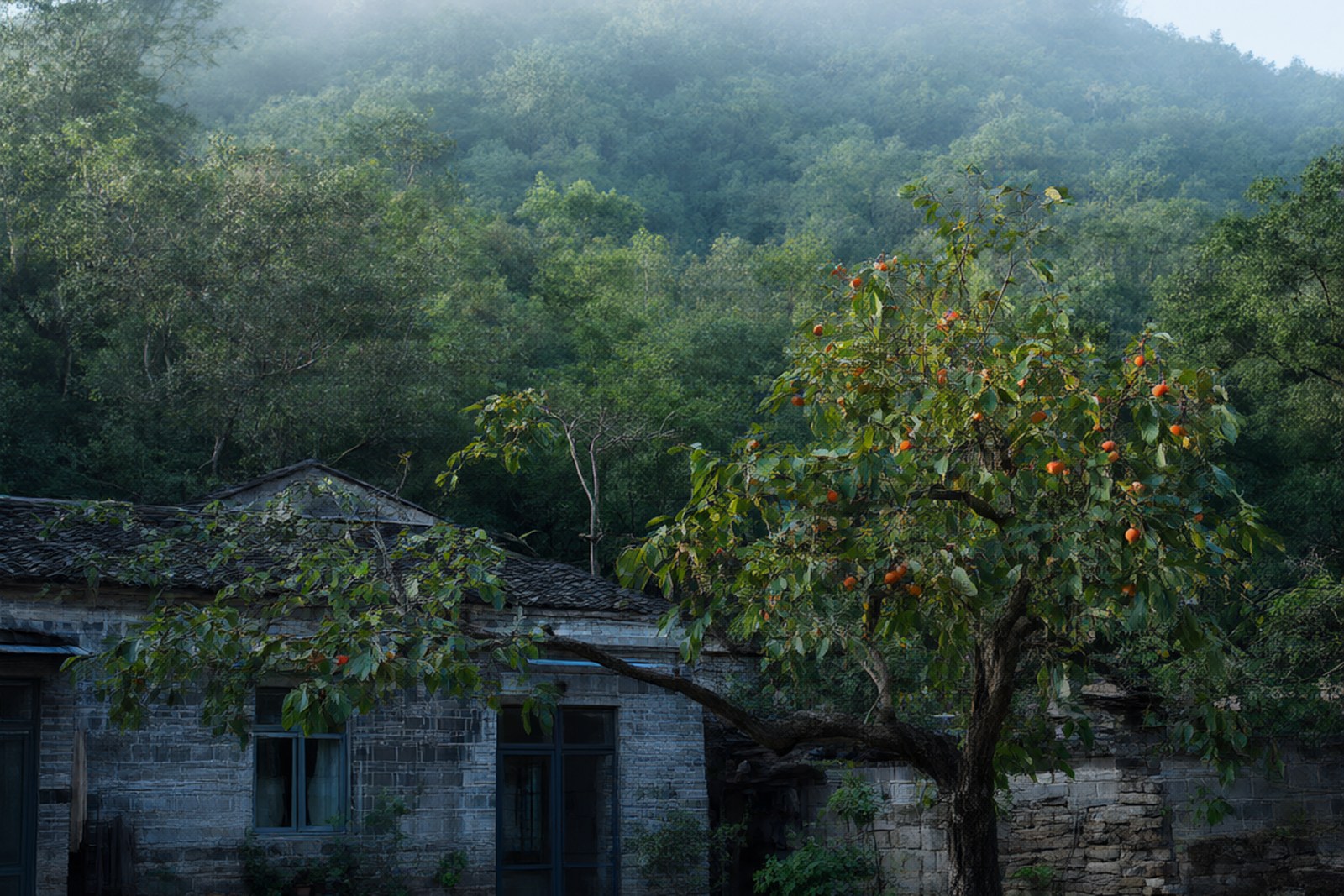
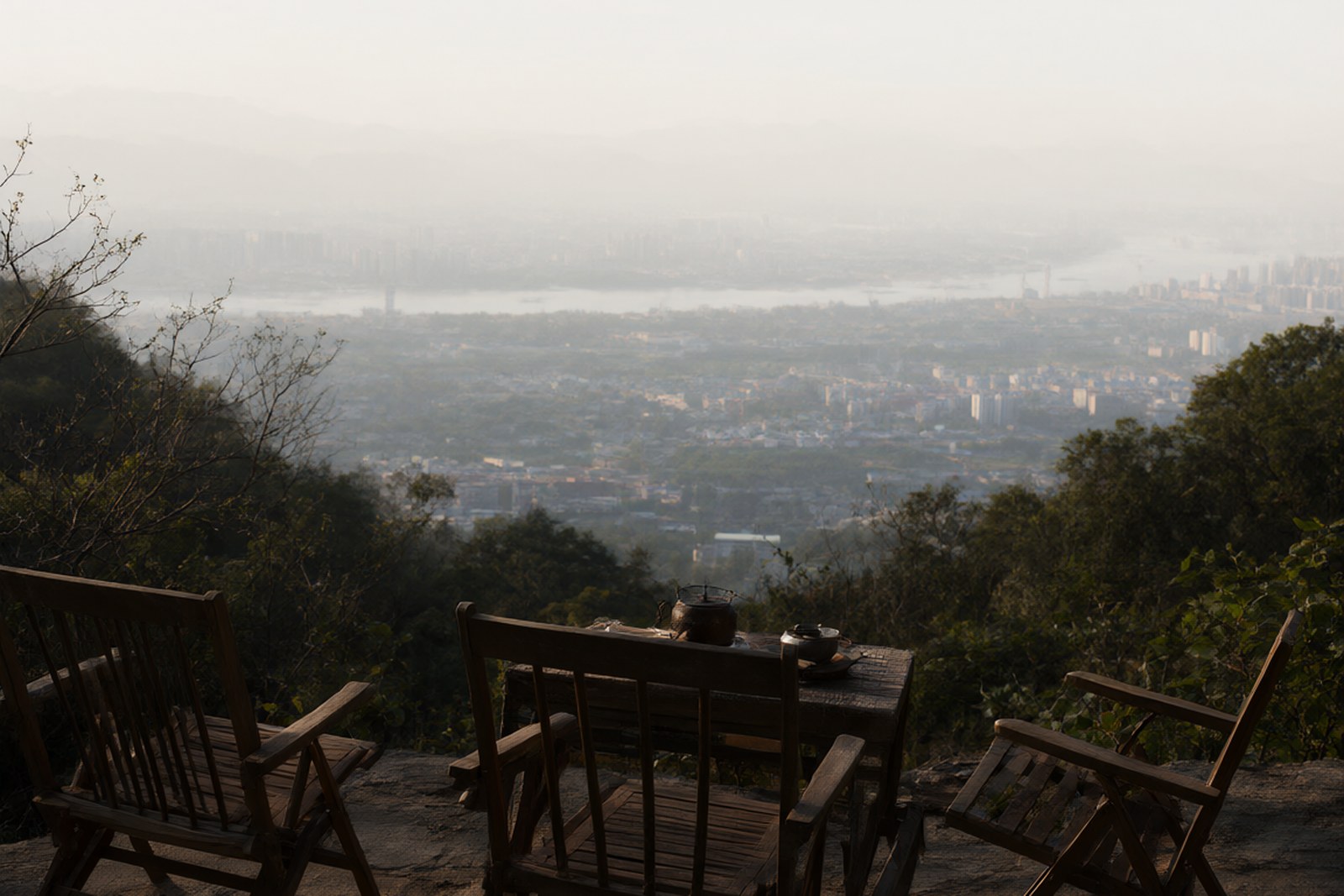
The rooms themselves are two sorts. Some houses are converted farm buildings – courtyards, timber frames, 柿子树 shìzishù persimmon trees over the yard – with the rooms arranged around the old plan and the kitchen downstairs; others are newer builds with terraces facing the city plain, where the evening view runs from the district’s rooftops out to the haze over the 长江 Cháng Jiāng Yangtze. Breakfasts lean on the district’s own table – 米粉 mǐfěn rice noodles, boiled eggs, pickles, tea – and nothing on the morning menu is trying to be anything else. What the houses sell is position and quiet, and every fitting dollar is spent on keeping the first and not spoiling the second.
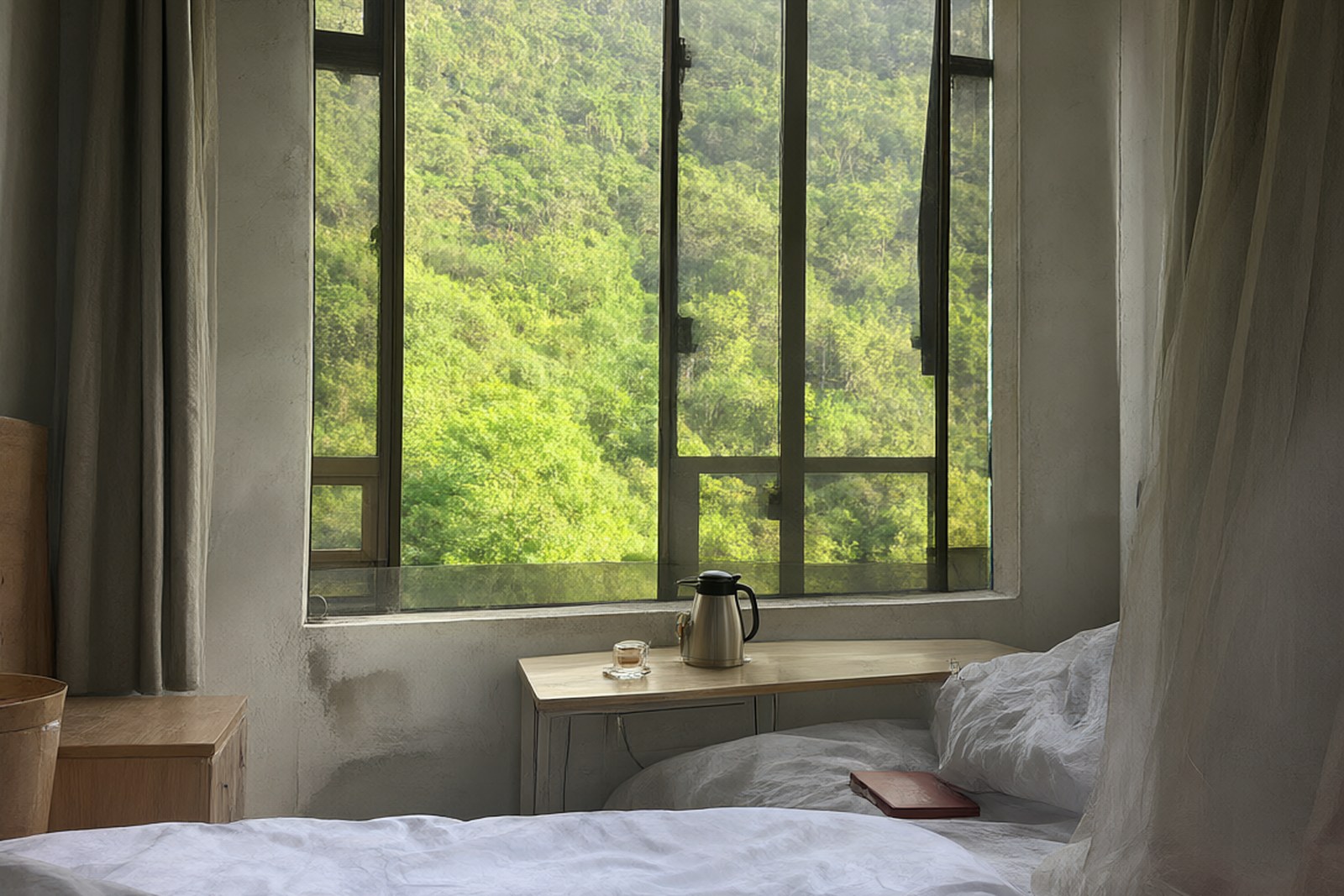
The pricing is the quiet surprise of the strip: rates stay modest year-round, because the houses are selling mornings rather than luxuries, and the district seat’s hotel belt is a short ride down the hill for anyone who wants a city floor. What raises a stay here above its price is the service the operators know their guests need – asked the night before, a householder will pack an early breakfast for a summit sunrise walk, rice noodles and eggs wrapped to eat at the top, and unlock the door at an hour the district’s hotels would not discuss. That is the deal the strip offers: a modest room, a knock on the door before the light, and the ten thousand steps empty ahead.
Words and Names
菩提山 Pútí Shān, Bodhi Mountain, the hill above 长寿区 Chángshòu Qū, Changshou District, 重庆 Chóngqìng: a strip of 民宿 mínsù homestays and small hotels under the prayer-flag slopes, serving pilgrims who climb the 万寿天梯 Wànshòu Tiāntī ten-thousand-step longevity ladder at dawn and walkers who want the temple forests on the doorstep. The houses are converted farm buildings with courtyards and 柿子树 shìzishù persimmon trees, or newer terraced builds facing the city plain; breakfasts are the district’s own – 米粉 mǐfěn rice noodles, eggs, pickles, tea – with the 长江 Cháng Jiāng Yangtze plain below. Rates stay modest year-round, and no named house, posted tariff or founding date is on the record consulted, and none is invented here.
What the Locals Know
The local knowledge is the ask and the night before. The ask is the room away from the lane the early climbers use – the stair-hung houses hear the first footsteps from five, and a courtyard room at the back hears the 柿子树 persimmon leaves instead. The night before is the breakfast: tell the householder at dinner that the summit sunrise is the plan and the packed noodles and eggs appear, the door is unlocked at the agreed hour, and the ladder is climbed on a full stomach the hotels below cannot match. The rest is the mountain’s own advice – start in the dark, take the ladder up and the forest paths down, and let the crowds that arrive with the coaches find a mountain already climbed.
Price. The foot-of-the-mountain houses price modestly year-round, quoted directly or by platform at booking; no posted tariff is on the record consulted, and the page quotes none. Rooms with the morning climb at the door ask little more than the ones a lane away, and the difference is the alarm clock, not the money.
Address. The homestays and small hotels sit on the lower slopes under 菩提山 Pútí Shān, the 598-metre hill inside 长寿区 Changshou District’s own street grid; no house-number directory is on the record consulted, and the practical address is whichever lane meets the ladder’s first flight.
Getting there. The mountain gate is inside the city, so the arrival is a short ride or a long walk from anywhere in the district seat; guests climbing the ladder at dawn confirm the previous night’s breakfast time with the house, and the houses are used to the request.
flowcloud would say that the lodging of Bodhi Mountain is the stillness class – 民宿 homestays and small hotels under the prayer-flag slopes of 菩提山 in 长寿区 Changshou District, simple clean rooms, noodles and eggs at dawn, modest rates all year – and that the correct booking is a back courtyard room with the early breakfast arranged the night before, for the ten thousand empty steps and the summit light, because no named house or posted tariff survives in the record consulted and none is invented. All checked October 2026.
Where to stay: the homestays and small hotels stand on the slopes below 菩提山 Pútí Shān Bodhi Mountain, inside the city’s own street grid at the edge of 长寿区 Chángshòu Qū, Changshou District – the mountain gate and the start of the 万寿天梯 Wànshòu Tiāntī longevity ladder are a short walk from the inn doors, and the district seat’s stations and the lake shuttle are minutes below by bus or taxi. Book a quiet courtyard room, tell the householder the night before about any dawn climb, and the mountain starts at the doorstep. Pair this page with the mountain page for the climb and the ancient-town page for the evening below. All checked October 2026.