
Caoyang Stays: Workers’-Village Heritage, High-Line Park Mornings and Triple-Line Commutes in Putuo District, Shanghai
新村绿荫藏旧梦,高架园中步履轻。Xīncūn lǜyīn cáng jiù mèng, gāojià yuán zhōng bùlǚ qīng – In the new village’s green shade old dreams hide; inside the elevated park the steps fall light.
The stay around 曹杨 Cáoyáng Caoyang – the workers’-village quarter on the eastern lip of 普陀区 Pǔtuó Qū Putuo District, 上海 Shànghǎi Shanghai, where 曹杨新村 Cáoyáng Xīncūn Caoyang New Village, the city’s celebrated 1950s planned workers’ community, keeps its ring of lanes, woods and the 环浜 Huánbāng ring creek, where 百禧公园 Bǎixī Gōngyuán Baixi Park – the kilometre-long high-line park built on a former freight-rail viaduct – stitches the neighbourhood together on its old concrete spine, and where metro lines 3, 4 and 11 meet at 曹杨路站 Cáoyáng Lù Zhàn Caoyang Road station – is the district’s neighbourhood-heritage market: converted rooms and small guesthouses in renewed village blocks, mid-range business hotels by the triple-line station mouth, and budget-friendly chains and apartments along 兰溪路 Lánxī Lù Lanxi Road’s shopping stride. The guests divide into two books: commuters and project callers who buy the triple-line interchange at honest money, and design-minded travellers who come precisely because the village is a piece of living planning history – red-roofed blocks, shade trees planted before the Cultural Revolution, grandmothers watering balconies – rather than a stage set. The product is a quarter you can read on foot: the high-line park for the morning walk, the creek loop for the evening one, noodle and canteen streets for every meal in between, and a station that reaches the inner ring by changing trains once at most. It is the rare Shanghai address where the neighbourhood itself, not a landmark, is the amenity – and the rooms are priced accordingly.
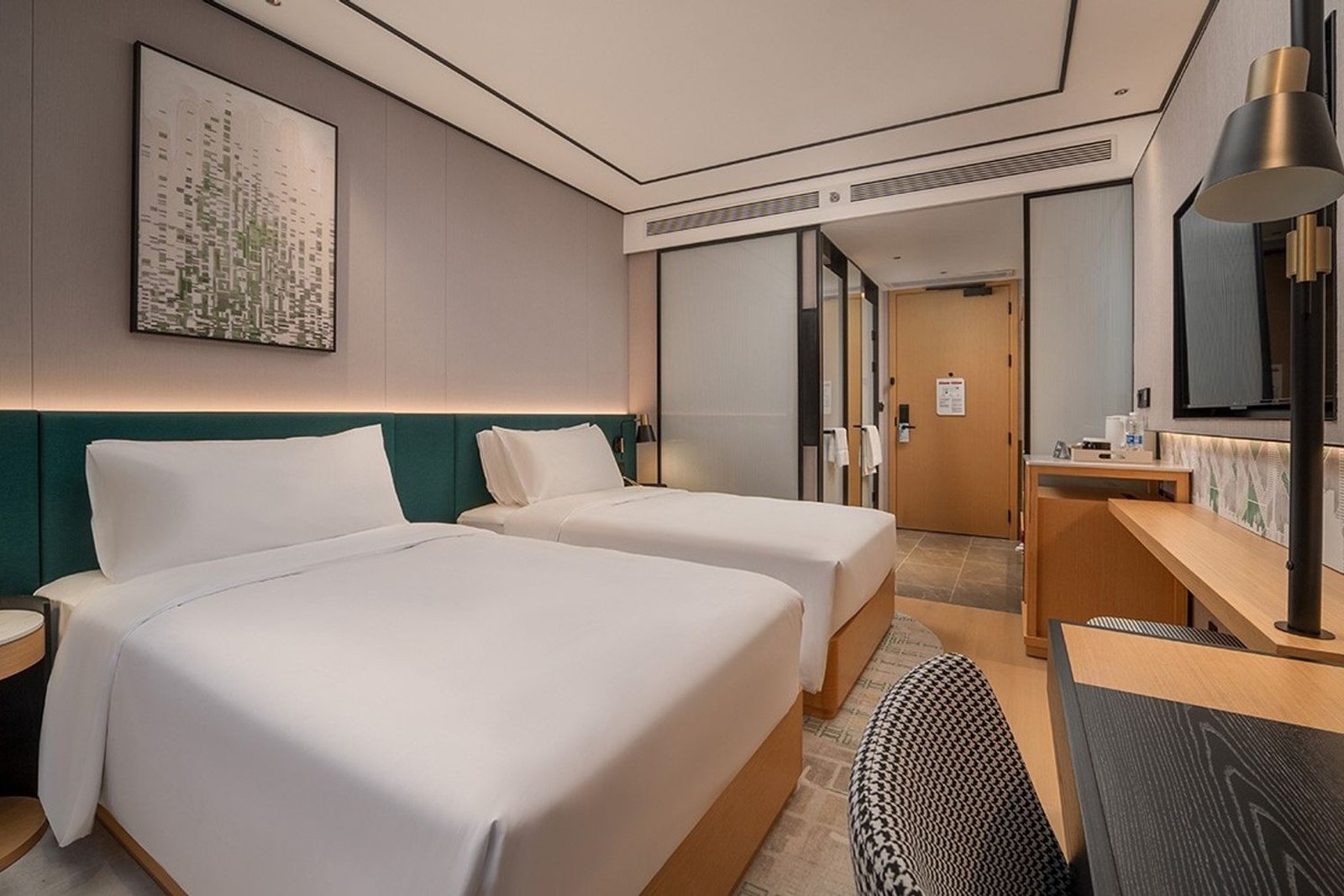
Call it honestly: this is a neighbourhood room, not a hotel-district room, and the difference has terms. The stock is conversions and chains rather than purpose-built towers, so rooms run small, standards run room-to-room, and the lift, where there is one, was added later (worth confirming the details for room size, floor and bathroom configuration before booking a heritage conversion – the catalogue photographs flatter the staircases). Dining is canteen-grand rather than restaurant-grand: excellent noodle shops, bakery queues and market streets at neighbourhood prices, but few late-night or celebration tables – dinner at eight is plentiful, dinner at eleven is a delivery app. The triple lines repay the booking most days, yet the interchange at Caoyang Road is a working station, busy at peaks and long-ish between platforms (worth confirming your transfer pattern if your mornings are timed to the minute). Against every caveat stands the price: beds here run visibly below the inner-ring bands for the same transit reach, the village blocks are genuinely quiet after nine, and the walk to anything daily – groceries, pharmacy, breakfast, the creek – stays inside ten minutes. Timing does the rest: autumn, when Baixi Park’s walkers and the village’s plane trees peak together, fills the best small rooms weeks ahead; a raw week in February lands the same rooms at chain money (worth confirming heating arrangements in older conversions before a winter booking).
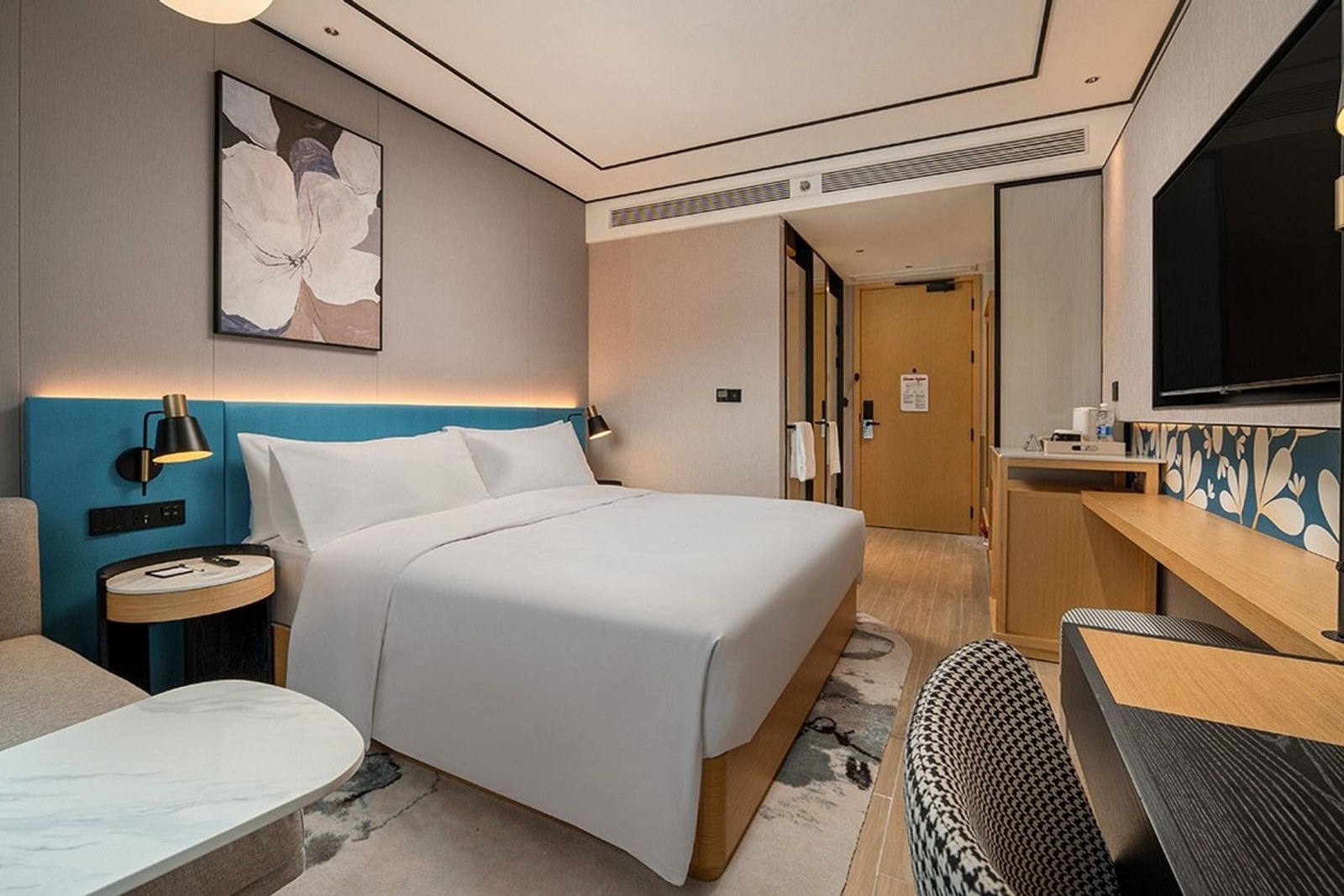
What gets oversold is the word “heritage”: the village is a lived-in residential community first and a monument second, and a booking-page photo of a renovated courtyard does not mean your room looks over one – most conversions look over lanes, parked scooters or the creek at ground level (worth confirming the exact position before paying a heritage premium). What gets oversold, too, is the high-line romance of Baixi Park: it is a superb walking structure and a genuine piece of adaptive reuse, but it is a neighbourhood park, not a spectacle, and the rooms “overlooking” it mostly share its viaduct wall. What repays the effort is the rhythm you buy with the room: breakfast noodles beside commuters at seven, the high-line walk to the station above the traffic, the creek loop at dusk when the village lamps come on, and the school-gate theatre of mid-afternoon – a Shanghai most visitors ride past without seeing, included free. For longer stays the dividend compounds: the village’s daily choreography – market hours, tai chi hours, the evening square-dance drums – turns a cheap room into a real address. Book Caoyang when sleep, commute and neighbourhood outweigh square metres; visit the high line when the itinerary has an hour to walk it properly.
Nearly everything else on this Putuo list rides the same compact map: choose 长风酒店 Chángfēng jiǔdiàn Changfeng hotels for the lakeside business belt, 真如商务酒店 Zhēnrú shāngwù jiǔdiàn Zhenru hotels for sub-centre value, 苏州河普陀段住宿 Sūzhōu Hé Pǔtuó duàn zhùsù Putuo Creek stays for river-bend quiet and 环球港商圈酒店 Huánqiúgǎng shāngquān jiǔdiàn Global Harbor hotels for the mall-top shopping band – four more doors into the same 普陀区 Pǔtuó Qū Putuo District. Book the bed, then let our Putuo travel guides and the district’s food map fill the daylight hours.
The Stays
- 曹杨路站口商务连锁 Cáoyáng Lù Zhàn kǒu shāngwù liánsuǒ business chains by Caoyang Road station – mid-range standard rooms at the lines 3/4/11 mouth; zero-transfer commutes at honest money.
- 曹杨新村改造型民宿客房 Cáoyáng Xīncūn gǎizào xíng mínsù kèfáng heritage-conversion guesthouse rooms in Caoyang New Village – small character rooms in renewed village blocks; confirm floor and stairs room by room.
- 兰溪路沿线性价比酒店 Lánxī Lù yánxiàn xìngjiàbǐ jiǔdiàn value hotels along Lanxi Road – budget-friendly beds on the shopping stride, breakfast and groceries at the door.
- 环浜沿河安静客房 Huánbāng yánhé ānjìng kèfáng quiet rooms along the ring creek – mid-range rooms facing the water loop away from the road hum; runners’ pick.
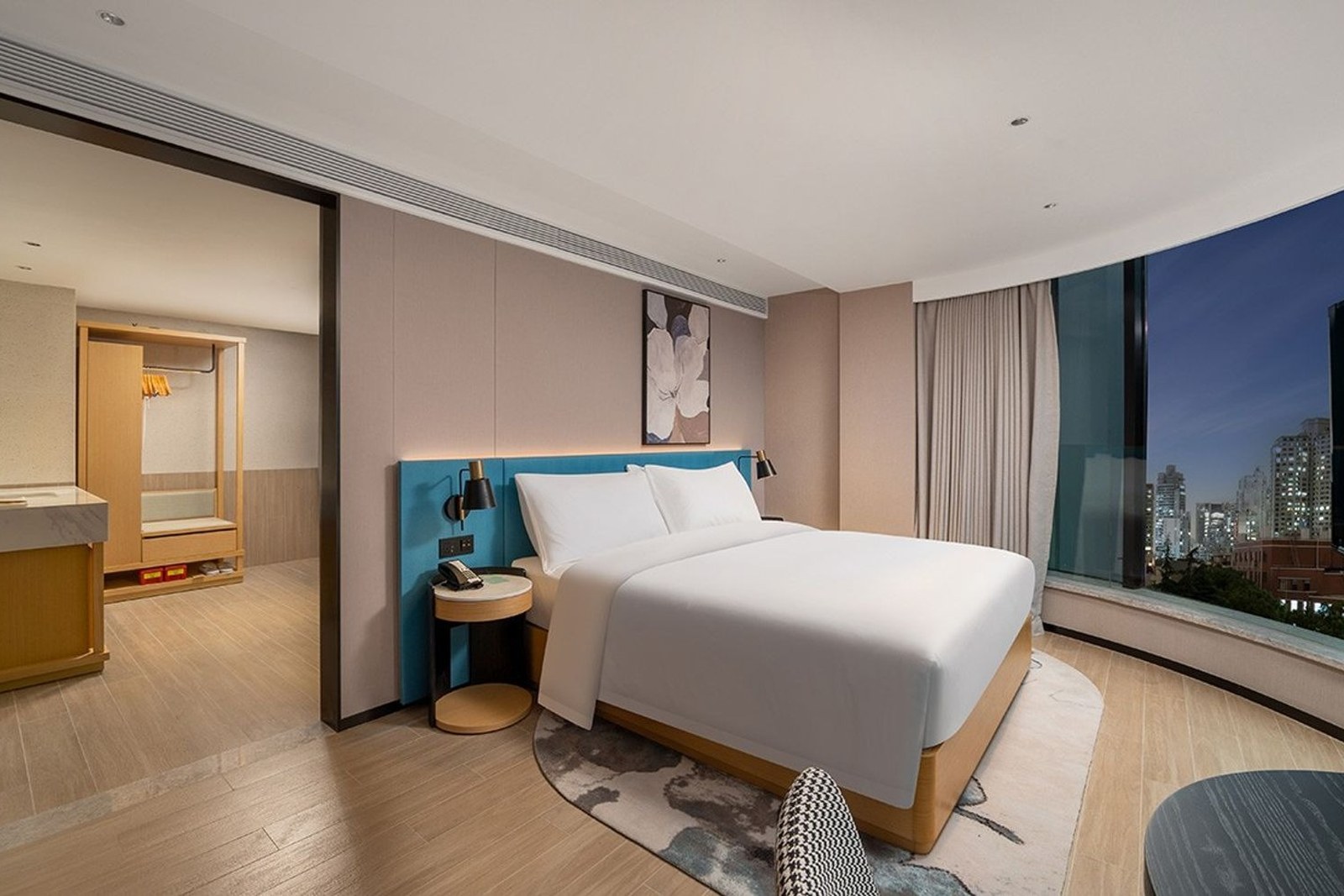
flowcloud would say that the Caoyang stay is a bed bought for the neighbourhood outside it – station-mouth chain to creek-quiet conversion in the October 2026 snapshot, all worth confirming the details – and that the honest move is to key the booking to the triple-line interchange, forgive the small rooms and the canteen-hours street map, and walk the high line once before eight when the village still belongs to its tai chi crowds, because the neighbourhood is the amenity and the conversions are the price – the plane trees keep the only legend. All checked October 2026.
Where to stay: Base yourself near 曹杨路 Cáoyáng Lù Caoyang Road station for three metro lines, or toward 百禧公园 Bǎixī Gōngyuán Baixi Park for the highline walks, favouring rooms on the park side for a quieter night. All checked October 2026.