
The inn is a 吊脚楼 diàojiǎolóu — a stilt house — with its front half over the water on a row of timber posts and its back half into the hillside, and the effect of sleeping in one is that the river never stops talking to you. Not loudly. The 清水江 Qīngshuǐ Jiāng here is broad, shallow and slow, and all night it works at the pilings with a low, patient lapping that becomes, by the second night, the only thing you can fall asleep to. At six in the morning there is a different sound: the ferry cable, pulled hand over hand through its guide, which is the oldest and most reliable alarm clock in western 湖南 Húnán.
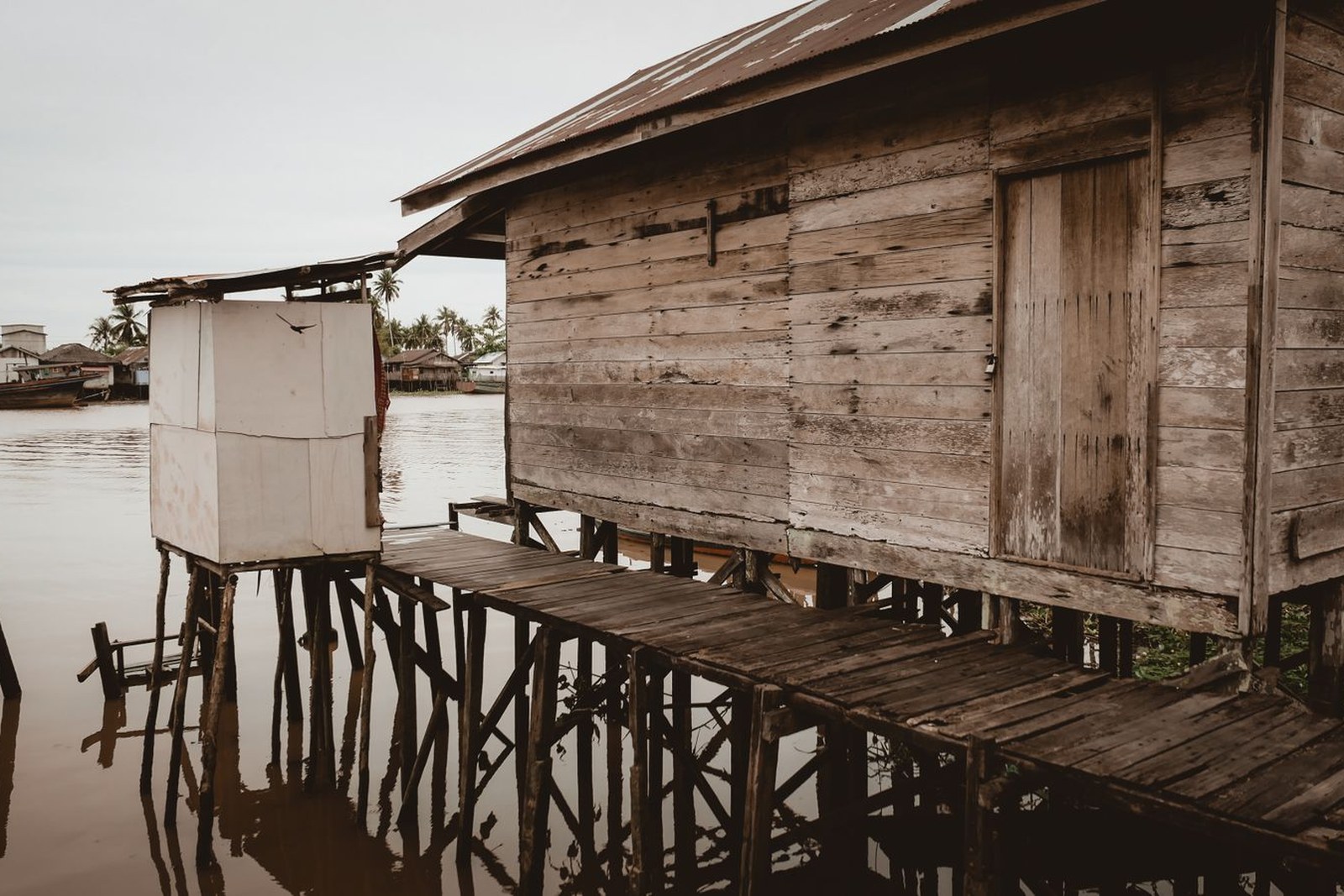
茶峒 Chádòng is a village in 花垣县 Huāyuán Xiàn, in 湘西土家族苗族自治州 Xiāngxī, on the western edge of Hunan, and it sits on a river that is also a border. On the far bank is 重庆 Chóngqìng; a little downstream is 贵州 Guìzhōu. Locals describe the position with a phrase they are justifiably fond of — 一脚踏三省 yī jiǎo tà sān shěng, one foot in three provinces — and there is a stone marker to prove it.
The other thing about 茶峒 is that it has a book. 沈从文 Shěn Cóngwén set 边城 Biānchéng, Border Town, here in 1934, and the novel’s ferryman and his granddaughter 翠翠 Cuìcuì have been part of the village’s identity ever since, to the point where the town was officially renamed 边城镇 Biānchéngzhèn in 2005. There is a 翠翠岛 Cuìcuì Dǎo in the middle of the river with a statue of the girl and her yellow dog, and a 白塔 báitǎ white pagoda rebuilt on the hillside behind the houses because the old one washed away.
The Inn and the Village
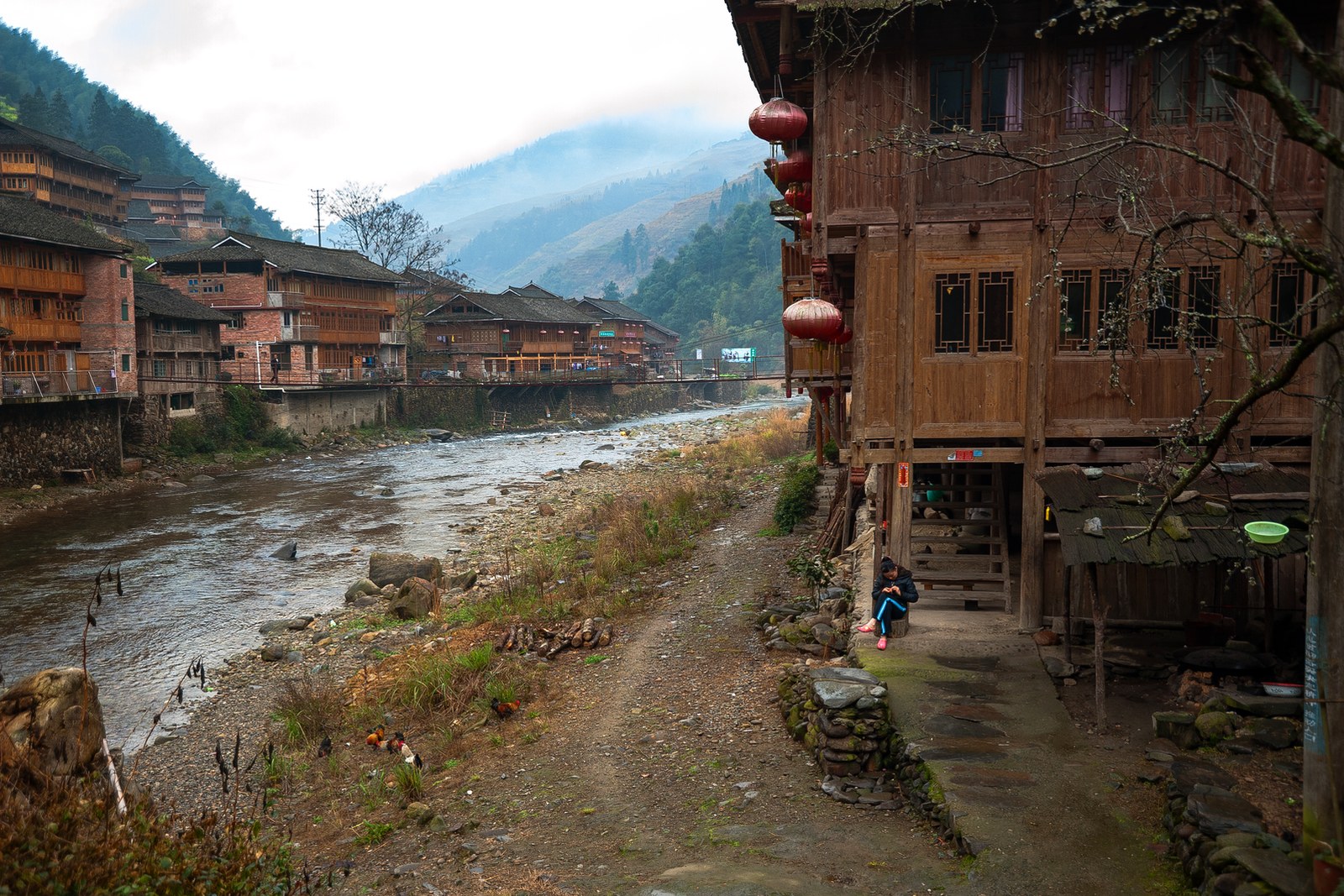
The 吊脚楼 diàojiǎolóu rooms are small and made entirely of wood, which means they are warm in the way a wooden building is warm and noisy in the way a wooden building is noisy — you will hear the family downstairs, the neighbour’s television, and the people walking home along the river path at eleven o’clock with a great deal to say. The bed will be firm. The window will open onto the water. There will be a thermos of hot water on the landing and a shared bathroom arrangement that varies from house to house.
What makes it worth the wooden walls is the position. You step out of the front door onto the 河街 héjiē, the riverside lane, which runs the length of the village between the houses and the water and is where everything happens: the laundry, the card game, the scales where the fish are weighed, the men mending nets, and the arrivals and departures of the 拉拉渡 lālādù, the cable ferry that has crossed this river for as long as anyone can remember.
The Ferry, and How to Cross It
The 拉拉渡 is the reason to stay overnight rather than visit for an afternoon. It is not a boat with an engine and it is not a bridge. It is a flat wooden punt tethered to a cable strung across the river, and the ferryman moves it by pulling the cable through his hands and letting the current hold the angle — a technique so simple that it has survived the invention of everything you can think of. It costs a couple of yuan. It takes about four minutes. It puts you in a different province.
Cross to 洪安古镇 Hóng’ān on the far side and you are in 重庆 Chóngqìng, in a town with the same stilt houses and a slightly different accent and a completely different set of local dishes. Come back before dark. There are few better half-days in China than that one.
Practicalities
Price. Riverside doubles in the 吊脚楼 guesthouses run ¥120–280 a night, with the upper end buying a room with a full-width window over the water and a private bathroom rather than a shared one. Rooms not on the river are about half. The village is busiest around the spring and autumn holidays and the summer weekends; outside those, walk the 河街 héjiē and ask, and you will find something.
Address. 茶峒 (Chádòng), officially 边城镇 (Biānchéngzhèn), 花垣县 (Huāyuán Xiàn), 湘西土家族苗族自治州 (Xiāngxī), western Hunan — on the 清水江 (Qīngshuǐ Jiāng) where it forms the boundary with 重庆 (Chóngqìng) and, a little downstream, 贵州 (Guìzhōu). The 河街 (héjiē) riverside lane is where the guesthouses are; the 拉拉渡 (lālādù) cable ferry crosses from its middle.
Rooms. Timber rooms in 吊脚楼 diàojiǎolóu stilt houses, mostly doubles, some with private bathrooms and some sharing. Ask for a river-facing room on an upper floor — the ground-floor rooms get the damp and the foot traffic and there is no getting around it. Bring earplugs if you are precious about sleep; the river is constant and the timber carries.
Getting there. 花垣县 (Huāyuán Xiàn) is reachable by bus from 吉首 (Jíshǒu), the prefecture capital, in about two and a half hours, and there are direct coaches to 边城镇 from the county town. If you are driving, the route from 吉首 comes over the mountains through 矮寨 (Ǎizhài) and 德夯 (Déhāng), which is a spectacular and slow road. The nearest high-speed rail is at 吉首东 (Jíshǒu Dōng) — from there it is a taxi or a bus and half a day, so most people come here as an overnight rather than a day trip, which is the correct decision anyway.
flowcloud would say that a village which turned a novel about waiting into the shape of its own life, and which still crosses the river by pulling a rope because it works, has understood something about permanence that the rest of us keep trying to buy.
Where to stay: Riverside 吊脚楼 (diàojiǎolóu) guesthouses on the 河街 (héjiē) at 茶峒 (Chádòng), now 边城镇 (Biānchéngzhèn), 花垣县 (Huāyuán Xiàn), 湘西 (Xiāngxī), western Hunan. Doubles ¥120–280 a night for a river view, about half that away from the water. Reachable by bus from 吉首 (Jíshǒu) in roughly two and a half hours, or by a slow and beautiful mountain road. Ask for an upper river-facing room, ride the 拉拉渡 (lālādù) cable ferry across to 重庆 (Chóngqìng) and back, and be up at six when the rope starts working.