
长寿古镇 Chángshòu Gǔzhèn, Changshou ancient town, keeps a modest row of inns inside and around its grey-brick streets, most of them courtyard houses converted during the town’s building boom but managed with a genuine local warmth that the chain hotels in the district seat cannot copy. The conversion is the honest kind: modern rooms behind old facades, plumbing and beds fitted where the family rooms were, the courtyards and eaves kept as they were built. Purists may note that the town itself is young – it was laid out in the town’s building boom rather than inherited – but the streets do what good streets do, and the inns inherit streets that already work. What the inns sell is the evening, because the town’s best hours come after the day visitors leave – the lanterns coming on along the 水渠 shuǐqú water channel, the fountain square filling with dancing retirees, and the food lanes sending up steam and chili smoke into the night.
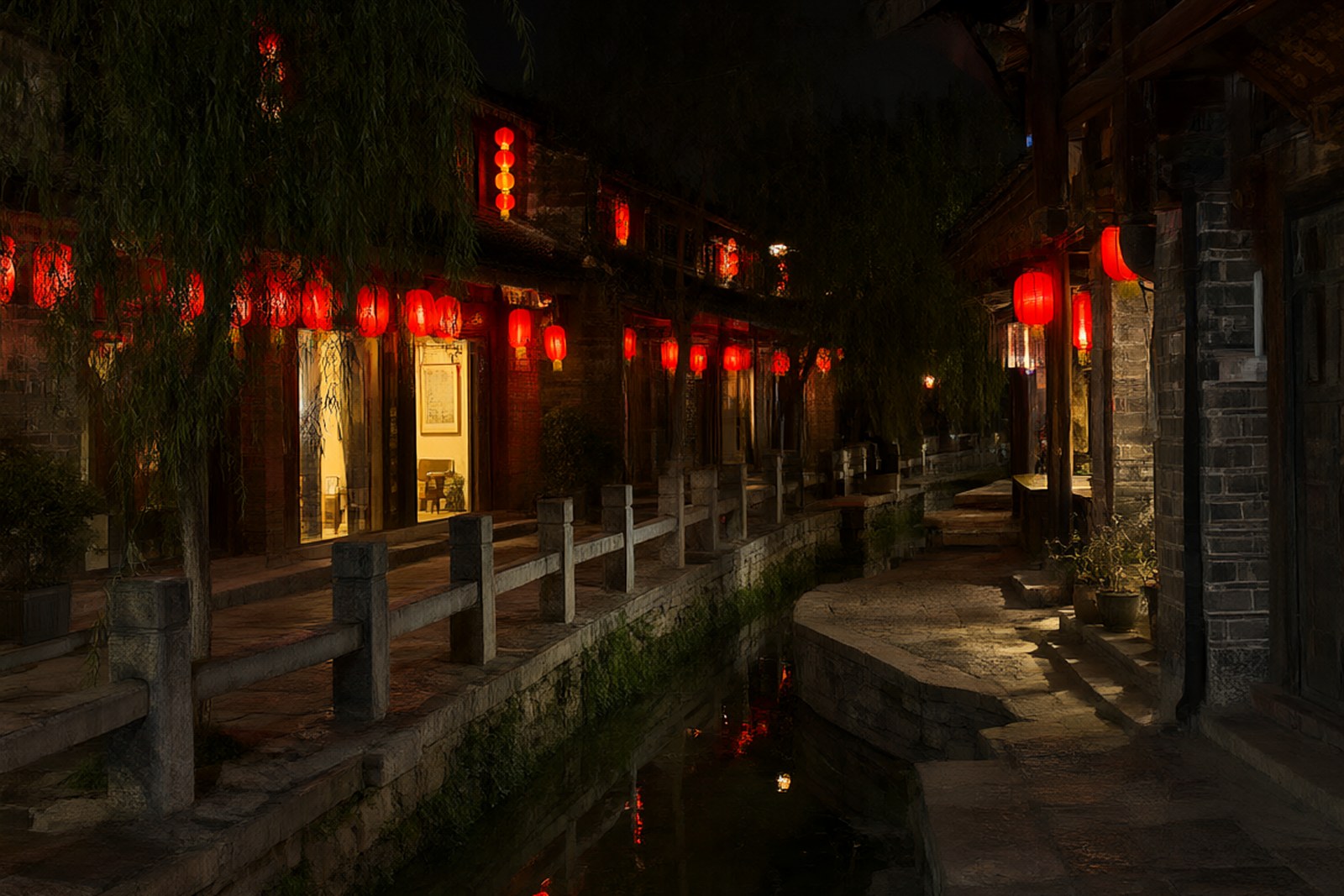
The location is the product, and it is stronger than any single room. A guest steps out of the inn door straight into the town’s best shops – the 米粉 mǐfěn rice-noodle houses and the 肥肠饭 féicháng fàn pork-intestine rice bowls that draw the crowds through the food lanes – and the shuttle to 长寿湖 Changshou Lake and 菩提山 Pútí Shān Bodhi Mountain stops nearby, which turns an overnight in the town into the practical base for the district’s two headline sights. The streets themselves keep the purpose-built charm that the town does well: carved archways, opera stages, teahouses filling their benches by mid-afternoon, and the evening fountain square pulling three generations of dancers out onto the stones.
The rooms inside the facades are modern and the trade is a family trade. The better houses keep a courtyard where breakfast is laid, and the staff are locals who will say which noodle shop opens earliest and which lane the coach tours miss. The conversion boom means the inventory is small and varied – a handful of rooms here, a converted merchant house there – rather than a hotel district, and the booking platforms carry some of it while the rest runs on phones and walk-ins, which is the honest shape of a young town still learning the inn business from old streets.
The guests split into two sorts, and the town serves both well. The weekend families come for the evening – the square, the opera stage, the food lanes – and fill the yards on Fridays and festival weekends, when the longevity-banquet long tables are laid for celebration crowds and the lanes run loud until the lanterns are put out. The midweek guests are the walkers and the temple-bound, who book the town for its position between the mountain gate and the lake shuttle, sleep through the quiet the town returns to, and climb 菩提山 Bodhi Mountain in the morning while the streets are still being swept. An overnight catches both halves of the town’s day, which is precisely what a day trip cannot do.
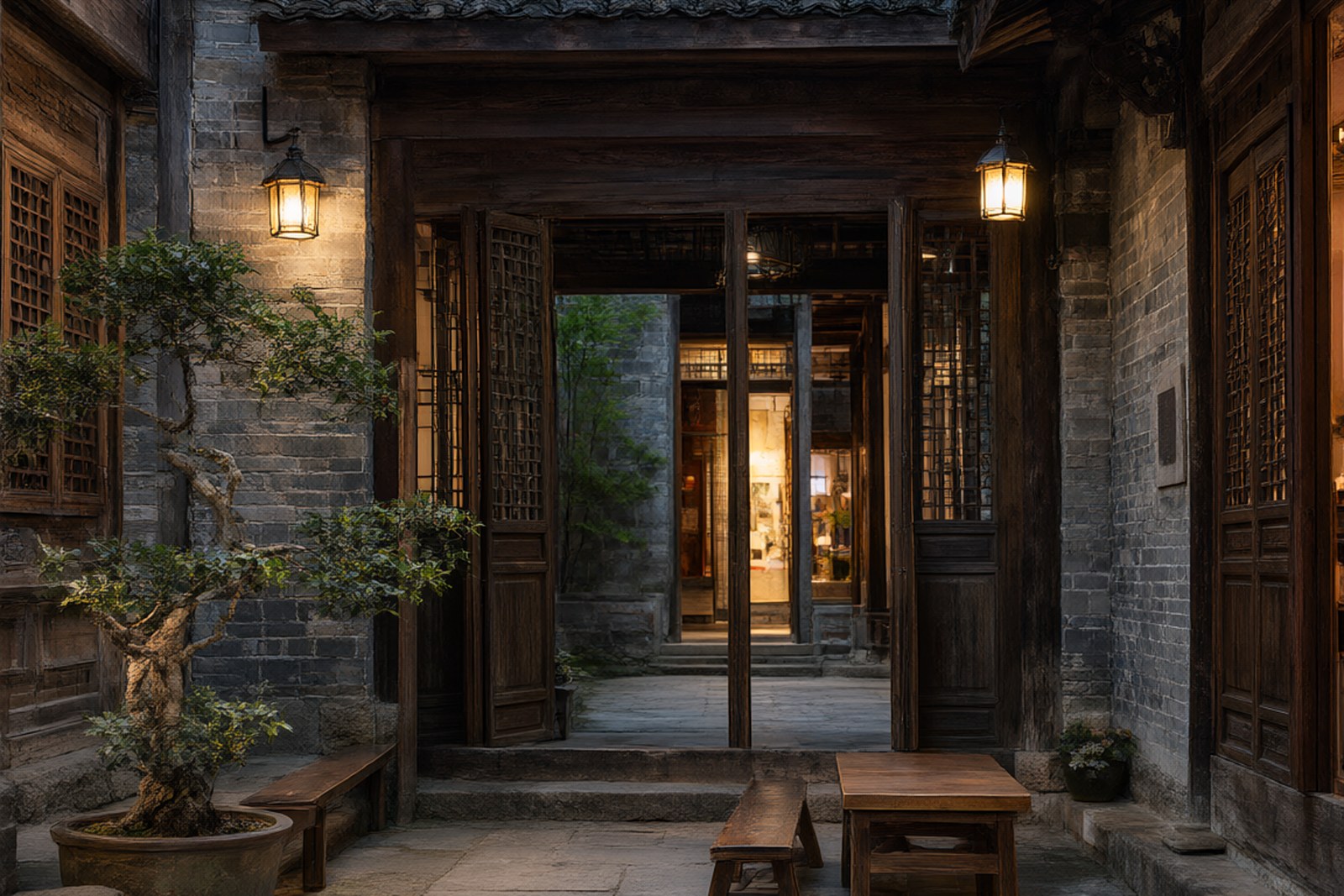
The one warning the record carries is about the square. Light sleepers should ask for rooms off the 方 fāng square side, because the square’s evening crowd keeps its own schedule – the dancing runs late, the fountain runs later, and a courtyard room one lane back trades nothing but noise for the same lanterns and the same breakfast. The lanes between the square and the water channel are the quiet inventory, and a booking that names the lane rather than the town gets it; the difference in kind is the whole night, and the locals know exactly which doorways sleep well.
Words and Names
长寿古镇 Chángshòu Gǔzhèn, Changshou ancient town, in 长寿区 Chángshòu Qū, Changshou District, 重庆 Chóngqìng: inns converted from courtyard houses in the grey-brick streets, modern rooms behind old facades, the 水渠 shuǐqú water channel and lantern-lit evening lanes, and the food lanes’ 米粉 mǐfěn rice noodles and 肥肠饭 féicháng fàn pork-intestine rice at the inn doors. The town sits between the new district and 菩提山 Pútí Shān Bodhi Mountain, with the lake shuttle stopping nearby and the evening fountain square keeping the schedule light sleepers should book away from. No named inn, posted rate or founding date is on the record consulted, and none is invented here.
What the Locals Know
The local knowledge is the ask and the hour. The ask is the room off the square – “要不在广场边上的房间” yào bú zài guǎngchǎng biān shàng de fángjiān, a room not beside the square – because the dancers and the fountain run their own clock and a lane-back courtyard hears only the water channel. The hour is the evening: the lanterns along the channel, the opera stage, the food lanes at their loudest and best, then a dawn that belongs to the town before the coaches arrive, when the teahouses are setting out benches and the noodle houses are starting their first baskets. Ask at the desk which lane the tours miss – the staff walk these streets home, and their answer is better than any map.
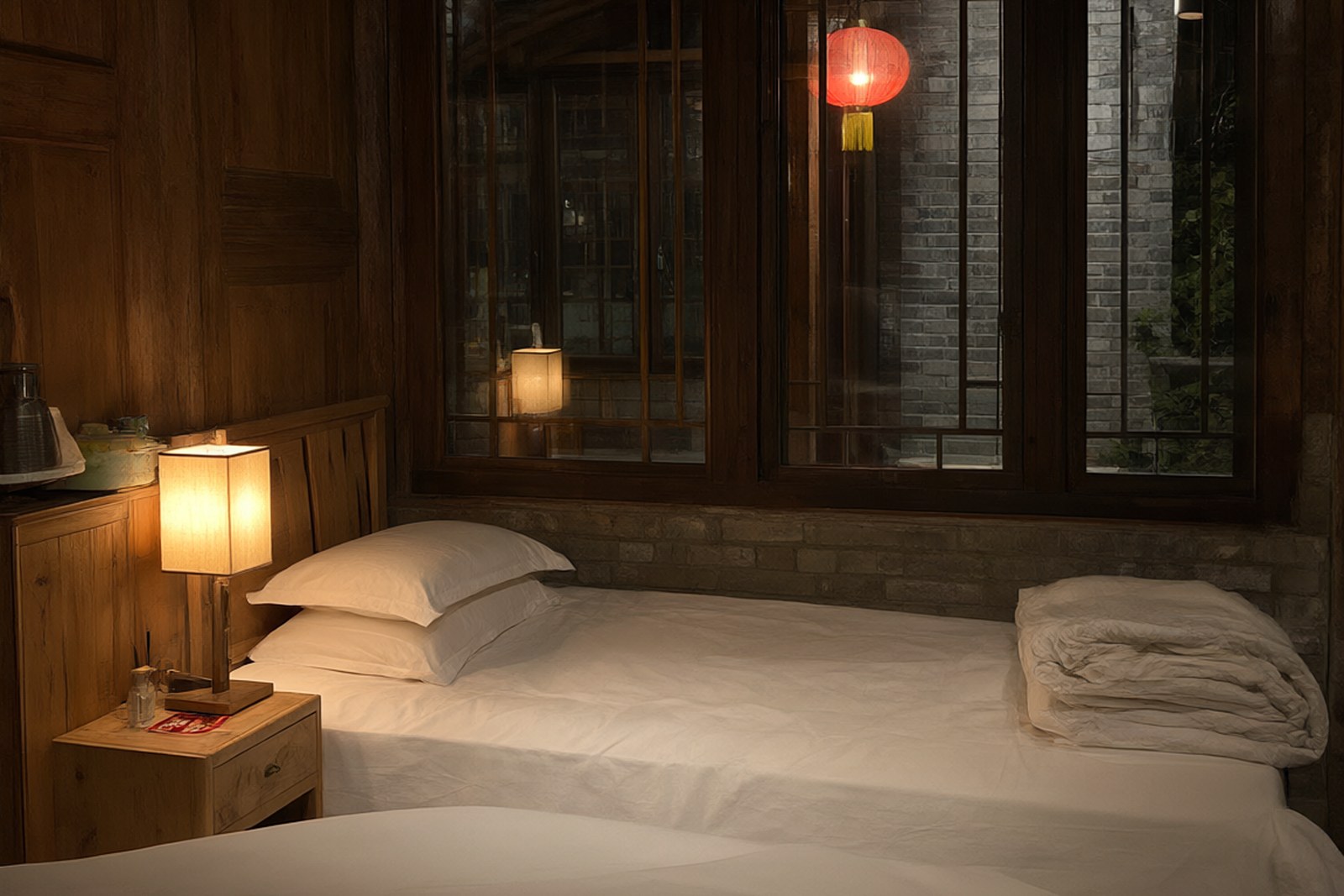
Price. The inn class prices as the town’s own band – a little above the district seat’s hostels, well under its hotel floors – quoted by platform or by phone at booking; no posted tariff is on the record consulted, and the page quotes none. Rooms opening to the inner courtyards sit at the top of each house’s range, and the front-facing ones below it.
Address. The inns stand inside the quarter of 长寿古镇 Chángshòu Gǔzhèn, the ancient town laid between the new district and the foot of 菩提山 Pútí Shān in 长寿区 Changshou District; the quarter is compact enough that the square is the only address that matters, and no house-number directory is on the record consulted.
Getting there. The town sits inside the district seat’s own transit reach – a short ride from the station roads, with the lake and mountain shuttles stopping at the quarter’s edge; arrival after the day crowds thin is the timing the quiet rooms are built around.
flowcloud would say that the lodging of Changshou ancient town is the converted courtyard class – modern rooms behind grey-brick facades in 长寿区 Changshou District, lanterns on the water channel and the food lanes at the door – and that the correct booking is a room off the fountain square for the evening the town is built for and the dawn before the coaches, with the lake and the mountain a shuttle ride away, because no named inn or posted rate survives in the record consulted and none is invented. All checked October 2026.
Where to stay: the inns stand inside and around the grey-brick streets of 长寿古镇 Chángshòu Gǔzhèn, Changshou ancient town, laid out between the new district and the foot of 菩提山 Pútí Shān Bodhi Mountain in 长寿区 Chángshòu Qū, Changshou District – a short ride from the district seat and its rail stations, with the lake shuttle stopping nearby and the whole town walkable from any inn door. Book through the platforms where listed and ask for the lane side, and the lanterns, the square and the food lanes are all outside the door. Pair this page with the ancient-town page for the streets and stages, and the mountain page for the climb above. All checked October 2026.