
牌坊街 Pái fāng jiē is the spine of old 潮州 Cháozhōu, a long lane of stone memorial arches that the city’s most accomplished scholars and officials were honoured with, and the old town is strung along it like beads on a wire. A guesthouse here is not a hotel; it is a set of rooms behind a carved wooden or brick facade on the lane itself, where the arches stand overhead and the whole of the historic quarter – the temples, the 粿 shops, the tea houses, the river – is on the doorstep. It is the most atmospheric place to sleep in the city, and the reason to book it is the position.
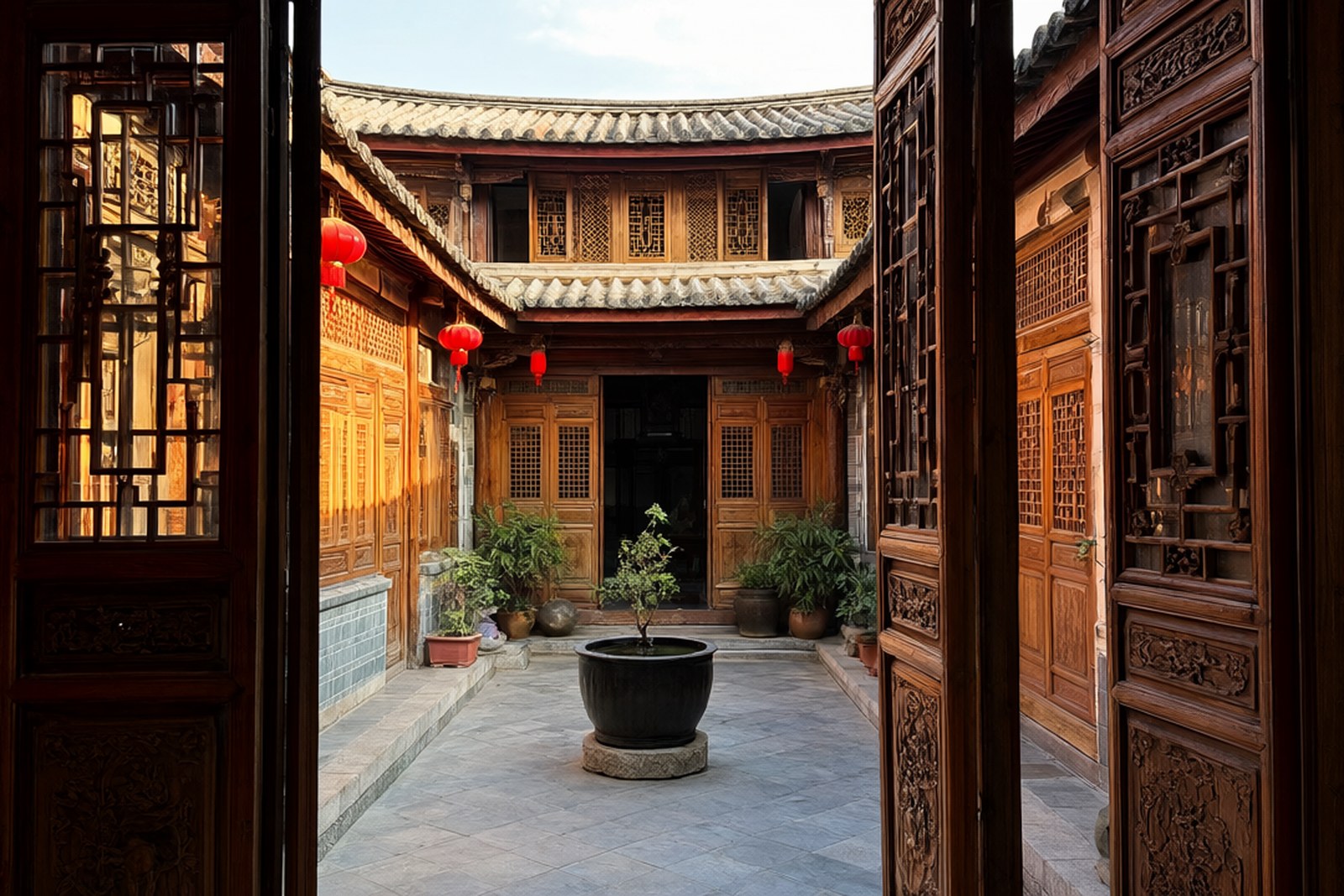
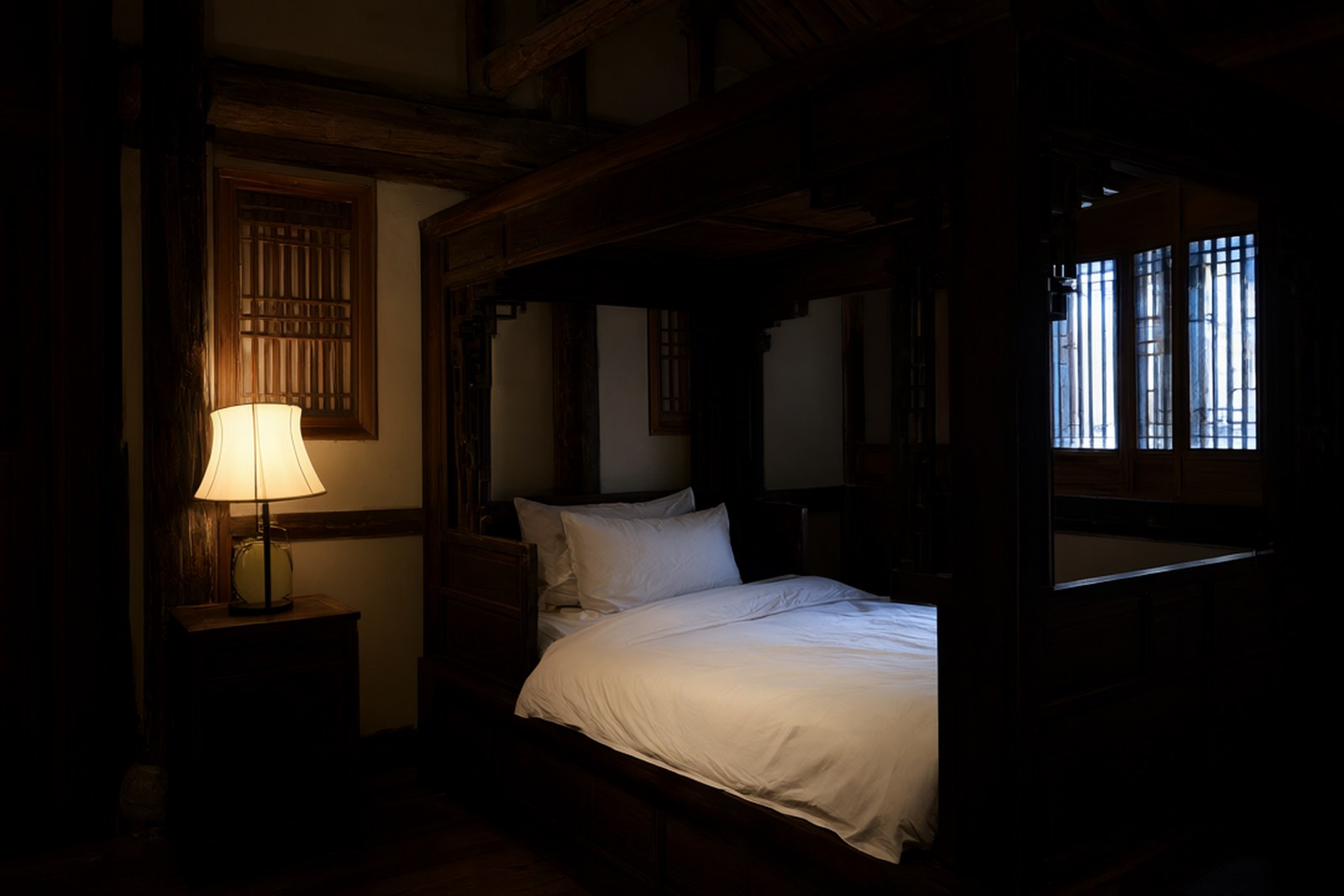
The guesthouses on 牌坊街 are mostly conversions of the old merchant houses and shophouses that line the lane. A typical one keeps the bones: a tiled courtyard, perhaps a small garden or a planted patio, and a set of rooms arranged around it. The rooms are comfortable rather than grand – a firm bed, air conditioning, a clean bathroom, a kettle – but they are furnished with an eye to the place, with carved timber, paper-shaded lamps and a bed that sits under an old beam. The quietest rooms face the courtyard rather than the lane, because the lane itself carries the sound of the city, which is part of why you have come.
Staying here changes how you see the city. In the evening the arches are lit and the lane fills with people strolling, eating 粿 and drinking tea; late at night it goes quiet and you can walk it almost alone. In the morning you are up before the day-trippers and can see 广济桥 Guǎngjì qiáo, the Guangji Bridge, and 韩江 Hán jiāng at a stroll. Everything is within a short walk: the 开元寺 Kāiyuán sì, the 甲第巷 Jiǎ dì xiàng with its carved houses, and the food for which the city is famous. Come for a night or two and treat the lane as your front door.
What the Rooms Are Like
Expect a room of eighteen to thirty square metres, a firm bed, air conditioning, a clean en-suite bathroom with a shower, and a finish that leans on the heritage of the building rather than on modern gloss. The courtyard-facing rooms are quieter and the lane-facing ones are livelier, so pick according to how you sleep. There is usually a kettle, tea and a small breakfast, and Wi-Fi is reliable. Some guesthouses share a bathroom; most have their own. There is rarely a lift, and the old timber stairs are worth being aware of if you carry heavy bags.
Practicalities
Price. A double at a 牌坊街 guesthouse runs ¥200 to ¥450 a night in the shoulder season, and more over the October week and Chinese New Year when the old town is busiest. The courtyard-facing rooms cost a little more, and the heritage-heavy ones with the most character push towards the top of the range.
Address. The guesthouses are along 牌坊街 Pái fāng jiē in the 湘桥区 Xiāngqiáo qū old town of 潮州, centred on the lane of arches and within a short walk of the river and the temples. 潮州 is reached by the high-speed rail to 潮汕站 Cháoshàn zhàn.
Rooms. Ask for a courtyard-facing room if you want quiet, and confirm whether breakfast is included. Check whether the bathroom is en-suite and whether the building has air conditioning, because the old houses are lovely but can be cold in winter and hot in summer. Ask about the check-in time, as some guesthouses are flexible and some are not.
Getting there. From 潮汕站 Cháoshàn zhàn on the high-speed line, a taxi to the old town takes about half an hour. From 潮州 city centre the old town is a short drive or a pleasant walk. If you are driving, ask about parking, because the lane itself is pedestrian and the car parks are a walk away.
Where to stay: the guesthouses along 牌坊街 in the 湘桥区 old town of 潮州, reached by taxi from 潮汕站. Book a courtyard-facing room, confirm the breakfast and the bathroom, and come for the fun of being in the middle of the historic quarter rather than for luxury.
flowcloud would say that a night spent behind a carved door on a lane of memorial arches, with the whole of a living old town for a doorstep, is a night that hands you a city rather than a room, and that a place which can do that needs no dressing up.