
赤坎 Chìkǎn is built on both banks of the 潭江 Tán jiāng, halfway between 开平 Kāipíng city and the coast, and its whole shape comes from one thing: the river was navigable, and for fifty years in the early twentieth century the money that had been earned by 开平 people in North America and Southeast Asia came home and was spent on shopfronts. The result is close to three kilometres of 骑楼 qí lóu, the arcade buildings whose upper floors overhang the pavement on columns, so that the whole street is a covered walkway with shops behind it and rooms above. The 骑楼 form was imported from Singapore and Penang and adapted here; the ornament on the facades – the parapets, the pilasters, the mixed Chinese and European mouldings – is the visible record of families who had seen both ends of the world and could not decide which one to build. What was a half-abandoned town thirty years ago has been restored building by building since 2014, and the inns are the restored upper floors of those shophouses.
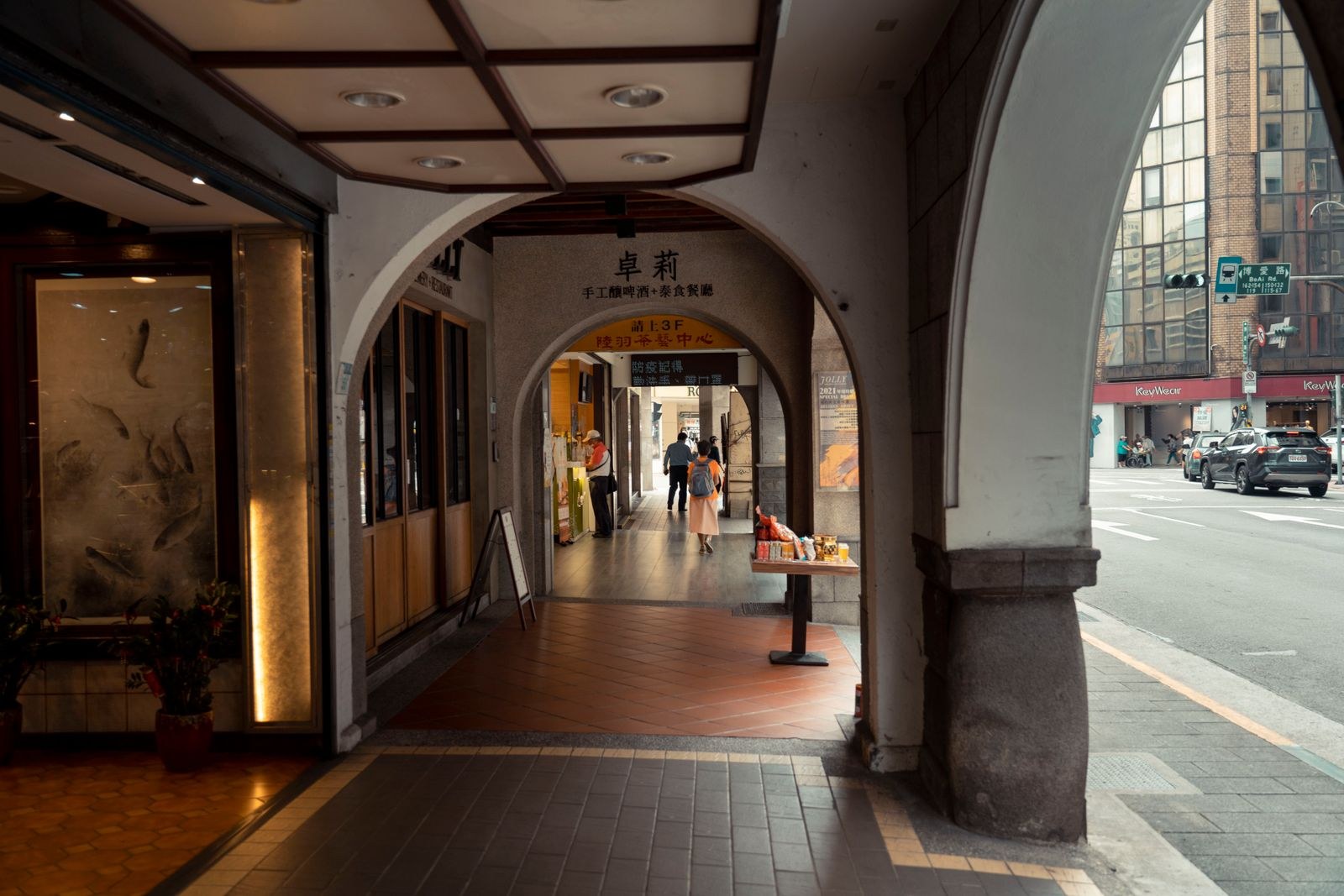
Sleeping in one is a specific experience, and the first thing to understand is that the buildings are long and narrow. A 骑楼 plot is perhaps four or five metres of street frontage and twenty metres deep, because the frontage was what you paid tax on, so the ground floor is a shop running back to a courtyard or a light well, and the rooms above are strung along a corridor with windows only at the two ends. This means that the middle rooms of a converted inn have no daylight, and the good ones are those at the front, looking over the arcade columns to the shops opposite. The fabric has been kept: grey brick, timber floors that creak unevenly, high ceilings, and shuttered windows that open onto the street noise at six in the morning. Some of the inns have put glass over the light well and created an atrium; those are the brighter and the more expensive.
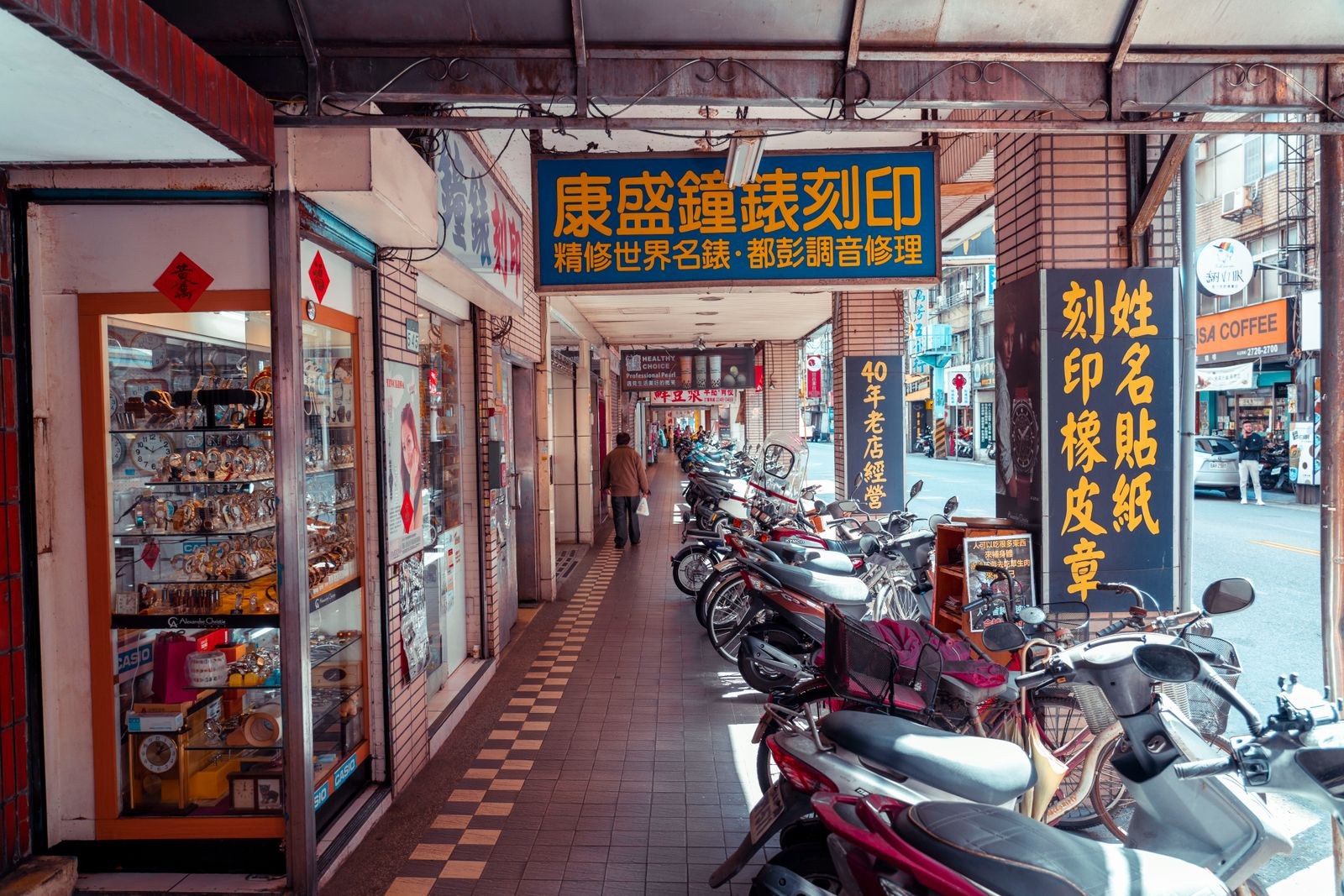
The compensation for the narrow rooms is what is outside the door. The two clan libraries, the 司徒氏图书馆 Sītú shì tú shū guǎn of 1925 and the 关族图书馆 Guān zú tú shū guǎn of 1929, stand at opposite ends of the town and are among the best buildings in Guangdong: the first has a clock tower and a reading room lit through coloured glass, and both were built by the clan associations of families whose sons had gone overseas. The 潭江 Tán jiāng runs past the front of the town and the quays are still there, and in the evening the whole arcade lights up under its columns while the restaurants put their tables out on the pavement. It is a tourist town now, and honest about it, but the arcade is real and so are the people living above the shops at the far end, where the restoration stops.
What the Rooms Are Like
Rooms run from about twelve to thirty square metres and are almost always on the first or second floor, reached by a timber or tiled stair. Expect a firm bed, air conditioning, a modern bathroom inserted into what was once a back room, and a window that looks either at the street or, in the cheapest rooms, at a wall. Ceiling heights are generous and occasionally dramatic, because the original buildings had high floors; sound insulation is not, because timber joists carry noise and the street below starts early. Rooms at the front are noisier and better; rooms at the back are silent and have nothing to look at. Most inns have a shared roof terrace or a small courtyard, and several serve breakfast in a ground-floor room that used to be the shop.
Practicalities
Price. A double in a restored arcade inn is ¥250 to ¥600 a night, the top of that range buying a room on the street front with the full height windows and the arcade below. Rooms without a street view start lower. Weekend rates rise sharply, and the whole town fills on public holidays, when booking a fortnight ahead is not excessive. The town charges an entrance ticket to the restored core during the day, which day guests pay and guests of the inns usually do not, but confirm it when you book.
Address. The inns are in the arcades of 赤坎古镇 Chìkǎn gǔ zhèn on both banks of the 潭江 Tán jiāng, in 开平市 Kāipíng shì, about fifteen kilometres south-west of 开平 city centre and an hour by road from 江门. The 上埠 shàng bù and 下埠 xià bù, the upper and lower quays, are the two halves of the old town, joined by a bridge, and each has its own cluster of properties.
Rooms. Ask for a street-facing room on the first floor rather than the second if you want to watch the arcade from the window, and confirm whether the room has an external window at all, because a converted back room in a 骑楼 may not. If you are a light sleeper, ask for the back: the arcade amplifies everything, and the shops below start unloading well before seven. Check whether the inn’s ticket arrangement covers the restored area, which can save a family forty or fifty yuan a head.
Getting there. From 开平市 Kāipíng shì take the 赤坎 Chìkǎn bus from the main bus station, about forty minutes; from 江门 the coach takes an hour and a half. The 江湛 railway stops at 开平南站 Kāipíng Nán zhàn, twelve kilometres away, with taxis at the exit. By car the town is twenty minutes off the 沈海高速 Shěnhǎi gāosù, and parking is on the edge of the old town because vehicles are kept out of the arcade streets.
flowcloud would say that a town built with money from abroad and then restored with money from the city is a good illustration of how Guangdong works, and that the arcade is worth a night precisely because it was designed for people to walk home under, out of the sun and the rain.
Where to stay: the restored arcade inns of 赤坎古镇 Chìkǎn gǔ zhèn on the 潭江 Tán jiāng in 开平市 Kāipíng shì, fifteen kilometres south-west of the city centre. Ask for a first-floor room facing the street so you can watch the colonnade from the window, confirm that the room has a real external window, and check whether the inn’s arrangement covers admission to the restored core, which it usually does.