
上川岛 Shàngchuān dǎo is the larger of the two islands in the 川山群岛 Chuānshān qúndǎo, the group the county town of 台山 administers from thirty kilometres away on the mainland, and the only way to reach it is by boat. The ferry leaves 山咀港 Shānzuǐ gǎng on the 台山 coast and runs for about forty minutes to 三洲港 Sānzhōu gǎng on the island’s north side, and by the time you step off, you are on an island of about a hundred and fifty square kilometres with one small town, a scattering of fishing villages and a great deal of granite hill. The guesthouses are concentrated along 飞沙滩 Fēishā tān, the long beach on the east coast, and they are family houses with a few rooms added on rather than hotels; several of them are old enough to have started life as the houses of people who then left for Hong Kong and sold the building to somebody who stayed.
The rooms themselves are simple and the view is the point. A seaview room in 飞沙滩 means a window or a balcony facing east over the water, which also means the sun comes up in it at five in the summer, and nobody who books one complains, because that is what they came for. Construction on the island is concrete and tile, the beds are firm, the air conditioning works, and the showers are hot, but nothing has been done for the sake of interior design. The proprietors live downstairs and will cook: the standard breakfast is 白粥 bái zhōu, rice congee, with 咸鱼 xián yú, the salt-dried fish the island is known for, and a plate of 蒸鱼 zhēng yú, a whole fish steamed with ginger that was swimming at 沙堤渔港 Shādī yú gǎng that morning. If you ask the night before, most will put a crab or a pot of 蟹粥 xiè zhōu on for you as well.
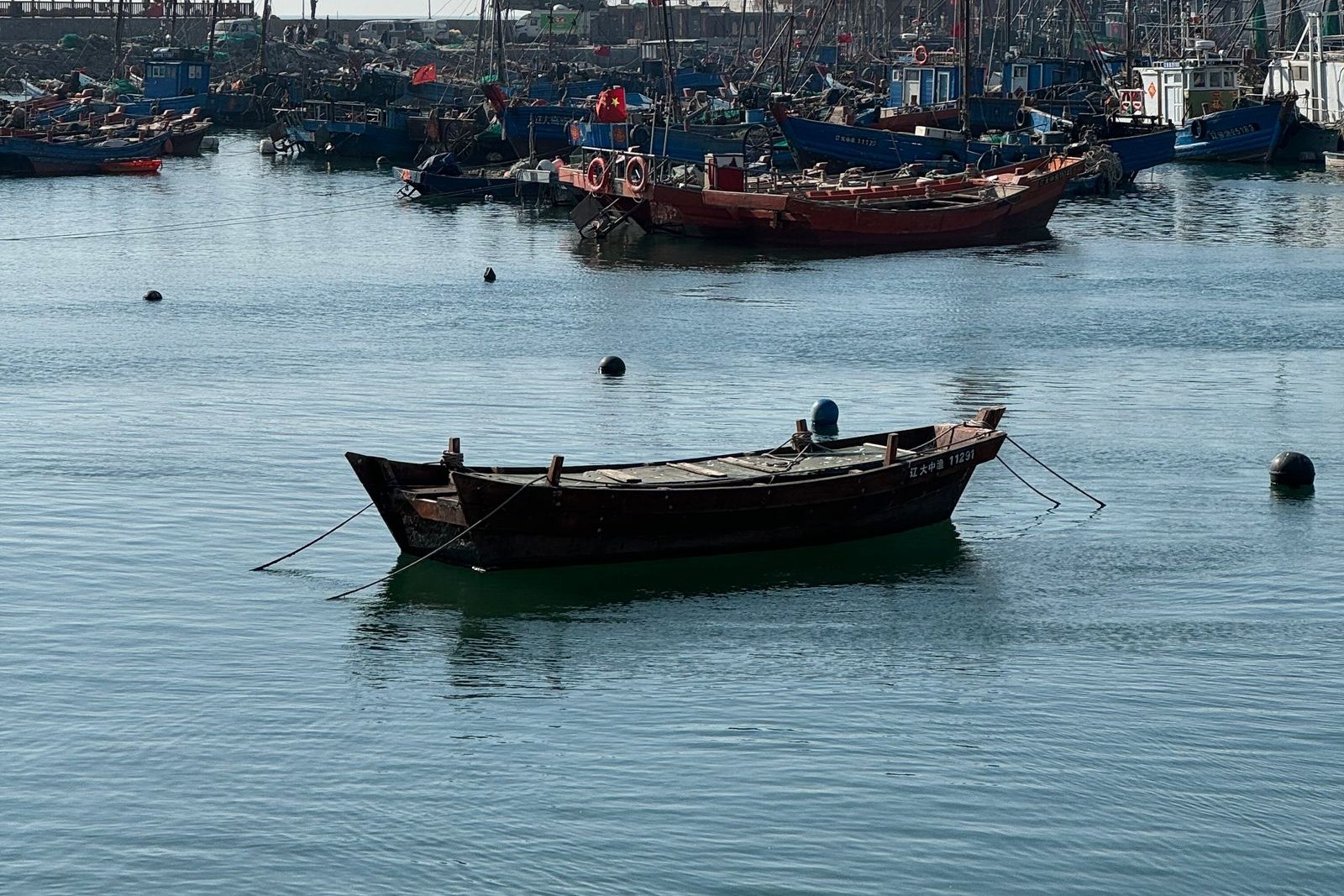
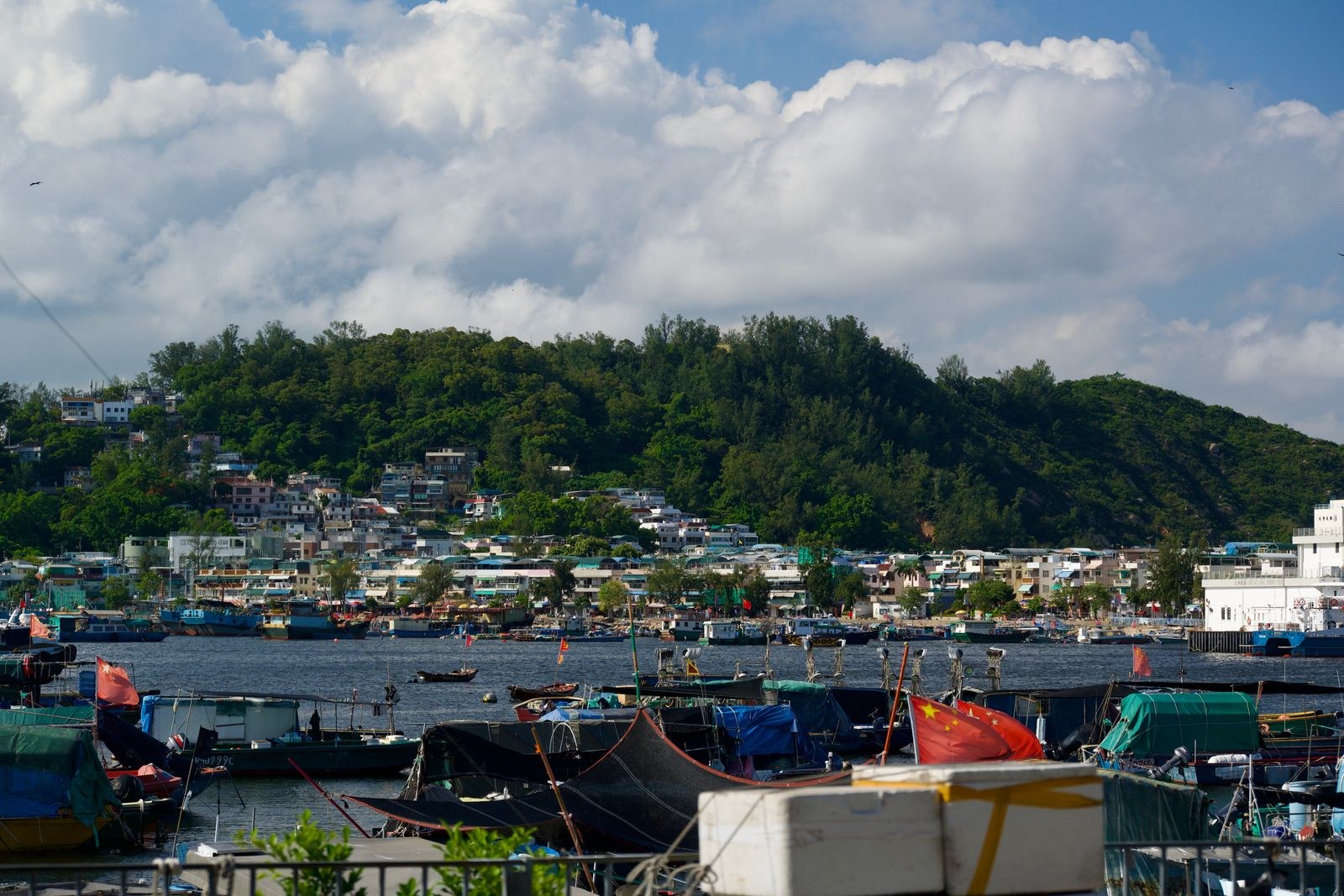
What makes staying on the island different from staying on the mainland coast is that the beach empties at five in the afternoon when the day-trippers get back on the ferry, and after that there is almost nothing to do, which is the entire attraction. 飞沙滩 runs about five kilometres and the sand is fine and pale; swimming is safe within the marked area, and the water on this side is calm because the island shelters it from the open sea. Behind the beach the road climbs into hills where the 猕猴 mí hóu, the macaques of the island’s nature reserve, are numerous enough to be a traffic hazard, and on the south coast at 沙堤 there is a working fishing harbour where the boats come in at dusk. There is also, surprisingly for a place this small, a sixteenth-century European grave: 方济各·沙勿略 Fāngjìgè Shāwùlüè, Francis Xavier, the Jesuit missionary, died on the island in 1552 waiting for a boat to the mainland, and the chapel built over the site is a ten-minute drive from the beach.
What the Rooms Are Like
Expect fifteen to twenty-five square metres, a firm bed, a tiled floor and a small bathroom with a shower. The classification here is informal: 海景房 hǎi jǐng fáng, a seaview room, costs perhaps a third more than a 山景房 shān jǐng fáng, one facing the hills, and on an island where the sea is the reason you came, the difference is worth paying. Balconies are common and are where people actually spend the evening. Air conditioning is universal in the newer houses and worth confirming in the older ones, because the island is hot and humid from May to October. Water is from the island’s own supply and is fine for showering; most places provide bottled drinking water. Wi-Fi is usually present and usually slow, and the mobile signal at 飞沙滩 is good.
Practicalities
Price. A double with a sea view in a 飞沙滩 guesthouse runs ¥200 to ¥500 a night in the shoulder season, and roughly double that in the first week of October and on summer weekends, when the ferry queues stretch back up the road at 山咀港 and the whole beach is booked out a month ahead. The cheapest rooms, without a view and sometimes without air conditioning, start near ¥120.
Address. The guesthouses line the road behind 飞沙滩 Fēishā tān on the east coast of 上川岛 Shàngchuān dǎo, in 川岛镇 Chuāndǎo zhèn, 台山市 Táishān shì – about forty minutes by ferry from 山咀港 Shānzuǐ gǎng to 三洲港 Sānzhōu gǎng, then fifteen minutes by the island bus or a taxi. The alternative cluster is at 沙堤渔港 Shādī yú gǎng on the south coast, which is a fishing harbour rather than a beach and is quieter and cheaper.
Rooms. Ask for an upper floor and a balcony, and ask which way the window faces before you book, because half the properties described as having a sea view are looking at it over somebody else’s roof. Confirm that the ferry times you were quoted are for the day you are travelling: the service is reduced outside the summer season and stops altogether in a typhoon, and when it stops, the island has no way on or off. If you are going for the macaques or the old chapel rather than the beach, staying at 沙堤 puts you closer to both and away from the noise.
Getting there. From 台山 Táishān city, take a bus or taxi to 山咀港 Shānzuǐ gǎng, about seventy kilometres and an hour and a half, and then the ferry to 三洲港 Sānzhōu gǎng; boats run roughly hourly in season and the crossing takes forty minutes. Tickets are bought at the port and it is worth arriving with time to spare on a weekend. The island has its own buses from the port to 飞沙滩 and 沙堤, and taxis wait at the pier.
flowcloud would say that an island you cannot drive to and cannot leave in bad weather is the last honest kind of holiday, because the sea decides your schedule and you find out within an hour whether you actually wanted a rest or only wanted to be seen taking one.
Where to stay: the guesthouses along the road behind 飞沙滩 Fēishā tān on 上川岛 Shàngchuān dǎo, reached by ferry from 山咀港 Shānzuǐ gǎng to 三洲港 Sānzhōu gǎng in 川岛镇 Chuǎndǎo zhèn, 台山市 Táishān shì. Book a sea-facing room on an upper floor, confirm the sailing time for the day you travel, and remember that nothing leaves the island in a typhoon, which is the one thing that can turn one night into three.