
Chongqing is a municipality of southwest China, and 沙坪坝区 Shāpíngbà Qū Shapingba is its north-west district, the bank where the 嘉陵江 Jiālíng Jiāng, Jialing River, bends beneath 歌乐山 Gēlè Shān, Gele Mountain, and where the thousand-year river town of 磁器口古镇 Cíqìkǒu Gǔzhèn, Ciqikou Ancient Town, keeps its guest beds. The town is a national 4A scenic area and a listed historic-cultural street, and by day it runs on tour-group time. But Ciqikou never stopped living, and the proof is the timetable the day visitors never see: shutters coming down at first light, teahouse fires lit before the vendors arrive. A night in the town’s inns buys that other clock – and Metro Line 1 puts the exchange within an easy ride of the centre.
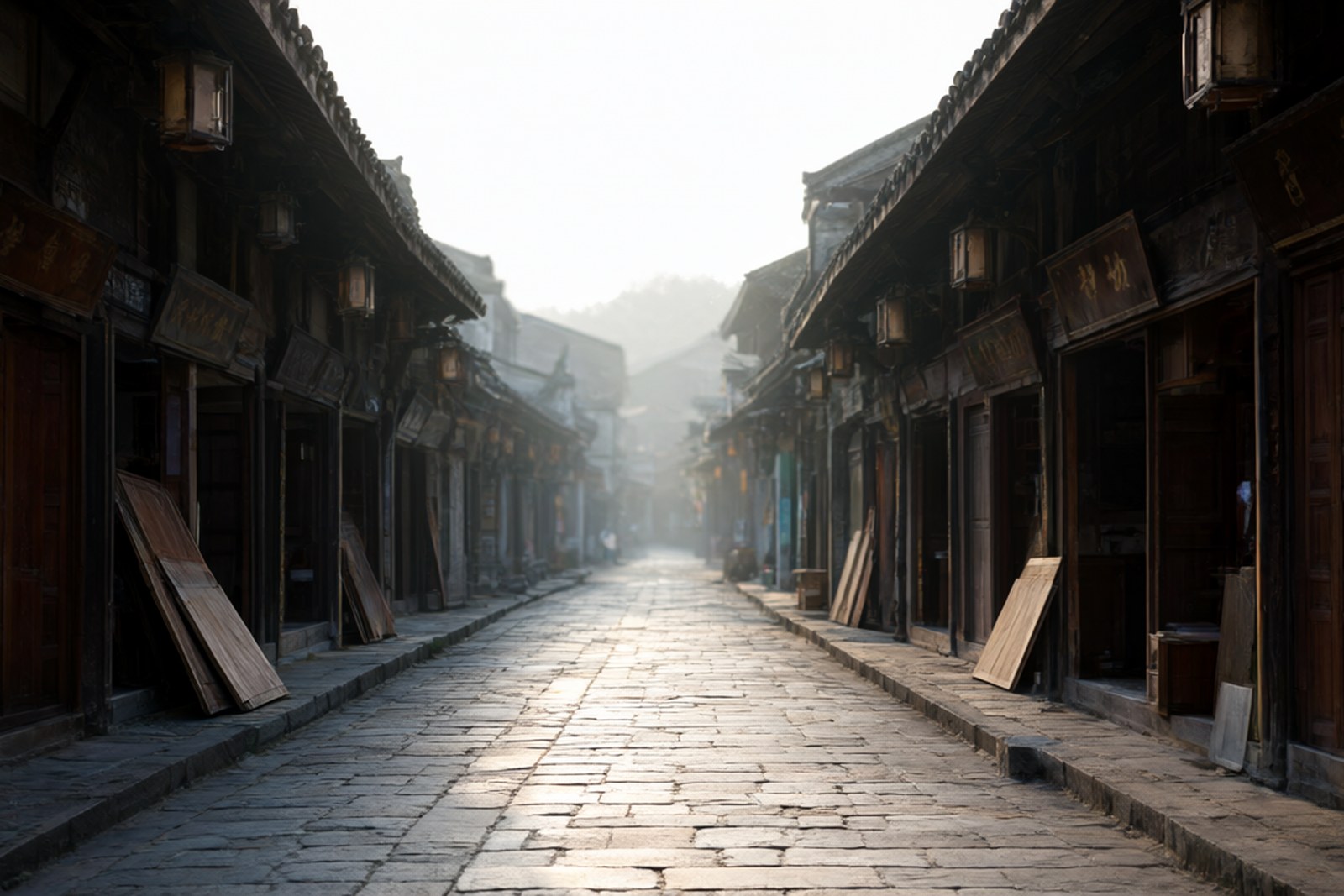
The town’s paper trail is old. The district’s records place the founding of the market town in the years between 998 and 1003, first named 白岩场 Báiyánchǎng, the white-rock market, after the pale cliff above the river. In the Kangxi reign of the Qing, porcelain men from Fujian founded the 沙坪窑 Shāpíng yáo, Shaping kilns, nearby, and for some three hundred years the wharf shipped their wares down the Jialing – traffic that gave the town its name: 磁器口 Cíqìkǒu, the porcelain port, a rank a Republican-era gazetteer confirmed. In February 1938 the wartime 沙磁文化区 Shācí wénhuàqū, Sha-Ci cultural zone, was proclaimed here – a single-source date, checked October 2026 – and tradition says a deposed Ming emperor once hid at the hill temple, 宝轮寺 Bǎolún Sì, Baolun Temple – a legend the record leaves alone.
The town’s bones survive in countable form: by the district archive’s account, one stone-paved road threads together nine traditional lanes, a dozen protected buildings and some 670 traditional-fronted houses, with Baolun Temple’s halls dating to the Song’s Zhiping years – a single-source inventory, checked October 2026. What the numbers describe is a town never emptied: the residents, temples and teahouses stayed, and the guest beds are the newest tenants of an old arrangement – rooms over shops and teahouses, over the wharf trade’s memory.
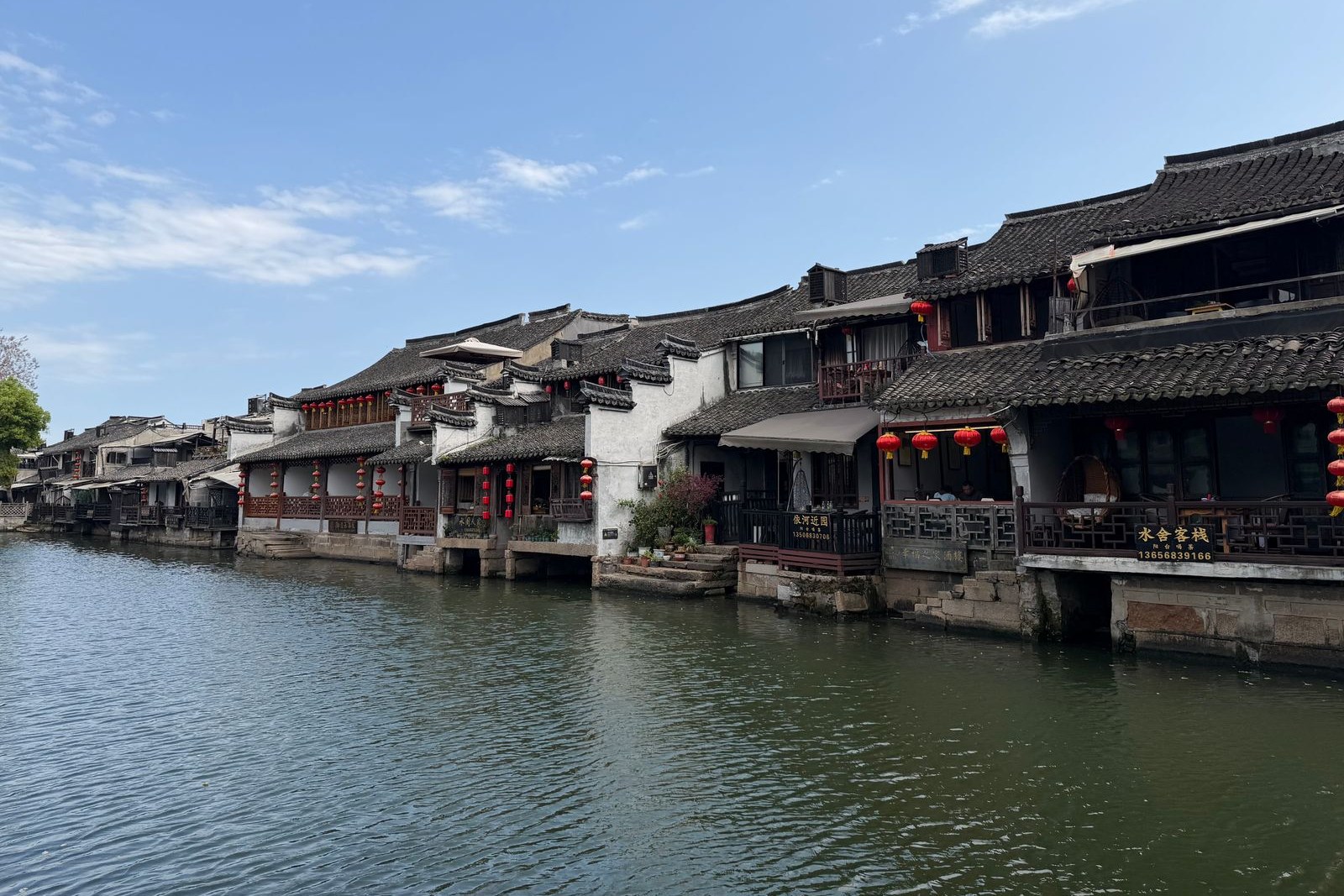
The beds sort into three registers. Above the teahouses: the 如舍 Rúshè river-view guesthouse at 2 磁器口正街 Cíqìkǒu Zhèngjiē, Ciqikou Zhengjie, at the main street’s end by the water – a working teahouse below, river-facing rooms above looking down the lane to the current, at mid-band money. The rebuilt quarter: 磁器口后街 Cíqìkǒu Hòujiē, Ciqikou Back Street, is a rebuilt commercial quarter rather than a conservation conversion, and its anchor house, the 华舫 Huáfǎng hotel at 12 Back Street, quoted from about 536 yuan in an October 2026 snapshot, its page listing an outdoor pool – confirm operation before booking. The dependable chain: the Holiday Inn Express Ciqikou Ancient Town at the Shijingpo end, from about 359, walkable to the gate. And the courtyard budget: 玺舍 Xǐshè at 16 Baolun Temple lane, from about 294, tea tables and a pet-friendly door. Every figure is a snapshot that floats.
Three boundaries keep this piece in its lane. Against the rebuilt-street register on the city’s south bank: that market sells a street reopened in 2018, and this town’s claim is the opposite – a street that never closed. Against the heritage-conversion register on the far south bank: no house here is sold as a conservation landmark – the Back Street is a rebuilt quarter, and the main-street rooms sit above working shops. And the district’s other registers keep their articles on this site; the town’s own story is the evening and the morning.
Practicalities
Price. In an October 2026 platform snapshot the town ran from about 199 to about 536 yuan a night: plain guesthouse rooms from about 199, the courtyard inn from about 294, the chain from about 359, the teahouse-upstairs river rooms in the mid band, and the Back Street pool hotel from about 536. Festival weeks lift every band, and the small houses book out first; reserve through Ctrip, Tongcheng or Trip.com, allowing a day for the host’s confirmation. Prices fluctuate seasonally; check current rates, and treat every figure as a snapshot that floats.
Address. 重庆市沙坪坝区磁器口 Zhòngqìng Shì Shāpíngbà Qū Cíqìkǒu, Ciqikou, Shapingba District, Chongqing – the teahouse guesthouse at 2 Ciqikou Zhengjie, the pool hotel at 12 Ciqikou Back Street, the courtyard inn at 16 Baolunsi, and the Holiday Inn Express at 261-7 Shijingpo, one metro stop from the gate.
Rooms. The stock is rooms above working teahouses and shops, river-facing categories at the water end, new mid-band rooms on the Back Street, and the chain’s inventory at the Shijingpo end. Book by position and treat any platform-awarded star as noise. Exact room counts are not confirmed in government or operator sources, so any precise figure is the platform’s own.
Getting there. Metro Line 1 to 磁器口 Cíqìkǒu, Ciqikou, puts the gate at a few minutes’ walk, with Shijingpo one stop on for the Holiday Inn Express; the riverside walk ties the town to 沙滨路 Shābīn Lù, Shabin Road, whose rooms have their own article, and Sanxia Square is a short metro ride inland. Parking is tight at weekends; the pool hotel and the chain keep their own lots. From 江北国际机场 Jiāngběi Guójì Jīchǎng, Jiangbei International Airport, allow a long taxi ride.
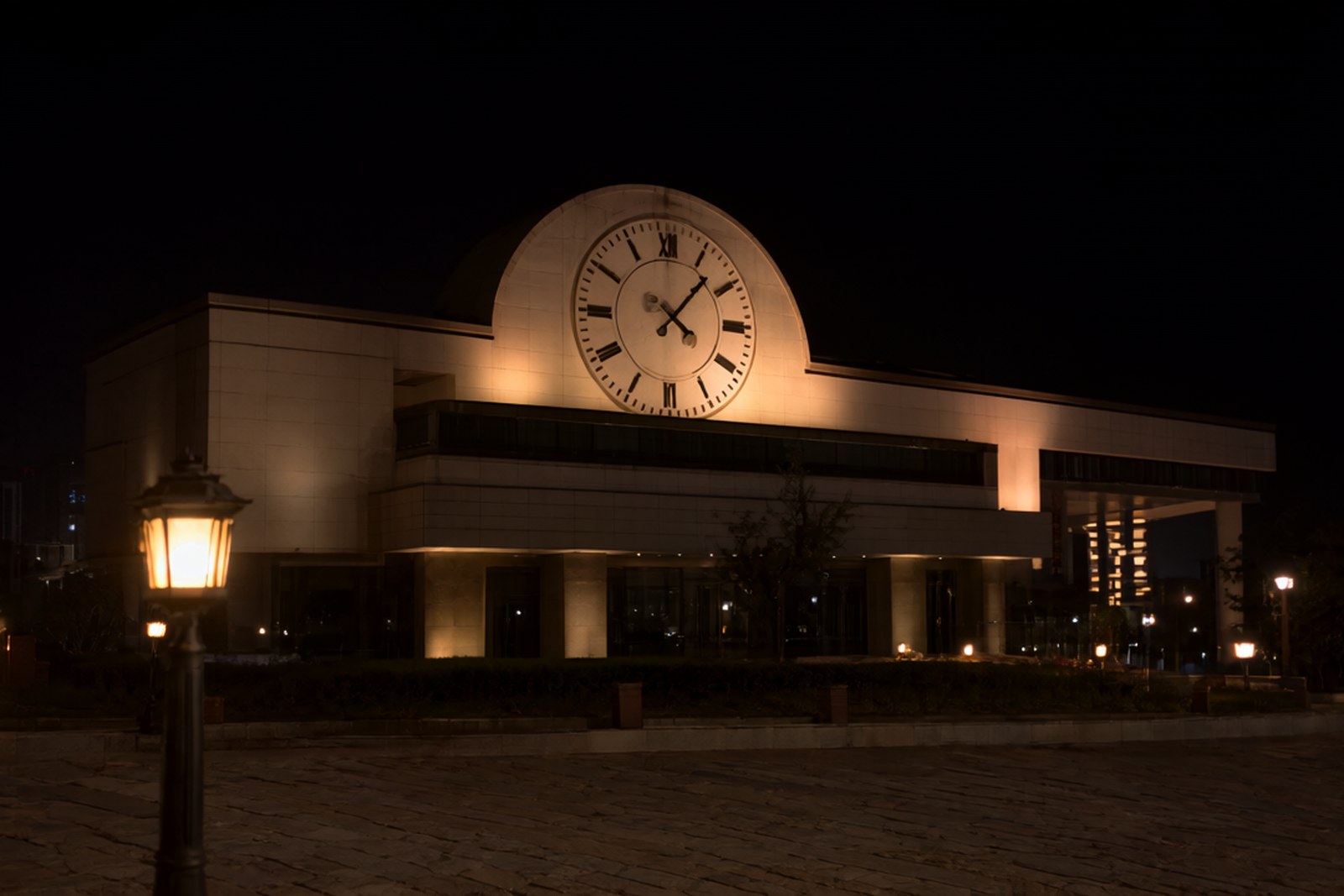
The evening and the morning are the product. Evening: the coaches pull out, the lane lamps come on, and the Chongqing 1949 Grand Theatre at the town’s edge – opened on 28 June 2021, a purpose-built immersive theatre of some 1,500 seats with its roof set as a clock face – takes its audience in while the wharf goes quiet; the lanes belong to the guests. Morning: congee steam on the main street, the shops shuttering open one by one, the first tour loudspeaker still an hour away. Then the guest checks out with the morning’s town instead of the postcard one.
flowcloud would say that Ciqikou is the only thousand-year town in China that hands its quietest hours to whoever kept a room, and that the correct way to sleep here is in the teahouse-upstairs room with the window on the river, because the day belongs to the itinerary but the night and morning belong to the town, which only shows them to guests.
Where to stay: the Rushe river room above the teahouse if the water and the working street are the point, the Huafang pool room on the Back Street if the evening wants a swim, the Holiday Inn Express if the chain’s consistency does the measuring, and 玺舍 Xǐshè from about 294 if the courtyard tea table is enough – because at 磁器口 Cíqìkǒu, Ciqikou, the rooms are part of why the town never stopped.