
南朗街道 Nánlǎng Jiēdào is the coastal subdistrict east of Zhongshan’s city centre – a subdistrict since the 2021 reorganisation, though many hotel platforms still file it under the old name 南朗镇 Nánlǎng Zhèn, and because 中山市 Zhōngshān Shì keeps no counties or districts, the subdistrict and its villages are the whole address. Two villages make its bed map: 翠亨村 Cuìhēng Cūn, where Sun Yat-sen was born and the free 5A zone now spreads, and 崖口村 Yákǒu Cūn on the 伶仃洋 Língdīng Yáng shore, the rice-and-mudflat village that has become the city’s rural star – 6.37 million visitors in 2025, more than the memorial museum next door.
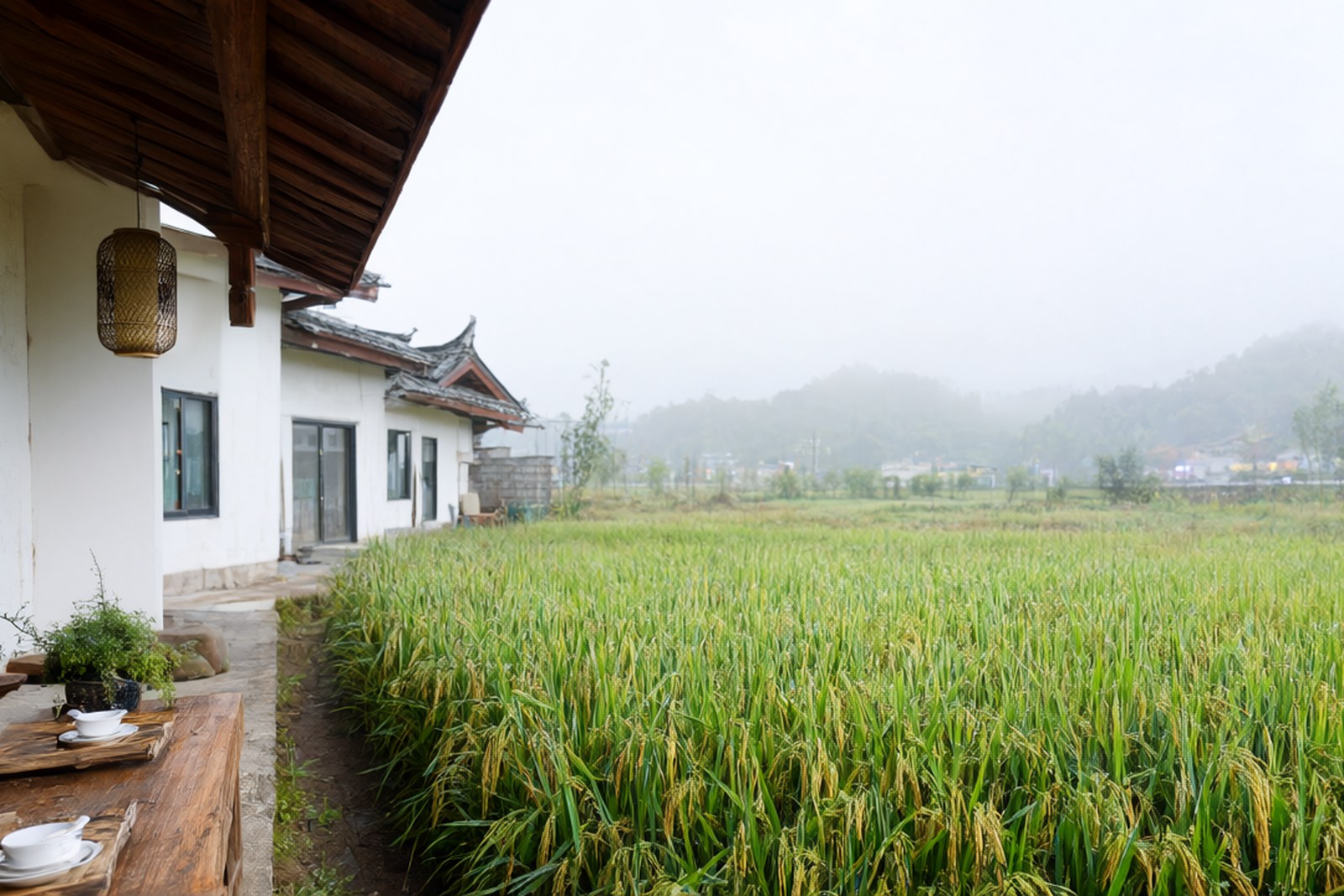
The 5A zone is the anchor. The Sun Yat-sen’s Hometown Tourism Zone, rated national AAAAA as Zhongshan’s first, is free to enter from the visitor centre at 翠亨大道 45 号 Cuìhēng Dàdào 45 Hào, and holds the 1892 two-storey house Sun Yat-sen built with his brother’s remittances, the memorial museum, the old village and a film city across about 3.15 square kilometres. You can sleep at the zone’s edge for very little – the platforms list a 柚子公寓 Yòuzi Gōngyù apartment 918 metres from the former residence at 165 yuan, a 麗枫 Lìfēng at 南朗 from 187, a station-front 格酒店 Gé Jiǔdiàn from 157 – but the beds this article is about lie two kilometres east, in the paddies of 崖口村 Yákǒu Cūn.
崖口村 Yákǒu Cūn keeps the numbers that made it famous. The village holds 30,000 mu of land – 5,000 mu of brackish fish ponds, 2,000 mu of contiguous rice paddy, and 8.5 kilometres of coastline, close to thirty per cent of the whole city’s, with Zhongshan’s last 70 mu of native mangrove and a wetland that records 110 bird species on the East Asian-Australasian flyway. Its claypot rice, 崖口煲仔饭 Yákǒu bāozǎifàn, went viral, and the village’s own 崖口大米 Yákǒu dàmǐ rose from 2.5 yuan a jin to 20 and onto the city’s ten-signature-products list. After the 深中通道 Shēn-Zhōng Tōngdào opened in 2024 the coaches came: 6.37 million visitors in 2025, overtaking the Sun Yat-sen Memorial Museum itself, along a food belt six kilometres long, with 170-plus young people back to run cafes, homestays and craft shops. The “people’s commune” wording some platforms attach to the village is their tag, and this article carries it as theirs.
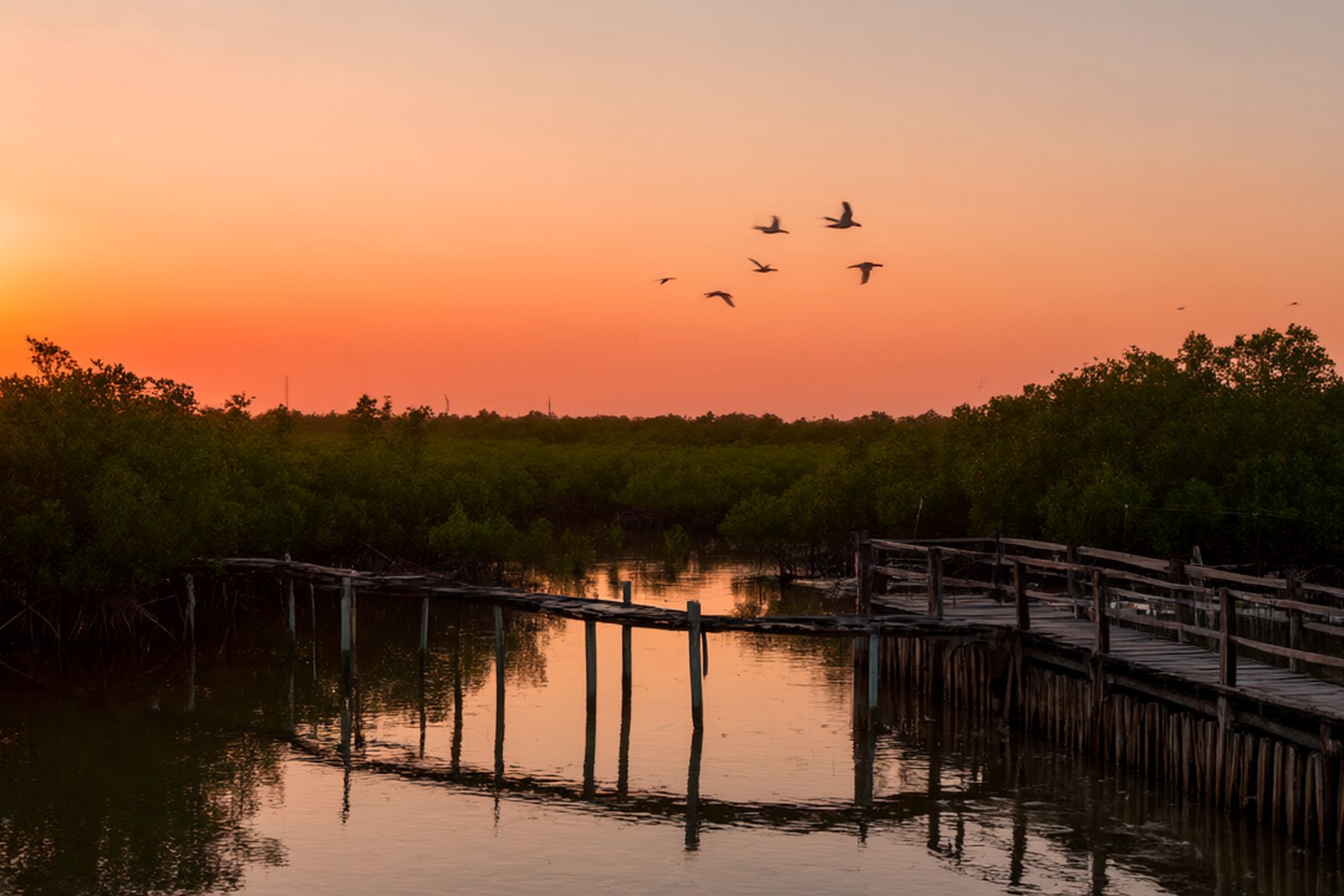
The homestay layer is young and priced for the day-tripper to stay the night. Checked on 30 September 2026: 稻浪家 Dàolàngjiā in the 中堡 village lane from 218 yuan, rated 4.9 on 同程 Tóngchéng and 4.6 on Meituan; 一田禾院 Yītián Héyuàn from 224 at 4.9, with tatami and treehouse family rooms; 稻梦空间 Dàomèng Kōngjiān from 195, with a 270-degree balcony over the paddy; 蝉意民枫 Chányì Mínfēng from 338, with constellation-theme rooms; 禾田香野 Hétián Xiāngyě from 359, around a garden courtyard; and, at the top, 春天里火车营地 Chūntiānlǐ Huǒchē Yíngdì, a train-theme camp with private-soak rooms from 887. Behind them sit a bookshop homestay, 禾舍书屋 Héshè Shūwū, and a wood-cabin-and-motorhome courtyard – two to three kilometres from the former residence and about the same from 南朗站 Nánlǎng Zhàn.
What the Rooms Are Like
A Yakou room is a village house built out. The paddy-view rooms have the balconies – the 270-degree corner at 稻梦空间 Dàomèng Kōngjiān is the photograph the village trades on – the family rooms have tatami and loft beds, the courtyard houses have gardens, and the train camp has its carriages and soaking tubs. What the rooms do not have is the town’s hotel machinery: breakfast is the village’s claypot rice and coffee, and the lanes are dark after dinner. The calendar rule: the spring flower weeks and the golden-paddy autumn weeks are the peaks; the flat green weeks between are the quiet and cheap ones.
Practicalities
Price. On 30 September 2026 the village band ran from 195 yuan for a paddy-balcony room to 359 for a courtyard house, with the train camp from 887 and the Cuiheng-side economy layer from 157 to 187. The flower weeks, the golden-paddy weeks and the national holidays are the peaks; no local report quantifies the swing. Every figure is a snapshot that floats.
Address. The addresses anchor to the subdistrict and village, as all Zhongshan addresses do: 南朗街道 Nánlǎng Jiēdào – the OTA pages’ 南朗镇 Nánlǎng Zhèn is the pre-2021 name – with the 5A zone at 翠亨大道 45 号 Cuìhēng Dàdào 45 Hào and the homestays inside 崖口村 Yákǒu Cūn at numbered lanes of 中堡村, 西堡新村, 新村街, 敦和北街 and 新溪路, two to three kilometres from the former residence and from the rail stations.
Rooms. Ask which way the balcony faces, because “paddy view” stretches from the 270-degree corner rooms to a glimpse between houses. Ask whether the family loft sleeps adults or only children. At the train camp, ask what the private soak includes in your room grade. And ask about dinner, because the village eats in its food street and the homestays mostly do not cook.
Getting there. The rail points are 南朗站 Nánlǎng Zhàn and 翠亨站 Cuìhēng Zhàn, both on the main line of the 广珠城际 Guǎngzhū Chéngjì: to Guangzhou South, second class 50 yuan and 46 to 54 minutes on the timetable checked on 30 September 2026 – 12306 has the live version – with the homestay cluster 2.6 to 3.0 kilometres from the stations by the platforms’ own measures. From Shenzhen the 深中通道 Shēn-Zhōng Tōngdào, open since 30 June 2024 at about 24 kilometres and roughly thirty minutes, lands on this coastal side, which is why the village’s visitor count jumped; the onward drive into Shenzhen itself is another half hour or so, an estimate – navigate.
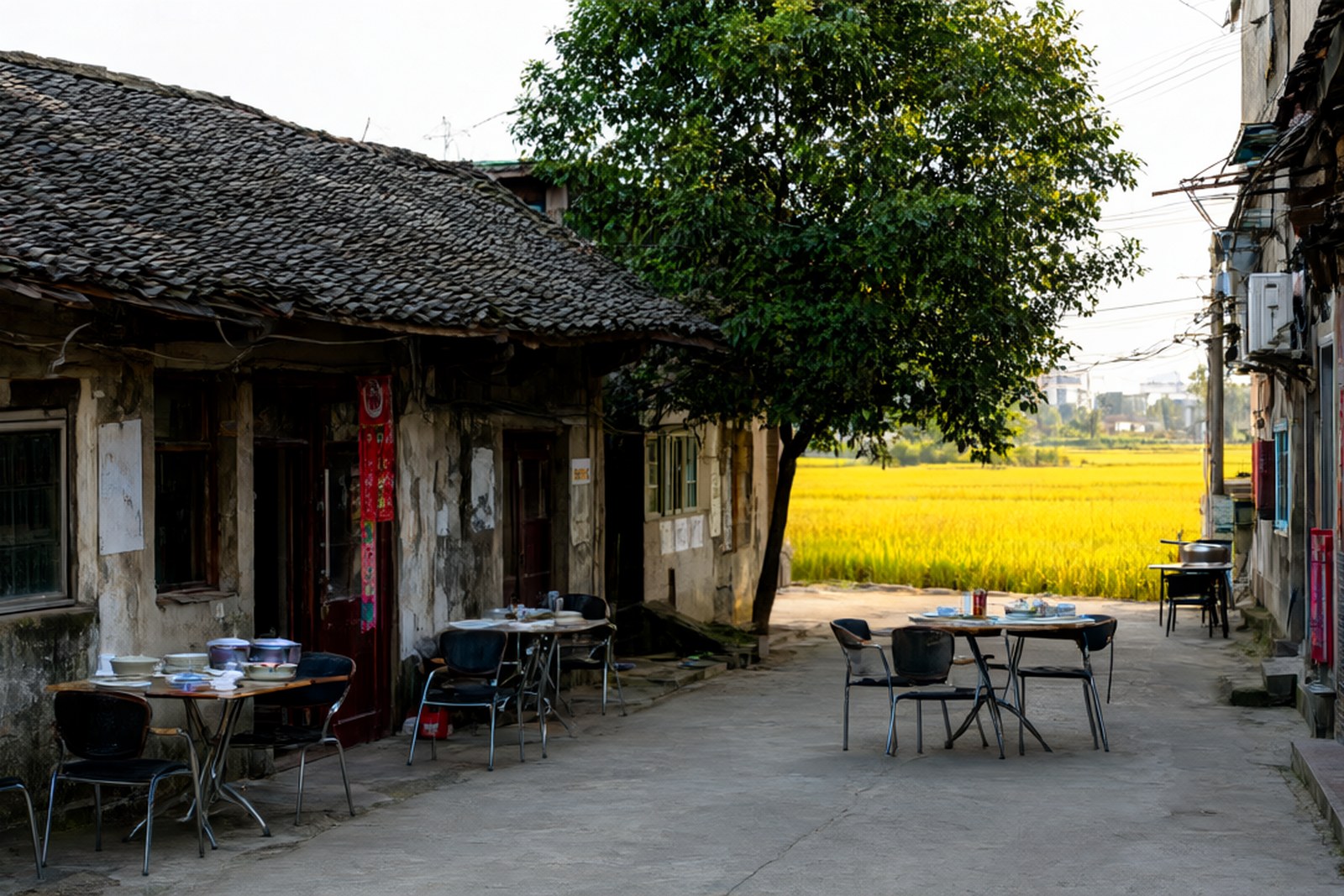
Where to stay: a 270-degree paddy-balcony room at 稻梦空间 Dàomèng Kōngjiān if the view is the point, the courtyard house at 禾田香野 Hétián Xiāngyě if the garden is, and a private-soak carriage at 春天里火车营地 Chūntiānlǐ Huǒchē Yíngdì if the trip deserves one indulgence – all in 崖口村 Yákǒu Cūn, 南朗街道 Nánlǎng Jiēdào, 中山市 Zhōngshān Shì, beside a free 5A zone and a food street that runs on claypot rice.
flowcloud would say that a village which held on to its commons now sells the view of them by the night, and that the correct way to sleep here is in the room with the balcony over the rice, because the paddy is the housekeeping and the claypot rice is the room service.