
粗坑村 Cū kēng cūn is a village in 京溪园镇 Jīng xī yuán zhèn in the east of 揭西县 Jiē xī xiàn, and it exists on this scale because of two things: tea, and the waterfall below it. The village is the site of the 黄满磜瀑布群 Huáng mǎn qì pù bù qún, the five-step waterfall group that is the county’s headline act and has its own article in this batch, and it is also one of the villages picked for the first round of 广东’s 百千万工程 bǎi qiān wàn gōng chéng rural programme. It grows tea on more than 5,000 亩 of the slopes around it – a bit over five hundred million yuan of output – and 苦笋 kǔ sǔn, bitter bamboo shoot, on more than 3,000 亩, worth a couple of hundred million more, with three farmer cooperatives doing the selling. The county’s plan for 2024 listed thirteen projects here for a total of about seventy-five million yuan, most of them tourism, food and shopping. The 民宿 mín sù – the farmhouse stays – are the leading edge of that, and they are the reason to sleep here rather than drive up from 揭阳市 Jiē yáng shì.
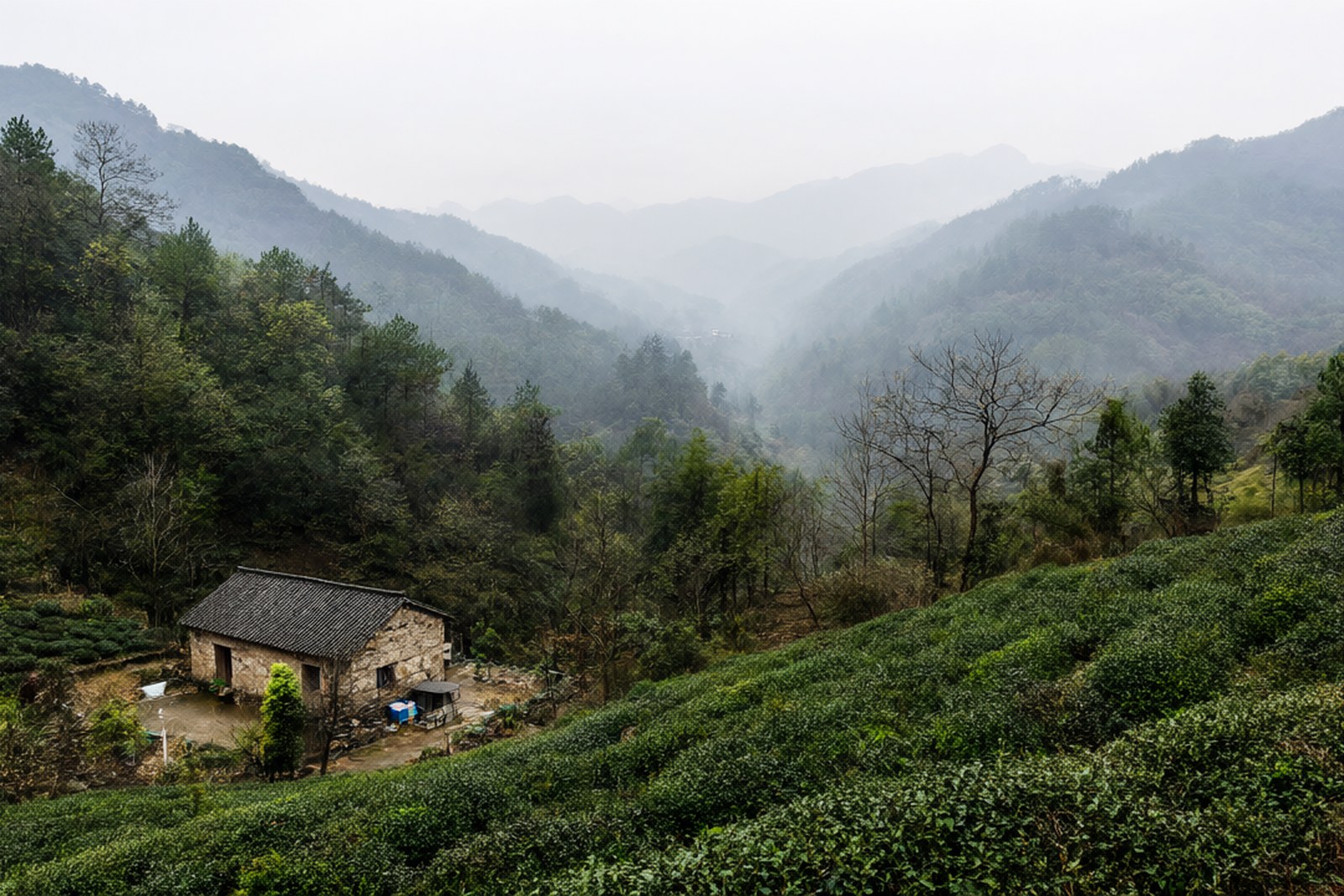
The village also has a claim on the prefecture that has nothing to do with scenery. 粗坑村 is where 团结报 Tuán jié bào, the paper that was later renamed 汕头日报 Shàn tóu rì bào, was founded, and the county prints the fact on the village’s own signage. It is a Hakka village in a Hakka county – 揭西 is the part of 揭阳市 that belongs to 客家 Kè jiā, the guest-family country, rather than to the 潮汕 Cháo shàn world that the city and 普宁 belong to – and everything about a night here follows from that: the food is Hakka food, the houses are stone and earth with deep eaves, the village’s 擂茶 léi chá, the pounded tea drunk as a meal rather than steeped as a drink, is the county’s own dish and is written up in the food column, and the mountains around you are the eight-tenths of the county that is not flat.
The waterfall itself is a few minutes away on foot or a very short drive, and the practical difference between sleeping here and coming up for the day is the thing worth paying for. 京溪园 is a long way up from anywhere, the road in bends through villages and tea, and a day visitor spends two hours of a four-hour window in a car. A guest gets the gorge at seven in the morning, when the mist is still in it and the falls have the place to themselves, and again in the evening after the coaches have gone. The county’s own figures for the summer are pleasant rather than dramatic and all the more believable for it: 揭西 averages about 21.5°C over the year and the waterfall area holds around 25°C in July and August, five to eight degrees under the 珠三角 Zhū sān jiǎo cities, which is exactly what a village on a north slope at this altitude should manage.
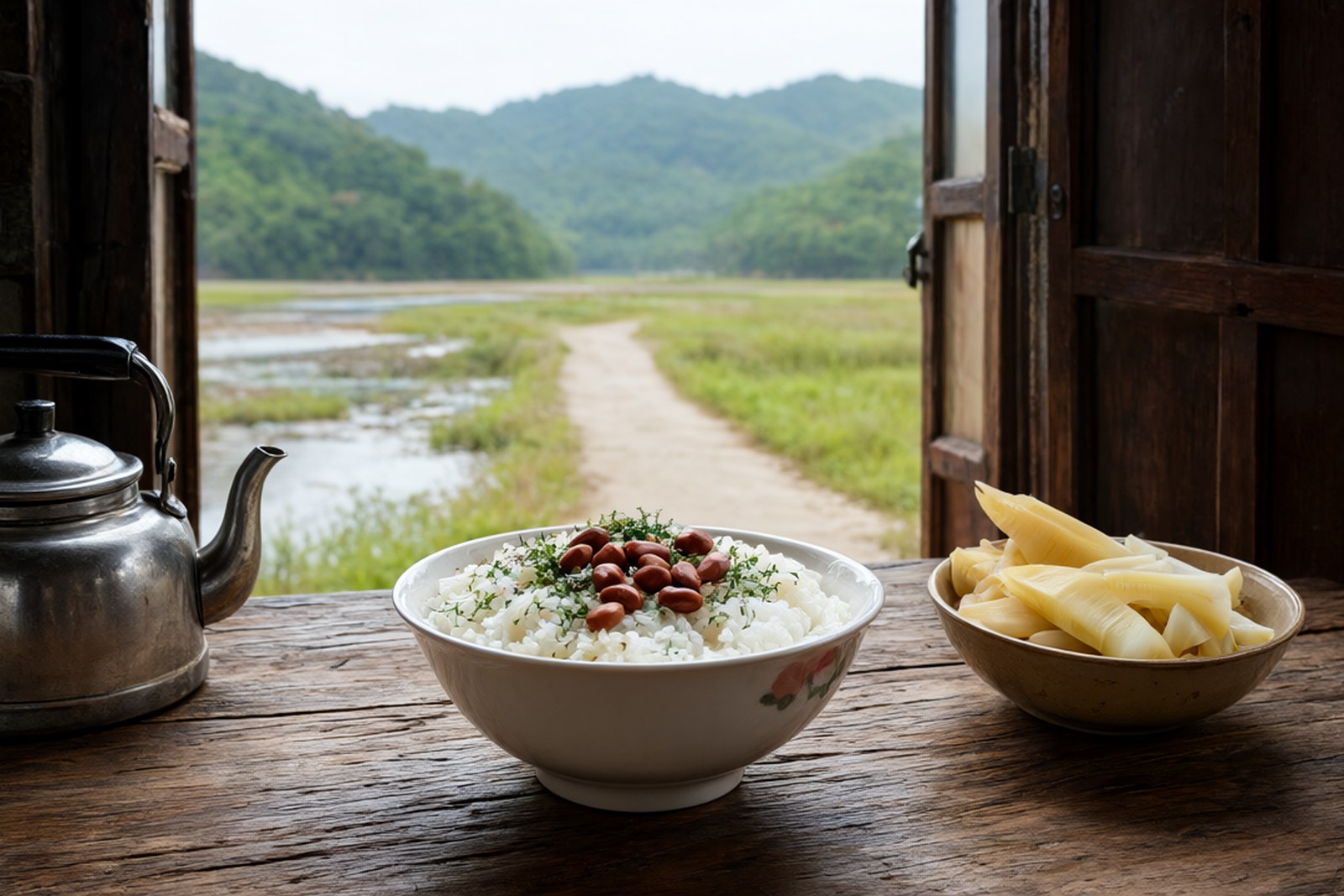
The food is a real part of the stay and not an afterthought. The kitchens here cook Hakka, and they cook what the village grows: 揭西擂茶 Jiē xī léi chá in the morning, ground from tea and mountain herbs and poured over rice with peanuts and greens as a full meal; 山坑螺 shān kēng luó, the small stream snails, cooked with chillies and perilla; 竹筒饭 zhú tǒng fàn, rice steamed in a bamboo tube; free-range chicken, cured pork and the village’s own 苦笋, the bitter shoots it grows on three thousand 亩 of slope. At the foot of the hill and along the road there is a string of 农家乐 nóng jiā lè, farmhouse restaurants, and the honest instruction for a visitor is to eat there or at the guesthouse rather than look for a restaurant, because there is not one. Several of the guesthouses keep a jar of their own 青梅酒 qīng méi jiǔ, the green-plum liquor the county makes, and it is the local habit to put a glass of it in front of a guest; if your host offers you some, that is the county being itself and there is no charge attached.
There are two ways to sleep on this hillside and they suit different people. The 京明温泉度假村 Jīng míng wēn quán dù jià cūn, half an hour away in the same town, has the tea terraces, the hot pools and a few hundred rooms, and its own article in this batch; the minsu here are the other end of it, four or five rooms in a family house with a courtyard, a kettle and somebody’s grandmother working a drying rack of tea. 河婆 Hé pó, the county town, is cheaper again if you want a chain hotel with a lift, but a bed in 河婆 is a bed twenty kilometres from the fall and it buys you nothing at dawn. Anyone who wants the county’s other ground – the 三山国王祖庙 Sān shān guó wáng zǔ miào at 河婆, the ancestral temple of some 16,000 shrines across the 潮汕 diaspora and a provincial intangible-heritage rite, or the 大北山 Dà běi shān forest park – is within an hour of all of it from here.
What the Rooms Are Like
A minsu room in 粗坑村 is a room in somebody’s house, and the honest description is four walls, two beds or one big one, a firm mattress under a thick quilt, a tiled or boarded floor, a kettle, an air conditioner that is used mainly as a heater in the winter months and a bathroom that may be private in the newer houses and shared along the corridor in the older ones. The newer rooms, put up for guests, have the white walls, the panel shower and a window onto the gorge; the older ones are stone and timber with deep eaves, a low ceiling, a veranda and a great deal more character. Nobody here has a lift, most have a courtyard with a table under it and a place to hang wet clothes, and breakfast is arranged with the family the night before. Ask about hot water if the house heats it on the roof, and expect the room to be plain rather than polished.
Practicalities
Price. A room in a 粗坑村 minsu runs about ¥120 to ¥260 a night, usually with breakfast and often with a home-cooked dinner arranged on top for a modest extra; the newer houses with a private bathroom and a gorge window sit at the top of that and the older rooms with a shared corridor at the bottom. 五一, 国庆 and the summer weekends are the times the village fills, and the 春茶 chūn chá picking weeks in April and May are the other; treat the numbers as a range and check the live rate, because several of these places take bookings only by phone.
Address. The minsu are in 粗坑村 Cū kēng cūn, 京溪园镇 Jīng xī yuán zhèn, in the east of 揭西县 Jiē xī xiàn, in the hills around the 黄满磜瀑布群 Huáng mǎn qì pù bù qún; 河婆 Hé pó, the county town, is about twenty kilometres west, 揭阳市 Jiē yáng shì roughly an hour and a half south-east by road, and the 京明温泉度假村 Jīng míng wēn quán dù jià cūn is in the same town about half an hour away.
Rooms. Ask for a room on the upper floor with the gorge in front of it, because the ground floor is the damp one in a valley that holds mist, and ask which way the room faces, since the whole point of being here is the early window. Ask what time dinner is and what it is, because the answer is what the garden and the hill are offering that day rather than a menu; ask about hot water and about a plug or a net, since standing water and green slopes mean mosquitoes in the warm months; and ask the house to write its own name and the village in Chinese for a driver, because 粗坑 is a small enough place that outsiders will not find it and the road sign is the only one there is.
Getting there. By road from 揭阳市 Jiē yáng shì in about an hour and a half and from 汕头 Shàn tóu in about two, off the 汕湛 and 潮惠 expressways; 揭西 has no railway of its own and the nearest stations are on the 厦深 line beyond the county, with 揭阳潮汕国际机场 Jiē yáng cháo shàn guó jì jī chǎng about an hour and a half away. The last stretch from 京溪园镇 up to the village is a narrow country road through tea and bamboo, and it wants to be driven in daylight; a car or a hired one is much the easiest way in, and the county’s buses come as far as the town below rather than the village.
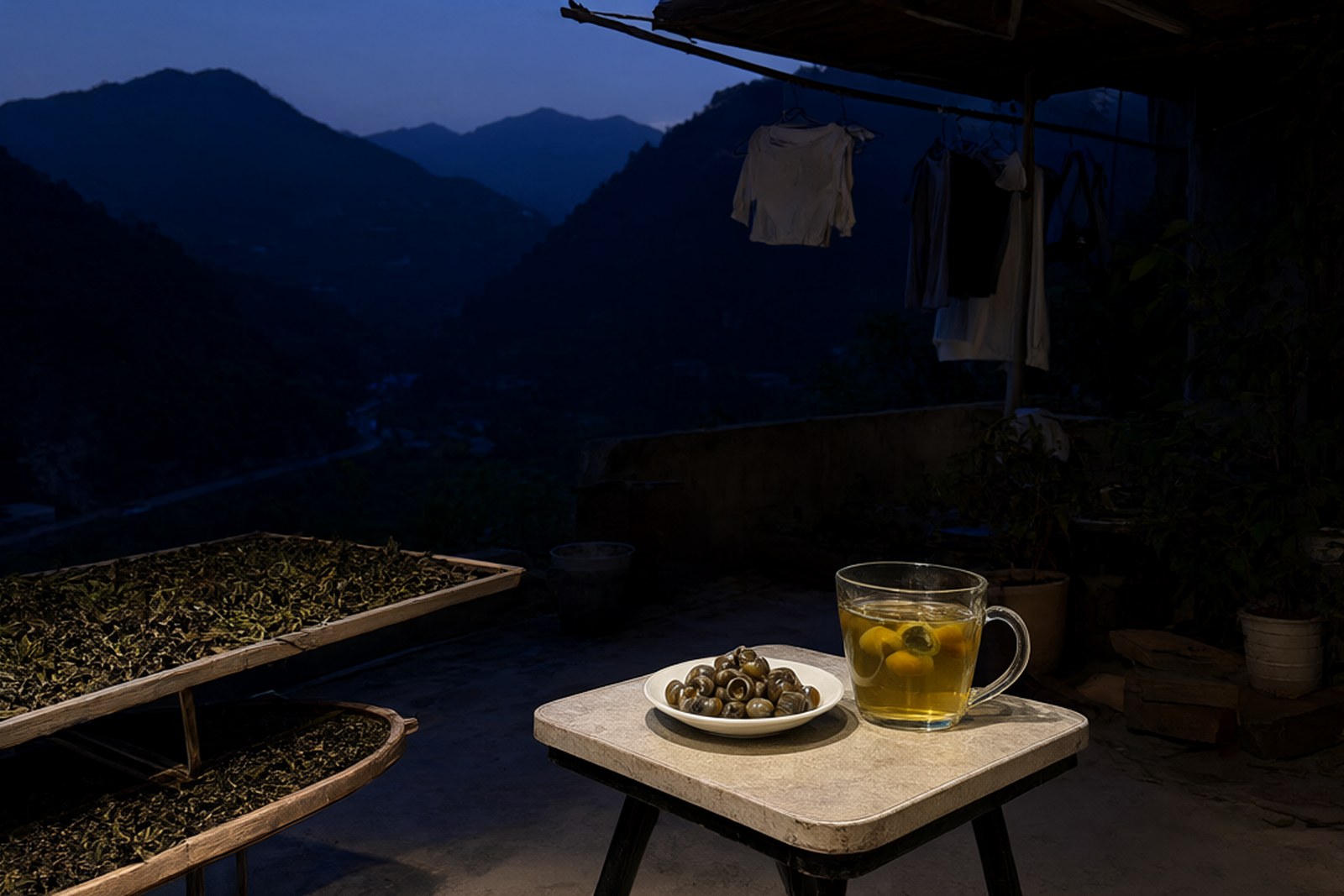
Where to stay: a family minsu in 粗坑村 Cū kēng cūn, 京溪园镇, in the east of 揭西县 Jiē xī xiàn, a few minutes from the 黄满磜 falls. Take the upper room and the gorge window, eat what the kitchen grew, say yes to the plum wine if it is offered, and be on the path above the fall before the day visitors have finished their drive up.
flowcloud would say that the best argument for a village bed is arithmetic rather than romance – two hours of driving saved out of a four-hour window – and that it is a happy accident of that arithmetic that the hours you keep instead are the two when the gorge is at its best.